Finding cockroaches in your yard can be unsettling. The first step to getting rid of them is understanding why they are there in the first place. These pests are drawn to three things: moisture, food, and shelter. All of these are common in the lush landscapes around Santa Cruz County.
Seeing even one roach is a clear sign that your property offers a welcoming environment. Think of it as a warning before they decide your kitchen looks even better. This guide provides proven methods, backed by our field-tested strategies, to help you reclaim your yard.
Why You Are Seeing Cockroaches Outside Your Home
Spotting a cockroach on your patio or under a planter can feel like a direct threat to your home. In many ways, it is. Outdoor cockroach populations are like a reservoir that can quickly spill into your living spaces. This often happens when they are looking for shelter from changing weather or a steady supply of food.
Figuring out what makes your property attractive to them is the first step in any good pest control plan. The unique coastal climate here in Santa Cruz County, from Aptos to Scotts Valley, creates the perfect breeding ground for several outdoor cockroach species. The moisture, mild temperatures, and natural debris like leaves and woodpiles offer everything they need to thrive.
Common Outdoor Roaches in Santa Cruz County
Not all cockroaches are the same. The species you see in your garden are usually different from the ones that live only indoors. In our area, you are most likely dealing with one of two types:
- American Cockroaches: Often called "palmetto bugs," these are the largest of the common roaches and have a reddish-brown color. They love very damp, dark areas like sewers, drains, woodpiles, and thick ivy.
- Oriental Cockroaches: Sometimes known as "water bugs," these roaches are dark brown or black and look greasy. They are known for living in cool, moist places like crawl spaces, under decks, and around drains.
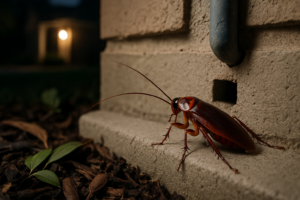
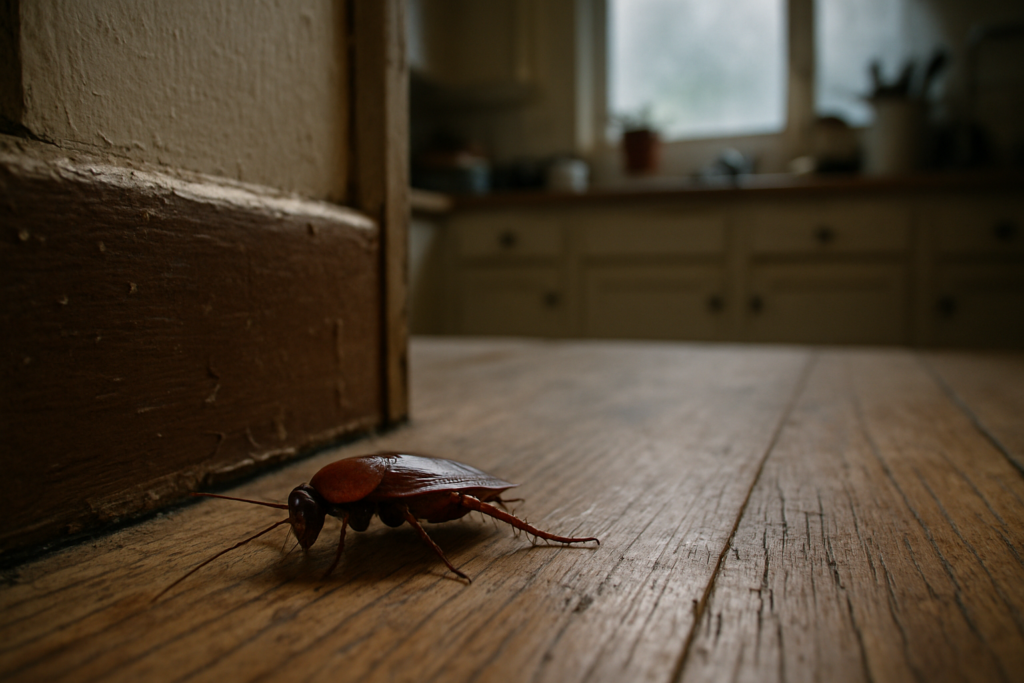
Here is a look at the common American cockroach, a frequent uninvited guest in local yards.
Its size and color make it easy to identify when you spot one near your home.
From Your Yard to Your Kitchen
An outdoor cockroach problem rarely stays outdoors for long. These pests are survivors. When conditions outside become less ideal—like during a heatwave or heavy rain—your home becomes a perfect shelter.
Cockroaches are more than just a bother; they are a public health concern. They can carry bacteria and allergens from outside filth directly into your home, contaminating surfaces and food.
This is a widespread issue. Of the more than 4,500 cockroach species in the world, about 30 species commonly invade human homes. A 2021 study by the U.S. Census Bureau found that nearly 14 million households reported seeing cockroaches in the past year, proving you are not alone. You can read the full research about their public health impact to learn more.
Understanding what attracts cockroaches to your home is a key part of solving the problem. It gives you real insight into your property’s weak spots.
Finding Where Outdoor Cockroaches Are Hiding
Good cockroach control is not about spraying your yard and hoping for the best. It is about being precise. Before you do anything, you need to think like a pest control technician and find out where the roaches are living and breeding. This approach makes sure any treatment you use is targeted, saving you time and frustration.
A complete property inspection is the most important first step. Outdoor cockroaches are masters of hiding. They prefer dark, damp, and undisturbed spots. Knowing their favorite hangouts is like having a map to the heart of the problem. It lets you focus your efforts where they will make a difference.
Your Property Inspection Checklist
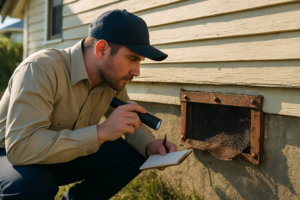
First, grab a good flashlight. You will be looking in places you probably ignore most of the time. Cockroaches thrive where moisture, food, and shelter come together. Your goal is to find these key zones, which our technicians consistently find are the biggest problem areas in Santa Cruz County homes.
This simple infographic breaks down the three main things to look for during your inspection—moisture, food, and shelter—and where you're most likely to find them.
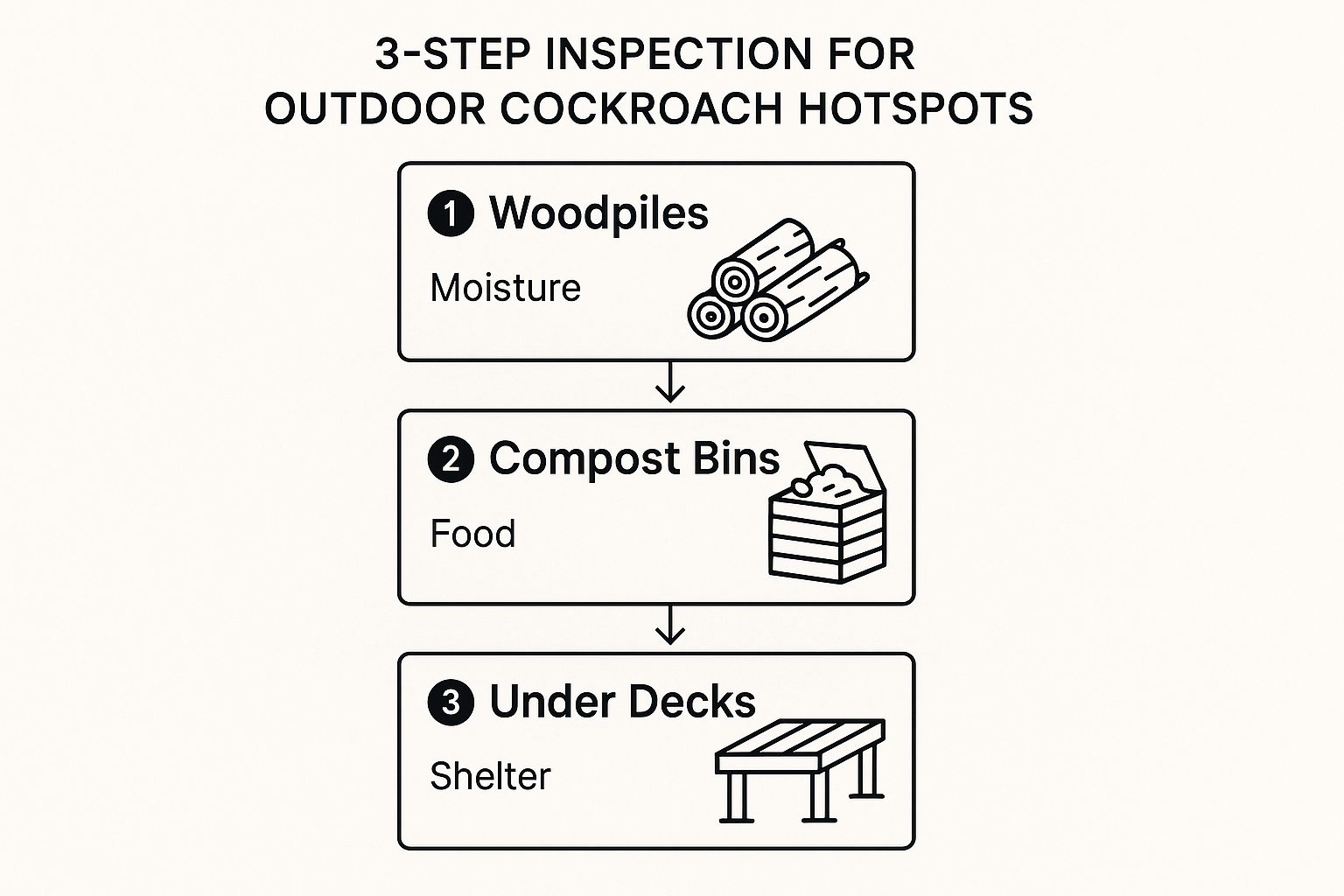
This process shows how different parts of your yard provide what cockroaches need to survive. When you start to address each of these elements, you take apart their habitat.
Here are the top five hotspots to check right away:
- Woodpiles and Lumber: Stacked firewood is like a five-star hotel for cockroaches. It offers dark spaces for shelter and traps moisture from rain and our coastal fog.
- Compost Bins and Trash Cans: To a roach, these are a buffet. Decaying organic matter is a main food source. Make sure your bins have tight lids and are stored away from your home.
- Thick Ground Cover: Dense ivy or other low plants create a dark, humid environment at ground level. The soil underneath stays moist, giving roaches water and protection.
- Under Decks and Sheds: The dark, quiet space under a deck or shed is a prime spot for an infestation. It is sheltered and often has damp soil, which is perfect for cockroaches.
- Clogged Gutters and Drains: Gutters filled with wet, decaying leaves are a common hotspot. This sludge provides both food and moisture, and it gives roaches a hidden path to your roof and attic.
Expert Insight: Seeing cockroaches during the day is a major red flag. These pests are nocturnal, so daytime activity often means their hiding spots have become too crowded. This usually signals a large infestation.
Why Each Hotspot Matters
Understanding why each hiding place is attractive helps you make lasting changes. A woodpile is a source of shelter and moisture. A compost bin is a source of food. The dark space under your deck is pure shelter.
By identifying what each hotspot provides, you can take specific actions to make it less appealing to pests. For a complete guide, our pest control inspection checklist offers a detailed walkthrough. It helps you think like a technician and spot problems you might have missed.
How to Create a Cockroach-Proof Barrier
Treating a roach problem is one thing, but prevention is the real secret. Building a physical barrier around your home is the most effective and eco-friendly way to stop pests. Think of it like building a fortress where you control every entry point.
This is a proactive strategy to make your home harder to get into. By sealing gaps, managing moisture, and rethinking your landscaping, you can lower the odds of an infestation without using pesticides. It puts you back in control.
Seal Every Crack and Crevice
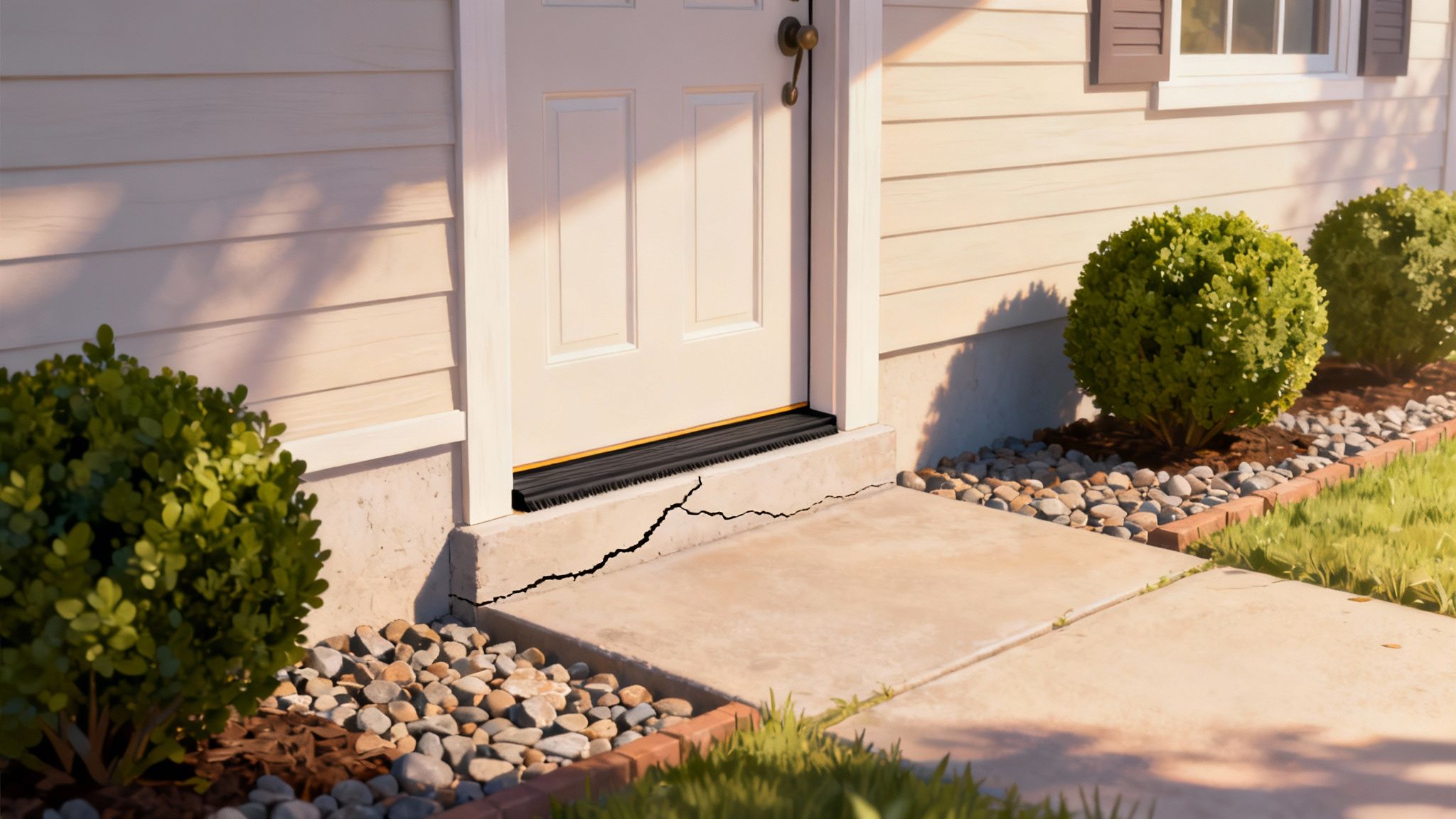
It is hard to believe, but cockroaches can flatten their bodies to squeeze through tiny gaps. A crack you might not even notice is an open door for them. Your first line of defense is to closely inspect your home's foundation, walls, and entryways.
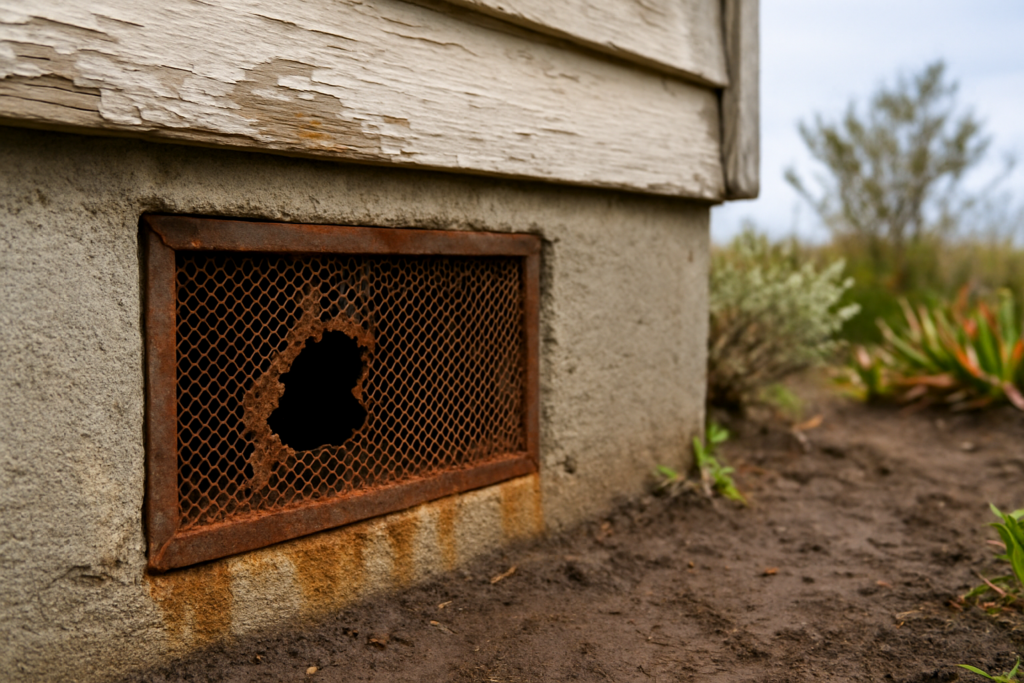
Start by walking around your house. Look for any cracks in the foundation or siding. Pay extra attention to where utility lines, pipes, and faucets enter your home. These spots often have small gaps perfect for pests.
Use a good quality silicone caulk to seal these openings. For bigger holes, especially around pipes, use expanding foam or copper mesh to create a pest-proof block. This simple weekend project is one of the best things you can do.
Fortify Your Doors and Windows
Doors and windows are main entry points for unwanted guests. Worn-out weather stripping or a small gap under your door is like a welcome mat for cockroaches.
- Install Door Sweeps: A rubber or bristle sweep on the bottom of your exterior doors creates a tight seal. This blocks roaches, drafts, and other bugs.
- Check Weather Stripping: Look at the weather stripping around all your doors and windows. If it is cracked or peeling, replace it. It is a cheap fix that makes a big difference.
- Repair Screens: Check every window and door screen for rips or holes. Even a tiny tear is enough room for a cockroach to get through.
Expert Takeaway: When sealing your home, be thorough. It is the small gaps people miss that cause problems. I tell homeowners to get down on their hands and knees to inspect the foundation and use a flashlight to check dark corners around pipes.
Manage Exterior Lighting and Landscaping
Your yard can either protect your home or attract pests. Smart choices with landscaping and lighting can make your property less inviting to roaches. For example, many outdoor roaches are drawn to light, so a bright white porch light is like a beacon.
Consider switching to yellow "bug lights" or sodium vapor lamps for outdoor fixtures. These bulbs are less attractive to most night-flying insects. This means fewer pests gathering right outside your doors.
Landscaping also plays a big role. Cockroaches need moisture and shelter. Overgrown shrubs touching the house or piles of firewood against your foundation provide the perfect habitat.
To make it simple, here is a quick checklist for Santa Cruz homeowners.
Your Home Fortress Checklist
| Area of Focus | Action Item | Why It Works |
|---|---|---|
| Foundation & Walls | Seal all cracks and gaps with caulk or copper mesh. | Eliminates direct entry points for cockroaches seeking shelter. |
| Doors & Windows | Install tight-fitting door sweeps and replace old weather stripping. | Blocks the most common and easiest access points into your home. |
| Landscaping | Trim shrubs 18 inches away from the foundation. | Improves airflow, allows sunlight to dry the soil, and removes a "bridge" for pests. |
| Mulch | Use gravel or rubber mulch in a 2-foot band around your home. | Wood mulch holds moisture and provides food; gravel stays dry and is unwelcoming. |
Following these steps will make it much harder for roaches to move in. For a deeper dive, check out our guide on how to prevent roaches in your Santa Cruz home.
Safe and Eco-Friendly Control Methods
For many of us in Santa Cruz, keeping harsh chemicals out of our yards is a top priority. The good news is, you do not need aggressive chemicals to reduce an outdoor cockroach population. A smarter, eco-friendly approach makes your property less inviting to them, which naturally lowers the pest pressure over time.
This strategy is about working with our local environment, not against it. By using natural materials and focusing on sanitation, you can create a yard that is both beautiful and less attractive to cockroaches. These methods work best when combined with the barrier techniques already discussed.
Use Natural Materials Strategically
Certain natural substances can be very effective when used correctly. Unlike sprays that kill everything, these options target pests without harming the surrounding ecosystem.
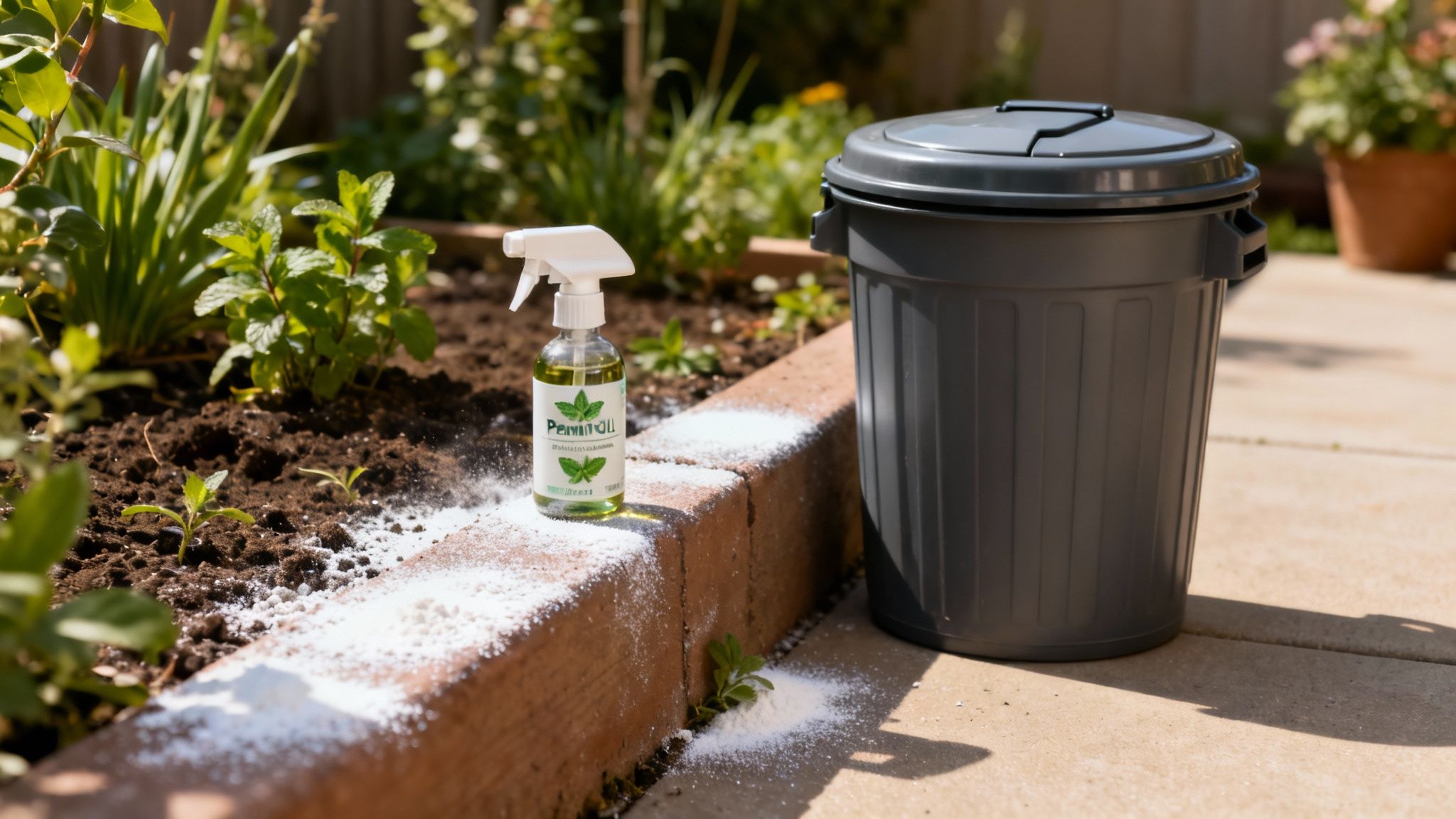
Diatomaceous Earth (DE) is a great tool, especially for dry areas. It is a fine powder made from fossilized organisms. It works by absorbing the oils from a cockroach's exoskeleton, causing it to dry out and die.
- Where to Apply It: Sprinkle a thin layer in dry, sheltered spots where you have seen roaches. Think under decks, in crawl space vents, and along the foundation under overhangs.
- A Critical Note: DE only works when it is completely dry. Our coastal fog can turn it into useless mud. It is important to apply it only in areas protected from moisture.
Expert Insight: When using DE, less is more. A light, barely-visible dusting is all you need. Cockroaches will walk around big piles, but they will cross a fine layer without knowing it is there.
Focus on Environmental Sanitation
The most powerful eco-friendly pest control method is simply keeping a clean outdoor space. Cockroaches are drawn to properties with easy access to food, water, and shelter. Take those away, and your yard becomes a much less appealing place for them.
This is the core idea behind modern pest control. It’s about creating long-term solutions, which you can learn more about in our guide to Integrated Pest Management techniques.
Your Outdoor Sanitation Checklist
Ready to make your property less roach-friendly? Here are the most important habits to adopt:
- Secure All Trash and Compost: Make sure your trash and compost bins have tight-fitting lids. A loose lid is an open invitation for a meal. Store the bins away from your home if possible.
- Eliminate Food Sources: Clean up potential food scraps. This means bringing pet food in at night, picking up fallen fruit from trees, and cleaning your barbecue grill.
- Manage Moisture: Do not let water pool anywhere. Check and empty birdbaths, saucers under potted plants, and old tires. Make sure sprinklers do not soak the ground near your foundation.
- Rethink Your Mulch: Wood mulch holds moisture and provides food for roaches. Consider using a 2-foot band of gravel or rubber mulch right up against your home’s foundation to create a dry zone.
By focusing on these safe and sustainable habits, you disrupt the cockroach life cycle without adding unwanted chemicals to your Santa Cruz environment.
Knowing When to Call a Pest Control Professional
DIY methods and eco-friendly sanitation are great first steps. But it is important to know when a roach problem has grown beyond simple fixes. Recognizing the signs of a serious infestation can save you frustration and stop an outdoor issue from becoming an indoor nightmare.
Knowing when to get professional pest control services is key to stopping a persistent problem fast. Sometimes, an infestation is just too large or too hidden to tackle on your own.
Red Flags That Signal It's Time for Help
Certain signs are giveaways that the cockroach population on your property is large and well-established. If you spot any of the following, you likely need a professional.
- Seeing Cockroaches During the Day: This is the biggest red flag. Cockroaches are nocturnal, so seeing them in daylight usually means their hiding spots are overcrowded. It is a sure sign of a major population.
- A Persistent, Musty Odor: A large cockroach infestation creates a distinct oily, musty smell. If you notice this around your foundation or deck, you likely have a significant problem.
- Finding Droppings Everywhere: Finding droppings in multiple spots suggests a high volume of roach traffic. This is especially true near potential entry points to your home.
Expert Insight: Cockroaches are survivors. They have been on our planet for over 280 million years. This long history is why they can be so hard to remove once they have settled in. Their evolutionary success is well-documented.
When Your Best Efforts Aren't Enough
Sometimes, the decision to call for help is simple: your efforts are not working. You have sealed cracks, cleaned up debris, and used diatomaceous earth, but the roaches keep coming.
If you have been trying to control the outdoor population for several weeks with no real improvement, it is time to bring in a professional. A licensed technician can spot the root cause you might have missed. For more guidance, check out our advice on when to call pest control.
The West Pest Co. Advantage
Calling a professional from West Pest Co. is about upgrading your strategy with expert knowledge. Our licensed technicians bring several key advantages to the fight.
- Expert Identification: We can quickly identify the exact species on your Santa Cruz property. This is vital because different roaches require different treatment plans.
- Targeted Eco-Friendly Products: We use professional-grade, eco-conscious products that are more effective and last longer than store-bought options, ensuring safety for your family and our local ecosystem.
- Comprehensive Strategy: We do not just treat the symptoms. We build a full plan that includes elimination, exclusion, and prevention tailored to your property.
Working with a professional saves you time, money, and stress, giving you lasting peace of mind.
Frequently Asked Questions About Outdoor Roaches
Seeing cockroaches on your patio can bring up a lot of questions. Here are straight answers to common concerns we hear from homeowners in Santa Cruz County.
Are outdoor roaches a sign of a dirty yard?
Not always. A messy yard with trash or leftover pet food can attract cockroaches. However, even the cleanest Santa Cruz properties can have them. Our mild, coastal climate is exactly what they love. The key is to manage moisture, clear out hideouts like woodpiles, and seal any cracks in your home.
What is the difference between indoor and outdoor cockroaches?
It comes down to where they prefer to live. Some species, like the German cockroach, are almost always found indoors. Finding one means you have an active infestation inside your home. On the other hand, American and Oriental cockroaches prefer to live in damp, dark spots in your yard. The trouble starts when they move inside for food, water, or shelter. Managing the outdoor population is your first line of defense.
If I kill one cockroach, will it attract more?
This is a common myth, and it is false. Squashing a single roach will not send out a signal to its relatives. However, you should see that one roach as a scout. Where there is one, there are almost certainly more hiding nearby. It is a clear sign that your property has the right conditions for an infestation.
How can I tell if outdoor cockroaches have moved inside?
The most obvious sign is seeing a live cockroach inside, especially in damp places like under a sink or in a bathroom. But they also leave more subtle clues:
- Droppings: Look for tiny black specks that look like coffee grounds in cabinets or along baseboards.
- Egg Casings: You might find brown, capsule-shaped egg casings, called oothecae, in dark, hidden spots.
- A Musty Odor: A large infestation can create an unpleasant oily or musty smell, especially in enclosed spaces like a pantry.
Finding any of these signs means it is time to take action.
Do yellow outdoor lights really help keep pests away?
Yes, they can make a difference. Many nocturnal insects, including some cockroaches, are drawn to the blue-white light from standard bulbs. Switching your porch lights to yellow "bug lights" makes your home's exterior less of a beacon for pests at night. It will not get rid of an existing infestation, but it is a smart part of a larger prevention strategy.
If outdoor roaches are already finding their way inside, cockroach control in Santa Cruz County from a professional can seal entry points and eliminate colonies before they establish indoors.
Dealing with a stubborn outdoor cockroach problem can be frustrating. If you’ve tried these methods and are still seeing pests, it may be time for professional help. The team at West Pest Co. has the local expertise to identify the source of your infestation and create a targeted, eco-friendly treatment plan that works for your Santa Cruz County home.
Don’t let roaches take over your yard. Schedule your free, no-obligation estimate with West Pest Co. today!