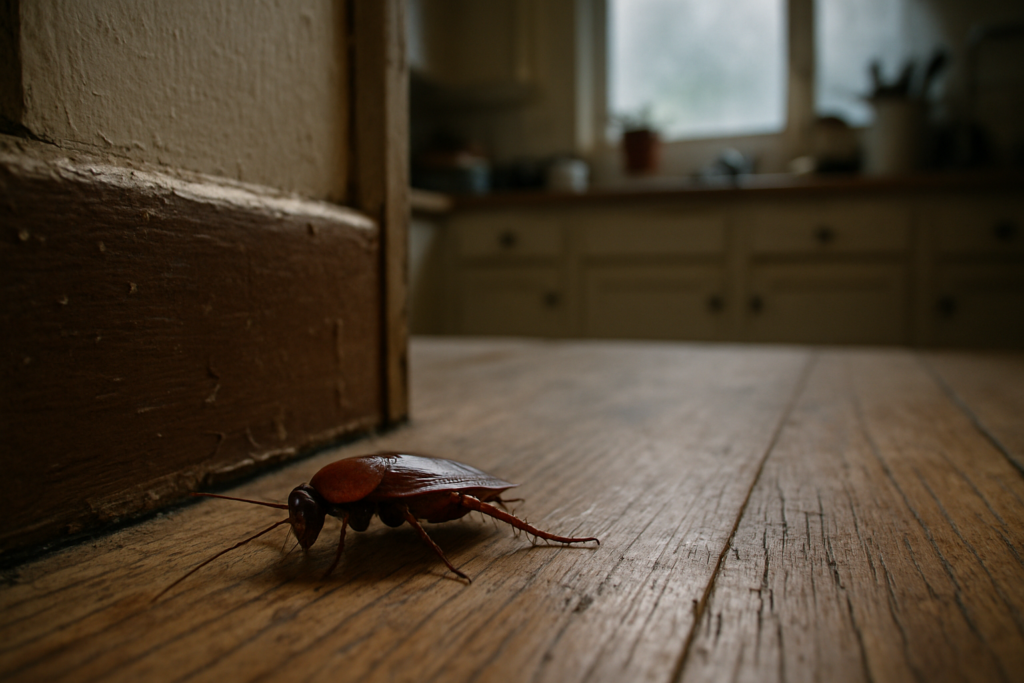
The best way to get rid of mice for good is to stop them from ever getting inside your home. It all comes down to two simple things: sealing up every possible entry point and removing their food sources.
A mouse can flatten its body to squeeze through a hole the size of a dime. Because of this, creating a physical barrier and keeping your home clean are the most effective, long-term ways to deter mice.
Why Santa Cruz Homes Are a Year-Round Magnet for Mice
Finding signs of mice in your home can be unsettling. It’s a common headache for homeowners all over Santa Cruz County. Unlike other places where rodents are just a fall and winter problem, our mild coastal climate gives mice the perfect environment to thrive all year.
From the lush gardens in Aptos to the open spaces around Scotts Valley, mice have constant access to food and shelter.
This means keeping mice out isn't just a seasonal chore for us—it’s a continuous effort. When the weather is nice, they live happily in our yards and gardens. But the moment a cold snap or heatwave hits, they look for a way inside our homes for stable temperatures and protection.
The Unique Pressures of Our Coastal Community
Living in Santa Cruz means we're surrounded by natural beauty, but that beauty comes with its own pest challenges. Our local environment is a big part of why mice are so persistent here.
- Abundant Food Sources: Fallen fruit in the backyard, open compost bins, and even bird feeders create a never-ending buffet for rodents.
- Plentiful Shelter: That dense ivy on your fence, the woodpile stacked against the house, or a cluttered garage are all ideal hiding spots right next to your home.
- Mild Climate: Mice here don’t hibernate. They breed all year long, leading to large populations that are always looking for new territory.
A single female mouse can have between 5 and 10 litters a year, with each litter containing up to a dozen pups. This is why a small mouse problem can quickly turn into a major infestation if you don't act fast.
Beyond the Nuisance: The Real Risks
Mice are more than just a creepy annoyance; they pose real risks to your property and your family’s health. They can carry diseases and contaminate countertops and food with their droppings and urine.
Worse yet, their need to gnaw can cause serious damage. They chew through electrical wiring, creating a dangerous fire hazard. They can also destroy insulation, wood, and drywall.
Understanding these local factors is the first step toward protecting your home. A proactive approach is always better than reacting to a full-blown infestation. You can explore the professional pest control Santa Cruz residents rely on to keep their homes safe.
Conducting a Professional-Level Home Inspection

Before you can get rid of mice, you have to think like a mouse. They are always looking for tiny, overlooked openings to squeeze through. A thorough home inspection is the most important first step to find and seal these weak spots.
This isn't a quick walk-around. Grab a good flashlight and be patient. Remember, a mouse can wiggle through a gap the size of a dime—that’s just a quarter of an inch. Your mission is to find every single crack, gap, and hole that small.
Where to Look Outside Your Home
Your outdoor inspection should focus on the foundation and any place a utility line enters your house. These are superhighways for mice entering homes across Santa Cruz County, from Capitola to Scotts Valley.
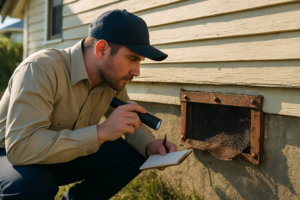
Start by walking the entire perimeter of your home, looking closely at the foundation. Pay extra attention to where different materials meet, like where wood siding connects to the concrete slab.
Next, check the utility lines. Carefully look where pipes for plumbing, gas lines, and electrical wiring go into the walls. Contractors often leave small, unsealed gaps around these entry points that welcome rodents.
Don’t forget these common trouble spots:
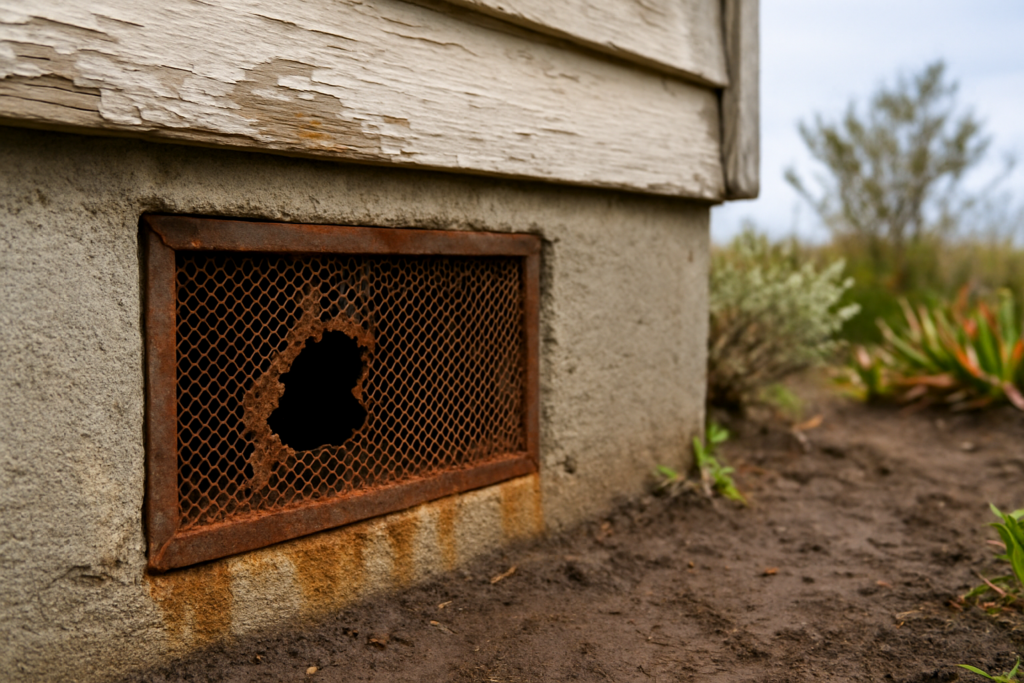
- Vents and Crawl Spaces: Make sure dryer vents have secure covers and crawl space vents have undamaged screens.
- Doors and Windows: Look for daylight under your doors. Check the weather stripping around all windows and the garage door for any damage or gaps.
- Roof and Eaves: Look up! Check for any openings where the roofline meets the walls, which is a common issue in older homes.
Top Entry Points for Mice in Santa Cruz Homes
Focus your inspection on these common weak spots that mice often use to get inside.
| Location | What to Look For | Recommended Sealant |
|---|---|---|
| Foundation Cracks | Any crack wider than a pencil, especially near corners. | Concrete patch or epoxy filler. |
| Utility Penetrations | Gaps around pipes, wires, and AC coolant lines. | Copper mesh stuffed into the gap, then sealed with caulk. |
| Garage Door Seals | Worn, cracked, or missing weather stripping at the bottom and sides. | New rubber or vinyl weather stripping. |
| Siding & Eaves | Gaps where siding meets the foundation or where eaves meet the roof. | Exterior-grade caulk or expanding foam. |
| Vents | Unscreened or damaged crawl space and attic vents. | 1/4-inch hardware cloth (metal screen). |
Checking these specific areas will greatly increase your chances of finding where mice are getting in.
Inspecting the Interior for Clues
Once you move inside, your goal is to find evidence of where mice have been. This shows you their travel routes and nesting spots, which helps you target your next steps.
Focus on dark, quiet places—like under sinks, behind the fridge, in the back of cabinets, and deep inside the pantry. Mice almost always travel along walls for security, so run your flashlight along the baseboards.
One of the biggest signs of a mouse highway is a greasy, dark smudge along a baseboard. These "rub marks" are created by the oils and dirt on a mouse's fur as it uses the same path over and over.
Keep an eye out for these other tell-tale signs:
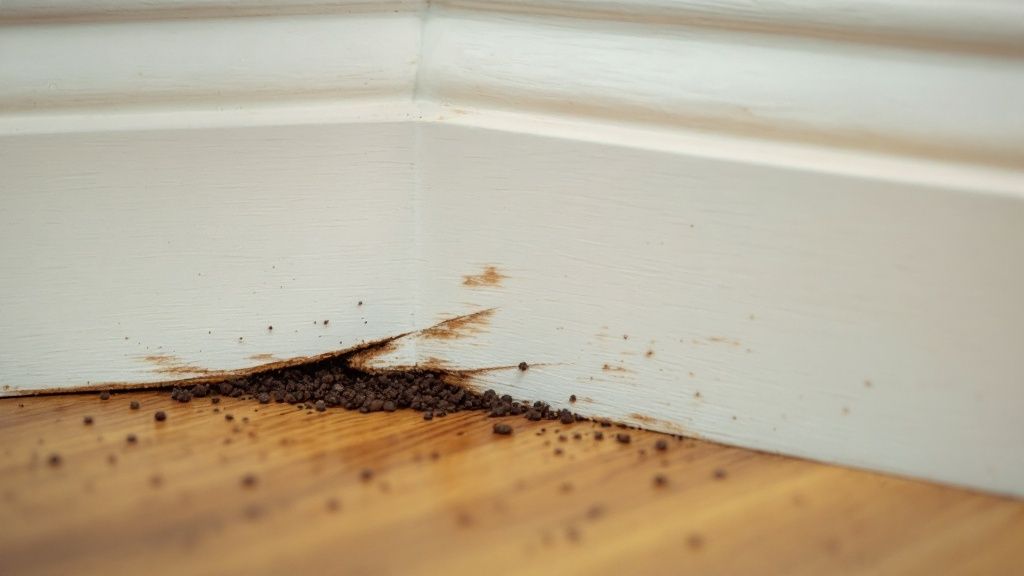
- Droppings: The most obvious sign. You're looking for small, dark pellets shaped like grains of rice.
- Gnaw Marks: Check for tiny chew marks on food packaging, wood trim, or electrical wires.
- Nests: Look for small piles of shredded paper, fabric, or insulation in hidden corners, drawers, or wall voids.
- Strange Noises: At night, listen for faint scratching or squeaking sounds coming from inside walls or ceilings.
A detailed inspection gives you a blueprint for your mouse-proofing strategy. If you want a professional to make sure nothing is missed, a home pest inspection in Santa Cruz can provide an expert-led plan.
Building Your Fortress: Sealing Entry Points
After your inspection, you have a map of every weak spot in your home's defenses. Now, it's time to take action. The most effective, long-term strategy for keeping mice out of your Santa Cruz home is Exclusion—physically blocking every potential entry point.
This isn’t about quick fixes. We're talking about creating a permanent, physical barrier that mice can't break through. Forget about flimsy materials like plastic, wood putty, or plain caulk; a mouse will chew through those. To do this right, you'll need the proper materials and some essential tools for home improvement.
Choosing the Right Materials
The secret is using materials that are completely chew-proof. Mice have strong teeth that can gnaw through many common building materials.
Here’s what really works for sealing gaps:
- Steel Wool or Copper Mesh: These are perfect for stuffing into small holes and gaps, especially around pipes. Mice hate the feel of these metals on their teeth and will give up.
- Hardware Cloth: This is a sturdy wire mesh, great for covering larger openings like crawl space vents. Use a mesh with openings no larger than 1/4 inch.
- Sheet Metal or Metal Flashing: For patching bigger holes in walls or along the foundation, sheet metal provides a barrier that mice can't get past.
- High-Quality Sealant: After you've stuffed a gap with steel wool or copper mesh, seal over it with a quality caulk or expanding foam. This locks the mesh in place and blocks drafts.
Pro Tip: Never use expanding foam by itself to fill a hole. Mice can chew right through it. It must be used with a chew-proof material like copper mesh.
This is a great example of using the right combination of materials to seal a common entry point at the foundation.
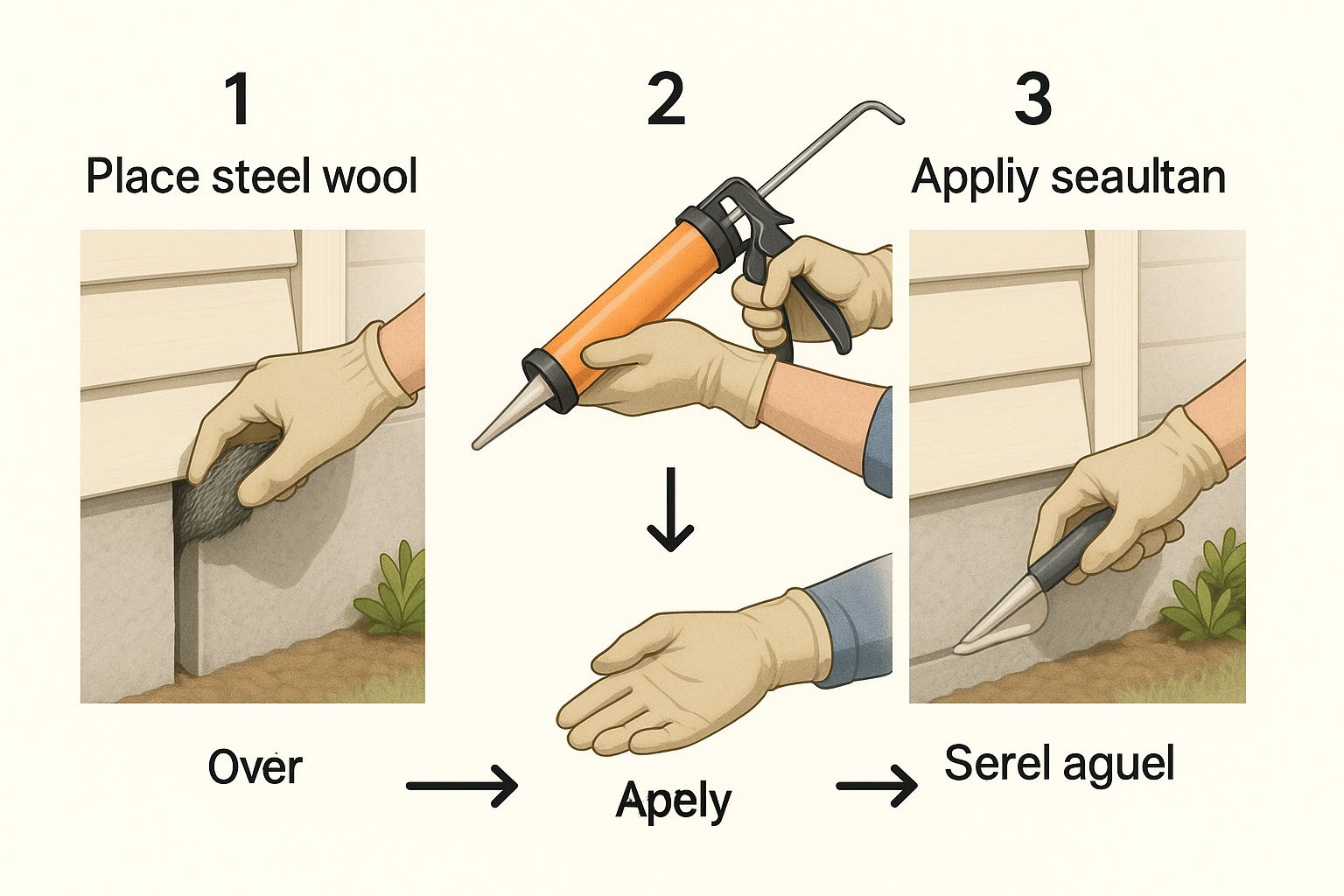
The key is a two-step process: first, fill the gap with something they can't chew. Second, seal it completely to create a durable, weatherproof barrier.
A Systematic Approach to Sealing
The best way to tackle this is to work from the ground up. Start at your home's foundation and seal every crack you found during your inspection. It might feel tedious, but it’s the most important part of the process.
According to a 2021 survey by the American Housing Survey, about 14.8 million homeowners reported seeing rodents in their homes. This shows why sealing holes as small as a quarter-inch is so vital for effective prevention.
Pay extra attention to where the wooden frame of your house sits on the concrete foundation. From there, move up to utility entry points, check your door sweeps, and inspect window frames. A systematic approach ensures you don’t miss a single weak spot.
Make Your Home Less Inviting to Rodents
A perfectly sealed home is a great start. But if you're still offering easy access to food and shelter, mice will keep trying to get in. Making your property less appealing is just as important for long-term prevention. This is about changing daily habits to eliminate what rodents are looking for.
These simple adjustments can make your home the last place any mouse wants to be.
Manage Outdoor Attractants
Your yard is the first place mice will check out. A few tweaks to your landscaping and storage can convince them to move on.
- Rethink Your Woodpile: Stacking firewood against your house is like building a rodent condo with direct access to your home. Keep woodpiles at least 18 inches off the ground and 12 feet away from your foundation.
- Trim Back Hiding Spots: Dense ivy, overgrown shrubs, and low-hanging tree branches give mice cover as they approach your house. Keep a 3-foot clear space between any plants and your foundation.
- Lock Down Food Sources: That bag of birdseed or dog food in the garage is an open buffet. Store all pet food and seeds in chew-proof containers made of metal or thick plastic with tight lids.
Eliminate Indoor Food and Nesting Sources
Once inside, a mouse doesn't need much to survive. Consistency is your best weapon here.
Start in the pantry. Cardboard boxes and thin plastic bags are no match for a mouse's teeth. Move dry goods—like cereal, pasta, and grains—into glass jars or metal containers. Make it a nightly routine to wipe down counters, sweep the kitchen floor, and wash all dishes. Don't leave snacks for unwanted guests.
Managing your trash is also a huge factor. If you're composting, using effective home composting techniques will help you manage waste without attracting every pest in the neighborhood.
Declutter and Organize Storage Areas
Clutter is a mouse's best friend. It provides hiding spots and nesting materials, allowing them to live and breed unnoticed. Garages, attics, and basements are prime real estate for them.
Tackle these areas by swapping cardboard boxes for heavy-duty plastic bins. Get things off the floor and onto sturdy shelves. When you reduce clutter, you take away their habitat and make it easier to spot early signs of a problem.
Natural Deterrents and Knowing When to Call for Help
Many homeowners in Santa Cruz County ask about natural ways to keep mice away, like peppermint oil or cedarwood. While these scents are pleasant, their effect on mice is temporary at best.
Strong smells might briefly discourage a mouse from a small, enclosed space like a cabinet. However, they aren't strong enough to drive an established mouse family out of your home. Think of them as a minor supplement, not your main defense. Real success always comes back to exclusion—physically sealing all entry points.
The Limits of DIY Mouse Control
Sealing gaps and keeping your kitchen clean are great first steps. But sometimes, a mouse problem can grow beyond what you can handle on your own. A few droppings in the garage are one thing; a full-blown infestation is another.
It’s time to call a professional if you see any of these red flags:
- Daytime Sightings: Mice are active at night. If you spot one during the day, it often means the hidden nests are overcrowded.
- Scratching in Walls: If you hear scratching, gnawing, or squeaking from inside your walls at night, mice have likely built nests deep inside your home's structure.
- Persistent Odors: A distinct, musky smell that won't go away is a classic sign of a large mouse population.
- Widespread Droppings: Finding fresh droppings every morning in multiple spots—like kitchen counters and the pantry—points to an active and growing infestation.
The Benefits of Professional, Eco-Friendly Help
When your DIY efforts aren't enough, calling a professional is the smartest and safest move. An expert can quickly spot all entry points, figure out the scale of the problem, and create a targeted, eco-friendly treatment plan that's safe for your family.
Instead of just scattering a few traps, a professional service like West Pest Co. delivers a complete solution. We focus on removal, total exclusion, and long-term prevention.
This approach ensures the current problem is solved for good and protects your home against future invasions. Understanding when to call pest control can save you time, stress, and money in the long run.
Frequently Asked Questions About Mouse Prevention
We get a lot of questions from homeowners across Santa Cruz County who are tired of dealing with mice. Here are straightforward answers to the most common ones.
Do ultrasonic pest repellers actually work?
Honestly, not very well. While the idea of a plug-in solution is nice, ultrasonic devices don't provide reliable, long-term results.
Mice might be startled by the sound at first, but they adapt quickly. Soon, they get used to the noise and go back to what they were doing. It's no substitute for sealing entry points and keeping your home clean.
I have a cat, so I shouldn't have mice, right?
A cat can be a good deterrent and might catch a mouse now and then, but it’s not a foolproof plan. A large mouse population will find hiding spots your cat can't reach, like inside walls or behind appliances.
Think of your cat as one layer of your defense, not the whole solution. Real prevention means getting to the root of the problem—how they're getting in and what they're eating.
Are newer homes in Scotts Valley or Capitola safe from mice?
You might think so, but no home is completely immune, no matter its age. In fact, new construction often disturbs existing rodent habitats. This sends mice scrambling for the nearest shelter, which is often a brand-new home.
Even modern houses can have tiny, unsealed gaps around plumbing, utility lines, and vents. Those small openings are all a mouse needs to get inside.
How do I know if I have mice or rats?
The quickest way to tell the difference is by looking at their droppings.
- Mouse droppings are small, pointed, and about the size of a grain of rice.
- Rat droppings are much larger, usually about a half-inch long with blunt, capsule-like ends.
If you see signs of rodents but aren't sure what you're dealing with, a professional inspection is the fastest way to get a clear answer.
What is the smallest hole a mouse can fit through?
This one surprises almost everyone. An adult mouse can squeeze through an opening the size of a dime—a gap of only a quarter of an inch. Their skeletons are very flexible, allowing them to flatten themselves to get through tiny cracks.
This is why a thorough inspection is so important. You have to seal every tiny crack and hole, because a mouse will take advantage of any opening you overlook.
Still have questions or feel like you're fighting a losing battle? The team at West Pest Co. is here to help you find a lasting, eco-friendly solution. Reach out today for a free estimate and take the first real step toward a mouse-free home.