Direct Answer: Rodent exclusion means finding every entry point on your home’s exterior, then sealing them in the right order — after confirming where rodents already are — so nothing gets trapped inside and the problem actually stays solved.
Most homeowners dealing with a rodent problem want the same thing: find out how they’re getting in, seal it up, and be done with it. That’s a completely reasonable ask. But what I see again and again is that people expect exclusion to be a quick fix — fill a hole, set a trap, problem solved.
The reality is a bit more layered than that, and the order of operations actually matters a lot. Done out of sequence, exclusion can make things worse. Done right, it’s the step that makes everything else — including trapping — actually work.
This article walks through exactly what the exclusion process looks like in Santa Cruz County homes: what gets inspected, what gets sealed, and why we don’t start sealing until we know what’s already inside.
Why the Inspection Comes First — and What It’s Actually Looking For
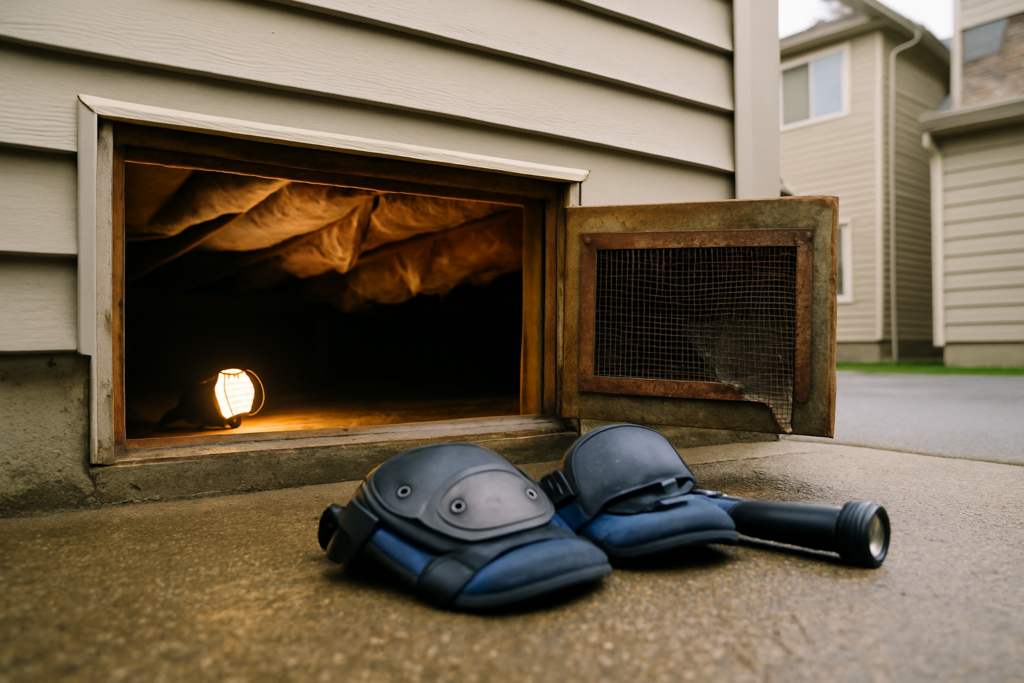
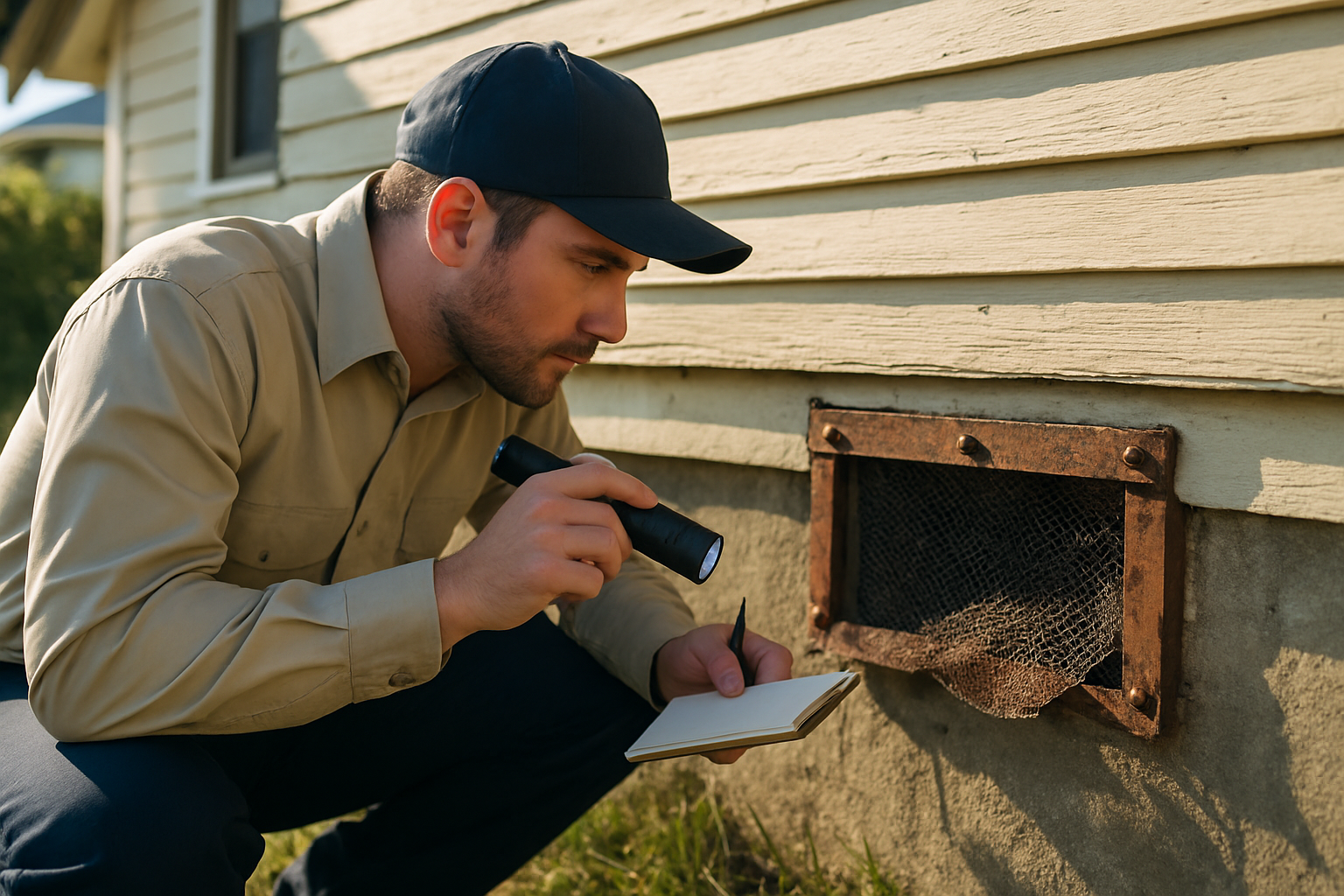
Before anything gets sealed, there has to be a thorough inspection of the entire exterior. That means crawlspace vents, utility penetrations, roofline gaps, and foundation edges — every place where a rat or mouse could squeeze through.
People are often surprised by what qualifies as an entry point. Rats can get through a hole the size of a quarter. Mice can fit through a gap about the diameter of a pencil. So even something that looks minor on the outside can be the main highway into your walls.
In Santa Cruz County specifically, the most common vulnerabilities I find are:
- Corroded crawlspace vent screens — especially in older homes in coastal neighborhoods like the Westside, Seabright, and Rio del Mar, where the salt air and fog accelerate rust faster than most people expect
- Unsealed utility penetrations — gaps left behind from mini-split installations, plumbing upgrades, and HVAC work are some of the most common entry points I find on homes less than 10 years old
- Open gaps along roofline fascia — where the fascia board has warped, separated, or simply wasn’t sealed, leaving a gap that rodents use to access attic spaces
One of the more memorable situations I’ve come across was a home where the entire attic was accessible through an open HVAC cavity — no screen, no seal, just an open channel running from the exterior wall into the insulation space above. The homeowner had no idea it was there.
For a deeper look at what a professional inspection covers beyond rodents, The Difference Between a Pest Inspection and a Regular Home Inspection breaks it down well.
Reading the Interior Evidence Before You Touch the Exterior
Once the exterior inspection is done, the next step is reading what’s happening inside — and this is the part most people don’t expect.
Droppings, gnaw marks, and rub stains (the greasy smudges rodents leave along walls and beams from repeated travel) all tell a story about where the animals are moving, where they’re nesting, and roughly how long they’ve been active. This interior evidence creates a map of the problem before any sealing begins.
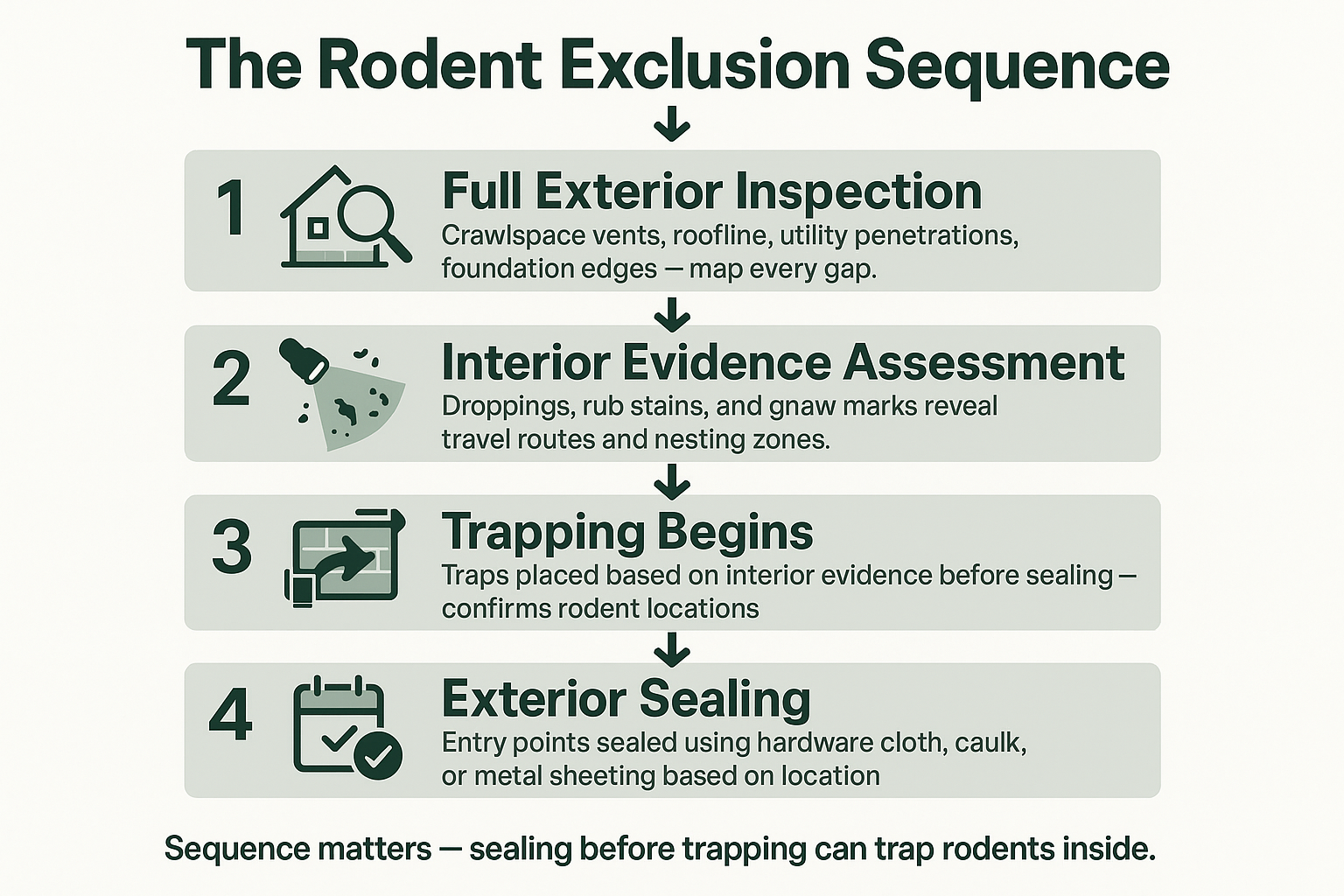
This step matters more than most people realize. If you seal the exterior before confirming where rodents currently are, you risk trapping animals inside the walls. A trapped rodent that can’t get out will die in the wall cavity — and then you’re dealing with a different problem entirely.
I’ve seen this happen when homeowners attempt exclusion on their own, using caulk and foam around the foundation before checking the crawlspace. They seal one end, don’t address the interior access, and the rodents just redirect to a different part of the structure.
If you’ve been hearing movement in the walls and want to understand what’s drawing rodents into that space, Rats in the Walls: What’s Actually Drawing Them Into Your Home covers the behavioral side of this well.
The Rodent Exclusion Sequence: Step by Step
Exclusion follows a specific order. Skipping steps — or doing them out of sequence — is why DIY attempts often fall short. Here’s how the process actually flows.
What Actually Gets Sealed — and With What
Once the interior picture is clear and trapping is underway, sealing the exterior is the next step. And the materials used matter — not all gaps get the same treatment.
Rodents can chew through foam, caulk, and even thin plastic. So the choice of material depends on where the gap is and how much pressure it’s likely to face.
Common sealing approaches include:
- Hardware cloth (steel mesh) — used over crawlspace vents and larger openings; rats cannot chew through properly installed galvanized mesh
- Sheet metal flashing — used along roofline gaps and fascia separations where a rigid barrier is needed
- Copper mesh or steel wool packed into gaps — used for smaller utility penetrations before a final caulk or foam layer is applied over the top
- Expanding foam alone — only appropriate for small gaps in low-pressure areas; never a standalone fix near rooflines or crawlspace entries
For utility penetrations — the gaps around plumbing pipes, conduit, and HVAC lines where they pass through exterior walls — the opening is usually much larger than the pipe itself. That gap gets packed and sealed in a way that’s permanent enough that a rodent can’t push through it.
The CDC guidance on rodent-proofing structures covers the basic principles behind material selection, and it aligns closely with what works in real field conditions here in Santa Cruz County.
What About Droppings, Insulation, and Cleanup?
A complete exclusion job often raises a follow-up question that homeowners don’t initially think to ask: what happens to the mess left behind?
Rodent droppings and contaminated nesting material aren’t just an unpleasant reminder that the animals were there. They’re also a health concern — rodent waste can carry hantavirus and other pathogens — and they leave behind scent trails that attract new rodents to the same areas even after the entry points are sealed.
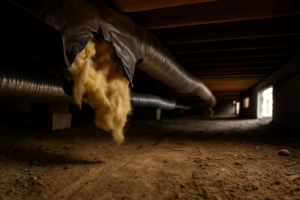
Several homeowners who’ve reached out to us have asked specifically about this. One described wanting a deep cleaning of droppings as part of the initial quote, and that’s a completely reasonable thing to ask about. Another asked about inspecting insulation and ductwork to determine whether replacement was needed after a rodent presence in the crawlspace.
Sanitation of contaminated material — safely removing droppings, soiled insulation, and nesting debris — is a meaningful part of a thorough exclusion job because it reduces the scent signals that draw rodents back. It also gives a clearer baseline to work from on any follow-up inspections.
If you’re in the early stages of figuring out what you’re dealing with, What Do Pest Inspectors Look For That Homeowners Usually Miss? is worth a read before you call anyone.
Common Entry Points in Santa Cruz County Homes
These are the vulnerabilities that come up most often during exclusion work in this area — and how they’re typically addressed.
| Entry Point | Why It’s Common Here | Typical Fix |
|---|---|---|
| Corroded crawlspace vent screens | Coastal fog and salt air rust mesh faster than inland climates; older homes often have original screens from the 1960s–80s | Replace with galvanized hardware cloth, properly framed |
| Utility penetrations (HVAC, plumbing) | Mini-split installs and plumbing upgrades often leave gaps around new penetrations | Pack with copper mesh, seal with appropriate caulk or metal collar |
| Roofline fascia gaps | Wood warps over time; coastal homes see more expansion and contraction | Sheet metal flashing or rigid foam board, depending on gap size |
| Foundation vents without screens | Some older homes have open foundation vents or screens that have fully deteriorated | New vent covers with integrated steel mesh |
| Open HVAC cavities | Renovation work sometimes leaves interior HVAC pathways exposed to exterior walls | Metal sheeting and sealant to close the channel entirely |
Why Exclusion Is What Makes Trapping Actually Work
Trapping without exclusion is a treadmill. You catch a rat, another one finds the same gap a week later, and the cycle continues. I hear this from homeowners all the time — they tried trapping on their own and couldn’t figure out why the problem kept coming back.
One of our customers described exactly the outcome that exclusion is meant to produce: Matthew’s inspection found one previously unknown access point, sealed it, placed traps inside, and returned a week later to find empty traps. That’s what success looks like — not just catching what’s currently inside, but closing the door so nothing new comes in.
Exclusion is the step that gives trapping a finish line. Without it, there isn’t one.
If you’re trying to understand whether what you have is a minor problem or something more established, The Difference Between a Rodent Problem and a Rodent Infestation can help you calibrate before you decide how to respond. And if you’ve already tried handling it yourself without success, When Should You Stop Trying to Handle a Pest Problem on Your Own? is a straightforward read on when it makes sense to call a professional.
Frequently Asked Questions About Rodent Exclusion
How much does rodent exclusion typically cost in Santa Cruz County?
Costs vary quite a bit depending on how many entry points need to be addressed, whether insulation or ductwork is involved, and how accessible the crawlspace and roofline are. A basic inspection and sealing of a small number of entry points is a very different scope than a full crawlspace exclusion with sanitation work. Many Santa Cruz County homeowners see exclusion jobs fall somewhere in a broad range depending on those factors — the best way to get a real number is to have someone actually look at the structure. West Pest Co. can give you a clear quote after an on-site assessment.
Can I just seal the holes I can see and skip the inspection?
You can try, but it usually doesn’t hold. The gaps that are easy to spot from the outside are rarely the only ones. And if rodents are already inside when you seal, you’ve created a different problem. An inspection first maps both what’s outside and what’s already active inside — that’s what makes the sealing permanent rather than temporary.
How do I know if rodents are still active inside after sealing?
Traps placed along known travel routes are the most reliable indicator. If traps are active after sealing, there are rodents that were already inside when the entry points were closed. That’s expected — it’s why trapping and sealing happen together, not in sequence. A follow-up visit to check traps and confirm activity has stopped is a standard part of a complete exclusion job.
What if the entry point is on the roof or in the attic? Is that harder to fix?
Roofline exclusion is more involved than foundation work — it requires safe roof access and the right materials for a weatherproof seal. But it’s a common part of exclusion work in Santa Cruz, especially in older homes where fascia boards have warped or separated over time. It’s not a reason to avoid the work; it just means the job needs someone comfortable working at height with the right materials.
Does exclusion mean I won’t have rodents again?
Exclusion significantly reduces the likelihood of re-entry by closing the specific pathways that rodents were using. But no home is perfectly sealed forever — materials age, new gaps develop, and rodent pressure from the surrounding environment continues. That’s why annual inspections are worth doing, especially in areas with active wildlife corridors or dense vegetation. The goal is a well-sealed home that’s much harder to enter — not a promise that nothing will ever try.
Ready to Find Out Where Rodents Are Actually Getting In?
West Pest Co. handles rodent exclusion throughout Santa Cruz County — from the Westside to Aptos, Scotts Valley, Watsonville, and everywhere in between. Matthew West has been voted Best Pest Control in Santa Cruz two years running (Readers Choice 2023 and 2024) and brings the same hands-on approach to every inspection. If you’re hearing activity in the walls or just want to know what your home’s vulnerabilities look like, call (831) 430-8402 or visit westpestco.com to get started.