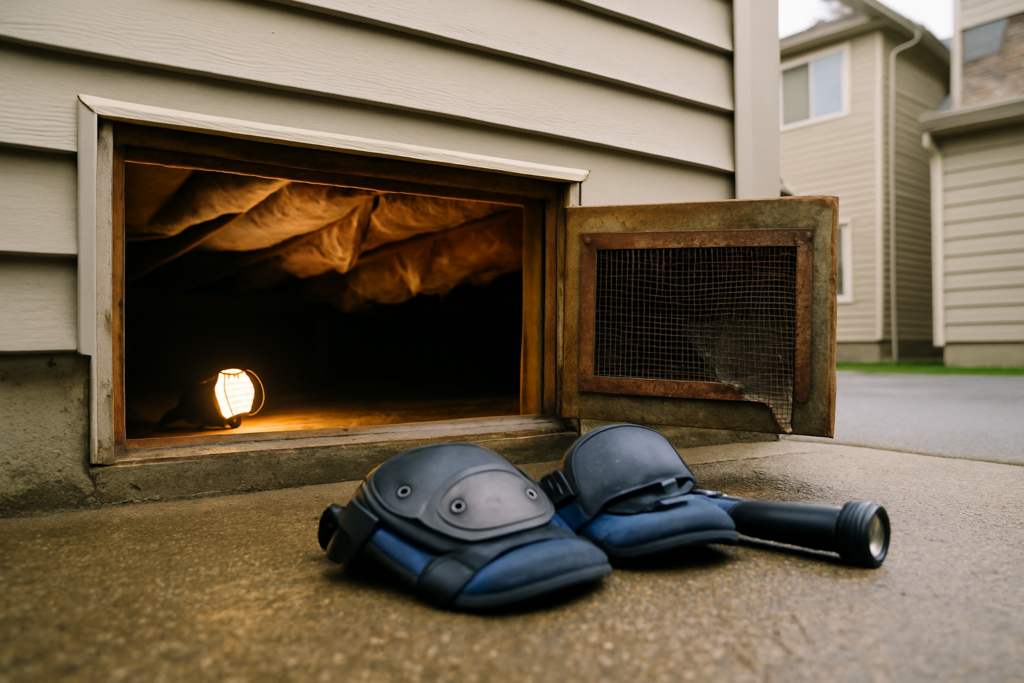
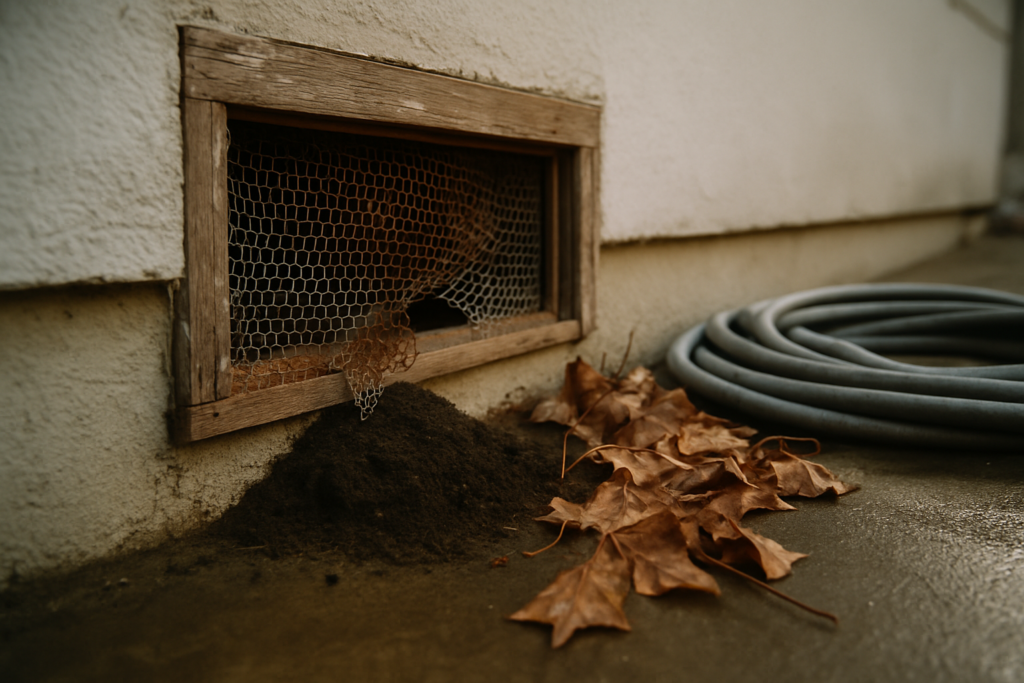
When it comes to stopping cockroaches before they start, your game plan boils down to three simple, yet powerful, strategies: sanitation, exclusion, and moisture control. If you take away their food, block their entryways, and dry up their water sources, you make your home completely unlivable for them. It’s a proactive approach that’s always more effective than dealing with a full-blown infestation later.
Your First Line of Defense Against Cockroaches
Before you can win the war against roaches, you need to build a rock-solid defense. The key is to think like a cockroach. What do they need to not just survive, but to thrive in a home? The answer is always the same: food, water, and shelter. This is your blueprint for denying them those essentials.
Forget generic advice. We’re talking about simple, consistent habits that can turn your home into a fortress against these pests. This isn’t about reacting in a panic; it’s about strategic prevention, starting with actions you can take tonight.
The Core Prevention Pillars
Your entire prevention strategy rests on mastering these three pillars. Get these right, and you’ll drastically cut your risk of ever seeing a roach.
- Sanitation: This is more than just being tidy. It’s about creating an environment so clean that a roach can’t find a single crumb to eat.
- Exclusion: Think of this as building a fortress. Your job is to find and seal every tiny crack, gap, or hole that a roach could squeeze through to get inside.
- Moisture Control: Cockroaches can survive for a month without food, but only about a week without water. This makes fixing leaks and getting rid of dampness absolutely critical.
The data below really drives home just how important your daily habits are, especially when it comes to sanitation and moisture.
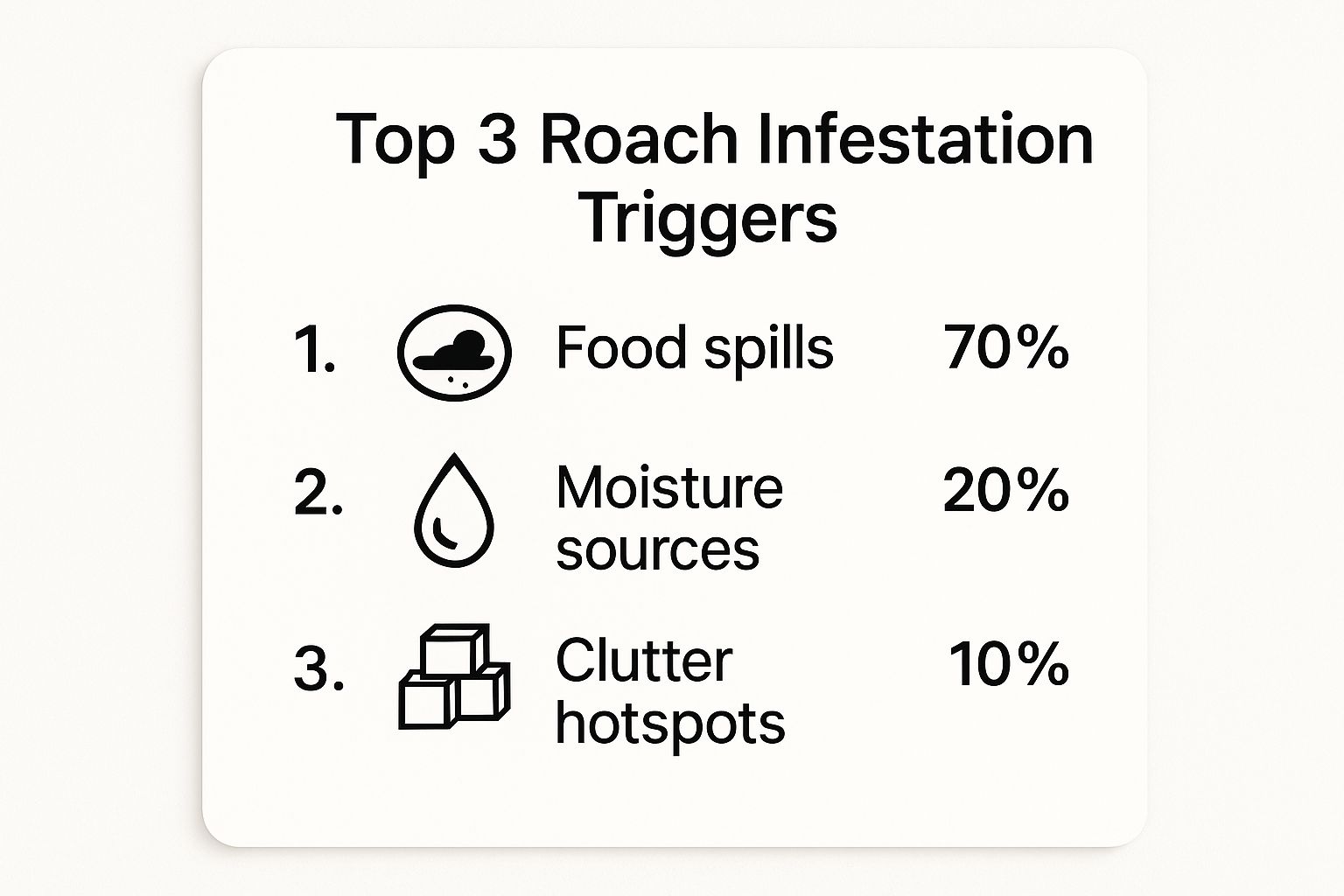
As you can see, what you do in your kitchen and bathrooms every day is your most powerful weapon in this fight.
To make this crystal clear, here’s a quick summary of how these pillars work together.
Core Roach Prevention Strategies At a Glance
| Prevention Pillar | Primary Goal | Key Actions |
|---|---|---|
| Sanitation | Eliminate Food Sources | Daily kitchen clean-ups, storing food in airtight containers, taking out the trash regularly. |
| Exclusion | Block Entry Points | Sealing cracks in walls, gaps around pipes, and spaces under doors and windows. |
| Moisture Control | Remove Water Access | Fixing leaky faucets and pipes, using dehumidifiers in damp areas, ensuring proper drainage. |
By tackling all three areas, you create a comprehensive defense that leaves no room for roaches to get comfortable.
Why a Proactive Approach Is Non-Negotiable
Cockroaches are incredibly resilient, which is why they are a challenge for homeowners across the globe. Estimates suggest there are trillions of them, and they flourish anywhere sanitation is lacking. The real problem is their breeding speed. A single German cockroach can lay several egg cases in her short life, and each one can contain up to 50 eggs. That’s how a small problem explodes into a massive one in just a few months.
Expert Insight: I’ve seen it time and again. You can have the cleanest home on the block, but if you share a wall with a neighbor who has an infestation, you’re still at risk. That’s why exclusion—physically sealing every possible entry point—is just as crucial as keeping your kitchen spotless.
Focusing on just one thing, like cleaning, while ignoring a leaky pipe under the sink or a gap under your front door, just won’t cut it. A truly effective defense has to be multifaceted. For homeowners who want that extra layer of security, learning about professional preventative pest control can provide year-round peace of mind and reinforce all the hard work you’re putting in.
Mastering Sanitation for a Roach-Free Zone
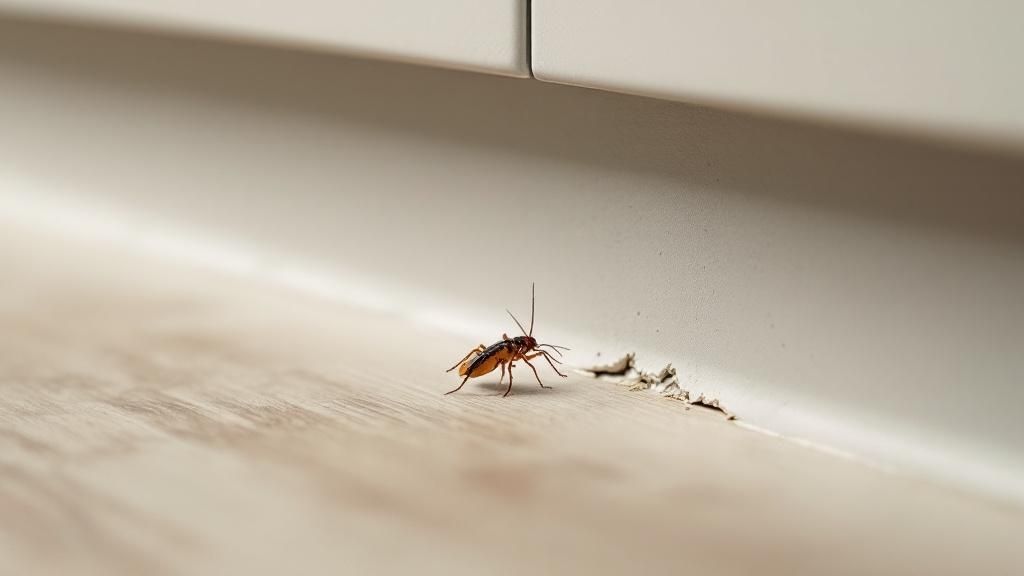
If you want to keep roaches out, your prevention strategy has to start in the kitchen. But this goes way beyond just wiping down the counters. To create an environment where cockroaches simply can’t thrive, you need to think like a roach and get serious about eliminating every last food source. A single crumb is enough to feed a roach for days, so a detailed approach is non-negotiable.
This means looking past the obvious surfaces and hunting down the hidden spots where food debris inevitably collects. Think about all the places you don’t look at every day. Your goal is to turn your kitchen into a sterile desert from a pest’s point of view.
The Kitchen Lockdown Routine
One of the most powerful habits you can build is a nightly “kitchen lockdown.” Before heading to bed, a quick, systematic sweep to remove all temptations can turn your kitchen from a 24/7 roach buffet into an empty restaurant.
Your nightly checklist should be second nature:
- Wipe all surfaces: Countertops, the stovetop, and the dining table are musts. Use a good cleaning spray to cut through any grease residue, which is a major roach attractant.
- Sweep or vacuum the floor: Get into the habit of checking under cabinet edges and around the stove and fridge. This is where crumbs love to hide.
- Wash all dishes: Never, ever leave dirty dishes in the sink overnight. If you have a dishwasher, either run it before bed or at least rinse the dishes well and shut the door tight.
- Dry the sink: Roaches need water just as much as they need food. A quick wipe-down of the sink basin eliminates one of their primary water sources.
A Pro’s Perspective: I’ve been in countless homes where the owners insisted they kept things clean, only for me to find a sticky layer of grease and crumbs behind the stove or under the toaster. Roaches are experts at finding these forgotten feasts. A quick two-minute check of these hidden zones each night makes a world of difference.
This routine isn’t about achieving perfection—it’s about consistency. Making this a daily habit is a cornerstone of any effective roach prevention plan.
Uncovering Hidden Crumb Zones
Cockroaches are master scavengers, and they thrive in the exact places we tend to forget. A truly deep clean means going beyond the visible and targeting their favorite hiding and feeding spots.
Make a point to check these often-overlooked areas:
- Underneath Appliances: Carefully pull out your refrigerator, stove, and dishwasher every few months. You will probably be shocked by how much food debris has gathered back there.
- Inside Small Appliances: Toasters, toaster ovens, and microwaves are notorious crumb traps. Unplug them, then give them a good shake over the trash can and wipe down the interior and the crumb tray.
- Pantry and Cabinet Shelves: A little spilled flour, sugar, or stray cereal can become a banquet for pests. Wipe down your shelves regularly and keep an eye out for any spills you might have missed.
Smart Food and Waste Management
How you store your food and manage your trash is just as critical as your cleaning habits. Roaches have an incredible sense of smell and will zero in on poorly stored food and overflowing garbage cans.
Airtight containers are non-negotiable. Cardboard boxes and thin plastic bags are no match for a determined roach. Get in the habit of transferring all your pantry staples—like cereal, flour, pasta, and especially pet food—into sealed glass or hard plastic containers. It keeps pests out and your food fresher, too.
Proper trash management is another key battleground.
- Use Bins with Lids: Both your indoor kitchen trash can and your outdoor bins need to have tight-fitting lids. No exceptions.
- Take It Out Nightly: Don’t let kitchen trash sit in your home overnight. Make removing it a final step in your lockdown routine.
- Position Outdoor Cans Correctly: Keep your outdoor garbage bins several feet away from your home’s foundation. Placing them right up against the house is like building a bridge for pests to march right inside.
Finally, remember that a clean home is far easier to maintain when it’s free of clutter, which gives pests endless places to hide. Learning how to declutter your home will make all of your sanitation efforts more effective and sustainable.
Building a Fortress to Keep Roaches Out

Even the cleanest home is at risk if roaches have an open invitation. While a spotless kitchen starves them out, exclusion is what truly locks them out for good. It’s the art of building a fortress, and it’s a non-negotiable step in preventing a roach problem before it starts.
Think of your home as a castle. Every unsealed gap is a potential breach in your defenses. A cockroach can flatten its body to squeeze through a crevice as thin as a quarter, so a thorough inspection is your first mission. You have to examine your home from the outside in, hunting for any little imperfection that could serve as an entryway.
Your Exterior Inspection Checklist
Start by walking the perimeter of your house with a critical eye. Don’t just glance; get up close and personal. You’re looking for the subtle weak points that pests are experts at exploiting. Pay special attention to anywhere different building materials meet, as these spots are notorious for developing gaps over time.
Your primary targets on the outside include:
- Foundation Flaws: Look for any cracks or holes in the foundation, no matter how small. These are direct highways into your walls and crawl spaces.
- Utility Entry Points: Check where pipes, electrical wiring, and AC lines enter your home. The penetrations often have gaps around them that are practically a welcome mat for roaches.
- Window and Door Frames: Inspect the seals around every single window and door. Worn-out weather stripping or cracked caulk is an easy access point.
- Weep Holes in Brick: These small drainage holes are necessary for your home, but they can also be roach entryways. Stuff them with copper mesh to block pests while still allowing for critical airflow.
Field Note: I once worked with a client who was frustrated by a persistent roach problem despite having a pristine home. The culprit? A tiny, quarter-sized gap around the outdoor water spigot. Sealing that one spot, which took less than five minutes, solved an issue they’d been battling for months.
This exterior check is your first—and most important—line of defense. Sealing these outdoor gaps stops roaches before they ever get a chance to see what’s inside.
Fortifying Your Home’s Interior
Once you’ve secured the perimeter, it’s time to move the hunt indoors. You’re now looking for any vulnerabilities roaches could use to travel between rooms or from shared walls in an apartment building. This internal lockdown is just as crucial.
Your interior search should focus on the hidden, dark areas where roaches feel safe. Grab a flashlight and check behind and under appliances, sinks, and cabinets.
Common interior weak spots are:
- Plumbing Penetrations: Look for gaps around pipes under every sink in your kitchen and bathrooms. The escutcheon plates that cover these holes are often just for show and can hide significant gaps behind them.
- Behind Appliances: This is a big one. Pull out your stove and refrigerator to check where the gas or water lines go into the wall and seal any openings you find.
- Attic and Crawl Space Vents: Make sure these vents are covered with a fine mesh screening to keep pests out.
For sealing these gaps, choose your materials wisely. Durable silicone caulk is excellent for sealing cracks along baseboards and around window frames. For larger holes or gaps around pipes, steel wool or copper mesh is a fantastic choice because roaches can’t chew through it. Just pack the hole with the steel wool and then seal over it with caulk or spray foam for a permanent fix.
Don’t Overlook These Sneaky Entry Points
Some of the most common roach entryways are the ones we use every single day. Don’t forget to inspect these often-overlooked spots that can undermine all your hard work.
| Common Gateway | Prevention Action | Why It Matters |
|---|---|---|
| Under Doors | Install door sweeps on all exterior doors. | Even a tiny gap at the bottom of a door is like a wide-open invitation for pests. |
| Dryer Vents | Ensure the exterior vent cover has a flap that closes securely. | A damaged or open dryer vent is a major highway for roaches seeking warmth and shelter. |
| Garage Doors | Check the rubber seal at the bottom and replace it if it’s cracked or worn. | Garages are often cluttered and provide direct, easy access to the rest of the house. |
These simple fixes can have a huge impact. By combining this fortress-building approach with other control methods, you create multiple layers of powerful defense. For those interested in enhancing their strategy, exploring a guide on natural cockroach deterrents can add another repellent barrier to your newly sealed home.
Eliminating Hidden Water and Shelter Spots
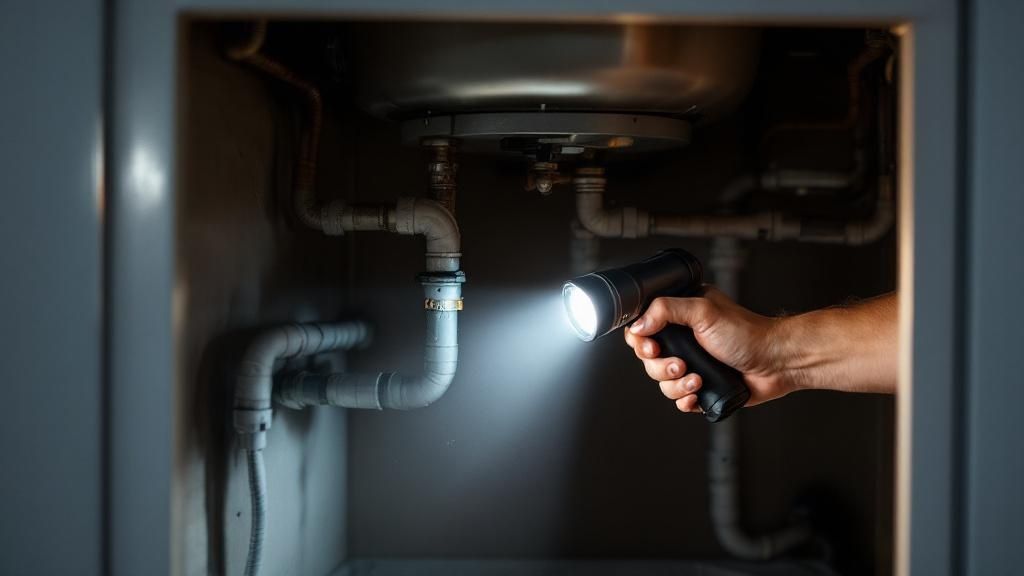
While food is what most people focus on, it’s water that roaches truly can’t live without. A cockroach can go a month without eating, but it will be dead in about a week without water. This makes moisture control one of the most powerful, yet frequently overlooked, tools in your cockroach prevention arsenal.
Think of it this way: every hidden leak, drip, and damp spot in your home is a private oasis for roaches. It’s where they drink, breed, and thrive, often completely out of sight. It’s time to go on a water hunt.
The Hunt for Hidden Water Sources
Grab a flashlight and start your search in the usual suspect areas: kitchens and bathrooms. Get on your hands and knees and look deep into the cabinet under your kitchen sink. You’re searching for slow drips from the pipes, condensation on the cold water line, or tiny puddles that signal a bigger issue.
Do the same for every bathroom in the house. Check the base of your toilets for any hint of water seepage and inspect all the plumbing under each sink. Appliances are major culprits, too.
- Refrigerator: The drip pan underneath is a common problem spot. Also, make sure the ice maker line isn’t leaking.
- Washing Machine: Check the hoses for any cracks or loose fittings that might be causing a slow, sneaky leak.
- Air Conditioning Units: A clogged AC drain line is a constant source of moisture. Ensure it’s clear and draining properly.
Fixing these hidden leaks is absolutely critical. For a deeper look at keeping your plumbing in top shape, you might find some great takeaways from this guide on comprehensive plumbing tips and services.
Managing Humidity and Condensation
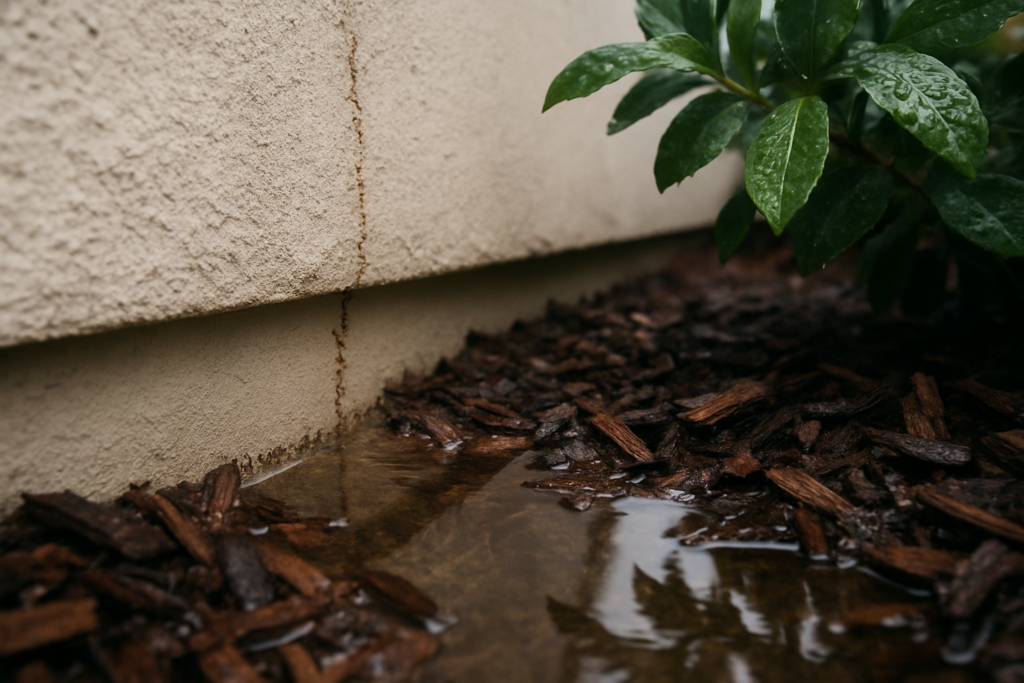
It’s not just about active leaks. High humidity alone can create enough moisture for roaches to survive. This is precisely why basements, crawl spaces, and bathrooms without good ventilation become prime real estate for infestations.
Improving your ventilation is key. Always run the exhaust fan during and for at least 20-30 minutes after a shower to pull all that damp air out. For those perpetually clammy areas like a basement, a good dehumidifier can be a game-changer, turning a five-star roach resort into a dry, inhospitable desert.
Decluttering to Destroy Roach Habitats
Once you’ve cut off their water supply, the next target is their shelter—what we in the business call harborage areas. Roaches are thigmotactic, which is a fancy way of saying they love being squished into tight, cramped spaces where they can feel surfaces above and below them. Your clutter is their paradise.
Garages, attics, and closets are often the worst offenders. That stack of old newspapers, the mountain of cardboard boxes from your last move, or piles of junk are all luxury hotels for cockroaches.
Expert Takeaway: Cardboard is public enemy number one. Roaches don’t just use it for shelter; the glue in corrugated cardboard is a food source. Even worse, they lay their egg cases (oothecae) inside the little corrugated flutes, turning your storage into a cockroach nursery.
It’s time for a systematic decluttering mission. The goal is to eliminate anything that provides those dark, tight, undisturbed spaces they crave.
- Cardboard and Paper: Ditch all cardboard storage boxes and switch to sealed plastic bins. Recycle old magazines and newspapers right away—don’t let them pile up.
- Storage Areas: Go through your attic, basement, and garage. Get things organized and up on shelves, away from the floor, to remove those ground-level hiding spots.
- Firewood: If you keep firewood, store it at least 20 feet from your house and make sure it’s elevated off the ground.
By taking away their shelter, you force roaches out into the open, making them more vulnerable and your home a much less appealing target. This has a major health benefit, too. Cockroaches are known vectors for parasites; one study of roaches in food-handling environments found that a staggering 46.4% carried parasitic infestations. When you eliminate their habitats, you dramatically reduce their ability to spread pathogens throughout your home.
Why Your Prevention Strategy Must Evolve
To truly win the battle against roaches, you have to think like your opponent. And let’s be clear: the common cockroach isn’t just some random bug. It’s a master of survival, practically engineered over millennia to live right alongside us. Its incredible resilience is exactly why a one-and-done approach, like grabbing a can of bug spray from the store, almost always fails in the long run.
Sure, a quick spray might kill the few roaches you see scurrying for cover. But what about the dozens, or even hundreds, hiding in the walls? What about their egg cases, which are built like tiny armored vaults? This is an enemy that learns and adapts. Over time, entire roach populations can develop resistance to common chemicals, making your go-to products completely useless. This isn’t a guess; it’s a documented biological reality.
An Ancient and Resilient Invader
The German cockroach, one of the most frequent trespassers in our homes, has been our unwanted roommate for a very long time. Its knack for spreading and adapting is a huge reason why keeping them out feels like such a constant struggle.
It’s a fascinating, if unsettling, history. Genetic studies show that the German cockroach began its world tour about 2,100 years ago in South Asia. From there, it hitched rides with humans, spreading west into Europe and then across the globe, perfectly mirroring our own travel and trade routes. This long journey has given them a massive genetic playbook, allowing different groups to mix, mingle, and share valuable traits—including resistance to whatever we throw at them. You can dive into the published research on their evolutionary path to see the full story.
The map below paints a clear picture of the two main routes this pest took to achieve its global takeover.
This just goes to show how roaches have perfected the art of travel, using us as their unwitting chauffeurs for centuries to colonize new territories.
This deep-rooted survival instinct is precisely why your prevention strategy can’t be static. You have to think beyond simply killing them. The goal is to create an environment where they just can’t thrive.
Key Insight: A roach doesn’t care what brand of spray you use if it can find a leaky pipe under the sink and a few crumbs behind the stove. Its needs are simple and universal, and a successful strategy has to cut off everything it needs to survive, all at once.
The Integrated Pest Management Approach
Because roaches are so incredibly adaptive, the only reliable, long-term solution is a multi-layered strategy known as Integrated Pest Management (IPM). This isn’t about a single product; it’s a completely different way of thinking that combines sanitation, exclusion, and smart, targeted treatments. It’s about building layers of defense that all work together.
This is the exact strategy we’ve been building throughout this guide.
- Sanitation: You’ve learned how to cut off their food and water.
- Exclusion: You’ve sealed up all their secret entry points.
- Monitoring: You know how to spot the earliest warning signs.
Now that you understand their ancient resilience, you can see why this integrated approach is the only way to go. You’re fighting a dynamic pest, so you need a dynamic defense.
Your Top Roach Prevention Questions Answered
Even with the best game plan, some questions always seem to pop up. You’ve sealed every crack you can find and your kitchen is spotless, but you’re still worried. Believe me, you’re not the only one. Let’s tackle some of the most common head-scratchers homeowners face when they’re serious about getting rid of roaches for good.
Getting these details right is often the final piece of the puzzle, turning a temporary fix into a permanent solution.
Do Natural Roach Repellents Actually Work?
This is a big one, especially for homeowners looking for eco-friendly pest control. While some natural substances like peppermint oil, cedarwood oil, or bay leaves can be mildly annoying to roaches, their power is limited. They might discourage a roach or two from exploring a small area, like a cabinet shelf, but they absolutely will not create a real barrier or get rid of an infestation.
Think of them as a tiny supplement to your main strategy, not a replacement. For real, lasting prevention, you have to stick to the fundamentals: sanitation, exclusion, and moisture control.
Why Am I Still Seeing Roaches in a Clean House?
This is easily the most frustrating situation a homeowner can run into. If your cleaning routine is truly on point, the problem almost always comes down to one of two things: gaps in your exclusion efforts or a problem coming from a neighbor.
In apartments, townhomes, and duplexes, roaches are experts at traveling through shared walls, plumbing, and vents. They couldn’t care less about property lines. This is where you have to get serious about sealing every single entry point, from the gap around the pipe under your sink to that tiny crack along the baseboard. It’s also worth doing another deep dive for hidden water sources. Even a spotless home can have a tiny, slow leak that’s a magnet for pests next door.
Expert Insight: I’ve walked into homes that were immaculate, but the client was still seeing roaches because of a chronic issue in the unit next door. In these scenarios, sealing every interior pipe penetration and wall void is the single most important thing you can do. You’re essentially building a fortress inside a fortress.
How Long Does a Prevention Plan Take to Work?
How quickly you see results really depends on how bad the problem was to start and—most importantly—how consistent you are.
- For a minor issue: If you’ve only spotted one or two roaches, you should see them disappear within one to two weeks of being really strict with your cleaning and sealing.
- For an established infestation: It takes longer to break the breeding cycle of a larger population. You’re likely looking at several weeks to a few months of consistent effort to truly wipe them out.
Consistency is everything. Just one night of leaving dirty dishes out or forgetting to empty the trash can be enough to sustain them and set your progress back. Stay on top of it, and you’ll see the results.
Don’t let roaches ruin your peace of mind. If you’re dealing with a stubborn problem or just want a professional to lock down your home’s defenses, West Pest Co. provides reliable, eco-friendly solutions designed for your property. Get a free inspection and customized plan today!
For a roach problem that keeps coming back despite your best efforts, Santa Cruz cockroach extermination from a licensed professional targets the harborage sites DIY products rarely reach.