Direct Answer: Most ant treatments fail because they kill foragers but never reach the colony. Argentine ants — the dominant species on California’s Central Coast — maintain satellite colonies and can relocate queens when threatened, which is why ants keep coming back after treatment.
I hear the same thing constantly from homeowners across Santa Cruz County: they’ve tried the sprays, maybe even hired a company, and the ants were back within a few weeks. One homeowner in Watsonville described it perfectly — she’d had a returning ant problem in her kitchen that started the previous summer, tried everything she could think of, and was finally out of patience. Another customer wrote in saying they’d had a terrible ant infestation for months and their own efforts had completely failed.
That kind of frustration is almost always traceable to the same root cause — and it’s not that pest control doesn’t work. It’s that the most common approaches target the wrong part of the problem.
This article is about what’s actually happening inside those ant colonies, why Santa Cruz’s coastal climate makes this problem worse than it is almost anywhere else in California, and what a treatment approach looks like when it’s actually designed to reach the source.
The Real Reason Ants Keep Coming Back After Treatment
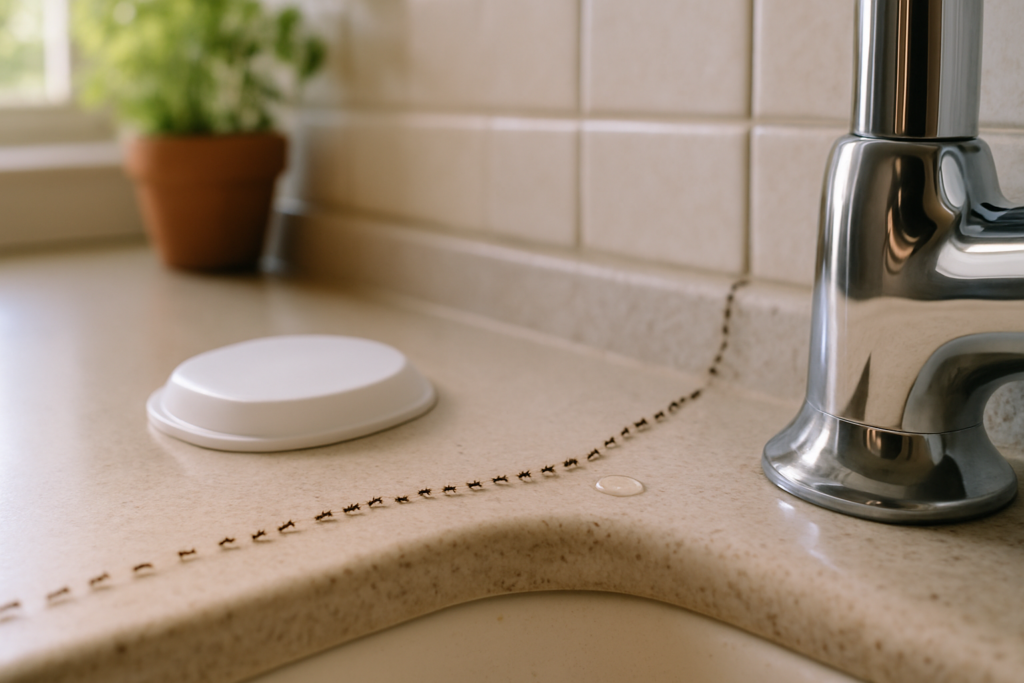
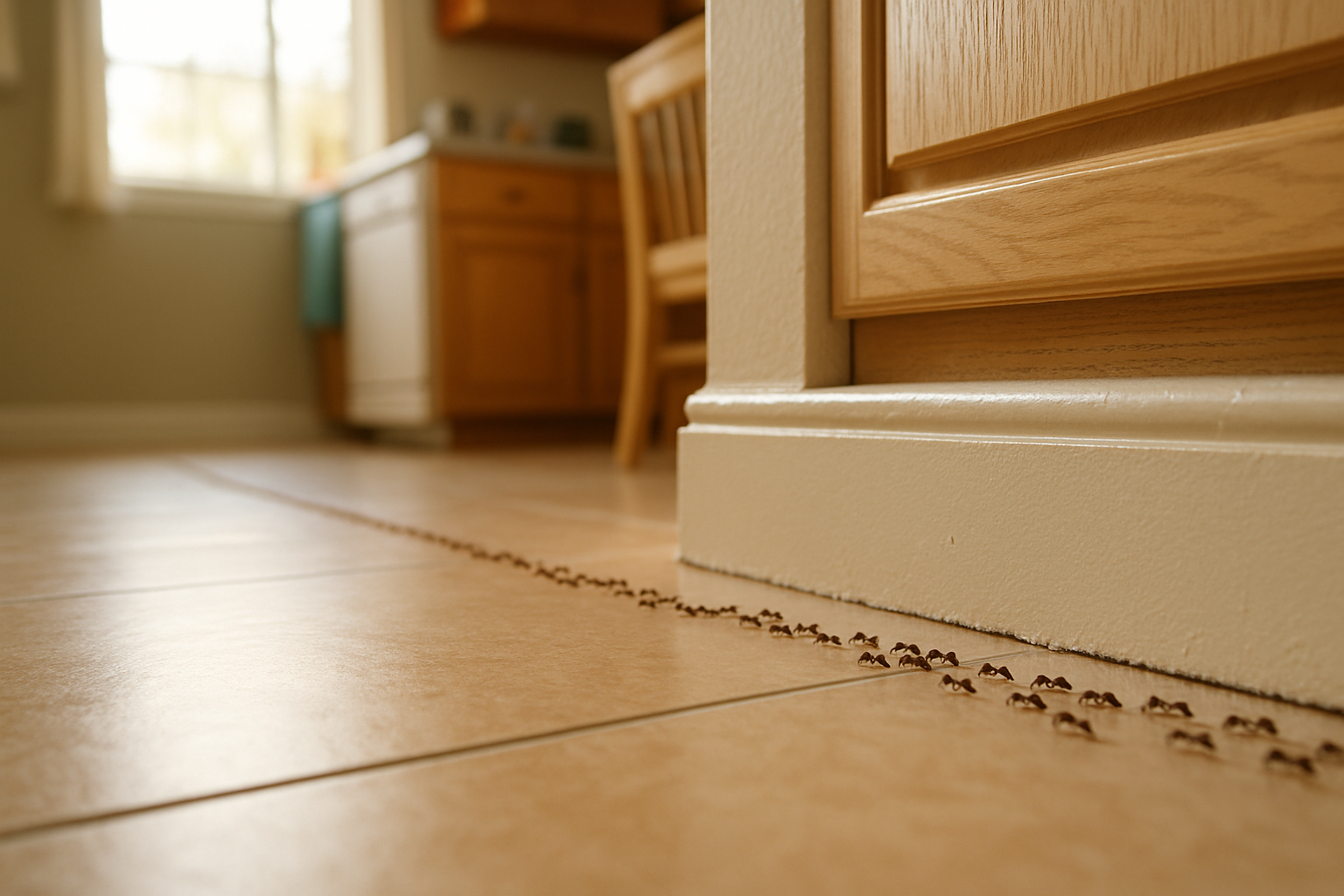
When you spray a trail of ants, you’re killing foragers — the workers sent out to find food and water. Those deaths are visible and satisfying. But the colony itself, which can contain hundreds of thousands of individuals and multiple queens, is typically located several feet underground or inside wall voids, completely untouched.
Here’s where it gets counterintuitive. Argentine ants — the species responsible for the vast majority of ant problems along the California coast, including throughout Santa Cruz County — don’t behave like ant species from drier climates. They maintain what are called satellite colonies: multiple connected nesting sites spread across a wide area, all sharing queens and workers fluidly between them.
When a surface spray kills a trail or disrupts a foraging route, Argentine ant colonies don’t die. They fracture. The colony senses the threat and splits — queens relocate, new satellite nests form, and activity shifts to a different entry point in your home. That perimeter spray you applied along the foundation? It may have actually made the colony harder to control, not easier.
This is the part most homeowners — and some pest control companies — don’t explain. Killing what you can see is not the same as treating the colony.
Why Santa Cruz’s Climate Makes This Worse Year-Round
Most advice about ant season assumes a climate with cold winters and dry summers — conditions that push ants into dormancy and naturally limit their activity window. Santa Cruz County doesn’t work that way.
The coastal fog, year-round soil moisture, and mild temperatures that make this place so livable for people also make it ideal for Argentine ants twelve months out of the year. I see active ant calls in January in Rio del Mar. Corralitos homeowners deal with foraging activity in February when people in Fresno or Sacramento haven’t seen an ant since October. On the Westside of Santa Cruz, colonies stay warm and hydrated through the entire winter because the soil temperature rarely drops enough to slow them down.
What this means practically:
- A one-time spring treatment is almost never enough in this county
- Colonies don’t reset or shrink over winter — they maintain size and pressure year-round
- The timing of any treatment matters more than most people realize, because colony behavior shifts with moisture and temperature in ways that affect how well bait is accepted
- Entry points that were sealed in October can be compromised again by spring rains and soil movement
When a homeowner tells me the ants come back every summer, the honest answer is that in Santa Cruz County, they often never fully left. Summer is just when the foraging pressure pushes hard enough indoors to become impossible to ignore. You can read more about when to stop trying to handle a pest problem on your own if you’re trying to figure out where DIY ends and professional help makes sense.
Why Surface Sprays Fail — and What Bait-Based Treatment Does Differently
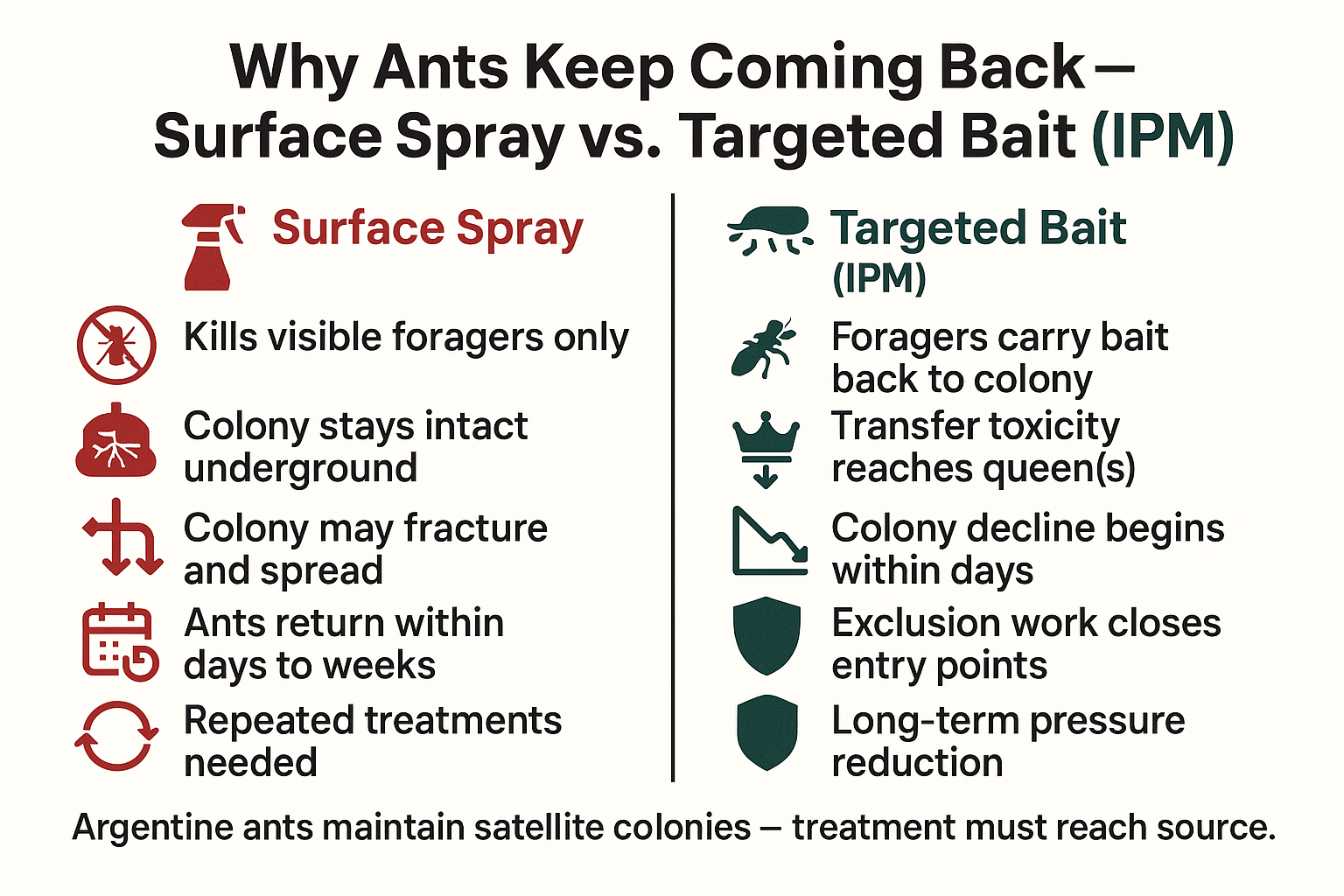
This comparison shows the core difference between a spray-based approach and a targeted, bait-based IPM approach — and why one reaches the colony while the other doesn’t.
What Bait-Based Treatment Actually Does — and What ‘Exclusion Work’ Means
One of the most common questions I see from Santa Cruz County homeowners — especially those with dogs, cats, or young kids — is whether targeted baiting is really different from a routine perimeter spray. One customer asked it directly in their inquiry: ‘Do you use targeted baits and exclusion work instead of routine perimeter sprays?’
The answer matters, so here’s how it actually works.
Bait-based treatment uses slow-acting formulations that foragers pick up and carry back to the colony. Because Argentine ants share food across the entire colony network through a process called trophallaxis, the active ingredient spreads through the population over time — including to queens. That’s what transfer toxicity means in practice. The forager isn’t just dying; it’s delivering.
This is fundamentally different from a perimeter spray, which creates a contact kill at the surface and never penetrates the colony structure at all.
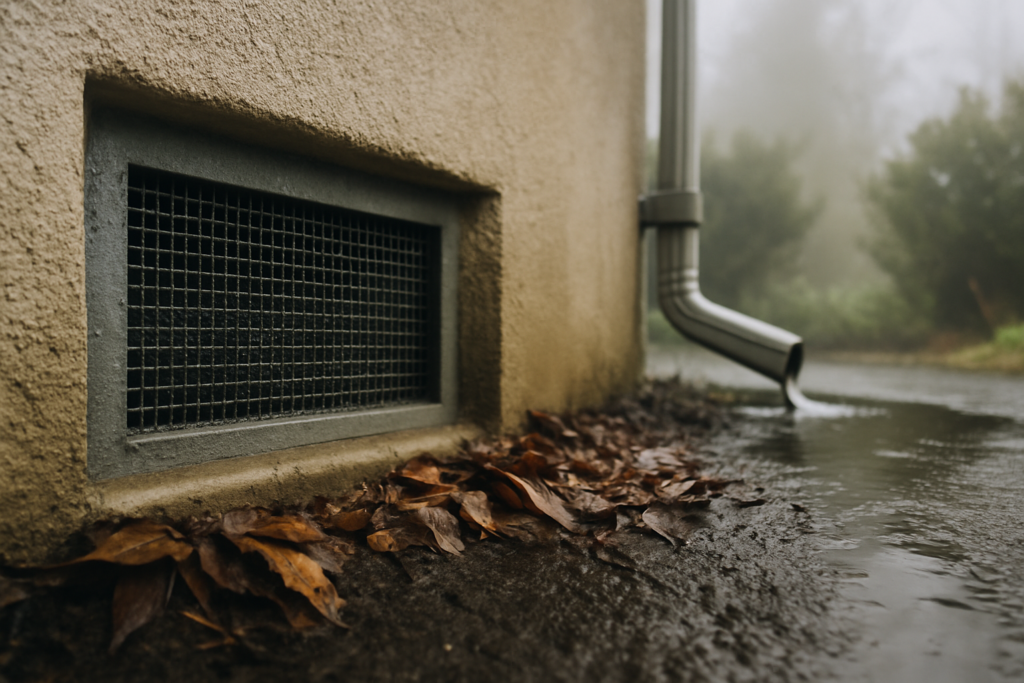
Exclusion work is the second half of the equation. It means physically identifying and sealing the points where ants are entering the structure — gaps around plumbing penetrations, cracks in the foundation, spaces under door thresholds, and similar openings. Without exclusion, even a well-placed bait program is working against ongoing reinvasion from outside.
For pet owners and families concerned about chemical exposure, properly applied baiting approaches use targeted placements in areas inaccessible to children and pets — not broadcast sprays across surfaces your family touches. One reviewer described a nightmare infestation resolved in under 24 hours, and specifically noted that everything used was ‘pet, plant and kitchen safe.’ That combination of speed and safety is exactly what a well-designed bait program can deliver when the treatment matches the biology of the problem.
For a deeper look at how to get rid of ant hills in your yard and what’s actually happening at the colony level, that article covers the outdoor side of this equation.
DIY vs. Professional Ant Treatment — What Each Actually Addresses
If you’re trying to decide whether to keep troubleshooting on your own or call someone, this breakdown shows what each approach typically reaches — and what it typically misses.
| Approach | What It Targets | What It Misses | Realistic Outcome |
|---|---|---|---|
| Store-bought spray | Visible foragers on surface | Colony, queens, satellite nests | Ants return within days to weeks |
| DIY bait stations (off-shelf) | Some foragers near placement | Queens in deep nests, entry points | Partial reduction, often temporary |
| Perimeter spray (some services) | Foragers near foundation | Colony structure, satellite nests | Colony may fracture and spread |
| Targeted bait + exclusion (IPM) | Colony via transfer toxicity, entry points sealed | Nothing — this is the full approach | Meaningful reduction; ongoing management for persistent colonies |
Why Switching Services Doesn’t Always Fix the Problem
A recurring theme in the inquiries we receive is homeowners who’ve already been through one or two pest control services and still have ants. One homeowner switched from a large national chain specifically because ants were returning before every scheduled service appointment — not after months, but before the next visit was even due.
That pattern usually points to one of two things: the treatment approach wasn’t reaching the colony, or the service interval wasn’t matched to the actual behavior of Argentine ants in a coastal climate. A quarterly spray schedule designed for an inland California climate may leave a Santa Cruz County home exposed for months at a time during peak foraging periods.
The other piece that often gets skipped entirely is the inspection. Before any treatment, someone needs to identify where the colony pressure is actually coming from — which entry points are active, where satellite nests are likely located, and what conditions on the property are attracting foragers in the first place. A treatment without that information is an educated guess at best.
If ants are returning after every treatment regardless of who you’ve hired, the question worth asking is whether anyone has actually looked at the full picture — colony structure, entry points, and environmental conditions — rather than just responding to wherever the trail is visible that day. For a sense of what pest inspectors actually look for inside your home, that article walks through the inspection process in detail.
Frequently Asked Questions About Ants Coming Back After Treatment
Why do ants come back just a few weeks after I spray?
Because the spray only killed the foragers — the workers you could see. The colony itself, including the queens, was underground and completely unaffected. Argentine ant colonies can also fracture when surface activity is disrupted, which means you may end up with more nesting sites than you started with. The only way to stop the cycle is to reach the colony itself, not just the trail.
Are Argentine ants actually different from other ants?
Yes, in ways that matter a lot for treatment. Argentine ants are the dominant species throughout coastal California, and unlike most ant species, they don’t fight between colonies — they cooperate. That means they can maintain enormous interconnected networks of satellite colonies across a wide area, all sharing queens and workers. A single Argentine ant ‘colony’ under a Santa Cruz home might actually span multiple nesting sites across the yard and into neighboring properties.
Is bait safe around my dog or young kids?
When applied correctly, bait-based treatments are placed in targeted locations — inside wall voids, along baseboards behind appliances, or in tamper-resistant bait stations — not broadcast across open surfaces. One Santa Cruz homeowner described a severe infestation resolved in under 24 hours with products that were ‘pet, plant and kitchen safe.’ That said, exact safety precautions depend on the specific products used and your home’s layout — any technician worth calling should walk you through that before starting.
How long does it take for bait-based treatment to work?
Slower than a spray — but for a real reason. Bait works by transfer: foragers carry it back to the colony, and it spreads through the population over days. You may see increased ant activity for 24-72 hours after placement as more foragers find the bait. That’s actually a sign it’s working. Significant reduction typically shows within one to two weeks depending on colony size and how well bait is accepted.
Do I need ongoing service, or is one treatment enough?
For Santa Cruz County specifically, one treatment is rarely the whole answer. Coastal soil conditions mean Argentine ant colonies stay active year-round, and new foraging pressure from neighboring properties or seasonal moisture changes can rebuild activity over time. The honest answer is that ant management in this climate is usually an ongoing process, not a one-time fix — and any service that promises otherwise is overstating what a single visit can do.
Can I use the homemade sprays I’ve seen online while I wait for a professional?
Most homemade sprays — vinegar, essential oils, dish soap — disrupt ant trails temporarily but don’t affect the colony at all. They can also contaminate bait placement areas, making professional treatment less effective afterward. If you’re planning to call someone, it’s worth holding off on additional DIY applications so the technician is working with accurate information about where the real activity is. You can read more about homemade ant killer spray options to understand what they can and can’t do.
Getting Straight Answers About Your Ant Problem
If ants have come back after every spray or every scheduled service, the problem isn’t that treatment doesn’t work — it’s that the treatment needs to match the biology of what’s actually living in your walls and yard. West Pest Co. serves homeowners throughout Santa Cruz County, from Watsonville and Corralitos to Rio del Mar and the Westside, and Matthew West answers the phone himself. If you want to talk through what’s happening at your home and what a targeted approach would actually look like, you can reach West Pest Co. directly at (831) 430-8402 or through westpestco.com.