Seeing a spider in your Santa Cruz home can be startling. But figuring out what kind of spider you're looking at is easier than you think. Most spiders are harmless, and knowing the difference between a common garden spider and a Black Widow just takes a little practice.
Color, size, and especially the type of web are big clues. This guide will help you quickly identify the spiders you might find in your home and yard.
Your Guide to Identifying California Spiders
Dealing with spiders can be nerve-wracking, and we understand that. California is home to many different kinds of spiders, and most of them actually help our local environment by eating other pests. For homeowners from Aptos to Scotts Valley, understanding which spiders are common is the first step toward peace of mind.
This guide is designed to give you confidence. We’ll focus on the simple, real-world details that help you make a fast, accurate ID. We'll skip the heavy scientific language and look at the clear signs that set one spider apart from another.
What to Look For First
When you see a spider, try to notice these details from a safe distance. These clues are often all you need to figure out what kind of eight-legged guest you have.
- Color and Markings: Is the spider one solid color, or does it have patterns? Look for stripes, spots, or the famous red hourglass of a Black Widow.
- Size and Shape: Note its general size, including its legs. Is its body long and skinny, or is it more round and compact?
- Web Design: A spider's web is a huge giveaway. Is it a classic, circular orb web? A messy, tangled cobweb in a corner? Or a funnel-shaped web near the ground? Some spiders, like Wolf Spiders, don't build webs to catch their prey at all.
- Location: Where did you find it? A dark, quiet corner of the garage often attracts different spiders than a sunny spot in your garden.
This infographic shows just how many types of spiders live in our state—and how few are actually a cause for concern.
The data is clear: while California has over 1,500 spider species, only a tiny fraction of them pose any medical risk to people.
Quick Identification Guide for Common California Spiders
Here is a quick table to help you compare the spiders you’re most likely to find around your Northern California home.
| Spider Name | Key Features | Web Type | Common Location | Threat Level |
|---|---|---|---|---|
| Black Widow | Shiny black body, red hourglass on abdomen | Messy, irregular cobweb | Dark, undisturbed areas (woodpiles, garages) | High (Venomous) |
| Yellow Sac Spider | Pale yellow or beige, no distinct markings | Small, silk "sac" retreats (no capture web) | Ceilings, wall corners, under furniture | Low (Painful Bite) |
| Orb Weaver | Varied colors, often with intricate patterns | Classic, circular "Charlotte's Web" style | Gardens, porches, near outdoor lights | Very Low (Harmless) |
| Wolf Spider | Large, hairy, brown/gray with patterns | No web for prey; hunts on the ground | Gardens, basements, garages | Very Low (Harmless) |
| Cellar Spider | Very long, thin legs; small, oblong body | Irregular, tangled webs | Basements, cellars, dark corners | Very Low (Harmless) |
This table is a great starting point for identifying the usual suspects you might run into.
Moving from Uncertainty to Action
Learning these basic identification skills helps you understand the creatures sharing your space. This knowledge lets you tell the difference between a helpful garden resident and a potential indoor pest. For a broader look at common household bugs, you might find our guide on what are these bugs in my house helpful.
Our goal is to help you feel more in control. Recognizing the spiders around your property empowers you to make smart decisions—whether that means leaving a harmless one alone or knowing when to call for professional help.
Identifying Medically Significant Spiders
While most spiders you find in your Santa Cruz home are harmless, California has a couple of species whose bites can be serious. Knowing how to identify these spiders is a key skill for any homeowner. This isn't about creating fear, but about building awareness so you can keep your family safe.
It's understandable to feel stressed about a potentially venomous spider. That’s why we’re focusing on the two main species of concern in our area: the Black Widow and the often-misunderstood Brown Recluse. We'll give you clear, simple signs to look for so you can tell them apart from their harmless look-alikes.
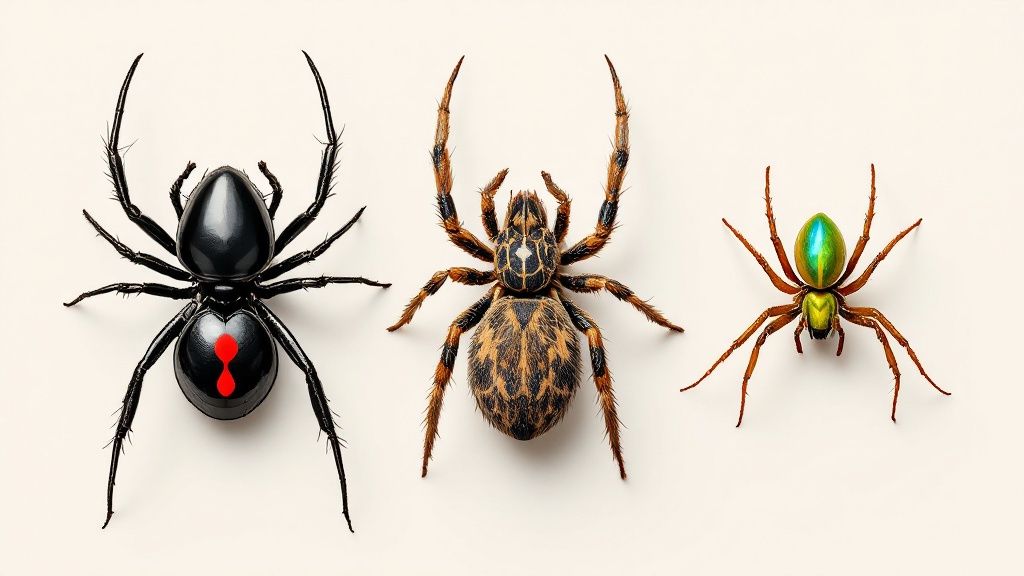
The Black Widow: A Spider to Respect
The Black Widow is the most recognized venomous spider in North America, and it lives right here in California. Their bites are rare because they are shy and not aggressive, but their venom is strong and requires medical attention.
Female Black Widows are the ones to look for; males are smaller and not considered dangerous. Here is what makes the female stand out:
- Shiny Black Body: Her most obvious feature is a glossy, jet-black, round abdomen, about the size of a marble.
- The Red Hourglass: The famous marking is a bright red, hourglass-shaped design on the underside of her abdomen. This is the surest way to identify her.
- Messy, Strong Web: Black Widows don't spin neat webs. They create messy, irregular, and surprisingly strong cobwebs, often close to the ground in dark, protected spots.
Black Widows prefer to build their webs in quiet, undisturbed places. Common spots around a Santa Cruz County property include woodpiles, sheds, crawl spaces, and cluttered corners of a garage.
Where Black Widows Hide
These spiders are drawn to dark, secluded areas that our properties often provide. They just want to stay hidden and protected.
Be extra careful when working in or cleaning out these areas:
- Underneath decks and patios
- In outdoor sheds and storage units
- Among stacked firewood or lumber
- Inside water meter boxes
- In cluttered garages and basements
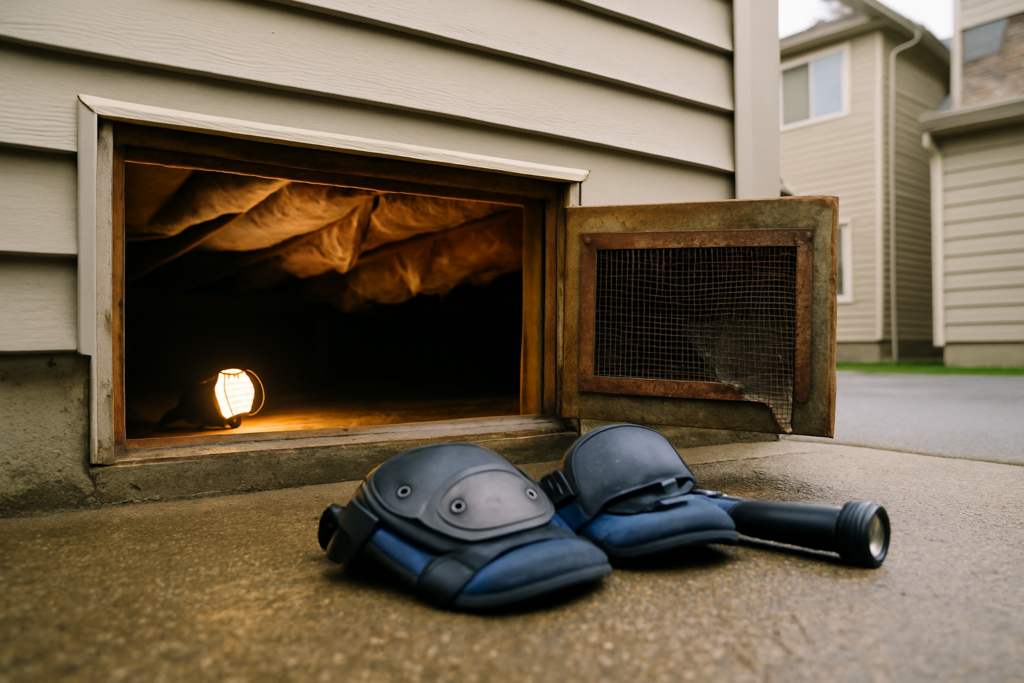
Because they hide so well, it’s easy to disturb one by accident. It’s always a good idea to wear gloves when reaching into dark spaces or moving items that have been sitting for a long time.
The Brown Recluse: A Case of Mistaken Identity
Let's clear up a major myth. The Brown Recluse spider is not native to California, and you won't find them living here. While a rare one might hitch a ride into the state on boxes, they are not a common threat in Santa Cruz, Aptos, or anywhere in our region.
The University of California's research confirms that nearly all "brown recluse" sightings in California turn out to be other harmless brown spiders. Spiders like the Titiotus spider or various sac spiders are often misidentified as recluses.
However, for your information, a true Brown Recluse has very specific features:
- A "Violin" Marking: They have a dark, violin-shaped mark on their back, with the "neck" of the violin pointing toward the rear.
- Six Eyes: This is a key detail. Unlike most spiders that have eight eyes, recluses have only six eyes arranged in pairs. This is very hard to see without a magnifying glass.
- Uniformly Colored Abdomen: Their abdomen is a plain, solid tan or brown color with no stripes or spots.
If a spider you find has eight eyes or patterns on its abdomen, it is not a Brown Recluse. Your chances of ever seeing one here are extremely low.
If you ever have any doubt, it's always best to get professional help. West Pest Co. offers reliable pest control for spiders and can help you figure out what you're dealing with, giving you peace of mind.
Understanding Harmless Common House Spiders
Finding a spider in your home is rarely a welcome surprise. But not every eight-legged visitor is a reason to panic. In fact, most spiders you find in California homes are harmless and can even be a big help. They act as nature’s own pest control, preying on flies, gnats, and ants.
Dealing with spiders can be unsettling, but a little knowledge can turn fear into understanding. This section is about getting to know the non-threatening spiders you’re most likely to see around Santa Cruz County, from the lanky Cellar Spider to the energetic Jumping Spider.
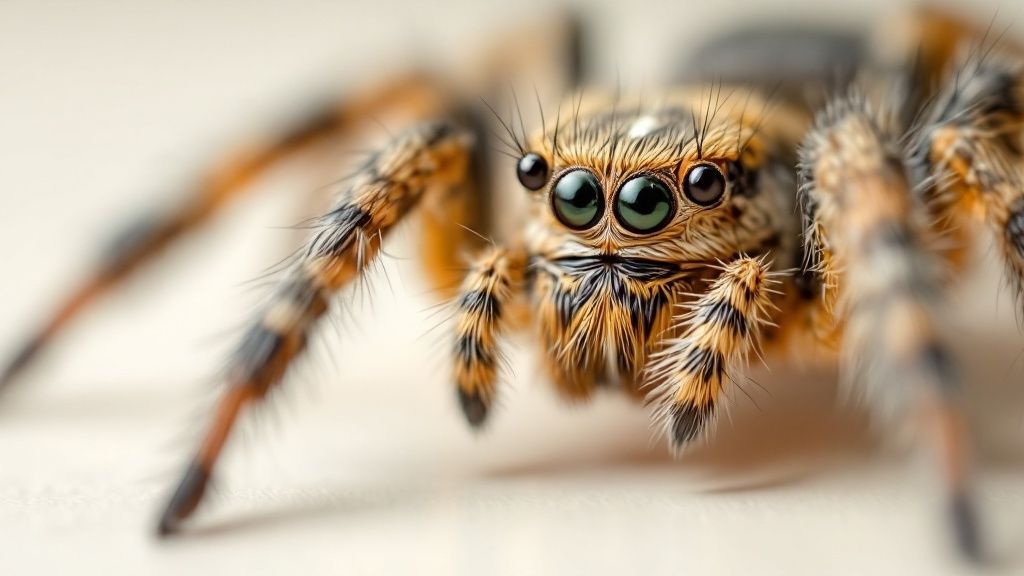
Cellar Spiders (Pholcidae)
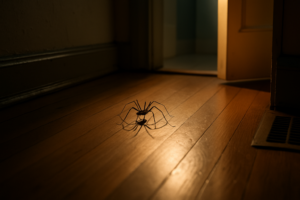
You probably know these spiders. Often called "daddy-long-legs," Cellar Spiders are one of the most common spiders found indoors. They are easy to spot with their very long, thin legs and tiny, peanut-shaped bodies. You'll usually find them hanging out in quiet corners.
Their webs are messy and tangled, not neat. You'll find them in cellars, garages, and attics. While they might look a bit creepy, they are totally harmless to people.
Jumping Spiders (Salticidae)
Jumping Spiders are the little athletes of the spider world. These small, stout spiders are known for their quick, jerky movements and their ability to leap, which they use to pounce on prey. They are active during the day and have great vision—if you get close, one might turn to look right at you.
You'll spot them on sunny walls, windowsills, and outdoor furniture. They don't spin webs to catch food but use their silk for safety lines and small shelters.
Grass Spiders (Agelenopsis)
If you’ve ever seen a funnel-shaped web in your lawn or bushes, you’ve probably found the home of a Grass Spider. These shy spiders are brown with dark stripes running down their backs. They are very fast runners and will dart into their funnels if disturbed.
They mostly live outdoors but sometimes find their way inside, especially in the fall. They are not aggressive and pose no threat to people or pets.
Many spiders we see in California homes aren't actually from around here. According to a 14-year study, about 21% of spider species found in Los Angeles were not native, showing how many have adapted to our urban areas.
A Diverse Urban Population
The mix of spiders you see is part of a bigger story. A long-term community science survey in Los Angeles found 241 different spider species over 14 years. The study showed that about 21% of the species were not native to the area, which tells us just how many spiders have moved into California's cities. You can read more about this urban spider diversity in Southern California to learn more.
This data shows that the spiders in your Aptos home could be a mix of local natives and well-traveled guests.
Why Do They Come Inside?
Harmless spiders aren't trying to invade your space. They usually come indoors for a few simple reasons.
- Searching for Food: Lots of spiders often means you have other insects for them to eat. They go where the food is.
- Seeking Shelter: Extreme weather—like a hot summer day or a chilly winter in Scotts Valley—can drive spiders inside.
- Accidental Entry: Sometimes, they just wander in through an open door, a crack in the foundation, or a torn window screen.
Recognizing these harmless spiders lets you make a smart choice. Leaving a few of these natural pest controllers alone can actually be helpful. However, if their numbers feel overwhelming, it could be a sign of a larger pest issue.
Exploring Spiders in Your Garden and Yard
Your garden is more than just plants; it’s a lively ecosystem. In that system, spiders are your personal pest control team. Stepping out into your Santa Cruz County yard means entering their world, where they work to keep insect populations down.
Many homeowners get nervous when they see spiders outdoors, but learning to identify them can change that. From the classic webs of Orb Weavers to the hidden burrows of Trapdoor Spiders, these spiders are fascinating and very helpful.
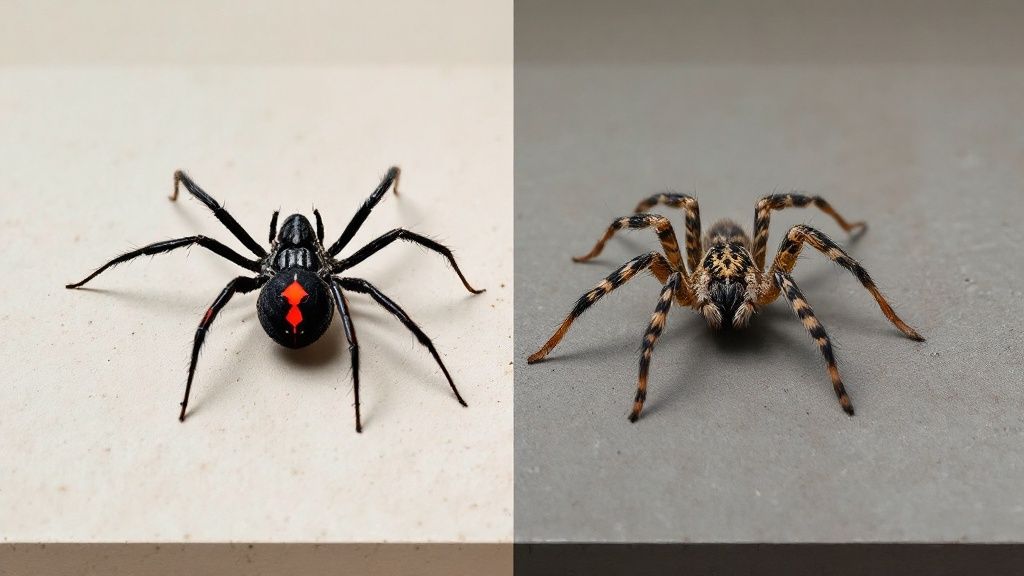
Orb Weavers: The Garden Artists
If you’ve ever seen a perfect, circular web glistening in the morning dew, you’ve met an Orb Weaver. These are the makers of the classic "Charlotte's Web" design, and they are completely harmless to people. They are one of the best allies your garden can have.
Orb Weavers come in many shapes and colors, often with beautiful patterns. They build their webs in open areas to catch flying insects like moths and flies.
Wolf Spiders: The Ground Hunters
Unlike Orb Weavers, Wolf Spiders don’t use webs to catch prey. These strong, athletic spiders are active hunters that chase down their food on the ground. Their mottled brown and gray coloring helps them blend in with soil and leaves.
You'll often spot them scurrying across patios or through garden beds, especially at night. While their large size can be startling, Wolf Spiders are shy and will almost always run from humans.
Trapdoor Spiders: The Master Builders
California is the perfect home for some truly unique spiders, including the Trapdoor Spider. These spiders are masters of camouflage. They live in silk-lined burrows underground, covered with a hinged "trapdoor" made of soil and silk.
They wait inside for an insect to walk by, then burst out to grab their meal.
California is a major hotspot for these secretive spiders. Recent research has even discovered new species, showing how much we are still learning about our state's amazing spider population.
The presence of these spiders is a great sign of a healthy soil environment. UC Davis continues to study their hidden lives, and you can read more about these fascinating California trapdoor spiders.
A Balanced Garden Ecosystem
Seeing different spiders in your yard is a sign of a healthy environment. They manage pest populations naturally, which means less need for chemicals.
- Natural Pest Control: Spiders prey on aphids, caterpillars, and other insects that can damage your plants.
- Signs of Biodiversity: A healthy spider population means you have a thriving ecosystem that can support them.
- Fewer Nuisance Insects: They help control flies and other annoying bugs around your outdoor living spaces.
By letting these spiders do their job, you’re supporting a healthier garden. Of course, if other pests are driving spider populations too high, a targeted approach to garden pest control can help restore that balance.
How to Prevent Spiders from Entering Your Home
The best way to handle spiders in your Santa Cruz home is to stop them from getting inside in the first place. This simple strategy is called integrated pest management (IPM). It’s all about making your home less attractive to spiders and the insects they eat. A little effort now goes a long way.
Think of these steps as your best line of defense. They address why spiders are drawn to your property, creating a lasting and eco-friendly solution.
Seal Up Entry Points
Spiders can squeeze through the tiniest openings. A quick walk around your home's exterior will likely reveal common entry points you can seal up to keep them out.
Think of it like weatherproofing your house, but for pests.
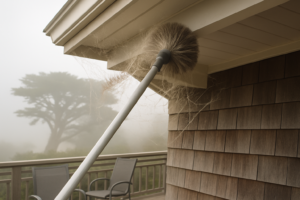
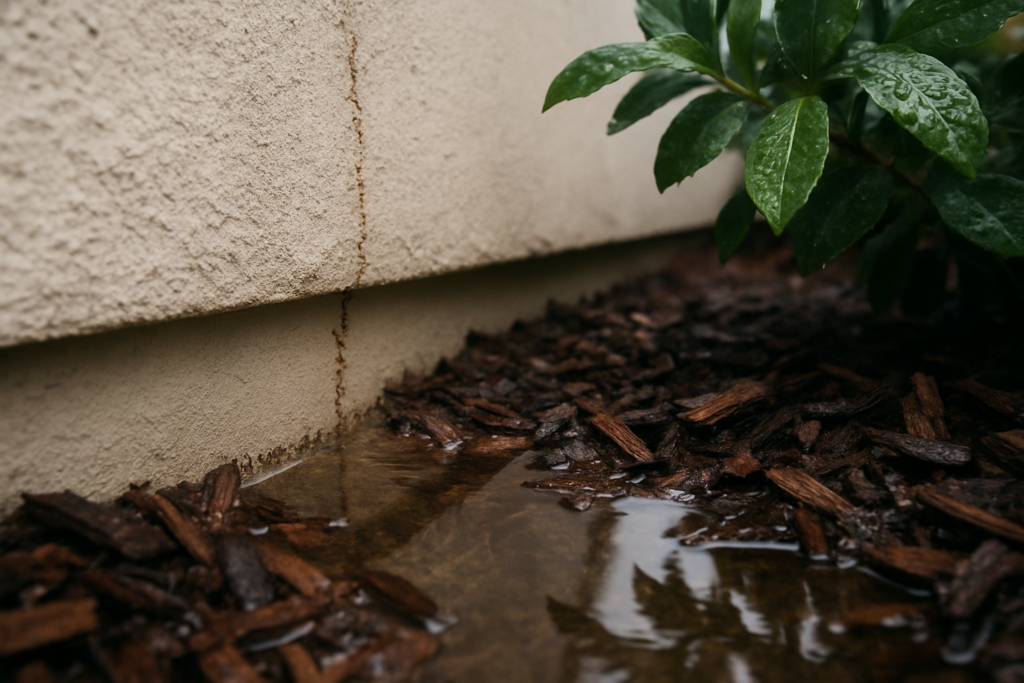
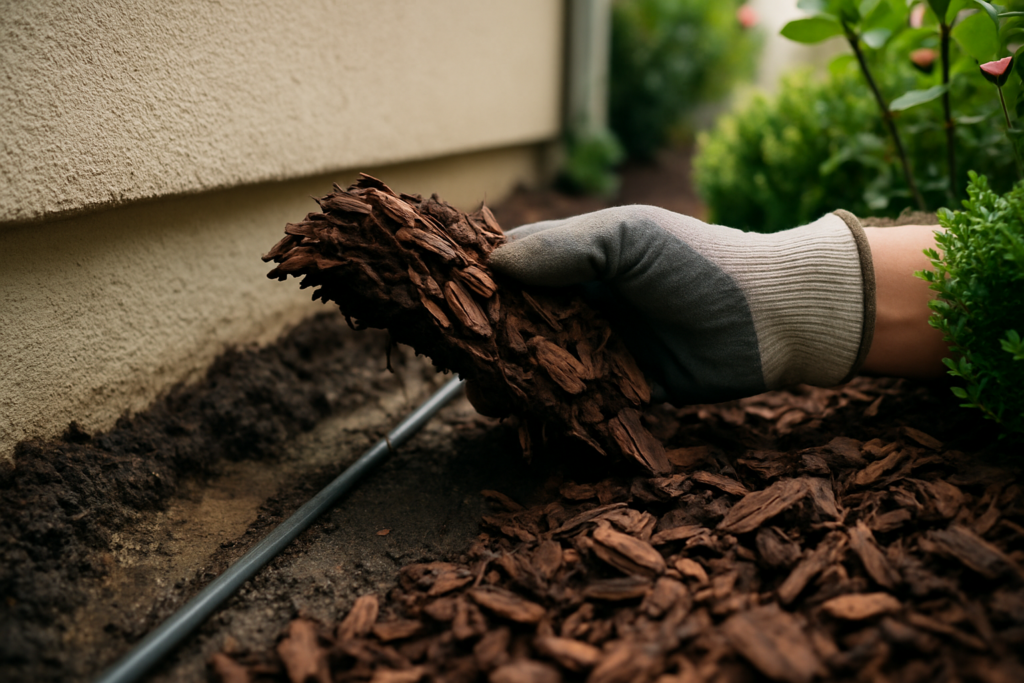
- Foundation and Walls: Look at your foundation and siding for cracks or gaps. Use caulk to seal any openings where pipes or vents enter the house.
- Windows and Doors: Make sure your window screens don't have any rips or tears. Install door sweeps under your exterior doors to close that common entry point for pests.
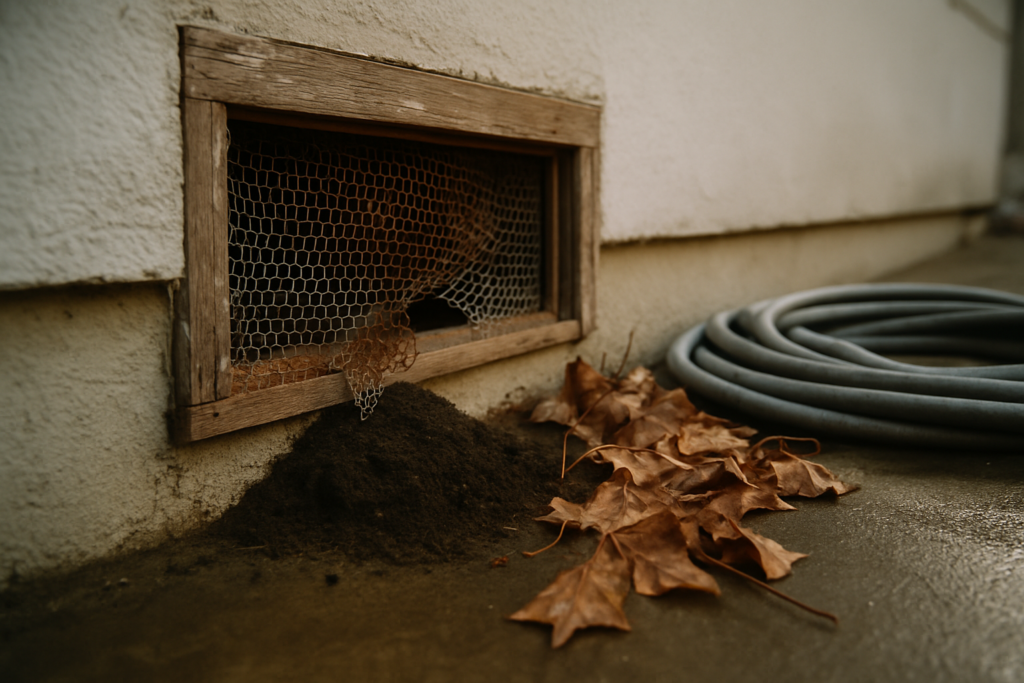
- Attics and Crawl Spaces: Cover vents with a fine mesh screen to block access for spiders and other critters.
Make Your Yard Less Inviting
Your yard can either be a buffer zone or a bridge for spiders trying to get into your house. A little tidying up can make a huge difference.
Spiders love cluttered, sheltered spots that offer places to hide and spin webs. By cleaning up the areas right around your foundation, you take away their favorite hiding spots.
Start by moving firewood stacks and compost piles away from your house. It’s also a great idea to trim back any tree branches or shrubs that touch the side of your home. Spiders use these as ladders to get to your windows and roof.
Control Their Food Source
Spiders go where the food is. If your home has other insects like flies or ants, it’s like a restaurant for spiders. Managing their prey is one of the most effective ways to reduce spiders.
Your outdoor lights can attract a nightly buffet for spiders. Try switching to yellow or sodium vapor light bulbs, which are less attractive to bugs. Also, make sure your garbage bins have tight-fitting lids to keep flies away.
Spider populations are directly tied to their food supply. Research on vineyards in California's Central Valley found that just six spider species made up over 90% of the total population, and their numbers changed based on conditions. You can read more about these findings on spider population dynamics to see how local conditions influence which spiders you see.
For more tips on spider-proofing your space, check out our guide on how to prevent spiders from getting inside. Taking these simple steps will help make your home a less welcoming place for spiders.
When Should You Call a Pest Control Professional?
While prevention is a great first step, some spider problems are best left to the experts. Knowing when to call for help is key to keeping your Santa Cruz home safe and comfortable.
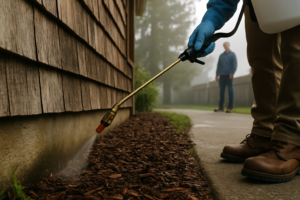
Let's be honest, home remedies and store-bought sprays have limits. They often fall short when you're dealing with a safety risk or a spider population that keeps growing. Recognizing these red flags can save you time, stress, and worry.
Signs It’s Time for Expert Help
Some situations should prompt an immediate call to a professional. These aren't issues to tackle on your own, as they can point to a bigger problem or a direct threat to your family's safety.
You should bring in a pro if you notice any of these signs:
- A Medically Significant Spider: Spotting a Black Widow is a clear signal to call for help. Professionals have the right gear and treatments to handle venomous spiders safely.
- A Sudden Population Boom: If you go from seeing an occasional spider to seeing them everywhere, that's a sign of an infestation. It often means there's a large food source—other pests—that also needs to be addressed.
- Numerous Egg Sacs: Finding multiple spider egg sacs around your property, especially indoors, means a new generation is about to hatch. Breaking that cycle requires professional help.
Dealing with a potential spider infestation is unsettling. The goal of professional pest control isn't just to get rid of the spiders you see, but to address the root cause and give you lasting peace of mind.
At West Pest Co., our eco-friendly approach targets the source of your spider problem without putting your family at risk. For homeowners in Capitola and across the county, we offer solutions that are both effective and responsible. To learn more about when to call pest control, our guide offers more details.
Your Top Spider Questions Answered
We get a lot of questions from homeowners in Santa Cruz County about the eight-legged visitors on their properties. Here are clear, straightforward answers to the questions we hear most often.
Are Brown Recluse Spiders Common In Santa Cruz?
Thankfully, no. Brown Recluse spiders are not native to California and are extremely rare here. The cool, coastal climate in places like Santa Cruz isn’t right for them to establish a population.
Most of the time, a suspected Brown Recluse is a harmless look-alike, like a Titiotus spider or a common sac spider. If you’re ever unsure, the safest bet is to call a professional for a positive spiders California identification. It's best to avoid handling any spider you can't identify for sure.
What Is The Most Dangerous Spider In California?
The Black Widow is the most medically significant spider in California. Its venom is a powerful neurotoxin, which makes its bite a serious medical concern. You can identify them by their shiny, black bodies and the famous red hourglass mark on the underside of their abdomen.
These spiders like to hide in dark, quiet places like garages, sheds, and woodpiles. While bites are rare, they always require medical attention.
How Do I Know If I Have A Spider Infestation?
Seeing a spider now and then is normal, but a few key signs can point to a bigger problem. The most obvious sign is a sudden and large increase in the number of spiders you’re seeing every day.
Finding lots of webs is another giveaway, especially indoors. If you start spotting multiple egg sacs, the spider population is likely growing. A lot of spiders also suggests you have another pest problem that is providing them with a steady food source.
A significant spider presence is often a symptom of another pest problem. Spiders will establish themselves where there is a consistent food supply. Addressing the spiders without managing their prey is only a temporary fix.
What Are The White Spiders I See In My House?
Those small, pale, or whitish spiders you often find indoors are typically Yellow Sac Spiders. Their color can range from a pale yellow-beige to a light greenish-white.
They are not considered dangerous, but their bite can be painful and may cause redness and swelling, similar to a bee sting. These spiders are active at night and don't build webs. Instead, they create small silk sacs to rest in, usually up in the corners where walls and ceilings meet.
Does West Pest Co Offer Eco-Friendly Spider Control?
Yes, absolutely. Here at West Pest Co., we specialize in environmentally responsible pest control because we know how much Santa Cruz residents value protecting our local environment.
Our approach uses integrated pest management (IPM) strategies that focus on long-term prevention. We use targeted, low-impact treatments that are safe for your family and pets. We believe in managing pests with a conscience, making sure our methods align with the values of our community.
If you’re spotting spiders frequently, a licensed pest control service in Santa Cruz can assess your home and address the underlying pest pressure attracting them.
If you're dealing with spiders and want a solution that is safe, effective, and environmentally conscious, West Pest Co. is here to help. Contact us today for a free estimate and let our experts restore your peace of mind.
.lwrp.link-whisper-related-posts{
margin-top: 40px;
margin-bottom: 30px;
}
.lwrp .lwrp-title{
}.lwrp .lwrp-description{
}
.lwrp .lwrp-list-container{
}
.lwrp .lwrp-list-multi-container{
display: flex;
}
.lwrp .lwrp-list-double{
width: 48%;
}
.lwrp .lwrp-list-triple{
width: 32%;
}
.lwrp .lwrp-list-row-container{
display: flex;
justify-content: space-between;
}
.lwrp .lwrp-list-row-container .lwrp-list-item{
width: calc(25% – 20px);
}
.lwrp .lwrp-list-item:not(.lwrp-no-posts-message-item){
}
.lwrp .lwrp-list-item img{
max-width: 100%;
height: auto;
object-fit: cover;
aspect-ratio: 1 / 1;
}
.lwrp .lwrp-list-item.lwrp-empty-list-item{
background: initial !important;
}
.lwrp .lwrp-list-item .lwrp-list-link .lwrp-list-link-title-text,
.lwrp .lwrp-list-item .lwrp-list-no-posts-message{
}@media screen and (max-width: 480px) {
.lwrp.link-whisper-related-posts{
}
.lwrp .lwrp-title{
}.lwrp .lwrp-description{
}
.lwrp .lwrp-list-multi-container{
flex-direction: column;
}
.lwrp .lwrp-list-multi-container ul.lwrp-list{
margin-top: 0px;
margin-bottom: 0px;
padding-top: 0px;
padding-bottom: 0px;
}
.lwrp .lwrp-list-double,
.lwrp .lwrp-list-triple{
width: 100%;
}
.lwrp .lwrp-list-row-container{
justify-content: initial;
flex-direction: column;
}
.lwrp .lwrp-list-row-container .lwrp-list-item{
width: 100%;
}
.lwrp .lwrp-list-item:not(.lwrp-no-posts-message-item){
}
.lwrp .lwrp-list-item .lwrp-list-link .lwrp-list-link-title-text,
.lwrp .lwrp-list-item .lwrp-list-no-posts-message{
};
}