Direct Answer: Yes, ants can smell food through chemical scent receptors far more sensitive than a human nose. One ant finding a crumb can recruit hundreds within hours through invisible pheromone trails.
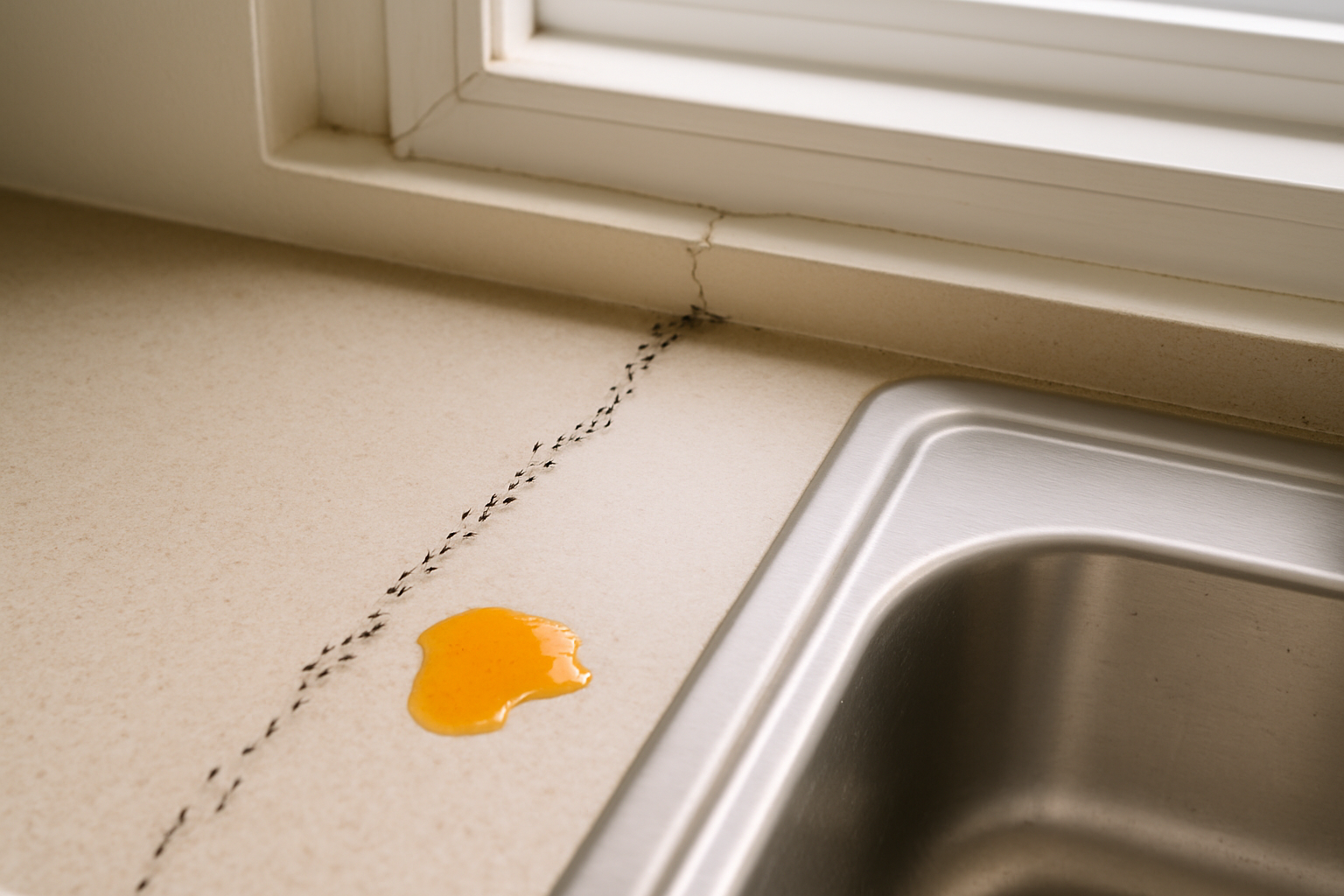
You walked into the kitchen this morning, and there were maybe three or four ants near the sink. By afternoon, there were hundreds moving in a tight line across the counter. Nothing changed, you didn’t leave a pie on the counter or forget to take out the trash. So where did they all come from, and how did they find your kitchen so fast?
This is one of the most common questions I hear from homeowners across Santa Cruz County, from Watsonville to Scotts Valley. The short answer is that ants don’t wander randomly. They’re following a chemical communication system so precise and fast-acting that it can turn a single forager into a marching column before you’ve even noticed the first one.
Understanding how that system works, and what it means for your kitchen, is the most useful thing you can do before reaching for a can of spray. Because how you respond in the first few hours matters more than most people realize.
The Science Behind How Ants Smell and Track Food
Ants have antennae packed with chemical receptors that pick up odor molecules at concentrations far below what a human nose would ever detect. According to research from UC Berkeley’s Department of Integrative Biology, ants use a combination of pheromones for nearly every aspect of colony life, navigation, alarm, recruitment, and food identification.
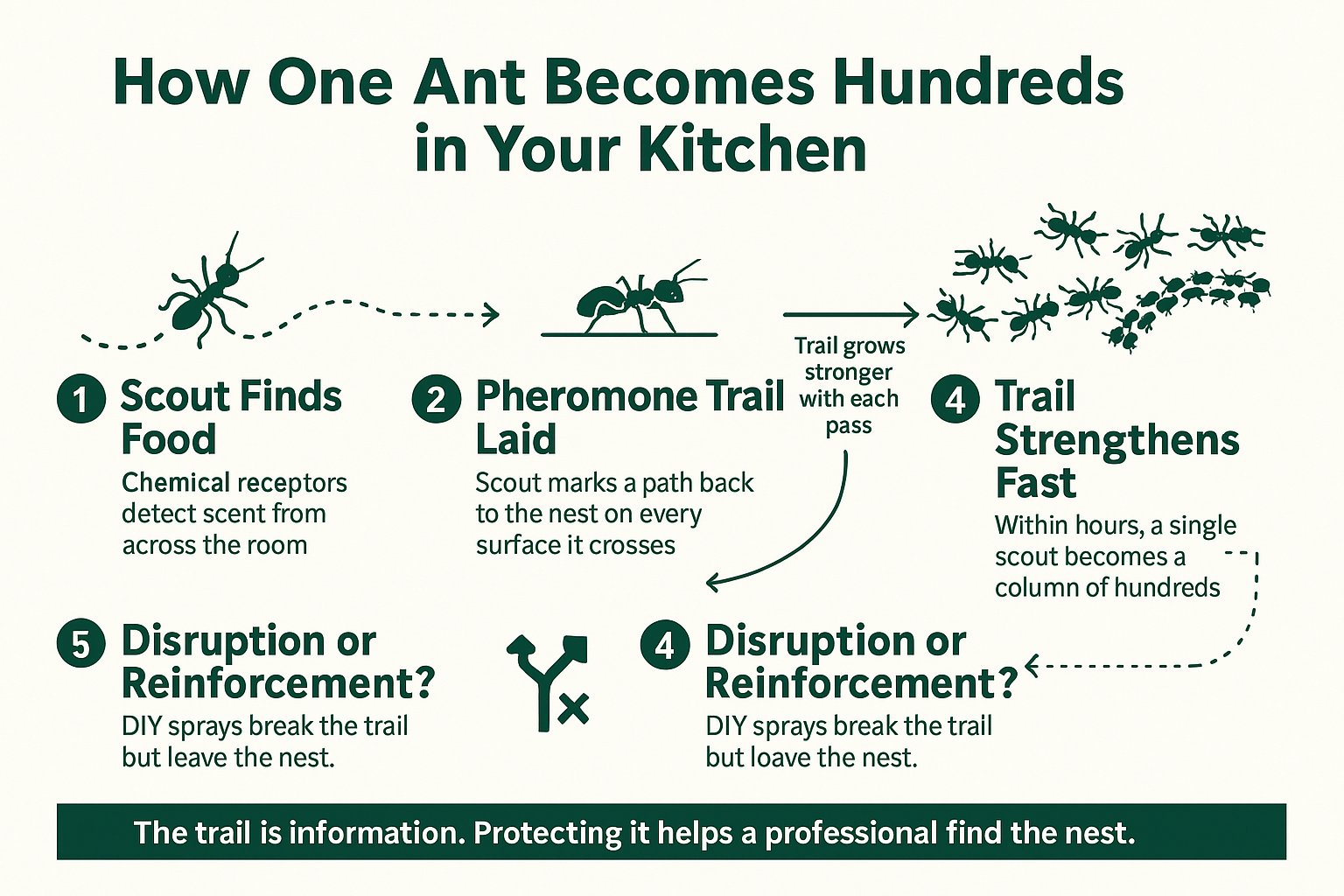
When a scout ant finds something worth eating, it doesn’t just eat and leave. On the way back to the nest, it drags its abdomen lightly along the surface, depositing a pheromone trail. Other foragers pick up that trail and follow it. As more ants travel the same path and confirm the food source, they reinforce the chemical signal. The trail gets stronger, the recruitment accelerates, and within a few hours a small scouting mission becomes a visible column.
The scents that trigger this response are more varied than most people expect:
- Sugary liquids, juice spills, syrup residue, a sticky ring left by a honey jar
- Protein sources, pet food left in a bowl overnight, grease splatter behind the stove
- Fermentation odors, overripe fruit, a wine glass rinsed but not washed
- Residue on dishes, even a plate left in the sink with traces of food still on it
Several homeowners who’ve reached out describe the same scenario: they left a bowl of pet food out overnight, and by morning the trail was already established. One customer in Aptos Hills specifically mentioned noticing ants “appearing out of nowhere” after a sticky spill behind the stove went unnoticed for a few days. That’s not a hygiene failure, it’s chemistry doing exactly what it’s designed to do.
Why Santa Cruz Kitchens Deal With This Almost Year-Round
If you’ve ever compared notes with a friend who lives in Sacramento or the Central Valley, you’ve probably noticed something: they tend to get a break from ants in winter. Here on the Central Coast, that seasonal pause mostly disappears.
Santa Cruz’s mild coastal climate, consistent humidity, year-round soil moisture, and temperatures that rarely drop far enough to slow colony activity, means ant colonies stay active and foraging through months when most inland California homes get relief. This is a real, specific feature of living near the coast, and it explains why the “why are they back again?” frustration is so common here.
The Argentine ant, which is the most common species we deal with in Santa Cruz County, is particularly well-suited to this climate. These colonies don’t have a single queen, they have dozens or hundreds, which makes them fast to expand, hard to fully suppress, and almost certain to keep foraging even in cooler months. If you’ve read our article on why ants come back every summer, you know this is tied to how the colony is structured, not just the season.
The practical takeaway: year-round kitchen hygiene matters more in Santa Cruz than it does in most of inland California. A sticky drip behind the stove that might go unnoticed all winter inland could recruit a trail within days here.
How One Ant Becomes Hundreds: The Recruitment Sequence
This shows exactly what happens from the moment a scout ant finds food in your kitchen to when a full column is established, and where the process can be interrupted.
Why Spraying the Trail Usually Makes Things Worse
This is the part most people find genuinely surprising, and it’s worth spending time on because it’s the opposite of what feels intuitive.
When you grab a can of store-bought contact spray and hit the trail, you kill the visible foragers. Problem looks solved. But the nest, which could be in a wall void, under a foundation slab, or in the soil outside, is completely untouched. And in some cases, the chemical disruption from certain spray formulas triggers a stress response in the colony. Instead of retreating, the colony splits and establishes satellite nests in new locations.
Multiple callers have described the same experience: spending two or three weeks applying store-bought products, then watching the ant activity spread from the kitchen to a second room, sometimes a bathroom, sometimes a bedroom near a pet food storage area. The original problem didn’t get solved. It got redistributed.
The other thing a contact spray does is destroy the very trail that a professional can use to trace activity back to the nest. That trail is useful diagnostic information. When I assess an ant situation in a home, the trail tells me where foragers are coming from, which direction they’re moving, and what they’re targeting. Wiping it out prematurely removes that roadmap. If you’re dealing with recurring ant problems and wondering when it makes sense to stop troubleshooting solo, this article on when to stop DIY pest control walks through that decision in plain terms.
Why Bait Works When Spray Doesn’t
Targeted baiting works on the same principle that makes ant communication so effective in the first place, it uses the colony’s own behavior against it.
Instead of killing foragers on contact, bait lets them carry a slow-acting product back to the nest. Because foragers share food with other colony members through a process called trophallaxis, the active ingredient spreads through the colony over time, reaching workers, brood, and queens that never came anywhere near your kitchen counter.
This is the core reason bait outperforms contact spray for established colonies. It doesn’t just reduce the visible symptom. It addresses the source.
For households with dogs, kids, or anyone with chemical sensitivities, this approach matters even more. Several reviews from Santa Cruz homeowners specifically mention the relief of learning that what was used in their kitchen was safe around pets and children. One customer shared this directly:
“In less than 24 hours my nightmare ant infestation was over! Matt texted when he was on his way, arrived promptly, completed the paperwork, traced the ant trails and got to work. Everything he used was pet, plant and kitchen safe.”, Lynette A.
That 24-hour turnaround surprises a lot of people who assume a professional treatment will take days or require them to leave the house. In most cases, it’s the opposite, targeted treatment is faster and less disruptive than weeks of failed DIY attempts. A professional who understands Argentine ant behavior in coastal California knows where to look, what product to use in a food-handling area, and how to confirm the trail is gone rather than just temporarily interrupted.
Contact Spray vs. Targeted Bait: What Each Actually Does
Homeowners often assume more product means better results. This table shows why the method matters more than the amount.
| Factor | Contact Spray | Targeted Bait |
|---|---|---|
| What it kills | Visible foragers only | Foragers, workers, queens, over time |
| Reaches the nest? | No | Yes, via forager sharing |
| Risk of colony splitting | Higher, some formulas trigger stress response | Lower, colony consumed gradually |
| Pet and kitchen safety | Varies widely by product | Many formulas rated safe for food-prep areas |
| Disrupts the trail (evidence)? | Yes, removes diagnostic information | No, trail remains usable for assessment |
| Typical timeline for results | Immediate but temporary | Slower start, more lasting outcome |
What You Can Do Right Now to Reduce Ant Recruitment
None of this means your kitchen needs to be spotless at all hours. But a few specific habits make a real difference in whether your kitchen is broadcasting food signals to nearby colonies.
- Wipe down the stove and counters after cooking, including the edges and the area behind the burners where grease collects
- Pick up pet food bowls at night, this is one of the most common overnight recruitment triggers I hear about from homeowners in Santa Cruz and Watsonville
- Rinse dishes before leaving them in the sink, residue on plates is enough to hold a trail
- Check behind appliances for sticky spills that aren’t visible at eye level
- Store sugary pantry items (honey, maple syrup, fruit preserves) in sealed containers or the refrigerator
None of these changes eliminate the possibility of ants entirely, especially in a coastal climate where colonies stay active year-round. But they meaningfully reduce the scent signals your home is putting out, and that changes the math for whether a scout bothers recruiting the colony.
Frequently Asked Questions About Ants and Food Detection
Can ants smell food through sealed containers?
Thin plastic bags and loosely sealed containers don’t block scent well, ants can detect odor molecules that pass through the material or escape around the seal. Airtight containers (glass with rubber seals or hard-sided plastic with locking lids) are significantly more effective than twist-top jars or resealable bags for anything sugary or protein-based.
Why do ants keep coming back to the same spot even after I clean it?
Pheromone trails can persist on surfaces even after you’ve wiped them. The scent compounds bind to certain materials and don’t fully break down with a quick wipe. A more thorough cleaning with soap and water helps, but if the nest itself is nearby and actively foraging, new scouts will re-establish trails within days. This is the core reason recurring activity often points to a nest inside or very close to the structure, not just kitchen habits.
I see ants in winter, is that normal in Santa Cruz?
Yes, and it’s one of the things that catches homeowners off guard when they move here from inland California. Argentine ants, which dominate most of Santa Cruz County, don’t go dormant in cool weather the way some species do. Our mild coastal winters keep soil temperatures high enough that colonies stay active and hungry. Year-round ant sightings are genuinely more common here than in drier, hotter regions of the state. For more on why ant pressure seems to reset every season, this piece on why ants come back every summer goes deeper on the colony biology behind it.
Is it worth calling a professional for ants, or can I handle it myself?
Depends on what you’re dealing with. A small number of scouts that show up occasionally and disappear, that’s often manageable with tight food storage and surface cleaning. But if you’ve had a visible trail for more than a few days, tried a spray and watched the problem spread, or found ants in multiple rooms, that’s usually a sign the colony is established nearby and DIY products are reaching their limit. The when to stop DIY pest control article is a useful read if you’re trying to make that call honestly.
What does a professional ant treatment actually look like in my home?
In most cases, a technician will follow the active trails to identify entry points and foraging patterns, then apply targeted bait at specific locations rather than broadcasting product across the whole space. The goal is to let foragers carry the product back to the colony. Treatment in a kitchen or around pet food areas uses formulas rated safe for those environments. Most homeowners don’t need to vacate the home, and the disruption is minimal compared to what most people expect.
Can ants find food faster in summer than in other months?
Warmer temperatures do accelerate ant activity, foragers move faster, recruit more quickly, and colonies produce more workers during peak warm months. In Santa Cruz, that peak runs roughly April through October, but the slowdown in cooler months is less dramatic than inland. So while summer is when trails appear fastest, don’t assume winter means you’re in the clear on the Central Coast.
Still Seeing Ants After Trying Everything?
West Pest Co. serves homeowners across Santa Cruz County, from Watsonville and Aptos to Scotts Valley and the city of Santa Cruz, and ant problems are one of the most common calls we get. Matthew West has been voted Best Pest Control in Santa Cruz two years running (Readers Choice 2023 and 2024) and holds a 5-star Google rating built largely on fast response and straight talk. If you’re dealing with a trail that keeps coming back or a spread that started after using a store-bought spray, give West Pest Co. a call at (831) 430-8402 or reach out at westpestco.com to get eyes on the problem.