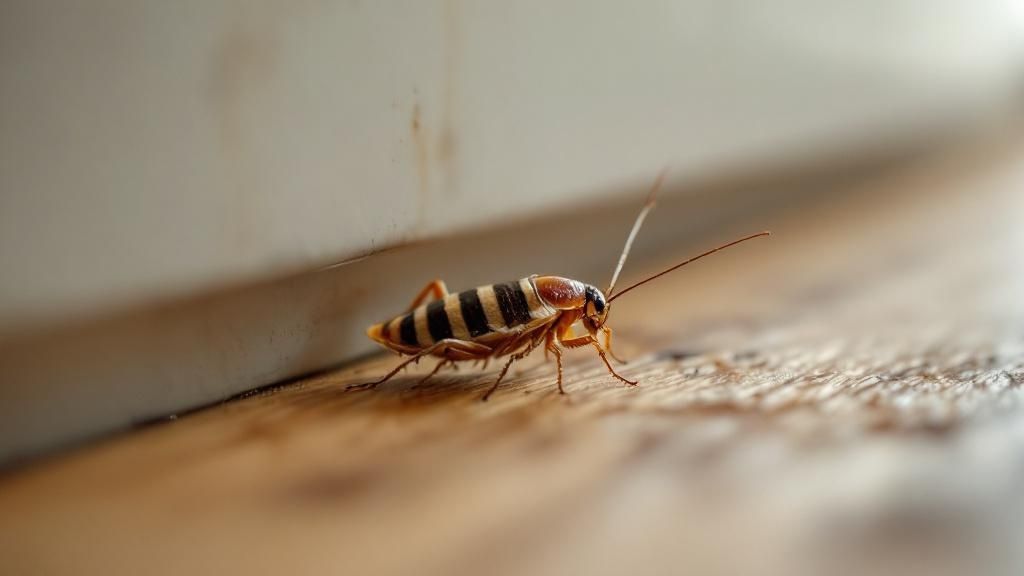
Before you can figure out how to get rid of German cockroaches, you have to be sure that’s what you’re dealing with. Getting this first step right is critical. These pests are smaller than other common roaches, light brown, and have two dark stripes running down their backs.
Spotting even one is a huge red flag. It often means a much larger problem is hiding just out of sight.
Confirming You Have German Cockroaches
Before you start any treatment plan, you need to be certain you've correctly identified your unwelcome guests. Using the wrong products wastes time and money. It also lets the real infestation grow worse. For homeowners in Santa Cruz County, German cockroaches are a common and frustrating issue.
Unlike larger roaches you might see outside, German cockroaches are almost always an indoor pest. Their small size is their superpower. It lets them hide in tiny spaces, from cracks in your kitchen cabinets to the warm motors behind your appliances.
Key Identifiers to Look For
Spotting them isn't always easy since they prefer the dark. But there are clear signs that point to a German cockroach infestation. Keep an eye out for these clues in your home:
- Size and Color: They are small, usually around half an inch long, and are a light brown or tan color.
- Distinct Markings: Their most recognizable feature is the two dark, parallel stripes running from their head down their back.
- Daytime Sightings: These pests are nocturnal. If you see one crawling around during the day, it’s a strong sign that their hiding spots are overcrowded. This signals a very heavy infestation.
To help you be certain, here’s a quick checklist you can use.
German Cockroach Identification Checklist
| Characteristic | Description for German Cockroaches |
|---|---|
| Size | Small, about 1/2 inch in length. |
| Color | Light brown to tan. |
| Stripes | Two distinct dark, parallel stripes on the pronotum (the shield behind the head). |
| Wings | Adults have wings, but they rarely fly. |
| Location | Almost always found indoors, especially in kitchens and bathrooms. |
| Droppings | Small, dark, pepper-like specks found on countertops or in drawers. |
| Odor | A musty, oily smell may be noticeable with large infestations. |
| Egg Cases | Look for light brown, purse-shaped egg capsules (oothecae) in hidden areas. |
If what you're seeing matches these descriptions, you have German cockroaches on your hands.
The German cockroach is the most common indoor cockroach pest in the world. Its success comes from its tiny size, fast reproductive cycle, and ability to resist insecticides. A single female can produce over 200 eggs in her lifetime, which is why populations are often made up of about 80% young roaches. You can learn more about their life cycle from Rutgers University.
Because they thrive in humid environments, our coastal climate in areas like Capitola and Aptos makes kitchens and bathrooms prime real estate. Always check under sinks, behind toilets, and around dishwashers—these are their favorite hiding spots.
Finding evidence of these pests can be unsettling. But proper identification is the key to solving the problem for good. Our guide on how to stop a cockroach infestation offers more prevention strategies. A correct ID ensures that the next steps you take are the right ones for a roach-free home.
Why Cockroaches Choose Your Santa Cruz Home
To get rid of German cockroaches for good, you have to understand what brings them inside. Let’s clear one thing up: it’s not just about having a dirty home. It’s about understanding what these pests need to survive.
Homes all across Santa Cruz County, from Capitola to Scotts Valley, can accidentally offer the perfect resources that German cockroaches need to thrive.
Unlike other pests that wander in from outside, German cockroaches depend on our homes. Recent studies have shown just how closely their history is tied to ours. They originated in Southeast Asia about 2,100 years ago and spread across the globe by hitching rides with human trade. You can read more about their history on PNAS.org. This explains why they are almost never found in nature.
The Big Three Cockroach Attractants
A German cockroach infestation is fueled by three simple needs: food, water, and shelter. Your home often provides these in places you’d never think to look.
-
Food Sources: They aren’t looking for a big meal. Tiny crumbs under the toaster, grease behind the stove, or residue in a recycling bin is a buffet for them. Pet food left out overnight is an especially powerful magnet.
-
Water and Moisture: Our coastal climate already provides the humidity they love. Add a slow drip under the kitchen sink or a damp sponge on the counter, and you’ve created the perfect roach drinking fountain.
-
Warm Shelter: German cockroaches crave warm, tight spaces. The motor of your refrigerator, the space behind a dishwasher, or the dark area beneath kitchen cabinets provide the warmth they need to reproduce quickly.
These pests are masters at finding resources. Their flat bodies allow them to squeeze into cracks as thin as a dime, giving them access to countless undisturbed hiding spots.
Making your home less inviting is your most powerful first move. By focusing on eliminating these three key things, you disrupt their life cycle. For more proactive measures, check out our guide on how to prevent roaches from entering your home.
The trick is to start thinking like a cockroach. Look for the small, overlooked details—the tiny spills, minor leaks, and stacks of cardboard boxes. Taking care of these weak spots is the foundation of any successful plan to get rid of German cockroaches.
The Hidden Health Risks of an Infestation
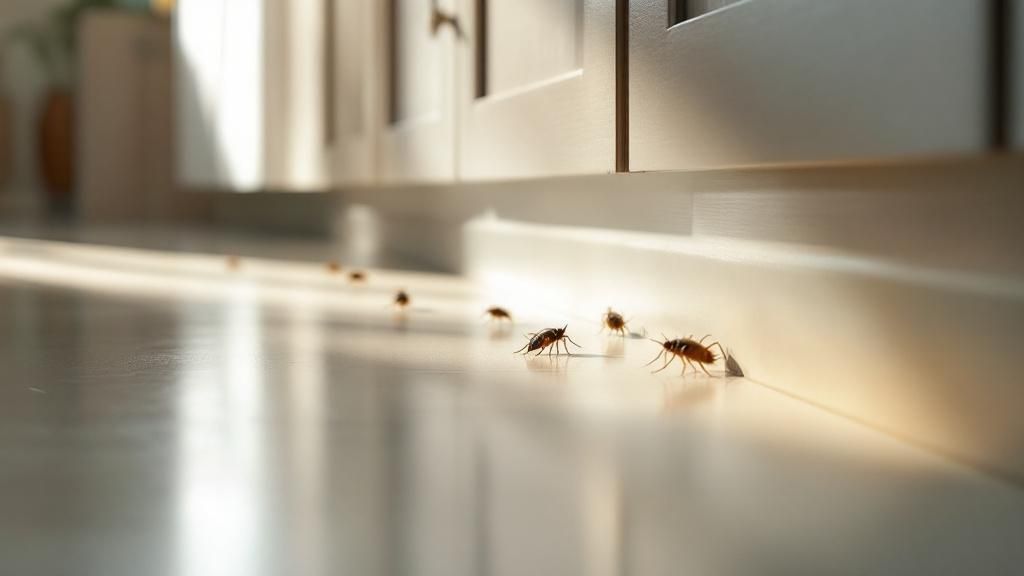
Finding a German cockroach is unsettling, but the real issue goes beyond the "ick" factor. These pests aren't just gross—they pose a direct threat to your family's health. Understanding these risks is why quick action is so important.
German cockroaches are active disease carriers. They spend time in drains and garbage before scurrying across your kitchen counters and food. As they travel, they leave a trail of dangerous germs behind.
Bacteria and Food Contamination
One of the biggest dangers is the contamination of your food. German cockroaches carry many types of nasty bacteria. A single roach can carry germs that cause food poisoning and other illnesses. They transfer these germs from their bodies to the surfaces where you prepare meals.
This isn't just a guess. Scientific studies found that roaches can host dozens of different bacterial species. In one analysis, a staggering 174 bacterial isolates were found on just 39 roaches, including dangerous pathogens like Staphylococcus aureus. The National Institutes of Health has detailed research on how cockroaches spread bacteria.
Allergies and Asthma Triggers
The health risks don't stop with bacteria. For many people, the allergens produced by German cockroaches are a major problem. These allergens come from multiple sources:
- Shed Skins: As young roaches grow, they molt and leave their old skins behind.
- Droppings: Their feces, which look like black pepper, build up in hidden areas.
- Saliva: They leave saliva on any surface or food they touch.
These tiny particles become airborne and are easily inhaled. They can trigger allergic reactions like skin rashes, sneezing, and watery eyes.
For anyone with asthma—especially children—exposure to cockroach allergens is very dangerous. It's a well-known trigger for asthma attacks, leading to wheezing, shortness of breath, and other serious breathing problems.
Pests of any kind can introduce health risks. Just as you want to get rid of roaches, knowing how to get rid of a rat infestation is also key to a healthy home. The bottom line is clear: a cockroach infestation is a health hazard that requires immediate attention.
Your Action Plan for a Cockroach-Free Home
Knowing what attracts German cockroaches is half the battle; taking action is the other. To win, you need a smart game plan. This strategy focuses on making your home completely unlivable for these pests.
Your plan boils down to three core pillars: Sanitation, Exclusion, and Moisture Control. By focusing your energy here, you can disrupt their entire life cycle and build a powerful defense.
The Foundation of Control: Sanitation
Sanitation is your most powerful tool. German cockroaches can survive on the tiniest crumbs and grease splatters. A consistent, thorough cleaning routine is the single best way to cut off their food supply.
Daily habits are what create long-term success. Maintaining a clean environment is a crucial part of any plan for a cockroach-free home. You might find this article on how often you should clean your home helpful.
Here are a few habits to adopt immediately:
- Secure All Food: Transfer pantry items like cereal and flour into airtight glass or hard plastic containers.
- Manage Pet Food: Don't leave pet food sitting out overnight. Clean the bowls after meals and store leftover kibble in a sealed container.
- Deep Clean Appliances: Pull out your stove and refrigerator to clean the grease and crumbs that collect behind and underneath them.
Blocking Entryways With Exclusion
Next, you have to cut off their travel routes. German cockroaches use tiny gaps and cracks like highways to move between rooms. Sealing these entry points is a simple but effective tactic.
Grab a flashlight and a tube of caulk. Inspect your home for these common entry points:
- Gaps around water pipes under sinks.
- Cracks between countertops and the wall.
- Crevices along baseboards or inside cabinets.
Sealing even the smallest openings can make a huge difference. A space as thin as a credit card is more than enough for a German cockroach to squeeze through.
Eliminating Moisture Sources
Finally, you need to turn off their water supply. Cockroaches can survive for weeks without food, but only a few days without water. Our humid coastal climate in Santa Cruz gives them an advantage, so controlling moisture inside is essential.
Fix any leaky faucets under sinks and repair dripping pipes. Make sure your bathroom is well-ventilated to cut down on condensation. Don't leave damp sponges on the counter, and wipe your sink dry before going to bed.
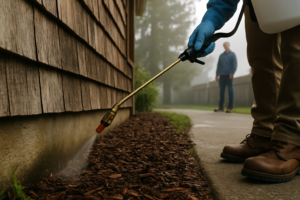
This simple infographic provides a great overview of the basic safety steps to follow if you decide to use insecticides as part of your broader strategy.
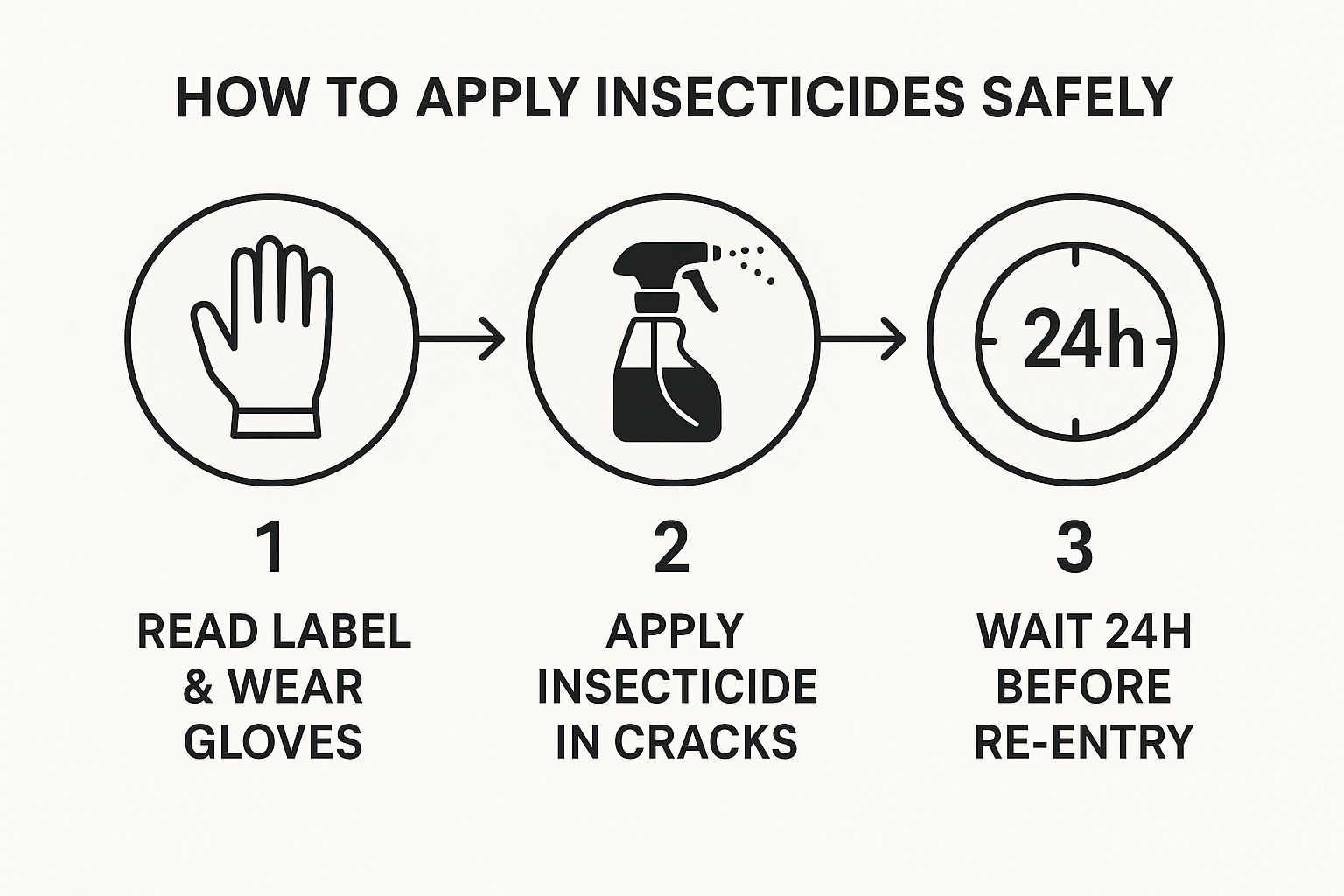
As the visualization highlights, safety is the non-negotiable first step before any application. Always read the label and protect yourself.
To help you stay on track, I've put together a simple checklist that breaks down these preventative tasks into a manageable routine.
Eco-Friendly Prevention Checklist
| Action Area | Daily Task | Weekly/Monthly Task |
|---|---|---|
| Sanitation | Wipe down counters and stovetop after every meal. Sweep or vacuum kitchen floors. Wash dishes immediately. | Deep clean under and behind appliances. Clean out the toaster and microwave. Organize and inspect the pantry. |
| Exclusion | Inspect for new cracks or gaps around windows and doors. | Inspect and seal gaps around pipes, baseboards, and wall outlets. Repair any torn window screens. |
| Moisture Control | Wipe sinks dry before bed. Fix any drips or minor leaks immediately. | Check for leaks under sinks and around toilets. Ensure bathroom fans are working properly. |
Following this checklist consistently will make your home far less inviting to German cockroaches. It gives you the upper hand in preventing an infestation before it starts.
Knowing When to Call for Professional Help
While keeping things clean and sealing cracks are powerful first steps, German cockroaches are some of the most stubborn pests you’ll ever face. Sometimes, an infestation can take hold and quickly spiral out of control.
Knowing the signs that a problem has moved beyond a DIY fix is key to getting rid of them for good.
German cockroaches are very resilient. They have developed resistance to many over-the-counter pesticides. These products often just scatter them into new hiding spots, making the problem worse. Their breeding cycle is so fast that the population can rebound in just a few weeks.
When DIY Isn’t Enough
It’s tempting to keep trying store-bought solutions, but there are clear signs it's time to bring in an expert. Watch out for these red flags:
- Seeing Roaches During the Day: This is a big one. Cockroaches are nocturnal, so a daytime sighting usually means their hiding spots are overcrowded. This points to a severe infestation.
- A Persistent Musty Odor: A large cockroach population produces a distinct, oily, and unpleasant smell. If you notice this odor, the infestation is likely well-established.
- Repeated Sightings After Treatment: If you’ve tried bait stations or sprays and you’re still seeing roaches, the core of the population is still active.
A professional service brings advantages that store-bought products can't match. Technicians have access to specialized baits and insect growth regulators (IGRs) that disrupt the roach life cycle without posing a big risk to your family or pets.
What to Expect from a Professional Service
Calling for professional help isn't giving up—it's making a smart decision to protect your home. At West Pest Co., our approach is thorough and designed for long-term results, especially for residents in Scotts Valley, Santa Cruz, and nearby areas.
An expert will start with a detailed inspection to find all hiding spots and entry points. From there, they’ll create a specific plan that targets the infestation at its source.
This integrated strategy is the most effective way to handle a German cockroach problem. If you need a trusted exterminator in Santa Cruz, our team is ready to help you reclaim your home with safe and effective solutions.
Frequently Asked Questions About German Cockroaches

We get a lot of calls from stressed-out homeowners in Santa Cruz about German cockroaches. To clear things up, we’ve put together answers to the most common questions we hear.
Why are German cockroaches so hard to get rid of myself?
German cockroaches are tough for a few key reasons. First, they reproduce at an unbelievable rate. A single female can lead to an infestation of thousands of roaches in just one year.
They're also masters of hiding. Their small bodies let them squeeze into tiny cracks behind appliances and inside walls. It's nearly impossible for a homeowner to find and treat every single nesting site. Finally, they often resist over-the-counter pesticides, which means store-bought sprays may not work.
Is it true that if I see one, there are many more?
Yes, unfortunately, this is absolutely true. German cockroaches are nocturnal and very secretive.
If you spot one out in the open during the day, it’s a reliable sign of a huge, overcrowded infestation. The roach you saw was likely forced out because there was no more room in its hiding spot. For every one you see, there could easily be hundreds more hidden away.
How did German cockroaches get into my clean house?
It’s a common myth that cockroaches only show up in dirty homes. While clutter provides an easy meal, these pests are expert hitchhikers.
They can be brought into the cleanest Santa Cruz homes inside grocery bags, cardboard boxes, or used furniture. In apartments, they travel easily between units through shared plumbing and walls. A clean home helps, but it doesn’t make you immune.
What does an eco-friendly cockroach treatment involve?
At West Pest Co., our eco-friendly approach uses Integrated Pest Management (IPM). This is a smart method that gets to the root cause of the infestation.
We start with a thorough inspection. Then, we use targeted baits and low-risk insect growth regulators (IGRs) that are carefully placed away from your family and pets. We also use physical methods like sealing cracks to block them off for good. This strategy gives long-term results without using unnecessary chemicals.
Can I get rid of cockroaches for good?
Yes, long-term control is definitely possible. It requires a partnership between professional treatment and your own home maintenance. A professional service can wipe out the active infestation.
After that, keeping them from coming back is all about consistent cleaning, sealing entry points, and controlling moisture. Understanding how often pest control should be done can give you a solid plan for ongoing protection. This combined effort delivers a lasting solution.
Don’t let German cockroaches take over your home. The team at West Pest Co. has the expertise and eco-friendly solutions to eliminate infestations safely. If you're ready to reclaim your home, contact us today for a free estimate and let our experts create a customized plan for you.