Direct Answer: A rodent problem is early-stage activity — one or two animals, limited signs. A rodent infestation means multiple animals are actively living, nesting, and reproducing inside your home.
You found droppings behind the stove. Maybe you heard something moving in the wall at night. Now you’re trying to figure out whether this is a small issue you can handle yourself or something that has already gotten out of hand.
That question matters more than most people realize. A rodent problem and a rodent infestation are not the same thing — and treating them the same way is one of the most common reasons Santa Cruz County homeowners end up dealing with the same issue six months later.
Santa Cruz’s coastal climate makes this more complicated than it sounds. The fog, the mild winters, the older housing stock in neighborhoods like the Westside and Live Oak — all of it creates ideal conditions for rodents to move in and stay in. Knowing which stage you’re actually in changes everything about how you respond.
What a Rodent Problem Actually Looks Like
A rodent problem is early-stage. You’re seeing signs of activity, but those signs are limited and relatively fresh.
Common indicators include:
- A small number of droppings in one or two locations — not scattered throughout the house
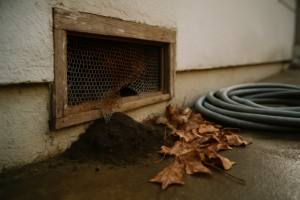
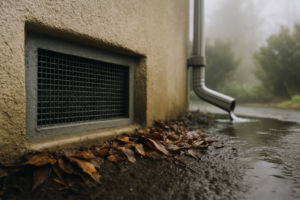
- One entry point or gap you can identify, usually around pipes, vents, or a gap under a door
- Sounds at night that are inconsistent — not every night, not in multiple walls
- No visible nesting material — no shredded insulation, paper, or fabric pulled into corners
- One trap catch over several nights, with no further activity after that
At this stage, you’re likely dealing with a single animal or a small number of scouts exploring the space. The activity hasn’t established itself yet.
This is the stage where a motivated homeowner can often manage things with properly placed snap traps, entry point sealing, and some patience. But it’s also the stage where doing nothing — or doing the wrong thing — turns a problem into something much harder to control. If you’re unsure when to stop handling it yourself, that line is closer than most people assume.
What Crosses the Line Into a Rodent Infestation
An infestation isn’t just “more rodents.” It’s a different situation entirely — one where animals have established territory, found food and water sources, and in most cases, started reproducing.
A single female rat can produce up to 40 offspring in a year under the right conditions. Once a colony gets established in a wall cavity, crawl space, or attic, the population can grow faster than traps alone can reduce it.
Signs that point toward a true infestation:
- Droppings in multiple rooms or multiple areas of the same room
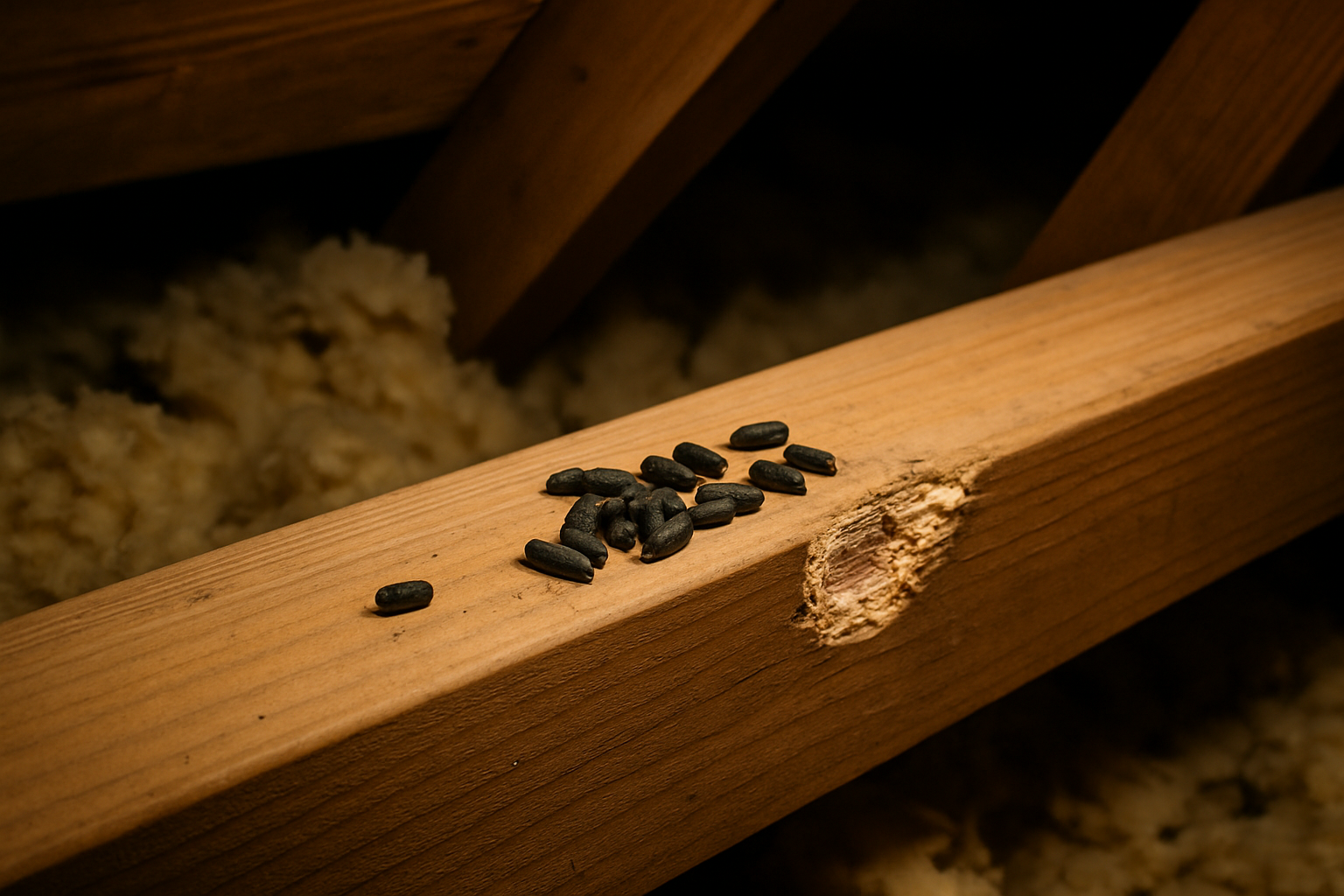
- Fresh gnaw marks on wiring, wood framing, or food packaging — not just old damage
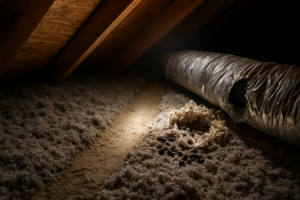
- Nesting material found in wall voids, attic insulation, or under appliances
- Rub marks (greasy smears along baseboards or wall edges from repeated travel paths)
- Sounds in multiple walls or ceiling areas, often every night
- Pets acting alert or anxious near walls at consistent times
- Traps catching animals repeatedly over days or weeks without activity slowing
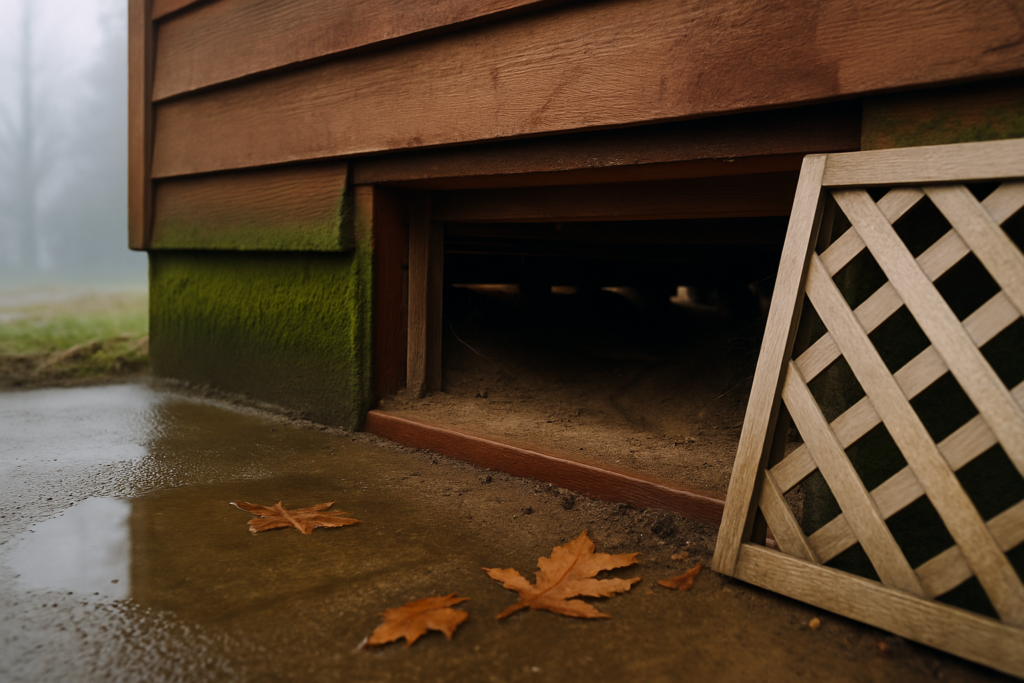
In older Aptos and Capitola homes with pier-and-beam foundations, this kind of activity often spreads through the subfloor before the homeowner ever hears it upstairs. By the time the signs are obvious inside the living space, the population underneath may already be well established.
Understanding why rats keep coming back even after you’ve dealt with them is key — because without addressing the underlying entry points and attractants, even a successful treatment won’t hold.
Problem vs. Infestation: How to Read the Signs
This side-by-side breakdown shows the key differences between early-stage rodent activity and an active infestation — based on what a technician actually looks for during an inspection.
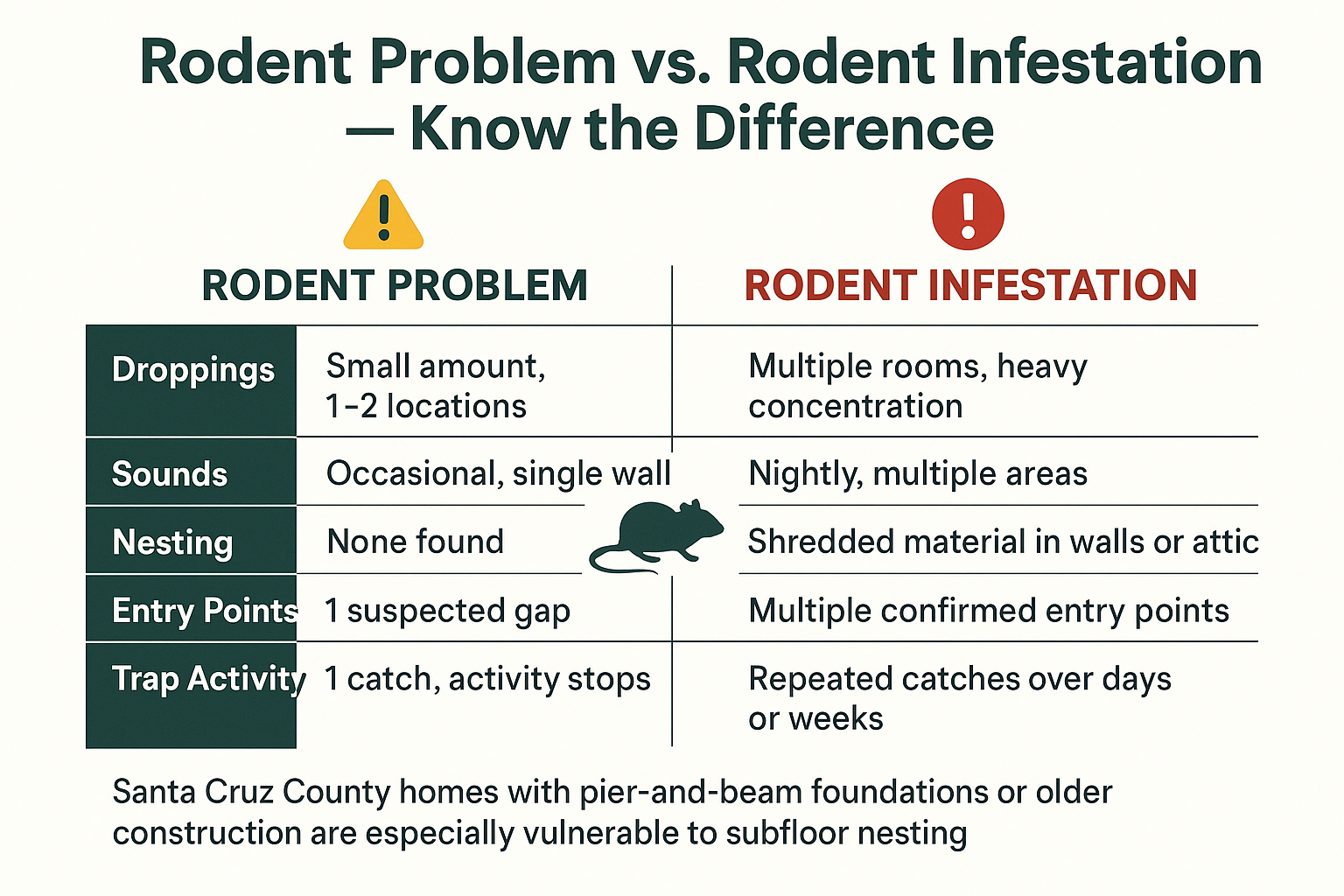
Rodent Problem vs. Infestation at a Glance
Use this as a quick reference when you’re trying to read the signs in your own home. The middle column reflects what’s typical in Santa Cruz County based on local housing stock and climate conditions.
| What You’re Seeing | Likely Stage | Suggested Next Step |
|---|---|---|
| 1–2 droppings near one appliance | Early problem | Set snap traps, identify entry point |
| Droppings in kitchen AND garage | Escalating problem or early infestation | Professional inspection recommended |
| Nesting material found in attic or crawl space | Active infestation | Call a professional — traps alone won’t resolve this |
| Sounds every night in multiple walls | Established infestation | Professional treatment needed |
| One trap catch, no further signs in 7–10 days | Problem likely resolved | Seal entry point, monitor for 2 weeks |
| Repeated trap catches over multiple days | Active infestation | Population too large for DIY trapping alone |
Why This Distinction Changes How You Treat the Problem
A homeowner dealing with one rat that wandered in from the yard doesn’t need the same response as a family in Ben Lomond whose crawl space has been hosting a colony through two wet winters.
For an early-stage problem, the approach is targeted:
- Identify and seal the one or two entry points involved
- Place snap traps (not glue boards, not poison bait in areas accessible to pets) in active zones
- Remove whatever attracted the animal — open compost, pet food left out, accessible birdseed
For an infestation, the approach is fundamentally different. You’re not just catching individual animals. You need to understand the full scope — where they’re nesting, how many access points exist, whether there are juveniles in the walls — before treatment makes sense. Placing traps in the wrong locations when an infestation is active often just redistributes activity rather than reducing it.
This is also why a professional inspection has real value at the infestation stage. A thorough look at the things pest inspectors find that homeowners usually miss — like secondary entry points under sub-slab penetrations or behind dishwasher kick plates — is often what determines whether a treatment actually works long-term.
For homes with active infestations, professional rodent control in Santa Cruz County typically runs $200–$500 for initial treatment, depending on the size of the structure, the extent of the infestation, and whether exclusion work (sealing entry points) is included. Some situations require follow-up visits, which may add $75–$150 per return trip.
The Santa Cruz Factor: Why Rodent Problems Here Escalate Faster
Inland California gets a cold winter that slows rodent activity and gives homeowners a natural reset. Santa Cruz County doesn’t.
The coastal climate — consistent fog, mild temperatures that rarely drop below 45°F even in January, and high soil moisture — means rodents stay active and mobile year-round. Roof rats in particular thrive in this environment. They nest in dense vegetation, move through coastal oak canopies, and find their way into attics along utility lines and overhanging branches. In neighborhoods like Seabright or the upper Westside, mature tree canopy makes roof-level entry points almost unavoidable without proactive exclusion.
What this means practically: a problem that might stay contained for three months in Fresno can become a full infestation in six to eight weeks in a Santa Cruz home if early signs are ignored. The mild climate removes the seasonal pressure that would otherwise slow reproduction and movement.
For properties in Watsonville, Corralitos, and the agricultural edges of the county, the added pressure of nearby fields and orchards creates a steady population of Norway rats and deer mice that cycle toward residential structures when crops are harvested or irrigation stops. That’s a different dynamic than what urban homeowners deal with, and it usually means entry-point management is more important than trapping volume.
Frequently Asked Questions About Rodent Problems and Infestations
I only found a few droppings — do I actually need a professional?
Not necessarily. If the droppings are limited to one area, appear to be from a single animal, and you can identify a likely entry point, you may be able to handle it yourself with snap traps and some sealing. But if you find fresh droppings again within a week of setting traps — or if the droppings show up in a second location — that’s worth getting eyes on professionally.
How do I know if the rodents are rats or mice? Does it matter?
Yes, it matters for treatment. Rat droppings are roughly the size of a raisin — dark, blunt-ended, about ¾ inch long. Mouse droppings are much smaller, around ¼ inch, with pointed ends. Rats tend to follow fixed travel paths and are more cautious around new objects like traps, which means placement matters more. Mice are curious and will investigate new items quickly. The treatment approach, trap type, and bait used are all different.
Can I use poison bait instead of snap traps?
Poison bait (rodenticide) carries real risks in homes with children or pets, and it creates a secondary problem — animals that ingest the bait often die inside walls, leading to odor issues that can last 2–4 weeks. Snap traps placed correctly are faster, cleaner, and safer in most residential situations. If you’re considering rodenticide, it’s worth talking to a professional first about placement and product selection.
I had a pest control company treat my home six months ago and the rats are back. Why?
Usually because the entry points weren’t fully sealed, or because a new gap opened up — which happens in older homes that shift seasonally. Treatment without exclusion is a temporary fix. The reason rats keep coming back almost always comes down to access, not the treatment itself. A follow-up inspection focused on the structure — not just the activity — usually reveals the gap.
What does a professional rodent inspection actually involve?
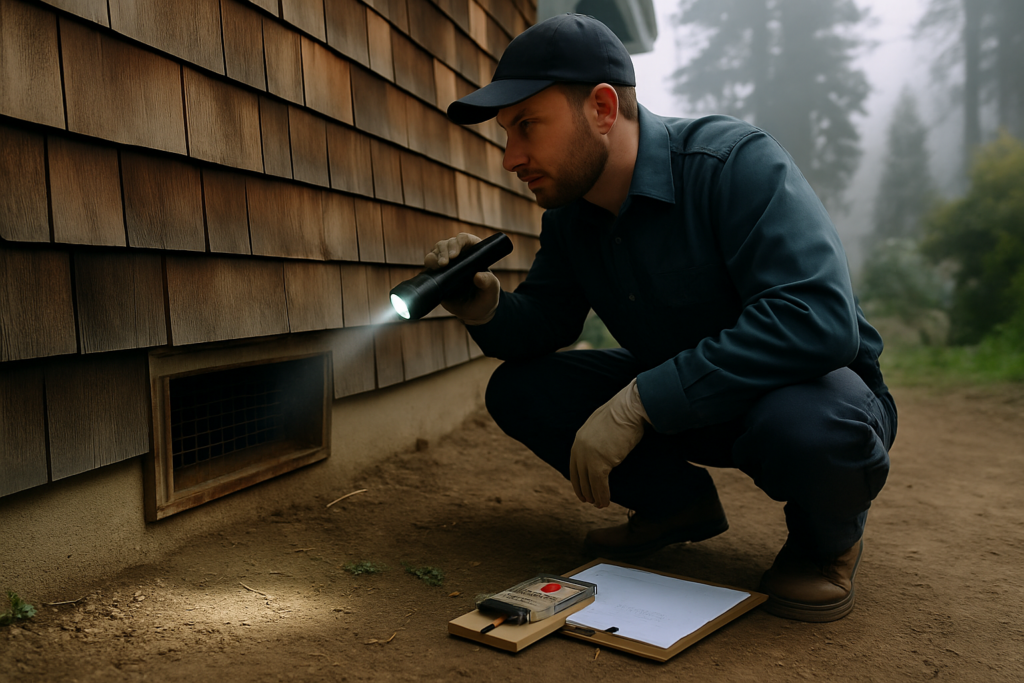
A thorough inspection covers the attic, crawl space or subfloor, garage, and exterior perimeter. The technician is looking for entry points (gaps as small as ½ inch for mice, ¾ inch for rats), active nesting, travel paths, and conditions that are attracting animals. In most Santa Cruz County homes, the critical areas are the roofline, where eaves meet siding, and anywhere utility lines enter the structure.
If I have an infestation, how long does treatment take to work?
For a moderate infestation, you should see a significant reduction in activity within 1–2 weeks of a professional treatment. Full resolution — meaning no new signs and confirmed entry points sealed — typically takes 3–4 weeks including follow-up. Larger infestations or homes with extensive subfloor activity may take longer. Anyone promising a single visit will resolve everything permanently isn’t being straight with you.
Not Sure Which Stage You’re In?
If the signs you’re seeing don’t clearly fit one column or the other, an inspection is the most practical next step — and it removes the guesswork before you spend time or money on the wrong approach. West Pest Co. serves all of Santa Cruz County, and Matthew West brings the kind of straight-talk assessment that helps homeowners understand exactly what they’re dealing with before deciding how to respond. Call (831) 430-8402 or visit westpestco.com to get a read on what’s actually happening in your home.