Direct Answer: Black widows in Santa Cruz homes hide in dark, undisturbed spots: garages, sheds, crawl spaces, and under deck boards or patio furniture. Look for a shiny black body and a red hourglass underneath.
You move a box in the garage, and something shiny and black drops on a thread. Now you are standing there wondering if you just met a black widow or one of the dozen harmless spiders that share your house.
I get this call constantly in Santa Cruz County, and the honest answer is that most of the time it is not a widow. But sometimes it is, and homeowners deserve to know the difference instead of guessing.
This is what I look for in the field: how to identify one, the spots they actually pick in coastal homes, and when a sighting is worth an inspection versus a broom and a pair of gloves.
How to Tell a Black Widow From Every Other Spider in Your Garage
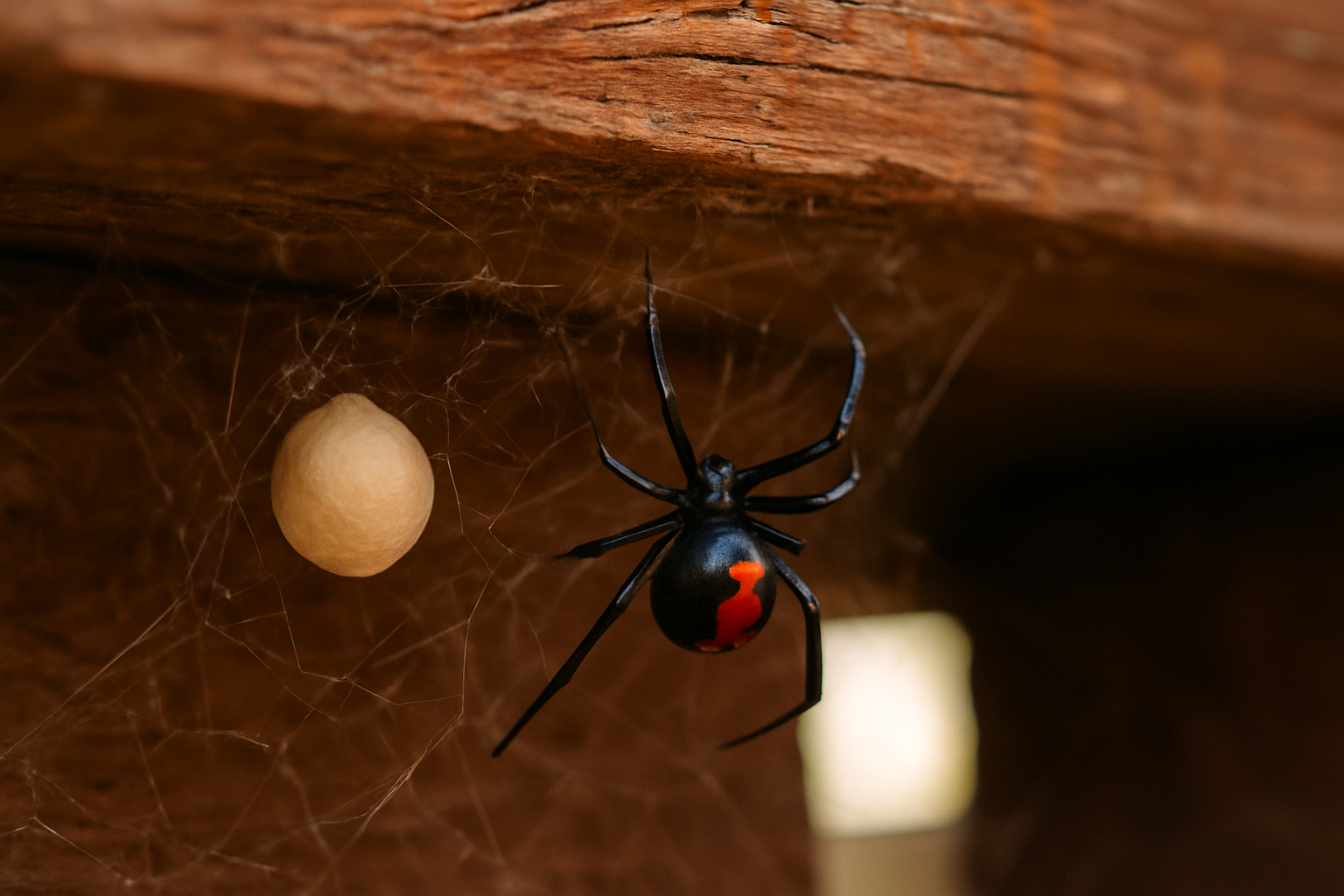
Adult female black widows are the ones that matter. They are glossy jet black, about the size of a large pea in the body, with legs that look thin and slightly spindly for their weight.
The giveaway is the red hourglass on the underside of the abdomen. You will not see it from above, which is why so many people misidentify them. If a spider is dark but has stripes, patterns, or a dull, fuzzy body, it is almost certainly something else.
A few other identifiers I use on site:
- The web is messy, not a neat wheel. It looks like tangled cobweb, usually within a foot or two of the ground.
- The silk is unusually strong. You can feel it snap when you sweep it.
- She hangs upside down in the web, which puts that red mark in view.
- Egg sacs are papery and tan, round, and about the size of a pencil eraser.
Male black widows are smaller, lighter brown or gray, and rarely encountered. If you want a broader rundown of what else is crawling around out here, I put together a guide on spiders common to Santa Cruz that covers the lookalikes in more detail. The University of California’s pest notes on spiders is another solid reference for identification.
Where They Actually Hide in Santa Cruz County Homes
Black widows want three things: dark, dry-ish, and undisturbed. That rules out most of your living space and points straight at the parts of the property you only touch a few times a year.
The spots I find them in over and over:
- Detached garages, especially in the corner behind stored boxes and along the bottom of shelving
- Garden sheds and the underside of stored pots, buckets, and wheelbarrows
- Under patio furniture, particularly the lip under a plastic chair seat or the folds of a cushion cover
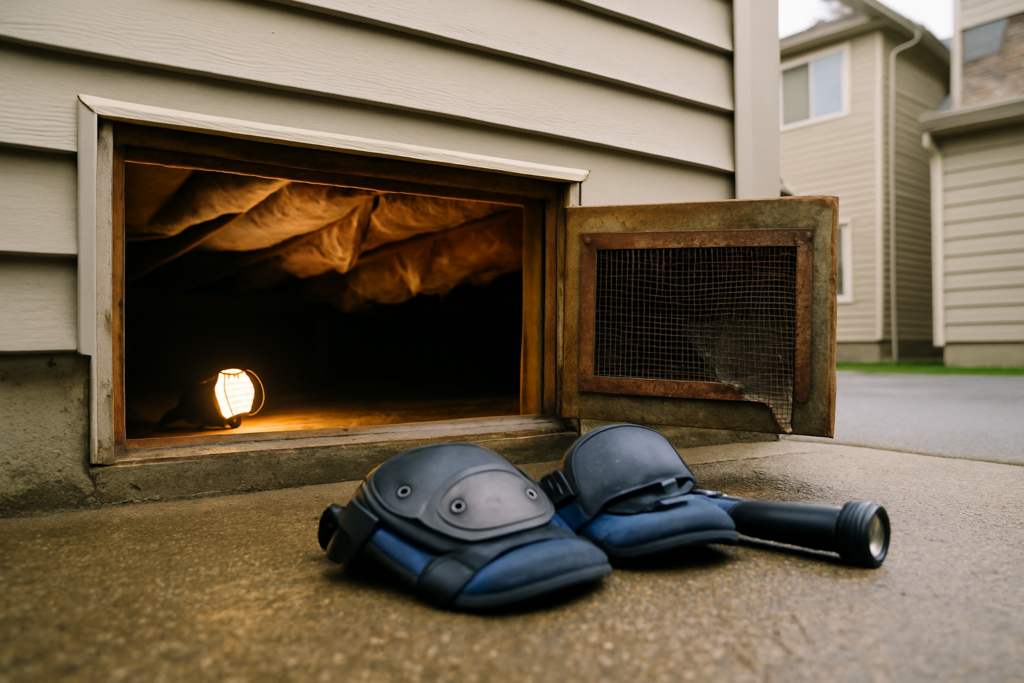
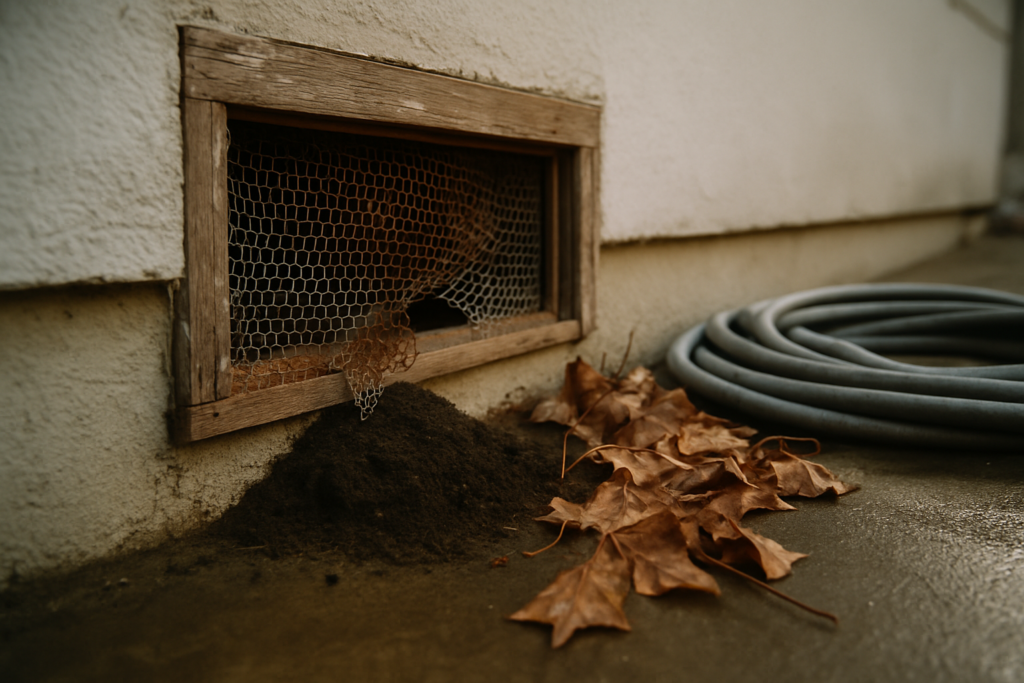
- Crawl spaces and vent screens on the older raised-foundation homes all over the Westside and Soquel
- Under deck boards and along the inside face of deck skirting
- Woodpiles, meter boxes, and the recessed handles of trash and recycling bins
Notice the pattern. None of these are places you walk past daily. That is exactly the point, and it is why bites usually happen when someone reaches blindly into a box or slides a hand under a piece of stored equipment.
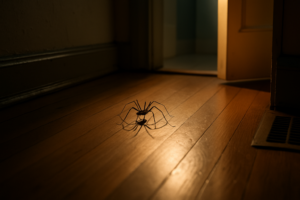
Inside the house is different. Finding one in a bedroom or a hallway is uncommon, and when it happens repeatedly it usually means there is an established population just outside the wall, in a garage that shares a door, or in an attached storage room.
Black Widow vs. the Spiders People Confuse Them With
Here is the quick field comparison I run through when a homeowner sends me a photo. Most of the time it lands in one of the bottom three rows.
| Spider | What It Looks Like | Web Style | Concern Level |
|---|---|---|---|
| Black widow (female) | Shiny jet black, pea-sized body, red hourglass underneath | Messy tangle, low to the ground | Medically significant, worth attention |
| False widow | Dull brown to purplish, no clean hourglass, faint pattern on back | Similar tangled web | Nuisance only |
| Cellar spider | Pale tan, tiny body, very long thin legs | Loose, wispy web in ceiling corners | Harmless |
| Orb weaver | Bulky patterned body, often orange or brown, larger | Neat wheel-shaped web | Harmless, outdoor |
| Wolf spider | Brown, hairy, fast-moving, hunts on the ground | No web | Harmless, startling |
Why Our Winters Do Not Slow Them Down
In inland and northern California, spider activity drops off hard once temperatures fall. That does not happen here.
Our coastal fog, mild winter lows, and steady humidity mean black widows stay active more or less year round. I have pulled widows out of outbuildings in Ben Lomond and from under deck boards in the Aptos beach neighborhoods well into January.
The housing stock adds to it. A lot of Santa Cruz County homes are older wood-sided bungalows with detached garages and crawl-space foundations, which is close to ideal harborage. Add coastal moisture and thick landscaping against the siding and you have year-round shelter with a steady supply of the smaller insects widows feed on.
So the practical takeaway is simple: do not assume winter is a safe window for cleaning out the shed. Glove up in December the same way you would in August. The same climate logic applies to most of what we deal with locally, which I covered in more depth in this look at spiders in my house.
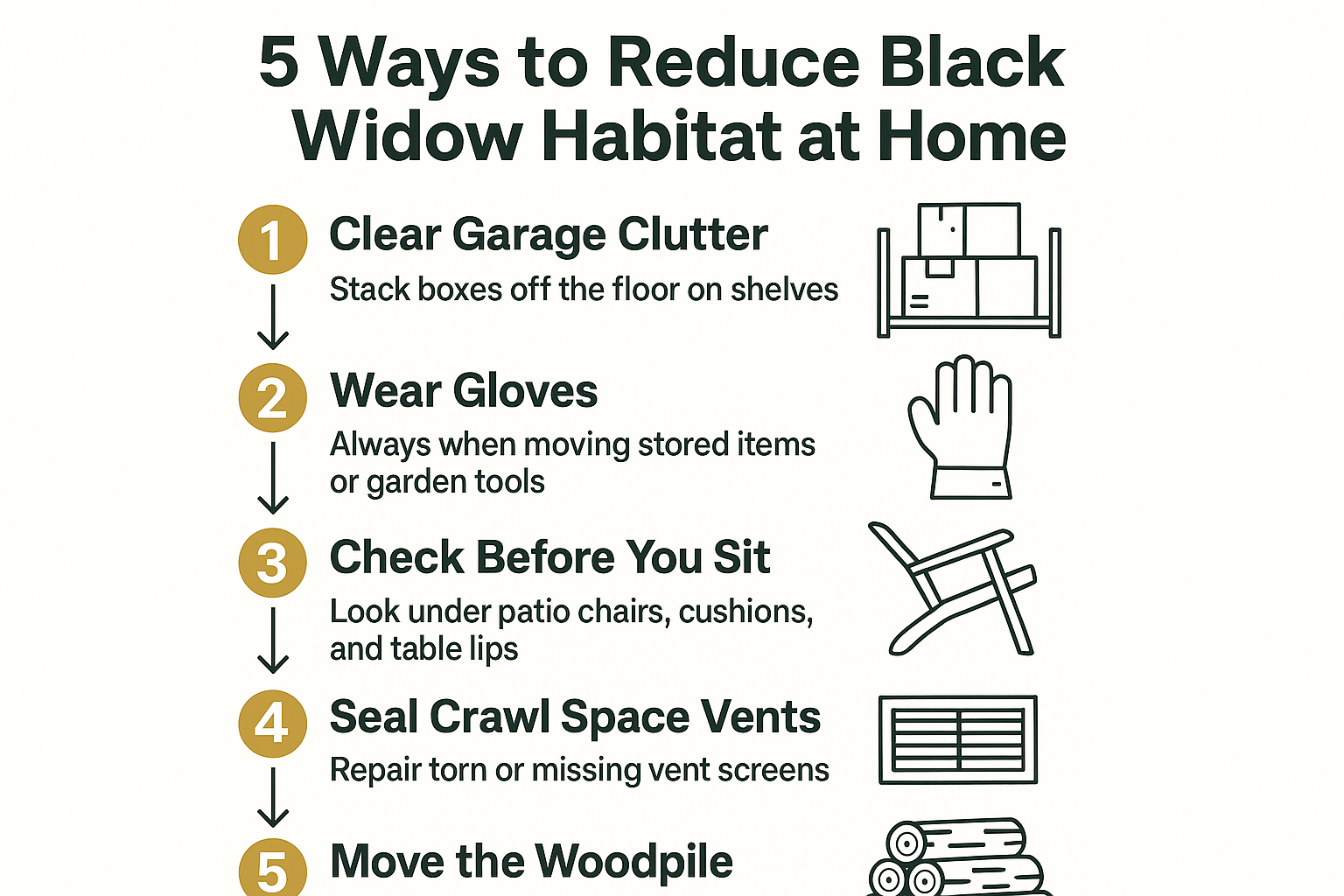
Five Habits That Cut Down Black Widow Encounters
None of these require a treatment call. They just remove the conditions widows depend on and keep your hands out of the places they like.
When a Sighting Is Worth a Professional Look
One widow in the back of a shed is not an emergency. Sweep the web, remove it, and glove up next time you go in there.
What changes my answer is repetition and location. Here is where I would want eyes on the property:
- You are finding multiple widows or egg sacs in the same area over a few weeks
- They are showing up in high-traffic zones, like an attached garage you walk through daily or a play area
- Someone in the home is young, elderly, or immune compromised, which raises the stakes on a bite
- You are not confident in the identification and do not want to guess
That last one matters more than people expect. A homeowner once came to us after months of unexplained bites at night that nobody could figure out. The actual culprit turned out to be tropical rat lice, not spiders at all, and no amount of spider treatment would have touched it.
That is the argument for inspection over broad spraying. Guessing from a distance gets you a treatment that misses. Walking the crawl space and the garage corners gets you the real answer, which is the same logic behind what pest inspectors actually look for inside your home.
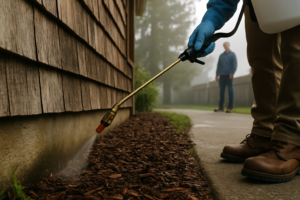
When there is an established population, the approach is a targeted residual treatment of harborage zones plus physical web and egg sac removal, not a blanket spray of the whole house. Cost varies with property size, how many structures are involved, and whether crawl space access is needed, but one-time targeted spider work in this area generally lands in the low hundreds. Ongoing plans are priced differently. Get an actual quote before you budget on that.
What to Do If Someone Gets Bitten
Black widow venom is medically significant, which is a different thing from deadly. Serious outcomes are rare, but reactions can be real, especially in children and older adults.
Symptoms usually show up within an hour or two: muscle cramping, abdominal pain, sweating, and pain that spreads out from the bite site rather than staying local.
What I tell homeowners:
- Wash the area with soap and water and apply a cold pack
- Call a doctor or poison control if symptoms go beyond mild local pain
- Do not wait it out with a child, an older adult, or anyone with a compromised immune system
- Keep the spider if you safely can, since identification helps
Bites are uncommon because widows are not aggressive. They bite when pressed against skin, which is exactly what happens when you reach into a box without looking.
Frequently Asked Questions About Black Widow Spiders in Santa Cruz Homes
Does one black widow mean there are more?
Not necessarily. A single female in an outbuilding is normal here. But if you are finding egg sacs or spotting several in the same area within a few weeks, that points to an established population rather than a wanderer.
Can I just spray a store-bought product on the web?
You can, and it may kill that individual spider. What it will not do is address the harborage that keeps drawing them back, and most over-the-counter sprays have short residual life in our damp coastal conditions. Clearing clutter usually does more good than the spray does.
Are black widows a bigger risk in an older home?
Somewhat, yes. Crawl-space foundations, detached garages, and unscreened vents give them more places to settle in undisturbed. Newer slab construction with sealed garages tends to have fewer options for them.
Do black widows come inside the living space?
It happens, but it is not their preference. They want undisturbed dark spots, and a lived-in bedroom is neither. Repeat sightings indoors usually trace back to an attached garage, a storage room, or a crawl space with a gap in the vent screen.
Is treatment safe around kids and pets?
It depends entirely on the products and the method. Targeted applications to harborage zones, with re-entry timing explained clearly, are a very different thing from broad interior spraying. Ask any technician what they are applying and where before they start.
Not Sure What You Are Looking At?
If you are finding widows repeatedly in a garage, crawl space, or anywhere your family walks daily, an actual set of eyes on the property beats guessing from a photo. West Pest Co. works throughout Santa Cruz County and the wider Monterey Bay region, and Matthew is usually the one who picks up the phone at (831) 430-8402. More on how we approach spider work is at westpestco.com.