Direct Answer: A regular home inspection evaluates the structure and systems of a home. A pest inspection focuses specifically on signs of insect or rodent activity, damage, and entry points — it requires a different set of eyes entirely.
If you’re buying or selling a home in Santa Cruz County, you’ve probably heard both terms thrown around: home inspection and pest inspection. Most people assume they’re getting the same thing — or that one covers the other. They don’t, and the gap between them can cost a homeowner thousands.
Santa Cruz’s year-round coastal humidity creates ideal conditions for rats, ants, cockroaches, and the kind of slow structural damage that builds up quietly behind walls and under floors. A general inspector walking through a Capitola bungalow or a Scotts Valley hillside home may catch a lot of things — but spotting active rodent harborage behind a water heater or an ant trail running through a wall void takes a different kind of attention.
This article explains what each inspection actually covers, what the real-world differences look like in the field, and how to decide whether you need one or both.
What a Regular Home Inspection Actually Covers
A licensed home inspector evaluates the physical condition of a property — the things you can see and test without tearing anything apart. They’re looking at the structure, systems, and safety of the building itself.
In a typical inspection, they’ll check:
- Roof condition and visible flashing
- Foundation and visible framing
- Electrical panels and visible wiring
- Plumbing fixtures and water pressure
- HVAC systems and ventilation
- Windows, doors, and interior surfaces
- Attic insulation (for condition, not pest activity)
Home inspectors are trained to spot water damage, code issues, aging systems, and deferred maintenance. But they are not trained or licensed to identify pest activity, and most inspection reports include a disclaimer that pest evaluation is outside their scope.
A general inspector might note that there are “what appear to be rodent droppings” in an attic — but they won’t trace how the rodents got in, how active the infestation is, or what damage has been done to insulation and wiring. That’s a pest inspector’s job.
What a Pest Inspection Focuses On Instead
A pest inspection is a focused evaluation of evidence of pest activity — current or past — and the conditions inside and around a home that make it vulnerable.
A trained pest professional is looking at things differently from the start. They’re checking entry points, not just damage. They’re reading evidence — gnaw marks, rub marks along baseboards, shed insect skins, frass near window frames — that a general inspector isn’t trained to recognize.
In Santa Cruz County specifically, what pest inspectors actually look for inside your home tends to include:
- Rodent entry points along rooflines, foundation gaps, and utility penetrations
- Active or historical ant activity in kitchen walls, crawl spaces, and moisture-prone areas
- Spider populations in garage corners, under decks, and in attic spaces
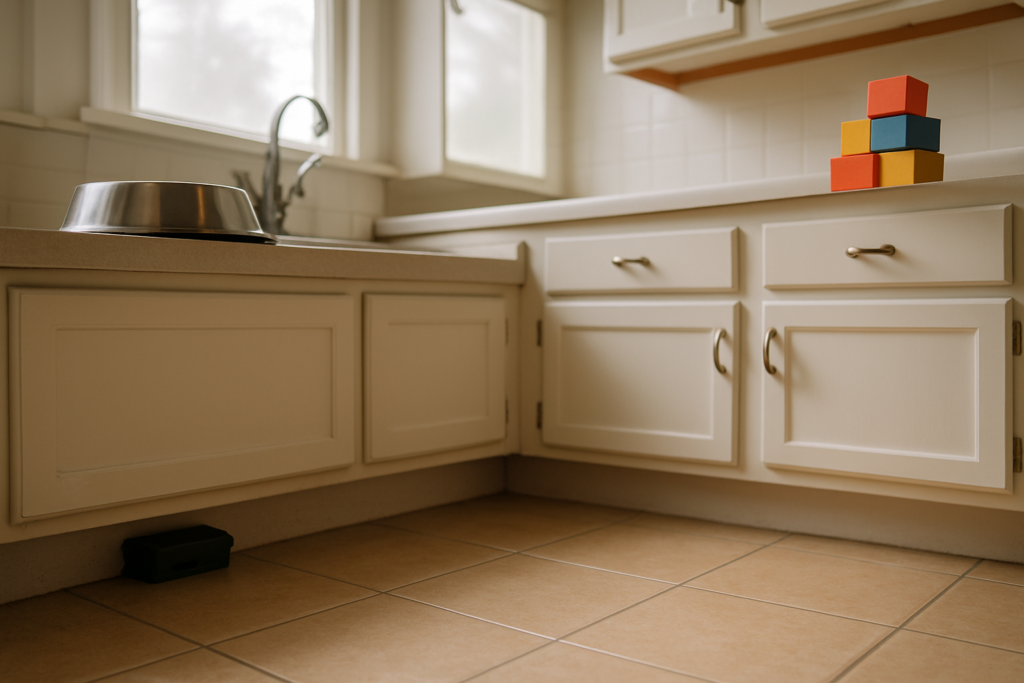
- Cockroach harborage in cabinet voids, under appliances, and in wall gaps near plumbing
- Flea evidence in carpet zones, particularly in homes with prior pet occupancy
- Wasp nesting activity in eaves, attic vents, and exterior wall voids
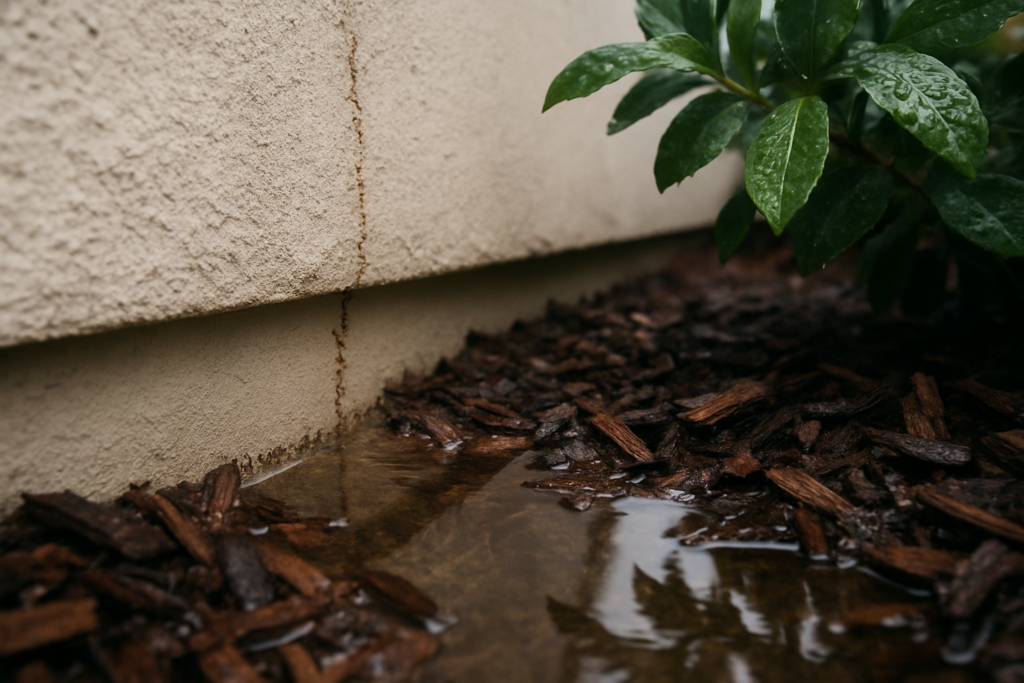
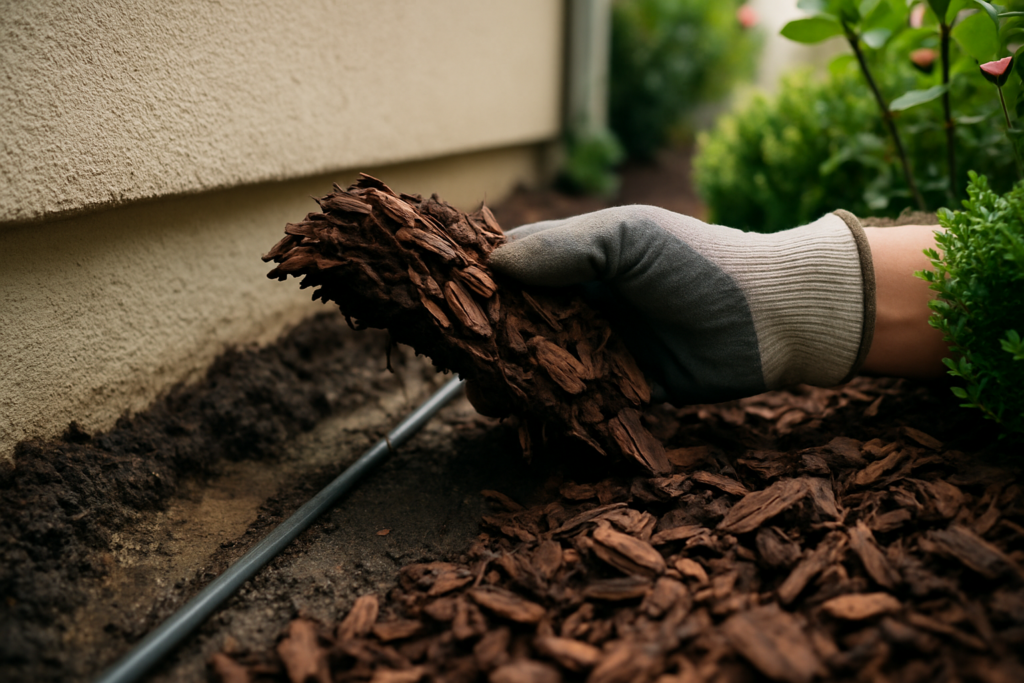
The inspection also covers conditions that attract pests — standing water near the foundation, dense vegetation against exterior walls, wood debris in crawl spaces, and gaps around pipe penetrations. These aren’t cosmetic observations. They’re the difference between a home that stays clean and one that needs treatment every few months.
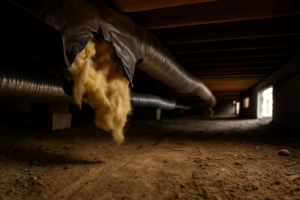
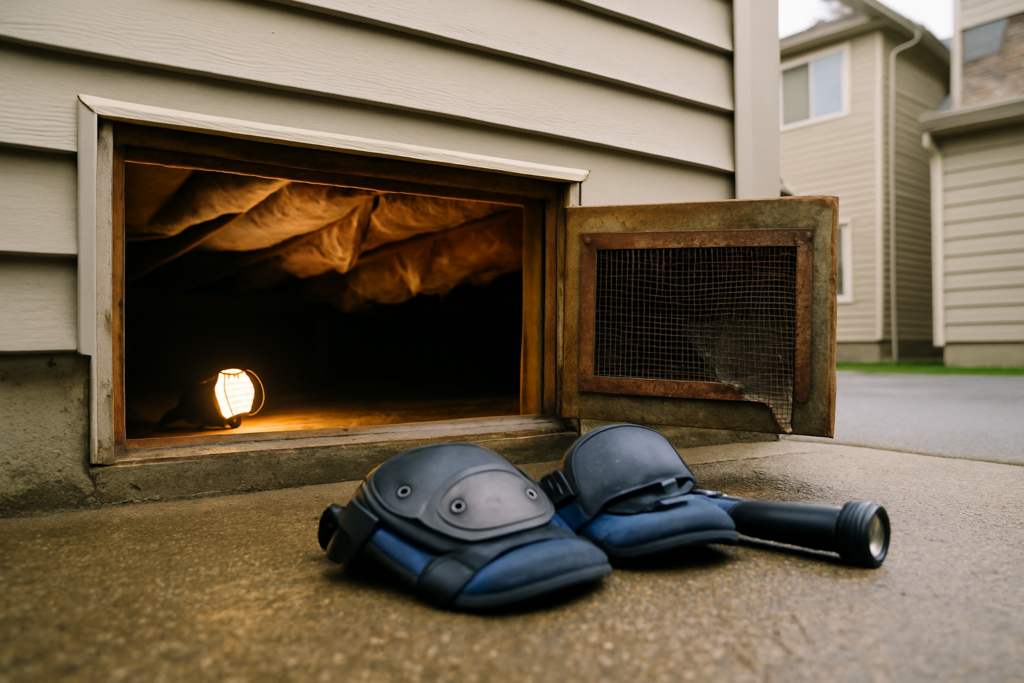
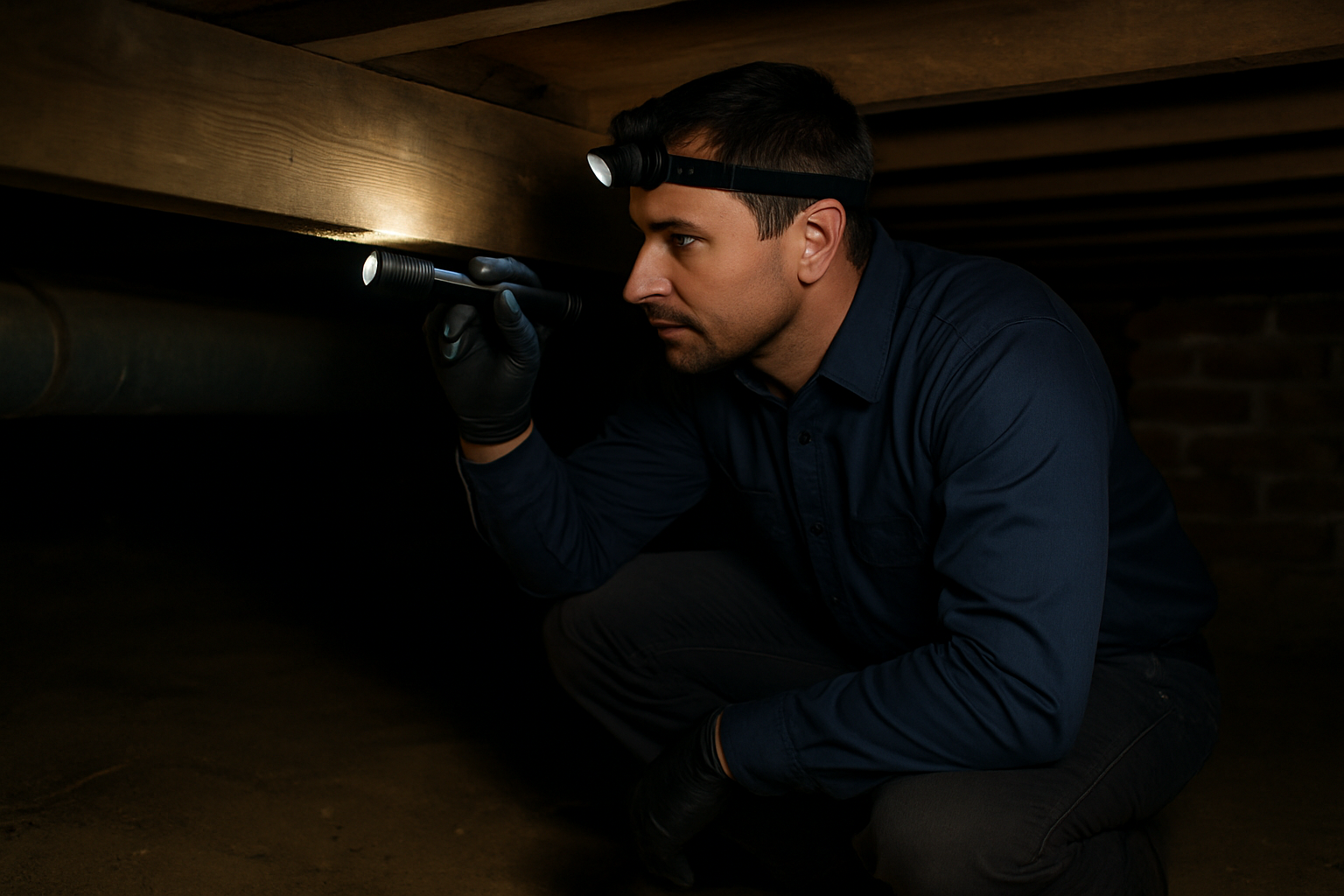
There’s also a practical difference in how deep a pest inspection goes. A pest professional will spend time in the crawl space, check under sinks with a flashlight, and look behind appliances. Most general inspectors do a visual walkthrough — they’re covering an entire home in 2 to 3 hours.
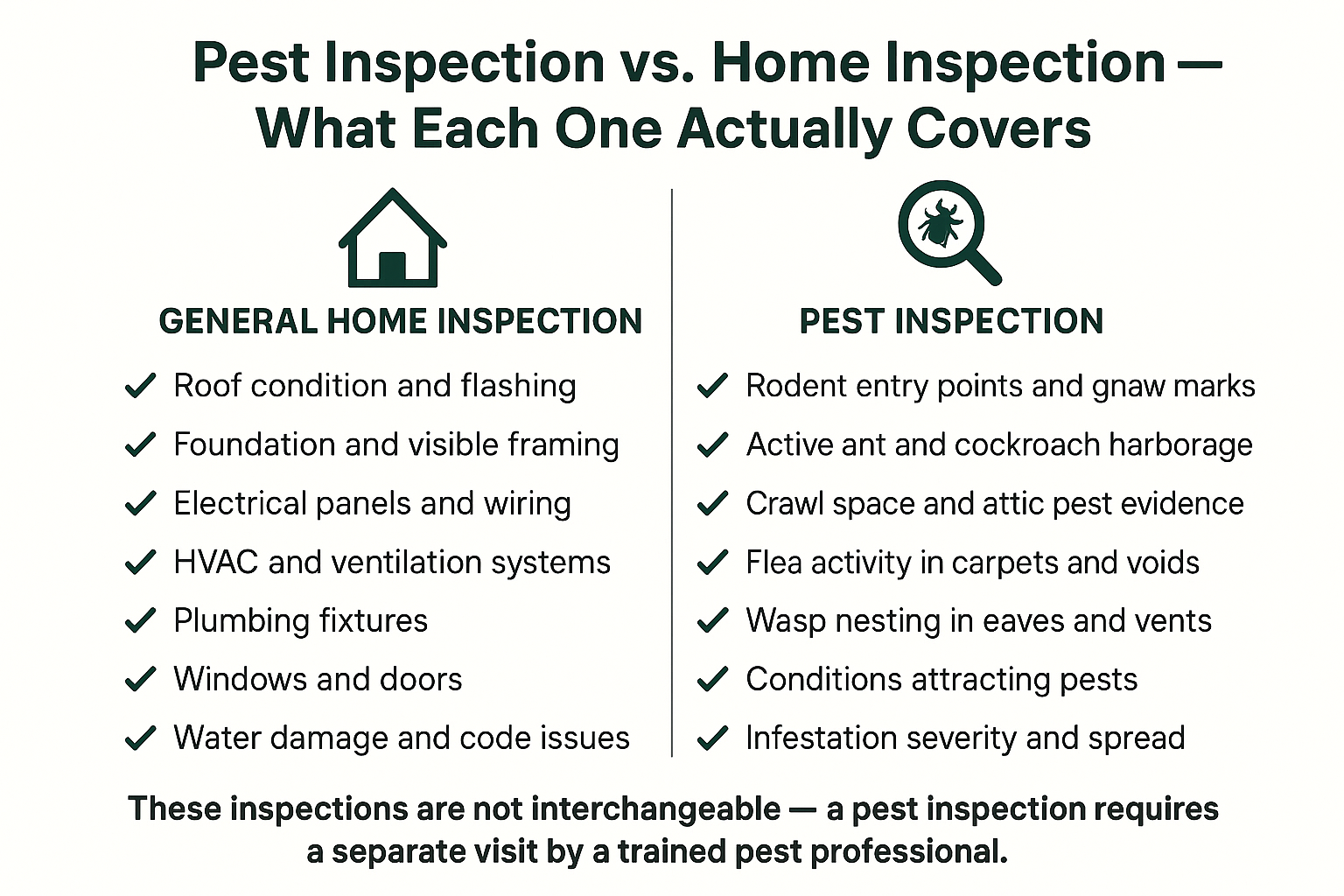
Pest Inspection vs. Home Inspection: Side-by-Side
This comparison shows exactly what each inspection type covers — and where they stop.
Quick Comparison: What Each Inspection Covers
Here’s how the two inspection types stack up on the things homeowners ask about most.
| What You Want to Know | Home Inspection | Pest Inspection |
|---|---|---|
| Rodent entry points and activity | Rarely flagged | Yes — primary focus |
| Active ant or cockroach evidence | Not evaluated | Yes — interior and exterior |
| Crawl space pest damage | May note visible damage only | Full evaluation with evidence |
| Attic insulation pest contamination | Notes condition, not cause | Identifies pest source |
| Structural damage from pests | May flag damage visually | Traces cause and activity |
| Entry point sealing recommendations | Not included | Yes — part of the assessment |
| Pest-attracting conditions (moisture, debris) | Sometimes noted incidentally | Yes — standard evaluation |
| Estimated cost to address issues | General contractor estimates | Treatment plan with specifics |
Why Santa Cruz Homes Often Need Both
In a lot of California markets, you’d only pull a pest inspection if a real estate transaction required it. Santa Cruz County is different.
The combination of marine fog, year-round mild temperatures, and older housing stock — especially in neighborhoods like the Westside, Seabright, and the older parts of Aptos — means pest pressure here is consistent across every season. Rats don’t wait for fall. Ants don’t take a winter break. How often a Santa Cruz home actually needs a pest inspection is a question worth asking seriously, not just when you’re buying.
A general home inspector walking through a 1970s beach-area home might catch the aging roof and note a soft spot in the subfloor — but they’re not going to trace that soft spot back to a slow rodent entry along the crawl space sill plate that’s been active for two years. That’s a different skill set and a different kind of attention.
The other practical issue: real estate transactions in Santa Cruz County often move fast, and buyers are sometimes told a home inspection “checked out” before anyone’s looked specifically at pest activity. That’s not a knock on home inspectors — it’s just a scope limitation that’s easy to miss in a competitive market. What pest inspectors look for that homeowners usually miss is a longer list than most buyers expect.
What a Pest Inspection Actually Costs in Santa Cruz County
Pest inspections in Santa Cruz County typically run $75 to $150 for a standard residential visit. That range reflects single-family homes — larger properties or homes with extensive crawl space access may run slightly higher.
In real estate transactions, the inspection fee is sometimes waived if treatment is performed by the same company. But outside of escrow, a standalone pest inspection is a separate paid visit — and it’s usually money well spent before a summer ant problem turns into a wall void issue, or before a rat you’ve already dealt with turns out to have been one of several.
By comparison, a general home inspection in the Santa Cruz area typically costs $400 to $600 depending on home size and the inspector’s scope. The two services are priced differently because they’re built differently — one is a systems audit, the other is an evidence search.
If you’re a homeowner — not buying or selling, just dealing with a problem — a pest inspection gives you a baseline. It tells you what’s active, what’s at risk, and what actually needs to be treated versus what can be monitored.
Frequently Asked Questions About Pest Inspections vs. Home Inspections
Does a home inspector check for rats and mice?
Not formally. A general home inspector may mention visible droppings or obvious signs of rodent activity in their report, but it’s outside their licensed scope. They won’t trace entry points, assess infestation severity, or recommend a treatment plan. That’s what a pest inspection is for.
Do I need a separate pest inspection if I already had a home inspection?
Yes, if pest activity is a concern. A home inspection and a pest inspection are conducted by different professionals with different training, different tools, and different goals. One does not substitute for the other. In Santa Cruz County especially, where pest pressure is year-round, it’s worth having both if you’re buying a home.
What happens after a pest inspection? Is treatment automatic?
No. A pest inspection is an assessment — it tells you what’s present, where it’s coming from, and what conditions are contributing to it. Treatment is a separate conversation. Some findings may not require immediate treatment at all, just corrective actions like sealing an entry point or removing debris near the foundation.
Can a pest inspection find fleas in a home that doesn’t have pets?
Yes. Flea activity doesn’t require a current pet — prior occupancy, wildlife entry through crawl spaces, or a rodent problem can all leave fleas behind. A pest inspection covers the kinds of evidence that most homeowners wouldn’t think to look for. There’s a good breakdown of how fleas get into homes with no pets if that’s a concern.
How long does a pest inspection take?
Most residential pest inspections take 45 minutes to 90 minutes, depending on home size, crawl space access, and what the technician finds along the way. If something unusual turns up — like evidence of an active rodent run in the attic alongside a separate ant issue — the inspection may take longer to document properly.
Is a pest inspection required to sell a home in California?
It’s not legally required by the state, but it’s commonly requested by buyers as a condition of purchase — especially in Santa Cruz County, where older homes and coastal conditions make pest activity a realistic concern. Many lenders financing older properties may also request one before closing.
Have Questions About What a Pest Inspection Covers?
West Pest Co. serves homeowners across Santa Cruz County — from Watsonville to Ben Lomond — with honest, thorough pest inspections that tell you exactly what’s happening and what, if anything, needs to be done about it. Matthew West answers calls directly and can often schedule same-day. Reach out at (831) 430-8402 or visit westpestco.com to learn more.