Direct Answer: Indoor moths in Santa Cruz are almost always either pantry moths (in dry food) or clothes moths (in stored fabrics). Finding the source early is the key to getting them under control.
A homeowner recently reached out to us describing moths in the house with no idea where they were coming from. It’s one of those pest situations that catches people off guard, you see a small moth fluttering near the kitchen or bedroom, assume it flew in from outside, and don’t think much of it. Then you see another one. And another.
In Santa Cruz County, that scenario comes up more than most people expect. And the reason it keeps coming up is that indoor moths aren’t random visitors from the yard. They’re almost always breeding inside your home in something you already own, either in your food storage or your closet.
There are two types worth knowing: Indian meal moths (pantry moths) and webbing clothes moths. They look similar at a glance, but they come from completely different places and require different responses. Getting that right is the first step.
Indian Meal Moths: The Pantry Is Almost Always the Source
Indian meal moths are the more common of the two in Santa Cruz kitchens. If you’re seeing small, bronze-winged moths flying near your cabinets or pantry shelves, especially in the evenings, this is likely what you’re dealing with.
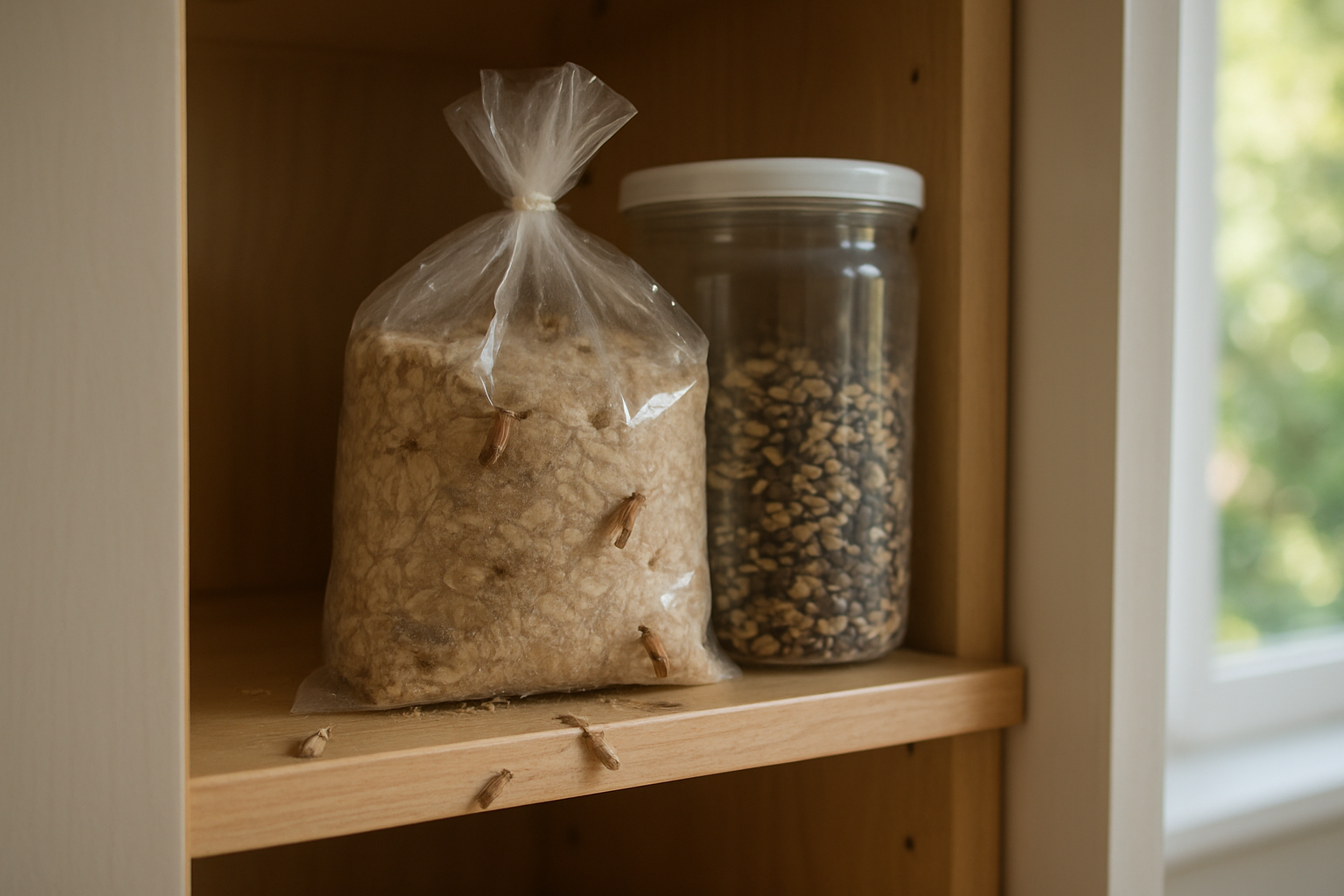
The moths themselves don’t damage your food. The larvae do. And the larvae are almost always introduced into your home inside already-infested packaging. Common sources include:
- Bulk grains, oats, and cereals
- Birdseed and pet food
- Nuts, dried fruit, and trail mix
- Flour, cornmeal, and rice
- Spice packets stored for a long time
The larvae spin fine, silky webbing inside the packaging as they feed. You’ll often notice the moths flying before you find the infested food, they emerge as adults and start moving around the kitchen while the larvae are still active in the bag or container they hatched from.
Santa Cruz’s coastal humidity is worth knowing about here. In drier inland climates, an infested package sometimes dries out before a full population can establish. Along the coast, in communities like Aptos, Soquel, and the Westside of Santa Cruz, the ambient moisture keeps grain damp enough for larvae to keep developing. A small problem can spread faster than it would in a drier environment.
To track down the source, pull everything out of your pantry and inspect each item. Look for webbing, clumping, or a faintly musty smell inside packages. Check the corners of bags and the underside of lids. Infested items need to go straight into a sealed bag and out of the house, not into your kitchen trash.
Clothes Moths: What to Check When There’s No Food Nearby
Clothes moths are different in nearly every way. They avoid light, move slowly, and tend to show up in rooms where there’s no obvious food source, which is exactly what makes them confusing.
If you’re seeing moths in a bedroom, hallway, or living room and there’s no pantry nearby, look toward stored fabrics. Clothes moths target natural fibers, wool, silk, cashmere, down, and feathers. Synthetic fabrics are generally safe, but a wool blend can still be damaged.
In older Santa Cruz craftsman homes, the most common discovery spots are:
- Rarely opened closets with stored wool coats or sweaters
- Under area rugs, especially wool or natural-fiber rugs
- Vintage or inherited clothing packed in boxes
- Upholstered furniture that hasn’t moved in years
The larvae are the ones doing the damage, not the adult moths you see flying around. By the time you notice the flying adults, the larvae may have already been feeding for weeks or months in a dark corner you haven’t checked.
To find the source, start with anything stored and undisturbed. Check the underside of rugs by lifting a corner. Look at folded sweaters and wool coats for irregular holes, shed larval casings, or faint webbing. The UC IPM guide on clothes moths has good detail on what the damage actually looks like if you want a reference while inspecting.
Once you find the affected items, take them outside before brushing or shaking them. Dry cleaning, freezing items at 0°F for at least 72 hours, or washing in hot water can kill larvae in most fabrics.
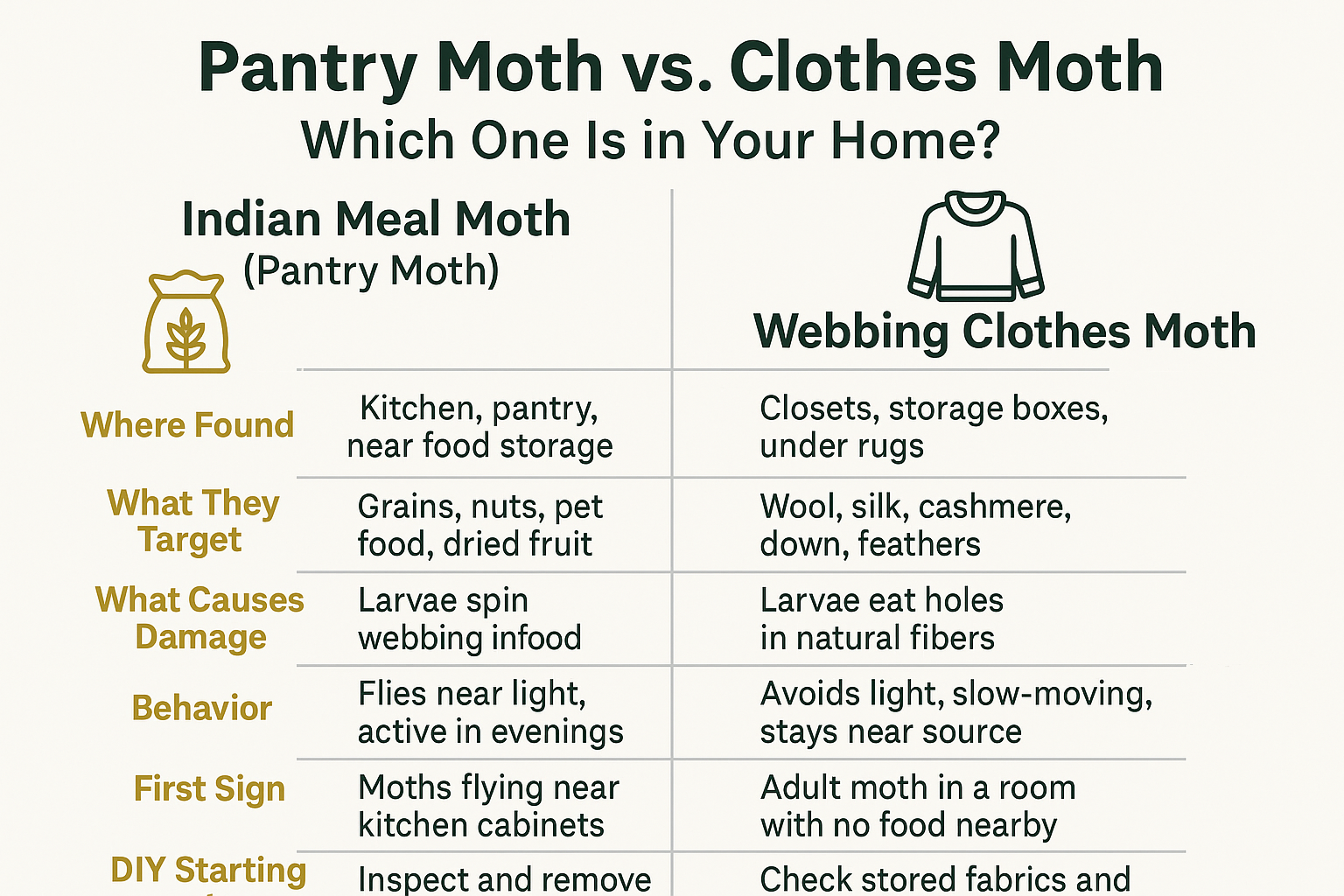
Pantry Moth vs. Clothes Moth: A Quick Comparison
These two moths cause different problems and come from different places. Use this to figure out which one you’re dealing with.
When DIY Is Enough vs. When to Call a Professional
Most small, contained moth problems can be handled at home. But some situations keep coming back no matter what you throw at them, and that’s when a professional inspection makes sense.
| Situation | DIY Reasonable? | Notes |
|---|---|---|
| One infested food package, no spread | Yes | Remove the source, clean shelves, monitor for 2-3 weeks |
| Moths in one storage box, single item affected | Yes | Treat the item, inspect nearby fabrics, seal clean items |
| Recurring pantry moths after throwing out food | Probably not | Larvae or pupae may be in cabinet cracks or crevices, not just food |
| Multiple rooms affected, source unknown | No | Harder to locate without knowing what you’re looking for |
| Extensive fabric damage found in closet | No | Population is likely established; a full inspection helps scope the problem |
| Moths returning after repeated DIY attempts | No | A professional can identify sources a homeowner might miss |
Why Santa Cruz Moths Don’t Slow Down in Winter
This is something that surprises a lot of homeowners who moved here from inland California. In most of the state, pantry moths slow down noticeably in winter because indoor temperatures drop enough to interrupt the larval cycle. Cold slows development, and populations thin out on their own by January.
That doesn’t happen the same way in coastal Santa Cruz County. In communities like Aptos, Rio del Mar, and the Westside of Santa Cruz, homes stay warm enough through the cool season for moth populations to keep cycling year-round. The larvae keep feeding, the adults keep emerging, and a problem that started in October is still going strong in February.
This matters because it changes how you approach the timeline. If you find moths in your pantry in November, don’t assume they’ll die off on their own before spring. They likely won’t.
If you’ve cleared out infested food and cleaned your shelves but moths keep showing back up a few weeks later, that’s a sign the population has expanded beyond the obvious sources. Larvae can pupate in cabinet cracks, along shelf edges, or inside storage containers that weren’t fully emptied. A professional inspection at that point isn’t overkill, it’s just the faster path to actually getting it handled. For homes dealing with other recurring pest issues at the same time, understanding what a pest inspection actually looks for can help you know what to expect before anyone comes out.
Frequently Asked Questions About Moths in the House
Can moths fly in from outside, or are the ones inside my home breeding there?
Adult moths can occasionally fly in through open windows or doors, but if you’re seeing them repeatedly inside, especially in the same area, they are almost certainly breeding somewhere in your home. A single adult from outside doesn’t turn into a recurring problem. A pantry source or infested fabric does.
I found moths in my kitchen but I’ve checked all my food and can’t find anything. What am I missing?
The most common oversight is birdseed, pet food, or spice packets. Birdseed is one of the most frequent sources we see, it often sits in a garage or pantry corner for months. Also check dried herbs, cornmeal, and any bulk items that have been in the cabinet a long time. Larvae can also be pupating in the corners or cracks of shelves themselves, not in food packaging, which makes them easy to miss.
How do I tell a pantry moth from a clothes moth just by looking?
Indian meal moths have distinctive two-tone wings, the outer half is coppery-bronze and the inner half is grayish. Webbing clothes moths are smaller, pale golden-tan, and uniform in color. Clothes moths also tend to run or flutter low rather than fly toward lights. If you’re seeing moths near your pantry or kitchen lights, it’s almost certainly pantry moths. If you’re seeing them in a dark bedroom or closet with no food nearby, think clothes moths.
Is it safe to eat food that was stored near an infested package?
If the packaging is intact and you don’t see webbing, larvae, or clumping inside, it’s generally considered safe. But when in doubt, throw it out. The bigger concern is contamination inside the package itself. Any bag or container where you see webbing, clumping grains, or small larvae should be sealed and discarded immediately.
My moth problem keeps coming back even after I’ve thrown out the infested food. Why?
This is a sign that the population has expanded beyond the original source. Larvae or pupae are likely in cabinet cracks, along shelf edges, or hidden in a container you didn’t fully empty. Vacuuming shelf edges, wiping down all surfaces with white vinegar, and storing dry goods in airtight glass or hard plastic containers helps a lot. If it keeps returning after that, the source may be somewhere less obvious, and a professional inspection is worth it at that point.
Not Sure What You’re Dealing With?
If you’ve cleared out your pantry, checked your closets, and moths keep showing back up, it may be time to get a second set of eyes on the problem. West Pest Co. serves homeowners throughout Santa Cruz County, from Aptos and Capitola to Scotts Valley and the Westside, and Matthew West has handled plenty of situations where the source wasn’t obvious until someone looked in the right place. You can reach the team directly at (831) 430-8402 or visit westpestco.com to learn more.