Direct Answer: Scratching in an attic at dusk or just before dawn usually means roof rats, the most common attic rodent in coastal Santa Cruz County. Mice make lighter, faster, higher sounds.
The calls almost always sound the same. Someone on the lower westside, in Pleasure Point, or up a canyon road in the Santa Cruz mountains wakes up around 4 or 5 in the morning to scratching above the bedroom ceiling, and lies there wondering how bad it already is.
What they really want to know is simple: is that a mouse or a rat, and how long has it been up there? Those two answers change everything about what happens next.
So I want to walk through how I read attic sounds and signs in the field, how roof rats get into homes here, and what an honest, well-run attic job actually looks like.
What the sounds in your attic are telling you
Timing matters more than volume. Roof rats are most active in the two hours after sunset and the two hours before sunrise, which is why so many people first notice them in the early morning quiet.
Here is how I sort it out before I ever get on a ladder:
- Heavy, deliberate scratching or a rolling sound across the ceiling usually means rats. A rat can weigh half a pound and you can hear the weight in the movement.
- Light, fast scurrying and high scratching in wall cavities points more toward mice.
- Gnawing that sounds like sandpaper on wood, often in short bursts, means teeth on framing, wire sheathing, or vent boots.
- Thumping or dragging in the same spot night after night usually means a nest, not a passing visitor.
- Sounds coming out of a heating vent or register mean they have found the duct chase, which connects rooms you would not expect.
One homeowner described hearing movement in both the walls and the ceiling of a townhouse and having no idea where to even start. That combination is common. Rats travel vertically inside wall cavities and horizontally across ceiling joists, so hearing both does not mean two problems.
If you want a more detailed breakdown, I wrote about how to tell mice from rats by the signs they leave.
How roof rats actually get into Santa Cruz County attics
Roof rats climb. That single fact explains why most homeowners look in all the wrong places.
People check the crawlspace and the garage door sweep. Meanwhile the actual opening is fifteen feet up, where nobody has looked in twenty years.
The entry points I find most often around here:
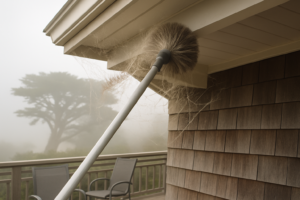
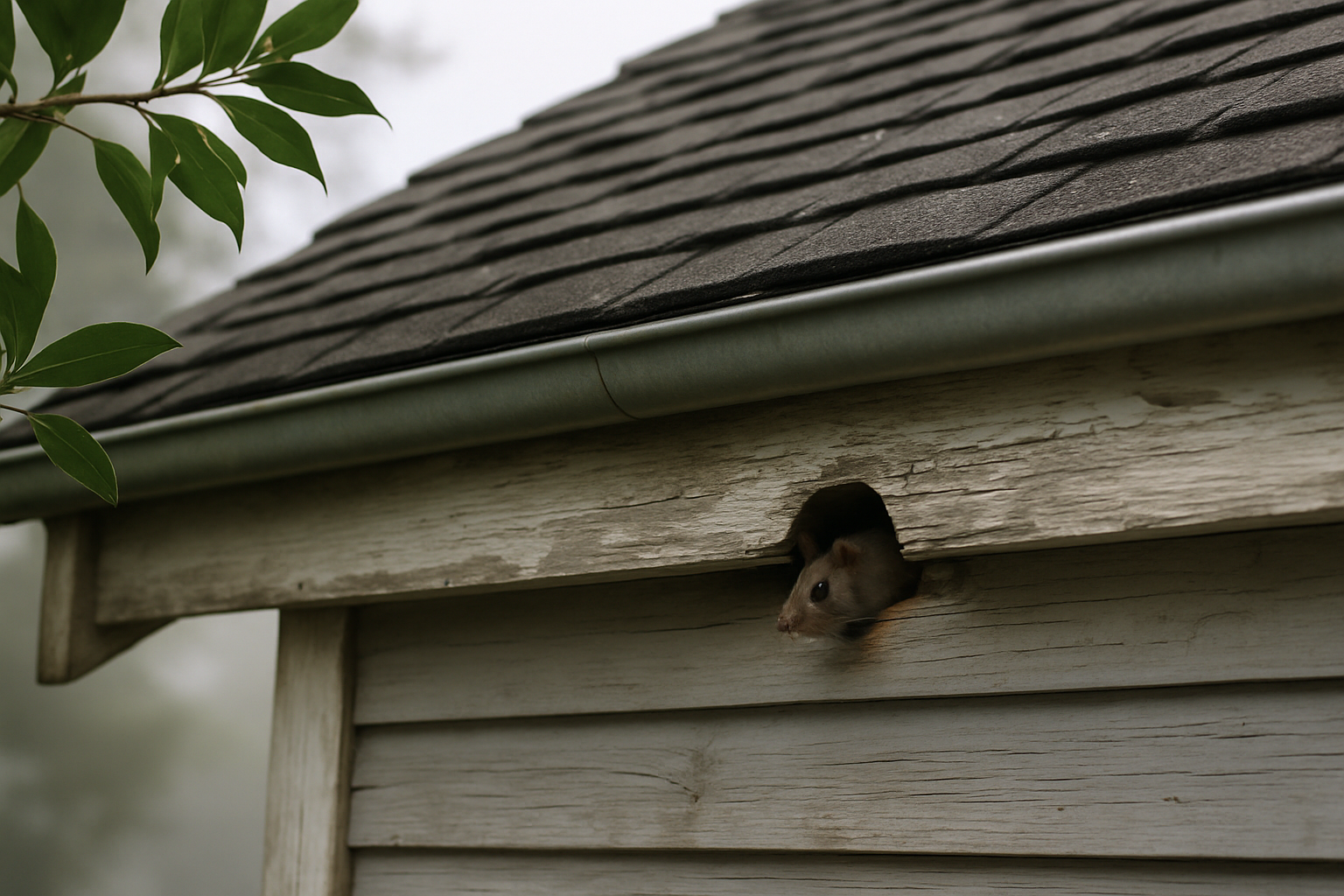
- Gaps where the roofline meets the fascia, especially on homes with additions or re-roofs done at different times
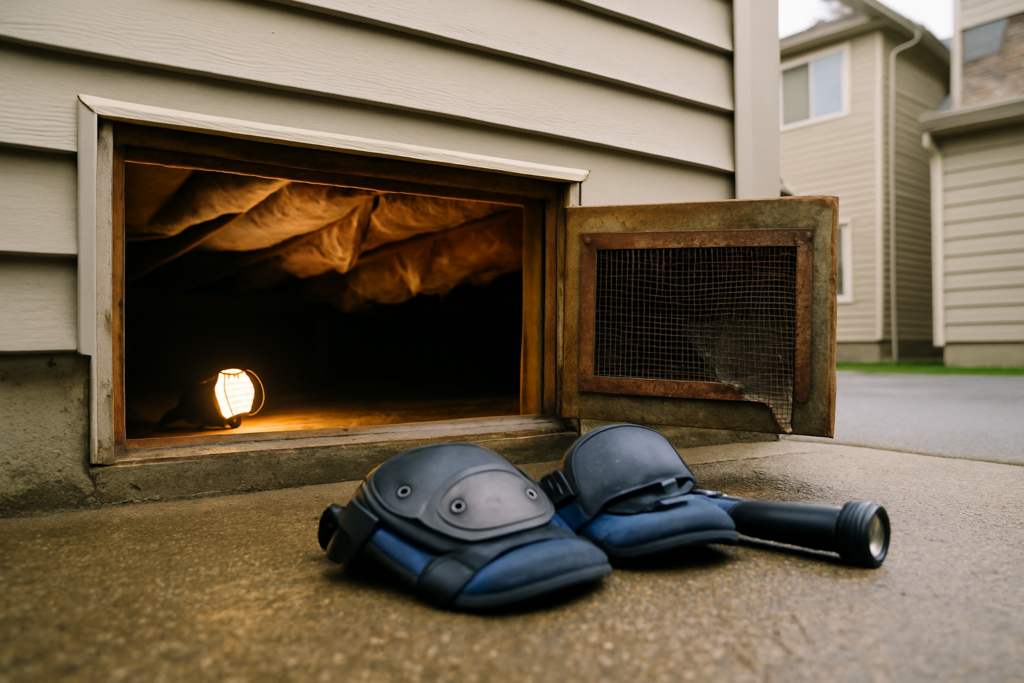
- Deteriorated or rusted foundation vent screens that let rats into the crawlspace, then up the wall cavities
- Open cavities around mini-split line sets and ducting where the penetration was foamed but never properly closed
- Failed vent boots and dry-rotted trim on older homes, which describes a lot of Santa Cruz County housing stock
- Overhanging bay laurel, oak, and pine limbs that put the roof within easy jumping distance
A roof rat can work through an opening about the size of a quarter. Young ones need even less. They do not chew a hole from scratch most of the time, they find soft, weathered wood and enlarge what is already there.
Timing plays into it too. Late summer through fall is when I see the biggest jump in attic calls, as nights cool off and outdoor food dries up. Homes near wooded hillsides, in Aptos, Ben Lomond, Soquel, and the canyons above Scotts Valley, tend to see it first.
Reading the signs: sound, evidence, and what it usually means
This is roughly the mental checklist I run through on an attic inspection. It is not a diagnosis, but it will tell you how urgent your situation is.
| What you notice | What it usually points to | Why it matters |
|---|---|---|
| Scratching around dawn, ceiling level | Roof rats moving to or from a nest | Active population, not a one-off visitor |
| Droppings about 1/2 inch, tapered ends | Rats | Size and shape separate rats from mice |
| Small dark droppings, rice grain size | Mice | Different trap placement and bait strategy |
| Flattened runways pressed through insulation | Established travel routes | Shows where traps actually need to go |
| Ammonia odor near a ceiling or vent | Urine saturating insulation | Suggests the issue has been going a while |
| Lights flickering or HVAC acting up | Chewed wiring or duct damage | Worth an electrical or HVAC look, not just pest work |
| Greasy dark smudges along beams or pipes | Repeat travel along the same path | Confirms a runway, helps map entry points |
The insulation question nobody wants to ask
Once people accept that rats are up there, the next question is almost always about the insulation. It is a fair question and the honest answer is that it depends on how long they have been in there.
Rats nest in insulation, not on top of it. Batts and blown-in cellulose hold urine and droppings the way a sponge holds water, and that contamination does not air out on its own.
What I look at when assessing insulation:
- How much square footage shows visible nesting, tunneling, or matting
- Whether odor is noticeable from the living space below, which usually means saturation, not surface soiling
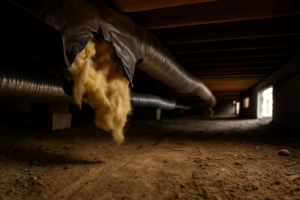
- Whether ducting has been chewed, since flex duct is easy for rats to open up
- Whether wiring shows gnaw marks, which is a safety issue worth having an electrician confirm
A small, recent problem in one corner is often fine once the rats are out. Widespread contamination across an attic is a different conversation, and it usually involves removal and replacement by an insulation contractor.
Either way, an inspection should tell you the condition of the insulation, not just how many traps are going in. If nobody looked at the insulation, nobody really looked at the attic.
What a real attic rodent job looks like, step by step
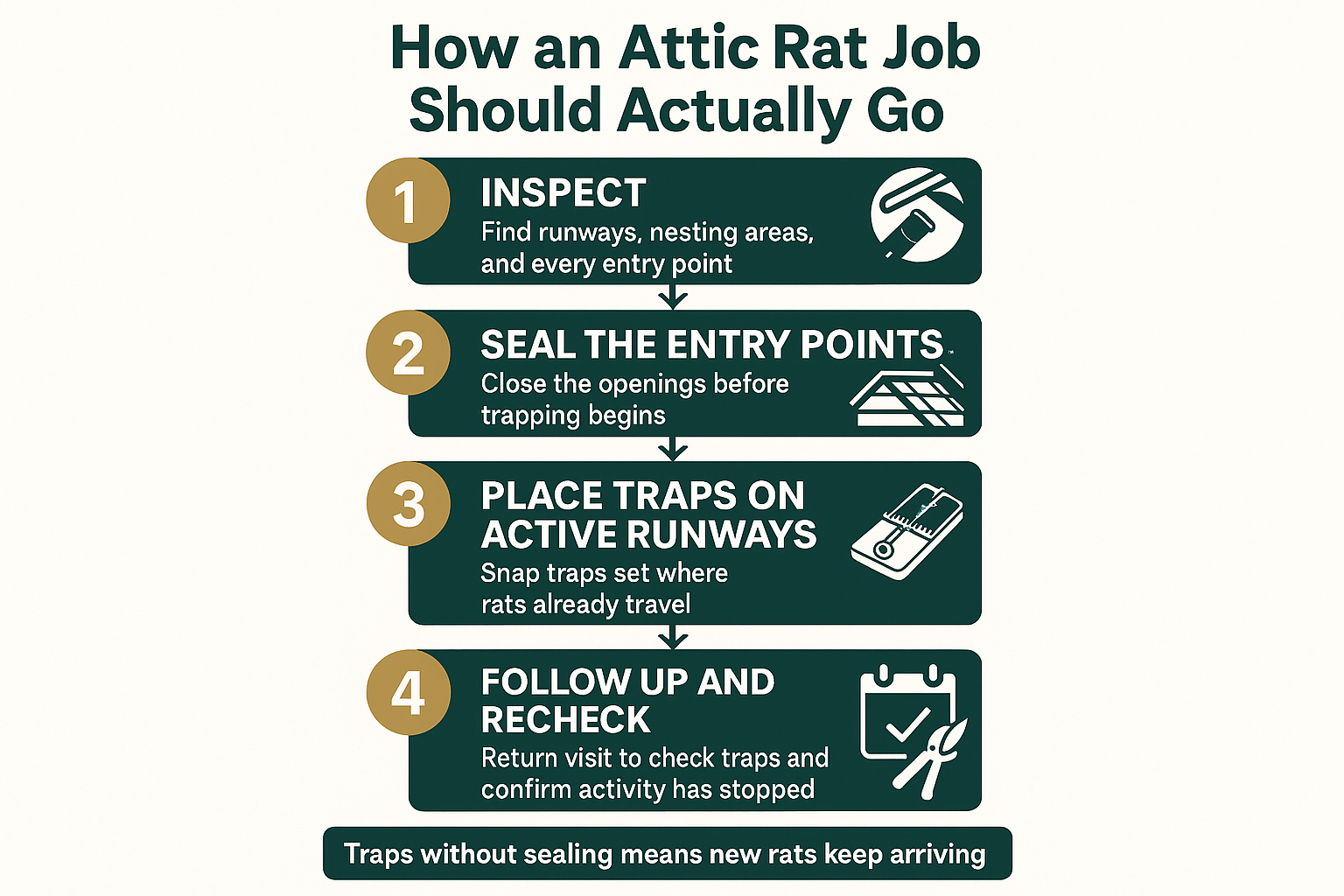
Almost every good outcome I have seen follows the same order of operations. Skipping a step is usually why a job drags on for months.
Why the traps you already bought are not working
Nearly every homeowner I meet has already tried traps. They set six of them in the middle of the attic floor, waited two weeks, and caught nothing while the scratching continued.
The traps were not the problem. Placement was.
Rats travel with their bodies against a surface. They run along joists, beams, pipes, and wall edges, and they rarely cross open floor. A trap in the middle of the attic is a trap in a place a rat has no reason to go.
The second issue is sequence. If the openings are still open, you can trap rats all month and new ones simply move in behind them. That is the pattern behind why rats seem to keep coming back even after a homeowner thinks they have handled it.
The reviews that describe the best outcomes all say the same two things in the same order. One customer wrote that an inspection found “one unknown access point for rodents,” the area was sealed, traps went in, and a follow-up visit a week later found empty traps.
That is what success actually looks like: quiet nights, and traps that stop catching anything. If you want the detail on that part, here is what the sealing process involves.
Poison-free work is the norm here, and for good reason
A lot of people ask for eco-friendly rodent removal before they even describe the problem. They mention owls, hawks, coyotes, and the neighbor’s cat, and they are right to.
A poisoned rat can leave the attic, die outside, and get eaten. That is how rodenticide moves up the food chain in a place like Santa Cruz County, where wildlife and neighborhoods sit right on top of each other.
State rules reflect that concern. Restrictions on second generation anticoagulant rodenticides, enforced by the California Department of Pesticide Regulation, have narrowed what can legally be used in and around homes. I covered the details in what California’s rat poison rule changes mean for homeowners.
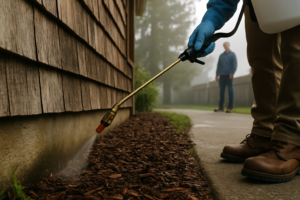
For attic work, it hardly matters. Snap traps on identified runways, entry point work, and habitat reduction handle attic rats well without introducing poison into the yard.
Cost varies more than people expect, so I would be careful with any number you see online. What drives it in this county is usually the size and access of the attic, how many entry points exist, the age and condition of the exterior, and whether follow-up visits are needed. An in-person look is the only way to get a real number, and most local companies will quote after seeing the property.
Frequently Asked Questions About Rats in the Attic
How long have the rats probably been up there before I heard them?
Often longer than people think. Homeowners tend to notice once the population grows enough that movement gets loud, which can be weeks or months after the first rats moved in. Cabin properties and homes with detached studios in the mountains are especially prone to this, since nobody is sleeping under that roof every night.
Do I need to replace my attic insulation?
Not always. If the nesting is limited to one area and caught early, cleanup of the affected section is often enough. Widespread contamination with a noticeable ammonia odor from the rooms below is a different situation, and that usually means removal and replacement by an insulation contractor. An inspection should tell you which one you are dealing with.
Can I just seal the holes and skip the trapping?
That is a bad idea if rats are already inside. You end up trapping them in your attic with no way out, which makes the noise and damage worse. Sealing and trapping have to work together, with the entry point work done so nothing new comes in while the active population is removed.
Will the noise stop right after the first visit?
Sometimes yes, often not immediately. Activity usually drops noticeably within the first several days once traps are on real runways, and a follow-up visit confirms whether things have gone quiet. Anyone promising total, permanent elimination in one trip is overselling it.
Are rats in the attic dangerous to my kids or pets?
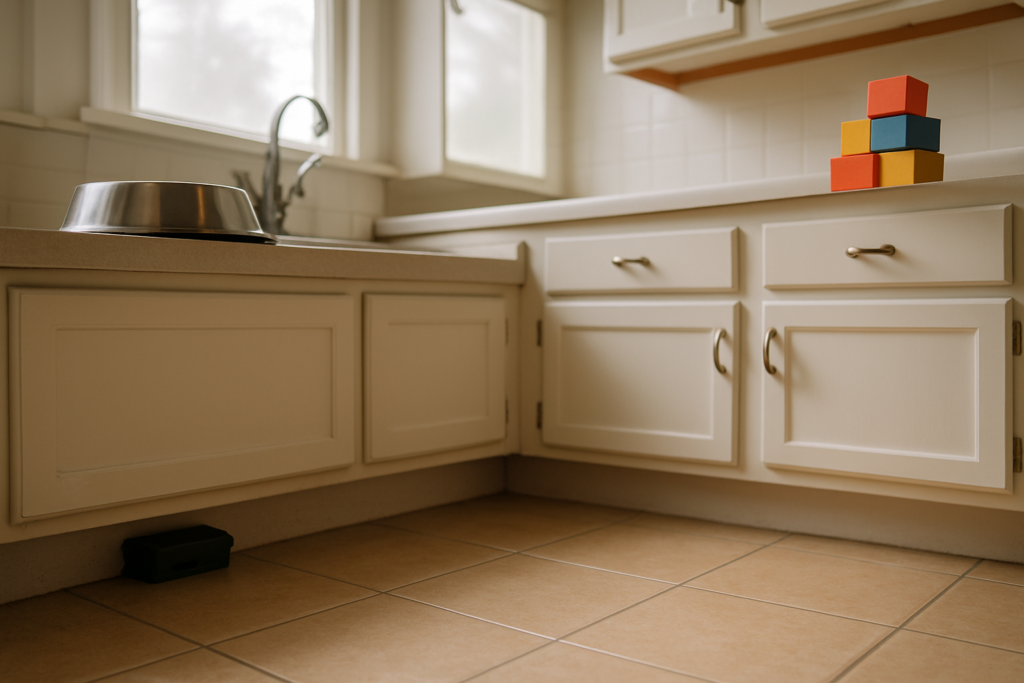
The direct risk is low since rats stay in the attic and walls, but droppings, urine, and the fleas or mites rats carry are real concerns. That is another reason I look at the insulation condition and not just the trap count.
Still hearing something overhead?
If the scratching keeps showing up at the same hour each morning, an inspection is the honest first step, since everything else depends on knowing where they are getting in. West Pest Co. works throughout Santa Cruz County and the Monterey Bay area, from the westside to Aptos to the mountain communities. Questions are welcome at (831) 430-8402 or westpestco.com.