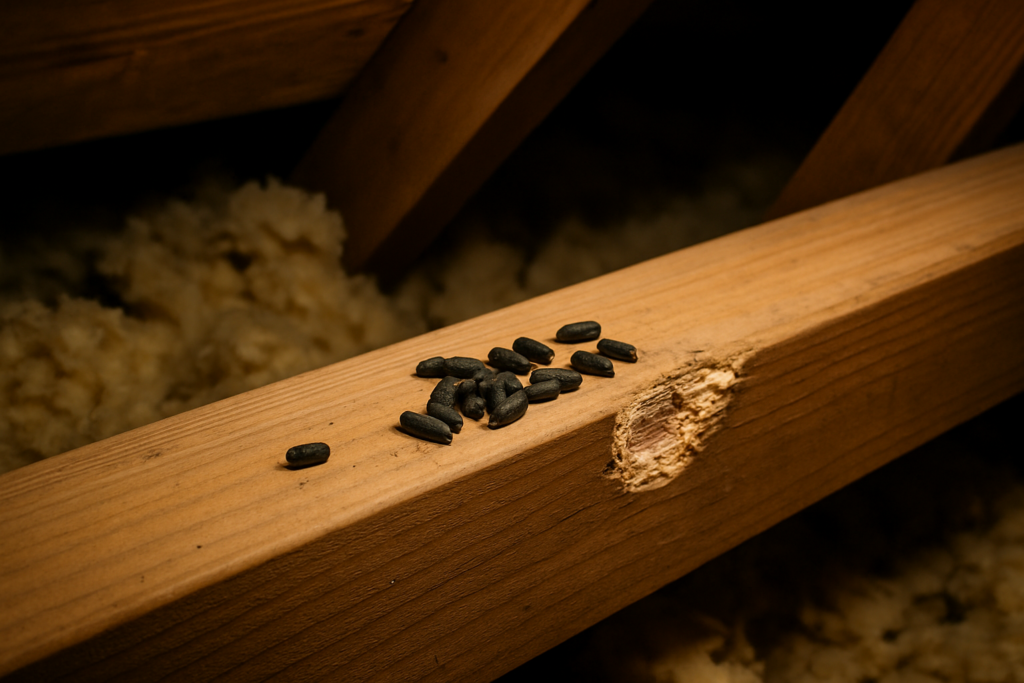
If you've just spotted a wasp nest on your property in Santa Cruz, you’re probably asking, "Can this wait a few days?"
Let's get straight to it. If that nest is anywhere near a high-traffic area—think doorways, patios, walkways, or your kids' swing set—the answer is a firm no. A nest in these spots isn't just a bother; it's an immediate safety risk that needs to be treated like an emergency, especially if you have young kids or anyone with allergies.
Why Immediate Action Is So Crucial
That feeling of urgency you have is completely justified. A wasp nest is like other home emergencies, from a burst pipe to a broken window. The longer you wait, the bigger the problem gets. When it comes to wasps, you need to safely and quickly address home emergencies to prevent a painful and dangerous situation for your family.
Wasp activity has been on the rise. In a recent year, nearby San Mateo County saw yellowjacket nest calls nearly double to over 1,000. At the same time, homeowner expectations have changed. Today, 90% expect help within 24 hours, and over half hire a pro in under four hours. This shows that when you see a nest, acting fast is the new standard.
This quick decision guide helps simplify things.
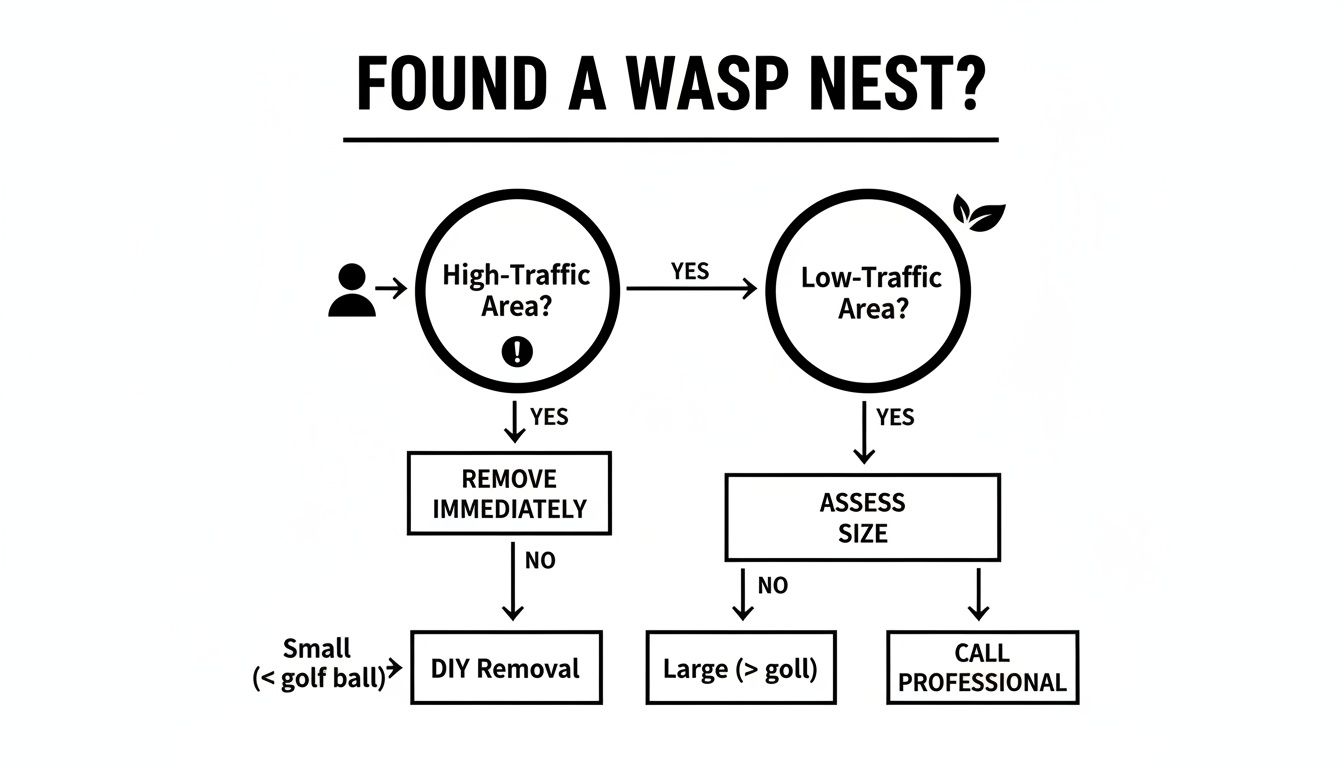 wasp nest removal based on high/low traffic areas and nest size.” />
The key takeaway is simple: the nest's location is the most important factor. If people or pets are nearby, professional removal is the only safe choice.
The Dangers of a DIY Approach
Many people think they can wait it out or handle the nest themselves. It’s tempting to grab a can of spray from the store, but this is a common mistake that often makes things worse.
Store-bought sprays can anger the wasps without killing the whole colony, making them more aggressive. An incomplete removal also means they will likely come back and rebuild. Worse, trying to do it yourself is dangerous, especially when you're on a ladder or can't see clearly. Every homeowner in Santa Cruz County should know these risks, which is why understanding how to treat a wasp sting is essential.
How to Assess Your Situation
To help you figure out how urgent the problem is, here is a quick risk assessment you can do from a safe distance.
Quick Risk Assessment: Should You Wait?
| Factor | Low Risk (Waiting Might Be an Option) | High Risk (Act Immediately) |
|---|---|---|
| Nest Location | Tucked away in a remote corner of the yard, far from any human activity. | Near doorways, windows, patios, walkways, or children's play areas. |
| Nest Size | Smaller than a golf ball (early stage, fewer wasps). | Larger than a golf ball (established colony with many defenders). |
| Household Allergies | No known allergies to insect stings in the household. | Anyone in the home has a known allergy to bee or wasp stings. |
| Wasp Activity | Only a few wasps seen coming and going occasionally. | Constant stream of wasps flying in and out of the nest. |
If your situation falls into any "High Risk" category, your next step is clear. Treat any visible wasp nest near kids, pets, or doors as urgent. Keep the area off-limits and call a professional pest control service. Never try to knock down or spray a nest yourself, even at night.
The Hidden Dangers of a Growing Wasp Colony
It’s easy to look at a small wasp nest and think, "I'll deal with that later." This is a classic, and dangerous, mistake. Think of that nest less like a bug problem and more like a spark in the dry Santa Cruz hills. What seems manageable today can become a big problem very quickly.
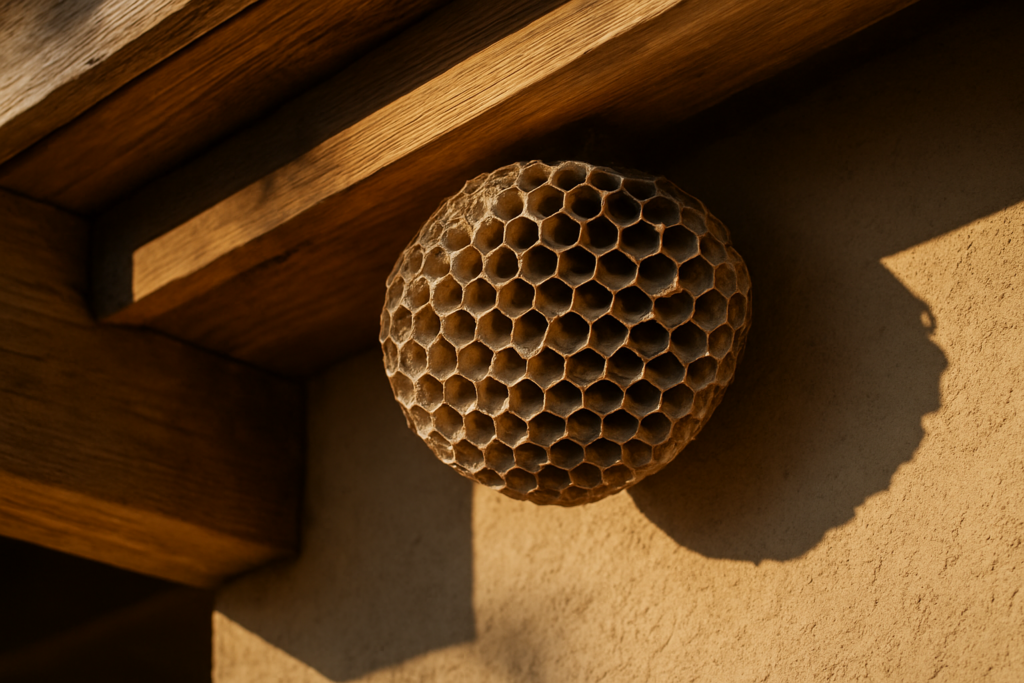
In the spring, a new nest might be just the size of a golf ball. But our warm coastal climate is the perfect place for them to grow. In just a few weeks, that small nest can become the size of a basketball, with thousands of aggressive defenders. Each new wasp is another soldier, making the colony more territorial and quick to attack.
The Science of a Wasp Colony
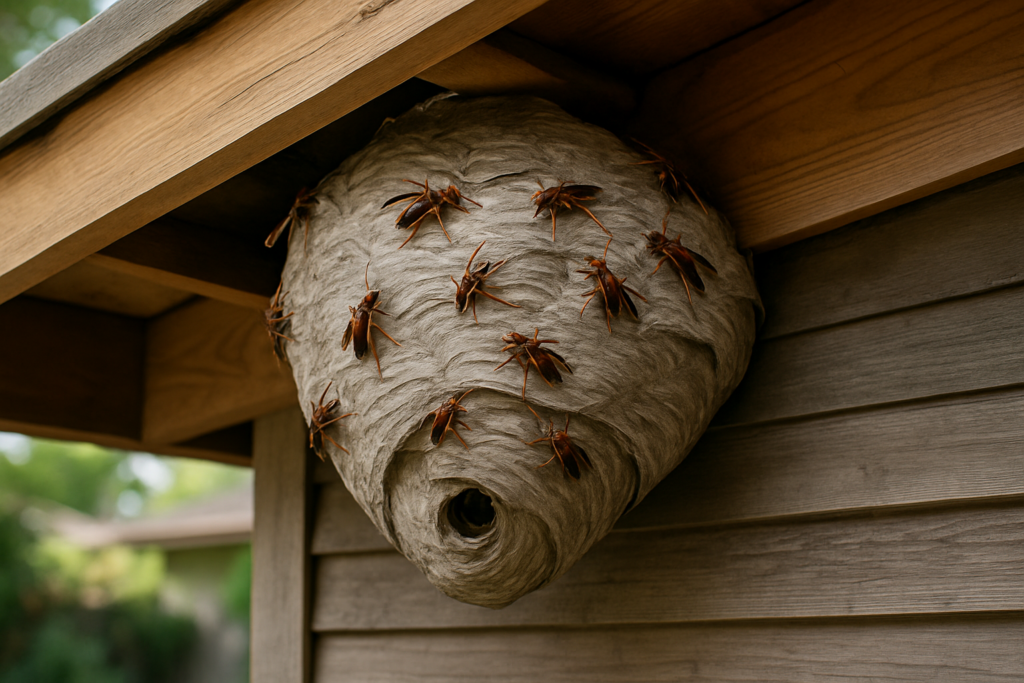
A wasp colony has one main mission: protect the queen and raise the next generation. As the colony gets bigger, so does its defensive zone. The wasps become very sensitive to vibrations and movement, like a lawnmower or a slamming door.
A single queen in early summer can lead to a “full-sized nest” later in the season, making it far more challenging and risky to handle if you delay. According to Health Canada, a mature social wasp nest can contain several thousand workers by late summer. You can find out more about how quickly nests expand and why waiting is a risk from Health Canada.
This rapid growth is why a nest that seemed quiet one week can become a major threat the next. It’s now a serious safety hazard with a much higher chance of a swarm attack. The longer you put it off, the more complex and dangerous the removal becomes. This is one of the many hidden health risks of common pests that homeowners often underestimate.
Why Every Day Matters
The math of a wasp colony is simple: more wasps mean more defenders. Here’s how the danger grows each day:
- Population Explosion: The queen lays eggs nonstop. The number of wasps can double in a very short time.
- Hair-Trigger Aggression: With more young to protect, worker wasps get far more aggressive and will attack with less reason.
- Expanding Territory: The wasps will travel farther from the nest for food, increasing the chance of an encounter on your patio or in the garden.
Waiting even a few days gives the colony time to build its numbers. This is why procrastination is the biggest risk when you’re dealing with a visible nest. Acting fast stops a small problem from turning into a dangerous infestation.
Why DIY Wasp Removal Often Makes Things Worse
When you spot a wasp nest, it’s natural to want it gone immediately. The urge to grab a can of spray and handle it yourself is understandable. But this is one home project where a DIY approach can backfire, creating a more dangerous situation.
Going it alone isn't just ineffective; it’s a gamble.
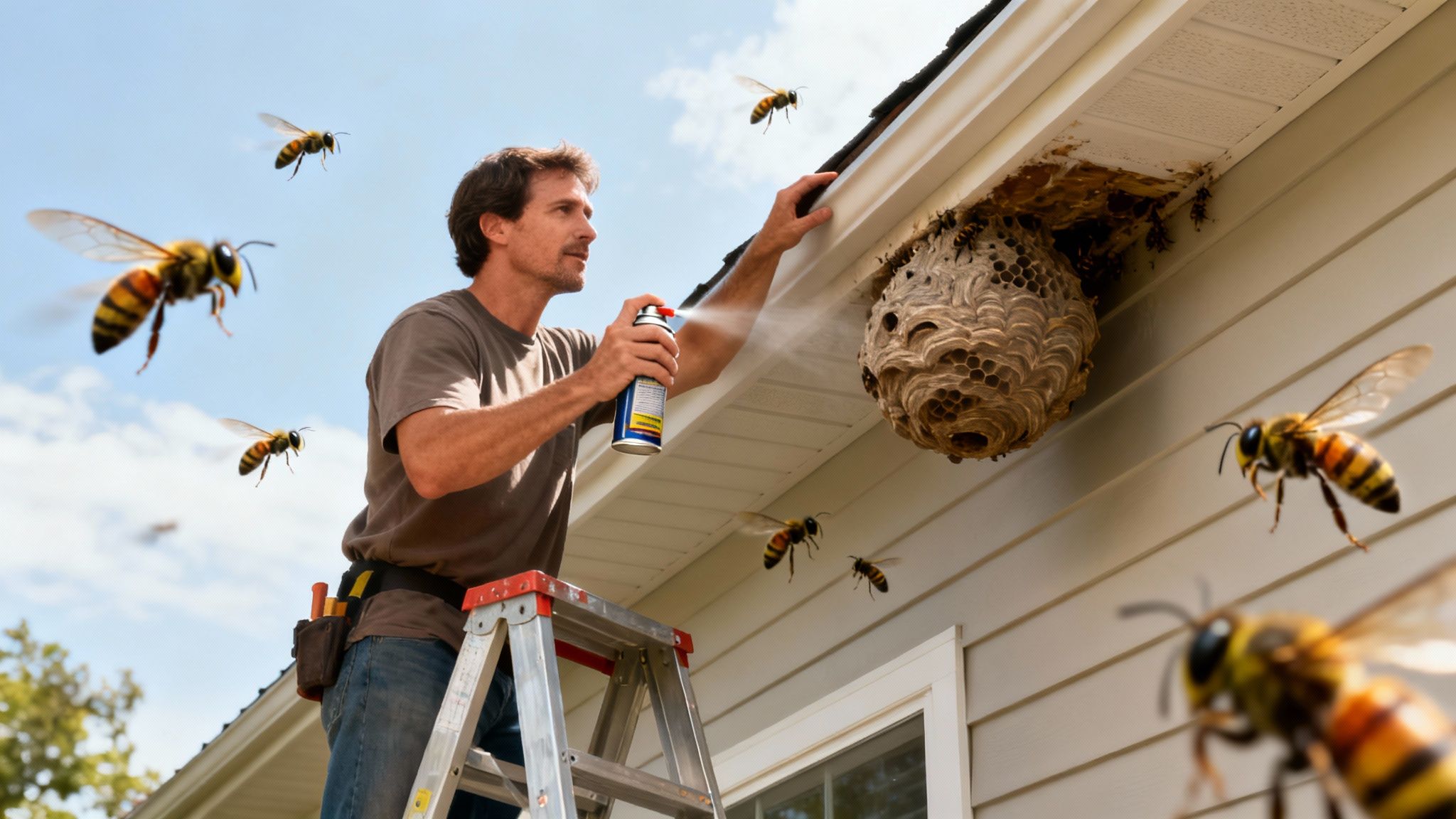
The biggest problem with store-bought wasp sprays is their lack of power. They might kill a few workers you can see, but they almost never reach deep into the nest to kill the queen and the rest of the hidden colony.
Instead of solving the problem, you've just angered the survivors. They will pour out of the nest in a defensive rage, ready to sting anything that moves. A single can of spray can turn a contained problem into an aggressive, swarming threat.
Physical Dangers of a DIY Attempt
Provoking an attack is bad enough, but trying to remove a nest yourself comes with other physical risks. Nests are often built in awkward places—under eaves, high in a tree, or in a shed. This can lead to dangerous situations:
- Falls from Ladders: Trying to aim a spray can while on a ladder is a recipe for disaster. A sudden swarm can make you lose your balance, leading to serious injuries.
- Confined Spaces: Tackling a nest in an attic or shed means you have no easy escape route. If the colony swarms, you’re cornered and could get dozens of painful stings.
- Incomplete Removal: Even if you knock down the nest, any survivors will simply start rebuilding nearby. Now, they’ll be even more aggressive and on high alert.
A failed DIY attempt doesn't just fail—it makes the threat worse. You're left with angry wasps and a problem that is now harder for anyone to solve.
Ultimately, the only way to be sure the entire colony is gone for good is to call a professional. For homeowners in Santa Cruz County, the safest solution is expert wasp nest removal from a team trained to handle these pests without putting your family at risk.
What to Do While You Wait for Professional Help
So you’ve made the smart call and have a professional on the way. Great decision. Your next job is to keep everyone safe until they arrive. A few simple steps can prevent a painful encounter. The goal is to manage the situation without upsetting the wasps.
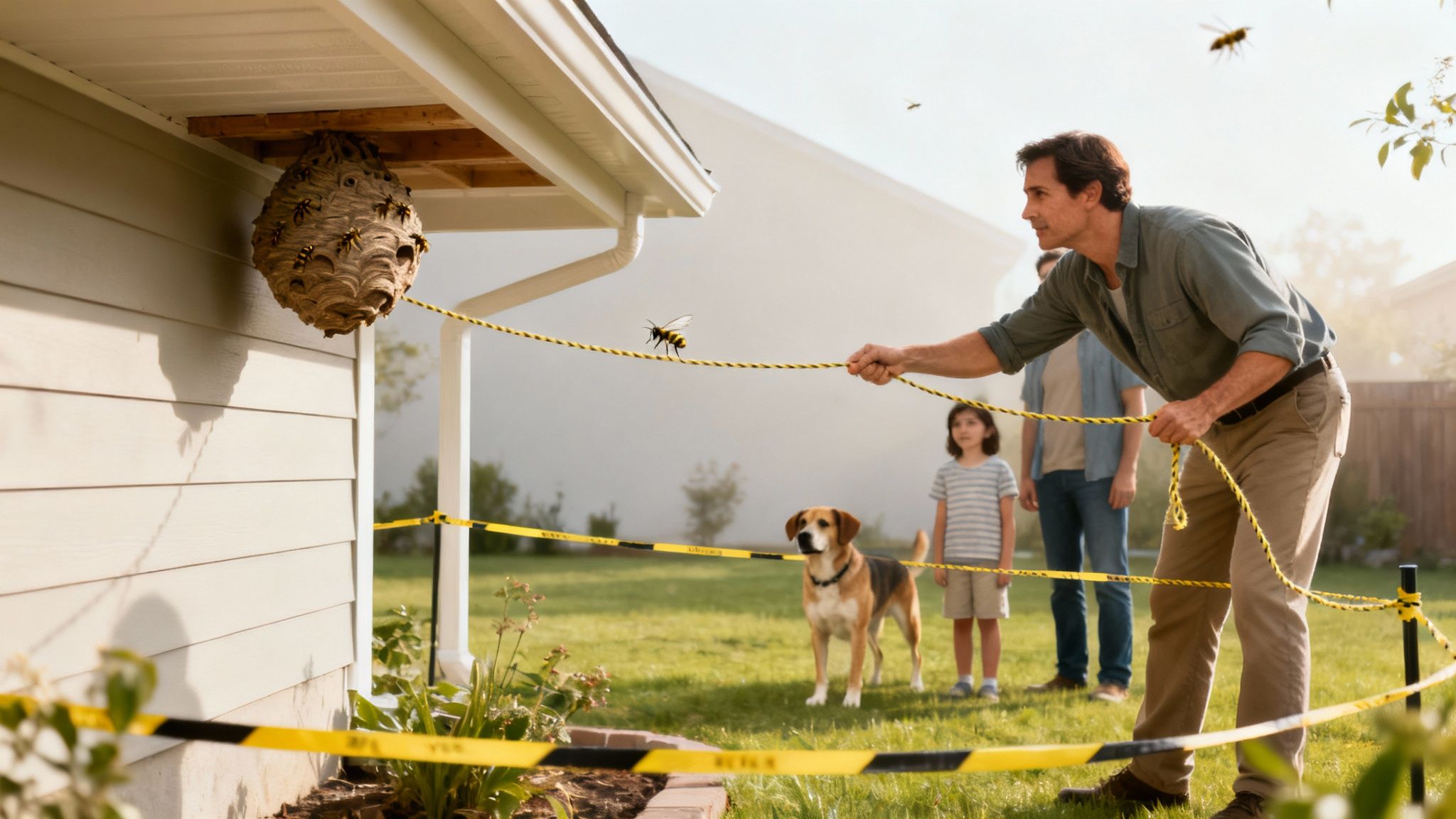
Your most important move is to create a "no-go" zone around the nest. Wasps are very sensitive to vibrations and movement, and their defensive zone can extend 15 feet or more from the nest.
Secure the Area Immediately
To make sure everyone stays out of that danger zone, take these steps right now.
- Establish a Safe Boundary: Use a garden hose, rope, or caution tape to mark a big circle around the nest. This shows kids and visitors to keep their distance.
- Alert Everyone: Tell your family about the nest and the boundary. For young kids, a simple rule like, "We don't play near that bush today" works well.
- Keep Pets Indoors: A curious dog or cat can wander into trouble quickly. It’s safer to keep them inside until the professionals say it's all clear.
- Reroute Foot Traffic: If the nest is near a common path, create a temporary detour that keeps everyone far away from the wasps' flight path.
Remember, the main goal is to reduce all activity near the nest. Even something that seems harmless can trigger an attack. By creating a calm, quiet area, you lower the risk of a swarm.
Actions to Avoid at All Costs
While securing the area is key, knowing what not to do is just as important. Avoid anything that creates loud noises or vibrations near the nest.
- Do not mow the lawn or use a leaf blower nearby.
- Avoid slamming doors or windows close to the nest.
- Never throw things at the nest or spray it with a hose.
- Postpone loud outdoor activities like kids' games or construction.
Taking these simple steps shows you’re in control of the situation. It turns a stressful moment into a manageable one while you wait for our technicians to solve the problem for good.
Choosing the Right Wasp Removal Service in Santa Cruz
When you have an urgent wasp problem, you need to find someone who can handle it safely and quickly. Here in Santa Cruz County, you need a local expert who understands our coastal climate and the types of yellow jackets and wasps that live here.
The right company won't make you wait. When you call a local provider, ask how soon they can come and what safety measures they take. To make sure you’re hiring a true professional, see if the company meets these criteria.
Here’s what you should be asking about:
- Same-Day Service: Can they guarantee a technician will be at your home today? For a high-risk nest, anything less is a gamble.
- Transparent Safety Protocols: Ask them to explain their process. How do they protect your family and property during the removal?
- Local Experience: Do they have experience with wasps common in Aptos, Scotts Valley, and across Santa Cruz? A local team knows what they're up against.
- Low-Toxicity Options: Do they offer eco-friendly treatments? This is important for homes with children, pets, or gardens.
Why West Pest Co. is the Right Call
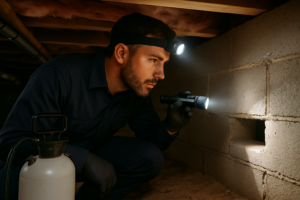
At West Pest Co., we built our service to meet these exact needs. We understand that finding a wasp nest is stressful, which is why we offer same-day wasp nest removal across Santa Cruz County. Our technicians specialize in safe, low-toxicity removal for high-risk zones like play areas, patios, and sheds.
When you contact us, you’re not just hiring an exterminator. You’re partnering with a local expert who puts your family’s safety first. We offer fast contact times (1–4 hours) and use safety-first protocols to get your yard back quickly and securely.
We focus on effective, low-toxicity solutions so you don’t have to choose between safety and results. We provide the peace of mind that comes from knowing the problem is handled correctly. If you want more information, learn who locals trust for pest control in Santa Cruz. If you’re in Santa Cruz and facing a wasp problem, don’t wait. We’re your fast, local solution.
Our Safe and Fast Wasp Control Process
When you call us with a wasp emergency, we get to work. Our process is built around a safety-first plan designed to solve your wasp problem fast, so you can get your peace of mind back.
First, we secure the site. This means setting up a clear safety zone to keep your family and pets away from the nest. Then, we do a full assessment to identify the wasp species and the size of the nest. This step tells us the safest and most effective way to handle the job.
Our Targeted and Safe Approach
We use specialized tools and proven, low-toxicity treatments to eliminate the entire colony. Our methods are precise, targeting the nest directly to limit any impact on the environment. This is part of our dedication to Integrated Pest Management, a smart, eco-friendly solution for Santa Cruz families.
After the treatment, we physically remove the nest. This is a crucial step. It prevents other pests from moving in and makes sure the wasps can't return to the same spot. Knowing that a professional uses safe practices is key. You can learn more about general safe bug killer options for lawns.
West Pest Co. offers same-day wasp nest removal across Santa Cruz County, with fast contact times of 1–4 hours and strict safety-first protocols. We specialize in safe, low-toxicity removal for high-risk zones like play areas, patios, and sheds.
This rapid response is how we address the urgency of a wasp threat, delivering on our promise of prompt and professional control.
Frequently Asked Questions
We get many calls from homeowners around Santa Cruz who have questions about dealing with wasps. It's normal to feel unsure about how to handle them. Here are answers to the questions we hear most often.
What is the best time of day to remove a wasp nest?
Professionals often treat nests at dusk or dawn. At these times, wasps are less active and most are inside the nest, which makes the treatment more effective. However, a trained technician with the right protective gear can safely remove a nest any time of day for emergency situations.
What happens to the wasps after you treat the nest?
Our treatments are targeted to eliminate the wasps inside the nest quickly. Any wasps that were out foraging will return to find their nest gone. Without the queen and colony, they cannot rebuild and will die off. We also remove the physical nest so other pests can’t move in.
How can I prevent wasps from building a nest again?
While it’s impossible to guarantee wasps will never return, you can make your property less appealing. A little prevention goes a long way.
- Seal Entry Points: Walk around your house and seal small gaps in siding, foundations, and under the roof eaves.
- Secure Food Sources: Make sure outdoor trash and compost bins have tight-fitting lids.
- Clean Up Your Yard: If you have fruit trees, pick up any fallen fruit from the ground.
Is professional wasp removal expensive?
The cost depends on the nest's size, location, and how hard it is to reach. But when you consider the high risk of painful stings and the fact that most DIY products don't work, professional removal is a smart investment in your family's safety. At West Pest Co., we provide free estimates so you know the cost before we start.
Do I need to be home during the removal process?
Not always. If the nest is outside and we can easily get to it, you don't have to be there. When you call to schedule your same-day service, we’ll discuss the details and make a plan that is safe, effective, and convenient for you.
If you're dealing with a wasp problem in Santa Cruz County, don't wait and wonder if it's safe.
Contact West Pest Co. today for a free estimate and our guaranteed same-day service. Let our experts make your yard safe again.