Direct Answer: Sometimes, yes — but only for small, newly formed nests in low-risk locations. Anything large, hidden, or inside a structure should be handled by a professional.
Every summer, Santa Cruz County homeowners find a wasp nest somewhere they didn’t expect — under a deck railing in Aptos, inside a backyard shed in Soquel, or wedged into a fence post along the bluffs in Capitola. The first instinct is usually to grab a can of spray and handle it. Sometimes that works out fine. Sometimes it ends with a trip to urgent care.
The honest answer is that nest removal difficulty ranges from genuinely manageable to genuinely dangerous, depending on a few specific factors most people don’t think to check before they start. Nest size, species, and location are the three things that determine whether this is a Saturday afternoon task or a call you should make to a professional.
This article breaks down what those factors actually look like in practice — so you can make a clear-headed decision before you’re standing there in shorts holding a can of Raid.
What Actually Makes Wasp Nest Removal Dangerous
Wasps aren’t aggressive by nature. But they are highly defensive of their nest, and when they feel threatened, they signal the rest of the colony fast. A single wasp can sting multiple times — unlike bees — and a disturbed colony can send dozens of wasps at once.
The risk level goes up sharply based on:
- Nest size — A nest smaller than a golf ball with fewer than 20 wasps is a different situation than a football-sized nest housing several hundred
- Species — Paper wasps are relatively calm; yellow jackets are significantly more aggressive and will pursue a perceived threat well beyond the nest site
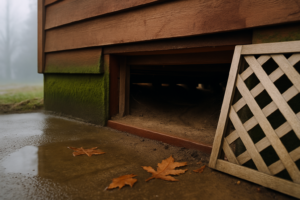
- Location — A nest in an open area gives you room to back away; one inside a wall void, attic, or crawl space traps both you and the wasps in close quarters
- Access — Working on a ladder while wasps are swarming around your face is where most serious injuries happen
- Allergies — Even one sting can trigger anaphylaxis in someone who doesn’t know they’re allergic; multiple stings are dangerous for almost anyone
In Santa Cruz County’s mild coastal climate, nests can stay active later into the fall than most people expect. The fog and moderate temperatures along the coast mean yellow jacket colonies in particular can remain large and defensive well into October — when inland colonies have typically started to decline.
If you’re not sure what species you’re dealing with, this guide to where wasps hide on your property covers common nesting spots and what to look for.
When DIY Removal Is Actually Reasonable
There’s a narrow set of conditions where a homeowner can remove a wasp nest without much real risk. Being honest about that matters — not every nest requires a professional, and pretending otherwise doesn’t serve anyone.
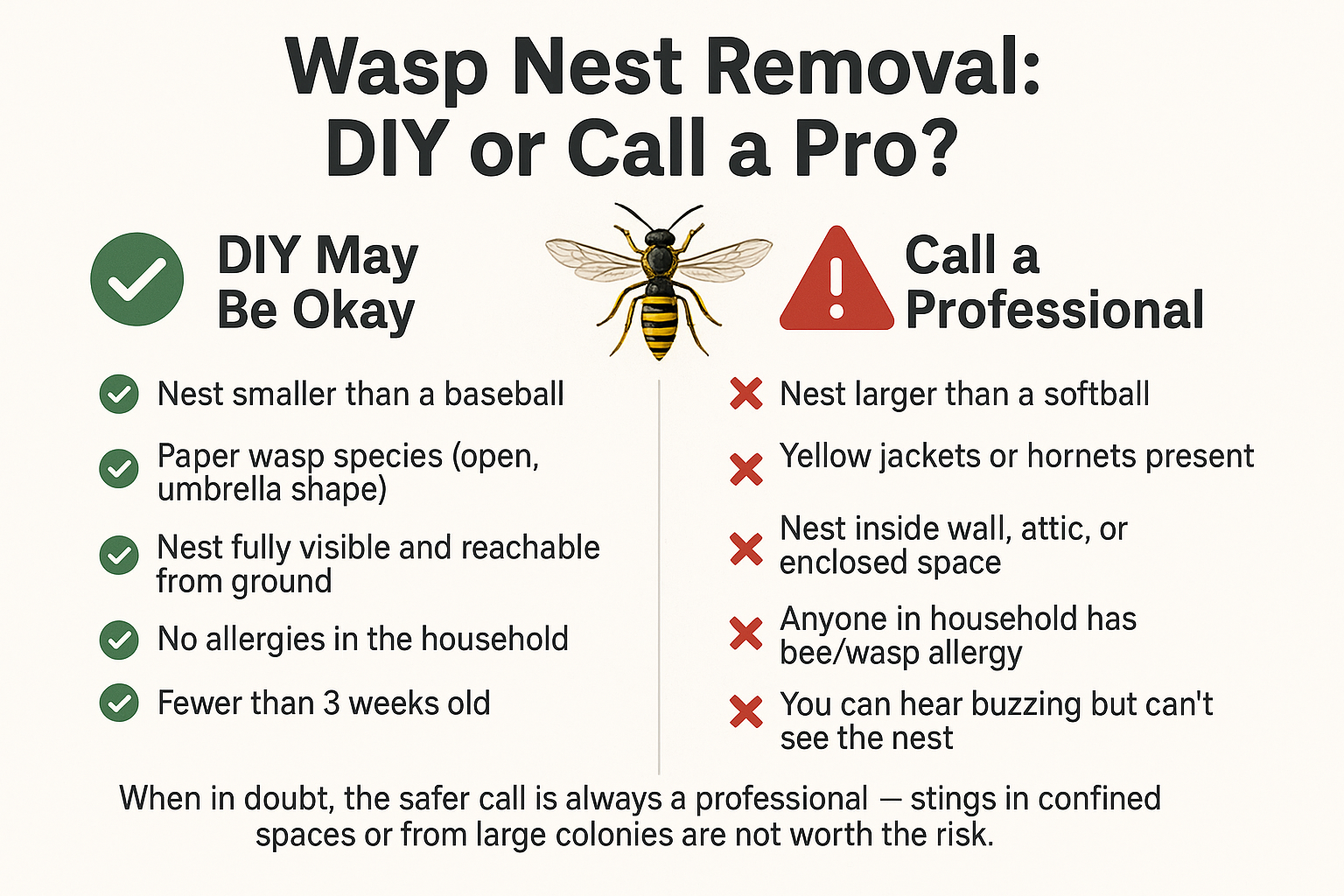
DIY removal is most reasonable when all of these are true:
- The nest is smaller than a baseball and was likely built within the last few weeks
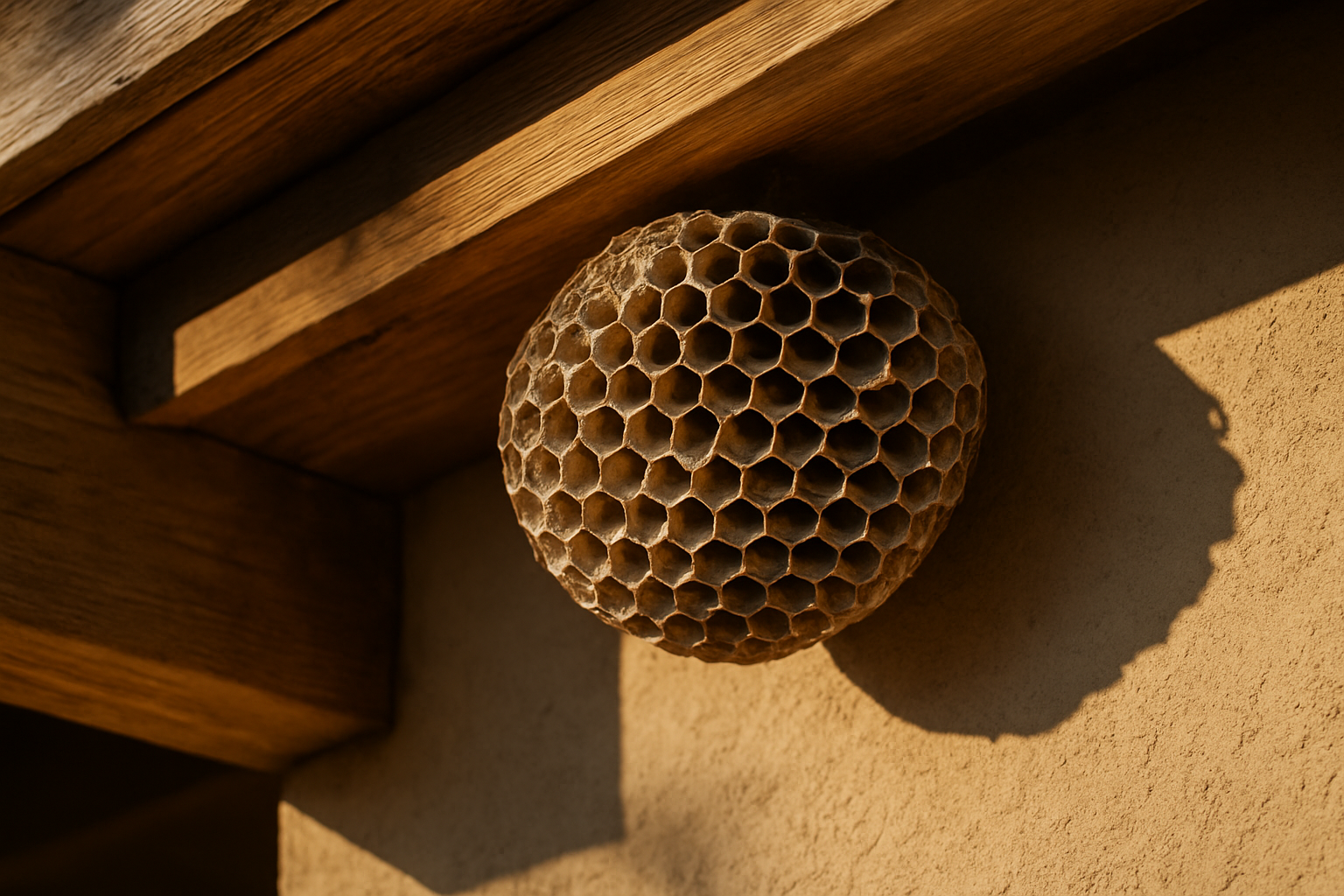
- It’s a paper wasp nest (open, umbrella-shaped, visible cells) — not a yellow jacket or hornet nest
- The nest is in an open, accessible location — not inside a wall, attic, or enclosed space
- You can reach it without a ladder, or from a stable surface with clear retreat space
- No one nearby has a known allergy to wasp stings
- You can treat it at night, when wasps are slow and mostly returned to the nest
If you decide to proceed, over-the-counter wasp sprays that shoot a stream from 15 to 20 feet work reasonably well for small exposed nests. Treat after dark, wear long sleeves and eye protection, and don’t linger. Remove the nest the following morning once you’re confident the colony is gone.
But if you’re checking those conditions and finding that even one of them doesn’t apply — especially if you’re dealing with yellow jackets or a nest you can hear but can’t fully see — that’s a meaningful signal to stop and call someone. Knowing when to stop handling a pest problem yourself is one of the more useful things a homeowner can learn.
DIY vs. Professional: Which Situation Are You In?
Use this side-by-side breakdown to quickly assess whether your nest situation is one you can handle or one that warrants a call to a professional.
The Nests That Are Almost Never Safe to Remove Yourself
Yellow jacket nests built inside wall voids, under crawl spaces, or in the ground are a different category entirely. These nests can hold thousands of wasps — not dozens — and the enclosed space means there’s nowhere to go when the colony responds.
In Santa Cruz County, yellow jackets commonly nest in the ground along hillside properties and in decaying fence posts and wood structures — both of which are abundant in older neighborhoods around Ben Lomond, Scotts Valley, and the east side of Santa Cruz. Disturbing a ground nest without knowing what’s inside it first is how people end up with 50 or more stings in under a minute.
Wall void nests create a different problem. Even if you treat the entry point and kill most of the colony, the nest itself — and the wax and debris inside — will attract other pests and can cause moisture damage if left inside the wall. A professional removes the nest and addresses the entry point so the cavity isn’t just recolonized the following season.
Anytime the nest is out of sight, underground, or inside a structure, the job involves more than just spraying. It requires knowing the full scope of what’s in there, which is something that’s hard to assess from the outside.
For context on what professional wasp and yellow jacket removal looks like locally, the yellow jacket exterminator page covers how West Pest Co. approaches these situations in Santa Cruz County.
Wasp Nest Situations at a Glance
Different nest scenarios carry very different risk levels. Here’s a quick reference based on the most common situations homeowners encounter in Santa Cruz County.
| Nest Situation | Risk Level | Reasonable Approach |
|---|---|---|
| Small paper wasp nest, open eave, reachable from ground | Low | DIY with nighttime spray application |
| Medium paper wasp nest, high on roofline or requires ladder | Moderate | Consider professional — ladder + wasps is a bad combination |
| Yellow jacket nest in open area, small colony | Moderate-High | Professional recommended — species is more aggressive |
| Yellow jacket or wasp nest inside wall void or attic | High | Professional only — colony size unknown, no safe retreat |
| Ground nest, location partially visible | High | Professional only — colony can be very large underground |
| Nest near children’s play area or high-traffic zone | High regardless of size | Professional — proximity to people changes the calculus entirely |
Frequently Asked Questions About Wasp Nest Removal
Can I just knock the nest down with a broom or a stick?
That’s one of the more common ways people end up getting stung badly. Physically disturbing the nest without killing the colony first sends the wasps into immediate defensive mode. Even a small nest can produce a painful response if you’re standing right next to it when it happens. If you’re going to remove a nest, treat it chemically first and give it at least 24 hours before any physical removal.
What time of day is safest to spray a wasp nest?
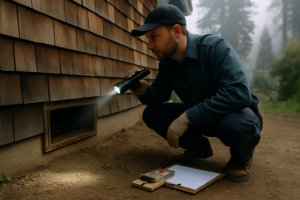
After dark — ideally between 10 PM and 2 AM. Wasps are slow and mostly inside the nest at night. Their vision in low light is poor, and the colony is less reactive. Bring a flashlight but keep it angled away from the nest. Don’t use your phone’s light directly at the nest.
Does the nest need to be removed after treatment, or can I leave it?
For small, treated nests in low-traffic areas, leaving the husk in place is usually fine — a dead nest won’t attract new wasps the same season. But if the nest is inside a structure, in a wall, or somewhere moisture can collect, physical removal matters. Decaying nest material can attract other insects and cause odor or moisture problems over time.
I hear buzzing inside my wall. What should I do?
Don’t spray anything into the wall void yet. Sealing the entry point without treating the colony first can force wasps to find a secondary exit — sometimes into the interior of the home. A professional can assess the size of the colony, treat it properly, and then address the entry point so it doesn’t happen again next year.
How much does professional wasp nest removal cost in Santa Cruz County?
For a straightforward, accessible nest, professional removal typically runs $75 to $150. Nests inside wall voids, attics, or requiring structural access can run $200 to $400 depending on complexity and time involved. Those aren’t alarming numbers relative to an ER visit or the cost of treating an allergic reaction.
Are wasps in Santa Cruz County more active at certain times of year?
Yellow jacket colonies tend to peak in late summer through early fall — August through October — when the colony is at its largest and food sources start to thin out. Santa Cruz’s mild coastal climate keeps colonies active later than people expect. Paper wasps are somewhat calmer and start building in spring, but a late-summer paper wasp nest is still a mature, defended colony.
Not Sure What You’re Dealing With?
If you’ve spotted a nest on your Santa Cruz County property and aren’t confident about what species it is, how large the colony has grown, or whether the location makes removal safe — West Pest Co. is worth a call before you try anything. Matthew West has handled wasp and yellow jacket situations throughout Santa Cruz, Aptos, Scotts Valley, and the surrounding communities, and he’s straight with people about what actually needs a professional versus what doesn’t. Reach out at (831) 430-8402 or visit westpestco.com to get a clear read on your situation.