Direct Answer: Wasps most commonly nest in wall voids, under eaves, inside dense shrubs, and in ground cavities. Check sheltered spots with limited foot traffic first.
You didn’t see it during spring. But now there’s a wasp circling the same corner of your patio every time you walk out — and that’s not a coincidence. By mid-summer, wasp colonies in Santa Cruz County are fully built out and actively defending territory. That’s when homeowners start noticing them.
Santa Cruz’s mild coastal climate makes this county one of the better environments for wasps in California. The fog and moisture that define places like Aptos, Soquel, and the west side of Santa Cruz city mean wood stays damp, vegetation stays dense, and sheltered nesting spots are easy to find. Wasps take full advantage of that.
This guide covers the specific places wasps are most likely nesting on a typical Santa Cruz County property — not a general list, but the spots that actually show up again and again. If you know where to look, you’ll know what you’re dealing with before it becomes a problem.
The Spots Wasps Prefer — and Why They Choose Them
Wasps aren’t random about where they build. They’re looking for three things: shelter from rain and wind, proximity to a food source, and low human activity during nest-building season. Santa Cruz properties tend to offer all three in multiple places at once.
The most common nesting locations on residential properties here include:
- Under roof eaves and overhangs — especially on north-facing or shaded sides of the house where the wood stays cool and dry
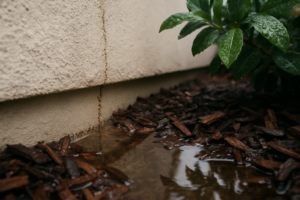
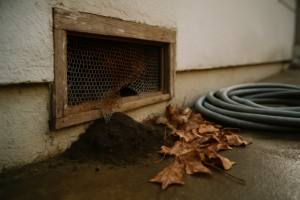
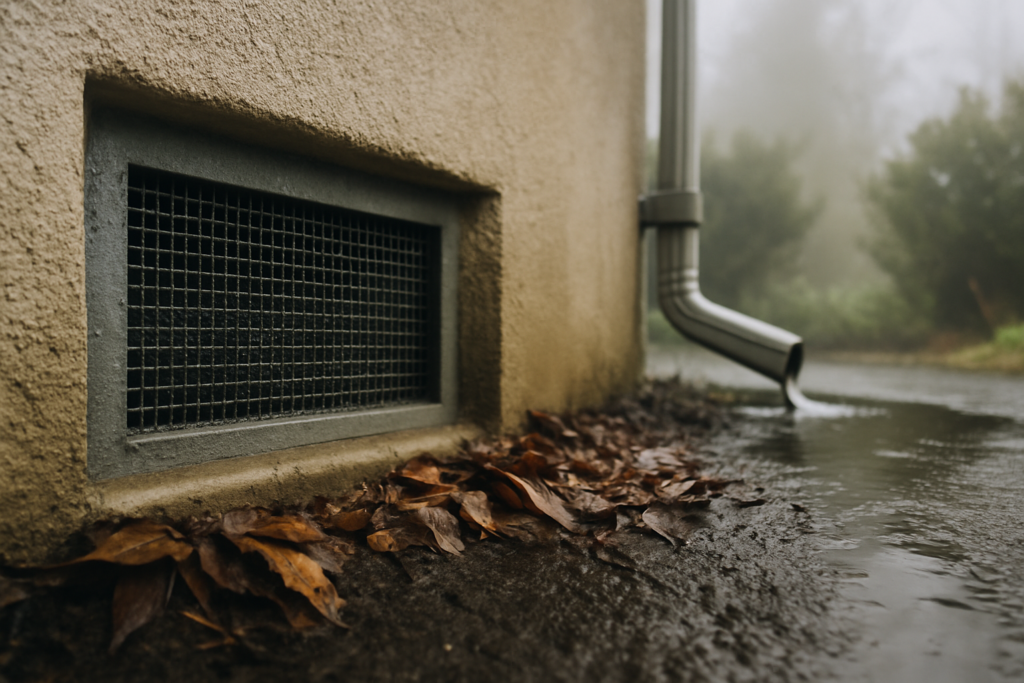
- Inside wall voids — wasps enter through gaps around utility penetrations, weep holes in stucco, or rotted wood trim; the nest grows inside where you can’t see it
- Shed ceilings and garages — detached structures with open vents or gaps under the roofline are among the most common sites Matthew West finds during calls
- Dense shrubs and hedges — paper wasps in particular build in the interior of ornamental plants, especially larger hedges along fences
- Ground holes and raised deck cavities — yellow jackets prefer to nest underground or in the space under a deck; these are the colonies most likely to sting because homeowners stumble into them accidentally
- Patio furniture and outdoor light fixtures — smaller nests often start under table edges, inside rolled umbrella fabric, or behind outdoor sconces where the surface stays undisturbed
The wall void situation deserves extra attention. A nest inside a wall can hold thousands of workers by August and may not be visible from the outside at all — just a steady stream of wasps entering and exiting a small gap. That’s a very different situation than a visible nest under the eave, and it requires a different approach to treat safely.
Yellow Jackets vs. Paper Wasps: The Hiding Spot Makes All the Difference
Most people call anything that stings a wasp, but the species matters a lot when you’re trying to find the nest. Yellow jackets and paper wasps behave differently, nest differently, and present different levels of risk.
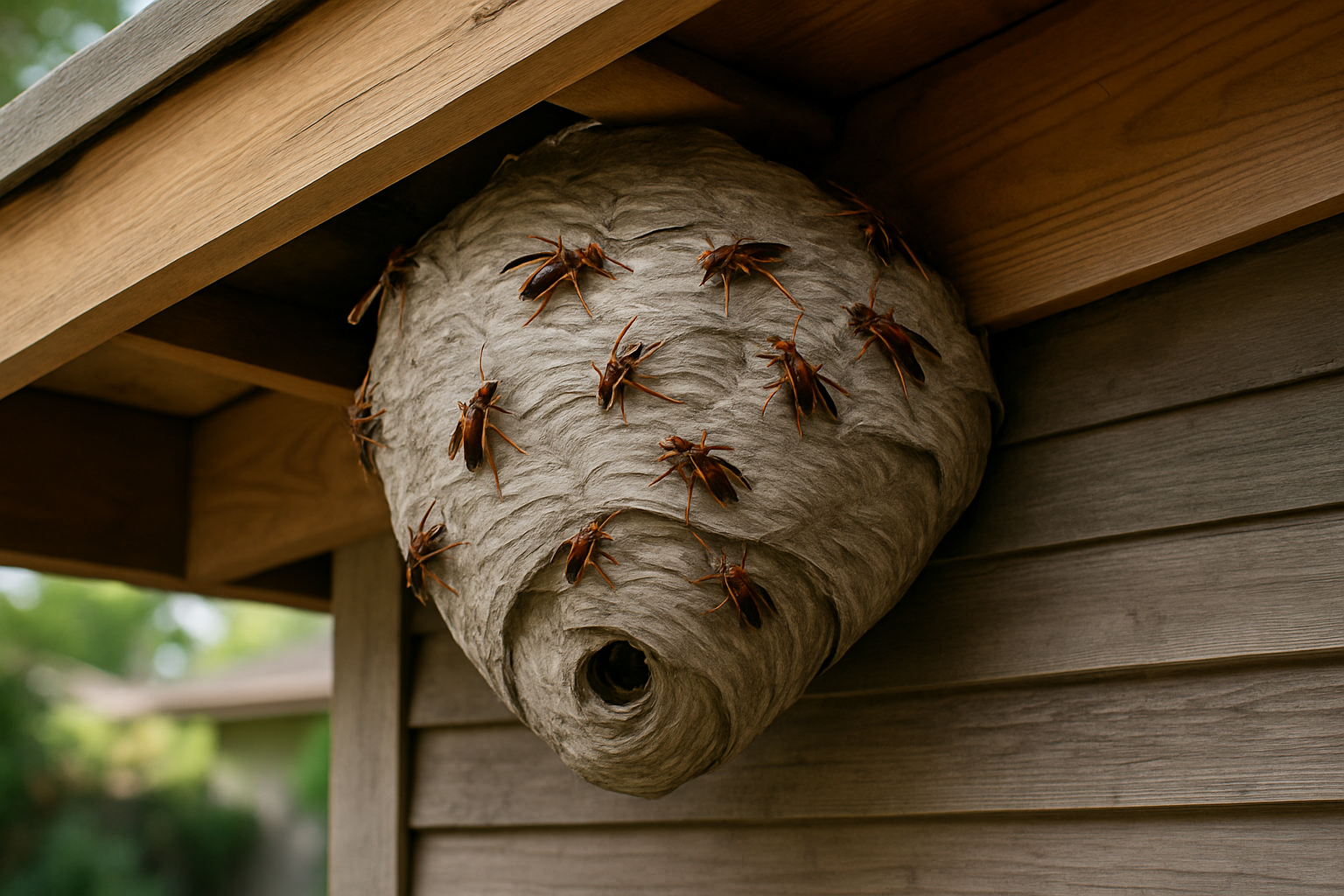
Paper wasps build the open, honeycomb-style nests you can see hanging under eaves or on fence posts. They’re territorial but not typically aggressive unless you get very close. Their nests are smaller — usually under a few hundred workers — and easier to locate because they don’t hide them.
Yellow jackets are the more aggressive species and the one responsible for most stings in Santa Cruz County. They prefer enclosed, protected spaces:
- Underground in existing rodent burrows or hollow root systems
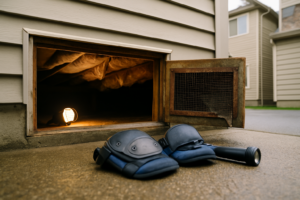
- Inside wall voids and crawl spaces
- Under wood decks and stairs
- Inside compost bins and recessed garbage enclosures
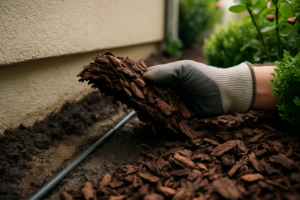
A yellow jacket colony can reach 3,000 to 5,000 workers by late summer. Because they nest in hidden spots, homeowners often don’t find them until someone steps too close and the colony responds. Ground nests near Capitola-area homes with raised garden beds or decomposing wood borders are especially common.
If you’re seeing wasps flying in and out of a hole in the ground or disappearing into a gap in your siding, that’s almost certainly yellow jackets. For more on what a professional looks for in situations like this, the Yellow Jacket Exterminator page at West Pest Co. lays out what treatment actually involves.
Where Wasps Nest by Property Zone
This breakdown shows the most likely nesting zones on a Santa Cruz County property and which wasp species tends to favor each location.
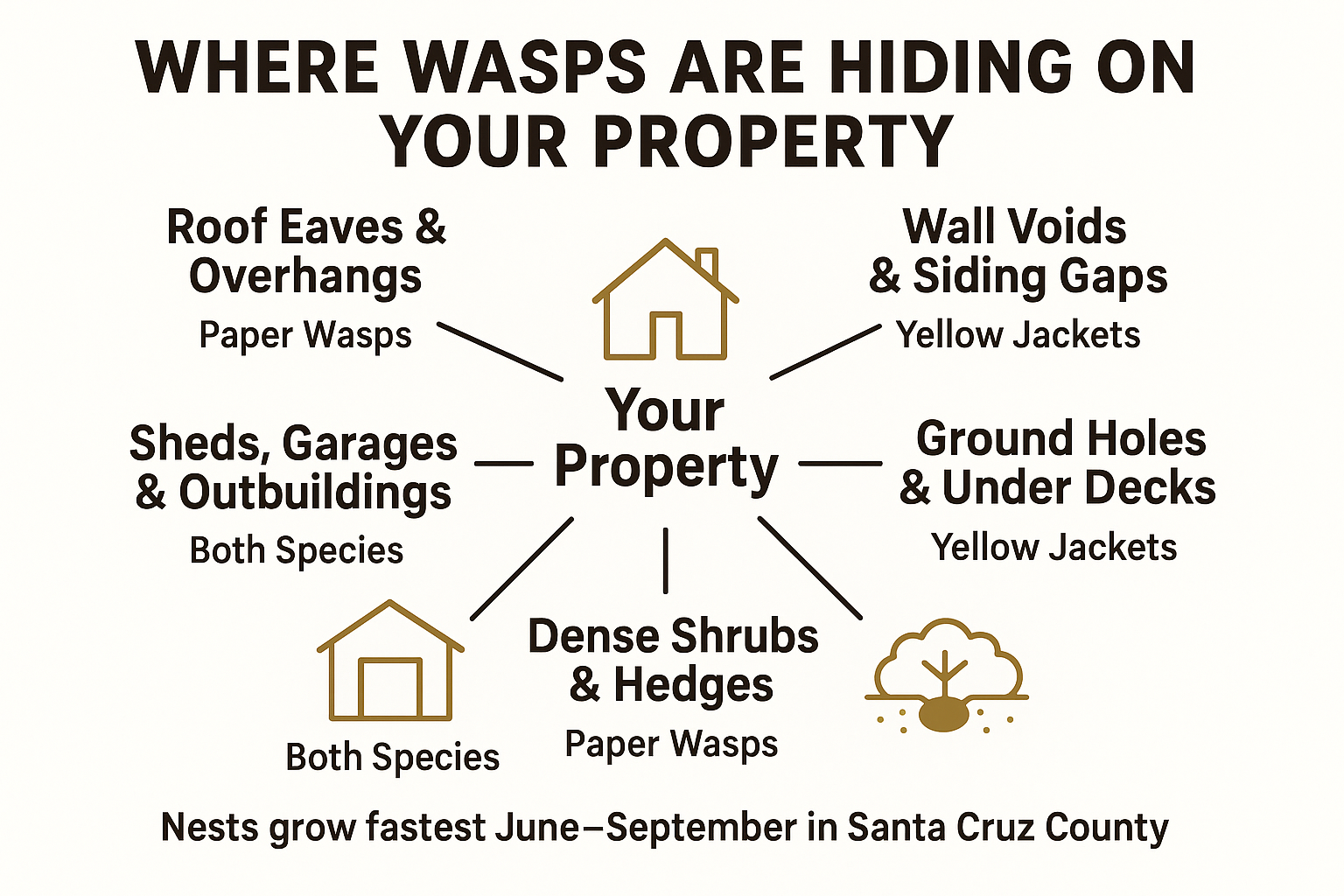
Wasp Nest Locations at a Glance
Use this as a quick reference when you’re trying to identify what you’re dealing with before calling for help.
| Location | Most Likely Species | Visibility | Risk Level |
|---|---|---|---|
| Under roof eaves | Paper wasps | Easy to spot | Low-moderate |
| Wall voids / siding gaps | Yellow jackets | Not visible | High |
| Ground holes / under decks | Yellow jackets | Ground-level opening visible | High |
| Dense shrubs or hedges | Paper wasps | Hidden inside foliage | Moderate |
| Shed ceilings / garage rafters | Both species | Visible if you look up | Moderate |
| Outdoor furniture / light fixtures | Paper wasps | Easy to spot | Low |
When to Walk Away and Call a Professional
Some wasp nests are manageable for a homeowner. A small paper wasp nest on a fence post with fewer than 20 workers, spotted early in the season, is low risk if you treat at dusk when activity is minimal. But most situations that homeowners call about are past that point.
Call a professional when:
- The nest is inside a wall void or a space you can’t directly access
- You’ve spotted a ground nest, especially near a play area, garden, or high-traffic path
- The colony is large — if you’re counting 30 or more wasps moving in and out, the nest is well-established
- Someone in your household has a known allergy to stings
- You’ve already attempted to treat and the activity continues or gets worse
Trying to seal a yellow jacket entry point without treating the nest first is one of the more common mistakes Matthew sees. The wasps don’t die — they find another exit, often into the living space of the home. That’s when a manageable outdoor problem becomes a very different situation indoors.
For context on knowing when DIY pest efforts have reached their limit, this guide on when to stop handling a pest problem on your own is worth a read before you reach for a can of spray.
How to Search Your Property Without Getting Stung
If you want to locate a nest before calling anyone, you can do it safely — as long as you’re not approaching the nest itself.
The safest method is observation from a distance. Stand at least 15 to 20 feet away from the area where you’ve seen wasp activity and watch for 5 to 10 minutes. You’re looking for a consistent flight path — wasps returning to a nest follow nearly the same route each trip. That line will lead you to the entry point.
A few practical tips for searching without incident:
- Search in the morning, between 7 and 9 a.m., when temperatures are cooler and wasps are less active
- Wear light-colored clothing — dark colors and floral patterns can draw attention
- Don’t swat at any wasp that flies near you during your search; it triggers a defense response
- Check around utility meters, hose bibs, and cable entry points — these gaps in siding are frequent entry points for wall void nests that homeowners miss
If you can identify the entry point from a safe distance, that’s useful information for whoever treats the nest. You don’t need to get any closer than that.
It’s also worth knowing that wasp activity tends to look different depending on the time of year. A nest that’s winding down in late October may show very little activity — but the colony can re-emerge the following spring if conditions are right. Understanding when pest problems actually need professional attention can help you plan ahead rather than react.
Frequently Asked Questions About Wasps on Your Property
How can I tell if the nest is inside my wall versus just near it?
Watch where the wasps are actually disappearing to. If they’re landing on the siding and then vanishing into a small gap — a crack, a weep hole, or a gap around a pipe — the nest is almost certainly inside. A nest under an eave will have wasps landing directly on the visible nest surface. Wall void nests are tricky because the entry point is often less than half an inch wide and easy to miss at a glance.
Is it safe to use store-bought wasp spray on a nest I found?
For small, accessible nests early in the season — yes, it can work. Treat at dusk or before sunrise when the colony is clustered and slow. Stand back, spray the entry point directly, and don’t linger. But for any ground nest, wall void nest, or nest larger than a tennis ball, store-bought spray isn’t reliable and can make the situation worse by agitating the colony without eliminating it.
Do wasps come back to the same spot every year?
They don’t reuse old nests, but they do return to the same locations. A sheltered eave or shed corner that supported a nest one year will attract new queens the following spring. Removing the old nest and sealing any entry points after the colony is gone is the best way to reduce repeat activity in the same spot.
Are the wasps I’m seeing in Santa Cruz more aggressive than other areas?
Yellow jackets in this region tend to be active later into the fall than in inland California — the mild coastal temperatures keep colonies going longer. By September and October, colonies are at peak size and worker wasps become noticeably more defensive as food sources shift. That’s the time of year when unprompted stings are most likely, so late-season nests should be treated with more caution than summer ones.
What does professional wasp treatment actually involve?
For visible nests, a technician applies a targeted treatment directly to the nest and the surrounding entry point, usually in the evening. For wall void nests, treatment involves injecting product into the void through the entry gap and sometimes a secondary access point. The nest is typically left in place — removing it isn’t always necessary and can be riskier than leaving it. Activity drops significantly within 24 to 48 hours in most cases, though some residual activity is normal while remaining workers return and encounter treated surfaces.
Found a Nest — or Not Sure What You’re Looking At?
West Pest Co. serves all of Santa Cruz County — from Watsonville and Aptos to Scotts Valley and the city of Santa Cruz — with same-day response when the situation calls for it. Matthew West answers the phone himself and will tell you straight whether what you’re describing needs a professional or something you can handle on your own. Reach out at (831) 430-8402 or visit westpestco.com to get a clear answer from someone who knows this area.