Direct Answer: In an attached building, rodents travel through shared framing, party walls, and common attics. The scratching you hear rarely marks where they live, so treating one unit alone usually falls short.
Almost every one of these calls sounds the same. Someone hears scratching overhead or inside a shared wall, usually right around sunrise or just after dark, and the second question out of their mouth is what it costs to make it stop.
One homeowner in a Santa Cruz County townhouse wrote in describing scratching in both the wall and the ceiling, asking for a price before anything else. Another on the West Side said rodents were burrowing under the foundation and then working their way up into the walls, and that the noise only showed up in the mornings.
Both of those are attached or partly attached buildings, and that changes the whole job. In a condo, townhouse, or duplex, the sound almost never marks the spot where the animal actually lives.
Why the Scratching You Hear Is Not Where the Rodents Are
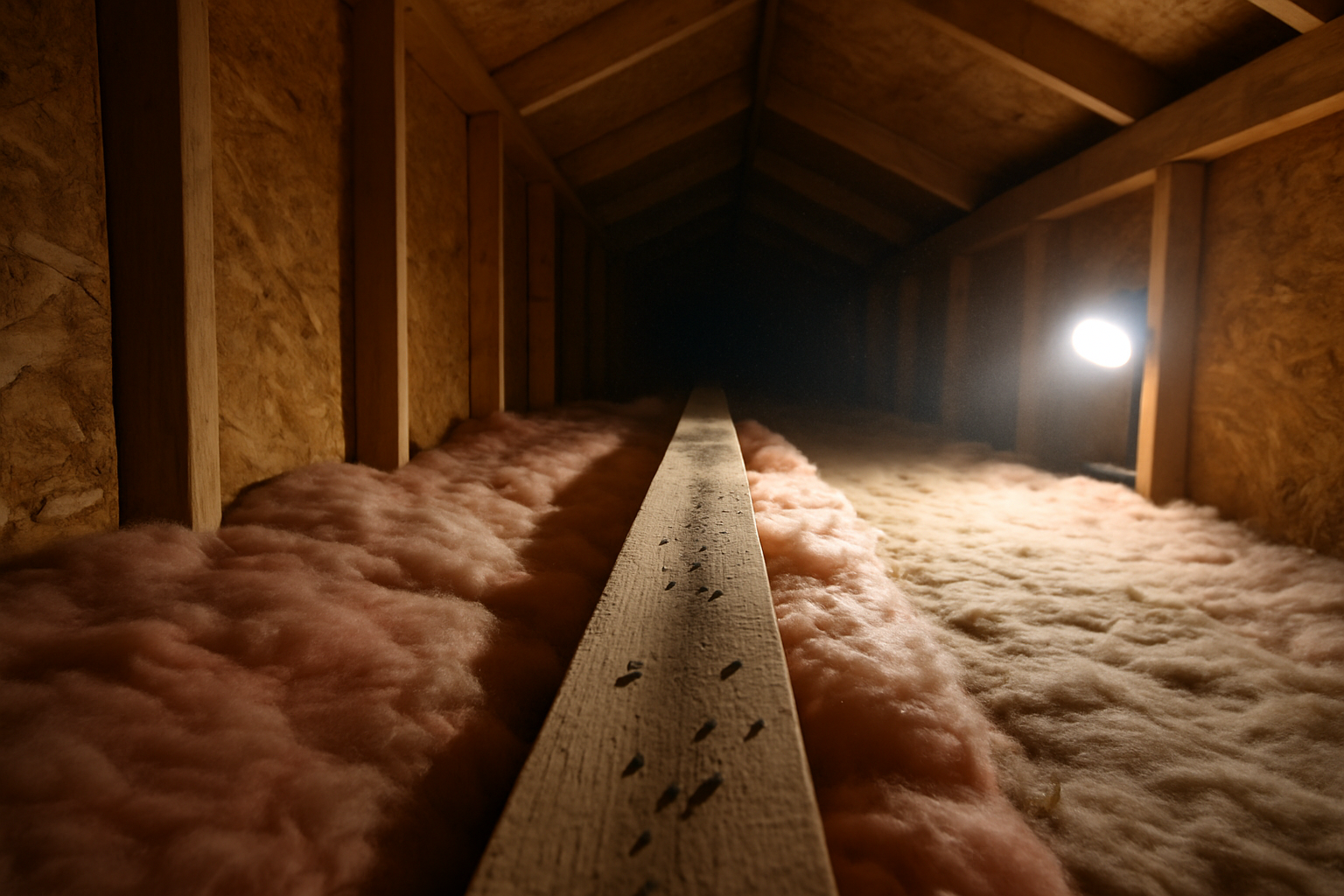
Attached construction gives rats and mice a highway. Shared framing, party walls, a common attic that runs above the demising wall, and utility chases for plumbing and heating all connect one unit to the next.
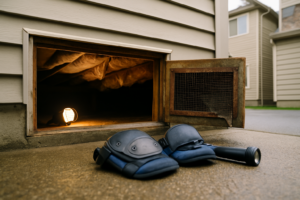
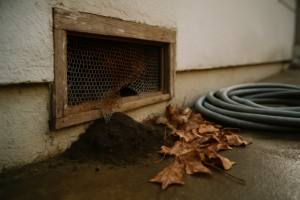
A rat can enter through a torn crawl space vent on the far end of the building, run the length of a joist bay, and end up making noise above a bedroom three units down. That is the single biggest reason people tear apart a closet ceiling and find absolutely nothing.
So I stop chasing the sound and start reading the evidence instead. In an attached building I’m looking for:
- Droppings and rub marks along the tops of joists and sill plates
- Grease trails, the dark smudge a rodent leaves against framing and ductwork where it travels the same route nightly
- Chew damage at insulation, wiring, and the paper facing on batts
- Flattened or tunneled insulation that shows a nesting pocket
- Gnawed edges at vents, pipe collars, and roof penetrations
Those marks show the travel route. The noise only shows where the drywall happens to be thin. Once you know the difference between a rodent problem and a full infestation, the evidence trail tells you a lot more than the 5 a.m. scratching does.
What Treating a Single Unit Can and Cannot Do
Here is the honest version, because owners deserve it before they spend money. Trapping inside one condo will usually quiet things down, sometimes within a week or two.
But if the building has a shared attic or a continuous crawl space, the activity often shifts sideways a few feet and comes back. You knocked down the animals using your section of the structure. The route into the building is still open.
So the realistic goal on a single unit is twofold:
- Reduce the active rodent population using your walls and ceiling right now
- Document how they are getting into the structure so the right party can address it
What I will not tell you is that one visit ends it for the whole building forever. In a shared structure, nobody can promise that, and anyone who does is guessing. Understanding what the exclusion and sealing process actually involves helps owners see why the structural side of the work matters as much as the trapping side.
The Permission Problem That Slows Multifamily Rodent Work Down
This is where most owners get stuck, and it has nothing to do with rodents. It has to do with who controls which part of the building.
The inside of your unit is usually your call. Attics, crawl spaces, roof lines, and exterior walls are often common area governed by an HOA or a property manager, which means scheduling, written approval, and sometimes a conversation with a neighbor who has not heard a thing and does not see the problem.
Property managers and agents around Santa Cruz, Capitola, and Corralitos reach out about tenant occupied units regularly, and the same rules apply there. The tenant reports the noise, the owner pays for the work, and the association controls the crawl space hatch.
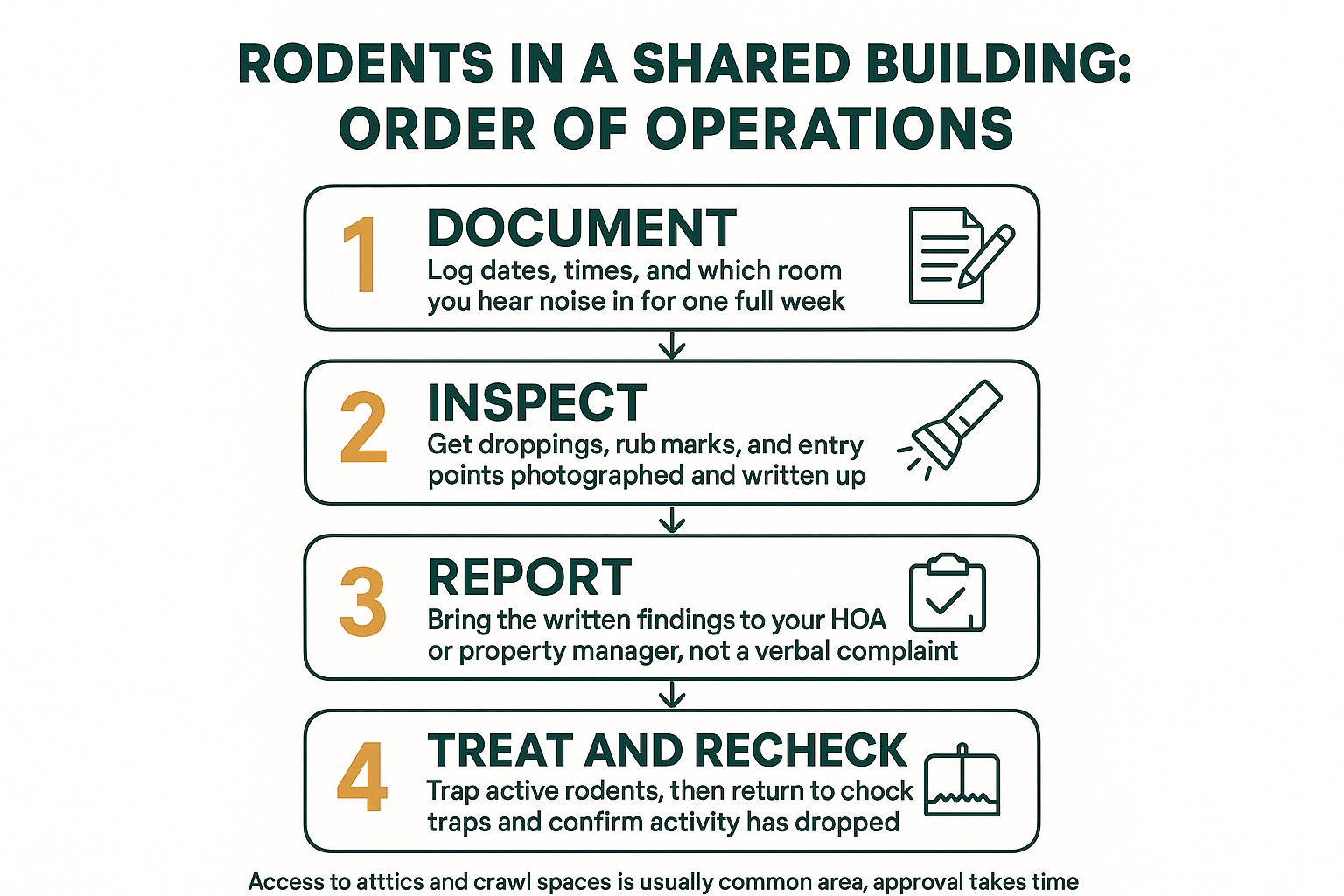
A practical order of operations saves weeks:
1. Write down what you hear and when. Dates, times, which room, which direction. A week of notes is worth more than a phone description.
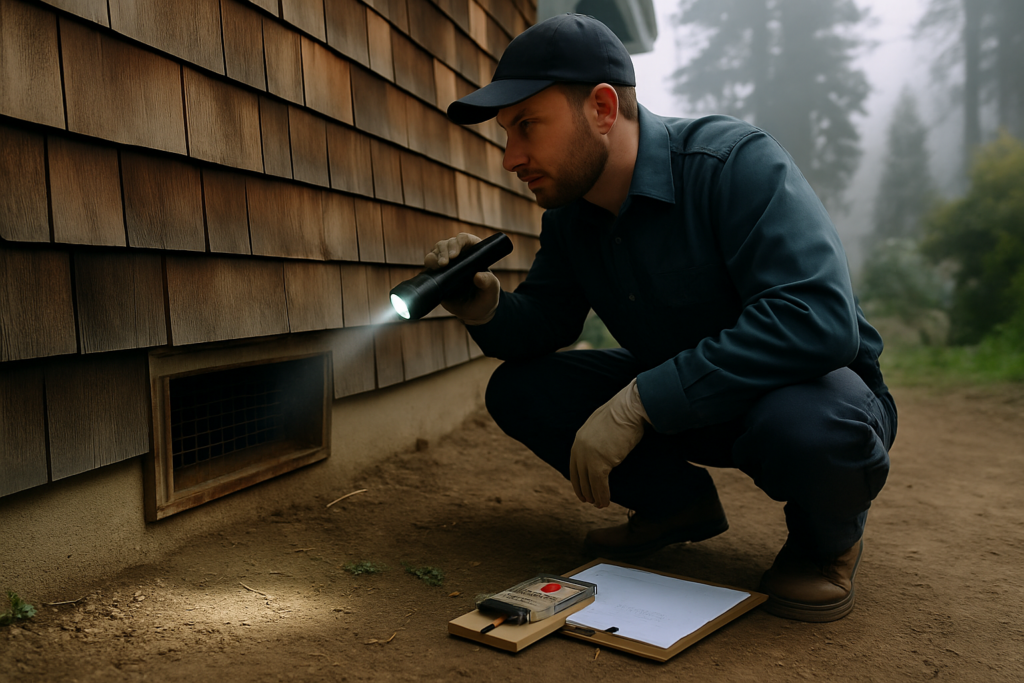
2. Get an inspection on record. Photos of droppings, rub marks, and open entry points turn a complaint into a finding.
3. Bring the findings to the HOA or manager. Asking for access with nothing to show usually gets a shrug. Asking with photos of a chewed vent screen usually gets a work order.
Who Usually Controls What in an Attached Building
Rules vary by association, so check your CC&Rs. But this is how responsibility typically breaks down in Santa Cruz County condo and townhouse communities.
| Area | Usually controlled by | What that means for scheduling |
|---|---|---|
| Unit interior, cabinets, garage | Unit owner | You can approve an inspection and trapping right away |
| Shared attic above the party wall | HOA or association | Written approval, sometimes neighbor coordination |
| Crawl space under multiple units | HOA or association | Access hatch may be in another unit or a locked area |
| Exterior walls, siding, roof line | HOA or association | Repairs often go through a board vote or a vendor list |
| Foundation and crawl space vents | Usually HOA | Common entry point, common approval delay |
| Tenant occupied unit interior | Owner, with tenant notice | Legal notice period applies before entry |
The Order of Operations for a Shared Building
Owners who follow this sequence tend to get access approved far faster than owners who start by asking the board for permission.
Entry Points I Find Over and Over in Older Coastal Buildings
Santa Cruz County housing stock skews old, and attached buildings from the 60s through the 80s tend to fail in the same places. A few show up constantly:
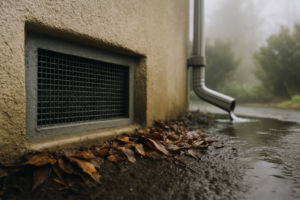
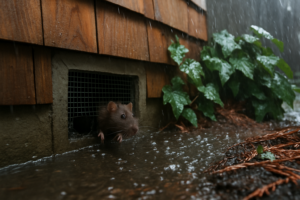
- Deteriorated foundation and crawl space vent screens. Rusted through, bent out at a corner, or missing entirely. Owners at Pleasure Point rentals have described exactly this.
- Roof penetrations. Plumbing vents, fan housings, and the gap at the roof to wall transition where two units meet.
- Open cavities around mini split line sets. One homeowner traced attic rat activity right back to the unsealed opening where the refrigerant lines entered the building.
- Garage door corners and side jambs, especially in a shared garage bank.
- Utility chases where plumbing or heating runs pass between units.
The coastal climate makes all of this worse. Fog, marine moisture, and mild winters mean a crawl space under a Capitola or Soquel building stays damp and comfortable year round, and rodents here push indoors in early fall rather than waiting for real cold the way they do inland.
If you already found evidence, knowing how to handle rodent droppings safely matters before anyone starts poking around a crawl space.
What Actually Drives the Cost of a Multifamily Rodent Job
That townhouse owner asked about price first, and it is a fair question. I just cannot answer it honestly over the phone before someone has been under the building.
Here is what moves the number up or down:
- How many units and how much shared space are involved. One condo is a different job than a six unit crawl space.
- Whether the attic and crawl space are accessible. A locked hatch in a neighbor’s garage adds visits.
- How many entry points turn up during the inspection.
- How many follow up visits the trap line needs before activity drops off.
- Whether an HOA approval step adds scheduling time.
Inspection findings change the scope more often than not. A job that sounded like one bedroom ceiling turns into a shared attic run, or the opposite, a scary sounding noise turns out to be one animal with one obvious way in.
That is why a real estimate comes after the crawl, not before it. A direct conversation about your specific building will get you a much better number than any figure printed on a website.
Why I Avoid Poison in Condo and Townhouse Clusters
Dense housing raises the stakes on bait, and I say this to every owner in an attached building.
Bait placed in a common area is out of your control once it is down. You do not know which animal takes it, where that animal dies, or what eats it afterward. One customer put the concern plainly in a review: “our neighborhood has a lot of owls, hawks, and coyotes, to say nothing of neighborhood cats and our dog.”
There is also the practical problem. A rodent that dies inside a party wall becomes an odor problem your neighbor lives with too, and there is no clean way to pull it out of shared framing without cutting someone’s drywall.
The EPA has restricted several rodenticide products over exactly these secondary exposure risks, and you can read the current restrictions on rodenticide products directly. For shared buildings I stick with trapping plus finding the access points. It is slower on paper and far more predictable in practice.
One more thing worth knowing: rodents in a wall can bring other problems with them. If people in the unit are getting bitten at night with no bugs to be found, rodent mites in the walls are worth ruling out.
Frequently Asked Questions About Rodents in Attached Homes
My neighbor says they don’t hear anything. Does that mean the rodents are only in my unit?
Not at all. Noise depends on ceiling construction, insulation depth, and how close the travel route runs to drywall. It is common for one owner to hear everything while the unit next door hears nothing, even though the same animals are running above both.
Can you treat my condo if the HOA won’t give access to the attic or crawl space?
Interior trapping inside your own unit is usually yours to approve, and that can bring the active problem down. But without access to the shared space, nobody can identify or address how the rodents are entering the building, so expect activity to return. Documented findings from an interior inspection are often what gets the association to open that hatch.
How long does it take to get quiet again?
In a single unit with good access, most owners notice the noise dropping off within the first week or two of an active trap line. Shared attics and crawl spaces take longer because there is more ground to cover and more return visits to check traps.
Why do rodents show up in fall here when my family in the Valley sees them in winter?
Coastal Santa Cruz County does not really do cold, it does damp. Fog and marine moisture keep crawl spaces humid all year, and food sources outside thin out earlier, so rats and mice move into structures well before inland rodents do.
I rent my unit out. Who handles this, me or the tenant?
The owner almost always does, since the work involves the structure and often common area approval. Tenants report the noise and provide access, but the inspection, the association coordination, and the repair decisions sit with you.
Thinking through a shared wall rodent issue?
Attached buildings reward having one person who knows the layout, which is why Matthew does the inspection himself, walks the owner through what he found, and comes back to check the traps instead of handing the building to a rotating crew. That continuity tends to matter most when an HOA or a property manager needs a single point of contact. Voted Best Pest Control in Santa Cruz in back to back Readers Choice years with a 5 star Google rating, and available across Santa Cruz County and the wider Monterey Bay area at (831) 430-8402 or westpestco.com.