Direct Answer: Rat removal cost in Santa Cruz County depends on how many structures are involved, how reachable the crawlspace or attic is, and how many follow-up visits the job needs. An on-site look sets the real number.
A homeowner in a Santa Cruz County townhouse reached out recently with a question I hear almost every week. She wanted to know what rat control costs, and she asked it while the problem was still a mystery to her. All she knew was that something had been scratching in the wall and ceiling at night.
That’s usually how this goes. Price is the first thing people ask about, and they ask before anyone has looked at the house. I understand why. Nobody wants to invite a stranger over without some idea of what they’re walking into financially.
So here’s an honest walkthrough of what actually moves a rat job up or down in price around here, why the number lands where it does, and what to look for on a written estimate so you can compare two quotes that read nothing alike.
Why No One Should Quote Your Rat Removal Cost Over the Phone
I can tell you what shapes the price. I can’t tell you your price until I’ve seen the property, and neither can anyone else who’s being straight with you.
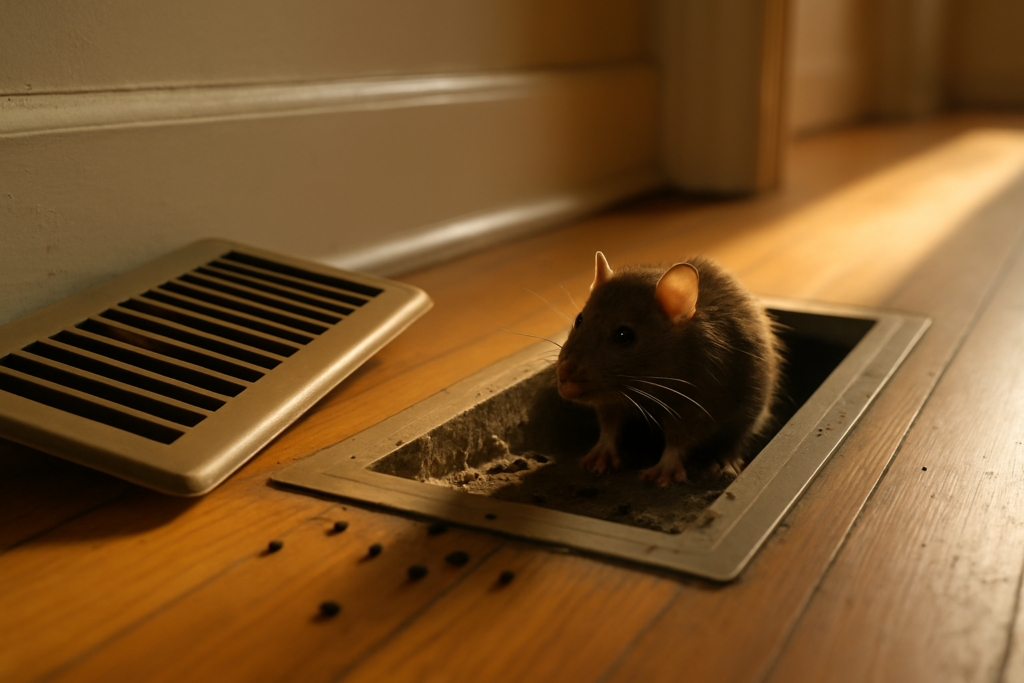
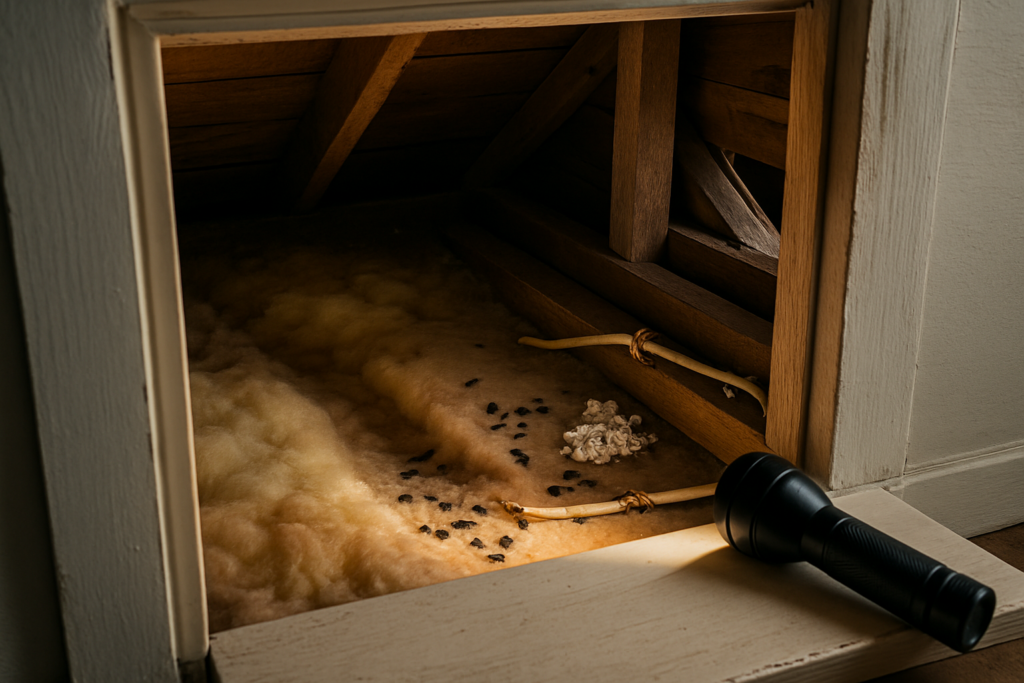
Rats don’t announce themselves. Scratching above a bedroom could be a couple of roof rats using a single soffit gap, or it could be an established group moving between an attic and a subfloor. Those are different amounts of work.
What I can say is that in this county, a single-structure trapping and monitoring job typically lands in the low-to-mid hundreds, and jobs involving multiple buildings or long-running activity climb from there. Treat that as general market context, not a quote.
The things that decide where you land:
- How many structures are involved (house, garage, studio, shed)
- How reachable the crawlspace and attic are
- How long activity has been going on before the call
- How many return visits the job realistically needs
Square footage matters less than most people expect. I’ve done 900 square foot cottages in Capitola that took more work than a large Scotts Valley home, because the small one had a tight crawlspace and the big one had an open attic hatch.
Access Is the Quiet Cost Driver Around Here
This is the part nobody expects. The price isn’t really about how big your house is. It’s about how hard it is to get to where the rats are living.
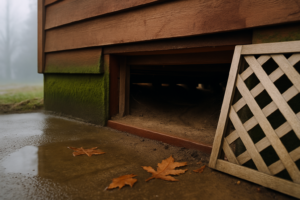
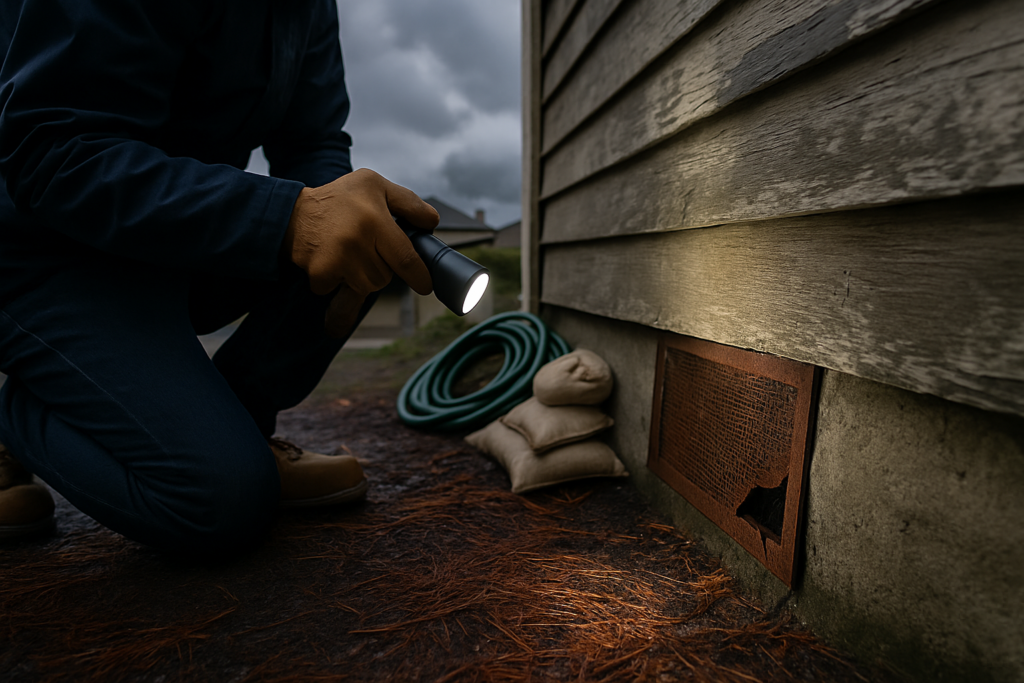
A lot of older homes on the Westside and around Pleasure Point sit on low crawlspaces with screened foundation vents and maybe 18 inches of clearance. Working that space means crawling on your side, hauling equipment in by hand, and doing it again on every return visit. That’s real time.
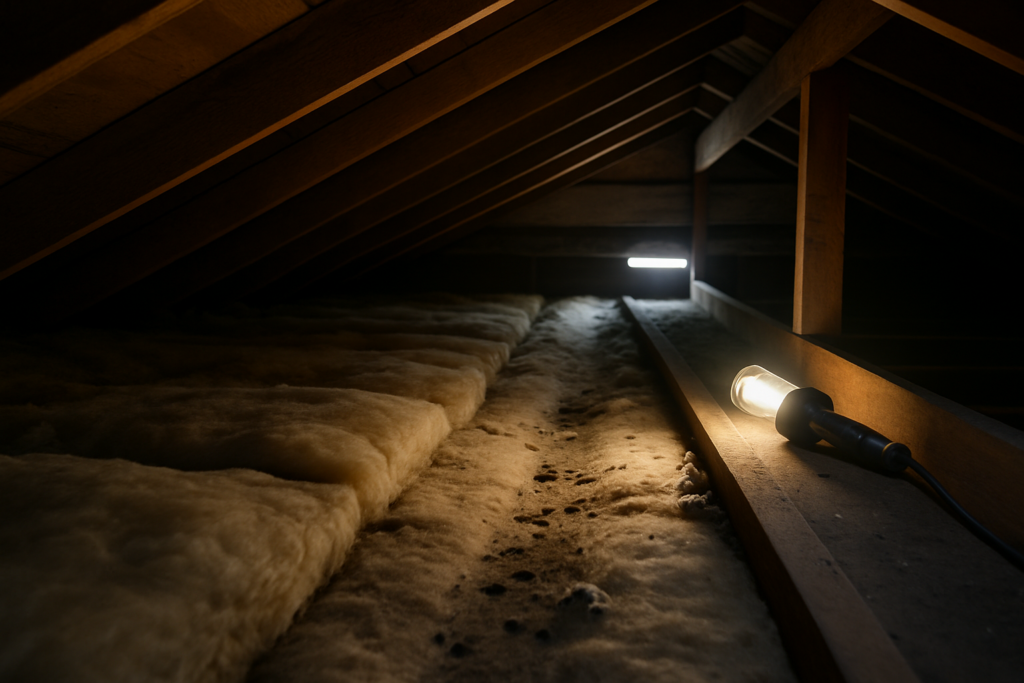
Compare that to a Scotts Valley home with a pull-down attic ladder and a floored walkway. Same number of traps, a fraction of the labor.
Things that add time on an inspection:
- Low or partially blocked crawlspaces
- Attics packed with stored boxes
- Insulation that’s already been disturbed or removed
- Detached buildings with separate foundations
- Steep or heavily vegetated lots in the Santa Cruz Mountains
Multiple structures are the other big one. Callers regularly describe rats under the foundation, in the attic above a bedroom, and in the garage at the same time. Each additional building means its own inspection, its own trap setup, and its own follow-up. A mountain property with a detached garage and a studio is simply a different job than a single condo unit.
What Pushes a Rat Job Up or Down in Price
Here’s a plain look at how the common variables tend to affect the number. These are directional, not dollar figures.
| Factor | Effect on Price | Why It Matters |
|---|---|---|
| Single structure, easy attic access | Lower end | Less labor per visit, faster monitoring checks |
| Low crawlspace behind screened vents | Higher | Slow to work, slow to re-check on every return trip |
| Detached garage or studio added | Higher per structure | Separate inspection, separate setup, separate follow-up |
| Activity noticed within days | Lower | Smaller population, fewer visits to resolve |
| Months of scratching before the call | Higher | More established activity, more monitoring time |
| Trapping and monitoring approach | Shifts cost to labor | Fewer product costs, more return visits built in |
| Tenant-occupied or scheduled-access property | Can add time | Coordination and limited working windows |
Rat Work Is Not One Visit, and That Structure Is What You’re Buying
This trips people up more than anything else. A wasp nest is often one trip. Rats almost never are.
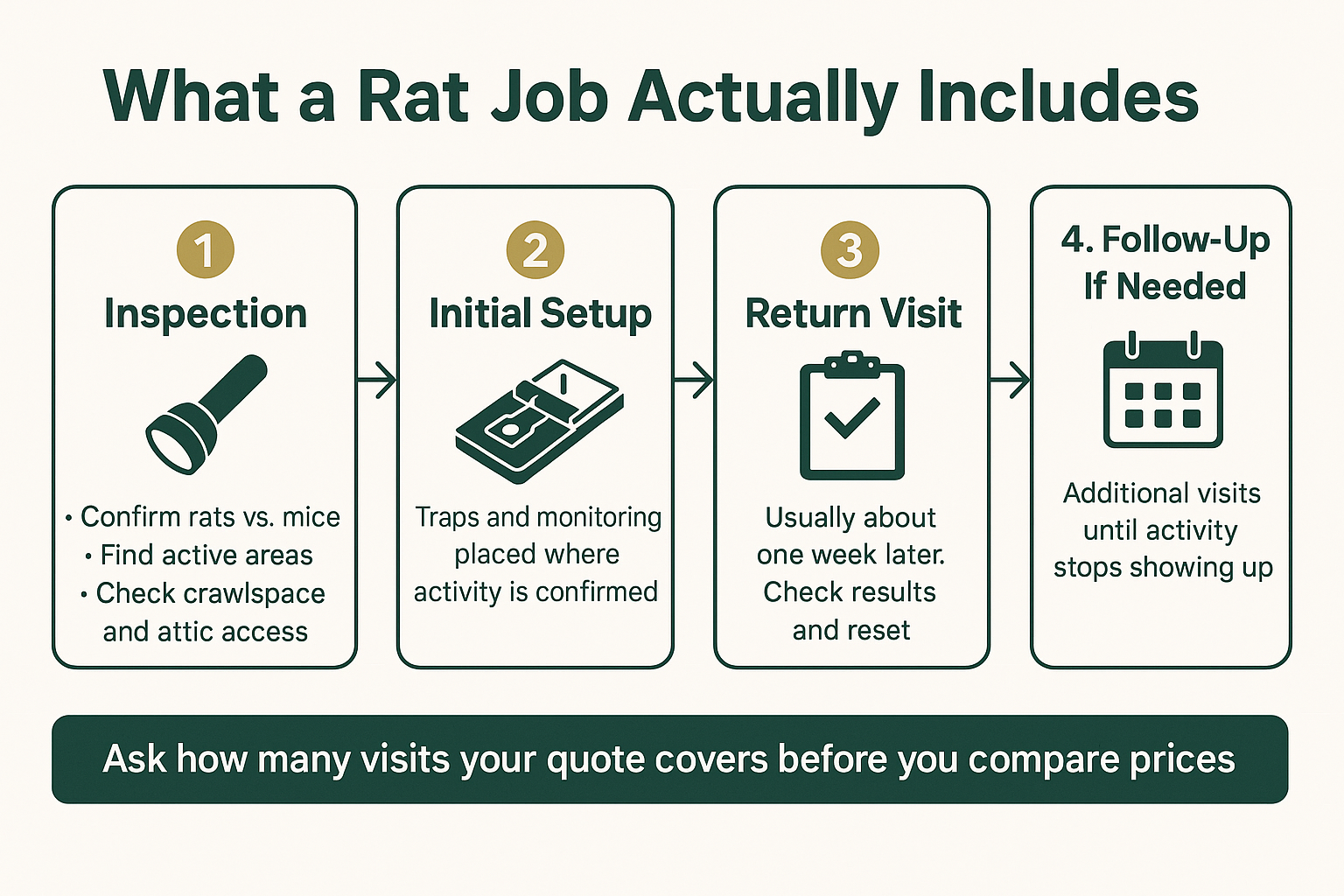
A normal job runs something like this:
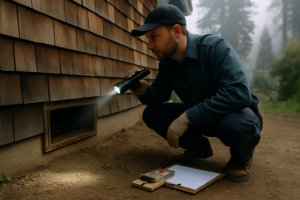
1. Inspection. Confirm it’s rats and not mice, find where they’re traveling, and identify the conditions drawing them in.
2. Initial setup. Place traps and monitoring in the active areas, based on what the inspection found.
3. Return visit. Usually within about a week. Check results, reset, and see whether activity has dropped off.
4. Additional visits if needed. If there’s still activity, the job isn’t done.
One local homeowner described exactly this rhythm in a review: an inspection turned up an access point she didn’t know about, traps went in, and a return trip a week later found them empty. That empty-trap check is the whole point. Without it, you’re guessing.
So when you’re comparing quotes, a lower upfront number with no follow-up built in is not automatically cheaper. If activity continues and every return trip is billed separately, the second invoice tells a different story than the first.
This is where rat pricing differs most from cost content about one-and-done treatments. It’s also worth reading up on what cockroach treatment tends to cost in Santa Cruz County if you want to see how a different pest structures its pricing.
The Typical Rat Job, Visit by Visit
Most homeowners are pricing a process, not a product. This is the sequence that number is covering.
Inspection Fees: Why Two Quotes Never Look the Same on Paper
A property manager handling a tenant-occupied rental in Santa Cruz asked me something a lot of people are thinking. He wanted an inspection where the inspection fee gets credited toward the work performed.
That’s a reasonable ask, and pricing structures across this county genuinely vary. Some companies charge for the inspection and credit it. Some fold it into the job price. Some advertise a free assessment and recover that cost somewhere else in the estimate.
None of those are wrong. They just make the bottom-line numbers on two quotes impossible to compare at a glance.
Ask these before you sign anything:
- Is there an inspection or trip fee, and is it credited toward the work?
- How many visits does the quoted price cover?
- What happens if rats are still active after the last included visit?
- Is any repair or structural work quoted as a separate line item?
- How long does the service period run, and does it auto-renew?
Larger regional and national companies tend to publish no pricing guidance at all and steer everything toward a recurring plan. That’s a big reason so many homeowners start these calls completely blind.
Does a Poison-Free Approach Cost More?
Eco-conscious homeowners here assume yes almost every time. The honest answer is that it’s usually structured differently rather than simply higher.
Trapping and monitoring shift cost away from product and toward labor and return visits. That’s why two quotes for the same house can look so different side by side. One is buying materials, the other is buying trips.
And the reason so many people in this county rule out bait from the start isn’t just personal preference. Neighborhoods from Aptos to Ben Lomond have owls, hawks, coyotes, outdoor cats, and family dogs moving through them, and secondary poisoning is a real risk when a poisoned rat becomes something else’s meal. UC’s Integrated Pest Management program covers rat biology and control methods in detail if you want the technical background.
State rules on rodenticides have also shifted in recent years, which changes what’s even available. I’ve written more about how California’s rat poison rules affect Santa Cruz homeowners.
One homeowner who shopped around put the price question plainly in a review: “I got quotes from three different exterminators, and West Pest Co had competitive prices.” Shopping around is fine. Just compare scope, not just the total.
Timing Affects Availability More Than It Affects Price
Rats here don’t follow the inland California calendar. Our coastal fall nights cool off early, and that pushes rodents toward warm structures sooner than people expect.
From late summer through November, scheduling gets tight countywide. That’s when the phone rings most, and it’s also when homeowners are least willing to wait a week.
The price doesn’t really change with the season. What changes is how much flexibility you have on the calendar. If you’re already hearing something in the ceiling in August, getting on the schedule then usually means more choice of dates than calling in late October.
Same pattern shows up with other seasonal pests. Summer is when wasp and yellow jacket nests crowd the schedule for the same reason.
Frequently Asked Questions About Rat Removal Costs in Santa Cruz County
Can you give me a ballpark over the phone?
I can give you general context and walk you through what drives the number, but not a firm quote. Until someone sees whether your crawlspace is reachable and how many buildings are involved, any number is a guess. The on-site look is what makes the quote accurate.
Why does rat work cost more than a one-time ant or spider treatment?
Because it’s a process with built-in return visits rather than a single application. Traps have to be placed, checked, and reset, and the job isn’t finished until activity stops showing up on those checks.
Does a bigger house always mean a bigger bill?
Not really. Square footage matters less than access and structure count. A small cottage with a tight crawlspace can take longer than a larger home with a walk-in attic.
How many follow-up visits should I expect?
Most jobs include at least one return trip after the initial setup, often about a week out. If activity is still showing up, more visits are needed. Ask any company how many are covered before you compare prices.
What if my rental is tenant-occupied?
That’s common here, and it mostly affects scheduling rather than method. Access windows have to be coordinated with the tenant, which can add time to both the inspection and the follow-up visits.
Is repair work included in a rat quote?
Usually not. Any structural or repair work is typically quoted separately from pest treatment, so ask specifically whether it appears as its own line item on the estimate.
Want a Number That Actually Fits Your Property?
One last thing worth mentioning: the person doing your inspection affects how accurate the quote is. At West Pest Co., Matthew often answers the phone and does the inspection himself, so the estimate comes from the technician who’ll do the work instead of a call center, which is part of why homeowners across Santa Cruz County have kept us at a 5-star Google rating and voted us Best Pest Control in the Readers Choice awards in 2023 and 2024. If you’re hearing scratching and want a property-specific number, (831) 430-8402 or westpestco.com will get you a straight conversation about what your situation involves.