Direct Answer: California’s Department of Pesticide Regulation is reevaluating indoor consumer bug bombs after 391 reported illnesses from 2018 to 2024. It is a review, not a ban, and the cans are still sold locally.
Most people I talk to reach for a bug bomb for the same reason. They saw a roach in the kitchen or fleas in the carpet, they wanted it handled that night, and the can at the hardware store was eight bucks and available right now.
So when California announced it is taking a hard look at those cans, a lot of Santa Cruz County homeowners started asking questions. Are they being pulled? Are they dangerous? Did I already put something bad on my kids’ floor?
Here is a calm walk through what the state actually said, why foggers underperform on the specific pests we deal with here, and what a targeted treatment does differently.
What California Actually Announced About Total Release Foggers
In late June 2026, the California Department of Pesticide Regulation announced it is starting a reevaluation of total release foggers used by consumers indoors. Those are the aerosol cans people call bug bombs.
The decision followed a DPR investigation into reported pesticide illnesses. The department published that investigation report on May 28, 2026.
Be clear on what a reevaluation is. It is a data gathering process that can lead to new restrictions down the road. It is not a ban, and those cans are still sitting on shelves in Santa Cruz, Capitola, and Watsonville today.
The number behind the decision is the part worth remembering. DPR reported 391 pesticide injuries or illnesses tied to people using total release foggers between 2018 and 2024, which works out to roughly 56 incidents a year statewide.
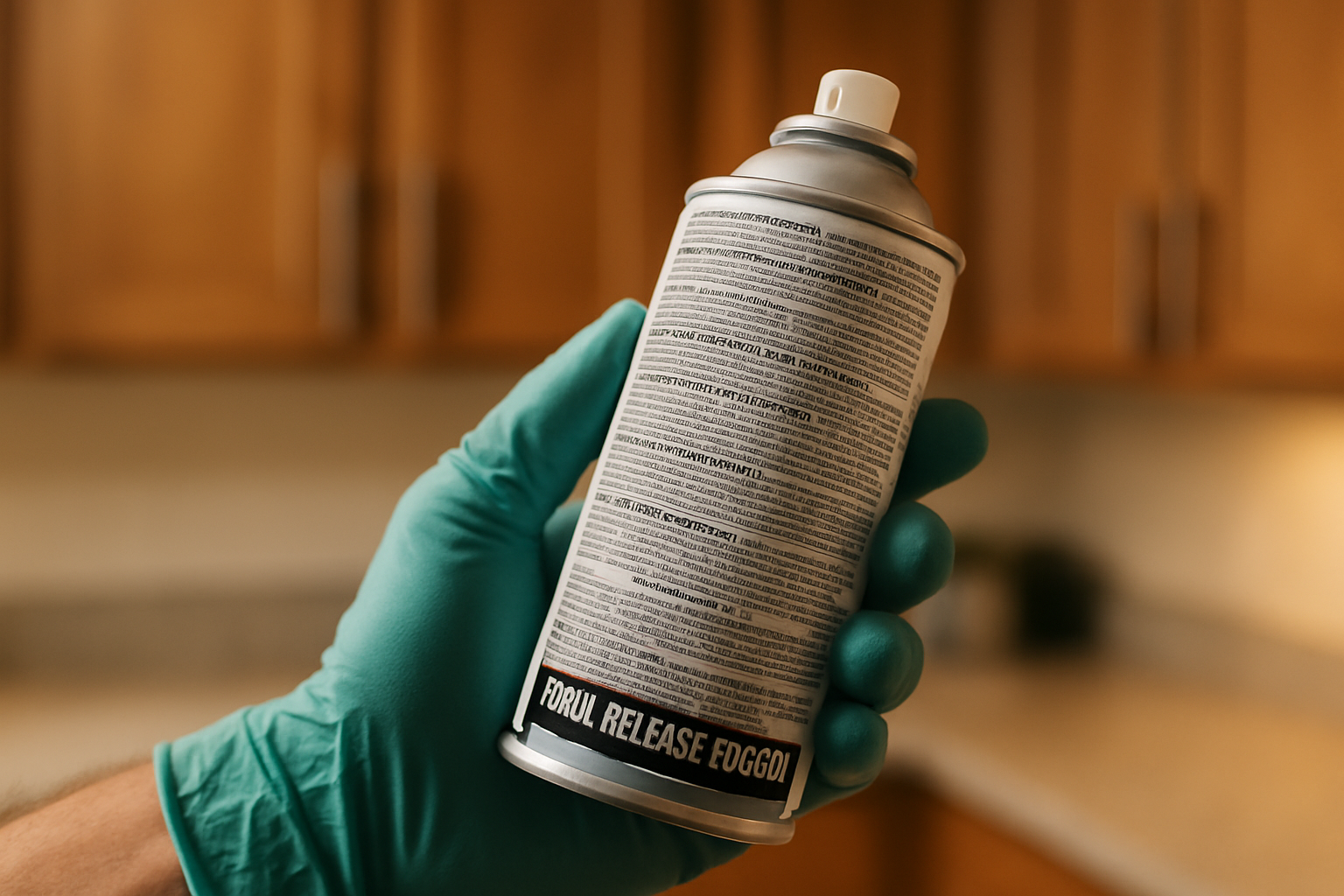
The review covers indoor consumer fogger products with active ingredients including:
- Pyrethrins
- Permethrin
- Cyfluthrin
- Cypermethrin
- Piperonyl butoxide
- S-methoprene
If you flip over a grocery store can, those are the same names printed on the back. You can read DPR’s own announcement of the fogger reevaluation if you want the source directly.
Most Problems Come From How the Cans Get Used at Home
Reading through what DPR found, the pattern is not exotic. It traces back to normal people making normal mistakes in their own houses.
The three that come up again and again:
- Too many cans for the square footage. People buy the three pack and set off all three in a 900 square foot cottage because more feels safer.
- Re-entering too soon. The label ventilation time gets skipped because the family has to sleep somewhere.
- Setting one off in a small closed room. A bathroom or a hall closet concentrates the product far past what the label assumes.
I am not saying that to scold anyone. I am saying it because the label instructions on these cans are dense, small, and easy to skim past when you are frustrated and covered in flea bites.
A product that depends on perfect homeowner execution in a real house with kids, a dog, and a pilot light is a product with a thin margin for error.
Why a Fog Misses the Pests Santa Cruz County Homes Actually Have
This is the part I wish more people knew before they buy. Foggers are marketed for exactly the pests we fight most around here: cockroaches, fleas, and ticks.
And homeowners here tend to reach for the biggest chemical option on the shelf. I regularly get calls asking whether a whole house can be tented or fumigated, and then the inspection turns up an ant trail coming in from a mulch bed, or a roach harborage behind a dishwasher motor.
That gap between what people think a heavy treatment does and what the pest is actually doing is the real problem. So here is the mechanical reason a fog underperforms.
A total release fogger sends up an aerosol mist. That mist drifts, then settles down onto open horizontal surfaces: counters, floors, tabletops, the dog bed, the toy bin.
Meanwhile:
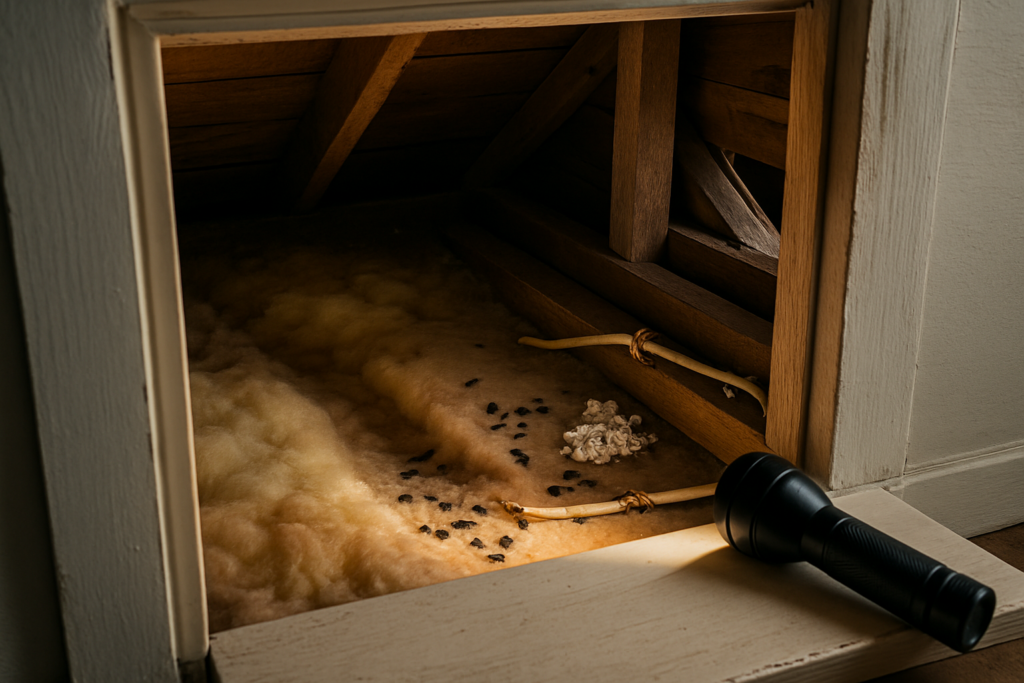
- Cockroaches sit tight in wall voids, under refrigerator and dishwasher motors, and inside cabinet corners where no airborne droplet is landing.
- Ants mostly nest outside in soil and only come indoors to forage, so you kill the scouts on the counter and the colony keeps sending more. That is worth understanding in detail, since ants find food fast and replace foragers faster.
- Flea pupae sit wrapped in a protective cocoon down in carpet fiber, largely unaffected by one airborne application.
So the fog lands where your family lives and misses where the pest lives. That is backwards from what you want.
Where the Fog Lands vs. Where the Pest Sits
A quick side by side of the three pests foggers are most often bought for in Santa Cruz County.
| Pest | Where it actually spends its time | What an indoor fog reaches |
|---|---|---|
| Cockroaches | Wall voids, under appliance motors, cabinet seams, behind baseboards | Open floor and counter surfaces only |
| Ants | Outdoor soil nests and mulch, foraging trails along walls | The visible foragers, not the colony |
| Fleas | Eggs and pupae buried in carpet fiber, pet bedding, floor cracks | Adults in the open, not protected pupae |
| Ticks | Yard edges, tall grass, leaf litter, pet fur | Almost nothing, since the source is outdoors |
| Spiders | Ceiling corners, garage rafters, window frames, exterior eaves | Some indoor webs, none of the outdoor source |
The Repeat Bombing Cycle, and Why Our Climate Makes It Worse
Santa Cruz County pests do not follow inland California’s calendar. Coastal fog, steady humidity, and damp soil keep cockroaches and spiders active straight through cool winters, and keep ants foraging close to year round.
So the homeowner who fogs in March is usually fogging again in June, and again in October. One can is not what stacks chemical residue up inside a house. The repetition is.
And the money adds up quietly. Costs vary by store and pack size, but multi-can boxes commonly run somewhere in the $10 to $25 range, and three or four rounds a year across a couple of years is real money spent on a problem that never closed out.
The frustration I hear most often is not anger. It is a kind of hopelessness. One homeowner told me the ants were everywhere, they were not even after anything in particular, the house was clean, and nothing off the shelf touched them.
Another said borax baits from the hardware store had done nothing across multiple rooms, with two cats and two teenagers in the house. That is the honest reason to explain what a fog does and does not reach.
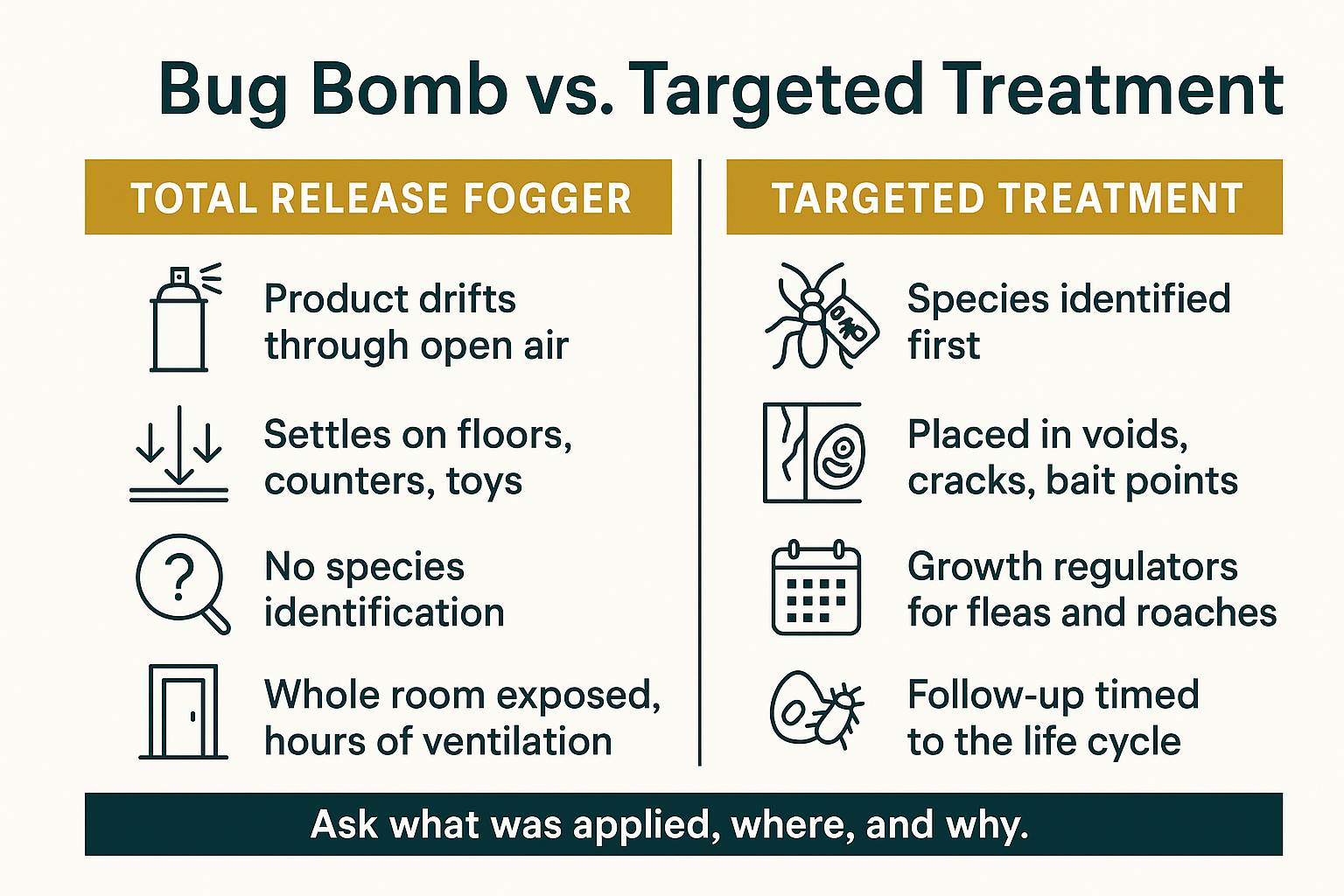
Fog Versus Targeted Placement, Side by Side
This breakdown shows the basic difference between a product that drifts and a product that gets placed.
If You Have Kids or Pets, a Fogger Is the Opposite of Targeted
This is who reads articles like this. The people who call me most often are parents and pet owners, and the first question is almost always some version of “what is the least harsh way to handle this.”
One caller had a new puppy. Another had three young kids in a small house. Another asked straight out whether targeted baits and exclusion work could be used instead of routine perimeter spraying.
A fogger cannot answer that request. It spreads product across the surfaces kids crawl on and pets lick, rather than into the crack where the pest lives. That is the exact inverse of what a low exposure approach looks like, which is what integrated pest management in homes with kids and pets is built around.
If you do decide to use a fogger anyway, the aftermath is the part most labels bury. Plan on:
- Full ventilation time before anyone goes back in, doors and windows open
- People and animals out of the house, not just out of that room
- Food prep surfaces covered before you start
- Pet bowls, bird cages, and fish tanks removed from the structure
- Re-cleaning counters, tables, and floors afterward before food touches them
If that list feels like more than you signed up for, that tells you something about the product.
What a Professional Visit Is Supposed to Look Like Instead
A licensed technician does not walk in and start spraying. The order of operations matters more than the product.
It should go roughly like this:
1. Identify the species. Small black ants in a kitchen and carpenter ants in a doorframe are not the same job.
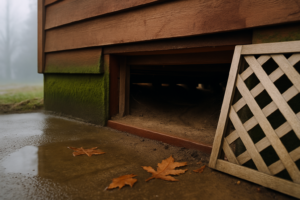
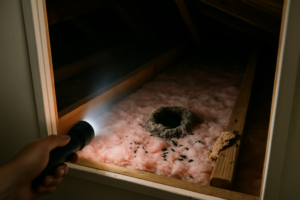
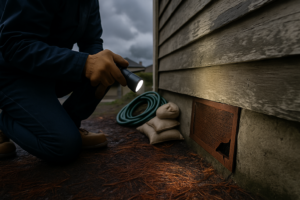
2. Find where it is nesting or entering. That means crawlspaces, attics, under appliances, along the exterior.
3. Place product in specific spots. Voids, cracks, and bait points where the pest travels, not across open living space.
4. Add growth regulators where they fit. For fleas and roaches, these interrupt the life cycle instead of just killing adults.
5. Schedule a follow-up timed to that life cycle, because one visit rarely lines up with every egg in the house.
The honest measure of a good treatment is simple. Can someone tell you what was applied, where, and why? A can on the floor can never give you that information.
One local homeowner put it well in a review: “he adjusted his recommendations due to my wife’s lung sensitivity and still provided a safe, effective treatment that’s used in hospitals and veterinary clinics.” That kind of adjustment only happens when a person is standing in the room making a judgment call.
The same thinking applies elsewhere in California pest rules. Rodenticide restrictions have tightened for a lot of the same reasons, and fleas can turn up in a home with no pets at all, which is one more case where blasting the room misses the actual source.
Frequently Asked Questions About Bug Bomb Safety for Indoor Home Use
Are bug bombs banned in California now?
No. DPR opened a reevaluation, which is a data gathering process that can lead to restrictions later. Consumer foggers are still legal to buy and use in Santa Cruz County today.
I already used one in my house. Should I be worried?
Most reported problems involved overuse, going back inside too early, or setting one off in a small closed room. If you followed the label ventilation time and cleaned surfaces afterward, you did the main things right. If anyone in the house felt sick during or after, call your doctor or Poison Control, not a pest company.
Will a fogger kill a flea infestation?
It knocks down adult fleas in the open, but flea pupae in carpet fiber are largely protected from a single airborne application. New adults keep emerging for weeks, which is why people fog, feel relief for a few days, and then see fleas again.
Why do my ants come back after every treatment I try?
Because most of the colony is outside in soil or mulch, and only the foragers come in. Killing what you can see on the counter does not touch the nest, and our damp coastal soil keeps ants moving nearly year round here.
Do I need my house tented for roaches?
Almost never. Roach problems are usually a harborage issue, meaning a specific damp, warm hiding spot near food, and they respond to targeted baiting and growth regulators far better than to a whole structure approach.
Want a Professional Read on What Is Actually in Your House?
We are owner operated, so Matthew often takes the call himself and walks Santa Cruz County homeowners through what he is applying, where, and why. That reputation is behind the two Readers Choice wins for Best Pest Control in Santa Cruz in 2023 and 2024 and the 5 star Google rating. If you want a professional look at a specific problem, the number is (831) 430-8402 and the site is westpestco.com.