Welcome to the future of pest management, where healthy homes and thriving gardens don't require an arsenal of harsh chemicals. Homeowners and garden managers are increasingly seeking solutions that are tough on pests but gentle on the planet, making the move toward effective natural pest control more relevant than ever.
These methods work in harmony with your local ecosystem to protect your property, offering long-term solutions by addressing the root cause of infestations rather than just the symptoms. They are not just quaint ideas; they are scientifically-backed, eco-friendly strategies. Moving beyond temporary fixes, this approach builds a resilient environment that naturally deters unwanted guests.
This guide will explore 10 powerful, practical, and proven natural pest control techniques. From harnessing the power of beneficial insects to employing simple physical barriers, you will gain the knowledge to create a resilient, pest-free space that is safe for your family, pets, and beneficial wildlife. Let's dive into how you can effectively manage pests the natural way, creating a healthier environment inside and out.
1. Companion Planting
Companion planting is a time-honored horticultural strategy that involves placing specific plants together to create a mutually beneficial ecosystem. This method of natural pest control leverages the natural properties of plants, such as their scents and chemical compounds, to repel harmful insects, attract beneficial predators, and improve overall garden health. By creating a diverse and balanced environment, you can significantly reduce the need for chemical interventions.

This approach works by confusing pests and disrupting their ability to locate their preferred host plants. It's a proactive, preventative measure that builds resilience directly into the structure of your garden.
How to Implement Companion Planting
Successful companion planting requires thoughtful planning. Instead of planting in monoculture blocks, intersperse your vegetables, herbs, and flowers to maximize their defensive capabilities.
- Marigolds and Tomatoes: Plant French marigolds around your tomato plants. The marigolds release a chemical called thiophene, which is toxic to root-knot nematodes, microscopic pests that can devastate tomato roots.
- Basil and Peppers: Grow basil alongside peppers. The strong aroma of basil is known to deter aphids, spider mites, and thrips, protecting your pepper harvest.
- Nasturtiums as Trap Crops: Plant nasturtiums near squash or cucumber plants. They act as a "trap crop," luring pests like aphids and cucumber beetles away from your more valuable vegetables.
- Aromatic Herbs: Integrate rosemary, thyme, and mint around the perimeter of your garden beds. Their powerful scents can confuse and repel a wide range of pests, including cabbage moths and carrot rust flies.
2. Beneficial Insect Release
Beneficial insect release is a form of biological control that involves introducing predatory or parasitic insects to your garden to manage pest populations. This method of natural pest control leverages nature's own predator-prey dynamics, creating a self-regulating system that keeps destructive bugs in check. By recruiting these tiny allies, you can effectively target specific pests without resorting to broad-spectrum chemical sprays that harm the entire ecosystem.
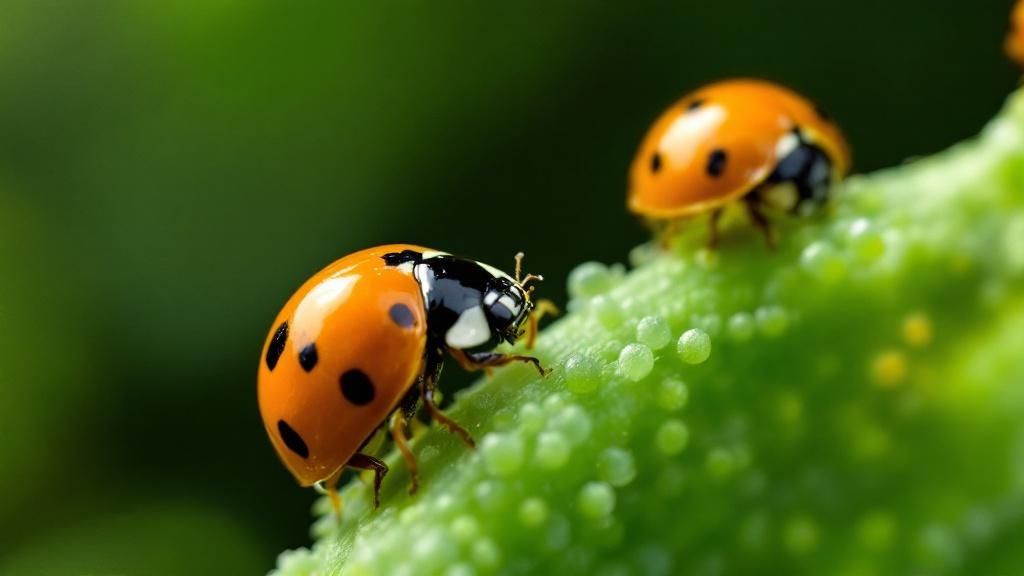
This proactive strategy works by establishing a population of "good bugs" that actively hunt and consume common garden pests. It is a powerful, eco-friendly solution championed by organic farming pioneers and university extension programs for its targeted effectiveness.
How to Implement Beneficial Insect Release
Success with beneficial insects depends on proper timing and creating a hospitable environment. You can often purchase these insects from commercial suppliers like Beneficial Insectary and release them directly into your garden.
- Ladybugs for Aphids: Release ladybugs at the base of plants plagued by aphids, such as roses or kale. They are voracious aphid predators and will quickly get to work.
- Green Lacewings for Generalists: Green lacewing larvae, often called "aphid lions," are generalist predators that consume aphids, mites, thrips, and other soft-bodied pests.
- Predatory Mites for Greenhouses: In enclosed spaces like greenhouses, release predatory mites to control destructive spider mite populations on sensitive plants.
- Timing and Technique: Release insects during the cool, early morning or evening hours to prevent them from immediately flying away. Lightly misting plants with water can also encourage them to stay.
3. Neem Oil Application
Neem oil is a powerful, plant-based pesticide derived from the seeds of the neem tree (Azadirachta indica). This cornerstone of natural pest control works by disrupting the life cycle of insects. Its active compound, azadirachtin, acts as an anti-feedant, growth regulator, and repellent, making it effective against a wide range of common garden pests without the harsh effects of synthetic chemicals.
This method is highly valued in organic farming and gardening because it targets pests like aphids, mites, and whiteflies while being generally safe for pollinators and beneficial insects when applied correctly. It’s a versatile solution for everything from houseplants to commercial crops.
How to Implement Neem Oil Application
Proper application is key to maximizing neem oil's effectiveness and ensuring plant safety. It’s best used as a preventative spray or at the first sign of an infestation.
- Mix Correctly: Combine cold-pressed neem oil with water and a small amount of mild liquid soap, which acts as an emulsifier to help the oil and water mix. A typical ratio is one to two teaspoons of neem oil and half a teaspoon of soap per quart of water.
- Time Your Application: Spray plants in the early morning or late evening. This helps prevent leaf burn from direct sunlight and minimizes impact on active pollinators like bees.
- Ensure Thorough Coverage: Coat all surfaces of the plant, including the undersides of leaves where pests like aphids and spider mites hide.
- Apply Regularly: For active infestations, reapply every 7 days. For preventative care, a 14-day schedule is often sufficient. Always reapply after rainfall washes the solution off the plants.
Using plant-friendly methods is crucial for maintaining a healthy garden ecosystem. For more guidance on eco-conscious solutions, you can learn more about plant-friendly pest control in Santa Cruz.
4. Diatomaceous Earth Application
Diatomaceous earth (DE) is a powerful, yet entirely mineral-based powder that serves as a highly effective mechanical insecticide. This substance is made from the fossilized remains of tiny aquatic organisms called diatoms, whose skeletons are composed of silica. As a method of natural pest control, DE works physically, not chemically, by using its microscopically sharp edges to abrade the waxy outer layer of insects' exoskeletons, causing them to dehydrate and perish.
This approach is particularly effective against crawling insects and is a valuable tool for creating physical barriers that pests cannot cross without sustaining lethal damage. Because it's a physical killer, insects cannot develop a resistance to it.
How to Implement Diatomaceous Earth Application
Applying diatomaceous earth correctly is key to its success. It should be applied as a light, dry dust in areas where pests are active. While a powerful pest solution, always use food-grade DE to ensure it is safe for use around homes, pets, and gardens.
- Pest-Proofing Foundations: Create a thin, continuous barrier around your home's foundation. This light dusting will kill ants, earwigs, and other crawling insects attempting to enter.
- Slug and Snail Garden Defense: Sprinkle a protective ring of DE around the base of vulnerable plants like lettuce and strawberries. Slugs and snails will avoid crossing the abrasive powder.
- Flea Control in the Home: Lightly dust pet bedding, carpets, and cracks in flooring where fleas and their larvae hide. Let it sit for several hours before vacuuming thoroughly.
- Protecting Stored Grains: For those with pantries or storing animal feed, mixing a small amount of food-grade DE into the grain can prevent infestations from weevils and beetles.
5. Essential Oil Sprays
Essential oil sprays harness the power of concentrated plant extracts to create potent, aromatic deterrents for a variety of pests. This method of natural pest control uses the volatile organic compounds found in plants, which can disrupt insects' nervous systems, mask the scents of host plants, and act as powerful repellents. When properly diluted, these sprays offer a targeted, biodegradable solution that is generally safe for plants, pets, and people.
This approach is highly effective for immediate, on-contact application and for creating a protective aromatic barrier around plants or entry points to your home. It’s a versatile tool for dealing with active infestations and preventing new ones from taking hold.
How to Implement Essential Oil Sprays
Creating an effective essential oil spray is simple, but proper dilution is key to preventing plant damage. Always mix the oils with water and an emulsifier, like a mild liquid soap, to ensure they combine properly.
- Peppermint Oil for Ants and Spiders: Mix 10-15 drops of peppermint oil with one cup of water and a few drops of dish soap. Spray this solution along ant trails, window sills, and doorways to deter ants, spiders, and even mice.
- Rosemary Oil for Flying Insects: Combine rosemary oil with water to create a spray that helps repel mosquitoes and flies. Lightly mist it on outdoor furniture or around patio areas before gathering.
- Citrus Oil for Aphids: Use orange or lemon essential oil to combat soft-bodied insects like aphids and mealybugs. The d-Limonene in citrus oil dissolves their waxy outer coating.
- Tea Tree Oil for Fungal Issues: Tea tree oil has natural antifungal properties, making it useful against powdery mildew and other fungal diseases on plants. Always test on a small leaf first, as it can be strong.
6. Beneficial Nematodes
Beneficial nematodes are microscopic, non-segmented roundworms that live in the soil and act as natural parasites to various pest insects. This method of natural pest control introduces a targeted army of predators that actively hunt down and eliminate harmful, soil-dwelling pests like grubs, fungus gnats, and root weevils. These organisms enter the host insect's body and release a symbiotic bacterium, which quickly multiplies and kills the pest from the inside out.
This biological control is highly effective because it targets pests at their larval stage, preventing future generations from emerging. It's a safe, non-toxic solution that poses no threat to humans, pets, or beneficial insects like earthworms and bees. For those exploring more advanced options, it's a key component of integrated pest management strategies. Learn more about how these and other eco-friendly pest control treatments work as part of a comprehensive plan.
How to Implement Beneficial Nematodes
Applying beneficial nematodes is a straightforward process, but timing and proper handling are crucial for their survival and effectiveness. They are living organisms that need specific conditions to thrive.
- Lawn Grub Control: Use Heterorhabditis bacteriophora nematodes to manage Japanese beetle grubs and other turf-damaging larvae. Apply them to your lawn in late summer or early fall when grub activity is high.
- Fungus Gnat Management: In greenhouses or with indoor plants, apply Steinernema feltiae to the soil. These nematodes will seek out and destroy fungus gnat larvae, breaking their life cycle.
- Flea and Weevil Control: To combat flea larvae in your yard or root weevils in ornamental plant beds, apply a mix of nematode species. This ensures broad coverage against different soil-dwelling pests.
- Application Timing: Apply nematodes in the evening or on an overcast day to protect them from UV radiation and heat. Water the soil before and immediately after application to help them travel into the ground where pests live.
7. Sticky Traps
Sticky traps are a simple yet highly effective physical tool used in natural pest control. These devices consist of a card or sheet coated with a non-drying adhesive that physically captures insects upon contact. Their effectiveness comes from using specific, bright colors, typically yellow or blue, which are visually attractive to certain types of flying pests, luring them to the sticky surface.
This method provides a dual function: it helps monitor pest populations to inform other control efforts and actively reduces their numbers. It is a non-toxic approach that avoids chemical sprays, making it safe for use in greenhouses, gardens, and around houseplants.
How to Implement Sticky Traps
Proper placement and maintenance are key to getting the most out of sticky traps. Use them strategically to target specific pests where they are most active.
- Yellow Traps for Whiteflies & Gnats: Hang yellow sticky cards just above the plant canopy in your greenhouse or near indoor plants. This color is highly attractive to whiteflies, fungus gnats, and aphids.
- Blue Traps for Thrips: Use blue sticky traps if you are dealing with thrips, particularly in flower crops or vegetable gardens, as thrips are more attracted to blue than yellow.
- Monitoring vs. Control: For monitoring, place one or two traps per 1,000 square feet. To actively control a population, you will need to increase the density significantly.
- Maintenance Schedule: Check traps regularly. Clean or replace them once about 75% of the surface is covered with insects or debris, as their effectiveness diminishes once they are full.
8. Bacillus thuringiensis (Bt)
Bacillus thuringiensis, or Bt, is a naturally occurring soil bacterium that serves as a highly targeted form of natural pest control. It produces protein crystals that are toxic to specific insect larvae when ingested. This microbial insecticide works by destroying the digestive system of the pest, effectively stopping them from feeding and causing them to die within days, all while being completely safe for humans, pets, birds, and beneficial insects.
This specificity is what makes Bt a cornerstone of organic gardening and agriculture. Unlike broad-spectrum chemical pesticides, it poses no risk to pollinators like bees or predatory insects like ladybugs, preserving the delicate balance of your garden's ecosystem.
This infographic summarizes the most common strains of Bt and the specific pests they target.
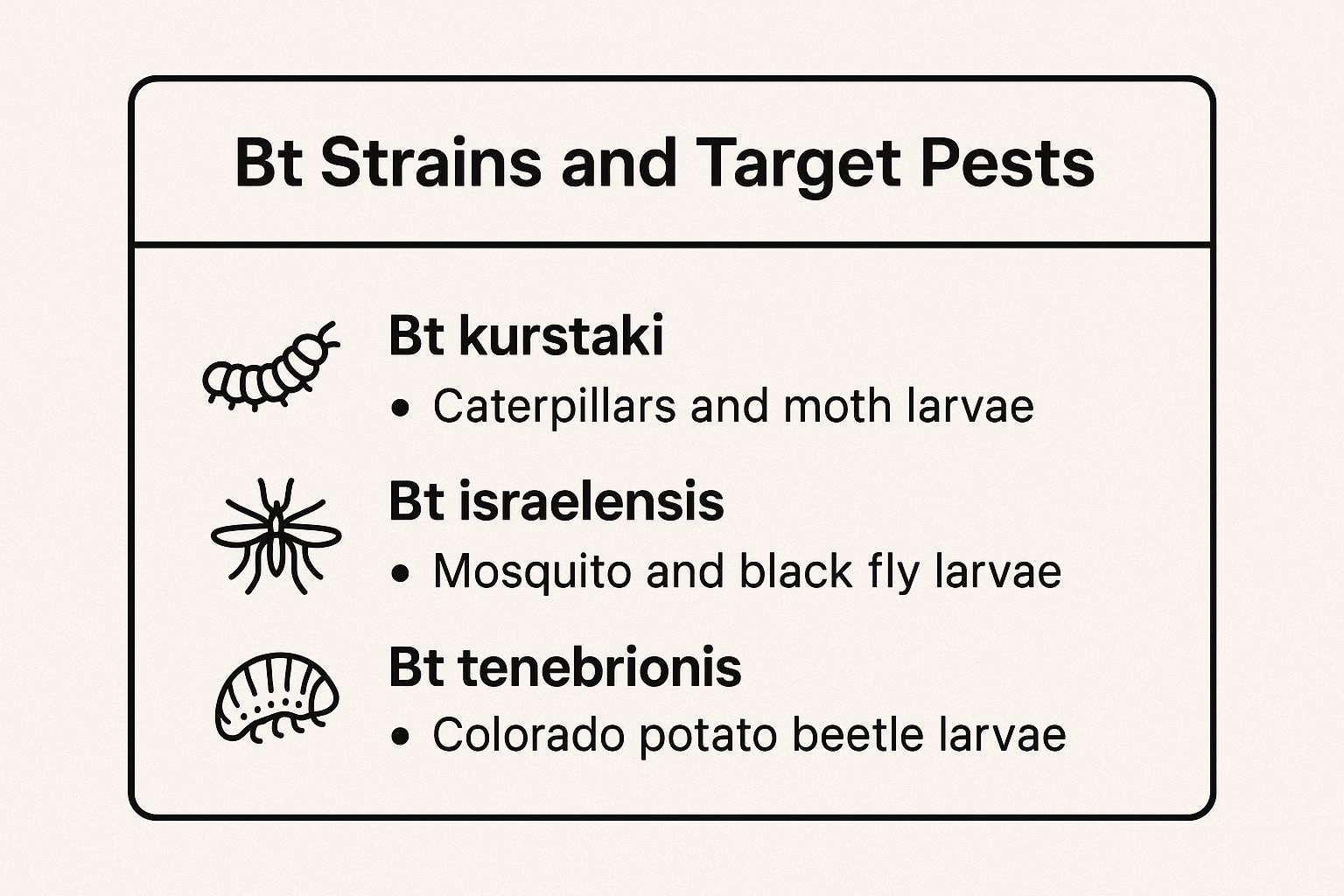
As the visualization highlights, selecting the correct strain is crucial for effective treatment, ensuring you only impact the intended pest.
How to Implement Bacillus thuringiensis (Bt)
Using Bt effectively requires proper timing and application, as it must be eaten by the pests to work. It is most effective on young, actively feeding larvae.
- Caterpillar Control: To protect cabbage, broccoli, and kale from cabbage worms and loopers, use the Bt kurstaki (Btk) strain. Mix the concentrate with water and spray thoroughly, covering all leaf surfaces, especially the undersides where larvae hide.
- Mosquito Management: For standing water in rain barrels or ponds, use Bt israelensis (Bti) in donut-shaped "dunks" or granules. Bti targets the larvae of mosquitoes, black flies, and fungus gnats, preventing them from maturing into adults.
- Potato Beetle Defense: Gardeners fighting the Colorado potato beetle can apply the Bt tenebrionis (Btt) strain. Apply at the first sign of larvae to protect your potato and eggplant foliage.
- Application Timing: Spray Bt in the late afternoon or on an overcast day, as the bacterial spores are degraded by UV sunlight. Reapply every 5-7 days or after rain during active infestations to maintain effectiveness.
9. Row Covers and Physical Barriers
Row covers and physical barriers offer a straightforward and highly effective form of natural pest control by creating a literal wall between your plants and the insects that want to eat them. These lightweight fabrics or solid materials are placed over crops, allowing sunlight, air, and water to pass through while physically blocking pests. This mechanical defense prevents insects from landing on, feeding on, or laying eggs on your valuable plants.
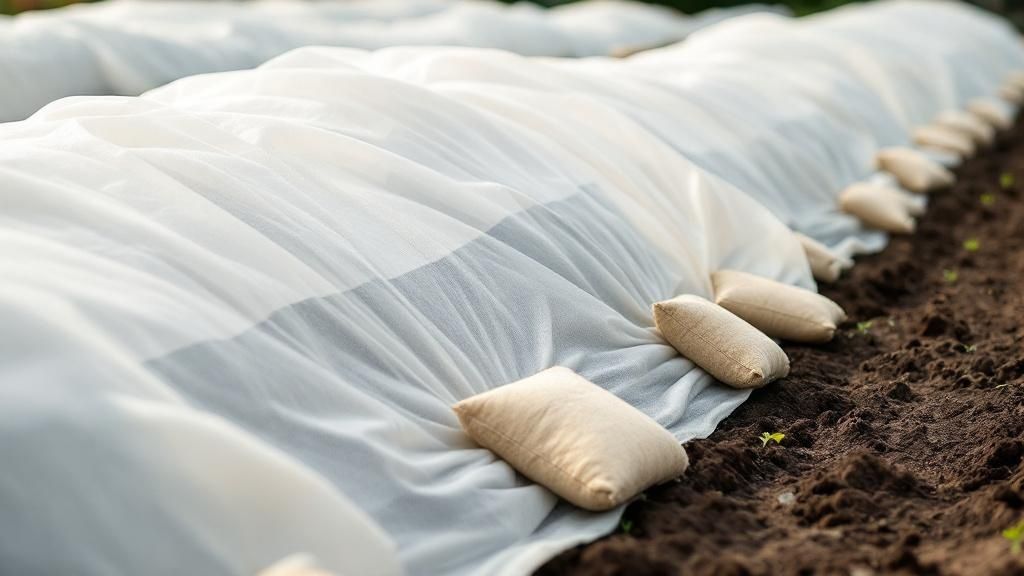
This method is a proactive strategy that completely isolates vulnerable plants during their most susceptible growth stages. By eliminating the opportunity for infestation, you can stop pest problems before they even start, without resorting to any sprays or chemicals.
How to Implement Row Covers and Physical Barriers
Proper installation is key to making physical barriers work. The goal is to create a complete seal that pests cannot breach, so attention to detail is crucial for success.
- Protect Brassicas: Use floating row covers over broccoli, cabbage, and kale immediately after planting to prevent flea beetles and cabbage worms from damaging young leaves.
- Guard Against Root Pests: Drape fine mesh netting over carrot and parsnip beds to block carrot rust flies from laying their eggs near the plant roots.
- Stop Slugs and Snails: Place copper tape or mesh barriers around the base of seedlings or raised beds. The copper creates a mild electric charge when slugs touch it, effectively repelling them.
- Secure the Edges: Ensure there are no gaps for pests to enter. Bury the edges of the fabric in the soil or use sandbags, rocks, or specialized clips to hold them down securely. Remember to temporarily remove covers from crops like squash and cucumbers during flowering to allow for pollination.
10. Habitat Modification and Sanitation
Habitat modification and sanitation is a preventative strategy that focuses on altering the environment to make it inhospitable for pests and more welcoming to beneficial organisms. This form of natural pest control tackles the root causes of infestations by methodically removing the food, water, and shelter that pests need to survive and reproduce. By maintaining a clean and well-managed space, you create a less attractive target for unwanted visitors.
This proactive approach fundamentally disrupts the pest life cycle. It's about designing a landscape and home environment that naturally resists infestation, reducing the need for reactive treatments later on.
How to Implement Habitat Modification and Sanitation
Effective implementation requires consistent upkeep and a keen eye for potential problem areas. By integrating these practices into your regular maintenance routine, you can significantly reduce pest pressure.
- Eliminate Standing Water: Regularly empty and clean birdbaths, check for clogged gutters, and turn over empty pots or containers where rainwater can collect. This is crucial for preventing mosquitoes from breeding.
- Manage Debris and Waste: Promptly clean up fallen fruit, which attracts fruit flies, wasps, and rodents. Keep compost piles well-managed and turned to avoid creating a haven for flies and other pests.
- Encourage Natural Predators: Install birdhouses, bat boxes, and bee hotels to attract beneficial wildlife that preys on common garden pests. A diverse habitat supports a balanced ecosystem.
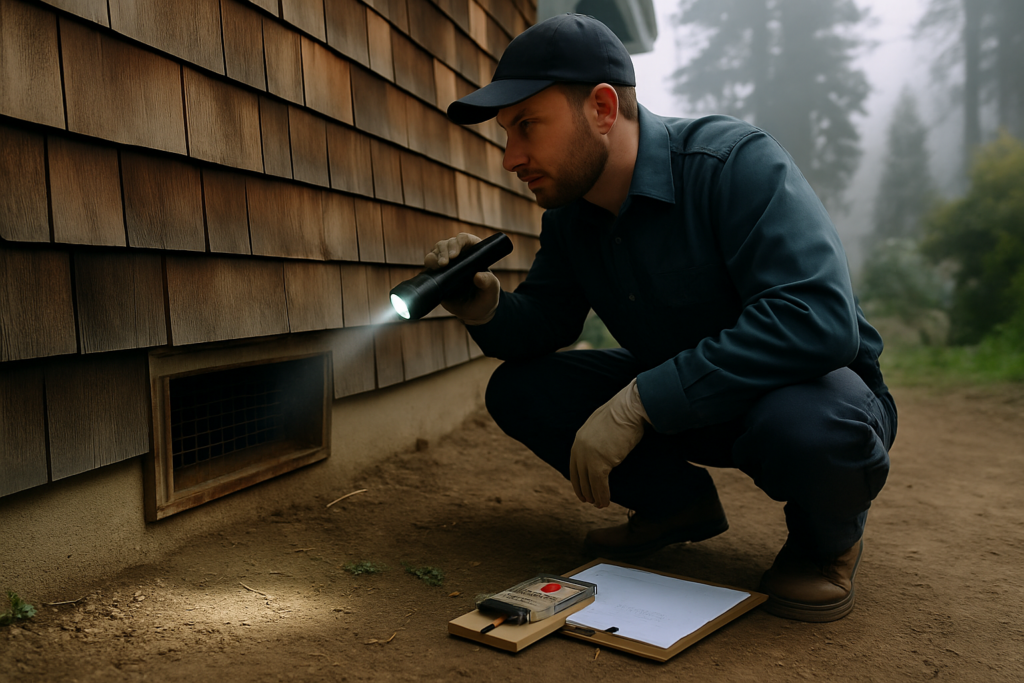
- Practice Good Garden Hygiene: Remove and dispose of diseased plant material immediately. Ensure proper spacing between plants to promote good air circulation, which helps prevent fungal diseases and discourages certain insects. For a thorough evaluation of your property's vulnerabilities, a professional home pest inspection in Santa Cruz can identify key areas for habitat modification.
Natural Pest Control Methods Comparison
| Method | Implementation Complexity 🔄 | Resource Requirements ⚡ | Expected Outcomes 📊 | Ideal Use Cases 💡 | Key Advantages ⭐ |
|---|---|---|---|---|---|
| Companion Planting | Moderate 🔄 (requires planning) | Low ⚡ (mostly knowledge-based) | Moderate to high 📊 (soil health, pest control) | Small to medium gardens, organic setups | Organic, cost-effective, enhances biodiversity ⭐ |
| Beneficial Insect Release | Moderate to high 🔄 (timing critical) | Medium ⚡ (purchase and habitat) | High 📊 (targeted pest control) | Gardens, greenhouses, IPM programs | Highly effective, sustainable, no residues ⭐ |
| Neem Oil Application | Low to moderate 🔄 (application timing) | Low to medium ⚡ (purchase needed) | Moderate to high 📊 (pest and fungal control) | Organic farms, gardens needing chemical alternative | Safe, multi-mode action, biodegradable ⭐ |
| Diatomaceous Earth Application | Low 🔄 (simple application) | Low ⚡ (inexpensive powder) | High 📊 (crawling insect control) | Home gardens, pet areas, stored grain | Non-toxic, resistance-proof, immediate kill ⭐ |
| Essential Oil Sprays | Low to moderate 🔄 (frequent reapplication) | Low to medium ⚡ | Moderate 📊 (repellent effect, variable) | Home gardens, indoor plants, small-scale use | Safe for people/pets, aromatherapy benefits ⭐ |
| Beneficial Nematodes | Moderate to high 🔄 (application conditions) | Medium to high ⚡ (cost, soil prep) | Moderate to high 📊 (soil pest control) | Soil-based pests in lawns, greenhouses | Targeted, safe, long-term biological control ⭐ |
| Sticky Traps | Low 🔄 (easy placement) | Low ⚡ (purchase traps) | Moderate 📊 (monitoring + fly control) | Greenhouses, fruit trees, indoor plants | Chemical-free, dual purpose, immediate feedback ⭐ |
| Bacillus thuringiensis (Bt) | Low to moderate 🔄 (application timing) | Low to medium ⚡ (purchase needed) | High 📊 (larval pest control) | Caterpillar, moth, mosquito larvae infestations | Highly selective, safe, approved organic ⭐ |
| Row Covers and Physical Barriers | Moderate 🔄 (installation and maintenance) | Medium ⚡ (material investment) | Very high 📊 (complete pest exclusion) | Vegetable crops, small farms, pollination-aware | 100% effective, reusable, chemical-free ⭐ |
| Habitat Modification and Sanitation | High 🔄 (ongoing vigilance) | Low to medium ⚡ (labor-intensive) | High 📊 (long-term sustainable management) | Large gardens, farms, integrated IPM | Cost-effective, ecosystem health, preventive ⭐ |
Integrating Natural Methods for a Resilient Property
Transitioning to natural pest control is more than just swapping a chemical spray for an organic one; it's about cultivating a resilient, self-regulating ecosystem in your home and garden. Throughout this guide, we've explored a diverse toolkit of ten powerful methods, from strategic companion planting and the release of beneficial insects to the targeted application of neem oil and diatomaceous earth. Each technique offers a unique advantage, addressing pest issues at different stages and from various angles.
The true mastery of natural pest control lies not in using one method in isolation, but in layering them to create a robust, multi-faceted defense system. This integrated approach, often called Integrated Pest Management (IPM), is the cornerstone of effective, long-term success. It’s about building a property that is inherently less attractive to pests and better equipped to handle them when they do appear.
From Individual Tactics to a Holistic Strategy
Think of your property as a complex puzzle.
- Preventative Foundation: Start with habitat modification and sanitation, removing the welcome mat for pests. Use physical barriers like row covers to protect vulnerable plants from the outset.
- Active Defense: Introduce biological controls like beneficial nematodes for soil-dwelling grubs and Bacillus thuringiensis (Bt) for specific caterpillar problems. Deploy sticky traps to monitor and reduce flying insect populations.
- Responsive Treatment: For active infestations, turn to targeted solutions. Use essential oil sprays for a quick knockdown on soft-bodied insects or apply neem oil for its systemic, growth-disrupting properties.
This layered strategy creates a dynamic and durable defense. An aphid that slips past your deterrent marigolds (companion planting) might soon become a meal for a ladybug you released (beneficial insects), preventing a small problem from escalating into a full-blown infestation.
Embracing the Journey and Knowing When to Call for Backup
Adopting these methods is a journey of observation and adaptation. Pay attention to what works for your specific environment, whether you're a homeowner in Santa Cruz County or a commercial property manager. Note which pests are common and which natural solutions are most effective against them.
While these DIY strategies are incredibly powerful, some situations demand professional expertise. Persistent, large-scale, or structurally damaging infestations can be overwhelming and may require specialized knowledge and equipment. Recognizing when to seek professional help is a critical part of a responsible natural pest control plan. A professional can help diagnose complex issues and implement targeted, low-impact solutions that align with your eco-conscious values, ensuring your property is protected without compromising its natural balance. The ultimate goal is a healthy, thriving space where both people and nature can flourish, pest-free.
Ready to tackle a persistent pest problem or want a professional to design an integrated, eco-friendly protection plan for your Santa Cruz property? Contact the experts at West Pest Co. for customized solutions that prioritize long-term prevention and environmental responsibility. Learn more about their low-impact approach and schedule a consultation today.