Quick Answer
If you want to know how to get rid of spiders in garage spaces quickly, start with clutter removal, vacuum webs and egg sacs, switch cardboard to sealed bins, and seal gaps around doors and walls. In Santa Cruz, coastal moisture makes garages more inviting, so dry the space out and focus on non-chemical prevention first. For more on low-impact options, see natural spider repellent for home.
If you opened the garage and found webs in the corners, spiders around storage bins, or egg sacs tucked behind tools, you're not alone. Garages in Santa Cruz County give spiders exactly what they like: shelter, moisture, insects to eat, and long stretches without disturbance.
The good news is that getting control of the problem is usually very doable. The key is using a layered plan that removes hiding spots, cuts off entry, and keeps new spiders from settling back in.
Introduction
Most garage spider problems start the same way. A few webs show up near the ceiling, boxes sit untouched for months, and before long you're searching for how to get rid of spiders in garage areas without turning the whole space into a chemical project.
The most effective place to start is simple. Remove the hiding spots, clean thoroughly, and make the garage less attractive to both spiders and the insects they feed on.
First, Identify Your Garage Spider Situation
Before you start spraying or tossing traps around, take ten minutes and look at the pattern. A garage with a few fresh webs needs a different response than a garage with heavy webbing, visible egg sacs, and spiders tucked into every storage corner.

What to look for first
Check the spots spiders use most often:
- Ceiling corners where webs collect dust and insects
- Behind cardboard boxes and stacked bins
- Garage door tracks and side gaps
- Along baseboards and around water heaters or utility penetrations
- Under shelves and workbenches where things sit untouched
Look for active webs, old dusty webs, and egg sacs. Active spider activity usually means the web looks fresh and clean instead of gray and loaded with dust.
If you're not sure what species you're seeing, a simple visual guide helps. West Pest Co. has a useful page on spiders in California identification that can help you sort nuisance spiders from ones that deserve more caution.
Common garage spiders around Santa Cruz
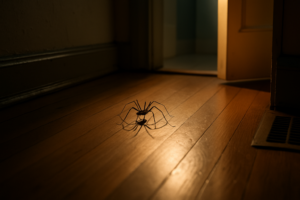
In local garages, I often see cellar spiders, common house spiders, and the occasional black widow in protected, quiet spots. Cellar spiders usually hang in loose webs near ceilings and shelves. Black widows tend to stay lower, deeper, and more hidden.
Practical rule: If you see shiny black spiders in protected corners, around stored items, or low near walls, slow down and use gloves and caution during cleanup.
You don't need to become a spider expert to fix the problem. You just need to know whether you're dealing with light nuisance activity or a setup that's become a steady harborage site.
A simple way to judge the severity
Use this quick check:
| Sign | What it usually means |
|---|---|
| A few isolated webs | Light activity, often manageable with cleanup and sealing |
| Fresh webs returning fast after removal | Active population and likely easy access points |
| Egg sacs on boxes or shelving | Reproduction is happening in the garage |
| Spiders in several zones, not just corners | The garage environment is supporting them well |
| Black widows or heavy clutter you don't want to disturb | Time to be more cautious or bring in help |
A quick inspection keeps you from wasting time on the wrong fix. If the garage is mostly quiet but has obvious entry gaps, exclusion matters most. If it's packed, dusty, and full of cardboard, cleanup is the first move.
Start with a Thorough Cleaning and Decluttering
This is the part homeowners most want to skip, but it's the part that changes the outcome. Removing clutter is the most impactful step you can take, with pest management studies showing that consistent decluttering can reduce spider populations by up to 70-80% in the first month (Bio-Tech Pest Control, 2023).

Why clutter matters so much
Spiders don't stay in garages because they love concrete. They stay because clutter gives them cover, stable web sites, and access to insects hiding in the same mess.
Cardboard is a big issue. It holds dust, absorbs moisture, gives insects shelter, and creates dark seams where spiders can sit undisturbed.
In practical terms, a tidy garage is harder for spiders to use. A packed garage does half the work for them.
What to remove and what to keep
Start by pulling everything away from the walls. Separate what's worth keeping from what has just been sitting there for years.
If the job feels bigger than a weekend cleanup, outside help with clearing a packed garage can make the first step easier, especially when the problem is really a storage issue as much as a pest issue.
Use this sorting approach:
- Recycle cardboard if you can. Replace it with sealed plastic totes.
- Bag loose fabrics like pet bedding, old blankets, and car covers before moving them.
- Keep items off the floor on shelving when possible.
- Leave a little space from the wall so you can inspect and clean behind storage.
- Discard heavily webbed junk rather than trying to save every low-value item.
How to clean without scattering spiders everywhere
Vacuuming works better than sweeping because it removes webs, spiders, and debris instead of just moving them around. A shop vac with a hose, crevice tool, and ladder is the right setup for most garages.
Work from high to low. Hit rafters, ceiling corners, shelf undersides, wall joints, and garage door tracks before you do the floor.
For homeowners who want an immediate impact, this matters: a shop vac with a crevice tool achieved a 95% immediate removal rate of spiders and webs in field tests, compared to 20% for brooms (Bob Vila Field Test, 2024).
What to do after the cleanup
Once the garage is cleared and vacuumed, don't slide back into the old pattern. Put items into sealed bins, label them, and keep the floor and corners visible enough to inspect.
If you want help keeping the problem from returning after cleanup, preventative pest control makes the most sense after the harborage has already been reduced. Prevention works better when the garage is accessible and not packed wall to wall.
Seal All Entry Points to Keep Spiders Out
A clean garage still won't stay clean of spiders if the structure is open. In Santa Cruz County, garages often have gaps at the side seals, the bottom door edge, vents, utility lines, and small cracks where concrete meets framing.

Where most garages are leaking pests
Walk the perimeter slowly with the garage door closed and the lights on inside. Daylight showing through is a clue, but not the only one.
Pay attention to:
- Door bottom seals that are cracked, flattened, or missing sections
- Side jamb gaps around the garage door
- Foundation and slab cracks
- Openings around pipes, wires, and conduit
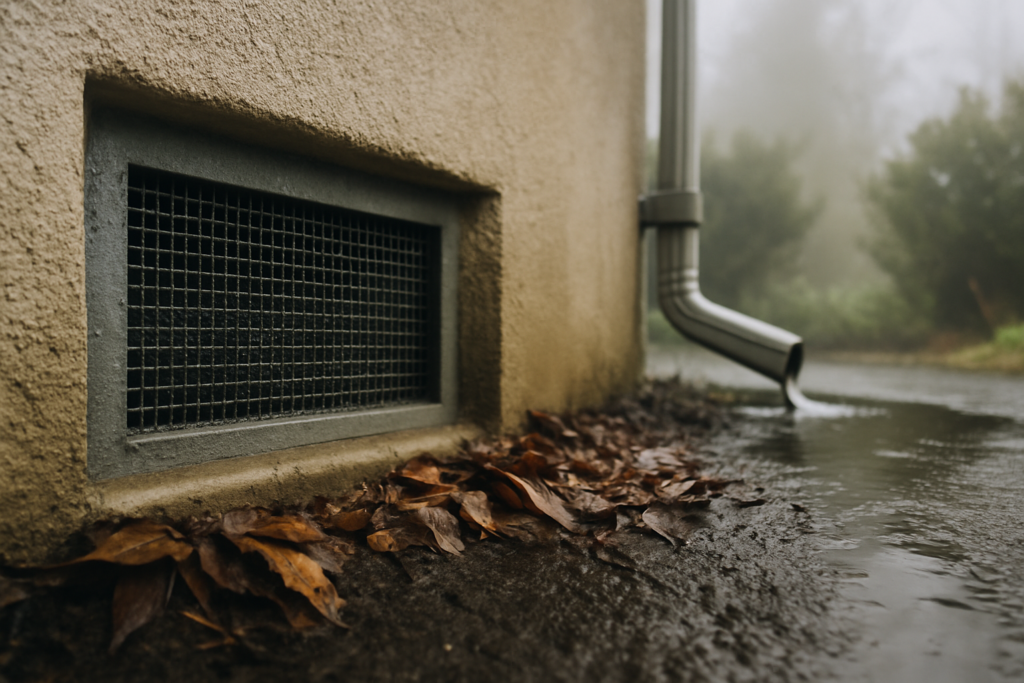
- Unscreened vents or damaged screens
If the bottom seal is worn out, replacing it is one of the more useful fixes a homeowner can make. This guide on weather seal garage door bottom replacement is a solid reference if you're handling that part yourself.
What to use
Silicone caulk works well for small cracks and penetration gaps. Weatherstripping helps around man doors and side gaps. Fine mesh screening belongs over vents where airflow is needed but crawling pests shouldn't get through.
This isn't glamorous work, but it changes the pressure on the space. If spiders and their prey can't get in easily, the garage stops functioning like an easy shelter.
A garage door that almost seals usually doesn't seal. Small gaps are enough to keep the cycle going.
For homeowners who don't want to rely on repeated spray use, no-chemical work pays off. West Pest Co. handles spider control in Santa Cruz County with practical options that can include exclusion-focused service for households that want a lower-impact approach.
Choosing Your DIY Spider Control Method
Once you've cleaned and sealed, you can decide how you want to deal with the spiders that are still there. People often make the mistake of going too hard on sprays and not hard enough on placement, monitoring, and follow-up.

Non-chemical methods that usually make the most sense first
Glue boards are useful for monitoring and capture. Put them along edges, behind stored items, near entry points, and where pets can't reach them. They tell you where activity is still happening and help reduce wandering spiders.
Vacuuming remains the fastest direct-removal method. It's especially useful after you disturb storage and suddenly expose webs or hidden spiders.
Essential oil sprays are where expectations need to stay realistic. Some homeowners like them because they smell better than conventional products, but they don't replace cleanup, sealing, and prey reduction. They also need repeated application, and in pet households they need extra caution.
A helpful comparison is this:
| DIY method | What it does well | Where it falls short |
|---|---|---|
| Glue boards | Shows activity and catches wandering spiders | Doesn't solve hidden harborage by itself |
| Vacuuming | Removes webs and spiders immediately | Won't hold if clutter and access remain |
| Essential oil sprays | May help discourage activity in certain spots | Variable results, frequent reapplication |
| Dusts or residual products | Can help in cracks and voids | Need careful placement and label-following |
Low-impact chemical options and real trade-offs
Some homeowners want to use a residual product in cracks, voids, and protected edges. That can have a place, but only if it's applied carefully and only where it makes sense.
The main mistake is treating the garage like a room that needs to be fogged or broadly sprayed. That usually doesn't fix why spiders are there. Spiders follow food, cover, and access. If those stay in place, broad spraying turns into repeated maintenance with disappointing results.
If you're weighing whether indoor spray is the right move, this article on why spraying pests inside your home rarely solves the real problem explains the logic well. The same thinking applies to garages.
Field lesson: A targeted product in the right crack can help. A random spray over everything usually can't carry the job by itself.
What works better than people expect
Reducing insect prey often lowers spider activity. In garages, that means managing moisture, reducing night-flying insect attraction around lights, and keeping pet food, bird seed, and messy storage under control.
If your garage stays damp, run a dehumidifier and correct any leaks or condensation problems. In coastal Santa Cruz conditions, moisture is often one of the hidden reasons spiders keep returning.
What usually disappoints
Foggers are rarely worth it for garage spiders. They don't address hidden egg sacs, don't fix clutter, and don't close entry points.
Random peppermint spraying around every wall also tends to disappoint if the garage is still packed with cardboard and active insect prey. The scent may be noticeable to you, but the structure still works for spiders.
When You Need to Call a Professional
DIY is reasonable when the activity is light, the garage is accessible, and you're comfortable doing the cleanup. It stops making sense when the garage is heavily cluttered, webs return quickly after cleanup, or you're finding black widows in places where hands and feet regularly go.
A professional also makes sense if you have kids, pets, or stored pet items in the garage and you don't want to experiment with products around bedding, carriers, feed containers, or absorbent materials. In those cases, treatment needs to be selective and practical, not just aggressive.
If you're trying to decide who to trust, West Pest Co. has a plain-language guide on how do I know if a pest control company is trustworthy. That's worth reading before you hire anyone for spider work.
Call for help when:
- You keep cleaning, but activity comes back fast
- You find black widows or lots of egg sacs
- You can't safely access rafters, deep storage, or high corners
- The garage is attached and spiders are moving toward the house
- You want a lower-impact plan built around exclusion and monitoring
Professional service doesn't mean promising complete eradication. It means getting a realistic inspection, a safer plan, and cleaner control of the conditions driving the problem.
Frequently Asked Questions About Garage Spiders
Are garage spiders common in Santa Cruz County?
Yes. Garages here often stay cool, shaded, and a little damp, which makes them attractive to spiders and the insects they feed on. Coastal conditions can keep activity going longer than homeowners expect.
How often should I clean the garage to keep spiders down?
If spider activity has been noticeable, monthly cleaning is a practical baseline. Focus on corners, shelf undersides, garage door tracks, and the spots that tend to go untouched.
Are natural spider sprays safe around pets and kids?
Not automatically. In homes with pets, non-toxic mechanical methods like glue boards placed where pets can't reach them are the safer first choice, and some essential oil sprays can cause irritation in 5-10% of pets at common concentrations (Veterinary Studies Review, 2025).
Will spiders go away if I just remove the webs?
Web removal helps, but by itself it usually doesn't solve the problem. If the garage still has clutter, insects, and entry gaps, new webs usually show up again.
Should I use cardboard boxes or plastic bins?
Plastic bins with good-fitting lids are the better option. Cardboard is easier for pests to hide around, and it holds moisture and dust.
How long does it take to see improvement?
If the main issue is clutter and web buildup, many homeowners notice a visible change quickly after cleanup and vacuuming. Longer-lasting improvement depends on whether you also seal access points and keep the garage maintained.
What if I have pet supplies stored in the garage?
Be careful with sprays, dusts, and anything that can settle onto bedding, carriers, or food-related items. In those homes, mechanical removal, sealed storage, and careful trap placement are usually the safest first moves.
Take Back Your Garage Today
If you're serious about how to get rid of spiders in garage spaces, keep it simple. Clean out the clutter, vacuum thoroughly, seal the openings, and use targeted control methods instead of trying to spray your way through the problem.
That approach is practical, safer for most households, and better suited to Santa Cruz's coastal conditions. If you want help figuring out what level of treatment makes sense for your garage, a local inspection can save a lot of trial and error.
Sources
Bio-Tech Pest Control. "Get Rid of Spiders." 2023. https://diygardening.co.uk/pestcontrol/get-rid-of-spiders/
Bob Vila Field Test. "Organization Spider Prevention Tips Keep Spiders Garage." 2024. https://www.flowwall.com/blog/organization-spider-prevention-tips-keep-spiders-garage
Veterinary Studies Review. "Pet-Safe Spider Control Discussion." 2025. https://www.youtube.com/watch?v=KoRKqaC54_E
If you'd like a practical second opinion on what you're seeing, West Pest Co. can help you sort out whether your garage needs simple exclusion work, targeted spider control, or a broader active-pest treatment plan. Service is available across Santa Cruz County, and you can request an estimate through the website. Phone number to be confirmed with client before publishing.