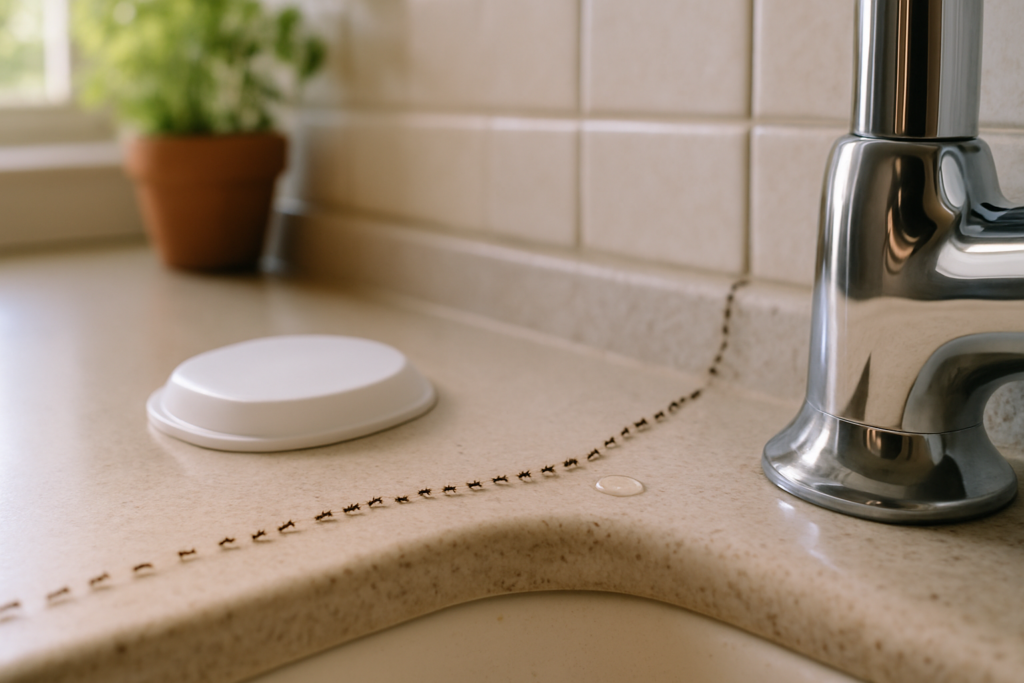
Direct Answer: Keep pets and kids out of the treated area until the technician says surfaces are dry, cover aquariums with pumps off, lift bowls and toys off the floor, and ask for the exact re-entry time.
Most people who call me have already decided they need help. They stall anyway, because nobody has told them what happens to the dog, the toddler, the fish tank, or the raised vegetable bed while the work is going on.
One homeowner with a young Labrador puppy asked whether we’d use targeted baits instead of routine perimeter spraying, then finished with the question I hear most: what precautions do you recommend for pets? Another was moving into an older Westside house with three kids and just wanted the gentlest interior option available.
So this is the plain answer to those questions, one at a time. This is the practical before, during, and after timeline for a Santa Cruz County household with kids and pets, not a philosophy piece.
What happens to my dog while you are treating the house?
The honest answer starts with a question back: what is actually being applied, and where is it going?
A gel bait tucked behind a dishwasher or an enclosed station in a wall void behaves nothing like a liquid band sprayed along the outside of a foundation. The first one your dog will never reach. The second one needs time and a closed gate.
When I’m working on a home with animals, the routine looks like this:
- Pets stay in a room or yard section I’m not treating that day
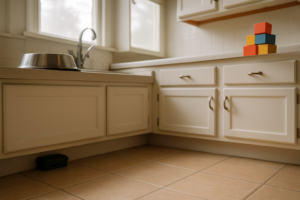
- Food bowls, water bowls, and litter boxes come up off the floor before I start
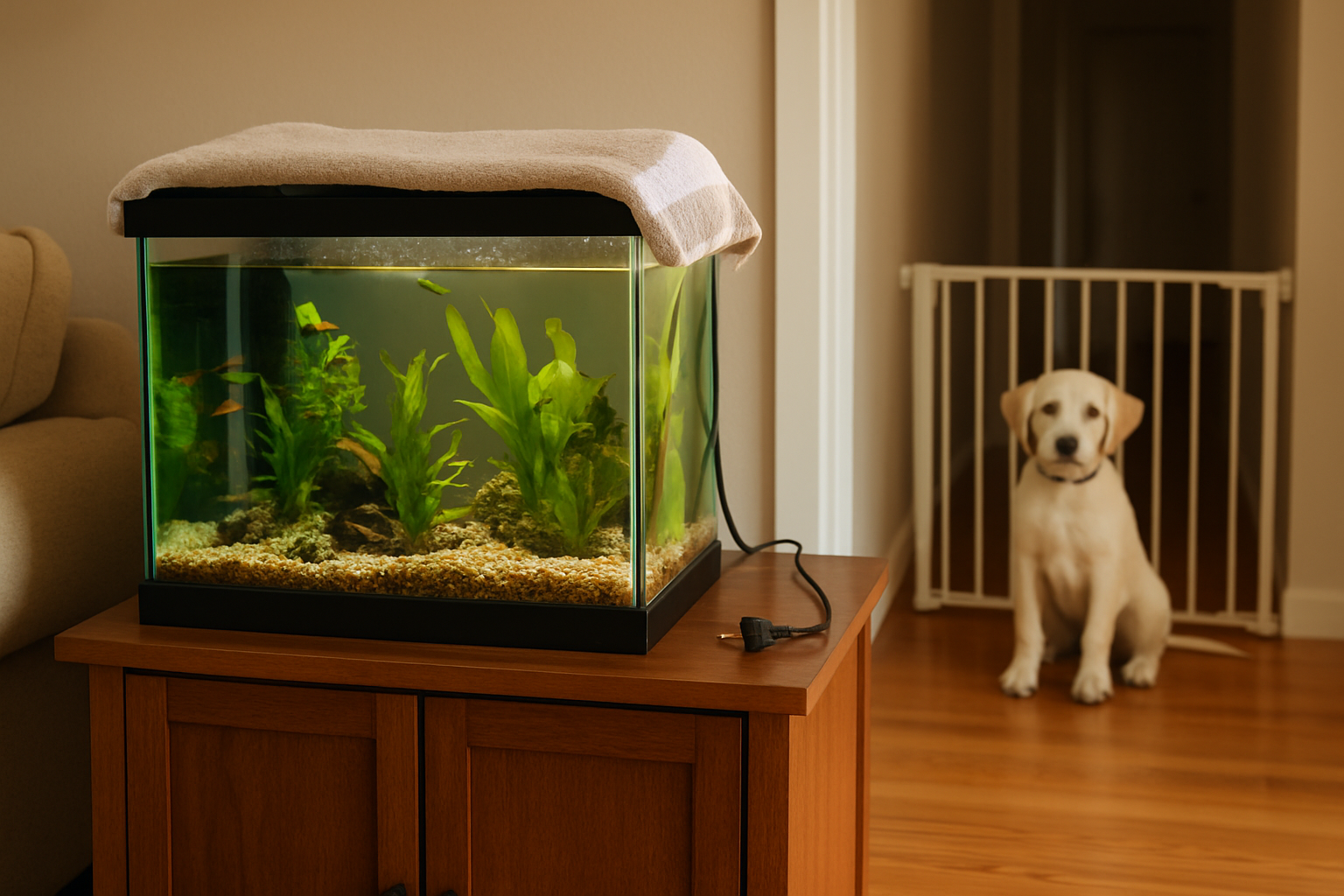
- Aquariums and reptile tanks get covered, with the air pump switched off during application
- Bird cages get covered or moved to a closed room
- Chew toys, beds, and rawhides come off the lawn and the floor
- Backyard chickens get secured, which comes up constantly in Soquel and Live Oak yards
One more thing worth saying out loud: when the work is targeted rather than blanket sprayed, the prep list gets very short. A repeat customer put it better than I can. “Everything he used was pet, plant and kitchen safe. I didn’t need to move furniture or rugs or cover anything.”
How long until my kids can go back in the room?
This is the most asked question and the most badly answered one. You will find a dozen numbers online and none of them are about your house.
Re-entry timing depends on what was applied and where it went. Bait placed inside a wall void or under a sink usually means there is no wet surface to wait on at all. A liquid band along an exterior foundation means you wait until it is dry.
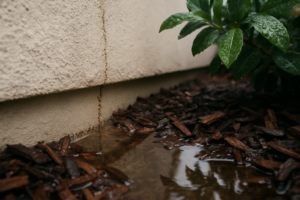
Here is the local wrinkle nobody accounts for. A shaded north wall in a foggy Westside or Live Oak morning can hold moisture for hours longer than the label estimate assumes, while the same product on a warm Watsonville afternoon is dry well ahead of it.
So the right move is not to guess. Ask the technician for the specific window for the specific product used that day, and ask before they pack up.
A technician who can’t tell you that number off the top of their head is a problem. A good one will tell you the room, the surface, the time, and what to do if the dog gets in there early anyway.
Re-entry depends on the type of application, not a single rule
Use this as your cheat sheet for what to ask before the truck leaves the driveway.
| What was applied | Where it usually goes | What to ask before the tech leaves |
|---|---|---|
| Gel bait or enclosed bait station | Wall voids, under sinks, behind appliances, locked exterior stations | Can my dog or toddler physically reach this spot? |
| Liquid band outside | A narrow strip along the exterior base of the house | How long until it is dry and the kids can use the yard? |
| Crack and crevice treatment indoors | Baseboard gaps, cabinet seams, plumbing penetrations | Which rooms do we stay out of, and for exactly how long? |
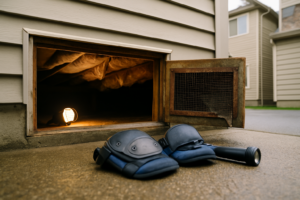
| Dust in a void | Attic spaces, wall voids, weep holes | Does any of this end up where we walk, sit, or store food? |
| Flea treatment on floors and upholstery | Carpet, rugs, pet resting areas | When can pets back on the carpet, and when should I vacuum? |
What do I actually need to do before you show up?
Less than most people expect, but a few things genuinely help. Ten minutes of prep makes the visit faster and keeps me from having to work around your stuff.
Before the appointment:
- Pull pet bowls, litter boxes, and floor-level food storage up and out of the way
- Pick up kids’ floor toys, play mats, and anything soft that lives on the ground
- Cover open aquariums and turn the pump off
- Clear a path to the kitchen sink cabinet, the laundry area, and the water heater
- Secure chickens, rabbits, or any outdoor animals
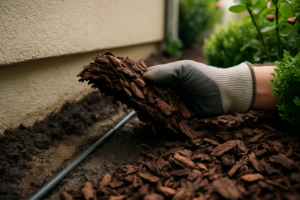
And tell me about the yard before I walk it. Fruit trees, edible beds, and any creek or greenbelt edge on the property change where I will and won’t place anything. One homeowner in Santa Cruz had just put in a landscaped front yard with wood mulch, got swarming ants out of it, and also kept an organic vegetable garden out back. That is not a limitation, it is just information I need up front.
If you want to understand what I’m looking at during the walkthrough, what pest inspectors actually look for inside your home covers that part in detail.
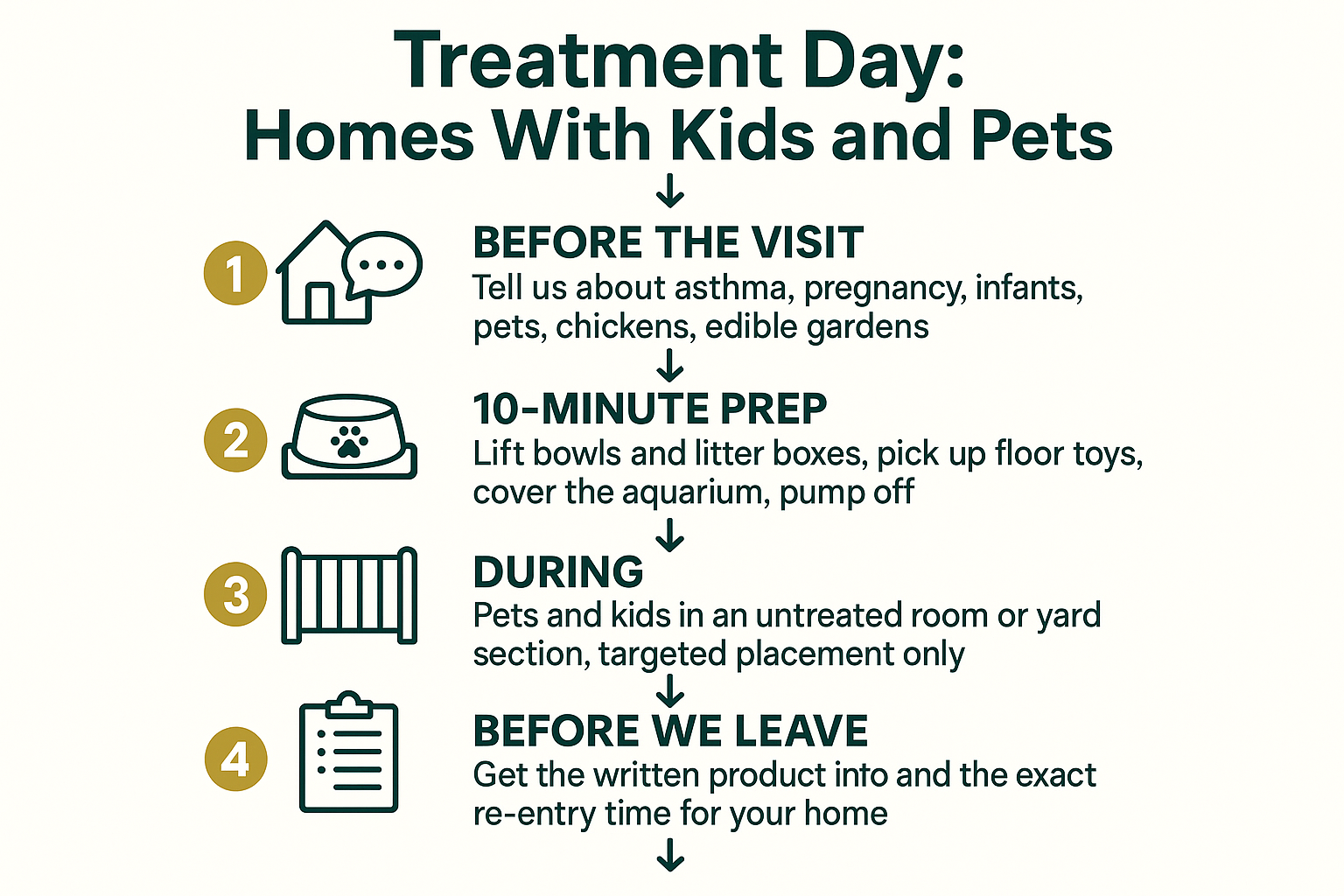
The treatment day timeline at a glance
Here is how a visit to a home with kids and pets usually runs, start to finish.
Someone in my house has asthma. Am I allowed to ask you to change the plan?
Yes. And you should, during the inspection, not on the day of the work.
Homeowners rarely know this conversation is on the table. It is. A customer here in Santa Cruz told me about his wife’s lung sensitivity up front, and the recommendations changed before any work started rather than after the fact. His review said it plainly: “he adjusted his recommendations due to my wife’s lung sensitivity and still provided a safe, effective treatment.”
Things worth mentioning without being asked:
- Asthma or any respiratory condition in the household
- Pregnancy
- An infant or a crawling toddler
- Chemical sensitivities or known reactions
- An immunocompromised family member
- A pet with a health condition
A homeowner dealing with ticks in the yard while pregnant is exactly the situation where product choice and placement should shift, and where more of the work moves outdoors and stays targeted. None of that is a special request. It is the information that makes the plan right the first time.
If you want the broader thinking behind low-impact choices, what IPM pest control means for homes with kids and pets goes deeper than I will here.
Should I be getting something in writing?
Yes, and in California you are entitled to it. This is where the transparency gap with big regional outfits shows up most.
Licensed structural pest control operators have consumer disclosure and recordkeeping duties under the California Structural Pest Control Act, which includes giving written pesticide information to the property owner, and to tenants where applicable, before a chemical application.
In practice, you can reasonably expect to know:
- The name of the product used
- Where on the property it was applied
- The precautions attached to it, including re-entry
This matters a lot for renters and for landlords. If you own a rental in Watsonville or Capitola and a tenant reports mice, that notice is part of the job, not a favor.
My honest read after years of this: a technician who explains the paperwork without being asked is a good sign. It usually means they know exactly what they put down and why.
Will one visit take care of it?
Not always, and I would rather say that now than have you surprised in two weeks.
Ants are the clearest example. Activity can look briefly worse right after treatment as trails get disturbed and foragers scatter. That is normal and it usually settles within a few days. Ants that keep coming back after treatment walks through why that happens.
Fleas are the other one. Eggs and pupae already in the carpet don’t respond to a single pass, which is why one flea treatment often isn’t enough to break the cycle.
Two honest points to close on:
- Follow-up timing matters more than product strength. Hitting the second visit at the right interval does more than a heavier application ever will.
- Treatment addresses the pests active right now. It does not end the pressure on a wooded Santa Cruz Mountains lot or a greenbelt-adjacent property forever.
Coastal conditions here keep that pressure steady. Fog, soil moisture, and mild winters mean ants, spiders, and roaches stay active in months when inland California gets a break.
Frequently Asked Questions About Treatment Day With Kids and Pets
How long do pets and kids need to stay out of a treated area?
It depends entirely on what was applied and where. Bait placed in a wall void or under a sink often means no wait at all, while a liquid application needs to be dry first. Ask your technician for the specific window for the specific product used that day. In foggy shaded spots on the Westside or in Live Oak, drying takes longer than the label estimate suggests.
Do I need to move furniture or take up my rugs?
Usually not. When the work is targeted instead of blanket sprayed, minimal prep is the norm. One homeowner noted she didn’t need to move furniture or rugs or cover anything at all.
What about my vegetable garden and fruit trees?
Tell me about them before I walk the property. Edible beds, fruit trees, and creek or greenbelt edges change where anything gets placed, and often mean the work shifts to enclosed placements and targeted spots instead of open application near the food.
My spouse is pregnant. Should we reschedule?
Not necessarily, but say something during the inspection rather than on treatment day. Pregnancy, asthma, an infant in the house, or a compromised immune system are all reasons to adjust product choice and placement up front. That conversation is a normal part of the job.
What paperwork should I get before any chemical is applied?
Under California law, licensed operators owe the property owner, and tenants where it applies, written pesticide information before application. Expect the product name, where it went, and the precautions. If nobody offers it, ask.
Why are there more ants in my kitchen the day after treatment?
Disturbed trails scatter foragers, so a brief uptick is common and usually settles within a few days. What matters more is the timing of the follow-up visit, not how heavy the first application was.
Still have a question about your own house?
When you call, you are likely to get Matthew, the owner, on the line, and he is the one who does the inspection and the work. That is why homeowners here get straight answers about products and precautions from the person holding the sprayer instead of a call center script. West Pest Co. has been voted Best Pest Control in Santa Cruz two years running with a 5-star Google rating, and questions about pets, kids, and treatment timing are welcome at (831) 430-8402 or westpestco.com.