When you want to keep spiders out of your home, the most effective natural repellents are all about scent. Spiders absolutely hate strong aromas like peppermint, vinegar, and citrus. These safe, non-toxic options work by creating an invisible barrier that makes your living spaces totally unappealing to them, offering a gentle but powerful way to keep those eight-legged critters out.
Creating a Spider-Free Home, Naturally
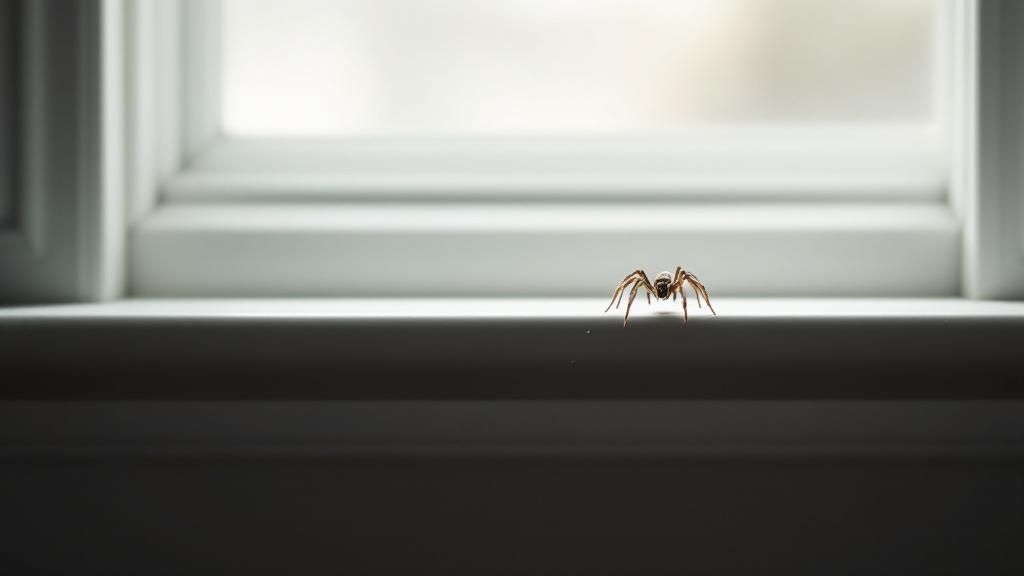
The moment you see a spider skittering across the floor, your first thought might be to grab a can of harsh chemical spray. But what if you could get the same result—a spider-free home—without introducing synthetic toxins into the air you breathe? The good news is, you absolutely can.
Choosing natural repellents isn't just a fleeting trend; it’s about making a conscious choice for a healthier living space. This shift is big. In fact, the global market for natural insect repellents is expected to jump from USD 2.79 billion to USD 4.37 billion by 2030. Homeowners everywhere are looking for eco-friendly alternatives that actually work, and you're part of that growing movement.
Why Natural Methods Actually Work
Here’s the secret: opting for a natural spider repellent for your home uses a spider’s own biology against it. Spiders don’t “smell” with a nose like we do. Instead, they use highly sensitive organs on their legs to taste and smell the world around them. Potent scents from things like peppermint oil or plain white vinegar are completely overwhelming for them.
Think of it like walking into a room where someone has sprayed way too much perfume. It’s overpowering, gives you a headache, and your only thought is to get out. That’s exactly how spiders feel about these strong, natural aromas—it forces them to retreat and steer clear of any areas you've treated.
To give you a quick overview of what works best, here’s a look at some of the most popular natural repellents.
Top Natural Spider Repellents at a Glance
This table breaks down the most effective natural options, highlighting what makes them work and where you can use them for the best results.
| Repellent | Active Scent | Best For |
|---|---|---|
| Peppermint Oil | Menthol | Window sills, doorways, baseboards |
| White Vinegar | Acetic Acid | Kitchen counters, bathrooms, hard surfaces |
| Citrus Peels | Limonene | Under sinks, in closets, along shelves |
| Cedarwood | Cedrol | Closets, drawers, storage areas |
| Tea Tree Oil | Terpinen-4-ol | Entry points, basements, garages |
Each of these offers a simple, powerful way to make different parts of your home less inviting to spiders without resorting to harsh chemicals.
What This Guide Covers
This guide is designed to give you everything you need to reclaim your space from spiders, naturally and for good. We’ll walk through:
- The Science Behind the Scents: We’ll break down exactly why these natural ingredients are so good at sending spiders packing.
- DIY Repellent Recipes: You'll get simple, step-by-step instructions for making your own powerful sprays with essential oils and other stuff you probably already have in your pantry.
- Long-Term Prevention Strategies: Discover the proactive steps you can take to make your home less attractive to spiders in the first place. For a more in-depth look, our professional guide to eco-friendly pest control treatments offers strategies that align perfectly with a natural approach: https://westpestco.com/eco-friendly-pest-control-treatments-santa-cruz-county/.
By the time you're done reading, you’ll have a complete toolkit of safe, affordable, and effective methods to turn your home into a lasting, spider-free sanctuary.
How Natural Scents Send Spiders Running

Ever wonder why a spritz of peppermint oil seems to make spiders vanish into thin air? It’s not just an old wives' tale; it’s grounded in pure biology. The real secret to an effective natural spider repellent for your home is understanding how these arachnids experience the world—which is completely different from how we do.
Spiders don’t have noses. Instead, they "smell" and "taste" their surroundings using incredibly sensitive chemo-receptive organs on their legs and pedipalps (the little leg-like feelers near their mouths). These organs are fine-tuned to pick up on the faintest chemical signals, helping them navigate, find a mate, or hunt for their next meal.
Here’s a way to think about it: imagine walking barefoot across a floor someone just mopped with a harsh, overpowering chemical. Every single step would be an intense, awful sensation. That’s exactly what a spider goes through when it crawls across a surface treated with a strong essential oil or vinegar.
The Science of Sensory Overload
The potent compounds found in these natural substances trigger a complete sensory overload. The powerful aromas basically jam the spider's sensory receptors, making it impossible for them to process any other important information from their environment. All that chemical "noise" is disorienting and deeply irritating to them.
The core principle here is simple avoidance. A spider’s biology compels it to get away from environments that overwhelm its senses. You're not just making an area smell bad to a spider; you're creating a powerful, invisible barrier that its instincts tell it not to cross.
This is precisely why a simple DIY spray can be so effective. You’re using a spider's own survival instincts against it, turning your home’s windowsills, doorways, and corners into no-go zones without resorting to harsh synthetic chemicals.
Key Compounds and How They Work
Different natural repellents have specific active compounds that spiders find particularly offensive. Knowing what these are helps you pick the most effective ingredients for your own repellent strategy.
- Menthol in Peppermint Oil: This is the star player that gives peppermint its sharp, piercing scent. To a spider, it’s an aggressive, irritating smell that they will actively work to avoid.
- Acetic Acid in Vinegar: The sharp, acidic nature of vinegar isn't just a strong smell. It can actually be harmful to spiders on direct contact, making it a powerful dual-action repellent.
- Limonene in Citrus Peels: This naturally occurring oil in citrus fruits is a well-known insect deterrent. It masks the subtle scent trails spiders use to navigate, leaving them confused and eager to find a way out.
When you apply these substances to key areas, you're doing more than just covering up smells. You are strategically deploying a non-toxic defensive line that disrupts a spider’s ability to function comfortably in your space. This is the foundation of any successful natural spider repellent plan, making your home safe for your family but hostile to unwanted eight-legged guests.
Your Guide to Essential Oils That Repel Spiders
Essential oils are much more than just nice smells in a diffuser. They’re highly concentrated plant extracts that happen to be fantastic natural spider repellents. When you know how to use them, powerful oils like peppermint and lavender create an invisible, aromatic barrier that spiders are hardwired to avoid. Think of this as your playbook for turning these potent oils into an effective, great-smelling defense system for your home.
The best part? You can easily mix your own custom repellent sprays right in your kitchen. It’s a quick and simple process that gives you total control over what you’re spraying around your living spaces.
This guide breaks down the simple, three-step process for making and using your own natural spider repellent spray.
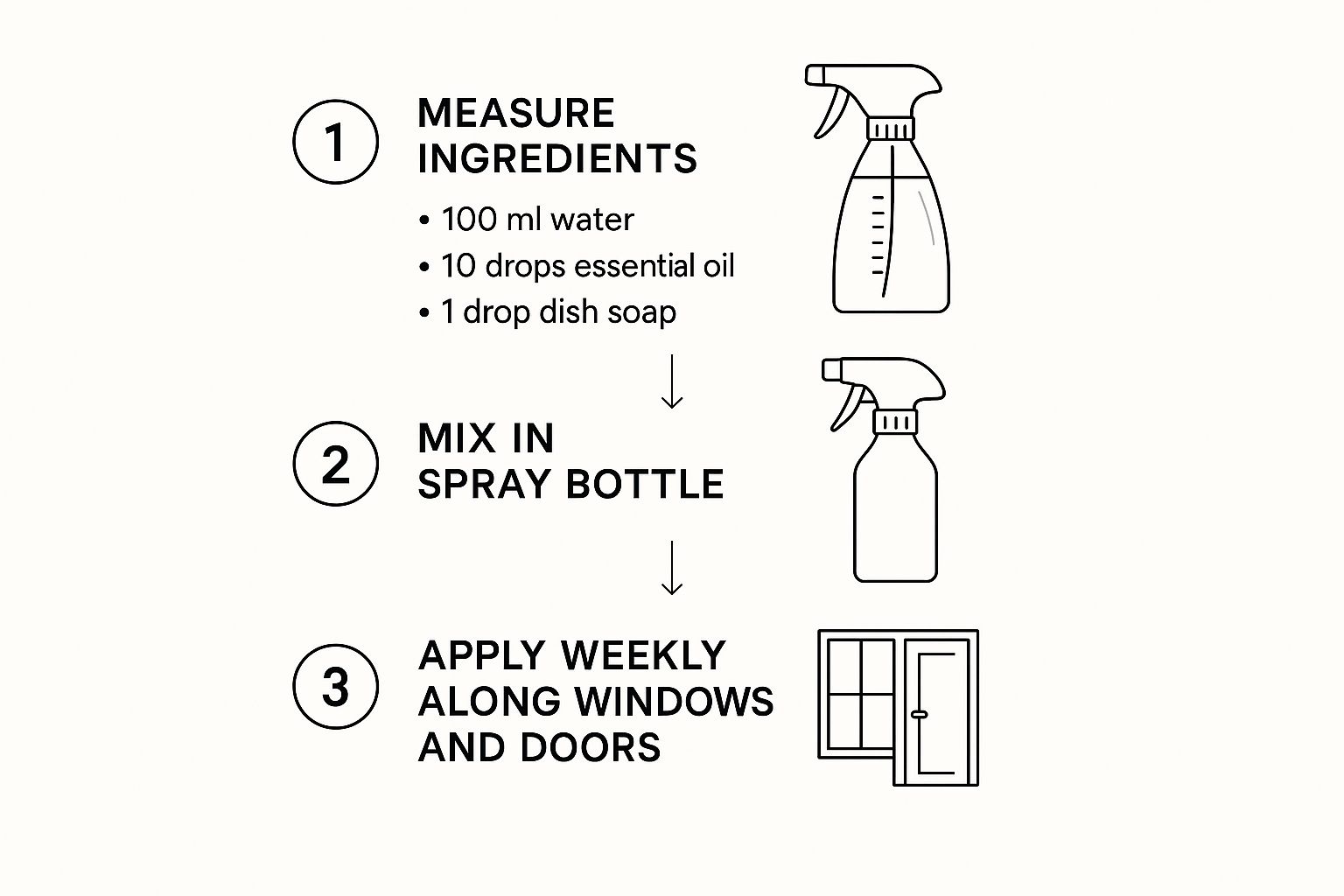
As you can see, the most important part of the whole process is consistency. A weekly spray-down of key entry points is what truly keeps your home a spider-free zone.
Top Essential Oils for Spider Control
While plenty of oils have repellent qualities, a few are absolute rock stars when it comes to dealing with spiders. These are my go-to choices for any homemade spray I'm mixing up.
- Peppermint Oil: This is, without a doubt, the reigning champion. The intense menthol compound is extremely irritating to a spider's sensitive legs, which makes it a wildly effective and popular choice.
- Tea Tree Oil: Known for its strong, medicinal scent, tea tree oil is loaded with compounds like terpinen-4-ol that arachnids find offensive. It’s an excellent option for less-trafficked areas like basements and garages.
- Lavender Oil: Here's a classic case of "one man's treasure…" A scent we find calming is one that spiders can't stand. Lavender is a gentler but still effective choice, perfect for spraying in bedrooms and main living areas.
- Citrus Oils (Lemon, Orange): The key ingredient here is limonene, a well-known natural insect deterrent. Spiders really dislike the sharp, clean scent, making citrus oils ideal for kitchens and bathrooms.
Pro-tip: Don't be afraid to combine a few of these. A mix of peppermint and orange, for example, can create a more complex scent that's even better at sending spiders packing.
DIY Spider Repellent Spray Recipe
Ready to mix your first batch? This simple recipe is the foundation for all your spider-control efforts. It's a reliable formula that works beautifully with any of the essential oils mentioned above.
The Perfect Ratio: For a standard-sized spray bottle, the sweet spot is about 10-15 drops of essential oil for every cup (8 oz) of water. This concentration is potent enough to repel spiders without being too overwhelming for you.
Here’s your step-by-step guide to making the spray:
- Gather Your Supplies: You’ll need a clean spray bottle, water, your chosen essential oil(s), and a tiny bit of liquid dish soap.
- Mix the Ingredients: Fill the spray bottle almost to the top with warm water. Add your 10-15 drops of essential oil.
- Add a Surfactant: Now for the secret weapon—add one single drop of dish soap. This is a critical step! The soap acts as an emulsifier, helping the oil and water actually mix instead of immediately separating.
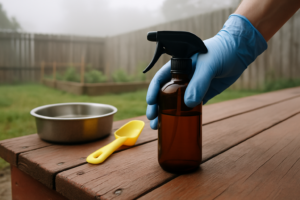
- Shake and Spray: Screw the lid on tight and give the bottle a vigorous shake to combine everything. That's it! Your natural spider repellent is ready for action.
Where and How to Apply Your Spray
To get the most out of your spray, you need to think like a spider. Focus your application on the places they’re most likely to sneak in or build a web. You're basically creating a defensive perimeter.
Spray a light mist along:
- Window frames and sills
- Door thresholds and frames
- Baseboards, especially in the corners
- Around pipes under sinks
- In dark, quiet spots like closets, basements, and garage corners
For the best protection, plan on reapplying your spray every 3-4 days, or at least once a week. Because these oils are natural, they evaporate over time. Consistent reapplication is the key to maintaining that fragrant barrier that keeps your home yours.
Using Pantry Staples to Keep Spiders Away
While essential oils are fantastic spider-fighters, you don't need to buy special products to start spider-proofing your home. Believe it or not, some of the most effective natural spider repellents are probably already sitting in your kitchen pantry. These everyday items are cheap, easy to find, and surprisingly good at convincing spiders to stay away.
The best part about this approach is its simplicity. You can make your home a much less inviting place for eight-legged intruders in just a few minutes, using ingredients you already have.
Let's dive into a few of the most reliable pantry staples.
The Power of White Vinegar
White vinegar is a true multitasking powerhouse in any home, and spider control is one of its hidden talents. Its secret weapon is acetic acid. Spiders have a very strong sense of smell and absolutely hate the sharp, pungent scent of vinegar.
For a spider, a surface wiped down with vinegar is like a chemical barrier they refuse to cross. The overwhelming smell sends them scurrying in the opposite direction, looking for a more pleasant place to set up shop.
How to Use White Vinegar as a Repellent:
- Mix the Solution: Grab a clean spray bottle and mix equal parts white vinegar and water. It's that simple—no other ingredients necessary.
- Apply to Hotspots: Lightly spritz the mixture on non-porous surfaces where you often see spiders, like kitchen counters, bathroom floors, and around window frames.
- Wipe and Repeat: Wipe the surfaces down after spraying to clean them and leave a thin film of the repellent scent. Reapply every few days to keep that defensive barrier strong.
A word of caution: vinegar's acidic nature can damage natural stone like marble or granite. If you're unsure, always test it on a small, hidden spot first.
Harnessing the Strength of Citrus Peels
Before you toss those orange or lemon peels in the compost, think again. The rinds of citrus fruits are loaded with limonene, a natural compound that's a well-known insect repellent. Spiders can't stand the fresh, zesty scent of citrus, making it another fantastic tool for your natural pest control kit.
Think of the citrus scent as a natural cloaking device. It messes with the subtle scent trails spiders use to find their way around, leaving them confused and unable to settle in.
Putting citrus peels to work is incredibly easy. Just rub the fresh peels along windowsills, bookshelves, and baseboards. You can also place the peels in small dishes and tuck them away in closets, under sinks, or in other dark corners where spiders love to lurk.
Aromatic Herbs as Lasting Deterrents
Herbs like mint and rosemary don't just add flavor to your food—their powerful aromas can act as a long-term natural spider repellent for your home. You can place bundles of dried or fresh herbs in key areas to create a fragrant, spider-free zone.
For a more proactive approach, plant mint or rosemary in pots and place them near your home's entry points, like by the front and back doors. Not only does this repel spiders before they can even get inside, but it also gives you a constant supply of fresh herbs for your kitchen. It's a win-win.
Your Long-Term Spider Prevention Plan
Let's be honest, lasting spider control isn't about constantly spraying every corner of your house. That's just a temporary fix. A truly effective strategy is all about smart prevention—making your home fundamentally unappealing to these eight-legged visitors in the first place.
Think of it like this: you can either be the firefighter, constantly putting out little spider "fires," or you can be the architect, designing a home that's naturally resistant to them from the get-go. This proactive approach focuses on three key areas: their entry points, their food sources, and their favorite hiding spots.
Seal Every Crack and Gap
Spiders are master infiltrators. That tiny gap under your door or a small crack in the window frame? To them, it's a wide-open front door. Your first line of defense is a thorough inspection of your home's exterior and interior for these potential highways.
- Caulk and Seal: Grab a tube of quality caulk and walk the perimeter of your home. Pay close attention to window frames, door frames, and spots where utility lines or pipes enter the house. Seal up any gap you find.
- Repair Screens: A tiny tear in a window or door screen is a classic entry point. Patching or replacing damaged screens is a quick fix that makes a huge difference.
- Install Door Sweeps: The space between the bottom of your exterior doors and the threshold is a superhighway for all sorts of pests. Installing door sweeps is an easy and incredibly effective way to block this vulnerable spot.
Sealing your home does more than just keep spiders out. It also blocks the other insects they love to eat, making your property less of a buffet. It's a foundational step that makes every other prevention effort more effective.
Manage Your Outdoor Lighting
Most spiders aren't actually drawn to light, but the bugs they feast on certainly are. Your porch light can act like a giant, glowing "all-you-can-eat" sign for a spider's dinner. By managing your lighting, you essentially shut down their food supply chain.
For a deeper dive into these tactics and other expert tips, our complete guide on how to prevent spiders is a great resource.
This shift toward prevention is a big reason why the natural repellent market is booming, especially in North America. Homeowners are more conscious than ever about creating safer home environments, leading to a strong preference for non-toxic solutions. You can dig into this trend by learning more about the rise of natural repellents from this market insight report on futuremarketinsights.com.
Maintain a Clean and Tidy Environment
Finally, never underestimate the power of good old-fashioned housekeeping. A clean home is a hostile environment for spiders because it eliminates their webs, egg sacs, and the cluttered corners where they love to hide.
- Vacuum Regularly: Make sure to hit the corners, get under furniture, and run the vacuum along your baseboards. This doesn't just suck up the spiders themselves—it also removes their webs and egg sacs, which can contain hundreds of future spiderlings.
- Reduce Clutter: Spiders thrive in quiet, undisturbed places. Think stacks of old boxes in the garage, piles of magazines in the corner, or that forgotten corner of the basement. Keeping your spaces organized and clutter-free removes their ideal real estate.
Common Questions About Natural Spider Repellents
Even with the best recipes and a solid game plan, it's normal to have a few questions when you're trying something new at home. Using natural spider repellents is a fantastic, safe approach, but getting the practical details right is what really makes it work. Let's tackle some of the most common questions to help you feel confident in your spider-proofing strategy.
We'll move from the "why" to the "how-to," covering how long these solutions last, their safety around your loved ones, and what to do when you feel like you're fighting a losing battle against an eight-legged army.
How Long Do DIY Repellent Sprays Actually Last?
This is usually the first thing people ask. You’ve mixed up your perfect peppermint spray—so, how long will it actually keep spiders away? Unlike synthetic chemical sprays engineered to stick around, the power of natural repellents comes from their strong, volatile scents.
Because the aromatic compounds in essential oils are natural, they break down and evaporate over time. Generally, you can expect a homemade spray to stay potent enough to do its job for about three to four days. If it's in a spot with a lot of airflow, like near an open window, it might fade even faster.
That's why consistency is your best friend here. Think of it less as a one-and-done treatment and more like part of your regular cleaning routine. A quick re-spray every few days keeps that aromatic "No Vacancy" sign lit for spiders.
To stretch the life of your sprays, always give the bottle a good, vigorous shake before each use. And don't forget that single drop of dish soap we mentioned earlier—it’s the secret ingredient that helps the oil and water stay mixed, ensuring you get a more even and lasting scent with every spritz.
Are These Natural Repellents Safe for My Pets and Kids?
Safety is priority number one in any home, and it's a huge reason people lean into natural solutions in the first place. The great news is that most of the ingredients we've discussed are generally considered safe around children and pets, as long as you use them correctly.
However, it's important to remember that "natural" doesn't automatically mean "harmless" in every single case. Some essential oils can be irritating or even toxic to our pets, whose systems are much more sensitive than ours.
- Generally Safe: Oils like lavender and lemon are typically well-tolerated when used as a room spray in a well-ventilated area.
- Use With Caution: Peppermint oil is very strong and is best used in moderation. Tea tree oil, specifically, is known to be toxic to cats and should be avoided completely if you have any feline friends at home.
Always keep an eye on your pets after you've introduced a new scent. If you notice anything unusual like drooling, sluggishness, or skin irritation, stop using the spray right away and air out the room. When in doubt, a quick call to your vet is always the smartest move.
Will These Methods Work for a Serious Spider Problem?
This is a critical distinction to make. Natural repellents are absolutely fantastic for prevention and for handling the occasional spider that wanders in. They make your home an unpleasant place for spiders to hang out, which is perfect for keeping a minor issue from snowballing.
But what if you're already seeing spiders all the time? If you're dealing with a constant stream of them or finding web after web, you’re likely up against a more established infestation. In that scenario, natural repellents are just one tool in a much bigger toolbox.
For a serious problem, you’ll need to combine these deterrents with the long-term prevention tactics we covered—deep cleaning, decluttering, and sealing up every crack and crevice you can find. If the problem still persists after all your hard work, it’s a clear sign you might need to call in the pros. Sometimes, a heavy-duty infestation requires a more direct approach, and for that, expert spider control and extermination services can reset the situation, allowing your natural methods to successfully keep things clear from that point forward.