Direct Answer: Ants return after treatment because the colony wasn’t reached, sprays kill foragers but leave queens and satellite colonies intact. The fix starts with identifying the species and choosing a method that gets to the source.
You treated the ants. Maybe you sprayed the perimeter yourself, or a company came out and hit the baseboards. And for a week or two, things looked better. Then they were back, sometimes worse than before, and in a different part of the house.
This is one of the most common frustrations I hear from homeowners across Santa Cruz County. I’ve gotten calls from people in Watsonville, Live Oak, Capitola, and Corralitos who all describe the same thing: they’ve already tried something, and the ants came back within weeks. One homeowner described having “a terrible ant infestation for months” with every DIY attempt failing. Another switched from a national chain specifically because the ants returned before the next scheduled service, almost every single time.
Post-treatment return is not bad luck. It is almost always a colony structure problem, a product choice problem, or both. And once you understand what’s actually happening inside the colony, the solution becomes a lot clearer.
Why the Ants You’re Seeing Are Not the Whole Problem
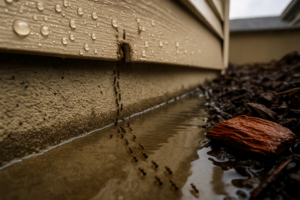
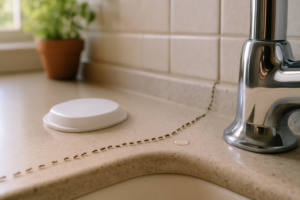
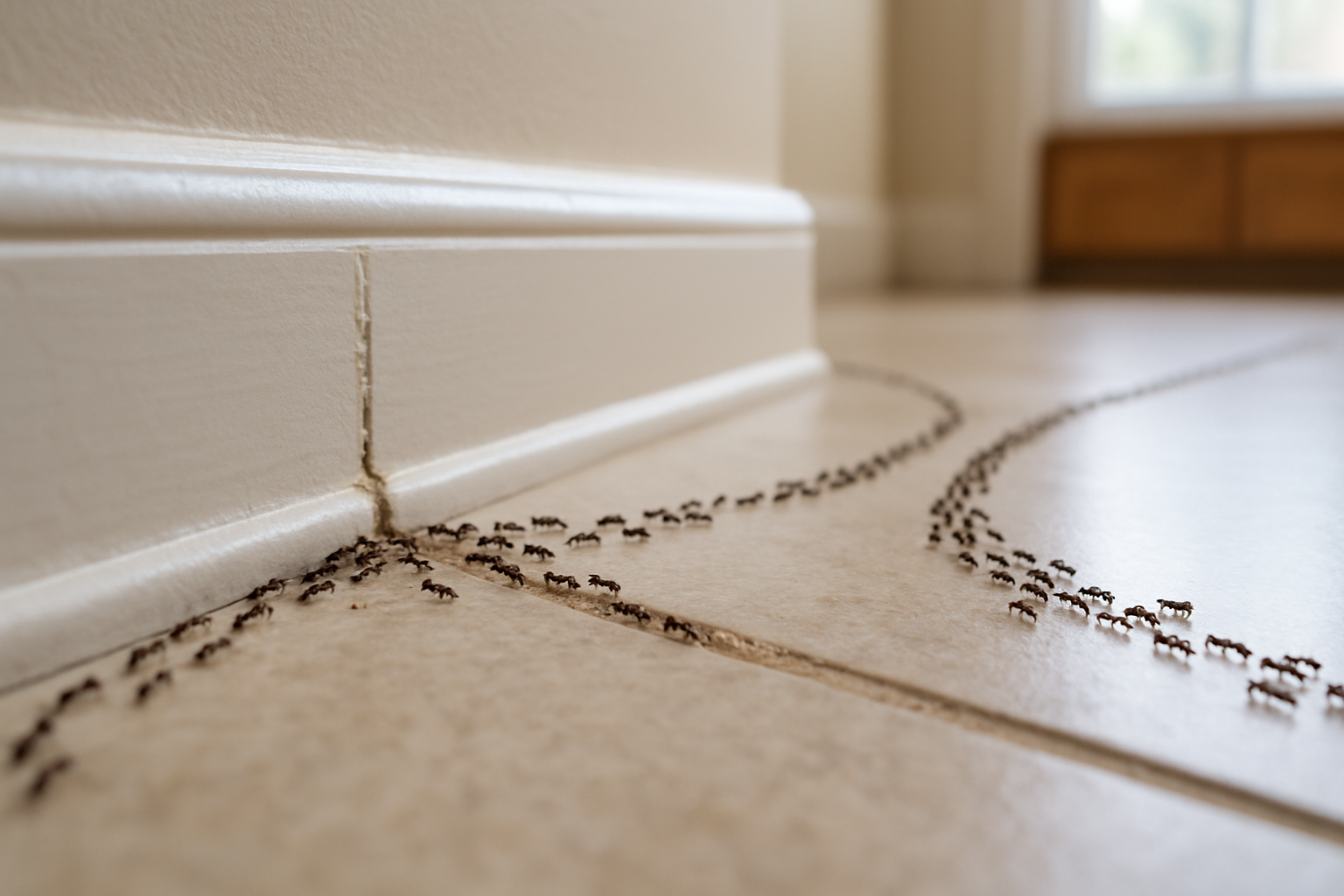
The ants trailing across your kitchen counter are foragers. Their job is to find food, lay a scent trail, and recruit more workers. They are a small fraction of the colony, and killing them does almost nothing to the population that matters.
The queens are what sustain the colony. In most ant species, killing the foragers just triggers the colony to produce more. You are, in effect, pruning a plant with a healthy root system. The top growth disappears temporarily, but the roots are untouched.
In Santa Cruz, this problem is compounded by the dominant species here: the Argentine ant. Argentine ants behave differently from most ants that pest control content is written about. They form what researchers call supercolonies, massive, interconnected networks with multiple queens spread across a large territory. Treating one entry point, one trail, or even one nest has limited effect on the broader population because the colony simply reroutes.
Santa Cruz’s year-round coastal moisture keeps Argentine ant colonies active at a level that most inland-calibrated treatment schedules don’t account for. These colonies don’t go dormant in winter the way they might in Fresno or Sacramento. They stay engaged, they stay hungry, and they keep searching, which is why recurring ant problems here tend to feel relentless compared to what friends in drier climates describe.
If you want to understand more about how forager ants scout and recruit so efficiently, How Ants Find Food So Fast, and What That Means for Your Kitchen explains the mechanics in plain terms.
The Repellent Spray Problem: How Treatment Can Make Things Worse
This is the part that surprises most homeowners, and honestly, it’s the most important thing I can tell you about why post-treatment return happens.
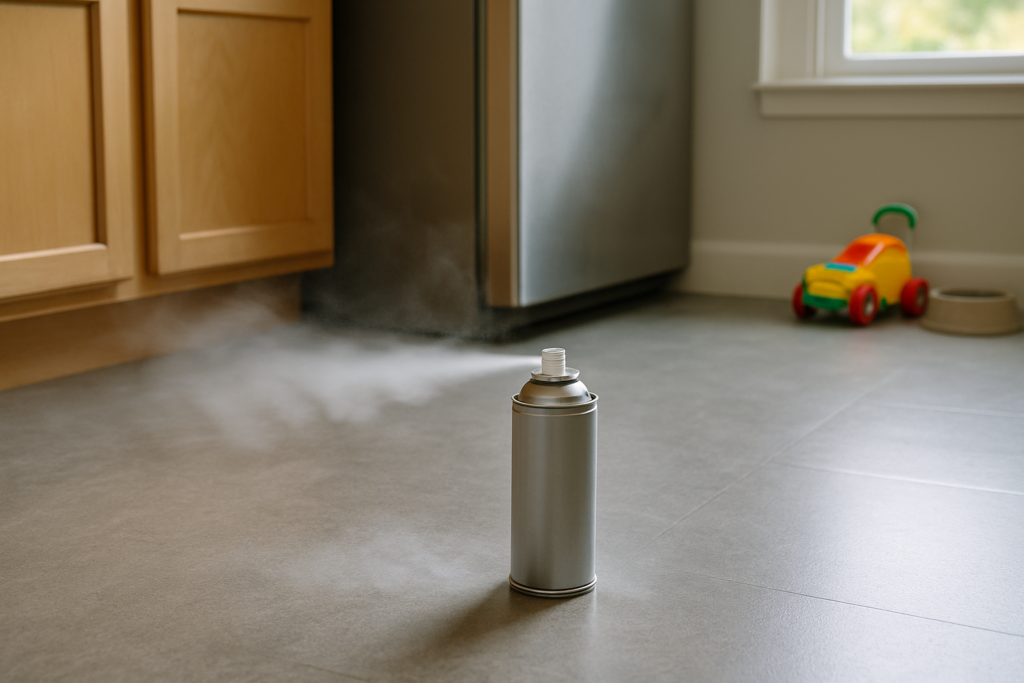
When a perimeter repellent spray is applied around the outside of a structure, forager ants encounter the treated zone and many of them turn back. That sounds like it’s working. But with Argentine ants and some other species, what can happen next is a phenomenon called colony bifurcation, the colony splits.
Workers that can’t cross the treated barrier establish a satellite colony inside the structure to avoid the treated zone entirely. Instead of coming in through one entry point at the foundation, the ants are now nesting in your wall void, your kitchen cabinet space, or behind a bathroom fixture. The treatment that was meant to push them out has effectively pushed them deeper in.
This explains a complaint I hear regularly from homeowners who switched providers: the ants seemed to get worse right after treatment, or moved to a completely different part of the house. That’s not a coincidence. It’s a predictable result of using a repellent product on a species that responds to barriers by relocating rather than retreating.
The fix is not more spray. It is a different approach entirely.
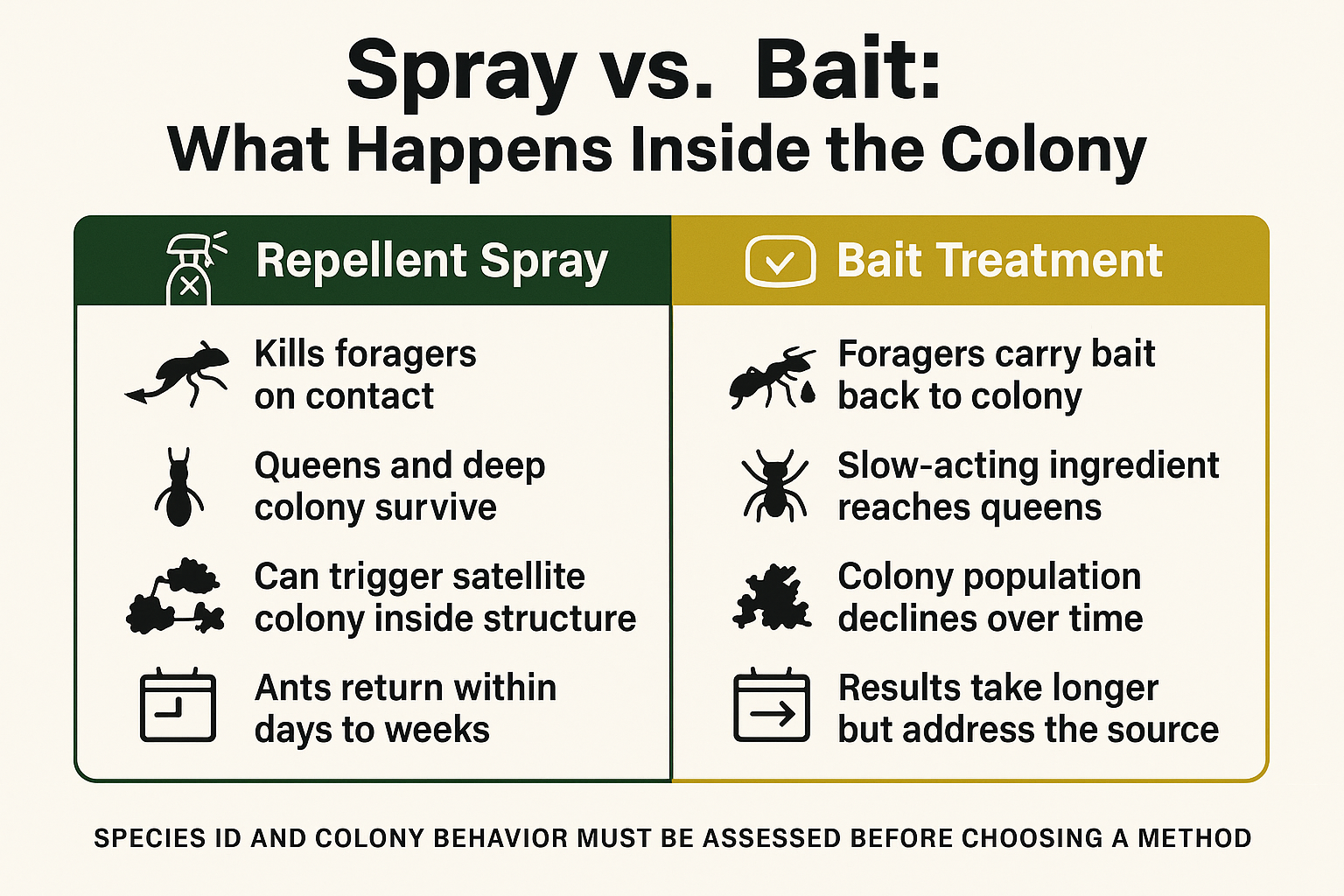
Spray vs. Bait: What Each Method Actually Does to the Colony
This comparison breaks down how repellent sprays and bait-based treatments affect an ant colony differently, and why the method matters as much as the product.
Why Bait Works Where Spray Doesn’t
A bait-based approach flips the entire model. Instead of blocking foragers, you let them do their job, but what they carry back to the colony is a slow-acting active ingredient rather than food.
Foragers bring the bait back and share it through a process called trophallaxis, where food is passed mouth-to-mouth between nestmates. The active ingredient spreads through the colony over days. When it reaches the queens, the reproductive core of the colony is affected, not just the workers on your countertop.
The critical word is “slow.” A bait that kills too fast gets detected by the colony before it spreads. A properly formulated, professionally selected bait works at a pace that doesn’t trigger avoidance behavior. This is why product selection matters, and why it requires knowing the species first.
A professional who asks questions before pulling out a product is doing something fundamentally different from one who shows up and sprays the perimeter on a schedule. The questions, what species are present, where are the trails originating, is this a new problem or recurring, are there multiple entry points, those answers change the product and the strategy entirely.
If you are also managing other pests alongside ants and want a broader picture of what a low-toxicity, targeted approach looks like, What IPM Pest Control Means for Homes With Kids and Pets is worth reading, especially if you have children or animals in the home.
What Drives Post-Treatment Ant Return: Quick Reference
These are the most common reasons ants come back after treatment, and what each one means in practice.
| Cause | What’s Happening | What It Requires |
|---|---|---|
| Repellent spray used on Argentine ants | Colony bifurcates, satellite forms inside structure | Switch to bait-based approach, reassess entry points |
| Only foragers treated, queens untouched | Colony recruits replacement workers within days | Treatment must reach colony interior |
| Untreated satellite colony already present | Second colony continues producing while one is treated | Full property inspection before treatment |
| Inland-calibrated service schedule | Santa Cruz moisture keeps colonies active year-round | Treatment timing adjusted for coastal conditions |
| Single entry point treated, others missed | Ants reroute through alternate access | Species-specific inspection covering perimeter and interior |
What a Different Kind of Inspection Looks Like
Most homeowners who contact us after a failed treatment from another provider describe the same experience: a technician arrived, sprayed the perimeter, left in under 30 minutes, and scheduled the next visit for 60 or 90 days out. No one asked what species were present. No one checked for interior nesting sites.
A thorough inspection for recurring ant problems looks quite different. It starts with species identification, because the treatment for Argentine ants is not the same as the treatment for carpenter ants, and misidentifying the species is one of the fastest ways to apply the wrong product and get no result.
From there, it covers:
- The full perimeter for entry points at the foundation, utility penetrations, and door frames
- Interior hotspots including under sinks, inside cabinet bases, and around plumbing fixtures
- Signs of satellite colonies, which often look like small clusters of activity in a spot that seems disconnected from the main trail
- Moisture sources that are drawing ants in, since Argentine ants in Santa Cruz are often following water as much as food
Carpenter ants deserve their own mention here. If you are seeing large, dark ants, not the tiny sugar ants most people picture, especially near wood or in the evening, that is a different situation with different stakes. Ants Come Back Every Summer. Here’s Why That Keeps Happening covers seasonal ant patterns, which is a separate issue from what we’re talking about here but worth understanding if you’ve had problems in both contexts.
Frequently Asked Questions About Recurring Ants After Treatment
How long should it take to see results after a professional ant treatment?
It depends heavily on the method used. A spray treatment may reduce visible ant activity within 24 to 48 hours, but as explained above, that doesn’t mean the colony was addressed. A bait-based approach works more slowly, often taking 1 to 2 weeks before you see meaningful colony decline. If ants are fully gone in two days after treatment and then return in two weeks, that’s a sign the treatment hit foragers only.
Is it possible that my house just has an ant problem that can’t be fixed?
No. Persistent ant problems are almost always a treatment method or inspection problem, not an unsolvable situation. Santa Cruz properties do face more pressure than inland homes because of the climate and Argentine ant density, but that means the approach needs to be calibrated for this environment, not that the problem is permanent.
Can ants come back even after a bait treatment?
Yes, especially if there are multiple satellite colonies that weren’t fully mapped during the inspection, or if the bait placement wasn’t maintained long enough. Follow-up matters. A single bait application may need to be refreshed or adjusted based on how the colony responds. This is one reason a one-and-done visit isn’t always realistic for a well-established infestation.
I’ve had multiple technicians from the same company, and the ants keep coming back. What does that tell me?
It usually tells you the method hasn’t changed even though the results haven’t improved. Several homeowners in our service area have described exactly this, going through many tech changes with a provider and still seeing ants return before each service window. If the strategy is the same every visit and the outcome is the same every visit, the strategy is the problem.
Is there a pet-safe or low-toxicity option for ant treatment?
Yes. Targeted bait placements are generally well-suited to homes with pets because the active ingredient is contained in a bait station rather than broadcast as a spray. That said, the specific products used and the precautions needed depend on your pets, the severity of the infestation, and where treatments are applied. It’s worth discussing that directly with whoever is doing the inspection.
Still Seeing Ants After Treatment?
If ants have come back after a previous treatment, whether from a DIY product or another company, West Pest Co. serves homeowners throughout Santa Cruz County, from Capitola and Aptos to Watsonville and the west side of Santa Cruz. Matthew West can be reached directly at (831) 430-8402, or you can learn more at westpestco.com. West Pest Co. has been voted Best Pest Control in Santa Cruz two years running, and holds a 5-star Google rating built on exactly this kind of situation: recurring problems that finally got resolved with the right approach.