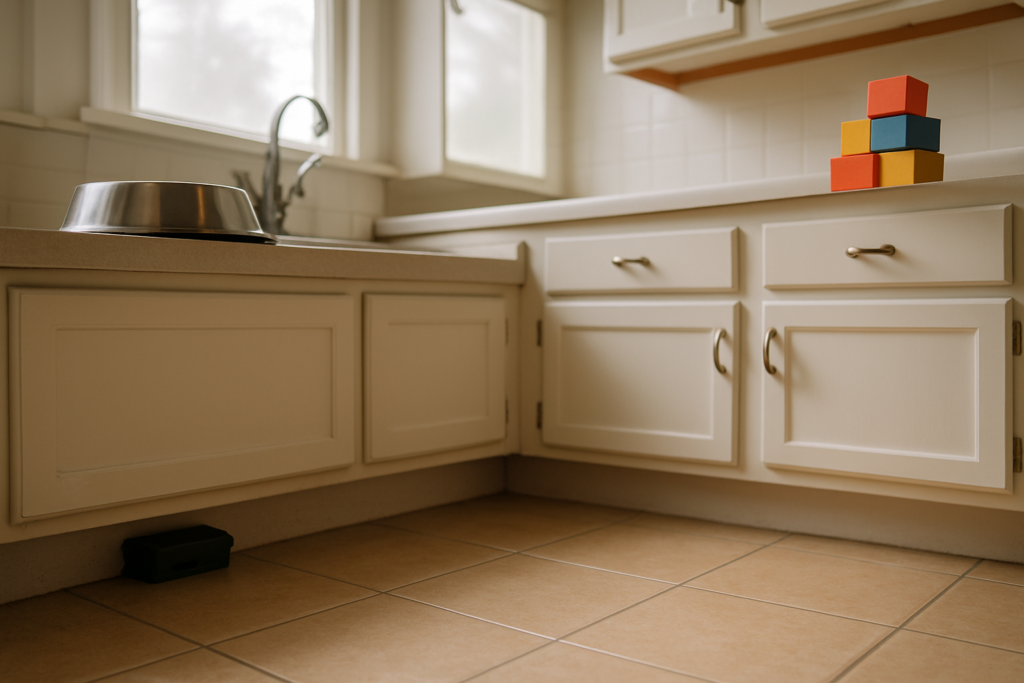
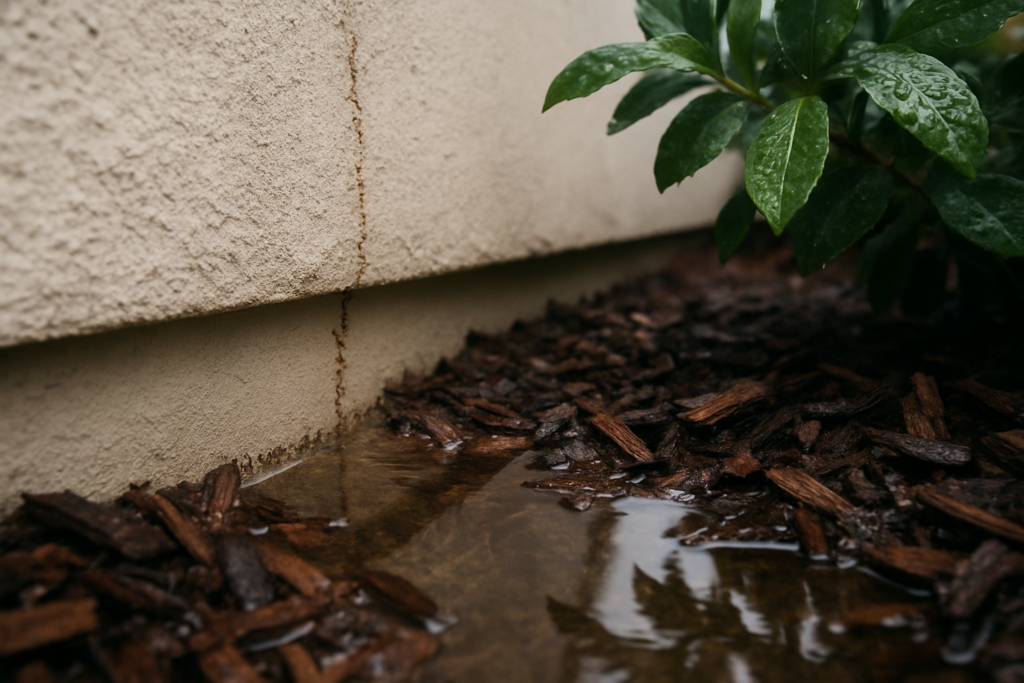
Direct Answer: IPM is a decision-making framework that uses the least-hazardous effective method first. It doesn’t mean zero pesticides, it means chemicals are used only when monitoring shows they’re actually needed, and only in targeted ways.
If you’ve ever searched for pest control and felt uneasy about chemicals in your home, you’re not alone. I hear it constantly from Santa Cruz County families, parents asking about a new puppy, a pregnant spouse, a child with asthma. The question is almost always the same: is there a safer way to deal with this?
The term you’ll see most often in that search is IPM, or Integrated Pest Management. But most of what gets marketed as IPM doesn’t come with much explanation. Homeowners are left guessing whether it actually means something different, or whether it’s just a selling point.
This article is about what IPM actually looks like in practice, not the theory version, but the real-world version that matters when you have a toddler crawling on the kitchen floor or a Labrador who has no interest in staying out of treated areas.
What IPM Actually Means, and What It Doesn’t
IPM stands for Integrated Pest Management. California defines it as a decision-making framework, not a product category. The California Department of Pesticide Regulation describes it as a process that prioritizes prevention, monitoring, and least-hazardous methods before escalating to chemical treatment.
The most common misconception I run into is that IPM means no pesticides. It doesn’t. What it means is that pesticides are selected and applied only when monitoring confirms they are actually needed, and only in the most targeted way available for that situation.
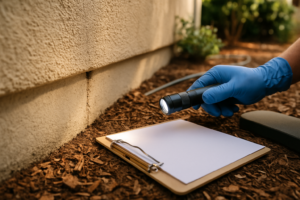
In practice, an IPM approach asks a few questions before reaching for any product:
- What pest is this, and what does it actually need to survive here?
- Can we remove those conditions instead of spraying?
- If a treatment is needed, what is the least-hazardous product that will work?
- Where should it be applied so it does the job without unnecessary exposure?
That last question is where IPM gets real for families with kids and pets.
The Real Difference: Perimeter Spray vs. Targeted Bait
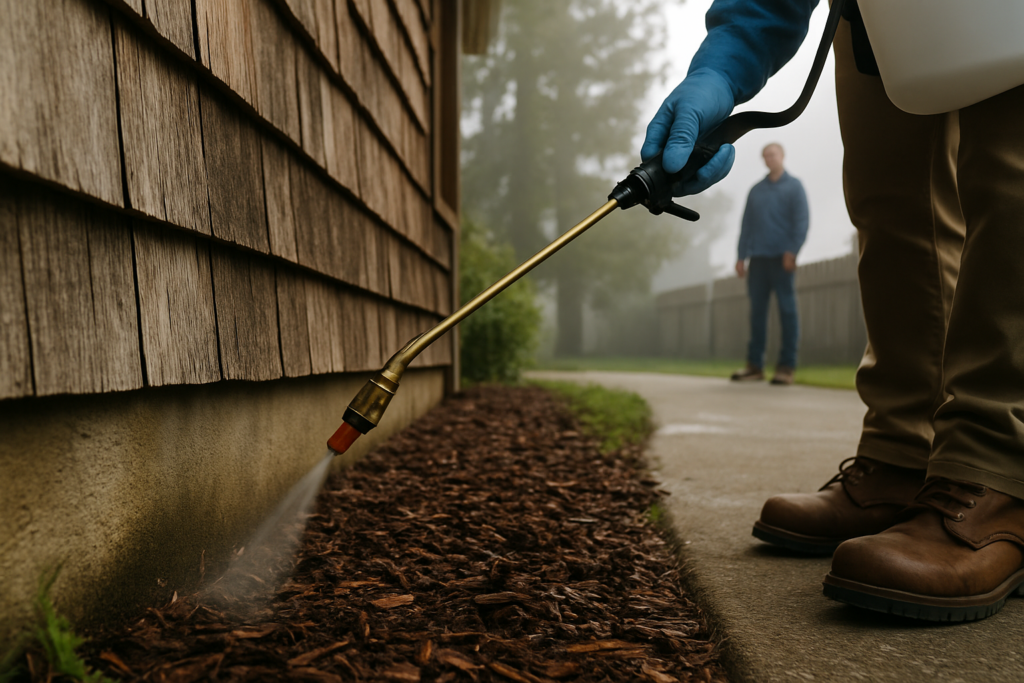
This is the distinction that matters most for families asking about safety. A broad perimeter spray applied on a fixed schedule deposits active ingredient across exterior walls, thresholds, and sometimes interior baseboards, surfaces that children and pets move across regularly. It’s preventive by design, which sounds good, but it also means product is going down whether pests are present or not.
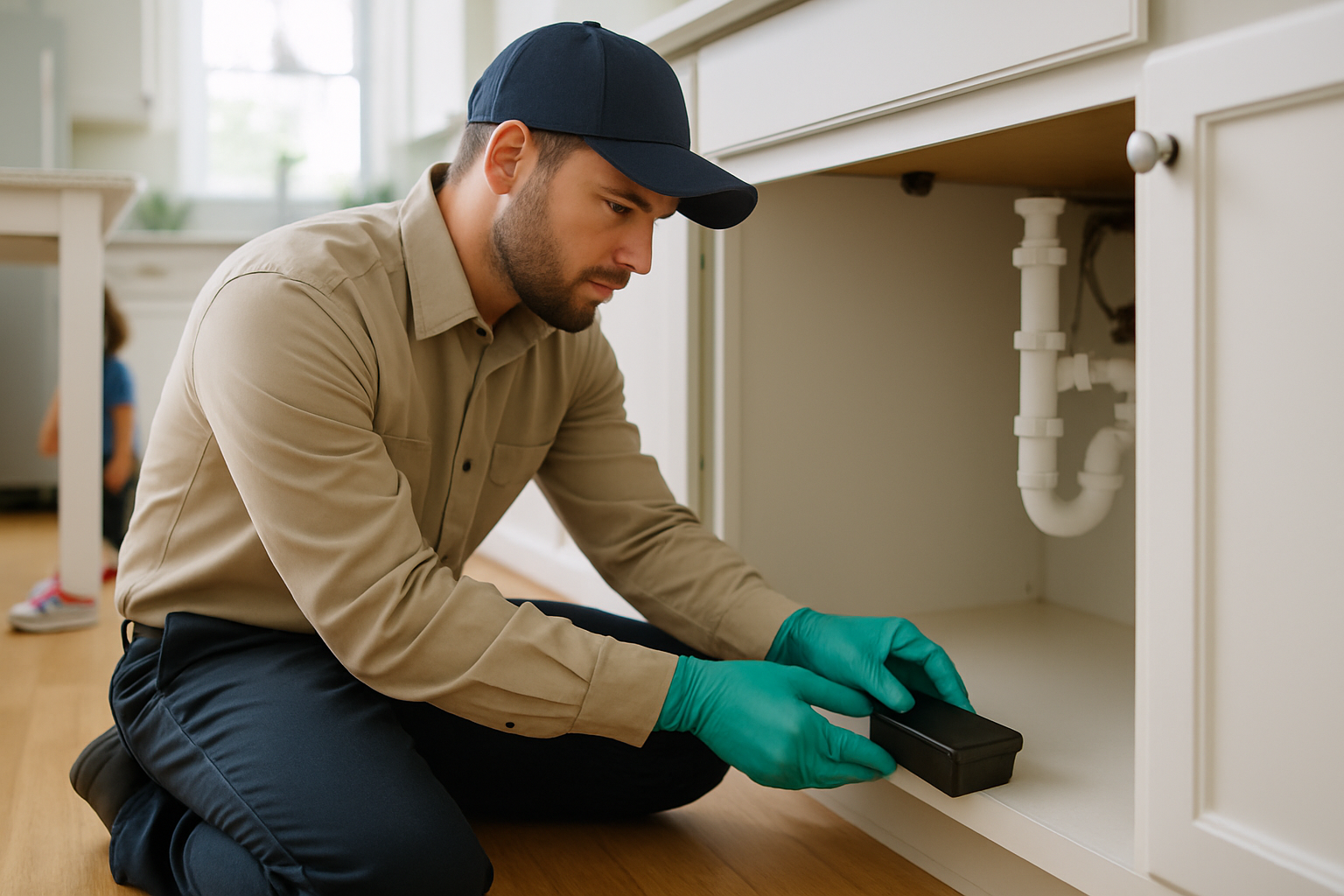
A targeted bait or gel application works completely differently. The active ingredient is placed inside a bait station, a crack, or a void, somewhere the pest actually travels, and somewhere a child or pet physically cannot reach it. The ant picks up the bait and carries it back to the colony. The mouse enters the station. The pest gets the treatment; your kitchen floor doesn’t.
One homeowner who reached out to us described exactly this situation. They had a young Labrador puppy and wanted to know whether targeted baits and exclusion work could replace the perimeter spray routine they’d been on. That’s a smart question, and the honest answer is: often, yes. But it depends on what pest you’re dealing with, how active the infestation is, and what the conditions in and around the home look like.
For ant problems specifically, which is one of the most common calls we get, gel baiting is usually far more effective than perimeter spraying anyway. A spray kills foragers on contact but does nothing to the colony. A properly placed bait reaches the queen. You can read more about why ant problems tend to repeat without the right approach in this breakdown of why ants keep coming back after treatment.
For rodents, the IPM conversation shifts toward exclusion. The goal is to find where they’re getting in and address that, rather than relying on ongoing bait rotation. We’ve had multiple Santa Cruz homeowners describe wanting a natural, hands-on approach to rodents they could hear in the walls, trapping, finding entry points, and addressing the conditions drawing them in. That’s exactly what a solid rodent exclusion process looks like.
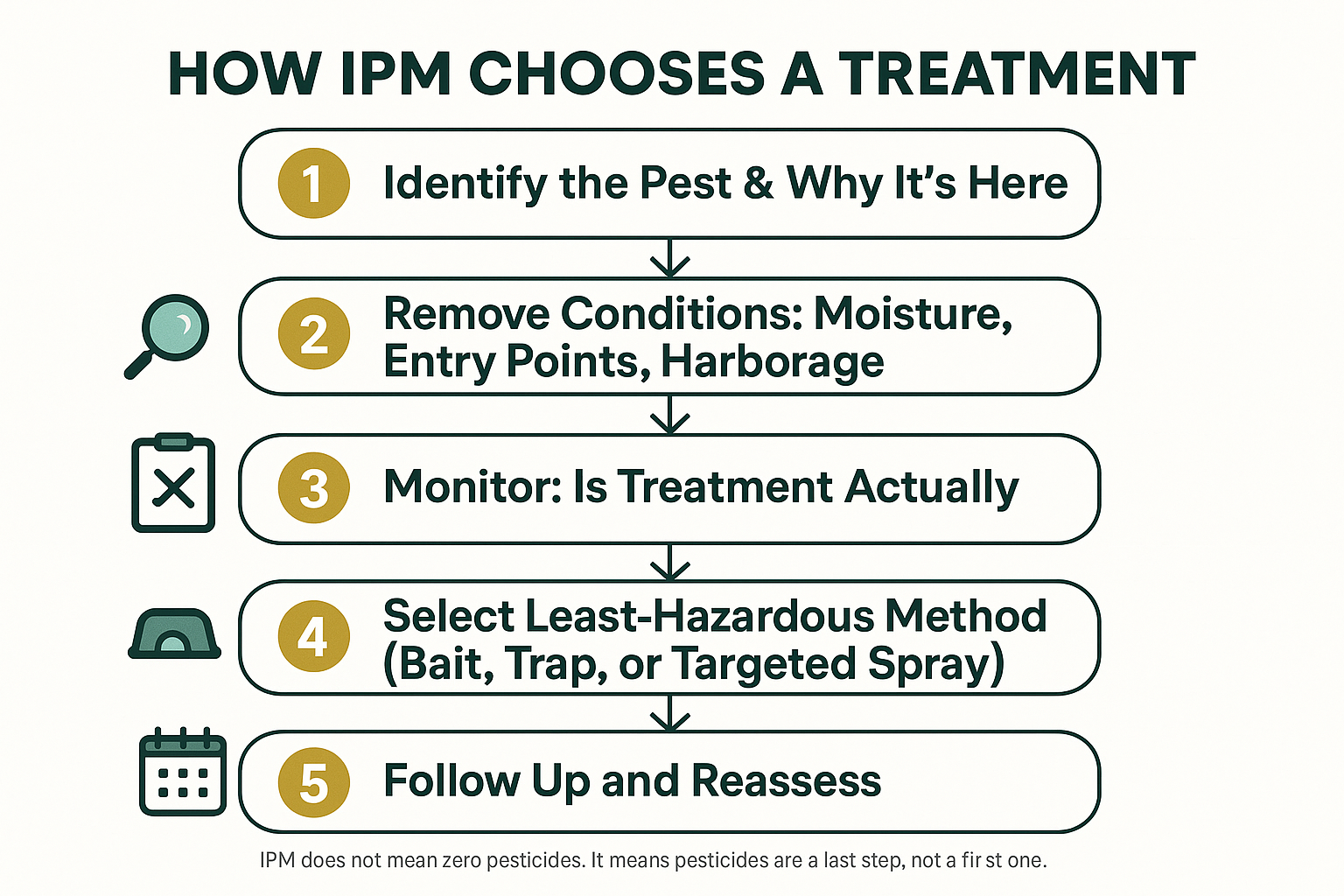
IPM Decision Flow: How a Treatment Gets Chosen
This shows the step-by-step logic a technician uses under an IPM approach before selecting any treatment method.
Why Santa Cruz’s Climate Makes Prevention the Starting Point
Santa Cruz County doesn’t have a real pest off-season. The mild coastal climate, year-round fog, consistent moisture, and soil that stays damp through winter, keeps ants, spiders, and cockroaches active well into months when inland homes get a break.
Because of that, some homeowners assume they need constant chemical coverage to stay ahead of problems. What I’ve found is that ongoing chemical applications without addressing root conditions just create a cycle, pests keep returning because the things drawing them in never change.
An IPM approach in Santa Cruz focuses first on those underlying conditions:
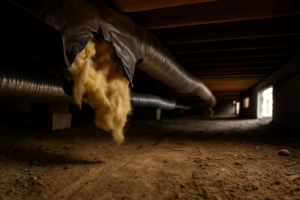
- Moisture sources near the foundation or crawlspace that attract ants and cockroaches
- Entry points in older siding, gaps around pipes, or damaged weatherstripping that let rodents and insects in
- Harborage sites like wood piles, dense ground cover, or debris near the home’s perimeter
Address those, and the need for repeated chemical applications drops significantly. Cockroaches are a good example, their persistence in Santa Cruz homes usually has more to do with conditions than with treatment gaps. Understanding why cockroaches keep coming back often starts with what’s happening in the crawlspace or under the sink, not with what was or wasn’t sprayed.
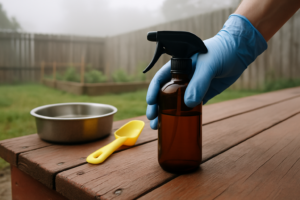
For ticks and fleas, the same logic applies to yard conditions. Shaded, damp areas near the fence line or under decking are where both pests stay active through cool coastal weather. Knowing what’s actually in your yard right now helps frame whether a yard treatment is the right starting point, or whether habitat changes come first.
Broad Perimeter Spray vs. Targeted IPM Approach
Here’s a plain-language comparison of the two most common treatment approaches for Santa Cruz homeowners asking about safety around kids and pets.
| Factor | Broad Perimeter Spray | Targeted IPM Approach |
|---|---|---|
| Where product is applied | Along exterior walls, thresholds, baseboards | Inside bait stations, cracks, or pest-active voids |
| Exposure risk for kids/pets | Higher, surfaces they contact regularly | Lower, product is physically inaccessible |
| Treatment trigger | Fixed schedule, regardless of pest activity | Applied only when monitoring shows it’s needed |
| Effect on ant colony | Kills foragers on contact, misses the queen | Bait is carried back to eliminate the colony |
| Role of exclusion | Rarely included | Central to the approach |
| Best for | Fast knockdown of visible activity | Long-term reduction with fewer applications |
What Household Sensitivities Should Change About Treatment
One of our Google reviews captures this better than I can. A customer brought in an ant problem, and during the conversation mentioned that his wife had a lung sensitivity. Rather than proceeding with a standard treatment, Matthew adjusted his approach and used a product that is also used in hospitals and veterinary clinics, effective, but selected with that specific household in mind.
That’s what health-aware treatment actually looks like. A knowledgeable technician should be asking about sensitivities, pets, pregnancy, and respiratory conditions before choosing a method, not after. If a pest control company doesn’t ask those questions during the initial conversation, that’s worth noticing.
For homeowners with concerns about chemical exposure, it’s also worth knowing that many effective IPM treatments use botanical or plant-based active ingredients, essential oil-based products, or physical controls like traps and exclusion work. These aren’t always the right tool for every situation, but they belong in the conversation from the start. The goal is always to match the method to the pest and the household, not to default to whatever is fastest to apply.
Frequently Asked Questions About IPM Pest Control for Families
Does IPM pest control cost more than a standard spray service?
It can, depending on the scope of work involved. An inspection-first approach that includes exclusion work, bait placement, and monitoring takes more time than a perimeter spray. That said, it often reduces the number of repeat visits needed, which affects the total cost over time. For an exact sense of what a treatment would run for your situation, it’s worth calling to describe what you’re dealing with.
How long do we need to keep kids and pets out of treated areas?
It depends on what product was used and how it was applied. With a gel bait placed inside a cabinet or crack, re-entry time is essentially immediate, the product is enclosed. With a residual spray, most products require the treated area to dry completely before re-entry, which is typically 1-2 hours under normal conditions. A good technician will give you a specific timeframe for your treatment before leaving.
Is IPM actually different from what most pest control companies do?
In practice, yes, though the label gets used loosely. The clearest signal is whether a company starts with an inspection and asks about your household before recommending a treatment, or whether they show up and spray on a fixed schedule. IPM should mean monitoring before treating and explaining why a specific product was chosen. If that conversation isn’t happening, the approach probably isn’t genuinely IPM-based.
We have a dog who loves to sniff everything. Are bait stations actually safe?
Most professional bait stations are designed so the bait is only accessible through a small opening sized for the target pest, too small for a dog’s nose to reach the product itself. That said, it matters which stations are used and where they’re placed. This is exactly the kind of thing to raise directly when you call, so the technician can confirm placement that fits your setup.
Can IPM work for a rodent problem, or is it mainly for insects?
IPM applies to rodents too, and honestly, it’s where the approach makes the most sense. The core of rodent IPM is finding where they’re entering and addressing that, rather than just running bait stations indefinitely. Trapping combined with exclusion work is often more effective long-term than chemical bait alone, and it avoids the concerns some families have about rodenticide around pets. You can see what that process typically involves in this article on what the rodent exclusion sealing process actually looks like.
What’s the difference between a one-time IPM treatment and an ongoing plan?
A one-time treatment makes sense when you have a clear, contained problem, a fresh ant trail, a visible nest, a new mouse entering through a known gap. An ongoing plan is better suited to homes where conditions keep inviting pests back, which is common in older Santa Cruz homes with moisture, vegetation close to the foundation, or crawlspaces that are hard to seal completely. Understanding when to stop handling a pest problem on your own is often the first step in figuring out which approach fits.
Have Questions About Treatment Safety in Your Home?
West Pest Co. serves families throughout Santa Cruz County, from the West Side and Capitola to Aptos, Scotts Valley, and Watsonville, and questions about kids, pets, and sensitivities are part of every initial conversation. If you want to talk through what an IPM-based approach would look like for your specific situation, Matthew West can be reached directly at (831) 430-8402 or through westpestco.com.