Direct Answer: Rats get into homes through foundation vent screens, gaps around utility lines, and open roofline seams — usually through damaged or corroded infrastructure that’s easy to miss from the outside.
Most Santa Cruz homeowners who contact a pest professional describe the same moment: they wake up around 6 a.m. and hear scratching in the walls — sometimes in the ceiling, sometimes deeper under the floor. By the time they pick up the phone, they already suspect rats. What they want to know is how the rats got in.
That’s a different question than why you have rats in general, and it deserves a specific answer. Santa Cruz County’s older housing stock — particularly in neighborhoods like Live Oak, Seabright, and the mountain communities above Aptos — is full of wood-frame homes built with crawlspace vents, aging pipe penetrations, and rooflines that shift and open over decades. The county’s salt air and year-round moisture accelerate that deterioration faster than in drier inland climates.
This article walks through the three structural entry types that account for the majority of residential rat intrusions in this area. If you’ve already heard the sounds, this is a practical framework for diagnosing what’s happening before you make a call.
Why Santa Cruz Homes Are Especially Vulnerable
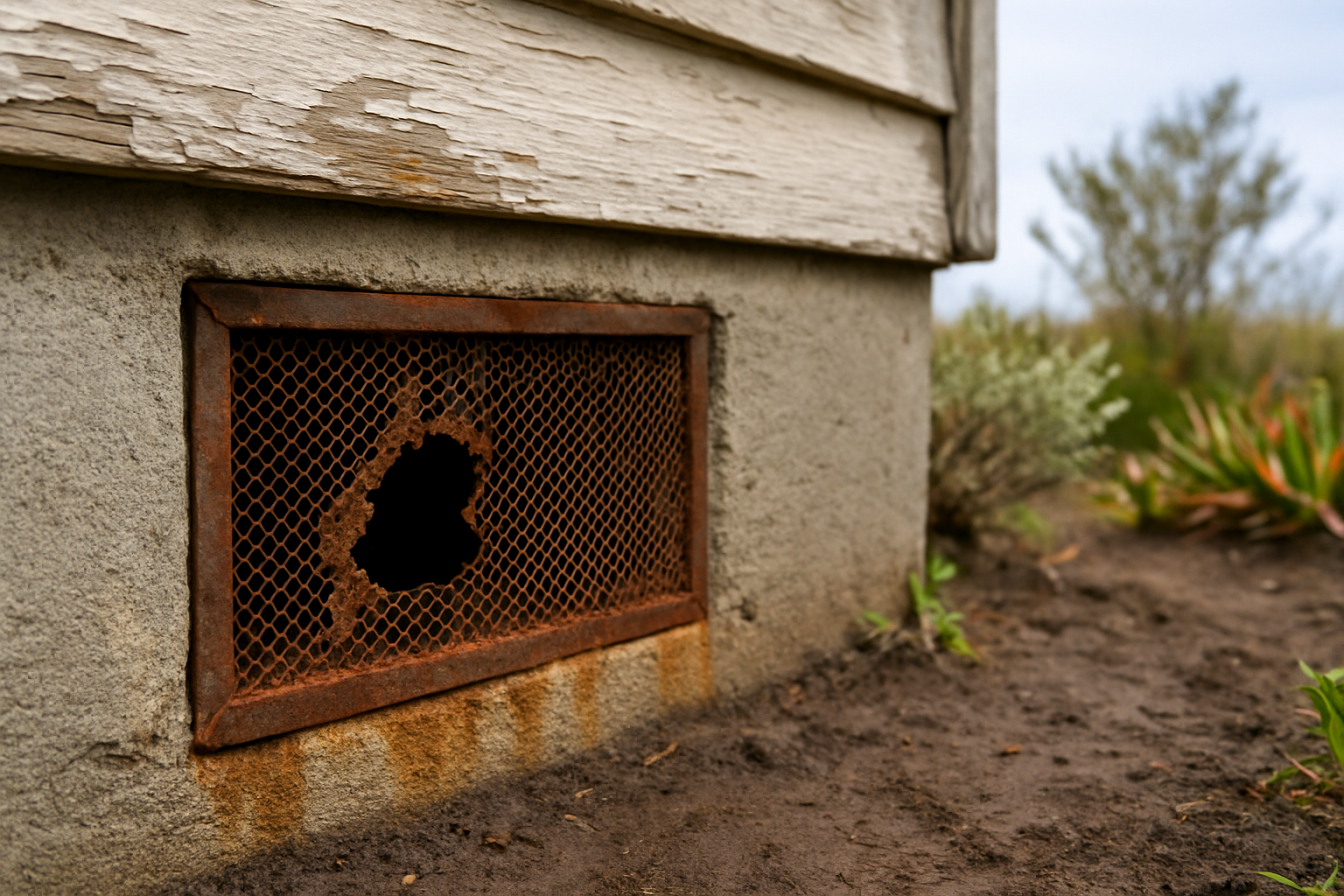
Santa Cruz’s coastal climate is mild — which sounds pleasant until you consider what year-round humidity and salt air do to building materials over time. Foundation vent screens, typically made of galvanized wire mesh, can corrode and pull away from their frames within 15 to 20 years in heavy coastal exposure. In neighborhoods close to the ocean, that timeline is often shorter.
Roof rats — the most common species in Santa Cruz County — are agile climbers that don’t need much space. They can squeeze through a gap as small as half an inch. Norway rats, which tend to stay lower and burrow along foundations, need slightly more room but are equally persistent about finding it.
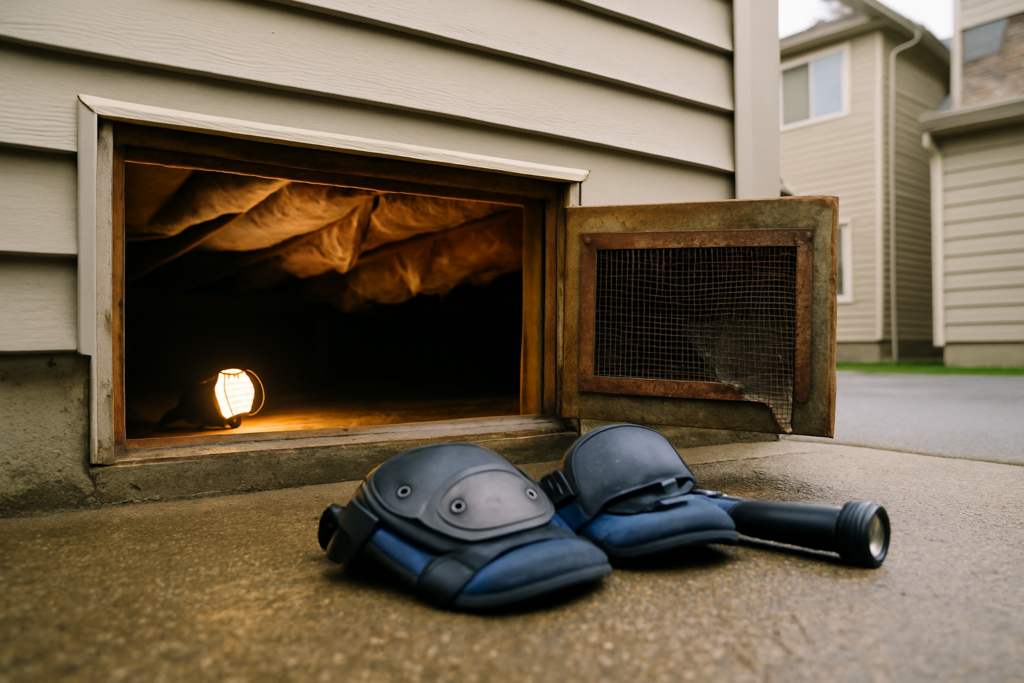
Several homeowners who’ve reached out to West Pest Co describe the same scenario almost word for word: they suspect rodents have burrowed under the foundation and entered the walls, often because they hear the activity near the floor level in the mornings. One homeowner near the lower Westside described it exactly that way — and in many of these cases, the entry point turns out to be a deteriorated crawlspace vent that was barely holding together. A quick look with a flashlight often confirms it.
Understanding the difference between a rodent problem and a rodent infestation matters here — because a single entry point left open can turn a minor issue into a much larger one quickly.
The Three Most Common Entry Points
When Matthew West inspects a home for rodent activity, the investigation almost always concentrates on three structural areas. These aren’t the only possible entry points, but they account for the vast majority of what turns up in the field.
1. Foundation Vent Screens
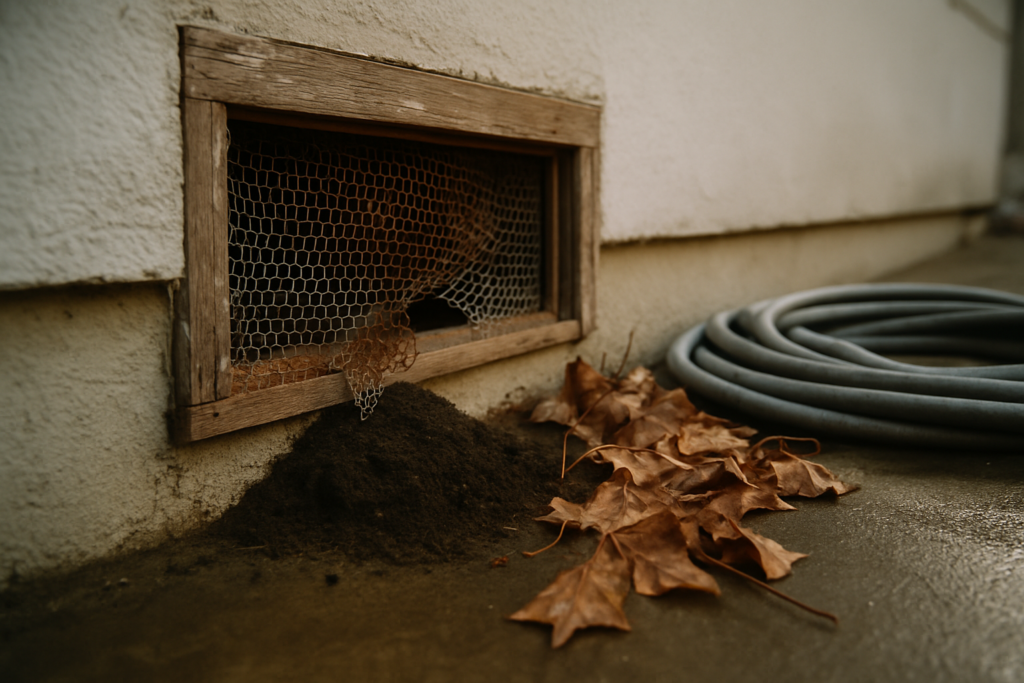
Crawlspace vents are the single most frequent entry point in Santa Cruz County homes. The mesh corrodes, the frame separates, or the screen gets kicked in by yard equipment and never replaced. A vent screen with a two-inch tear in it is a wide-open door for roof rats and Norway rats alike.
A rental property near Pleasure Point is a good example of how this plays out — a homeowner described several crawlspace vent screens that had simply deteriorated over the years, with no one catching it during routine maintenance. By the time scratching sounds appeared, rats had already established a path into the wall cavities.
2. Utility Penetrations — HVAC Lines, Plumbing, and Conduit
Every time a new line runs into a house — a plumbing supply, a gas line, an HVAC refrigerant line — there’s a gap cut in the exterior wall or foundation. Those gaps are supposed to be sealed. Often they aren’t, or the original foam or caulk has dried out and cracked.
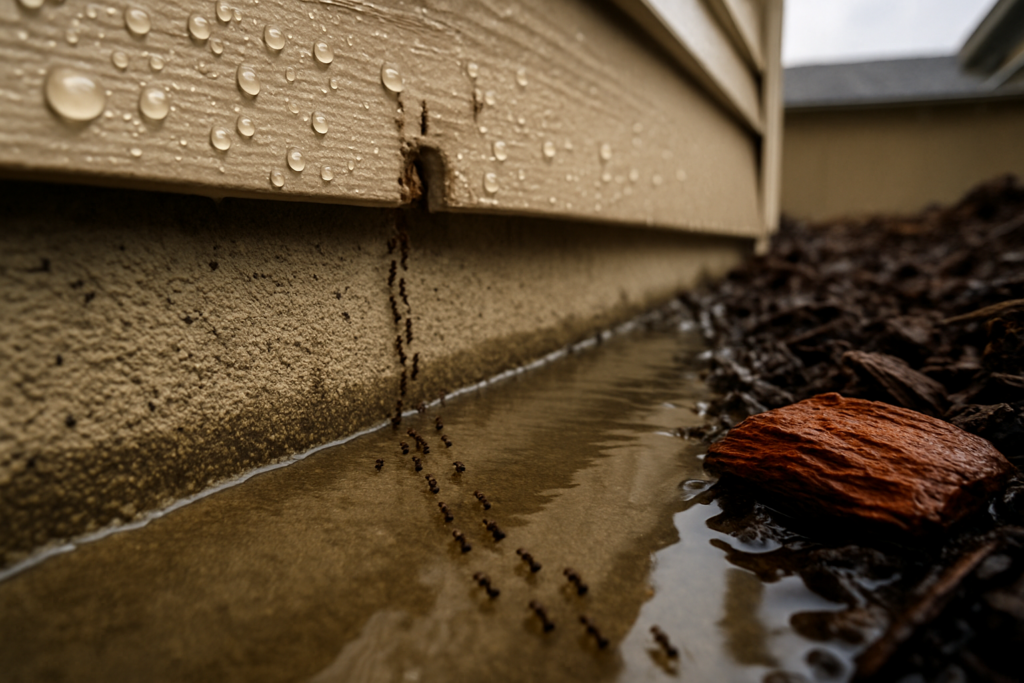
One Aptos homeowner described hearing rodents specifically inside a mini-split duct cavity — a narrow channel that had been left partially open when the HVAC system was installed. A small gap around the exterior line set gave rats a direct path into the wall space. This kind of entry point is easy to miss because it looks finished from the outside until you get close and probe the sealant.
3. Roofline Gaps Near the Fascia
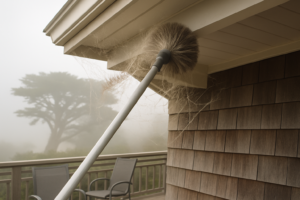
Roof rats earn their name — they travel along fences, trees, and power lines to reach the upper portions of a house. Where the fascia board meets the soffit, where vents penetrate the roofline, and where the eave returns at the corner of the house all represent gaps that open up as wood expands and contracts over the seasons.
Homes with large trees close to the roofline are at higher risk because rats use branches as a bridge. But even without tree access, a determined roof rat will find a quarter-inch gap in the fascia and work it open over time.
Here’s a quick checklist a homeowner can walk through with a flashlight before making a call:
- Foundation vents: look for rust, separated frames, torn or missing mesh
- Pipe and conduit entry points: probe the sealant around every line entering the exterior wall — crumbled foam is a red flag
- HVAC line sets: check where refrigerant lines pass through the exterior, especially on mini-split systems
- Roofline and fascia: look for daylight between the fascia and soffit, gaps at eave corners, and any open gable vents
- Garage door gaps: the bottom seal and the gap at the sides are often overlooked on attached garages
Where Rats Are Actually Getting In: A Visual Checklist
This infographic maps the three primary structural entry zones on a typical Santa Cruz wood-frame home, with what to look for at each location.
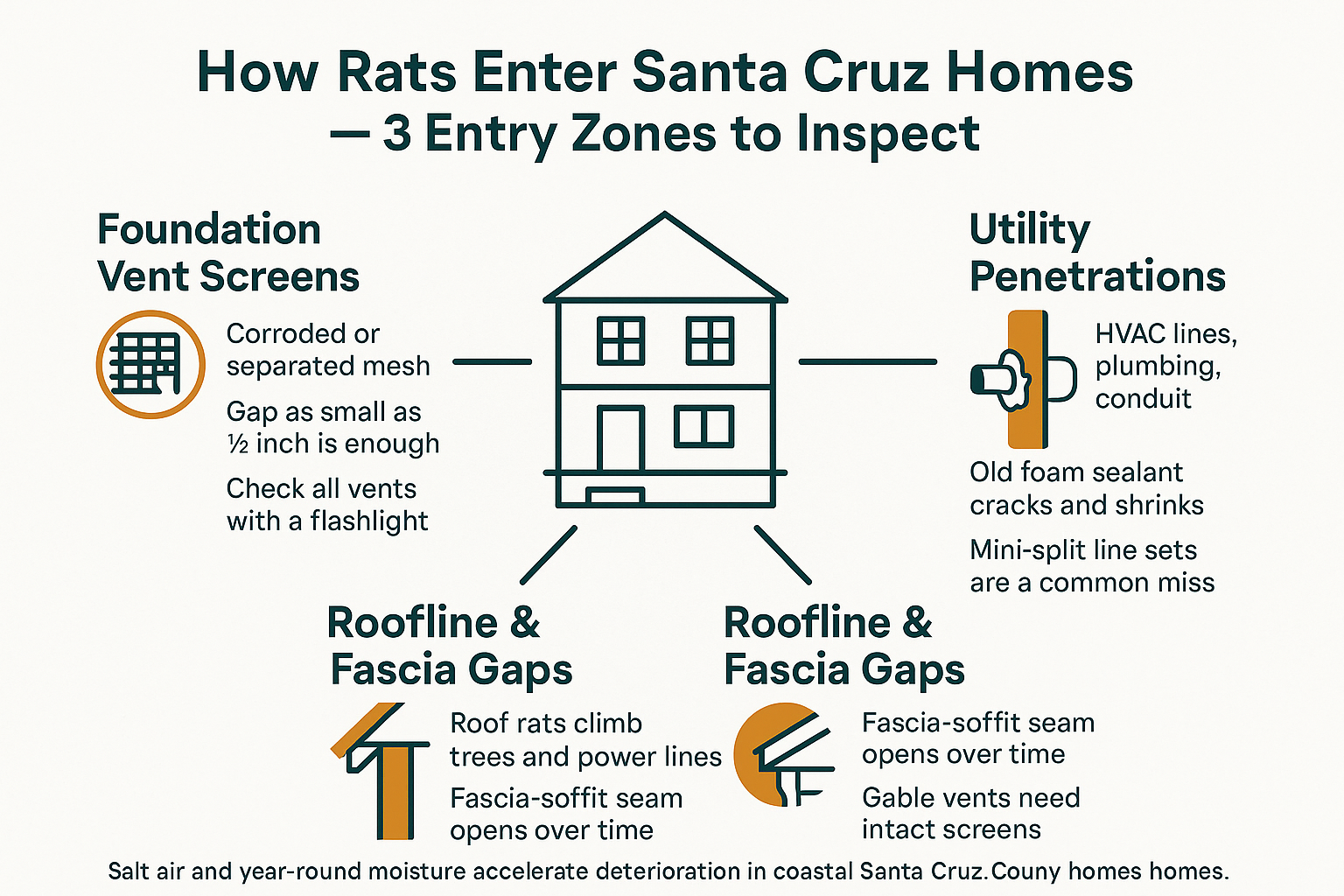
Entry Point Comparison: What to Look For and Where
Each entry type has different visual signs and requires different repair materials. This reference covers what a homeowner is likely to find during a basic exterior walk-around.
| Entry Type | What You’ll See | What the Fix Typically Involves |
|---|---|---|
| Foundation Vent Screen | Rust, torn mesh, frame pulling away from foundation | Screen replacement with galvanized or stainless mesh rated for rodent exclusion |
| Utility Penetration | Crumbled foam, visible gap around pipe or conduit | Steel wool packing plus fresh caulk or expanding foam rated for pest exclusion |
| Roofline / Fascia Gap | Daylight visible at soffit seam, gaps at eave corners | Fascia re-nailing, soffit patch, or hardware cloth over open gable vents |
| Garage Door Seal | Gaps at corners or sides of door, worn bottom seal | Bottom seal replacement, corner gap fill with hardware cloth or metal flashing |
Why Fall Is the Time to Find These Gaps — Not January
In most of California, rodent pressure peaks in late fall as temperatures drop and animals seek warmth indoors. Santa Cruz is a little different — the climate is mild enough that rats stay active most of the year — but the same fall pressure applies. Rats that have been living in the yard or in dense vegetation start probing structures more aggressively starting around October and November.
A homeowner who does a foundation and roofline inspection in September or early October has a real advantage. Finding a deteriorated vent screen before rats discover it is a different situation than finding it in January after you’ve been hearing scratching for six weeks.
This is also the right framing for how often a Santa Cruz home actually needs a pest inspection — not as a reactive emergency call, but as a predictable part of maintaining an older home in a coastal environment. The inspection that catches corroded mesh in October costs far less in time and money than the removal and exclusion work that follows an established infestation.
And for homeowners wondering what a professional actually looks at during that kind of walkthrough, what pest inspectors look for that homeowners usually miss covers a lot of the same ground — including areas that are genuinely hard to assess without crawling under the house.
What Happens When the Entry Point Gets Fixed — Not Just Trapped
One of the most common frustrations homeowners describe is having a pest company come out, set traps, and leave — only to hear scratching again weeks later. The reason is usually straightforward: trapping without sealing the entry point is a temporary fix. New rats will move in through the same gap.
The approach that actually works is sealing the entry point at the same visit — not as a separate follow-up service. One West Pest Co. customer put it clearly in a review: Matthew “found 2 places where the mice were getting in and fixed them right away.” That same-visit sealing is the part that breaks the cycle.
Another reviewer described the same outcome: “His inspection found one unknown access point for rodents. He sealed the area, placed traps inside and returned in a week to find empty traps.”
For homeowners who want to understand this pattern more — why rats keep coming back after trapping alone — the article on why rats keep coming back even after you’ve dealt with them explains the underlying behavior in more detail.
Frequently Asked Questions About Rats Getting Into Walls
I’m hearing scratching in the morning — is that definitely rats?
Morning activity is a strong indicator. Roof rats are most active just before dawn and right after dusk, which is why that early-morning scratching pattern shows up so consistently. Norway rats tend to be more nocturnal. Mice are lighter and faster-sounding — more of a skittering sound than a heavy drag. If the sound is in the walls or ceiling and follows a predictable schedule, rats are the most likely explanation. A professional inspection will confirm it and identify where the activity is concentrated.
How small a gap can a rat actually fit through?
Roof rats can compress through a gap as small as half an inch. Norway rats need about three-quarters of an inch. That’s smaller than most homeowners expect, which is why damaged vent screens and cracked pipe sealant — gaps that look minor — are such common entry points.
Can I seal the entry points myself?
Some repairs are DIY-friendly. Replacing a foundation vent screen with galvanized or stainless mesh is straightforward if you’re comfortable working around a crawlspace. Packing steel wool into gaps around pipes and covering it with fresh caulk is also a reasonable first step. Where it gets harder is identifying all the gaps — not just the obvious ones. A professional inspection often finds secondary entry points that the homeowner missed during their own walkthrough.
What does rodent exclusion work typically cost in Santa Cruz?
Pricing varies based on how many entry points need sealing, how accessible the crawlspace and roofline are, and whether any damaged vents or fascia boards need replacement. In Santa Cruz County, homeowners generally report spending anywhere from a few hundred dollars for a targeted seal-up of one or two entry points to higher amounts when the job involves extensive crawlspace work or multiple vent replacements. The best way to get an accurate number is to have someone walk the property and assess what’s actually there. West Pest Co. can provide a specific quote after inspection.
I had a pest company out already and the rats came back. What went wrong?
Almost always, the entry point was never sealed. Traps and bait address the rats inside the structure — but if the gap that let them in is still open, new rats will eventually find it. Exclusion — sealing the entry point — is what stops the cycle. If your previous service only involved trapping, that’s likely why the problem returned. Ask specifically about exclusion work when you contact a pest professional.
Are the treatments safe around kids and pets?
This is one of the most common concerns West Pest Co. hears from Santa Cruz families. Matthew West uses targeted, eco-friendly treatment approaches designed with children and pets in mind — and he explains exactly what he’s using and why before any treatment begins. If you have specific concerns about chemical sensitivity or a young pet in the home, raise that upfront when you call.
Think You’ve Found the Entry Point?
West Pest Co. serves homeowners throughout Santa Cruz County — from Live Oak and Pleasure Point to Aptos, Scotts Valley, and the mountain communities above Ben Lomond. If you’ve been hearing scratching and want someone to walk the property, identify the entry points, and seal them the same visit, Matthew West can help. Call (831) 430-8402 or visit westpestco.com to get in touch directly.