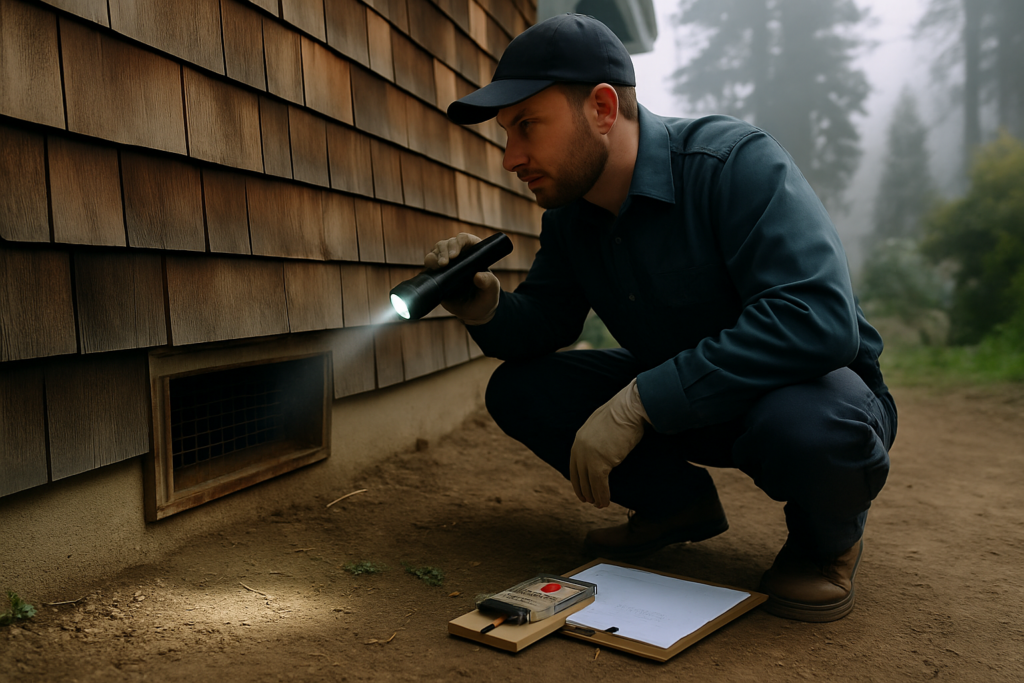
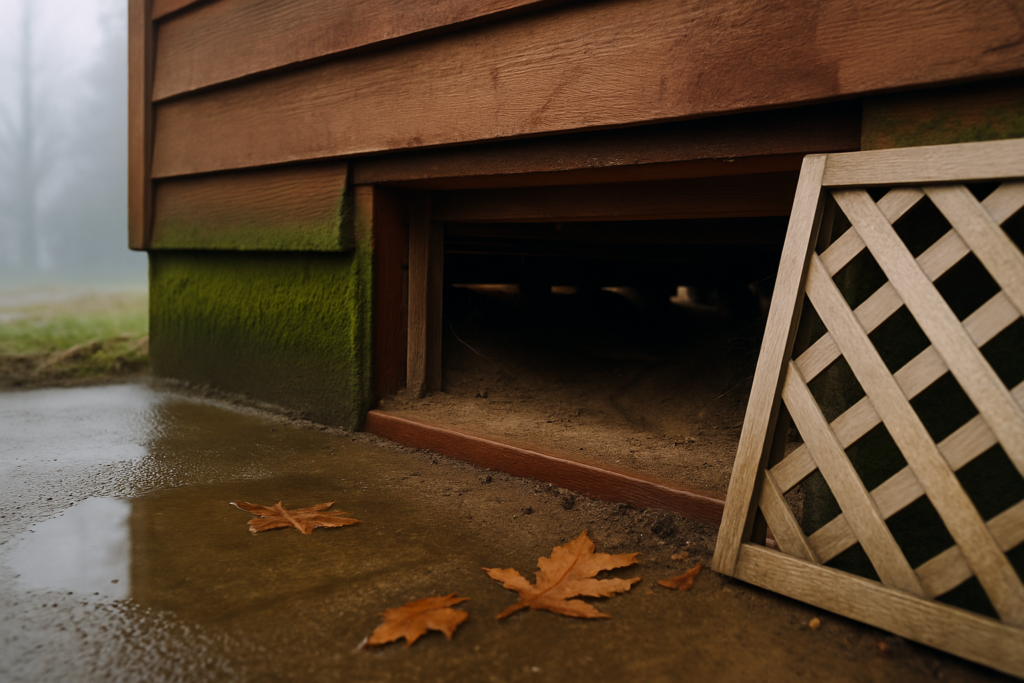
Direct Answer: Rats return because the entry points that let them in were never sealed. Killing the rats without closing those gaps just makes room for the next group.
You set traps. Maybe you put out bait. The rats seemed to disappear — and then, a few weeks later, you heard them again in the walls or found fresh droppings in the garage. It’s one of the most frustrating experiences a homeowner can have, and it happens constantly in Santa Cruz County.
Santa Cruz’s mild, foggy climate means rats here don’t behave the way most people expect. They don’t retreat in winter the way they do in colder regions. Norway rats and roof rats both stay active year-round along the coast, and Aptos, Soquel, and the wooded hillsides above Scotts Valley are particularly prone to repeated infestations because of the dense tree canopy and older home stock.
The reason rats keep coming back almost always comes down to two things: entry points that were never sealed, and attractants that were never removed. Trapping and baiting handles the rats already inside — but it does nothing to stop the next wave from moving in.
The Entry Point Problem — Why Treating Rats Without Sealing Is Like Bailing a Leaking Boat
A roof rat can squeeze through a gap the size of a quarter — roughly half an inch. Norway rats need about the size of a half dollar. Most Santa Cruz homes, especially those built before 1980, have no shortage of both.
Common entry points that get missed include:
- Roof-to-fascia gaps where wood has warped or rotted from coastal moisture
- Utility penetrations — the holes where plumbing, HVAC lines, and electrical conduit enter the structure
- Garage door gaps along the bottom and sides, especially on older roll-up doors
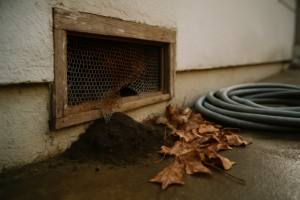
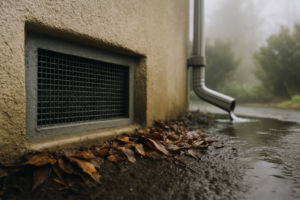
- Foundation vents with damaged or missing screens
- Gaps around attic vents where screens have rusted or pulled loose
Professionals call this process exclusion work, and it’s what separates a treatment that holds from one that needs to be repeated every few months. If you’ve had a pest inspection done on your home, the inspector was almost certainly looking for exactly these vulnerabilities.
The challenge in Santa Cruz County is that the coastal humidity accelerates wood decay and rust, meaning entry points can open up faster than in drier inland climates. A vent screen that was intact two years ago may have a significant gap today. Annual checks matter here more than most people realize.
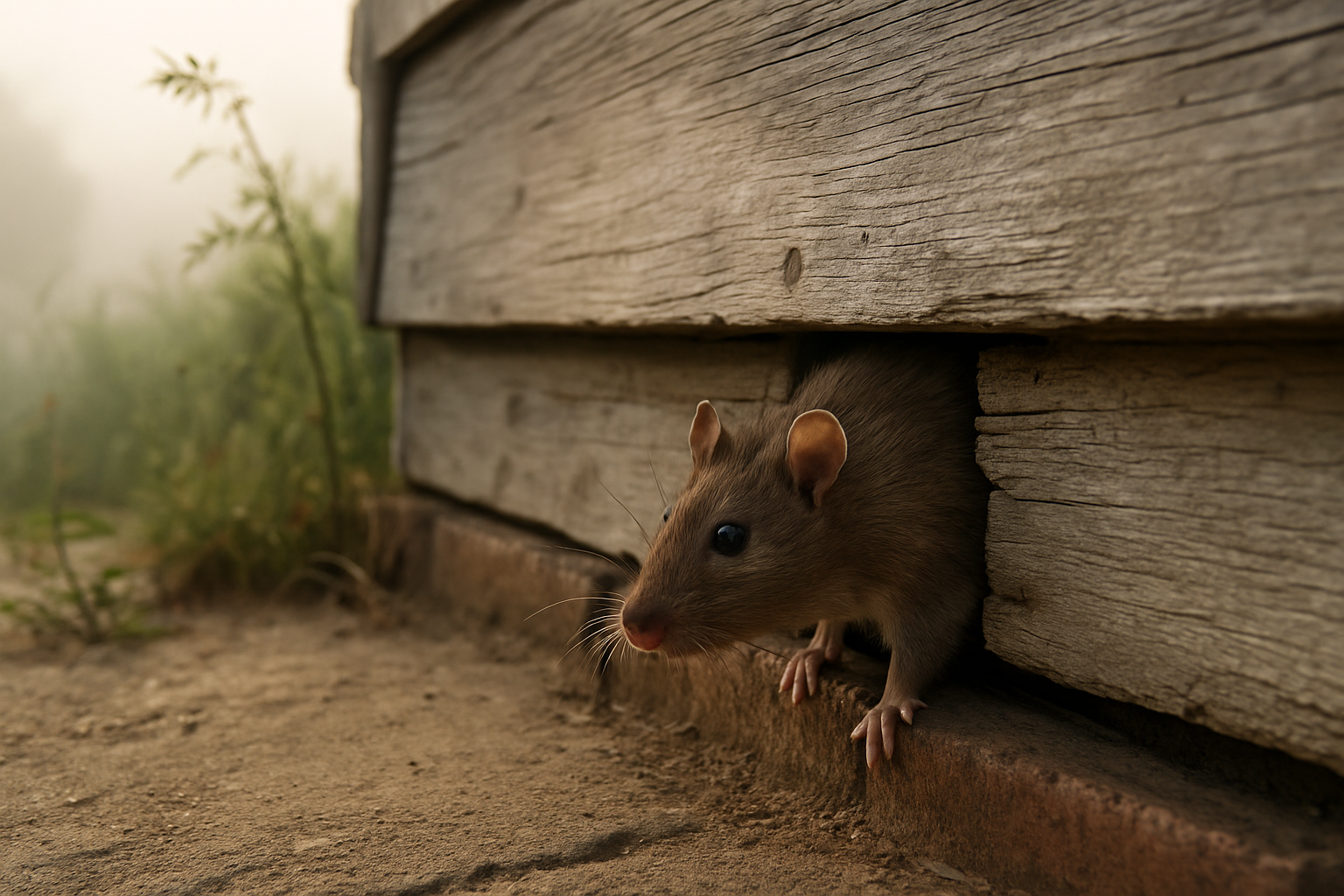
What’s Actually Pulling Rats Back to Your Property
Even with solid exclusion work, rats will keep testing your home if the property is giving them reasons to stay nearby. Roof rats in particular are persistent — they’ll run the same routes and revisit the same food sources for weeks.
The attractants that most homeowners overlook:
- Fruit trees and garden beds — Santa Cruz County has a lot of both. Fallen citrus, figs, and tomatoes are a primary food source for roof rats. A lemon tree dropping fruit near your foundation is essentially a welcome sign.
- Bird feeders — seeds that fall to the ground attract rodents fast, especially in areas like Ben Lomond and Rio del Mar where wooded lots back up against properties.
- Pet food left outside — even a few hours of exposure overnight is enough.
- Compost bins without sealed bottoms — open-bottom bins sitting directly on soil are common in eco-conscious Santa Cruz households, but they’re a significant rodent attractant.
- Cluttered garages and sheds — rats don’t just eat there, they nest there. Stored cardboard, old insulation scraps, and piled firewood are ideal nesting material.
Removing these attractants doesn’t mean you need to tear out your garden. It means managing them — picking up fallen fruit promptly, storing birdseed in sealed metal containers, and keeping pet food inside overnight. Small changes make a measurable difference in how frequently rats test your perimeter.
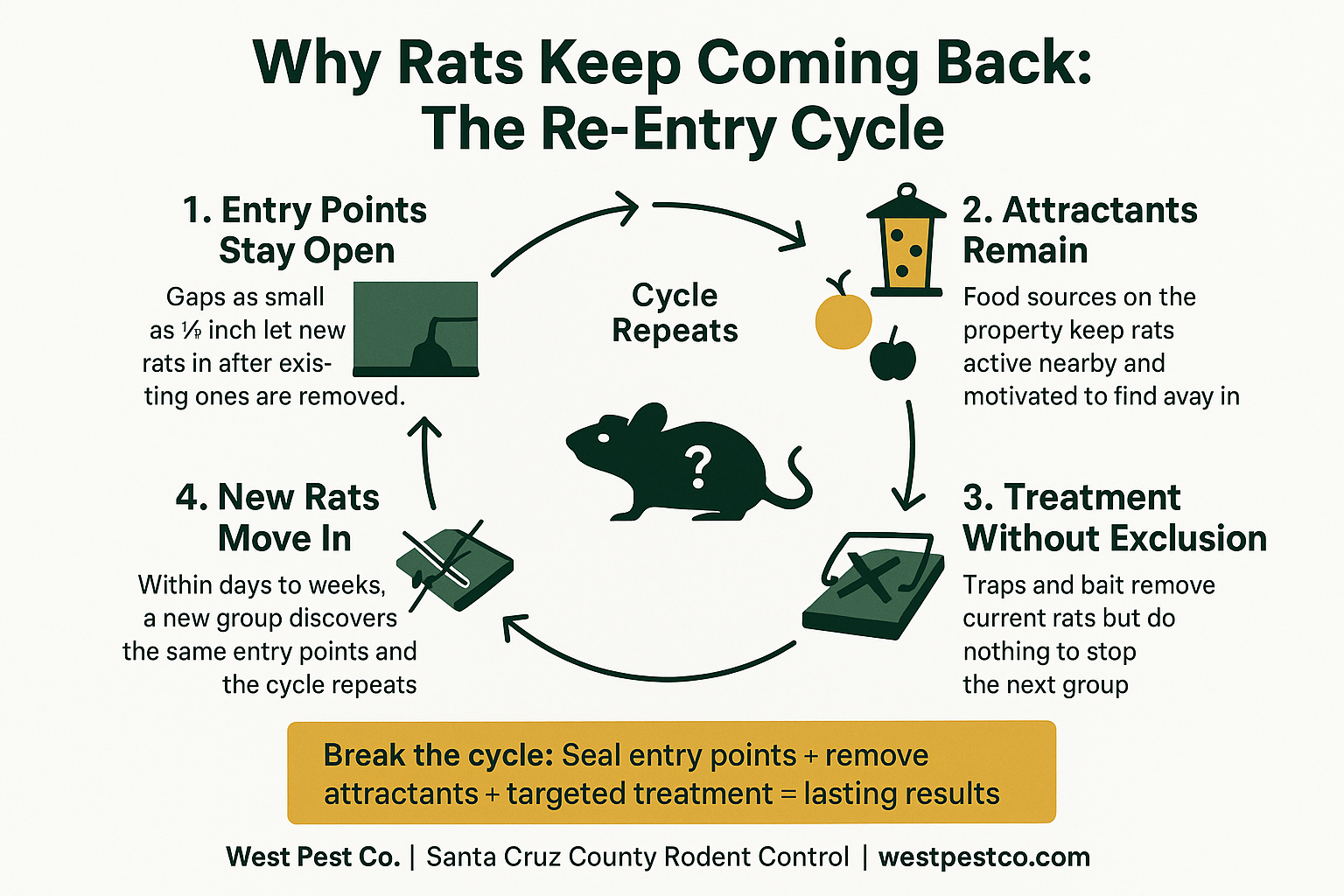
The Rat Re-Entry Cycle — Why They Keep Coming Back
This infographic breaks down the four-stage cycle that causes repeat rat problems in Santa Cruz homes, and where to interrupt it.
What a Real Rodent Treatment Actually Looks Like — and What It Doesn’t
A lot of homeowners have tried hardware store snap traps or bait stations from the big box stores on Soquel Avenue or in Watsonville. These products can work, but they’re designed to kill individual rats — they’re not a system.
A professional rodent treatment addresses three things together:
1. Population reduction — using the right trap or bait placement based on rat species and activity patterns, not just dropping stations near obvious signs.
2. Exclusion — physically sealing the gaps that allowed entry. This often involves steel wool, hardware cloth, foam sealant, and in some cases replacing damaged vent screens. Exclusion materials matter — rats will chew through standard foam or thin mesh.
3. Follow-up monitoring — checking stations, confirming activity has stopped, and catching new access points before they become a re-entry problem.
Skipping any one of these steps is usually why people end up calling a professional after two or three rounds of DIY attempts. If you’re already at that point, this guide on when to stop handling pest problems yourself walks through the decision clearly.
It’s also worth understanding that professional-grade rodent control in Santa Cruz County typically runs $150–$350 for an initial treatment, depending on the size of the home and the scope of exclusion work needed. Ongoing monitoring visits, if needed, usually fall in the $75–$125 range. Those numbers vary — a larger home in the hills above Scotts Valley with significant attic activity will cost more than a straightforward garage treatment in Capitola.
DIY Rodent Control vs. Professional Treatment — What’s Actually Different
Here’s a side-by-side look at what each approach covers, and where the gaps typically are.
| What It Covers | DIY Approach | Professional Treatment |
|---|---|---|
| Population reduction | Snap traps, bait from hardware stores | Species-specific trap/bait placement based on activity evidence |
| Entry point identification | Usually missed or only partially addressed | Full exterior and interior inspection for gaps ½ inch and larger |
| Exclusion (sealing gaps) | Rarely completed — materials often wrong | Steel mesh, hardware cloth, proper sealants installed correctly |
| Attractant assessment | Up to the homeowner to figure out | Technician identifies specific attractants on the property |
| Follow-up monitoring | None built in | Scheduled return visits to confirm resolution |
| Typical cost | $20–$80 in supplies per attempt | $150–$350 initial; $75–$125 per follow-up visit |
The Santa Cruz-Specific Factors That Make This Harder Than It Looks
Rodent problems on the Central Coast don’t follow the same seasonal logic as inland California. In Fresno or Sacramento, rodent pressure typically spikes in fall and eases in spring. In Santa Cruz County, the mild winters mean rats stay active and reproductive almost year-round.
Roof rats — the species most common in the tree-heavy neighborhoods of Santa Cruz, Aptos, and Ben Lomond — are exceptional climbers. They use overhanging tree branches as highways onto rooftops, which is why a ground-level inspection alone often misses the actual entry point. Branches within three feet of a roofline are a significant risk factor.
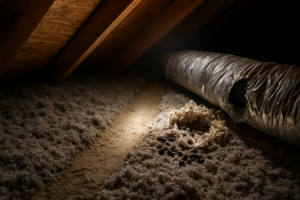
Older homes also present specific challenges. Many properties in the Westside, the Seabright neighborhood, and in unincorporated areas like Corralitos and Las Lomas have pier-and-beam foundations with open crawl spaces that are difficult to fully secure without dedicated exclusion work. These are also the homes where a rat problem in the attic can go undetected for months before the homeowner hears anything.
If you’re unsure whether what you have is a new infestation or ongoing activity from the same population, a professional inspection is the clearest way to get an answer. The animal in attic page on the West Pest Co. site covers what to look for when the sounds and signs are ambiguous.
Frequently Asked Questions About Rats Coming Back
How fast can a new group of rats move in after the old ones are gone?
Faster than most people expect. If entry points stay open, new rats can begin exploring the same access routes within days to a few weeks of the previous population being removed. Rats communicate through scent trails, and those trails persist even after the original animals are gone — which is part of why the same spots keep getting used.
Can rats come back if I’ve already had the entry points sealed?
Yes, if the sealing wasn’t done with the right materials. Rats can chew through standard spray foam, thin plastic sheeting, and even some rubber weatherstripping. Effective exclusion uses steel wool packed into gaps before sealing, or hardware cloth with openings no larger than ¼ inch. If the material can be chewed through, it’s only a matter of time.
My neighbor has rats. Is that why mine keep coming back?
It’s a factor, but not an excuse to give up on your own property. Rats have a home range of roughly 100–300 feet, so a neighboring infestation absolutely puts pressure on surrounding homes. But a properly sealed and de-attractant home is much less likely to be colonized even when rats are active nearby. Your neighbor’s problem makes good exclusion on your own property more important, not less.
Is it safe to use bait stations around kids and pets?
Professional-grade bait stations are tamper-resistant and designed so children and pets can’t access the bait inside. That said, placement matters — a technician will position stations in areas that limit incidental contact. If you’re using consumer bait products from the hardware store, those often lack the same containment design. When in doubt, discuss placement and product choice with your technician directly.
Do I need to do anything to my yard, or just seal the house?
Both matter. Sealing the structure keeps rats out of your living space. But if the yard remains a comfortable habitat — with food, water, and shelter — rats will keep living close enough to keep testing your home. Addressing fallen fruit, dense ground cover near the foundation, open compost, and outdoor pet food makes the whole property less hospitable.
How do I know if I have roof rats or Norway rats — and does it matter?
Roof rats are sleek, with large ears and long tails — they climb well and tend to nest in attics, trees, and upper walls. Norway rats are stockier, with shorter tails, and prefer ground-level burrows near foundations. It matters for treatment because bait station placement and trap height need to match where each species travels. A technician can usually identify the species from droppings, activity patterns, and entry point location alone.
Still Hearing Rats After Treatment?
If rats have come back after trapping, baiting, or a previous treatment, West Pest Co. can walk through your property and identify exactly where the breakdown happened — whether it’s an unsealed entry point, a persistent attractant, or an incomplete treatment the first time around. Matthew West has been voted Best Pest Control in Santa Cruz two years running for a reason: he explains what he finds and fixes the actual problem, not just the symptom. Call (831) 430-8402 or visit westpestco.com to get answers from someone who knows Santa Cruz County rodent behavior firsthand.