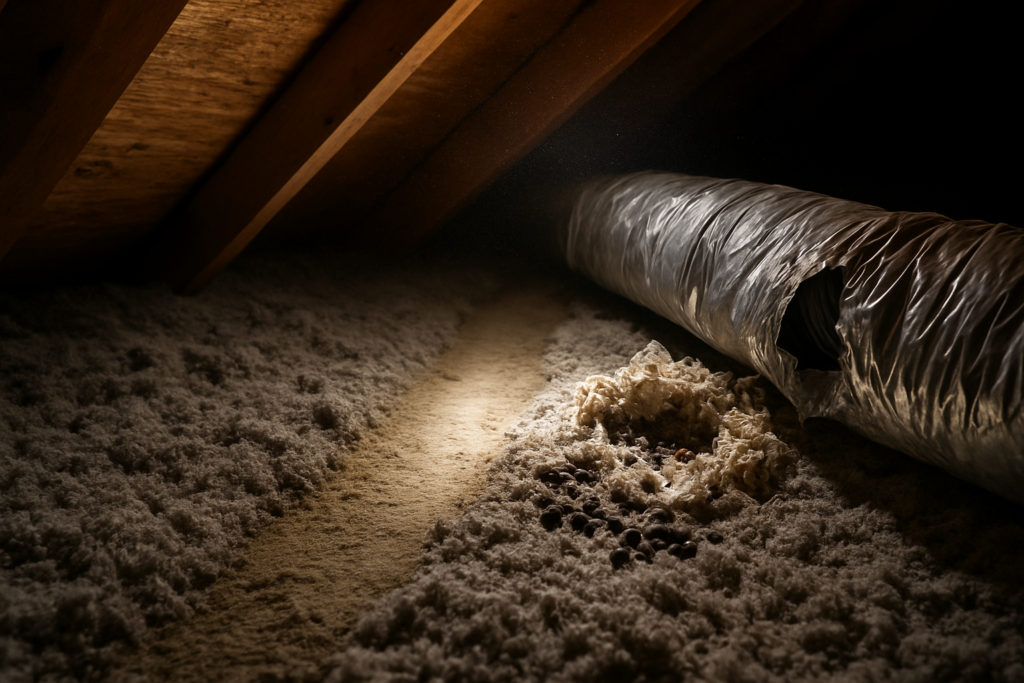
Direct Answer: Most Santa Cruz homes benefit from a pest inspection once a year, but homes near wooded areas, creek corridors, or with a history of rodents or ants may need one every six months.
Most Santa Cruz homeowners don’t think about pest inspections until something is already wrong — a trail of ants across the kitchen counter, scratching sounds in the attic at night, or a wasp nest that appeared seemingly overnight. By the time the problem is visible, it usually isn’t new.
Santa Cruz County has a climate that works against homeowners in this regard. Year-round fog and coastal moisture keep the soil damp, which draws ants almost every month of the year. Mild winters mean cockroaches and spiders stay active when they’d go dormant in drier, colder parts of California. Rodents start pushing indoors earlier in fall because the temperatures drop faster on the coast than they do just a few miles inland.
The question of how often a home needs a pest inspection isn’t one-size-fits-all. It depends on where your home sits, what’s happened before, and what the structure itself looks like. This article breaks down the honest answer — including when once a year is plenty and when you probably shouldn’t wait that long.
Why Santa Cruz Homes Don’t Follow the Same Schedule as the Rest of California
Pest control advice written for Sacramento or Los Angeles doesn’t translate cleanly to Santa Cruz. Those climates have hard seasonal breaks — cold winters that slow insect activity, dry summers that reduce rodent cover. Santa Cruz doesn’t get those natural resets.
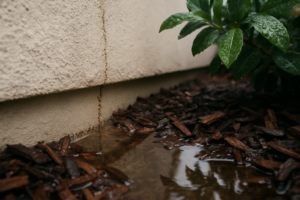
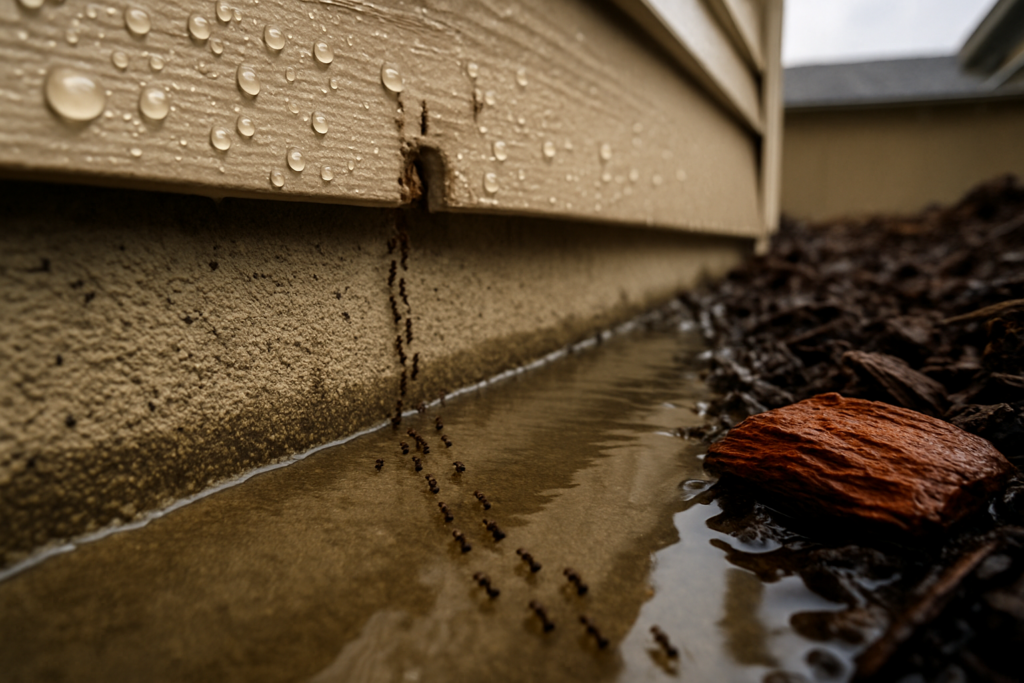
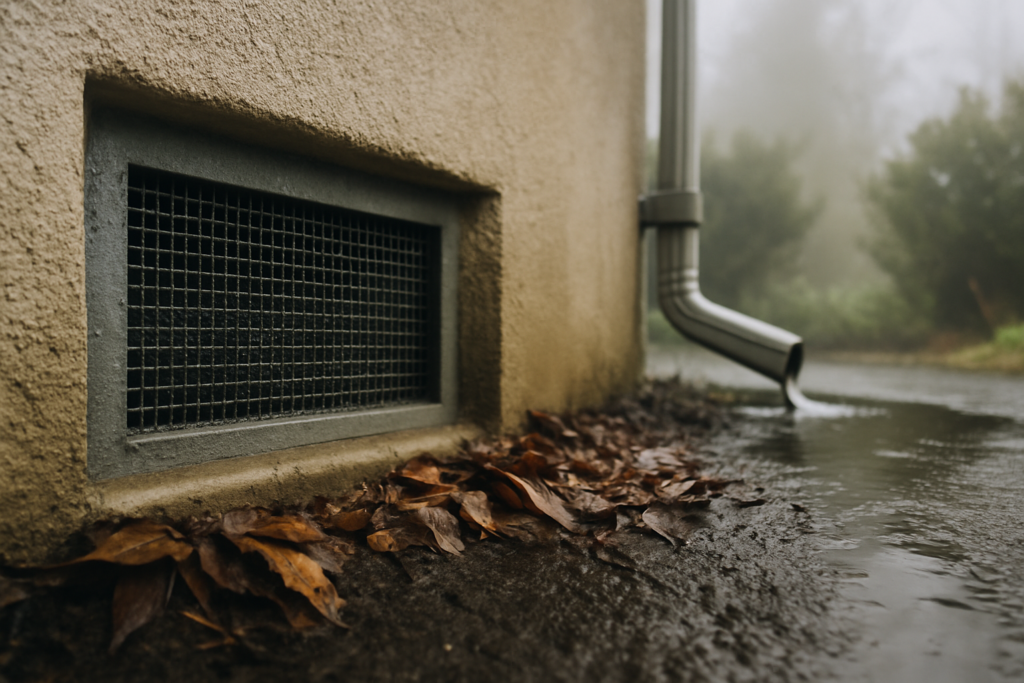
The fog belt that runs through the city of Santa Cruz, Aptos, and Soquel keeps ground moisture elevated even in late summer. That moisture is exactly what Argentine ants need to stay active and keep expanding their colonies. It also softens wood over time, which makes older homes along the Westside or near the San Lorenzo River more vulnerable to entry points developing around door frames and foundation sills.
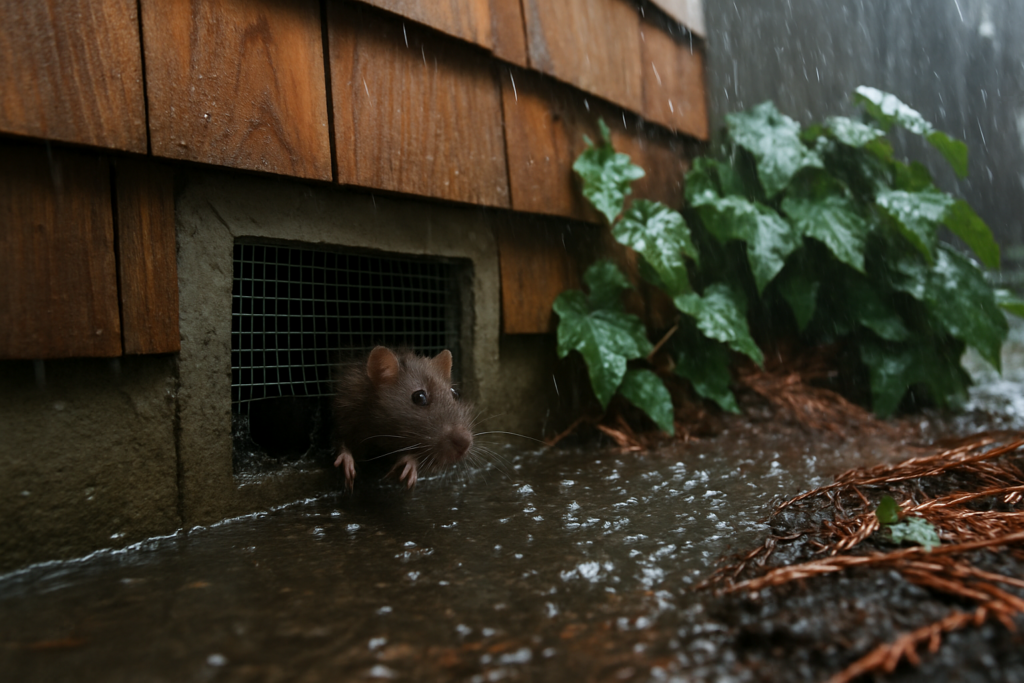
Rodents are a good example of how the local calendar shifts things. In inland California, rats and mice typically start seeking shelter in October. In Santa Cruz County — especially in hillside neighborhoods like Scotts Valley or Ben Lomond where tree canopy is dense — rodent pressure often picks up in late September and can persist straight through April if an entry point is available.
If you’ve ever wondered what pest inspectors look for that homeowners usually miss, a lot of it comes down to these entry points — gaps that aren’t obvious to the untrained eye but are very obvious to a rat looking for a warm place to nest.
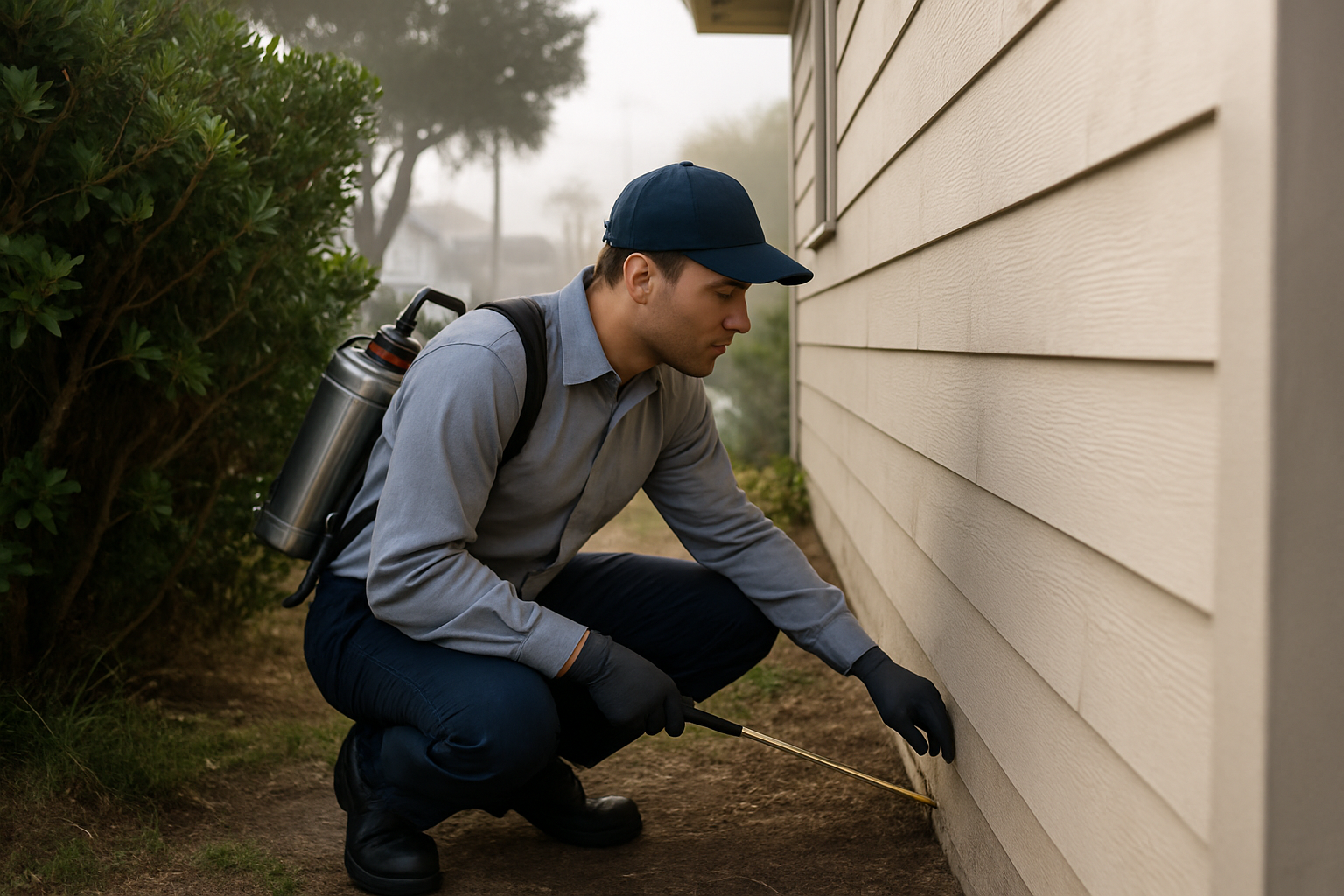
The Honest Answer: What Drives Inspection Frequency
For most Santa Cruz County homeowners, once a year is a reasonable baseline. A yearly inspection catches developing problems before they become expensive ones — a small rodent entry point before it becomes a full attic infestation, or early ant activity around a crawlspace before colonies establish inside walls.
But that baseline shifts based on a few specific factors. Here’s what actually changes the math:
- Your home’s age. Homes built before 1980 — common throughout the Seabright, Beach Flats, and downtown Santa Cruz neighborhoods — tend to have more gaps, older weatherstripping, and wood that has shifted enough to create entry points. Older homes often need inspection every 6 months.
- Proximity to vegetation or water. If your yard backs up to a creek, a greenbelt, or dense native vegetation (common in Aptos Hills, Corralitos, and the hills above Scotts Valley), pest pressure from rodents, spiders, and ants is consistently higher. Annual isn’t enough.
- Previous infestations. A home that had a rat problem in the last two years should be looked at more frequently than one with a clean history. Rodents return to the same entry points. So do ants — as explained in more detail in this piece on why ants keep coming back even after treatment.
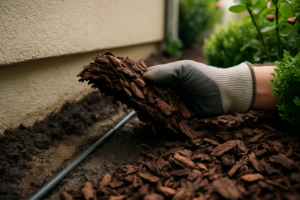
- Active landscaping changes. Adding mulch beds, removing trees, or changing irrigation can shift pest behavior quickly.
For homes that check two or more of those boxes, twice a year is a better default than once.
Pest Inspection Frequency by Home and Property Type
Use this as a rough guide — it won’t fit every situation perfectly, but it reflects what tends to come up in the field across Santa Cruz County.
| Home/Property Type | Suggested Frequency | Primary Concern |
|---|---|---|
| New construction, low vegetation, clean history | Once a year | General prevention check |
| Pre-1980 home, standard lot | Every 6–12 months | Entry points, rodents, ants |
| Near creek, greenbelt, or dense tree cover | Every 6 months | Rodents, spiders, ants year-round |
| Previous rodent or ant infestation | Every 6 months for 2 years | Re-entry and colony re-establishment |
| Commercial property or rental unit | Quarterly to semi-annually | Cockroaches, rodents, regulatory compliance |
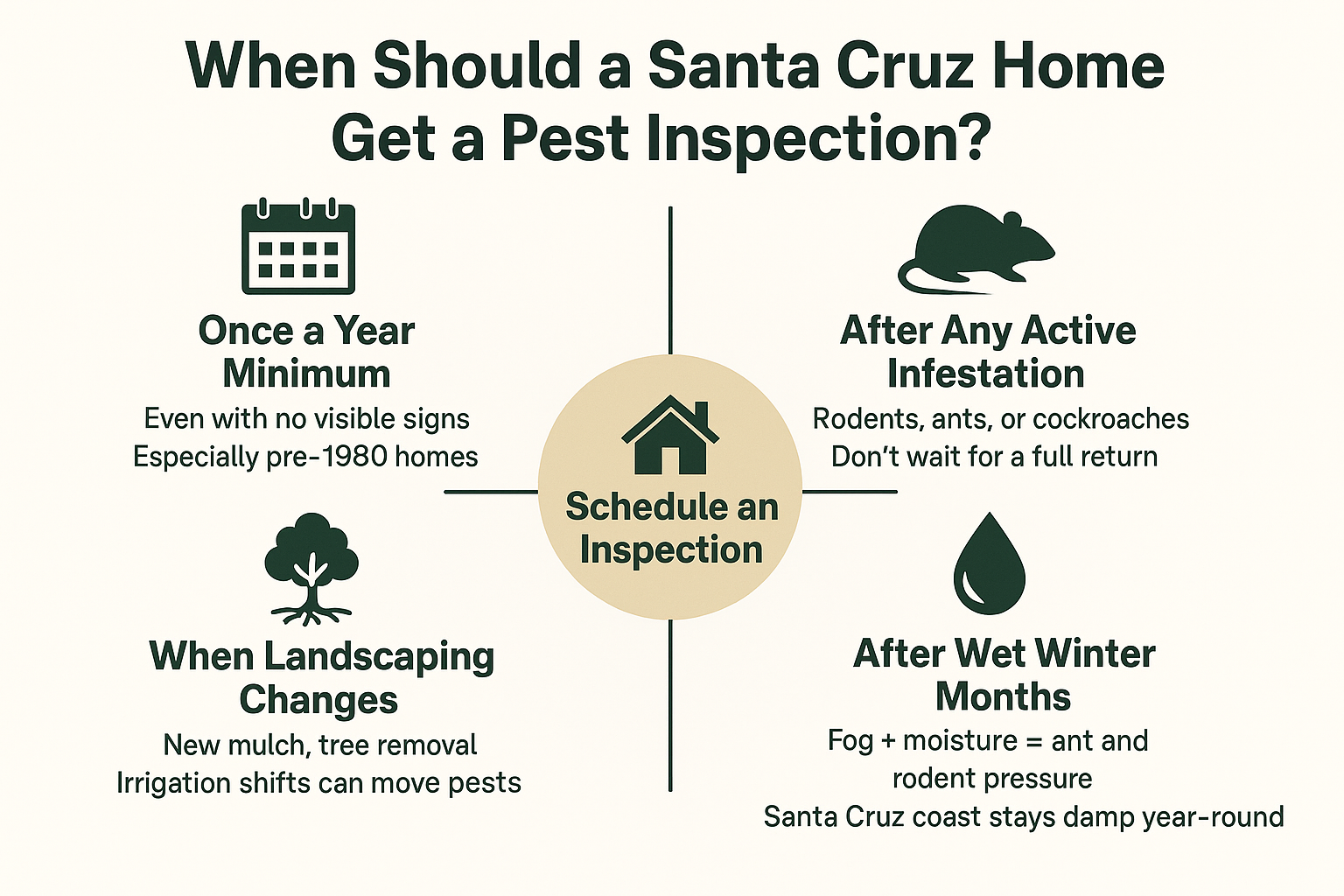
When to Schedule a Pest Inspection in Santa Cruz County
This infographic breaks down the four main triggers that should prompt a homeowner to book an inspection — regardless of when the last one happened.
What a Pest Inspection Actually Costs in Santa Cruz — and What You’re Paying For
A standard residential pest inspection in Santa Cruz County typically runs $75 to $150 depending on the size of the home and whether the inspector is checking just the interior, or the full exterior and crawlspace as well.
Some companies fold the inspection cost into a treatment quote, which can make pricing feel unclear. It’s worth asking upfront whether the inspection fee is separate from any treatment cost — and whether you’ll get a written summary of what was found. A verbal “looks fine” isn’t worth much if a problem develops two months later.
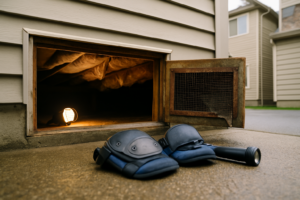
What you’re actually paying for in a good inspection is systematic access — someone checking the crawlspace, the attic hatch, the garage perimeter, the weep holes in your stucco, and the gap behind your dishwasher. These are places homeowners typically miss and where early infestations almost always start.
For homeowners who are on the fence about whether to call a professional at all, this breakdown on when to stop handling a pest problem on your own is worth reading before making that call.
Signs That Mean You Shouldn’t Wait for Your Next Scheduled Inspection
A scheduled inspection is proactive. But certain things should move a homeowner to pick up the phone before that date arrives. These aren’t vague warning signs — they’re specific patterns that experienced technicians see regularly in Santa Cruz homes.
- Scratching or movement sounds in walls or the attic, especially between dusk and midnight. Rats are nocturnal. This pattern almost always means rodents, and every week that passes means more damage.
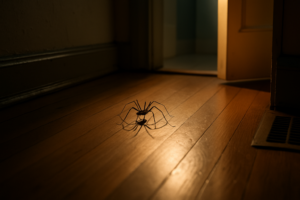
- A sudden increase in spider activity indoors. One or two spiders is normal. A sharp uptick — especially of larger spiders in corners, behind appliances, or in a garage — often means something else in the home is drawing them in. The Santa Cruz homeowner’s guide to spiders covers what species to watch for.
- Ants appearing in multiple rooms, not just the kitchen. When ants spread to bathrooms, bedrooms, or laundry areas, the entry point is usually somewhere structural — not just an open food container.
- Any sign of cockroach activity — droppings, shed skins, or a single roach seen in daylight. Daytime sightings suggest crowding, which means the population is larger than a few individuals.
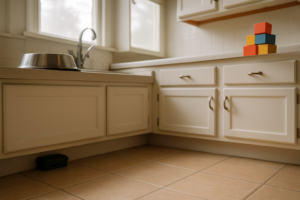
- A musty smell in the crawlspace or near base cabinets that wasn’t there before. Rodent urine has a distinct odor, and it often becomes detectable before the infestation is otherwise visible.
If two or more of these are happening at once, the answer to “should I call?” is yes.
Frequently Asked Questions About Pest Inspections in Santa Cruz
Do I need a pest inspection if I haven’t seen any pests recently?
Yes, and that’s actually the best time to have one. Most infestations are not visible until they’re established. Rodents in attics, ants trailing along interior wall voids, and cockroaches behind appliances can be present for weeks before a homeowner notices anything. A proactive inspection while things look fine is far less expensive than a reactive one after damage is done.
How long does a typical pest inspection take?
For a standard single-family home in Santa Cruz County, expect 45 minutes to 90 minutes depending on property size and whether a crawlspace is involved. Homes with large lots, extensive landscaping, or detached structures like sheds or garages take longer.
Is a pest inspection the same as a termite inspection?
No — and this distinction matters. A general pest inspection covers active insects, rodents, and structural entry points. Termite inspections are a separate service entirely, typically required for real estate transactions. West Pest Co. does not offer termite inspections — if that’s what you need, you’ll want to contact a licensed termite company. For everything else, a general inspection covers the full picture.
Can I do my own pest inspection instead of calling someone?
You can do a basic walkthrough, and it’s worth doing — checking door sweeps, looking for gaps around pipes, and monitoring areas where you’ve seen activity before. But the places pests actually enter are usually not visible without getting into crawlspaces, checking attic vents, or knowing what rodent rub marks or ant trails look like in their early stages. A homeowner walkthrough and a professional inspection aren’t really the same thing.
Are eco-friendly treatments available after an inspection finds a problem?
Yes. Targeted, eco-friendly treatment approaches are available for most common Santa Cruz County pests — including rodents, ants, cockroaches, and spiders. The right approach depends on what’s found during the inspection and the specifics of the home. What makes eco-friendly pest control work better than DIY remedies is a good read if you’re weighing your options.
Do I need to do anything to prepare my home before an inspection?
Clear access to the crawlspace hatch, attic entry, and the areas under sinks and behind appliances if possible. It also helps to write down anything you’ve noticed — sounds, locations, timing — before the inspector arrives. That information shapes where the technician focuses and often speeds up the process significantly.
Ready to Know What’s Actually Going On in Your Home?
West Pest Co. serves homeowners throughout Santa Cruz County — from the Westside and Seabright to Aptos, Capitola, Scotts Valley, and the hills above Ben Lomond. Matthew West has been voted Best Pest Control in Santa Cruz two years running, and the business carries a 5-star Google rating built on honest assessments and fast response. If you’re due for an inspection or something doesn’t feel right, give Matthew a call directly at (831) 430-8402 or visit westpestco.com to get in touch.