Direct Answer: Fresh rodent droppings are dark, soft and shiny. Old ones are gray and crumble to dust. To be sure, clean the area, then check it again after two or three nights.
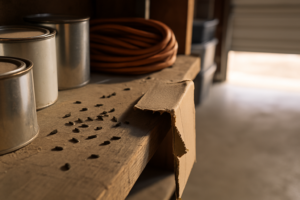
You go into the garage for a bike pump and there are droppings along the shelf. Now you are standing there trying to figure out if you are looking at this week’s problem or last winter’s leftovers.
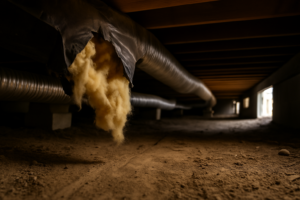
I get this question constantly. One Santa Cruz homeowner wrote in after already pulling insulation out of the crawlspace and attic from a past rodent issue, saying they were not sure if it was still active but were pretty sure there were rodents in the garage right now.
That one judgment decides everything. If it is old, you need a careful cleanup. If it is live, you need to find out where they are getting in before the activity moves past the garage wall.
Reading the Evidence: Fresh Versus Old
Most of what you need is visible without tools. You just have to know what you are comparing.
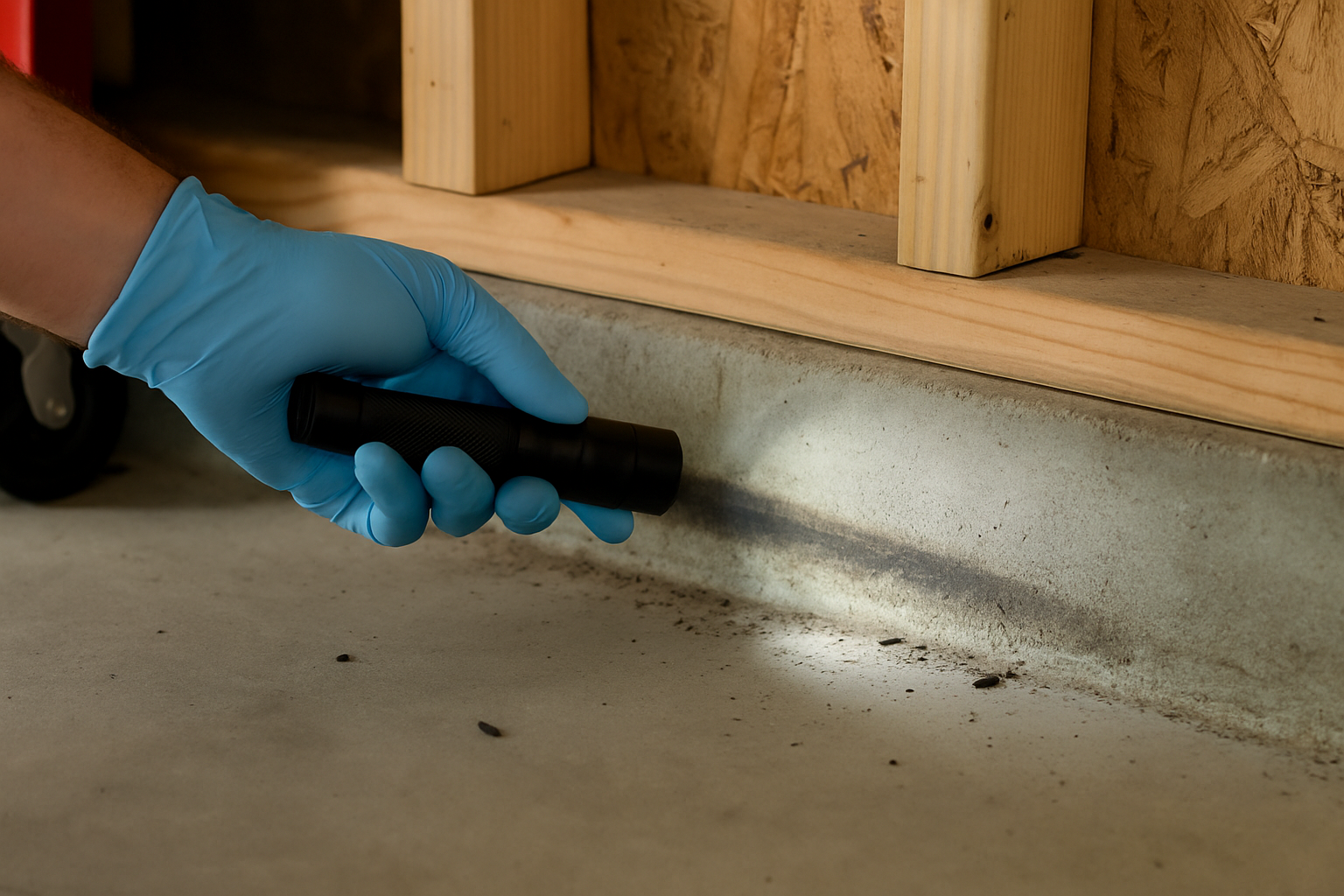
Droppings. Fresh ones are dark, almost black, with a slight shine and a soft feel. Old ones fade to gray or brown and crumble to powder if you press them with a stick. Never test them with your bare hand.
Chew marks. New gnawing on cardboard, wood or plastic looks bright and raw, with pale fuzzy fibers at the edge. Older damage is dull and has a film of dust sitting in it.
Rub marks. Rats follow the same path every night and leave a dark greasy smear along baseboards, pipes and the bottom of studs. An active run looks polished. An abandoned one looks dusty and flat.
Smell. A live population in a closed garage usually brings a faint ammonia smell near the nesting area. Old activity does not.
If you see dark soft droppings plus bright chew marks in the same corner, I would treat that as current until proven otherwise.
The Two-Night Test Anyone Can Run
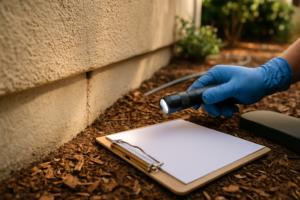
When the signs are mixed, stop guessing and run a test. This is the same thing I do on an inspection, and it takes about ten minutes to set up.
- Clean the suspect area completely. Wipe down the shelf or sweep the corner so you start from zero. Mist droppings with a disinfectant spray first instead of sweeping them dry.
- Dust a thin layer of flour or baby powder across the floor in front of the suspected run, about the width of a sheet of paper. Keep it light. A heavy pile makes a mess and tells you nothing.
- Tape a small paper tab over any hole you are suspicious about, like the gap around a dryer vent or water heater pipe. A sticky note folded over the opening works.
- Leave the lights off and the door shut for two or three nights.
Then go look. Tracks in the flour, a chewed or shoved-aside paper tab, or new droppings on the cleaned shelf means you have live activity. Clean flour and an untouched tab after three nights means you are most likely looking at history.
For what to do once you confirm fresh droppings, here is what to do after you find rodent droppings without stirring up dust.
Old Evidence Versus Active Evidence at a Glance
Here is the quick comparison I run through on a garage walkthrough.
| Sign | Looks Old | Looks Active |
|---|---|---|
| Droppings | Gray, dry, crumbles to powder | Dark, soft, slight shine |
| Chew marks | Dull edges with dust settled in | Bright raw edges, loose fibers |
| Rub marks | Dull, dusty smear | Dark and polished looking |
| Nesting material | Flattened, dusty, no odor | Fluffy, loose, ammonia smell nearby |
| Flour test after 3 nights | Untouched | Tracks or tail drag lines |
| Paper tab over a hole | Still in place | Chewed, torn or pushed aside |
Why the Garage Is Usually the First Room They Take
Homeowners often tell me they are embarrassed, like rodents in the garage mean they failed at housekeeping. It is almost never about that. It is about how the building is put together.
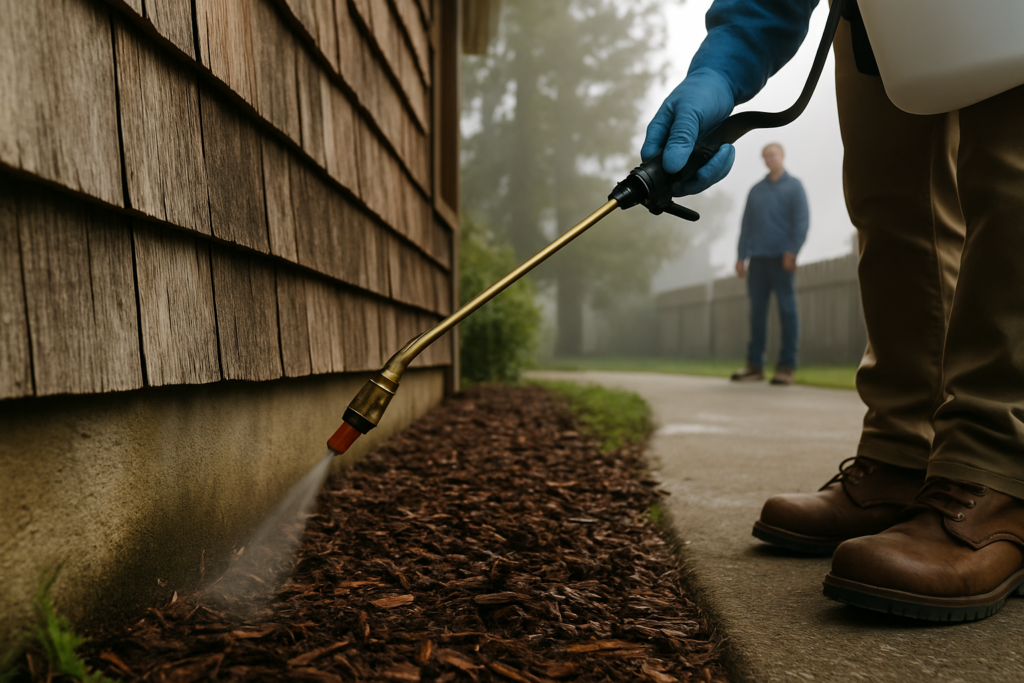
Santa Cruz County’s own rodent prevention guidance points at the same weak spots I find over and over, and you can read the full county rodent prevention booklet for the details. On a Central Coast garage, the usual list looks like this:
- The rubber seal under the roll-up door. Coastal damp and sun cycling make it stiff and wavy, so daylight shows through at the corners.
- Foundation vent mesh that has rusted loose or been pushed in.
- The gap where stucco meets the slab, especially on older homes in Soquel, Capitola and the Westside.
- Unsealed holes around the water heater, dryer vent or electrical conduit.
- Ivy and dense shrubs growing right up the wall. The county recommends trimming plants roughly 10 inches off the ground and back from the house.
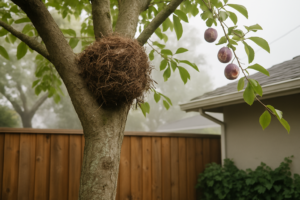
- Stacked cardboard boxes and open pet food, plus spilled bird seed and fallen fruit outside the door.
A rat only needs an opening about the size of a quarter. A mouse needs far less. So a closed garage door proves nothing on its own.
One more local wrinkle: the fall push indoors here tends to start in September, well before any real cold. Warm dry weeks dry out the greenbelt and they go looking for water.
Where Rodents Get Into a Central Coast Garage
These are the six openings I check first on almost every garage inspection.
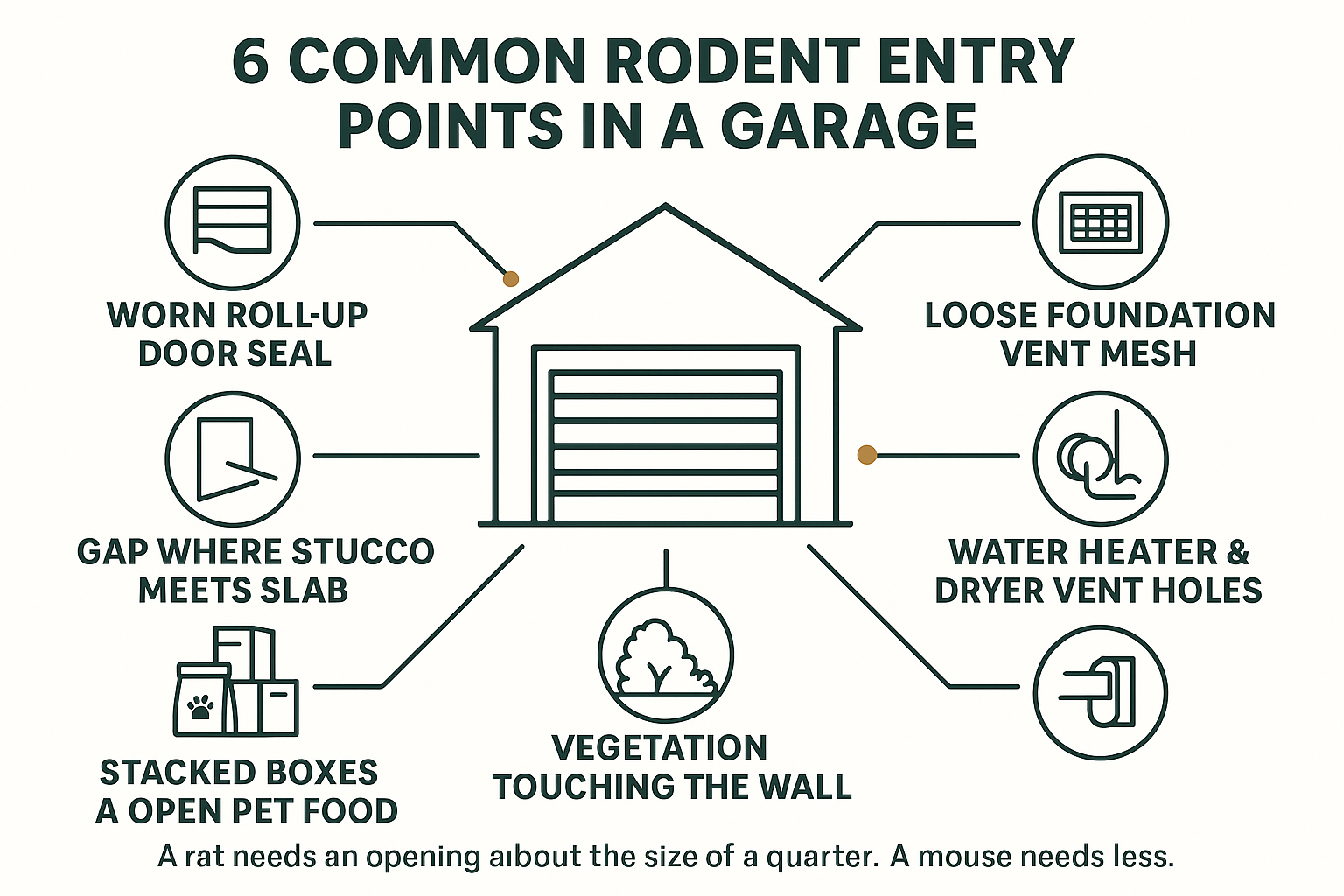
The Garage Is a Staging Area, Not the Destination
This is the part I want homeowners to understand. Rodents rarely stop at the garage. It is warm, quiet and nobody goes in at night, so it becomes the base camp.
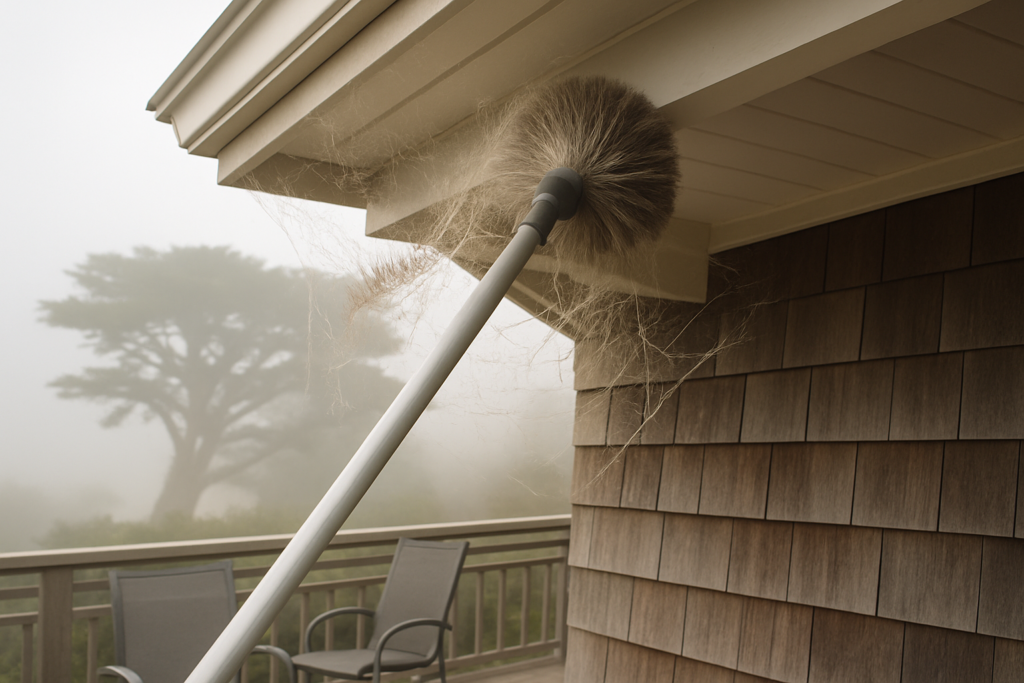
From there, a shared garage wall, an open attic connection over the garage, or a plumbing chase lets them travel into the rest of the house. I have had callers describe noises in walls and baseboards on the opposite side of the house from where they set their traps.
Sounds tell you a lot if you pay attention to timing and direction:
- Light scratching overhead in the early evening usually means activity in the attic or ceiling space, often starting right after dusk.
- A heavier thump or scurry along a joist around 2am points to a larger rat moving a regular route.
- Scratching low in a wall usually means they came up from a crawl space or in at the slab line.
Before anyone opens a hatch, do this: stand in the quiet house at dusk, mark on paper the room and the height where you hear it, then repeat two more nights. A pattern shows up fast. If it is consistently overhead, the sounds and signs of rats in the attic will help you narrow it down. If it is low and underneath, reading the crawl space signs is the better starting point.
Why Poison Is Not the Answer Here Anymore
Poison is the first thing most people bring up, so let me be straight about it. California has already moved the whole industry away from it.
AB 1788, signed in 2020, banned most uses of second-generation anticoagulant rodenticides. AB 2552, signed in September 2024 and effective January 1, 2025, extended that to first-generation compounds including chlorophacinone and warfarin, with violations carrying fines up to $25,000 per day.
So a no-bait approach is not a boutique preference around here. It is the mainstream option.
There is a practical upside too. Trapping tells you exactly what was removed and how many, which is the only honest way to know when a garage is clear. And a rodent that dies inside a wall from bait leaves an odor problem in an attached garage that you will be living with for weeks.
What a Professional Garage Inspection Actually Buys You
If you have already set six traps and caught nothing, the traps are not the problem. The placement is, and placement depends on knowing the runs.
What an inspection is really worth is the diagnosis:
- Where they are getting in, including openings most homeowners never think to look at
- Which openings actually matter versus the ones that look bad but are not in use
- What is feeding and watering them on the property
- Whether activity has already moved past the garage into walls or the attic
Our reviews tend to credit the inspection more than anything else. One Santa Cruz customer put it plainly: “His inspection found one unknown access point for rodents.” That one find is usually the difference between catching a few and catching the same few every month.
I will also be honest about the ceiling on results. A wooded property in Ben Lomond or a lot backing a greenbelt on the Westside stays under outside pressure no matter what happens indoors. The goal is removing what is inside and reducing the reasons more show up, and what the exclusion and sealing process actually looks like explains why closing openings matters more than any single treatment.
Frequently Asked Questions About Rodents in the Garage
How long do rodent droppings stay looking fresh?
In a cool, damp Santa Cruz garage, droppings can hold a dark color for several days to a couple of weeks, longer than they would inland. That is exactly why I do not trust appearance alone. Clean the area and re-check after two or three nights and you get a real answer.
I set six traps in the garage and caught nothing. Does that mean they are gone?
Not necessarily. Empty traps often mean the traps are sitting in open floor space instead of on the run. Rodents hug walls and edges, so traps need to sit flush against the wall, perpendicular to it, in the path the rub marks show.
What does a garage rodent inspection usually cost in Santa Cruz County?
It varies quite a bit depending on the size of the property, how much crawl space and attic need checking, and whether treatment follows. Market context on the Central Coast generally puts a standalone rodent inspection in the low hundreds, with ongoing work priced separately. Call for an exact number on your specific home rather than relying on a range.
Is it safe to clean up the droppings myself?
It can be, as long as you do not sweep or vacuum them dry. Mist the area with a disinfectant, let it sit, then wipe with paper towels while wearing gloves and a mask. Dry sweeping sends particles into the air, which is the part you want to avoid.
Should I handle the garage before I have insulation replaced?
Yes. Putting new insulation into a crawlspace or attic while activity is still live is money spent twice. Get the inside cleared and the openings identified first, then schedule the insulation work.
Still Not Sure If the Garage Activity Is Live?
If you have run the flour test and the answer came back active, or the signs are mixed enough that you would rather have someone look, West Pest Co. does garage rodent inspections throughout Santa Cruz County. You can reach us at (831) 430-8402 or at westpestco.com, and we will walk you through what we find and why it matters.