Direct Answer: California opened public comment on options to reduce risks from fipronil flea and tick products. It is a review, not a ban. The products remain legal and on shelves today.
You saw a headline about California reviewing flea drops, and now the box in your bathroom drawer feels like a question instead of a routine. I get that call more than people think, usually from someone with two cats and a dog who wants to know if she should stop using the tubes tonight.
Here is the short version before anything else: this is a review, not a ban. Nothing with fipronil in it has been pulled off a shelf in Santa Cruz County, and the state has not announced a removal date.
What the state did do is open the floor for public input on ways to reduce risk, and the reason behind it has a lot to do with water. In a county where people ask about downstream effects before they ask about price, that detail matters. I will walk through what was posted, what is being considered, and the part of a flea problem that no product on your pet was ever going to handle.
What the fipronil flea and tick products California review actually says
On September 16, 2026, California’s Department of Pesticide Regulation posted a draft memo listing options to reduce risks from fipronil pet flea and tick products. Public comment runs through November 16, 2026.
A draft options memo is exactly what it sounds like. The agency is asking people what they think about a list of possible changes before deciding whether to pursue any of them. You can read the state’s own announcement on the Department of Pesticide Regulation’s site.
The options put up for feedback include:
- Limits on how often a product can be applied
- Lower application rates
- A waiting period before bathing a treated pet
- Restrictions on use by pet groomers
- A restricted material designation, which would require a permit
- A voluntary stewardship and education program
The same announcement noted 89 alternative spot-on products already sold in California, plus medicated collars, sprays, shampoos, and oral medications.
I want to be clear about the line I do not cross. What goes on your animal is a conversation between you and your veterinarian. I treat homes and yards in Santa Cruz, Aptos, and Soquel, and I have opinions about products on floors where cats sleep, but I am not the person who picks your dog’s monthly treatment.
The reason this review exists is water
On July 31, 2026, the state published a final aquatic risk memo for fipronil pet products. It looked at how the ingredient reaches wastewater and what that can mean for aquatic life. The September options carried that same thread forward.
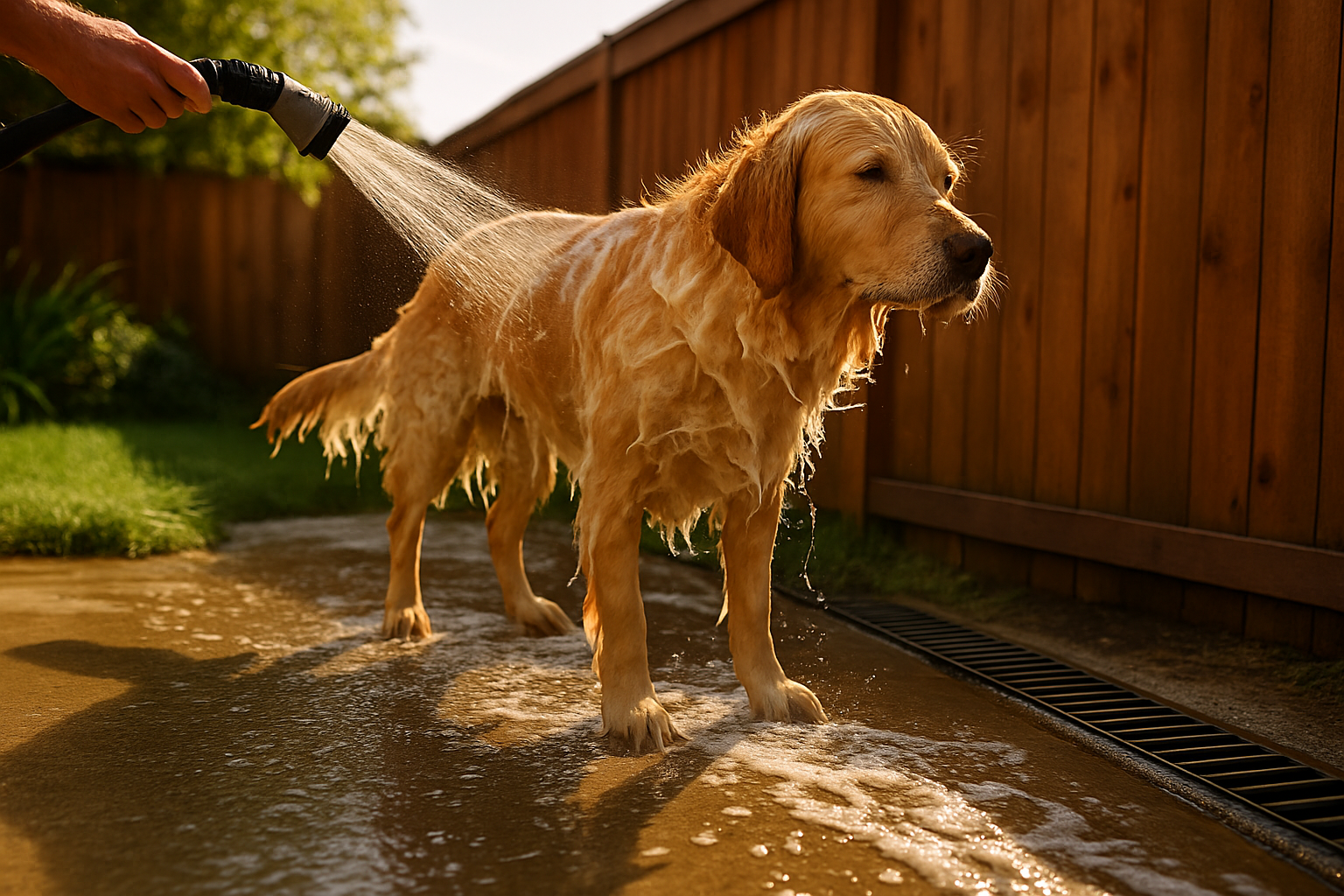
That is why bathing timing and groomer use ended up on the list. Rinse water from a treated pet has to go somewhere. A tub drain feeds the sewer system. A hose bath on the driveway feeds a storm drain, and in this county storm drains are short trips to the San Lorenzo River, Soquel Creek, or the harbor.
If you live within a few miles of any of those, you already know where the water ends up. Monterey Bay is a national marine sanctuary, and a lot of my customers chose this county partly because of that.
I am not here to make anyone feel guilty about bathing the dog. I would rather lay out the path the water takes and let you decide what you want to do with that.
One review we received put the reason people call here better than I could. The customer described us as “the only one who seemed educated on and aware of the long-term ecosystem effects of poison.” That is Kelsey’s wording, not mine, and it is a fair description of the questions I field on a weekly basis.
The options on the table, in plain language
Here is each option the state listed for public comment and what it would mean day to day if it ever moved forward. None of these are in effect right now.
| Option under review | What it would change for a pet owner | Status today |
|---|---|---|
| Application frequency limits | Fewer doses allowed per year than current labels permit | Draft option only |
| Lower application rates | Less active ingredient per tube or dose | Draft option only |
| Bathing waiting period | A set number of days before you could bathe a treated pet | Draft option only |
| Groomer use restrictions | Limits on salons applying these products | Draft option only |
| Restricted material designation | A permit requirement, which would change who can buy it | Draft option only |
| Voluntary stewardship program | Education and labeling efforts instead of hard rules | Draft option only |
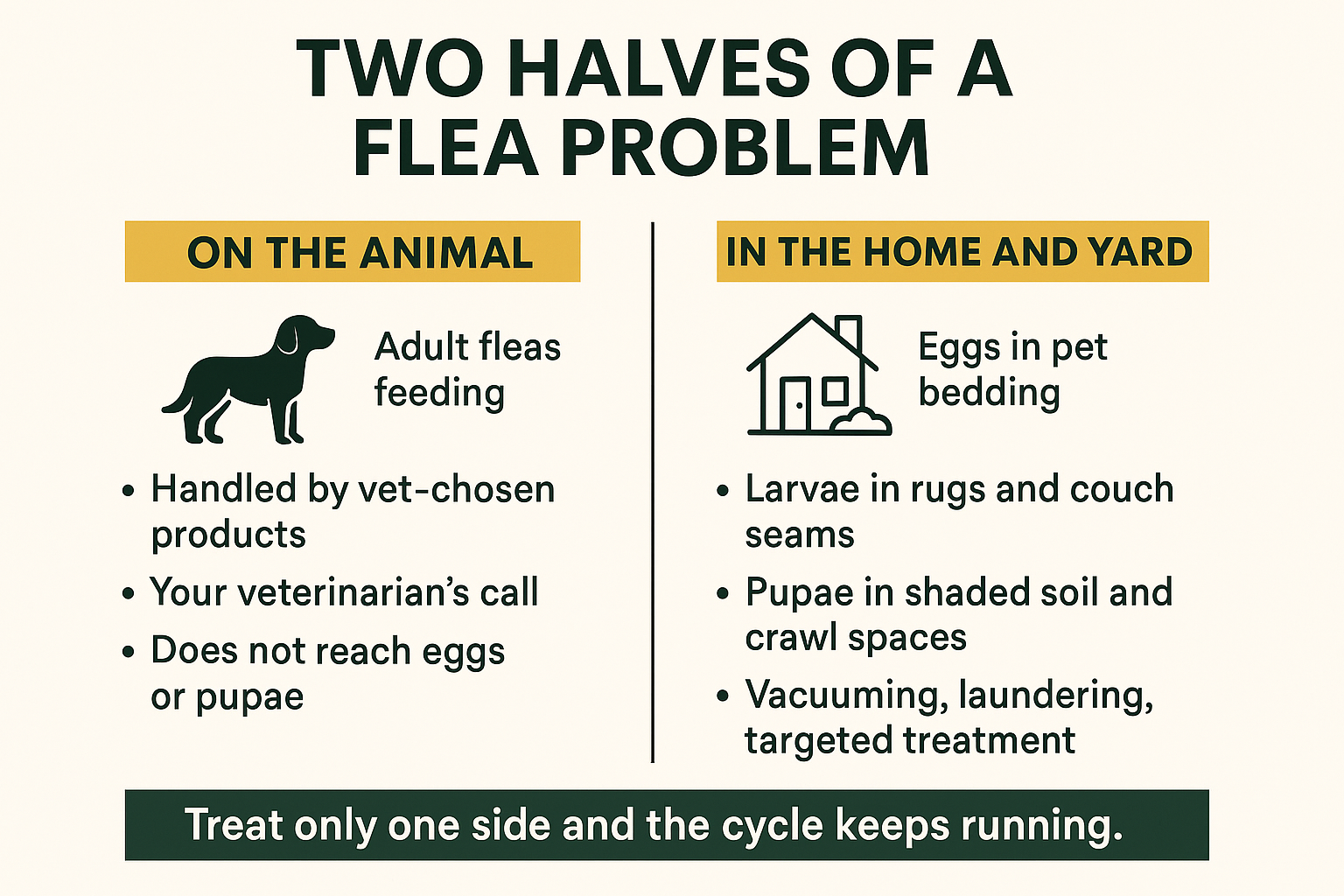
Whatever goes on the animal only handles the animal
This is the part most pet owners miss, and it is the part you control no matter what the state decides about any single ingredient.
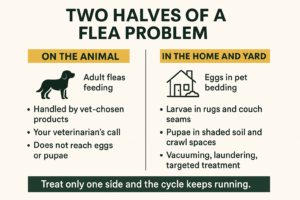
The adult fleas riding your dog are a small slice of the population. The eggs, larvae, and pupae are sitting somewhere else entirely, and they do not care what is on your pet’s shoulder blades.
In a Santa Cruz home, that “somewhere else” is usually predictable:
- The rug by the back door, where a dog shakes off after a trail walk
- Deep in pet bedding and the seams of a favorite couch cushion
- A cat’s window seat, especially a sunny one over a heater vent
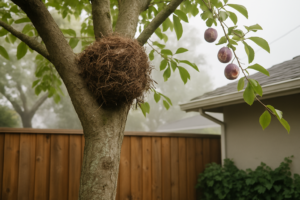
- Shaded dirt under a deck or along a north-facing fence line
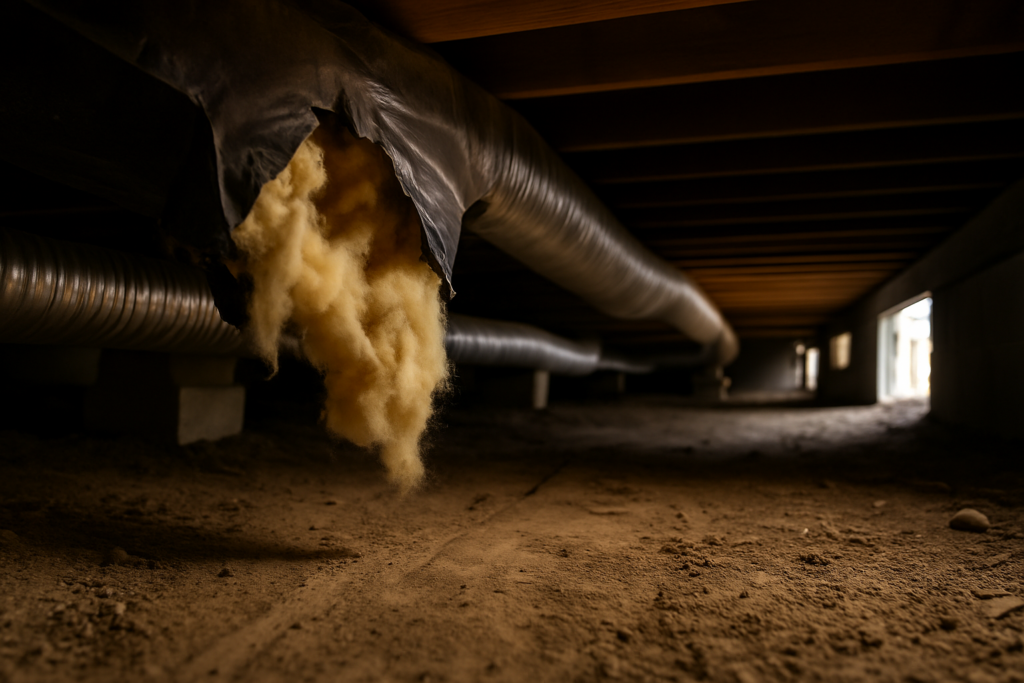
- Crawl space soil, which stays damp year round in this climate
Flea pupae are built to wait. They can sit in a cocoon in that shaded soil for weeks, which is why a house can seem fine for a stretch and then go sideways again.
The state’s own announcement pointed pet owners toward non-chemical habits alongside product alternatives: vacuuming, laundering pet bedding, regular flea combing, and keeping indoor and outdoor spaces clean. Those are not filler advice. That is the home side of the job, and it is separate from the pet side.
When I treat a home and yard for active fleas, I am working that environmental half. It does not replace what your vet recommends for the animal, and it is not a one-and-done event either.
Two different jobs, two different places
This breaks down which part of a flea problem lives on your pet and which part lives in your house and yard.
The coastal flea calendar does not end in October
Most flea advice online is written for inland California, where a cold snap slows things down and the problem fades by late fall. We do not get that here.
Santa Cruz County does not see a hard freeze. Fog keeps yards damp, indoor heating keeps living rooms warm, and crawl spaces stay humid through January. The cycle keeps running on a slower clock instead of stopping.
That is why people are still finding black specks in a dog bed in the middle of winter and assuming something went wrong. I wrote more about that pattern in what Santa Cruz pet owners see in January.
Ticks follow a different trigger. They track the rains rather than the summer heat, so the first real storms often bring more activity in tall grass and brushy edges, not less. If you walk dogs in the greenbelt or along Nisene Marks, what’s actually in your grass right now is worth a read before the next muddy walk.
Worth noting on timing: the comment window closes November 16, right in the middle of the county’s fall flea and tick stretch. If you want a say in the outcome, that window is open now, not in some quiet off season.
What you can reasonably do in the next week
None of this requires waiting for a state decision.
- Read the active ingredient line on the package you already own. It is on the back, usually in small print above the net contents.
- Ask your vet about alternatives if you want one. With 89 spot-on products plus collars, sprays, shampoos, and oral options in California, there is room to have that conversation.
- Separate the two jobs. Pet treatment is one task. Bedding, rugs, and the shaded spots outside are another.
- Vacuum and launder on a schedule, not just when you see a flea. Pet bedding on hot wash, rugs by the door, under cushions.
On cost, I will be straight with you. Flea and tick service for a home and yard varies with square footage, how much shaded ground you have, how many pets are in the house, and whether the problem has been running for a month or a season. Many Santa Cruz County homeowners see quotes land somewhere in the low to mid hundreds for an initial treatment, but that is general market context, not a number I can promise sight unseen. A real quote comes after someone looks at your property.
One more thing, since the whole point of this review is ingredients. Asking what is being applied and why is a completely reasonable question. A technician who cannot answer it in plain words is the warning sign, not the ingredient itself.
Frequently Asked Questions About the Fipronil Review
Is fipronil banned in California right now?
No. Nothing containing fipronil has been pulled from shelves. The state posted draft options for reducing risk and opened public comment through November 16, 2026. No removal date has been announced.
Should I throw away the flea drops I already bought?
That is your veterinarian’s call, not mine. The products are still legal and still labeled for use. If you are uneasy about the ingredient, bring the box to your next appointment and ask about the alternatives available in California.
Why is bathing my dog part of a pesticide review?
Because of where the rinse water goes. The state’s final aquatic risk memo, published July 31, 2026, looked at how the ingredient reaches wastewater and affects aquatic life. A tub bath feeds the sewer and a driveway bath feeds a storm drain, which in this county means the river, the creeks, or the bay.
If I treat my pet, do I still need the house treated?
Often yes, if the problem is established. Products on the animal work on the animal. The eggs, larvae, and pupae sitting in bedding, rugs, and shaded crawl space soil are a separate job, and leaving that half alone is why people feel like the problem keeps coming back.
Can I submit a comment to the state myself?
Yes. Public comment on the draft options is open through November 16, 2026, and the details are on the Department of Pesticide Regulation’s announcement page.
Do fleas really stay active here through winter?
They do. Without a hard freeze, with coastal fog keeping yards damp and indoor heating keeping rooms warm, the cycle slows rather than stops. Finding specks in a dog bed in January is common on this side of the hill.
Questions about the home and yard side of a flea problem?
Flea and tick treatments for homes and yards are handled across Santa Cruz, Aptos, Capitola, Soquel, Scotts Valley, and Watsonville, all within a short drive of Monterey Bay. The approach leans on low-toxicity products and explaining the choice out loud, which is the same reason West Pest Co. was voted Best Pest Control in Santa Cruz in 2023 and 2024. If you want to talk it through, the number is (831) 430-8402 and the site is westpestco.com.