You step outside with coffee, hear a steady buzz, and notice the same insects cutting back and forth to one spot near the lawn, porch steps, or siding. That's usually the moment the questions start. Is this yellow jackets, or just bees passing through? Is it dangerous, or just annoying? Can you deal with it yourself, or is this one of those jobs that gets risky fast?
In Santa Cruz County, that situation is common enough that it helps to slow down and read the activity before doing anything. A lot of yellow jacket problems look small at first. A few wasps at a hole in the ground. A little traffic under the eaves. A couple showing up around outdoor meals. But the right response depends less on how many you see in one moment and more on where they're nesting, how they're moving, and who uses that part of the yard.
If you're trying to protect kids, pets, garden space, or just your own peace of mind, a yellow jacket exterminator should be thinking about more than “spray and leave.” The primary job is choosing the safest method for the specific site.
What to Do About Yellow Jackets in Your Yard
The most common yard scenario goes like this. You notice a regular stream of yellow jackets using the same route, often low to the ground, and they seem focused on one opening. That pattern matters more than a random wasp flying by.

Start by watching, not disturbing
Stand back and watch from a safe distance for a few minutes. Look for repeated flight in and out of one spot. Hidden nest entrances are often the only clear sign when yellow jackets are nesting underground, inside wall voids, or under steps.
A calm first look usually tells you more than a fast reaction. If they're just visiting food or fallen fruit, that's a different problem than a colony established under your yard or inside the house envelope.
Practical rule: If you can trace repeated traffic to one opening, think “nest” rather than “stray foragers.”
What matters right away
A few details help sort the problem quickly:
- Nest access point: Ground hole, gap in siding, roofline void, deck edge, or eave.
- Traffic area: Patio, walkway, play area, dog run, trash area, or a part of the yard nobody uses much.
- Your household: Children, pets, gardening activity, and anyone sensitive to stings.
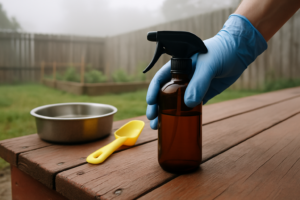
If you want lower-chemical prevention ideas first, West Pest Co has a practical guide on how to get rid of yellow jackets naturally. That approach can help with attractants and light pressure, but it doesn't change the fact that an established nest near daily activity often needs direct treatment.
Yellow jackets are a common local issue, especially later in the warm season. The good news is that most situations become clearer once you identify the insect correctly and accurately judge the nest location.
Is It Really Yellow Jackets? Identification Tips
Misidentification causes a lot of bad decisions. People treat bees like yellow jackets, leave yellow jackets alone because they assume they're paper wasps, or spray at random foragers without finding the nest.

What yellow jackets usually look like
Yellow jackets tend to look sleek, bright yellow and black, and less fuzzy than bees. Their bodies read as smooth and sharp rather than rounded or hairy. In flight, they often seem quick, darting, and purposeful.
Honey bees and bumble bees usually look fuzzier and thicker. Paper wasps are different in another way. They look longer and more delicate, with dangling legs in flight, and they often build the familiar open, umbrella-style nest.
For a closer side-by-side guide, this page on bee nest identification helps homeowners sort out the common look-alikes.
Nest style tells you a lot
If you see an open-faced paper nest hanging from an eave or branch, that points more toward paper wasps than yellow jackets. Yellow jackets often choose more enclosed or hidden spots. Common locations include:
- Underground cavities
- Wall voids
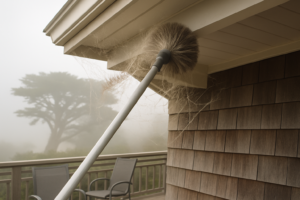
- Attics and eaves
- Spaces under porches or steps
That hidden nesting habit is one reason people underestimate them. The entrance may be small, but the colony behind it may not be.
A useful reality check comes from Cooper Pest Solutions' yellow jacket guidance, which notes that a nest that starts with a single queen in spring can contain up to 4,000 workers by late summer, making the colony much more defensive.
Yellow jackets often announce themselves through traffic patterns before you ever see the nest itself.
Behavior around people and food
If insects are hovering around trash, sugary drinks, pet food, or outdoor eating areas, yellow jackets move differently than bees. They tend to scavenge aggressively and don't look as interested in flowers as bees do.
Use this simple comparison:
| Insect | Body look | Nest clue | Common behavior |
|---|---|---|---|
| Yellow jacket | Smooth, bright yellow and black | Hidden, enclosed, underground or voids | Fast, direct, scavenges food |
| Honey bee | Fuzzy, duller yellow-brown | Hive structure, not papery wasp nest | Flower-focused, less interested in trash |
| Bumble bee | Very fuzzy, round | Usually not the same visible wasp nesting pattern | Slow, heavy, pollinator behavior |
| Paper wasp | Longer body, more leggy | Open umbrella-shaped nest | Often less defensive away from nest |
Correct identification matters because treatment choices change. A yellow jacket exterminator isn't just removing “wasps.” They're matching the method to the insect and the nest type.
When to Handle It Yourself and When to Call a Pro
Homeowners usually want a straight answer here, and they should get one. Not every yellow jacket sighting means you need professional removal. But some situations shift from manageable to unsafe very quickly.

The narrow lane where DIY may be reasonable
DIY is only worth considering when the situation is simple and low-risk. Think of a small, visible nest, in an area with little foot traffic, where you can clearly see what you're dealing with and keep distance.
That still assumes you have protective clothing, no sting allergy concerns in the household, and a way to retreat quickly if the insects react. If any of those pieces are missing, the job stops being simple.
When a pro makes more sense
A professional is the safer choice when the nest is hidden, inside a structure, or in the ground. Those are the jobs where homeowners usually don't know the true nest size, can't access the colony directly, and end up treating the wrong spot.
Critter Control's yellow jacket guidance makes an important point that many guides miss. Professionals look at nest location and traffic patterns to decide whether immediate targeted removal is needed.
Here's the practical split:
DIY may be reasonable
- Small visible nest: Early-stage activity you can see and identify.
- Low-traffic location: Far from doors, patios, play areas, and pet paths.
- Straight access: No ladders, crawlspaces, wall voids, or blind corners.
Call a pro
- Ground nest: High sting risk and easy to misjudge.
- Wall or roof void activity: The colony is hidden, and treatment has to reach the nest.
- Busy location: Near doors, seating areas, gardens, trash, or anywhere children and pets pass.
- Unclear identification: If you don't know what insect it is, don't guess.
- Allergy concerns: If anyone in the household is sensitive to stings, this should not be a DIY experiment.
If you can't clearly see both the insect and the nest entrance, you're not dealing with a beginner job.
For homeowners trying to judge that line, West Pest Co has a plain-language article on when to call pest control. To see real customer stories and learn more about West Pest Co, visit their success stories page.
One side note. If you're comparing local providers online, some homeowners also find this overview of Transactional LLC local service SEO advice useful because it explains how service businesses present local information and reviews online. That can help you sort polished listings from informative ones.
How a Yellow Jacket Exterminator Solves the Problem
A good yellow jacket exterminator starts with biology, not just product choice. The goal is to reach the colony. Spraying random flying workers rarely solves anything.

Conventional treatment and why it often works fastest
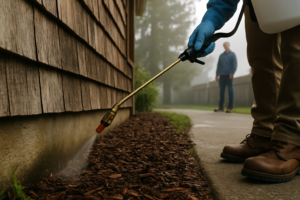
The standard professional approach is targeted nest treatment, not wide-area spraying. Texas A&M School IPM guidance notes that effective yellow jacket control relies on delivering insecticide directly to the nest entrance rather than spraying flying insects, because returning foragers can carry treatment deeper into the colony.
That matters in real yards. For a ground nest, a dust applied to the entrance may be the most efficient option. For an exposed entrance under eaves or trim, a directed aerosol or similar nest treatment may be the cleaner fit.
Conventional treatment usually makes sense when:
- The nest is established
- The location creates an immediate sting risk
- Fast knockdown matters more than minimizing product use at all costs
Lower-chemical and eco-conscious options
Eco-conscious service doesn't mean pretending every nest can be solved with no pesticide at all. It means reducing unnecessary exposure, avoiding blanket applications, and choosing the most focused method that fits the site.
In practice, that often looks like:
- Precision over broadcast spraying: Treating only the nest area.
- Timing the work carefully: Late-day or low-activity periods can reduce disturbance.
- Using traps strategically: Helpful for monitoring and reducing foragers in lower-risk areas, but not as a stand-alone nest elimination plan.
- Protecting sensitive areas: Extra care near edible gardens, play zones, and pet spaces.
For homeowners comparing methods, the right question isn't “chemical or no chemical?” It's “what gets control with the least unnecessary spread?”
No-chemical methods and their limits
Physical removal, exclusion, or vacuum-style capture can sometimes play a role, but they are not universal answers. Hidden yellow jacket nests inside walls, underground voids, or structural cavities often don't lend themselves to clean physical removal without increasing disturbance.
That's why a professional should explain trade-offs plainly:
| Method | Where it fits | Main upside | Main limit |
|---|---|---|---|
| Targeted conventional treatment | Active nest with clear entrance | Usually the most direct colony control | Involves regulated pesticide use |
| Lower-chemical targeted approach | Sensitive family or garden settings | Reduces unnecessary spread | Still may require direct nest treatment |
| No-chemical removal | Limited, accessible situations | Minimal chemical exposure | Not practical for many hidden nests |
If you're comparing service options, wasp nest removal information from West Pest Co outlines how these decisions are made on real properties. The method should fit the nest location, nearby use of the space, and your comfort level with treatment choices.
What to Expect from a Professional Service
Most yellow jacket service calls follow the same basic pattern. First comes inspection. Then treatment. Then a short period where the site is watched for returning activity.
 pest control technician in uniform inspecting the exterior of a home for pests.” />
What the technician is looking for
The technician isn't just confirming “yes, there are wasps.” They're checking where the nest is likely located, whether there may be more than one access point, how close the activity is to daily foot traffic, and what treatment can be delivered with the least disruption.
In some situations, traps may be part of the plan. EPA registration material for a yellowjacket trap system reflects the broader professional approach: targeted nest treatments for colony elimination paired with lure traps for monitoring and reducing foragers in lower-risk areas.
What happens after treatment
Some activity after treatment can be normal because foragers may return to the entrance before the colony fully collapses. What matters is the trend. You want declining traffic, not fresh heavy movement.
You should also expect honest limits. Yard and home pest treatments address active pests only. They do not eliminate eggs or full pest life cycles, and they should never be described as complete eradication or a permanent solution. With yellow jackets, treatment can solve the current active nest, but it doesn't mean future queens will never try a new site on the property.
A reliable service call leaves you with fewer surprises, not bigger promises.
What a clear explanation sounds like
A solid pest professional should be able to tell you:
- Where the nest likely is
- Why this method was chosen
- What areas to avoid temporarily
- What kind of follow-up activity is normal
- What prevention steps matter for this property
If you're trying to sort through company websites before hiring, this article on Reviews To The Top pest control marketing is useful in a sideways way. It shows how pest companies present themselves online, which can help you tell the difference between educational detail and generic sales language.
Local Prevention Tips for Next Season
Santa Cruz County homes have a mix of older construction, gardens, fruit trees, patios, and outdoor eating spaces. All of that can make yellow jacket pressure feel very property-specific. Prevention works better when it matches how you use the yard.
Cut down the easy food sources
Yellow jackets are often drawn to the same things people enjoy outside. Sweet drinks, recycling residue, pet food, compost, and fallen fruit all hold them in the area longer.
A few habits make a real difference:
- Manage outdoor food waste: Rinse drink containers and keep trash lids closed.
- Pick up fallen fruit: Don't let fermenting fruit sit under trees.
- Watch pet feeding areas: Outdoor bowls can attract scavenging insects.
- Clean after meals: Wipe tables, rinse spills, and don't leave cans out overnight.
Make nesting spots less attractive
Prevention isn't just about food. It's also about reducing quiet, protected voids around the home.
Walk the exterior and pay attention to:
- Gaps in siding or trim
- Openings around eaves
- Voids under steps or porches
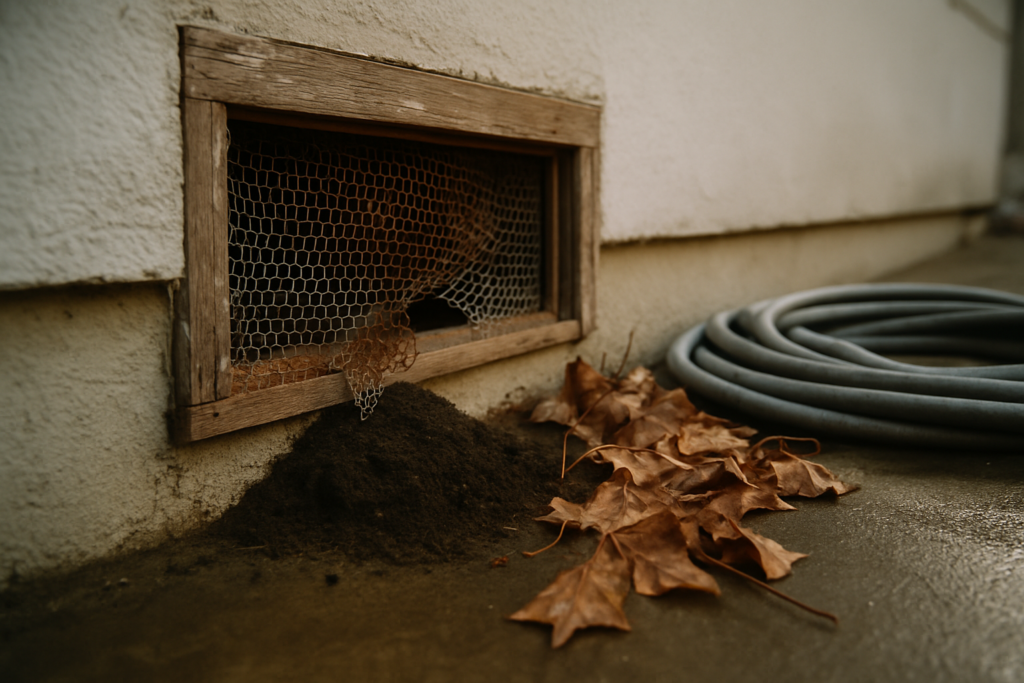
- Unscreened vents where insects can move in and out
You won't seal every possible harborage site, but reducing easy access helps.
Use traps at the right time
Timing matters. Oregon State University's yellowjacket guidance notes that lure traps in early spring are most effective for preventing queens from establishing new nests, while summer trapping helps reduce the number of workers.
That means traps are more useful as a seasonal strategy than a late panic move. Put another way, traps can reduce pressure. They usually don't replace nest treatment once a colony is established in the yard or structure.
For more seasonal prevention ideas, this guide on how to prevent wasps is worth reading before warm weather ramps up.
If you're in Santa Cruz County and trying to decide whether you're looking at casual foraging, a hidden nest, or a situation that needs direct treatment, West Pest Co. offers practical pest inspection and yellow jacket removal for active infestations. The goal is simple: identify the problem clearly, choose the least disruptive method that fits the site, and give you a realistic idea of what comes next.