The most effective way to keep ants away is to make your home completely uninteresting to them. It boils down to eliminating their access to food, water, and shelter. This proactive approach—focusing on cleaning, sealing up entry points, and securing your food—is far more successful than just reacting to an invasion after it’s already underway.
Your First Line of Defense Against Ant Invasions
When you spot that tell-tale line of ants marching across your kitchen counter, it’s easy to feel overwhelmed. But that single-file line is just a symptom. The real problem isn't the handful of ants you see; it's the invisible scent trail they've left behind, signaling to hundreds, or even thousands, of others that your home is a reliable spot for a meal.
To truly keep ants away, you have to start thinking like an ant and completely dismantle their supply chain. This means shifting your mindset from reactive spraying to proactive prevention. The battle isn't won by killing the foragers you see, but by making your home so unappealing that the scout ants never report back with good news.
We're going to walk through a simple but powerful three-part strategy: Clean, Seal, and Secure.
The Clean Habit That Matters Most
An ant-proof home almost always starts in the kitchen, which is the primary target for any hungry colony. A daily counter wipe is a great habit, but to stop ants, you need to go deeper to eliminate the subtle invitations you might be sending out. Ants are incredibly resourceful and can thrive on the tiniest spills and crumbs.
Your cleaning strategy should zero in on the areas ants love most:
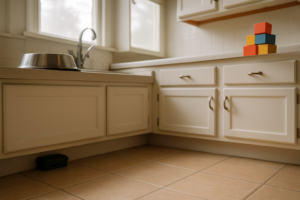
- Under Appliances: The dark, undisturbed spaces under your toaster, microwave, and coffee maker are crumb goldmines. Make it a weekly habit to move these appliances and clean thoroughly underneath them.
- Pet Food Stations: Your pet's food bowl is an all-day buffet for ants. Instead of leaving food out 24/7, try establishing set feeding times. Clean the bowls and the area around them as soon as your pet finishes eating.
- Sticky Spills: A single drop of honey, juice, or syrup on a cabinet door or floor can create a powerful scent beacon. Clean up all sticky messes immediately with a proper cleaning spray, not just a damp cloth, to fully remove that sugary residue.
Since kitchens are ground zero for ant invasions, a solid cleaning routine is your best weapon. For a comprehensive approach, this ultimate kitchen deep clean checklist covers all the hidden spots where ants love to forage.
This simple visual breaks down just how quickly a tiny crumb can lead to a full-blown invasion.
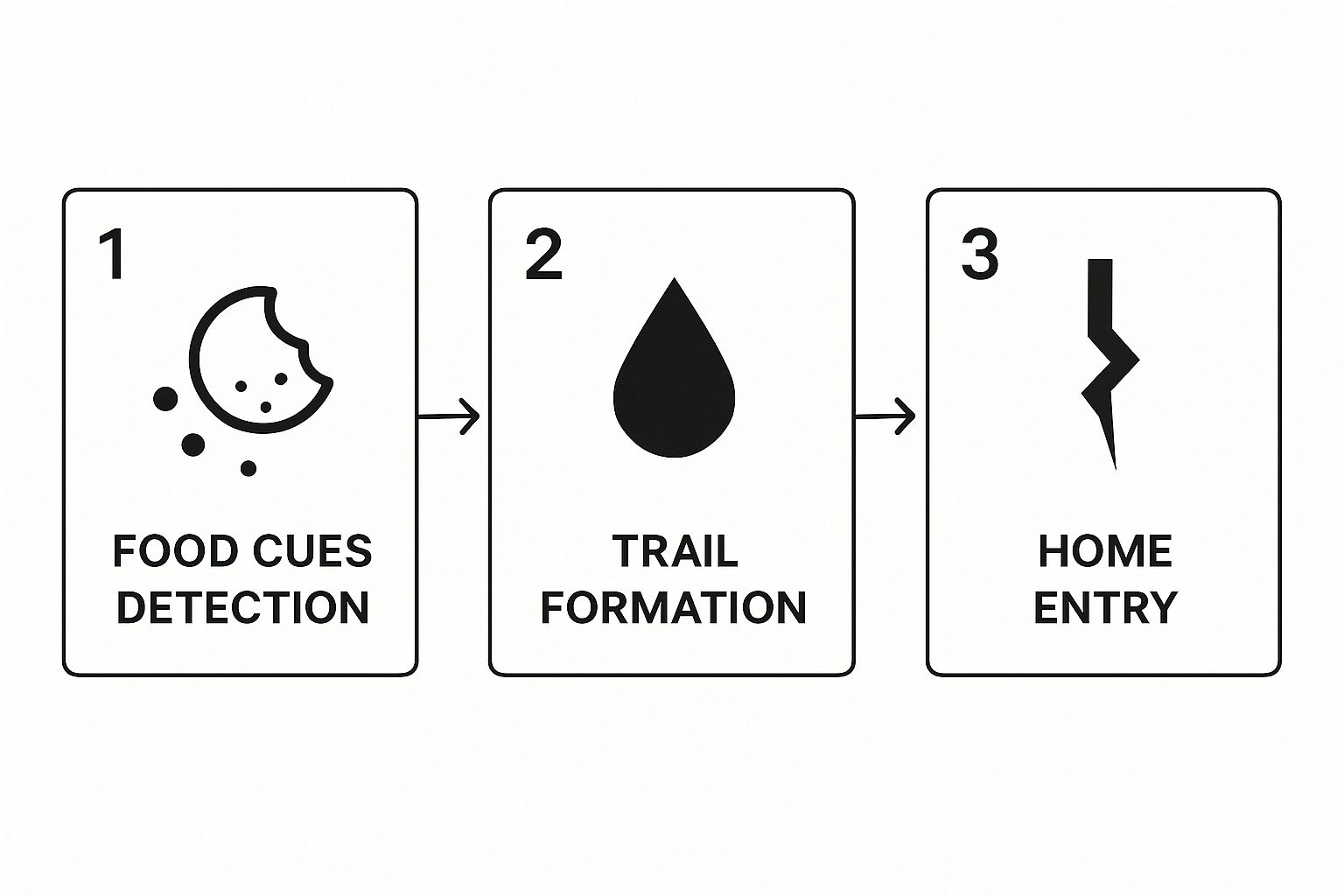
As you can see, the process is painfully simple for ants. They detect food, create a trail, and invite the whole colony in. That’s precisely why cutting off their food source is so critical.
To make this even easier to remember, I've put together a quick guide based on the principles we just discussed.
The Clean, Seal, Secure Method: A Quick Guide
This table breaks down the three core principles of ant prevention into simple, actionable steps. Think of it as your go-to reference for keeping your home off the ants' radar.
| Principle | Key Actions | Why It Works |
|---|---|---|
| Clean | Deep clean under appliances, manage pet food stations, and immediately wipe up all sticky spills. | Removes the scent trails and food sources that attract scout ants in the first place. |
| Seal | Inspect your home's exterior and interior for gaps. Use silicone caulk to seal cracks and crevices. | Creates a physical barrier, blocking the tiny highways ants use to get inside your home. |
| Secure | Transfer all pantry staples into airtight containers. Use a trash can with a tight-fitting lid. | Eliminates easy access to food, making your pantry and kitchen an unrewarding target. |
By consistently applying these three steps, you're not just reacting to ants—you're actively making your home an environment where they can't thrive.
Seal Every Crack and Crevice
Next up, it’s time to go on a "home safari" to find and block the tiny highways ants use to get inside. You’d be genuinely surprised at how small of an opening an ant needs to squeeze through.
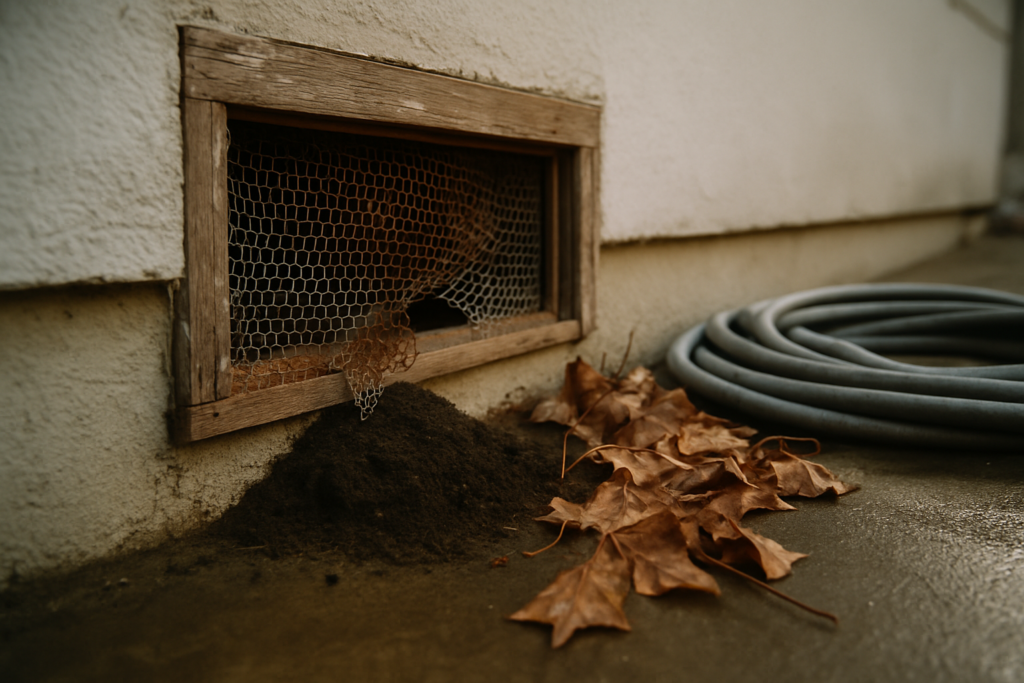
Take a walk around your home’s foundation, paying close attention to any gaps around:
- Pipes and utility lines
- Window and door frames
- Cracks in the foundation or siding
- Worn-out weather stripping
Grab a quality silicone caulk and seal these openings permanently. This simple afternoon project is a core component of https://westpestco.com/preventative-pest-control/ because it creates a physical barrier that stops invaders before they even get started.
Key Insight: Up to 80% of ant incursions in homes are linked directly to uncovered food or crumbs. This underscores that sanitation isn't just about tidiness—it is your single most powerful pest control tool.
Secure Your Food Sources
Finally, make your pantry an impenetrable fortress. Cardboard boxes and thin plastic bags are no match for a determined ant colony. Transfer all of your pantry staples—like cereal, sugar, flour, and pasta—into airtight containers made of glass, hard plastic, or metal. This not only blocks their access but also contains the odors that might attract scout ants in the first place.
The same rule applies to your garbage. Use a trash can with a tight-fitting lid and take it out frequently. The link between food waste and pest activity is well-documented. In fact, studies show that effective prevention, like securing food sources, can slash household ant problems by more than 90%.
Natural and DIY Solutions That Actually Work
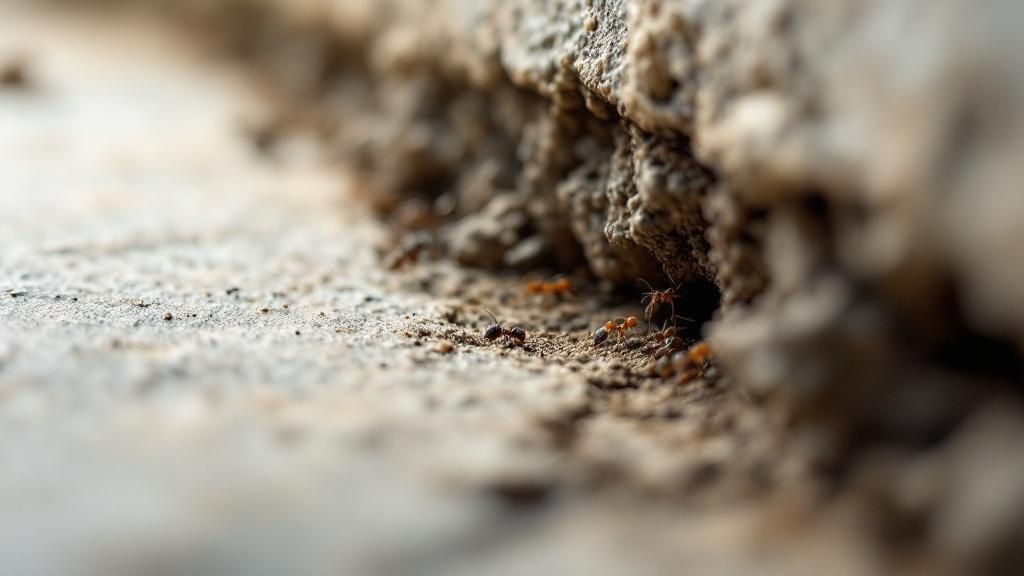
If you'd rather try a gentler approach before calling in the pros, your own kitchen pantry holds some surprisingly effective tools. These aren't just old wives' tales; many common household items work because they directly interfere with how ants navigate and communicate. Learning to use them correctly is the key to making your home an unwelcome place for these pests.
The real power behind many DIY solutions is their ability to create "scent camouflage." Ants don’t use maps or GPS. They follow invisible pheromone trails left by other ants to find food and get back to the nest. Strong, unfamiliar smells disrupt these chemical messages, scrambling their navigation system.
Harnessing Scent to Disrupt Ant Trails
One of the most effective and affordable ant deterrents is plain white vinegar. Its sharp, acidic scent is overpowering to ants, completely erasing their pheromone trails and turning any surface you've wiped down into confusing, hostile territory.
For a simple and powerful spray, mix a solution of 50% white vinegar and 50% water in a spray bottle. Use this to wipe down your countertops, floors, and any other surfaces where you’ve seen ant activity. It cleans just as well as it deters.
Citrus fruits like lemons and oranges work on a similar principle. The oil in their peels, particularly d-Limonene, is a well-known natural insect repellent.
- Lemon Juice Spray: Mix the juice of one lemon with water in a spray bottle. Apply it along windowsills, door thresholds, and any visible cracks.
- Citrus Peels: Don't toss those orange or lemon peels. Scatter them in garden beds near your house's foundation or in planters by the door. The strong scent acts as a natural boundary.
Many homeowners find real success with these methods. If you're interested in going further, there are many different approaches to natural pest control that prioritize safety and environmental responsibility.
Using Spices and Powders as Physical Barriers
Beyond just scents, certain pantry staples can create physical barriers that ants are either unable or unwilling to cross. These work best when used at specific entry points rather than spread all over.
Cinnamon is a fantastic example. Whether you use it in powdered form or as whole sticks, its strong smell is offensive to ants. Sprinkle a solid line of ground cinnamon across known ant entry points, like a gap under a door or along a kitchen windowsill. The fine powder also has the added benefit of clogging their spiracles (breathing pores), making it a formidable obstacle.
Used coffee grounds are another great barrier. The strong odor and acidic nature can deter ants from setting up shop. Sprinkle them around the perimeter of your home or in your garden to discourage nesting near your foundation.
Pro Tip: When using powders like cinnamon or coffee grounds, you have to create an unbroken line at least a quarter-inch wide. Any gap in that line is like leaving a gate wide open, and believe me, the ants will find it.
Diatomaceous earth (DE) is arguably one of the most effective natural powders for pest control. It’s not a poison; it’s a mechanical killer. DE is made from the fossilized remains of tiny aquatic organisms, and under a microscope, its particles are incredibly sharp.
These sharp particles stick to an ant's exoskeleton and scrape away the waxy outer layer, which causes the ant to dehydrate and die. For it to work, the ants must walk through it.
Safely Applying Diatomaceous Earth
When using DE, it is crucial to use food-grade diatomaceous earth, which is safe to use around pets and children when applied correctly. Never use pool-grade DE, as it has been chemically treated and is very harmful if inhaled.
Strategic Placement for Maximum Impact:
- Apply Dry: Use a puffer or duster to apply a very thin layer in dry, low-traffic areas where you've seen ants. Think behind appliances, inside wall voids where pipes come in, under cabinets, and along baseboards.
- Guard Entry Points: Create a fine barrier around the exterior of your foundation, paying close attention to cracks, vents, and utility entry points.
- Avoid Wet Areas: DE is completely ineffective when it gets wet. Be sure to reapply it after it rains or in any areas that become damp.
Thinking about the bigger picture, a comprehensive guide to natural pest control for your garden can provide valuable strategies for managing a wide range of pests in an eco-friendly way.
Using Ant Baits and Traps Strategically

When the preventative stuff hasn't quite cut it and you've got a full-blown ant highway in your kitchen, it's time to change tactics. Just spraying the ants you see is a losing game. It feels satisfying for a minute, but it does absolutely nothing to solve the real problem: the hidden colony and its queen.
This is where ant baits and traps come in. They aren't about instant gratification; they're about a targeted, strategic mission.
Think of baits as a Trojan Horse. Unlike contact sprays that only kill the foragers they touch, baits are carried back to the nest as a "food" source. The ants share it with the entire colony, including the queen, effectively dismantling the operation from the inside out. This is how you get a long-term fix, not just a temporary pause in activity.
Know What's on Their Menu
I've seen it a hundred times: a homeowner gets frustrated, grabs the first ant bait off the shelf, and wonders why it didn't work. The secret is that the bait's effectiveness comes down to what your specific ants are craving at that moment. A colony's dietary needs shift, sometimes based on the season or their current growth cycle.
One week they're in a carbohydrate phase, hunting for anything sugary to fuel the workers. The next, they might need protein to feed the queen and her developing larvae.
- Sugar-Based Baits: These are usually gels or liquids. If you see ants swarming a drop of spilled juice or a sticky spot on the counter, a sugar bait is your best weapon.
- Protein-Based Baits: These often come in granular or solid forms. If you've caught them going after pet food, meat crumbs, or greasy spills, you'll need a protein bait.
Not sure what they want? Run a quick test. Put a small dab of jelly and a tiny smear of peanut butter on a piece of cardboard near their trail. Watch to see which one they swarm. That's your answer.
Expert Tip: Using the wrong bait is like offering a five-star steak to a vegan. The ants will just walk right past it, and your infestation will rage on. Matching the bait to their diet is the most critical step for success.
Place Your Traps Like a Pro
Where you put the bait is just as important as which kind you use. Tossing a bait station into the middle of the floor won't work and can be a hazard for pets or kids. You have to get inside the ants' heads and place the bait directly along their established routes.
Follow their trails and look for their main highways. You'll want to place bait stations:
- Along baseboards and tucked into corners.
- Under sinks, dishwashers, and behind other appliances.
- Near cracks in the foundation or tiny gaps where they're entering the house.
The idea is to make it incredibly easy for them to find the bait without messing up their natural foraging line. I find placing it an inch or two away from their trail—not directly on it—is often the sweet spot.
The Hardest Part: Being Patient
Okay, you've placed the bait. Now comes the challenge: you have to wait. It's so tempting to grab a paper towel and wipe out the ants you see crowding the bait station, but you have to resist. Every single ant that takes that bait and heads back to the nest is a soldier working for you.
In fact, you might see an increase in ant activity for the first day or two. Don't panic! This is a great sign. It means the bait is working, and the foragers are recruiting their nestmates to come get the "food." Depending on the colony's size, the whole process can take anywhere from a few days to a couple of weeks.
The market for these smart solutions is getting bigger. The microgranule bait segment, for example, is expected to be worth over $120 million by 2025 as people look for effective options that are less toxic. This trend shows that homeowners are getting smarter, using baits for active infestations while relying on preventative strategies for long-term control. To learn more about how non-chemical tactics can make a huge difference, check out these tips on sealing entry points from Western Exterminator.
Creating an Ant-Proof Barrier Outside Your Home
True, long-term success in keeping ants away starts outside your four walls. While a clean kitchen is important, the real battle is won by creating a strong defensive line around your home's exterior. This is what stops an invasion before it even has a chance to begin.
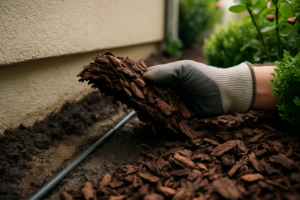
Think of your yard and foundation as a buffer zone. With just a bit of strategic effort, you can turn that area into a formidable obstacle for any scouting ant. The goal is to dismantle their "bridges" and remove the resources that attract them to your house in the first place.
Landscaping for Ant Prevention
Believe it or not, your beautifully landscaped garden could be an unintentional superhighway for ants. The most common culprits? Overhanging tree branches and shrubs that touch your siding or roof. These give ants a direct, off-the-ground path straight to your home's most vulnerable points.
Make it a seasonal habit to trim back any and all vegetation. You want at least a six-inch gap between the plant and your house. This simple action removes their easiest route inside, forcing them down to the ground where your other defenses are waiting. You'd be surprised what a massive difference this small landscaping tweak can make.
Eliminating Outdoor Water Sources
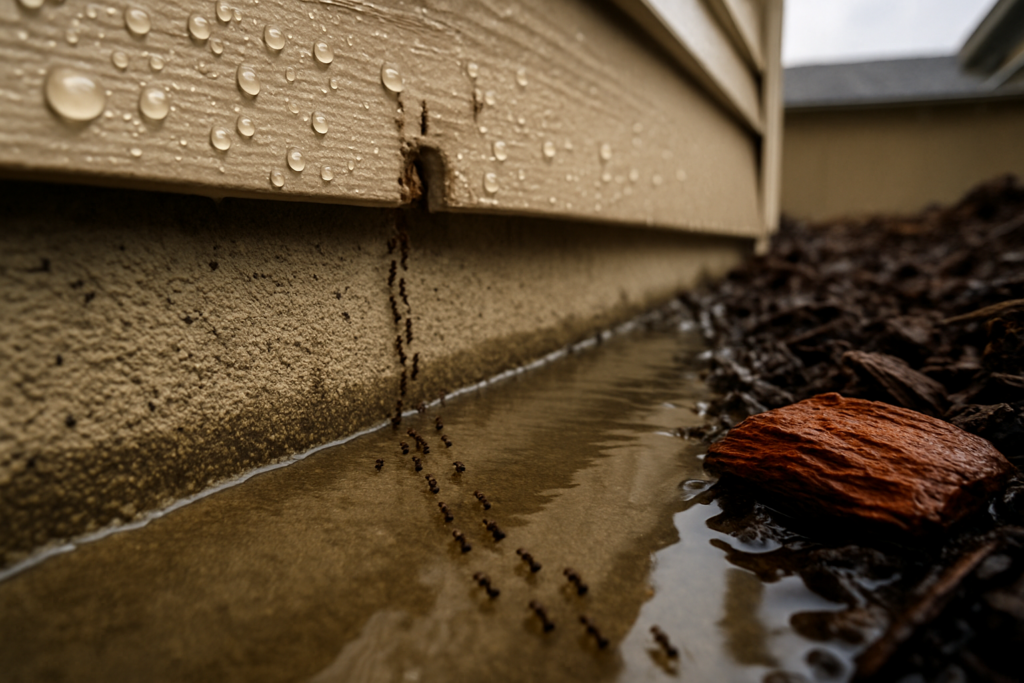
Ants, like every living thing, need water to survive. They are constantly on the hunt for reliable sources, and a tiny, consistent leak is more than enough to support an entire colony. It’s time to go on a water hunt around your property.
- Leaky Faucets and Hoses: Check every outdoor spigot and hose connection for those slow, annoying drips. A simple washer replacement can eliminate a major ant magnet.
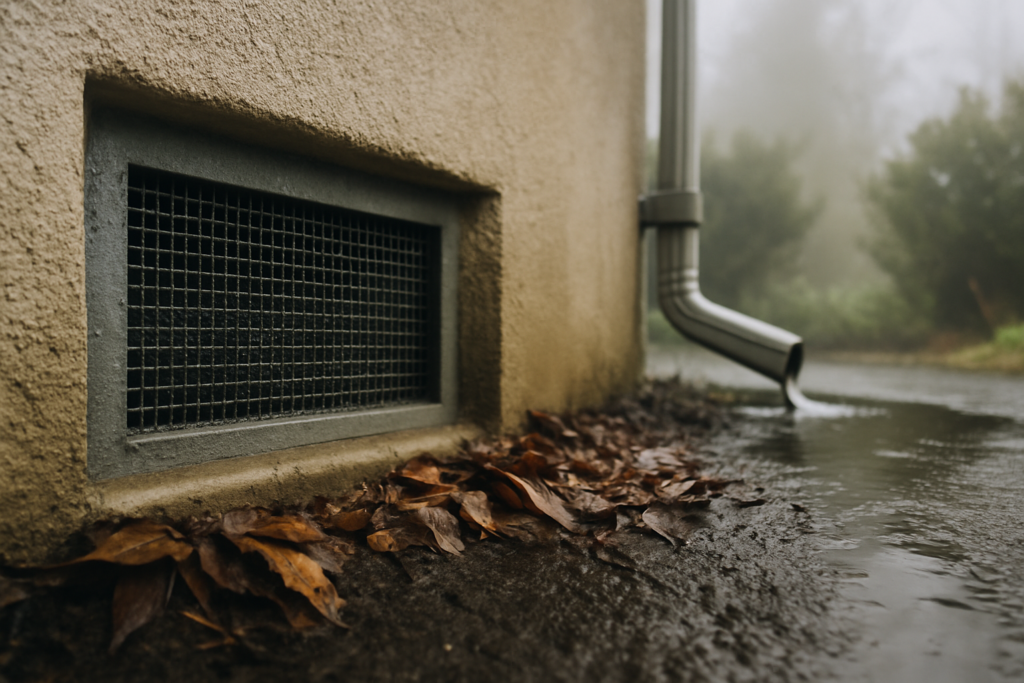
- Clogged Gutters: Gutters packed with damp leaves and debris are a dream home for ants—an elevated nesting site with a constant water supply. Regular cleaning is absolutely essential.
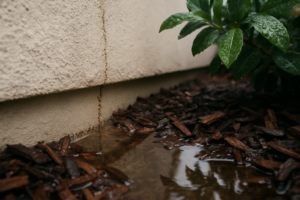
- Poor Drainage: Look for spots where water pools near your foundation after it rains. This could be in flowerpots, on uneven patio stones, or just low spots in the yard. Fix the drainage or at least be diligent about emptying any standing water.
By systematically getting rid of these hidden water sources, you make your property significantly less hospitable. Any ants looking to set up a new nest will likely just move on to a more favorable spot.
Applying a Strong Perimeter Defense
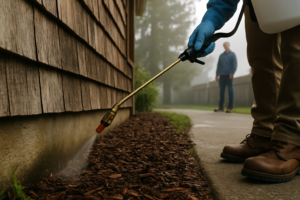
Once you’ve handled the landscaping and water issues, the final move is to create a treated barrier around your foundation. This is your chemical or physical "no-go zone." You have some great options here, whether you prefer natural methods or more conventional treatments.
A popular and highly effective natural choice is diatomaceous earth (DE). This fine powder, made from fossilized aquatic organisms, works by physically scratching the ant's exoskeleton, which causes them to dehydrate. As long as it's kept dry, it's incredibly effective. Grab a duster and apply a thin, continuous line of food-grade DE around the entire perimeter of your foundation. Really focus on areas where pipes and utilities enter the home and right under the thresholds of all your doors.
For a more potent, longer-lasting solution, you might consider a liquid insecticide specifically formulated for perimeter use. These products are designed to be sprayed in a band on the ground and a few feet up the foundation wall, creating a shield that can last for several weeks or even months.
Important Takeaway: The key to any perimeter treatment, whether it's natural or chemical, is consistency. An unbroken barrier is critical. A gap of just a few inches is like leaving the front door wide open for an ant army to march right through.
By tackling these outdoor attractants—from trimming branches to sealing leaks and applying a solid perimeter treatment—you're getting to the root of the problem. This proactive approach dramatically lowers the ant population pressure on your home. It’s the most effective strategy for keeping ants away for good, ensuring they see your house as a fortress, not a pantry.
Even the most dedicated DIY efforts can fall short sometimes. While home remedies and store-bought baits are great for a few stragglers, there are definite moments when the best way to get rid of ants for good is to hand the problem over to a trained expert.
Knowing when to make that call can save you a ton of time, money, and frustration.

The most obvious sign is a persistent infestation. If you’ve deep-cleaned the kitchen, sealed every crack you can find, and put out baits, but the ants just keep marching back, you’re probably up against a deeply established colony. These situations often involve multiple satellite nests that are far beyond the reach of standard consumer products.
Identifying High-Stakes Ant Problems
Not all ant invasions are created equal. Some species are just an annoyance, but others pose a much greater threat to your property. When these guys show up, professional intervention isn't just a good idea—it's essential.
The biggest offender here is the carpenter ant. These large, typically black ants don’t eat wood, but they burrow through it to build their nests. Left unchecked, a carpenter ant colony can cause serious structural damage by chewing through beams, supports, and wall studs. If you see large ants (especially near damp wood) or find little piles of what looks like sawdust (we call this "frass"), it's time to call an expert. Immediately.
Crucial Takeaway: The moment you suspect carpenter ants, the clock is ticking. DIY methods are rarely effective against these wood-destroying pests, and delaying professional help can lead to costly structural repairs down the line.
Another clear sign is when you simply can't find the nest. Professionals have the training and tools to trace faint ant trails back to their source, whether it's hidden in a wall void, under a concrete slab, or deep in your yard. Without finding and eliminating the queen, you'll never truly solve the problem; you'll just be fighting skirmishes.
What to Expect From a Professional Service
When you hire a reputable pest control company, you’re getting more than just someone with a sprayer. A true professional service always starts with a thorough inspection. They'll correctly identify the ant species and map out all the nesting sites and entry points. This diagnosis is the foundation of any effective treatment plan.
Based on what they find, they’ll create a targeted strategy. This could involve a combination of tactics like:
- Exterior Perimeter Treatments: Applying a non-repellent barrier that ants cross without realizing it, carrying the treatment back to the rest of the colony.
- Targeted Baiting: Using professional-grade baits that are much more potent and specifically formulated for the species you have.
- Dust Application: Applying fine insecticidal dusts into wall voids and other hidden spots where nests are located.
This is a major industry for a reason. The global ant control market was valued at around $553 million, a figure largely driven by homeowners who understand the health risks and property damage ants can cause. With over 70% of pest control companies reporting ant-related calls each year, it's clear this is a common challenge. You can dig into these market trends and industry innovations over at DataInsightsMarket.com.
If you're facing a stubborn infestation in the Santa Cruz area, getting help from expert ant exterminators can provide a safe, lasting solution. They have the local knowledge to handle our specific species and implement a plan that protects your home for the long term.
Common Questions About Keeping Ants Away
Even with the best game plan, questions always come up when you're in the middle of a battle with ants. It’s completely normal to wonder if what you're doing is working or if your ant problem is somehow unique. Let's tackle some of the most common questions we hear from homeowners, giving you clear answers to handle your ant situation with confidence.
Why Do I Suddenly Have So Many Ants?
It can feel like an overnight invasion. One day your kitchen is spotless, and the next, there’s a superhighway of ants marching across your floor. This sudden surge is rarely random—it’s almost always a reaction to a specific trigger.
A huge one is a recent shift in the weather. A heavy rainstorm, for instance, can easily flood outdoor nests, forcing entire colonies to pack up and find higher, drier ground. Your home looks like the perfect five-star hotel. On the flip side, a sudden heatwave or drought can dry up their natural food and water sources, sending them on a desperate march indoors to survive.
Another major trigger is nearby disruption. Did your neighbor just start a big landscaping project, or is there construction down the street? All that digging and heavy machinery can destroy established ant nests, causing the survivors to scatter and look for new real estate. Sometimes, though, it's just a matter of bad timing; a single scout ant from a nearby colony simply got lucky and stumbled upon that crumb you accidentally left out.
Are Natural Ant Repellents Safe for My Pets?
This is one of the most important questions for any pet owner, and the short answer is: it depends. It's a common misconception that "natural" automatically means "harmless," especially when pets are involved. While many DIY solutions are certainly safer than conventional chemical pesticides, you still need to be careful.
A 50/50 solution of white vinegar and water is generally considered safe to use around both dogs and cats once it has dried. The smell might not be their favorite, but it’s non-toxic. Likewise, sprinkling food-grade diatomaceous earth in out-of-the-way places—think behind appliances or along baseboards—is typically safe since it works physically, not chemically.
A Note of Caution: Essential oils are where you need to be extremely careful. Peppermint oil can be a fantastic ant deterrent, but it can be toxic to cats if they ingest it or absorb it through their skin. Dogs are generally less sensitive, but potent oils can still cause irritation. Never apply essential oils directly to your pet or let them lick surfaces where oils have been freshly applied.
How Long Does It Really Take for Ant Bait to Work?
Patience is the hardest part of using ant baits, but it's also the secret to their success. Baits are a marathon, not a sprint. Unlike a contact spray that gives you instant (but temporary) satisfaction, baits are designed for a slow, methodical takedown of the entire colony.
Here's what to expect: for the first 24 to 48 hours after you set out a bait station, you'll probably see more ants. Don't panic—this is a good sign! It means the scouts found the "food," approved it, and are now leading their nestmates to the buffet. They’ll carry the slow-acting bait back to the nest, sharing it with the other workers, the larvae, and most importantly, the queen.
Depending on the colony's size and the ant species, you should see a big drop in activity within a few days to a week. For really large or stubborn infestations, it might take up to two weeks to get the job done. Whatever you do, resist the urge to spray the ants swarming the bait. Every single one of them is an employee doing the extermination work for you.
While our focus here is on ants, maintaining a pest-free home often requires addressing a range of potential invaders. For example, you might find it useful to explore resources related to solutions for other household pests like bed bugs.
Facing an ant problem that just won’t quit? When DIY methods aren't cutting it, it's time to call in the experts. At West Pest Co., we provide reliable, long-term solutions to keep your home pest-free. Don't let ants take over your space—visit us online at westpestco.com to schedule your thorough inspection and get a customized treatment plan today.