Quick Answer
A homemade ant killer spray can help when you need to knock down a trail fast, but sprays usually kill only the ants you hit or push them somewhere else. If you want the colony to collapse, bait works better than spray. If you’re comparing traps and bait strategies, this guide on whether ant traps really work is useful too.
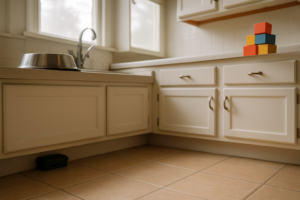
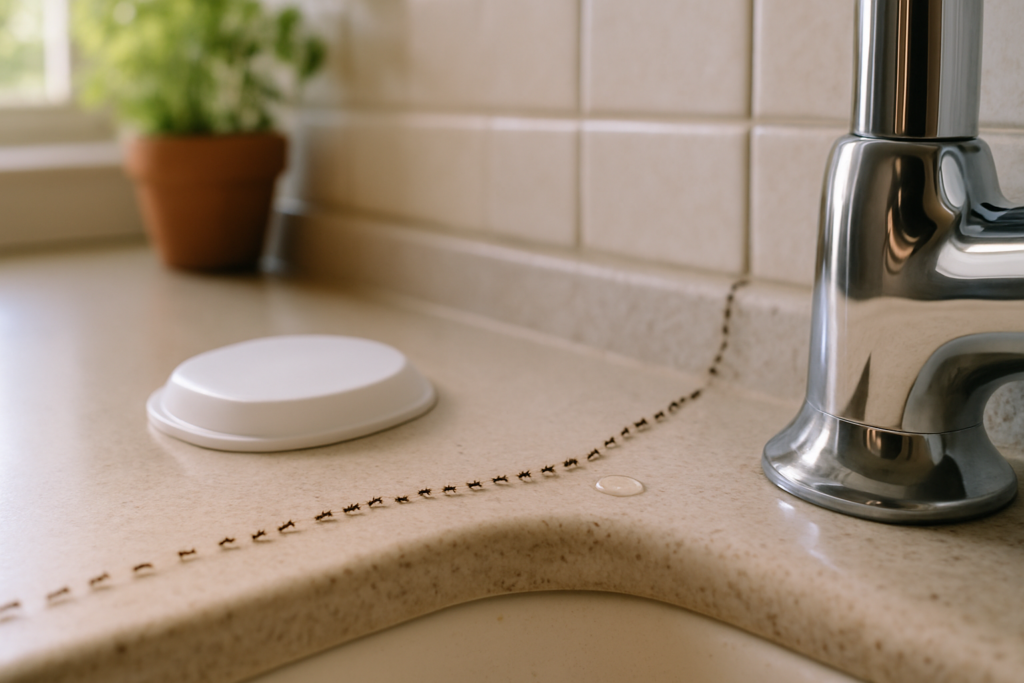
You wiped the counter, came back ten minutes later, and the ants were back. That’s usually when people start looking for a homemade ant killer spray that feels fast, simple, and safer to use around the house.
That instinct makes sense. For a kitchen line, a DIY spray can be a good first move. It just helps to know what it’s doing, what it won’t do, and why some ant problems in Santa Cruz County keep returning no matter how many times you spray.

Two Simple Homemade Ant Killer Sprays for Immediate Use
If ants are marching across the counter right now, two DIY options are worth trying first. They’re easy to make, they’re useful for immediate cleanup, and they can reduce visible activity quickly.
They are not colony treatments. Think of them as short-term control.
Soap and Water Spray
Plain dish soap mixed with water is the simplest contact spray. When it hits ants directly, it can kill them by breaking down the protective outer layer that helps them hold moisture.
Use a clean spray bottle and mix a small amount of dish soap with water. You don’t need an elaborate formula here. Spray the ants directly, then wipe the area clean so dead ants, food residue, and trail scent don’t keep drawing more foragers.
This method is practical for:
- Counter trails: Good for kitchens, window sills, and baseboards where you can see active movement
- Spot treatment: Useful when ants are clustered around a spill or pet bowl
- Quick cleanup: Easy to rinse and repeat as needed
The downside is simple. If you miss the nest, the colony keeps sending replacements.
Vinegar and Water Spray
Vinegar works differently. It’s less about killing the colony and more about disrupting how ants find their way. Homemade spray approaches using vinegar disrupt scent trails temporarily by masking the volatile organic compound markers ants use for trail following, but the effect lasts only 4 to 8 hours before ants can re-establish trails after evaporation, according to Orkin’s DIY ant treatment guidance.
That makes vinegar useful after you’ve wiped up active ants. Spray the trail area, clean the surface, and remove the route they were using.
Practical rule: If you use vinegar, treat it like a temporary reset, not a fix.
It also doubles as a cleaner on many sealed household surfaces. If you like natural cleaning approaches in general, these effective citrus cleaning methods are a useful read. Just be careful with natural stone and any surface that can react poorly to acidic cleaners.
Here’s the quick comparison most homeowners need:

| Spray | What it does well | Main limitation |
|---|---|---|
| Soap and water | Kills ants on contact | Must hit the ants directly |
| Vinegar and water | Disrupts trails and helps clean the area | Ants often return after the scent fades |
For a homeowner, that distinction matters. A spray can make the kitchen look better today. It usually won’t solve why ants showed up in the first place.
Why Sprays Alone Will Not Solve Your Ant Problem
The ants you see are only the part of the problem that’s out in the open. The colony is somewhere else, and that’s the piece a homemade ant killer spray usually misses.
With many species, workers are sent out to forage, then replaced as needed. So if you spray a visible line every day, you may feel like you’re making progress while the nest keeps operating normally.

The Santa Cruz Problem With Argentine Ants
In coastal California, Argentine ants are a big reason DIY ant work gets frustrating. University of California IPM data summarized in this Argentine ant discussion shows these ants form supercolonies, often ignore simple baits, and DIY sprays achieve less than 20% colony reduction. They can forage across wide networks, and their food preference can shift.
That’s why a homeowner may spray one trail in the kitchen and then find ants in the bathroom, pantry, or along a window frame the next day. The colony wasn’t solved. Traffic just shifted.
You can kill the ants on the counter and still leave the real problem untouched.
This is the same reason broad indoor spraying often disappoints. If you want the logic behind that, this breakdown of why spraying pests inside your home rarely solves the real problem lines up closely with what happens in ant jobs.
Why Homeowners Think The Spray Worked
Sprays create visible results. The line disappears, the counter looks clean, and activity pauses. From the homeowner’s point of view, that feels like success.
Then the ants reappear because the nest still has workers, brood, and one or more queens. That’s the trade-off with contact methods.
A quick way to consider it:
- Visible ants: The part you notice
- Trail system: The route they’ve established into the house
- Nest activity: The source you need to affect if you want results that last longer
For active pests, yard and home treatments can reduce what you’re seeing, but they don’t eliminate eggs or full pest life cycles and shouldn’t be treated as a permanent solution. Ants are a good example of why that matters. Control is about pressure reduction and targeting the source, not making blanket promises.
More Effective DIY Methods That Target the Entire Colony
If you want DIY ant control to do more than knock down a trail, you need a bait. Bait works because the ants carry it back instead of dying right away near the surface.
That delay is the point. Worker ants feed other ants in the colony, including the parts you can’t reach.
Borax Sugar Bait
A proven borax bait uses 1 tablespoon borax, 1 cup sugar, and 1/2 cup water. In the verified data, borax-based baits achieve 90% to 100% colony elimination within 7 to 14 days when ants carry them back to the nest, and that ratio matters because it isn’t immediately lethal on pickup, as explained in this borax bait formulation reference.
Place small amounts in protected bait stations or containers with tiny access points. Keep them out of reach of children and pets. Borax baits can work very well, but they require careful placement and patience.
Baking Soda and Powdered Sugar Bait
If you’d rather avoid borax, a 1:1 mixture of powdered sugar and baking soda is a common bait option. The sugar attracts foraging ants, and the baking soda becomes lethal after the ants consume it and carry it back, based on this Apartment Therapy bait method.
This method is simple to set in shallow lids near active trails. It’s often a better DIY choice than a spray if your goal is to affect more than the ants you can see.
Important safety note: Any sweet bait can attract pets. If you have a dog that gets into spills or sugary items, it’s smart to think through placement carefully. This veterinarian article on what if dogs eat sweeteners is a useful reminder that “household ingredients” doesn’t automatically mean “leave it anywhere.”
A Few Troubleshooting Notes That Matter
DIY baiting goes wrong for predictable reasons.
- Wrong food preference: Some ants want sweets, then shift toward protein or grease
- Bad placement: If bait is too far from activity, ants may never find it
- Too much cleaning too soon: If you remove every forager immediately, you can interrupt bait pickup
- Using spray and bait together: Strong repellent sprays near bait often reduce feeding
- Expecting overnight results: Good baiting usually takes time
If you want a broader home strategy beyond one recipe, these integrated pest management techniques are the right framework. The idea is to combine sanitation, entry-point reduction, moisture control, and targeted treatment instead of relying on one product.
FAQ Your Homemade Ant Killer Questions Answered
Does homemade ant killer spray actually work?
Yes, but only for the ants you hit or the trail you disrupt. A spray can be useful for immediate cleanup in the kitchen or bath. It usually won’t reach the nest, which is why the activity often returns.
Is vinegar safe to spray on countertops?
Usually on sealed surfaces, but not on every material. Vinegar can be a poor choice for natural stone and some delicate finishes. Test a small hidden area first if you’re unsure.
Is baking soda bait really effective?
It can be. A 1:1 mix of powdered sugar and baking soda works because ants are drawn to the sugar and carry the mixture back, where the baking soda becomes lethal after ingestion, based on the verified method above. It’s more strategic than a contact spray because it targets ant behavior, not just the visible trail.
Why are the ants ignoring my bait?
That usually means one of three things. The colony may be feeding on a different food source, the bait may be in the wrong spot, or nearby sprays and cleaners may be pushing the ants away before they feed.
How long should I wait before deciding DIY isn’t enough?
If you’ve cleaned thoroughly, placed bait carefully, and ants are still showing up in several parts of the home, it’s time to stop guessing. Repeated sightings in multiple rooms usually mean the colony is more established than a simple kitchen fix can handle.
Can I use homemade ant killer spray outside too?
You can use it on active trails, but outdoor use is often less reliable. Sun, wind, irrigation, and new foraging paths all work against surface sprays. That’s one reason outdoor ant pressure often needs a more targeted plan.
Should I try ammonia or stronger homemade mixes?
I wouldn’t jump to that. Stronger isn’t always better, especially around indoor surfaces, food prep areas, or pets. If you’re considering that route, this article on whether ammonia kills ants and what experts actually recommend gives a more grounded answer.
When to Call a Professional for Ant Control
Some ant problems are still reasonable DIY jobs. A light kitchen trail, one entry point, and a colony that responds to bait can often be managed at home.
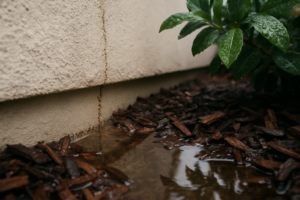
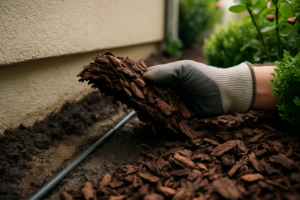
Call for help when the pattern changes. Ants in multiple rooms, recurring waves after baiting, activity around plumbing voids, wall lines, mulch edges, or repeated reinfestation usually means you’re dealing with a larger network than a homemade ant killer spray can handle.
If you’re hiring any home service company, the same common-sense advice applies as it would for any contractor. This guide on how to manage your home project is a good reminder to ask clear questions about process, scope, and expectations.
For ant work specifically, knowing when to call pest control saves a lot of trial and error. A good inspection should tell you where ants are entering, what conditions are helping them, and what kind of control is realistic.
A professional should also be honest about limits. Yard and home pest treatments address active pests only. They do not eliminate eggs or full pest life cycles, and they should never be sold as a permanent solution.
If homemade ant killer spray has turned into a repeating chore, West Pest Co. can take a look and give you a straightforward assessment for your Santa Cruz County home. No pressure, just clear advice on what’s happening, what treatment would involve, and what kind of results are realistic.