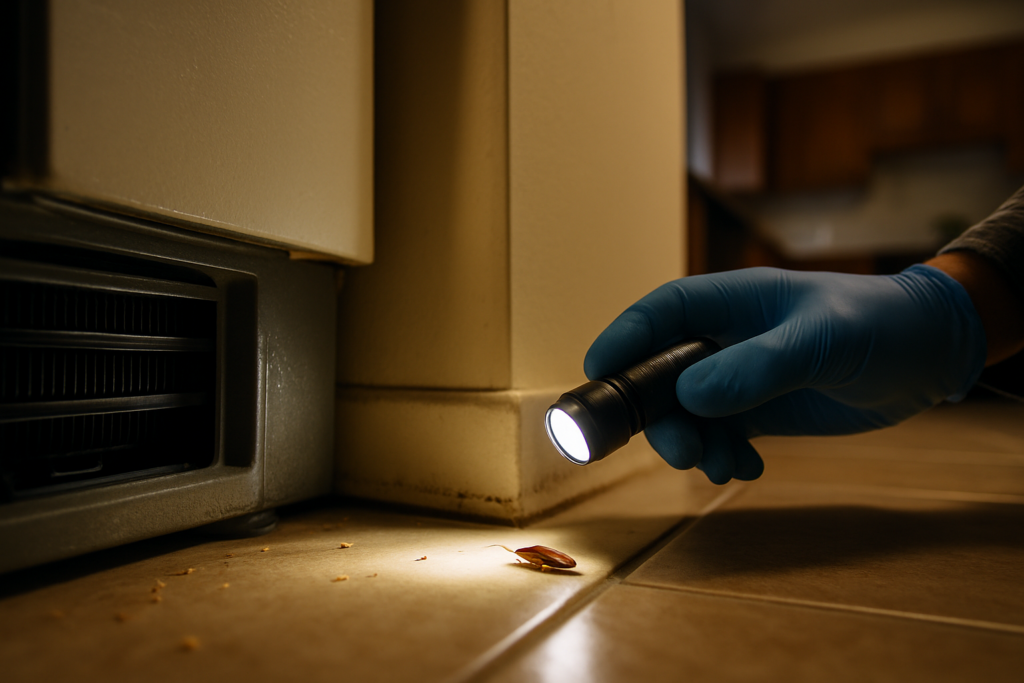
Direct Answer: A wet winter does not create new pests here. It pushes the ones already outside toward dry ground, so check vent screens, utility gaps, gutters, and stored food before the first big storm.
NOAA’s Climate Prediction Center put the odds of a very strong El Nino for the October through December window at roughly 95 percent in its August assessment. Forecasters also gave about a 69 percent chance that this event runs stronger than any on record going back to 1950.
Most people around here already know what a heavy rain year looks like. The atmospheric river winter of 2022-23 ended with a federal disaster declaration for Santa Cruz County in April 2023, and plenty of homeowners are still thinking about it.
Here is the part that matters for pests. A wetter than usual winter does not create new pests in this county. It changes where the ones already living outside decide to go, and your house is the driest thing on the block. This checklist walks through what I look at on a property before the first real system rolls in.
1. Check Your Crawl Space Vent Screens Before the Ground Saturates
This is the first thing I look at, every time. When soil stays wet for days instead of hours, outdoor burrows collapse and rats and mice go looking for dry ground. The nearest dry ground is usually under your house.
A homeowner on the West Side wrote in describing it almost word for word: they believed rodents had burrowed under the foundation and gotten into the walls, and they were hearing them in the mornings. A property manager over near Pleasure Point flagged deteriorated foundation and crawl space vent screens as the likely entry point on a rental.
On older coastal houses in this county, that is one of the most common weak spots. Salt air and fog are hard on metal screen.
Walk the full perimeter and look for:
- Rust holes in the screen mesh, especially on the shaded north and ocean-facing sides
- Screens that have pulled loose at a corner or bowed away from the frame
- Gaps between the screen frame and the stucco or siding around it
- Any opening bigger than a quarter, which is all an adult rat needs
Note what you find now. Repairs are far easier to schedule in October than in the middle of a January storm.
2. Look at Every Point Where Something Enters the House
Vent screens get the attention, but the openings that actually let rodents in are usually the boring ones nobody looks at. Anything that passes through a wall leaves a gap around it, and those gaps were often filled with foam or caulk that has been sitting in coastal weather for fifteen years.
Grab a flashlight and check where these penetrate the exterior:
- Water and gas lines at the foundation
- Electrical, cable, and irrigation conduit
- Dryer vents with broken or missing flaps
- Hose bibs and exterior outlets
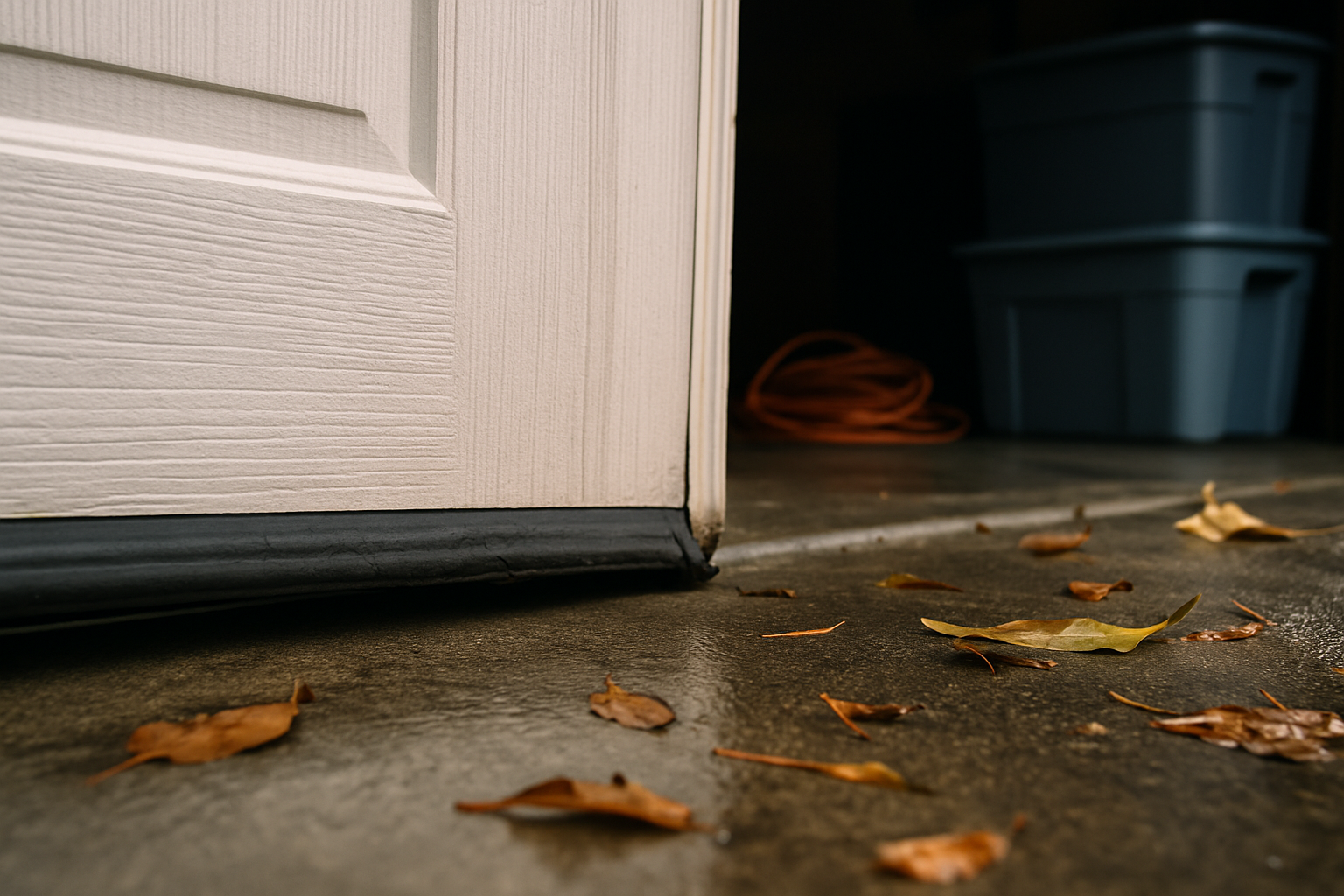
- The gap under a garage door seal, especially at the two bottom corners where the rubber wears first
The garage door corner is the one I point out most often. Concrete settles, the seal stops meeting the slab, and you end up with a half inch opening on a wall that connects straight into an attached storage space.
If you want a better sense of what a trained eye is picking up during this kind of walk, what pest inspectors actually look for inside your home covers it in more detail.
3. Clear the Gutters and Move Water Away From the Foundation
Water management is a pest issue here in a way it simply is not over the hill. Coastal fog and humidity mean a damp crawl space stays damp long after the rain stops. Inland homes dry out. Ours sit wet.
That lingering moisture is why cockroaches and spiders stay active through our mild winters instead of dying back the way inland pest calendars assume. A crawl space that holds water is a year-round habitat, not a seasonal one.
Before the first system:
- Clear redwood and pine needles out of gutters, since they pack down and hold water instead of flowing
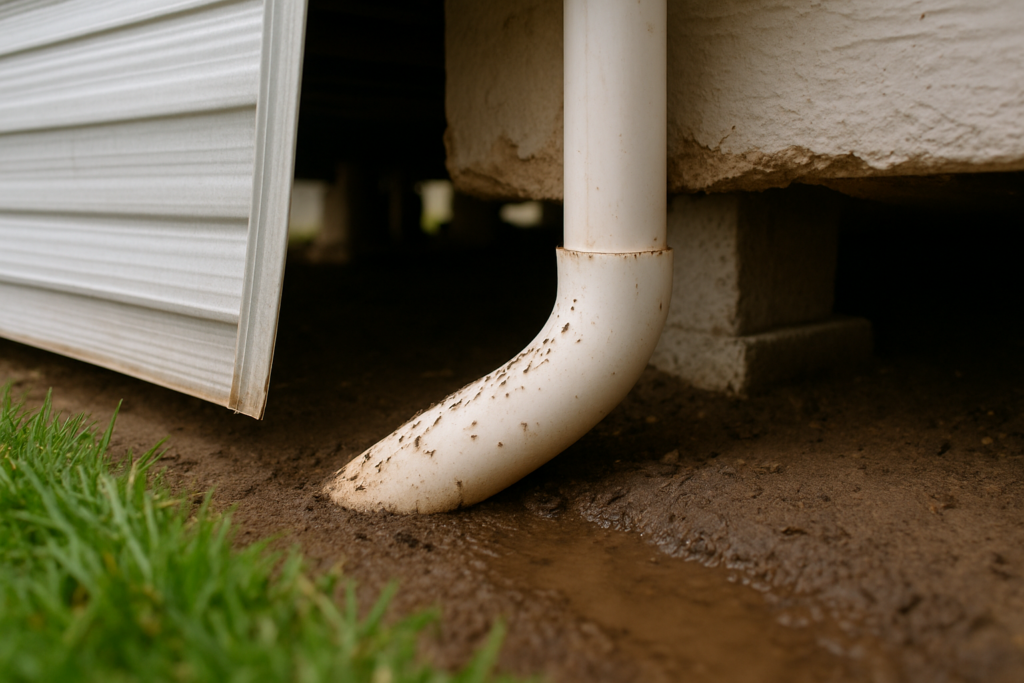
- Check that downspouts discharge at least 4 to 6 feet from the foundation, not straight down against it
- Walk the perimeter after a rain and mark low spots that puddle beside the house
- Look for splash-back staining on siding, which tells you where water has been sitting
Extenders on downspouts are cheap and take an afternoon. Regrading a low spot is a bigger job, but at minimum you want to know it is there so you can watch that section of crawl space through the winter.
4. Trim Branches Back Off the Roofline and Siding
Wet vegetation touching a house causes two problems at once. It holds moisture against the structure, and it works as a bridge.
Rats climb well. A branch resting on a roof edge or a wall of ivy running up the siding gives them a route straight to the eaves, where they find soffit gaps and attic vents. In the Santa Cruz Mountains and in the older neighborhoods around Soquel and Aptos, this is the single most common way rodents get above ground level.
What I look for:
- Any limb touching the roof, gutters, or siding, ideally trimmed back 3 feet or more
- Ivy, jasmine, and bougainvillea climbing exterior walls
- Dense shrubs pressed directly against the foundation
- Fence lines and arbors that run right up to the eaves
Do this before the wind picks up, not after. Winter storms push branches into contact with houses that had clearance in September, and that is when I start getting calls about scratching overhead. If you want the fuller picture on what draws them in, rats in the walls goes deeper on the causes.
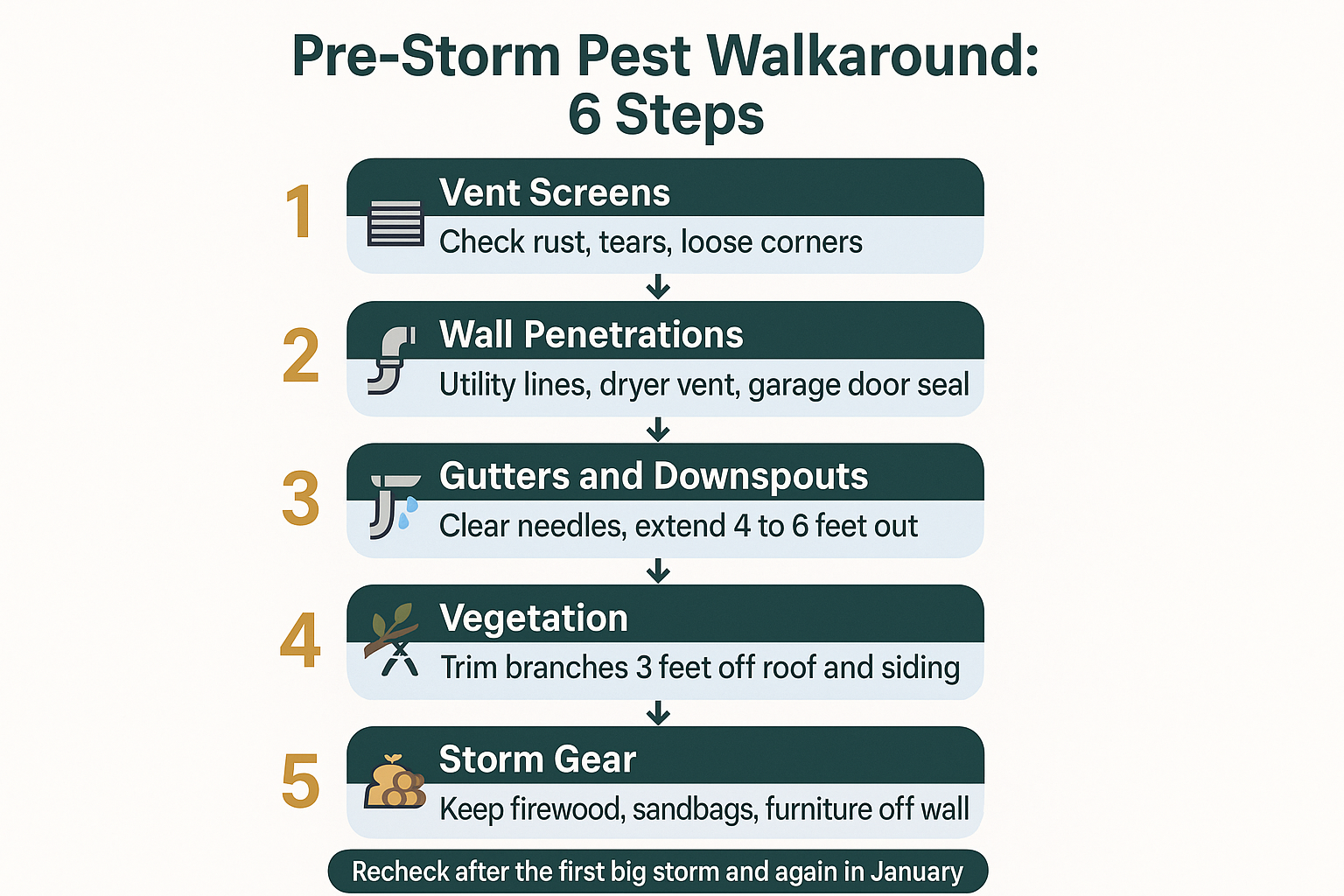
The Pre-Storm Walkaround, Step by Step
Here is the order I work in when I walk a property before a wet stretch, from the ground up.
5. Keep Storm Gear a Few Feet Off the House
This is the item almost nobody writes about, and it is the one I end up explaining most often in November.
The county’s own storm preparedness guidance tells people to secure outdoor items and stage sandbags, and that advice is correct. The issue is not the prep. It is where the prep ends up sitting.
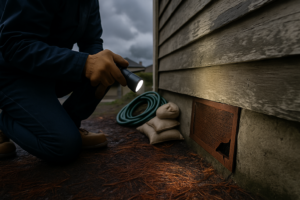
Every one of these gives rodents and spiders a dry, undisturbed place to spend the winter within a few feet of your walls:
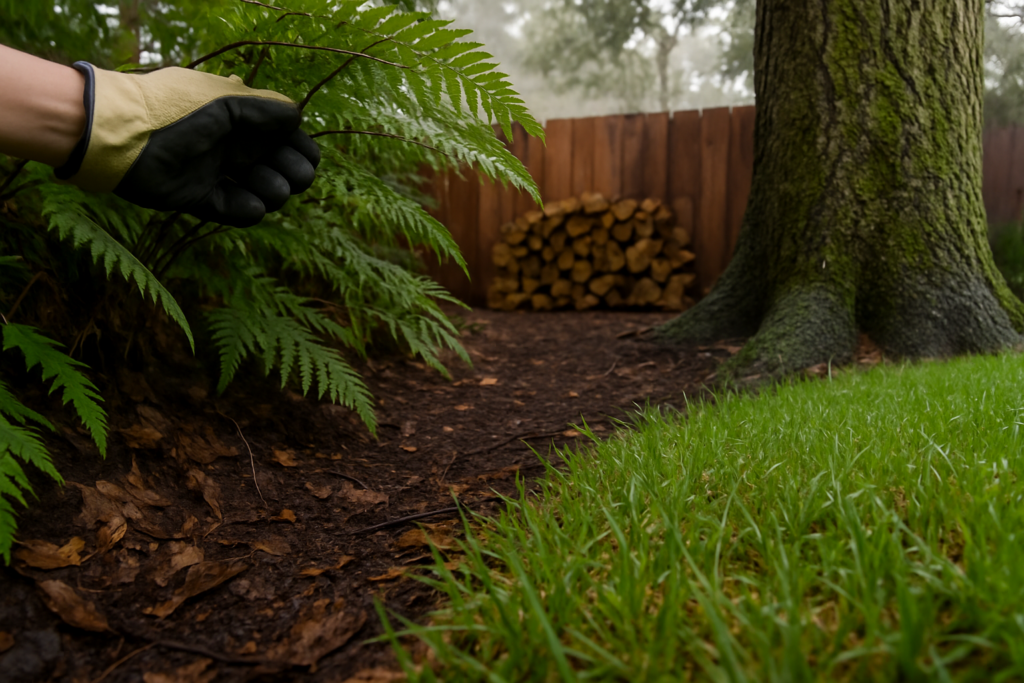
- Firewood stacked against the siding
- Sandbags leaned on the foundation or piled at a doorway
- Tarped woodpiles and covered equipment
- Patio furniture crammed into a garage or under the deck
- Empty pots, cushions, and plywood set flat on bare soil
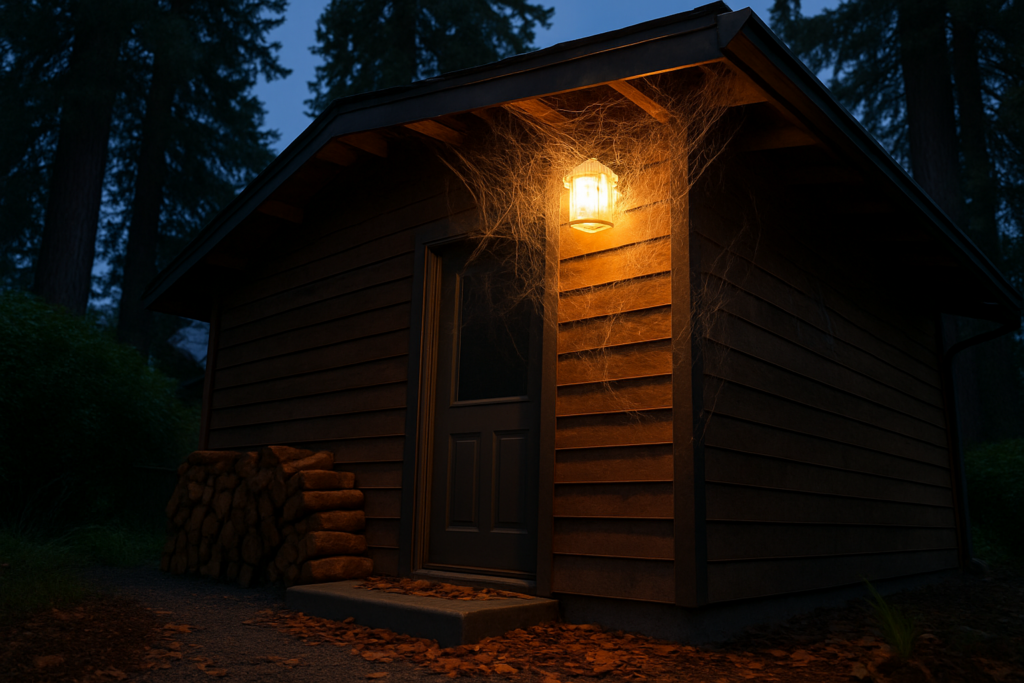
When homeowners in this county call me about spiders, they are usually describing garages, ADUs, sheds, and older houses. That is the same list of places that fill up with storm gear in November.
The fix is placement, not avoidance. Keep piles a few feet off the structure, up off bare soil on a rack or pallet, and pull tarps back once in a while so the space is not left undisturbed for four months.
6. Move the Storm Supply Pile Into Hard Sided Bins
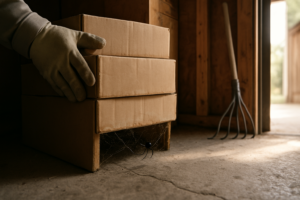
The emergency supply stash is a genuinely overlooked one. People do exactly the right thing, stocking up in October, and then store it all in cardboard boxes and paper bags in the garage.
That pile shows up right when rodents are hunting for dry shelter and calories. Cardboard, paper, and fabric are also nesting material, so you are handing them shelter and food in the same corner.
Watch these in particular:
- Emergency dry goods, rice, pasta, and crackers
- Extra pet food, which is one of the biggest draws I see
- Bird seed, usually the worst offender of the group
- Bulk paper products and cardboard flats
- Spare bedding and camping gear in soft bags
Hard sided bins with tight fitting lids solve most of it. Keep the whole stack off the floor and pulled away from the wall line, because that open strip along the base of the wall is where droppings and gnaw marks show up first and where you actually have a chance of catching a problem early.
Set a reminder to check the pile again in January. It usually sits untouched for months, which is exactly the condition rodents are looking for.
Quick Reference: What to Check and Why It Matters in a Wet Winter
A one-screen version of the walkaround you can pull up on your phone while you are outside.
| Area | What to Look For | Why It Matters in Heavy Rain |
|---|---|---|
| Crawl space vents | Rust holes, torn mesh, loose corners | Collapsed outdoor burrows push rodents toward dry ground under the house |
| Wall penetrations | Gaps at pipes, conduit, dryer vents | Old foam and caulk fail after years of coastal weather |
| Garage door seal | Worn or gapped bottom corners | Connects an enclosed storage space directly to the yard |
| Gutters and downspouts | Packed needles, discharge at the foundation | Keeps crawl spaces damp long after the rain stops |
| Vegetation | Branches on the roof, ivy on siding | Moisture against the structure plus a climbing route to the eaves |
| Storm gear | Firewood, sandbags, tarps against the house | Dry, undisturbed harborage a few feet from the wall |
| Supply storage | Cardboard, bird seed, pet food on the floor | Shelter, nesting material, and calories in one spot |
7. Know the Three Signs Worth Checking After the First Real System
Prep work is only half of it. The first big storm is a stress test, and it tells you where the house is weak.
Give it a day or two after the rain passes, then go look for three things:
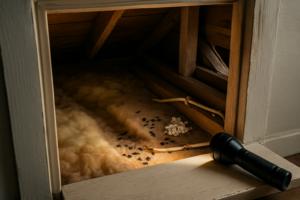
- New droppings along a wall line, usually in the garage, a back closet, or under a sink
- Fresh gnawing at a vent screen, which looks like bright, clean metal or wood edges where weathered material used to be
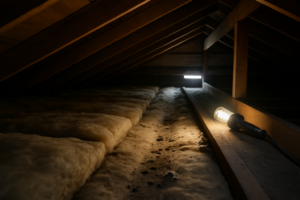
- Scratching sounds that start after dark, most often overhead or inside a wall
Any one of those means something got in during the storm, not before it. That is useful information, because it narrows down where to look.
Droppings in particular deserve careful handling rather than a broom and a dustpan. What to do after you find rodent droppings walks through that.
If you are hearing activity and cannot find the source, that is usually the point where the DIY approach stops paying off. Knowing when to stop handling it yourself is a fair judgment call, and it is different for everybody.
8. Be Realistic About What Storm Prep Actually Does
I would rather be straight with you than sell you a feeling of certainty.
Everything on this list lowers pressure and buys time. It does not make a house pest proof for the winter, and any company promising a permanent result during a heavy rain year is overselling. Houses in this county are old, wood framed, and sitting in wet soil for months. Conditions change.
One more thing worth saying plainly: poison bait is not the storm season shortcut people assume it is, and California’s rules on rodenticides have changed in ways most homeowners have not caught up with.
What prep actually gets you is a shorter list of weak points, an earlier warning when something does get in, and a much simpler problem to solve in January than the one you would have had otherwise. For homes with recurring conditions like coastal moisture and heavy vegetation, an ongoing residential approach tends to make more sense than reacting each time something shows up.
Frequently Asked Questions About Storm Season Pest Prep in Santa Cruz County
Does a strong El Nino winter actually mean more pests?
Not more pests, exactly. It means relocated pests. Saturated soil collapses outdoor burrows and floods low ground, so rats and mice that were living fine in a yard or greenbelt start looking for dry shelter. Your crawl space is the closest option.
When should I do this walkaround?
Ideally before the first big system, so sometime in October or early November. If you are reading this after the rain has already started, do it anyway on a dry day. The vent screens and the storage pile are the two items I would not put off.
Do I really need to worry about spiders and roaches in winter here?
In Santa Cruz County, yes. Inland pest calendars assume a cold season that knocks activity down, and we do not really get one. Fog, mild temperatures, and damp crawl spaces keep spiders and cockroaches active through the winter, which is why garages and ADUs stay a problem year round.
Is it worth having someone look at the crawl space before winter?
It depends on the house. If you have an older home, a history of rodent activity, or you have never actually been under there, a set of eyes before the rain starts is time well spent. If your home is newer, dry, and quiet, the walkaround in this article covers most of it.
What does storm season pest work usually cost?
It varies quite a bit, and I would not quote a number blind. Cost depends on home size, crawl space access, how many entry points are involved, and whether there is already active pest activity versus prevention only. Call for an exact figure on your property rather than trusting a range you read online.
Want a Set of Eyes on the Crawl Space Before the Rain Starts?
The hardest weeks of a wet winter in Santa Cruz County are the ones where everybody calls at once, which is why response speed matters more in December than it does in June. West Pest Co. is owned and operated by Matthew West, who often takes the call himself and walks you through what he is seeing rather than handing over a plan, backed by back to back Readers Choice awards for Best Pest Control in Santa Cruz and a 5 star Google rating. As one customer put it, “I was incredibly impressed by how responsive and professional they were from start to finish.” If you would like someone to look at your vents and crawl space before the first system, the number is (831) 430-8402 or westpestco.com.