Direct Answer: California has banned second-generation anticoagulant rodenticides for most residential uses since 2021, with additional restrictions added in 2023 and 2024. Trapping, exclusion, and non-anticoagulant alternatives are still legal and effective.
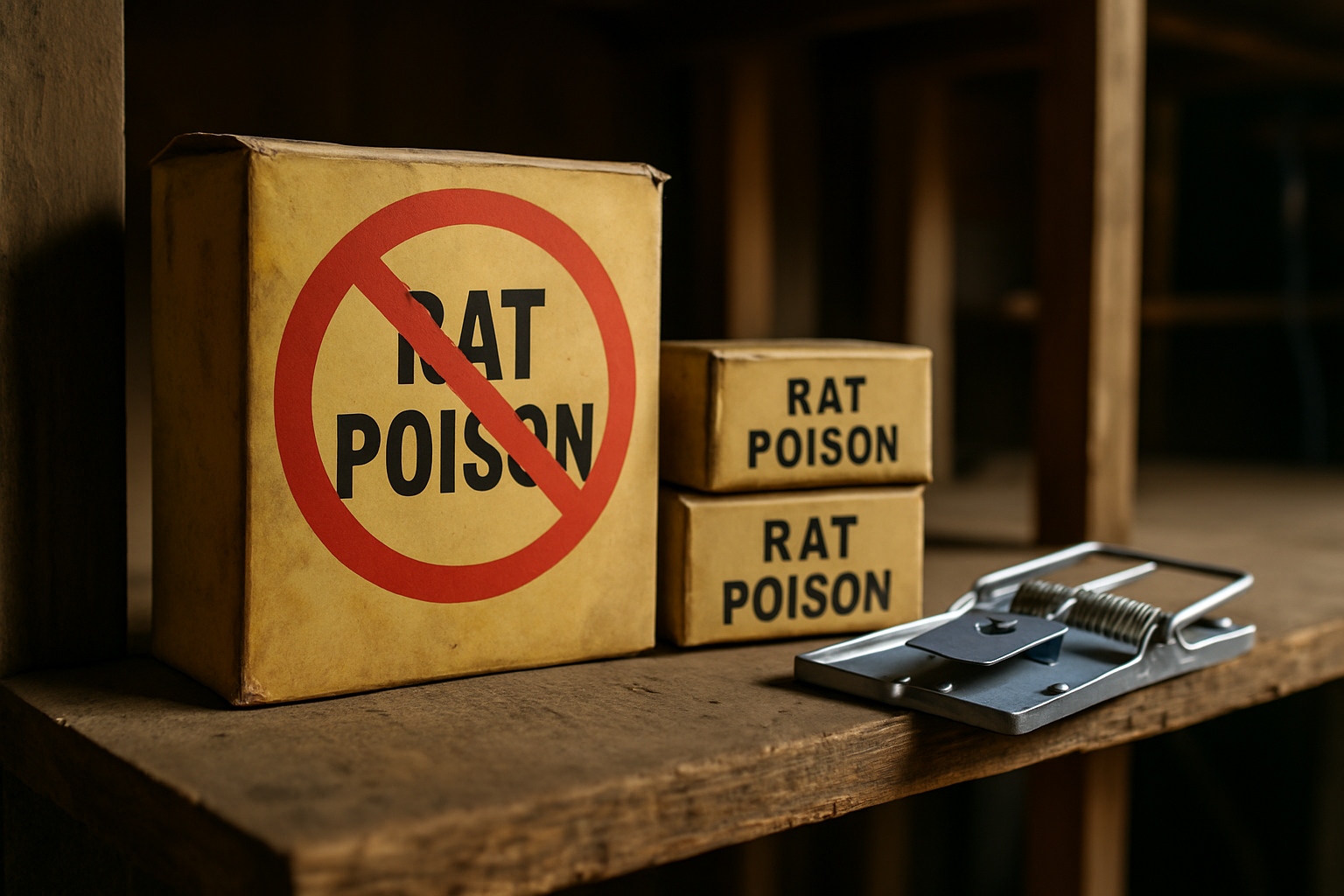
A lot of Santa Cruz homeowners still have a box of rat poison sitting on a garage shelf from a few years back. Here’s something worth knowing before you reach for it: that product may now be illegal to use in California.
Over the past four years, California has passed three separate laws, AB 1788 in 2020, AB 1332 in 2023, and AB 2552 in 2024, that together restrict or outright ban most residential and commercial uses of anticoagulant rodenticides. The most potent products, once sold freely at hardware stores across Santa Cruz County, are now off-limits for nearly everyone who isn’t a licensed agricultural operator or responding to a declared public health emergency.
Most people don’t know this yet. And honestly, some pest control operators don’t either. This article breaks down what changed, why it changed, and what still works when you’re dealing with rats or mice in your home.
What California Actually Banned, and When
The key distinction in these laws is between first-generation anticoagulant rodenticides (FGARs) and second-generation anticoagulant rodenticides (SGARs). Both work by preventing blood from clotting, but SGARs are far more potent and persist much longer in animal tissue.
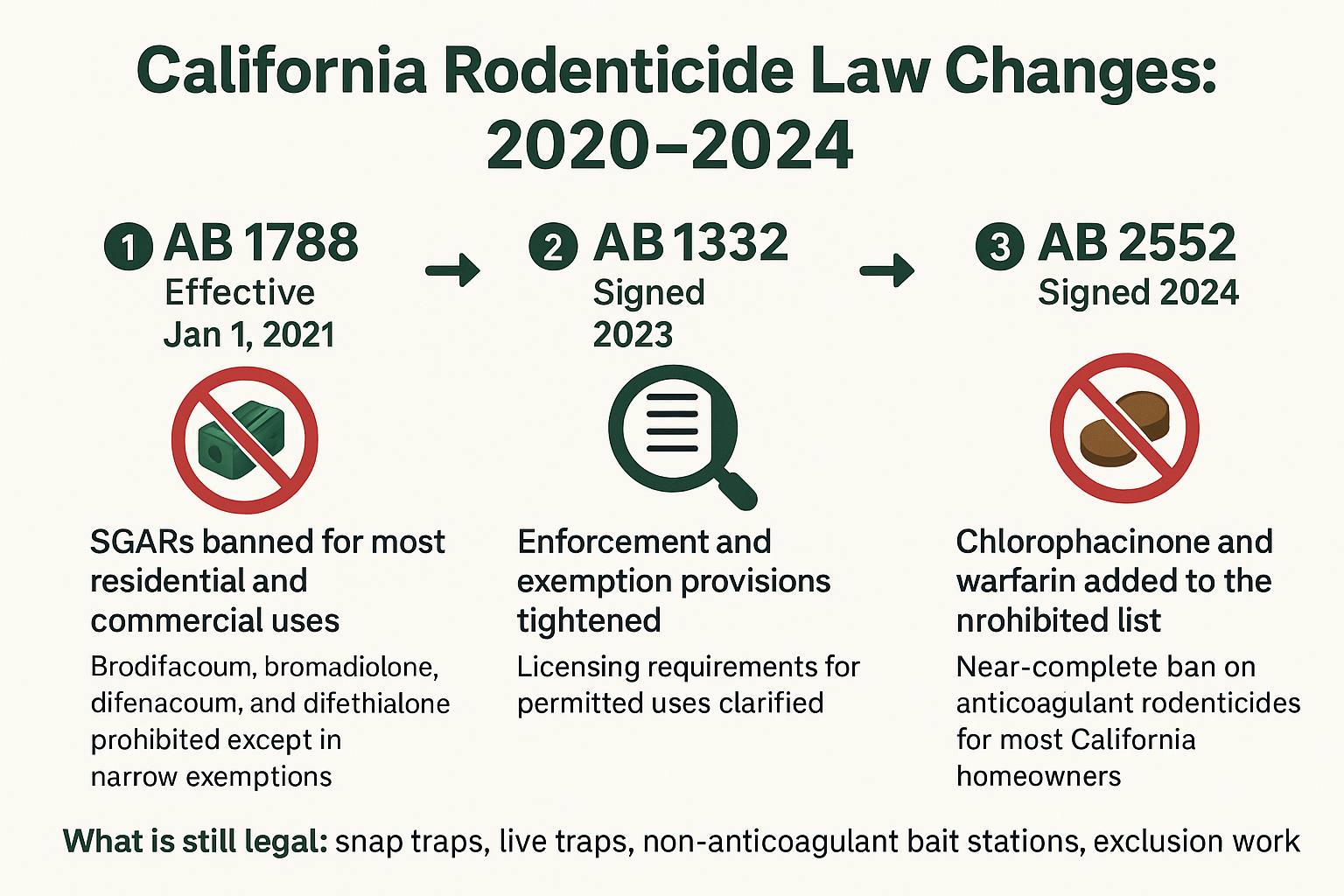
AB 1788, which took effect January 1, 2021, prohibited the use of SGARs for most residential and commercial purposes throughout California. The banned active ingredients include:
- Brodifacoum
- Bromadiolone
- Difenacoum
- Difethialone
These were the same compounds found in products like d-CON Max Strength and Tomcat With Bromethalin, products that were sold at Ace Hardware and Home Depot up until the ban.
Then in 2023 and 2024, California went further. AB 2552, signed in 2024, added chlorophacinone and warfarin, two first-generation anticoagulants, to the prohibition list for most uses. What was once a partial ban on the strongest products has become a near-complete prohibition on the entire anticoagulant category for everyday residential use.
If you have an old box of rat bait in your garage, check the active ingredient. If it’s any of the above, you shouldn’t be using it. California’s Department of Food and Agriculture maintains current guidance on what’s permitted.
Why This Matters More in Santa Cruz Than Almost Anywhere Else
This isn’t just a regulatory technicality. The reason California passed these laws is the same reason they hit especially close to home here on the Central Coast.
SGARs don’t kill rodents immediately. A rat that eats poisoned bait may wander for days before it dies, behaving sluggishly and becoming easy prey. Every owl, hawk, coyote, or bobcat that catches that rat absorbs the poison too. State researchers found SGARs in over 90% of mountain lions and 88% of bobcats sampled across California, animals that likely never came within a hundred yards of a bait station.
In Santa Cruz County, this isn’t an abstract concern. The open spaces at Henry Cowell Redwoods, Wilder Ranch, and along the San Lorenzo River corridor support active populations of barn owls, red-tailed hawks, and bobcats. These animals are working as natural rodent control every single night. Poisoning the local rodent population with anticoagulants doesn’t just kill rats, it poisons the predators that would have kept the rat population down in the first place, which means more rats over time, not fewer.
One of our own Google reviewers made this point after comparing quotes from several companies: they noted that Matthew “was the only one who seemed educated on and aware of the long-term ecosystem effects of poison.” That stuck with me, because it’s exactly right. Poison-first thinking is counterproductive in an ecosystem where natural predation is still active, and Santa Cruz has that ecosystem.
The California Rodenticide Timeline at a Glance
Here’s a quick look at how California’s rat poison laws have evolved since 2020 and what each law actually changed.
So What Actually Works Now?
This is what most homeowners really want to know when they hear about the bans. The short answer is: the most effective rodent control methods were never poison-dependent to begin with.
Here’s what remains fully legal and, in my experience, more reliably effective:
- Snap traps and mechanical traps. Modern metal snap traps are far more effective than the old wooden kind. We set them in active run paths, not randomly, based on what the inspection reveals. One homeowner in our service area reached out recently saying he’d tried trapping mice in his kitchen for weeks without success. Placement is almost always the issue. Traps positioned correctly along wall edges and entry points catch rodents that never would have taken bait.
- Exclusion work. This is sealing the actual entry points, gaps in the foundation, openings around pipes, deteriorated vents, and similar vulnerabilities. One reviewer mentioned Matthew found an access point they’d never noticed in over a year of dealing with the problem. Rodent exclusion is the part of the process that most homeowners underestimate, it’s also what prevents the same problem from coming back.
- Non-anticoagulant bait stations. Products using active ingredients like bromethalin or zinc phosphide are not part of the anticoagulant category and remain permitted under current California law for licensed pest control operators. These aren’t the same chemicals that were accumulating in mountain lions, and they’re a legitimate option when trapping alone isn’t sufficient.
If you want to understand more about what distinguishes a genuine infestation from an isolated incident, this breakdown of the difference between a rodent problem and a rodent infestation is a useful place to start before deciding how to respond.
Anticoagulant Rodenticides: Legal Status at a Glance
This table shows how the most common rodenticide active ingredients are classified under current California law for residential and general commercial use.
| Active Ingredient | Generation | Legal for Residential Use in CA? |
|---|---|---|
| Brodifacoum | Second-generation (SGAR) | No, banned since Jan 1, 2021 |
| Bromadiolone | Second-generation (SGAR) | No, banned since Jan 1, 2021 |
| Difenacoum | Second-generation (SGAR) | No, banned since Jan 1, 2021 |
| Difethialone | Second-generation (SGAR) | No, banned since Jan 1, 2021 |
| Chlorophacinone | First-generation (FGAR) | No, added to prohibition under AB 2552 |
| Warfarin | First-generation (FGAR) | No, added to prohibition under AB 2552 |
| Bromethalin | Non-anticoagulant | Permitted (with restrictions, consult a licensed operator) |
| Zinc phosphide | Non-anticoagulant | Permitted in certain forms (licensed use) |
Why the Eco-Friendly Approach Was Already the Better Approach
One thing I want to be clear about: the methods these laws are pushing people toward aren’t compromises. They’re what thoughtful rodent control looked like before cheap poison became the default.
Santa Cruz’s coastal climate creates year-round rodent pressure that most inland communities don’t experience the same way. The fog and humidity keep soil moisture high, food sources accessible, and harborage conditions favorable almost every month of the year. Rats and mice push indoors earlier in the fall here, and they don’t disappear in winter the way they might in colder climates. Understanding what draws them into your home is the first step toward dealing with them effectively.
The approach that holds up over time, inspection, targeted trapping, exclusion, and follow-up, is the same approach West Pest Co. has used from the start. It’s not a response to the new laws. It’s just how rodent control actually works. Several customers who contacted us recently specifically asked for “natural,” trapping-based, and sealing-based approaches, which tells me that Santa Cruz homeowners are increasingly arriving at the right conclusion on their own.
And if you’re wondering whether rats might have come back after a previous treatment, this piece on why rats keep returning even after you’ve dealt with them explains exactly why exclusion is the part that can’t be skipped.
Frequently Asked Questions About California’s Rat Poison Laws
I have an old box of rat bait in my garage. Can I still use it?
Check the active ingredient on the label. If it lists brodifacoum, bromadiolone, difenacoum, difethialone, chlorophacinone, or warfarin, it is no longer legal for residential use in California. Using a banned product doesn’t just put you on the wrong side of state law, it creates real risk for the owls, hawks, and other wildlife in your neighborhood. Dispose of it properly through your county’s hazardous household waste program and replace it with a legal alternative.
Do these laws apply to pest control companies, or just homeowners buying products at the store?
Both. Licensed pest control operators in California are also subject to these restrictions. A company that still shows up and uses banned anticoagulant bait stations is operating outside the law. If a pest control tech recommends a product and you want to know what’s in it, you’re completely within your rights to ask.
Are snap traps really as effective as bait?
In most residential situations, yes, often more effective. The catch rate with snap traps is directly tied to placement and bait selection, not the trap itself. A snap trap positioned in the right run path with the right lure outperforms a bait station that a rat chooses to avoid. The key is reading the signs, droppings, rub marks, entry points, before placing anything.
What should I do if a pest control company is still offering to use products I’ve read are banned?
Ask them specifically which active ingredient they’re using and whether it’s permitted under AB 1788 and AB 2552. A knowledgeable operator will answer that directly. If they can’t, or they dismiss the question, that tells you something important about how up to date they are.
If I seal my home, is that enough to solve a rat problem on its own?
Exclusion is the most important long-term step, but if rats are already inside, sealing alone doesn’t remove them. The process is typically: inspection to find entry points, trapping to address active activity, then sealing once the infestation is under control. Sealing before removing existing rodents can actually trap them inside. The order matters.
My neighbor uses rat poison in their yard. Is that still legal?
It depends on what product they’re using. Anticoagulant rodenticides are banned for residential use regardless of whether someone is treating inside or outside. If your neighbor has an old product and doesn’t know about the changes, a calm heads-up is genuinely useful, for them and for the owls in your neighborhood.
Dealing With Rodents in Santa Cruz County?
West Pest Co. has been handling rodent problems across Santa Cruz County, from the west side of Santa Cruz to Aptos, Scotts Valley, Corralitos, and beyond, using trapping and exclusion methods that were never dependent on the products California has now banned. Matthew West has earned back-to-back Readers Choice Best Pest Control recognition and a 5-star Google rating by doing the job honestly and explaining exactly what he finds. If you’ve got rats or mice and want a straight answer about what to do, call (831) 430-8402 or visit westpestco.com.