Direct Answer: Before touching a wasp or yellow jacket nest, identify the species first — paper wasps and yellow jackets behave very differently and require different responses. Never spray a nest yourself without confirming you’ve reached the full colony.
A homeowner recently reached out about a small, active wasp nest sitting directly above the entrance door to her backyard studio. She wanted it gone quickly — but she also wanted it done safely, without harsh chemicals, and without making the situation worse. That situation is more common than most people realize, and it’s exactly the kind of problem where doing the wrong thing first creates a much bigger problem than the nest itself.
Every summer in Santa Cruz County, nests that were marble-sized in April grow into grapefruit-sized colonies by late June. By July, those same nests are actively aggressive near doorways, eaves, and deck structures where people walk every day. The wooded hillsides from Scotts Valley through Ben Lomond give wasps and yellow jackets ideal nesting habitat — mature trees, old wood structures, and plenty of soil cavities near garden beds.
Before you touch anything, there are two things worth understanding: what species you’re dealing with, and what actually happens when a DIY approach only partially works. Getting those two things right changes your decision entirely.
Paper Wasps vs. Yellow Jackets: The Difference That Changes Your Risk
These two insects get lumped together constantly, but they behave very differently — and that matters before you decide what to do.
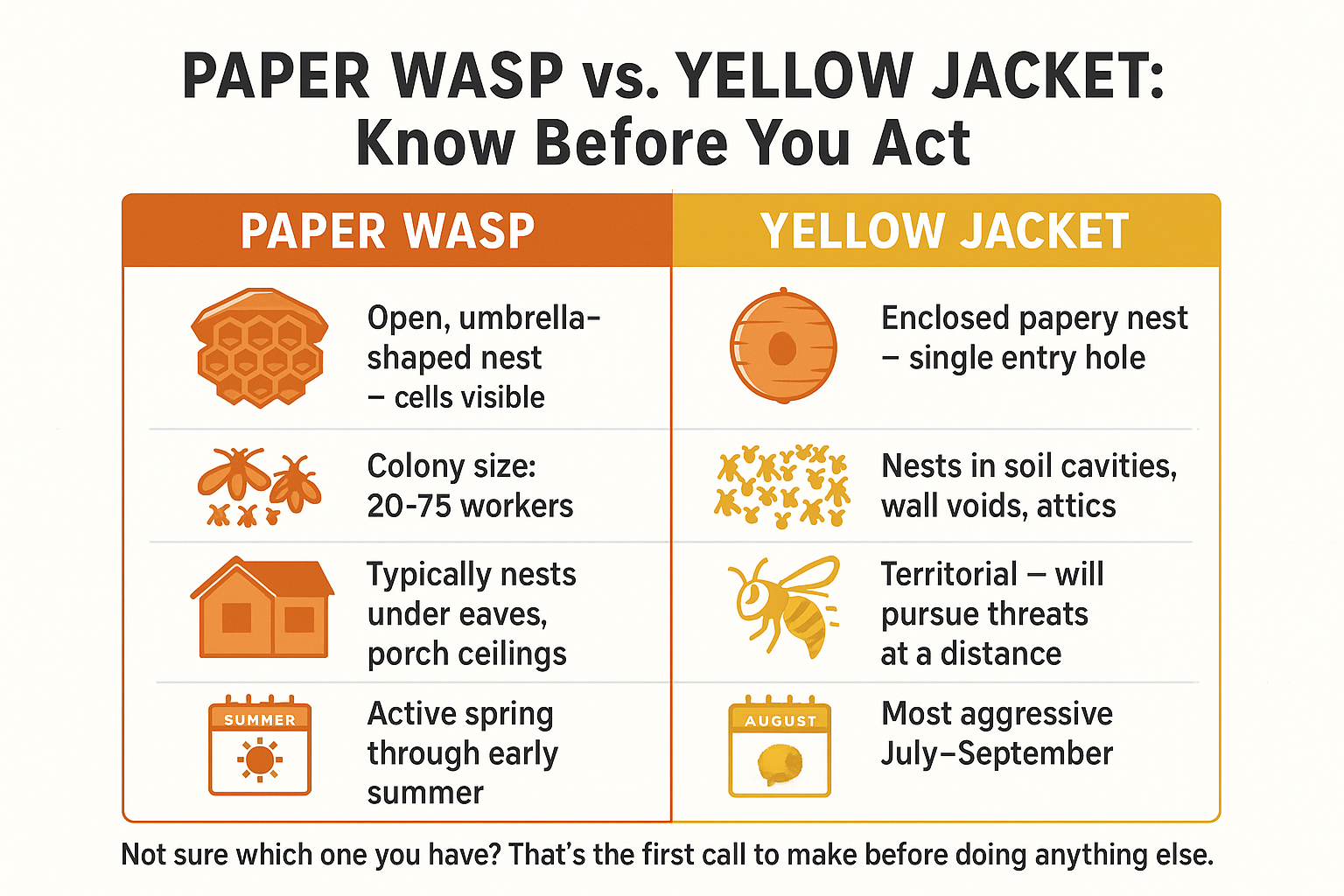
Paper wasps build the open, umbrella-shaped nests you’ve probably seen hanging under eaves or from porch ceilings. The individual cells are visible, usually uncapped, and the nest looks almost architectural. Paper wasp colonies are generally smaller — often 20 to 75 workers — and these insects are not particularly territorial unless the nest is physically touched or someone gets very close. If you’re seeing this type of nest in a low-traffic area and nobody is near it, calm observation is a reasonable first step.
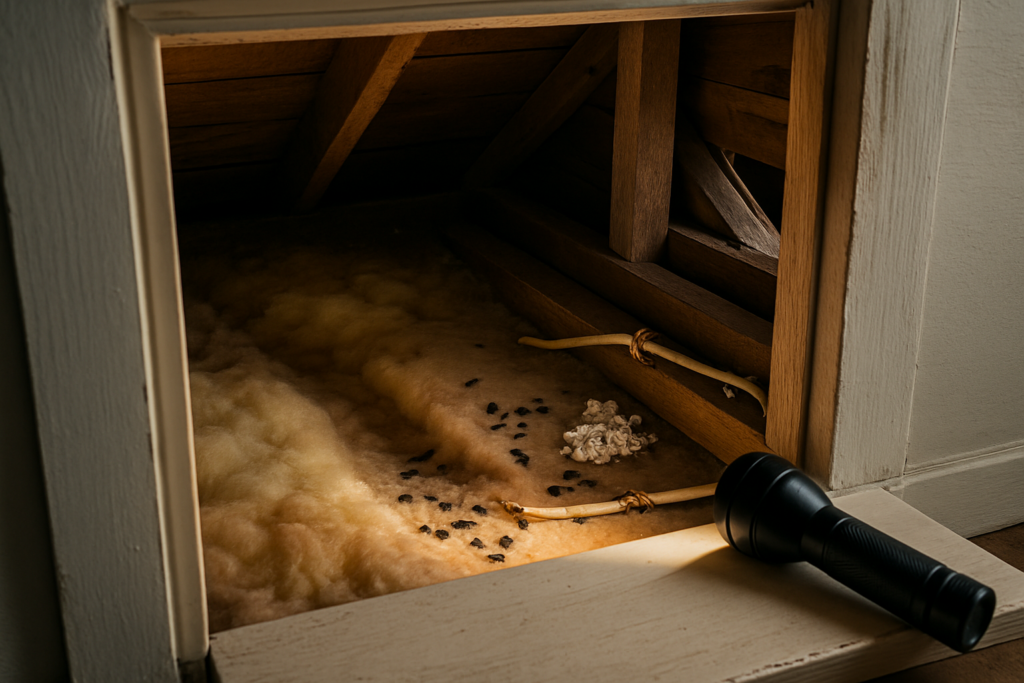
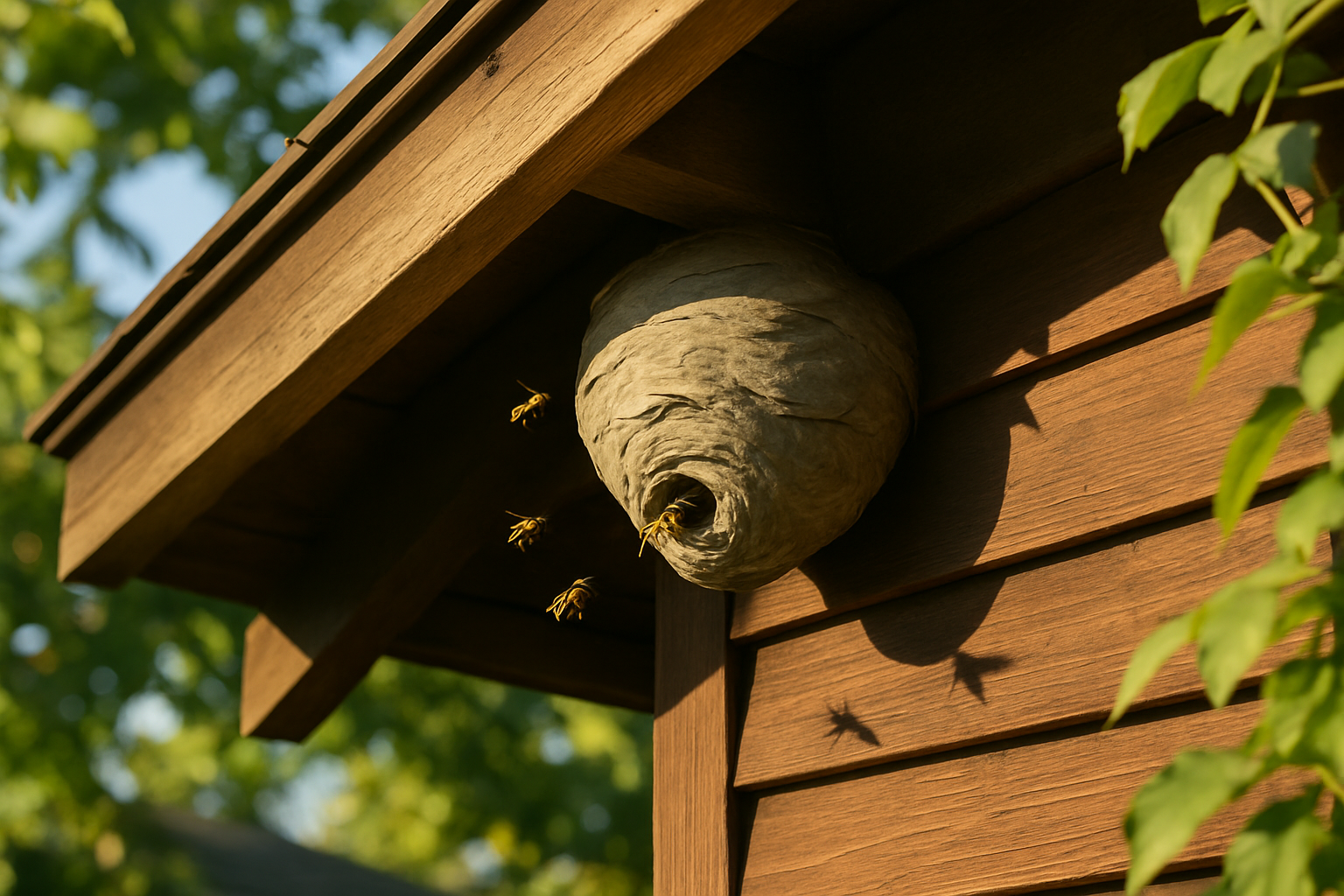
Yellow jackets are a different situation. They build enclosed paper nests — the ones that look like a gray ball or elongated pod — and they frequently build in places you can’t easily see:
- Underground soil cavities, especially near garden beds
- Wall voids in older wood-frame homes
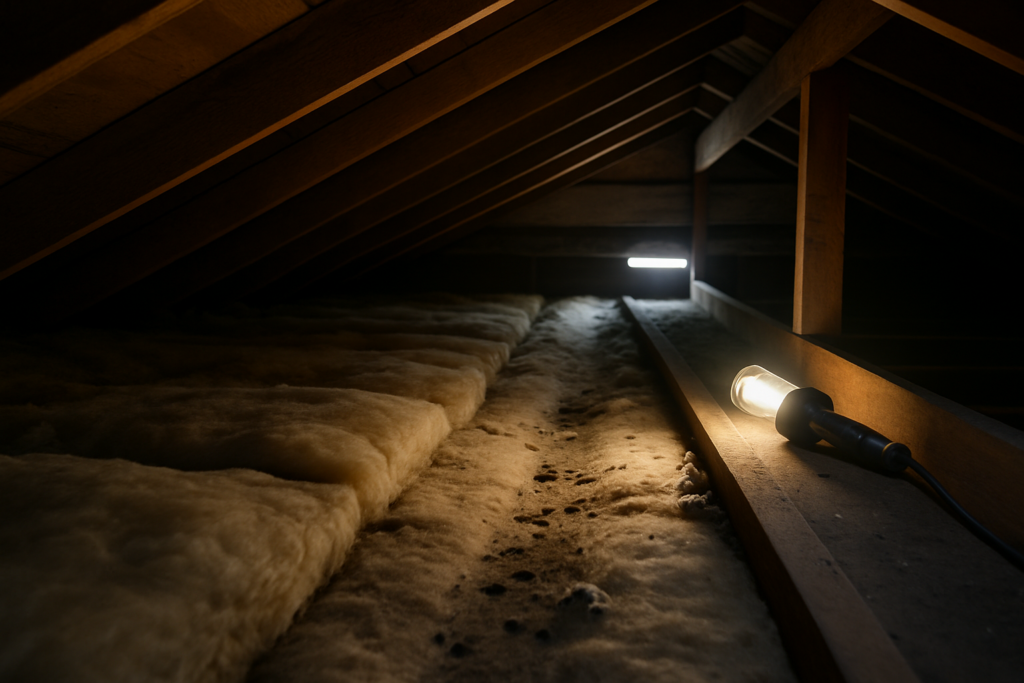
- Attic spaces and crawl spaces
- Hollow stumps and dense shrub root systems
Yellow jacket colonies are much larger, sometimes reaching several thousand workers by late summer. They’re territorial at a distance and will pursue a perceived threat well beyond the nest itself. By August, colony stress increases naturally as the season progresses, and stings near previously quiet nests become more common — even without obvious provocation.
Knowing which one you’re looking at is the first decision point. If you see an open, comb-style nest with visible cells, that’s almost certainly a paper wasp. If you see a solid, papery enclosure — or you’re hearing buzzing from inside a wall or from a hole in the ground — that’s a yellow jacket situation, and it warrants a different level of caution. For a more detailed breakdown of where wasps are most likely hiding on your property, that guide covers common nesting sites by structure type.
The Most Common DIY Mistake — and Why It Makes Things Worse
This is the part I want every Santa Cruz homeowner to read before they reach for a can of spray.
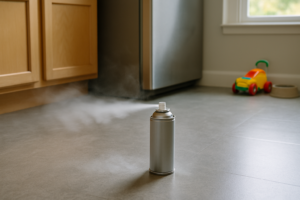
The most dangerous move is spraying a nest at night and assuming the problem is handled by morning. Here’s why that logic fails.
A standard can of store-bought wasp spray reaches the outer surface of a nest. For a visible paper wasp nest under an eave, that may be enough — the colony is small and exposed. But for a yellow jacket nest inside a wall void, an attic space, or an underground cavity, that spray contacts only the workers near the entrance. The queen, the brood, and the bulk of the colony remain untouched.
The result? The surviving population becomes significantly more aggressive. Workers that weren’t defensive before are now responding to what they perceive as an attack. You’ve disturbed the nest without eliminating it, and that’s often when people get stung.
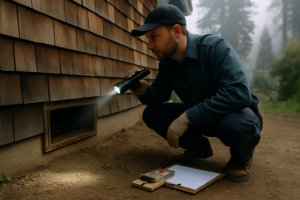
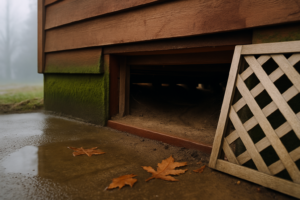
This is especially relevant for older homes in Santa Cruz — many of the wood-frame bungalows and hillside cabins from Aptos to the mountains have gaps in siding, soffit voids, and crawl spaces that give yellow jackets access to cavity nesting sites that are completely invisible from outside. The UC IPM program notes that yellow jacket colonies in wall voids are among the most difficult to treat because the full extent of the nest often can’t be assessed from the entry point alone.
If you’re not certain the entire colony has been reached — and with cavity nests, you almost never can be — a partial treatment creates more risk, not less. That’s the core reason a high-traffic nest location, like the doorway studio situation described earlier, calls for a more careful approach than a quick fix from a hardware store shelf.
Paper Wasp vs. Yellow Jacket: A Quick Field Guide
Use this comparison to identify which stinging insect you’re dealing with before deciding on next steps.
When Observation Is Fine vs. When to Call a Professional
Not every wasp nest is an emergency. This breakdown helps you decide where your situation actually falls.
| Situation | Likely Species | Recommended Action |
|---|---|---|
| Open comb nest under eave, low-traffic area, no one nearby | Paper wasp | Monitor from a distance — may not need removal |
| Open comb nest directly above doorway or walkway | Paper wasp | Professional removal recommended — disturbance is inevitable |
| Enclosed papery nest visible on structure | Yellow jacket | Call a professional — colony size is unknown |
| Buzzing sound inside wall or ceiling | Yellow jacket | Do not spray — call a professional immediately |
| Hole in ground with heavy wasp traffic | Yellow jacket | Do not disturb — professional treatment required |
| Small nest found in early spring, minimal activity | Either species | Watch it — nests are small and manageable; reassess in 2–3 weeks |
What Professional Wasp and Yellow Jacket Removal Actually Looks Like
When a professional handles a wasp or yellow jacket nest, the first thing they do is assess the full situation — not just the part of the nest that’s visible.
For an exposed paper wasp nest, removal is usually straightforward. The nest is treated and removed in a single visit, and because paper wasp colonies are small, the risk during treatment is manageable with proper protective gear and the right product applied correctly.
For yellow jacket nests in cavities — walls, attics, underground — the process is more involved. A technician will identify the entry and exit points, assess whether there are multiple access holes, and apply treatment in a way that reaches the interior of the nest rather than just the workers at the entrance. In some cases, a follow-up visit is needed to confirm the colony has been fully addressed. That’s a realistic expectation, not a failure.
For cavity nests inside walls, it’s also worth knowing that the nest material itself sometimes needs to be removed — especially if it’s inside a living space — to prevent residual attractants that can draw other pests. A technician who skips that step is leaving something behind.
As for cost, professional wasp and yellow jacket removal in the Santa Cruz area can vary considerably depending on nest size, location, and access difficulty. A straightforward exposed nest typically runs less than a hidden cavity nest that requires interior access or return visits. Reaching out directly for a specific situation is the only way to get an honest number — there’s too much variation for a single estimate to mean much. You can also read more about when DIY pest control stops being the right call and what that decision actually looks like.
When You Can Wait and When You Shouldn’t
I want to be honest here: not every wasp nest requires an immediate professional call. But a few specific situations do.
Call a professional right away if:
- The nest is in a high-traffic location where accidental disturbance is likely — doorways, walkways, play areas
- You’re hearing buzzing from inside a wall, ceiling, or floor
- The nest is underground and you’ve already disturbed it
- Anyone in your household has a known allergy to stinging insects
- The colony is visibly large — a nest the size of a softball or larger in July is not a small-colony situation
Careful observation is reasonable if:
- The nest is small (golf ball size or smaller), in a low-traffic area, and was just discovered
- It’s a paper wasp nest on a structure that nobody needs to access
- You can maintain a consistent distance of several feet without the wasps showing defensive behavior
The honest framing is this: the longer you wait through summer, the larger these colonies get. A nest that seems manageable in late May is a genuinely different problem by late July. Santa Cruz’s warm summer days — especially in the inland valleys and hillside communities around Scotts Valley and Ben Lomond — accelerate colony growth faster than many homeowners expect. If you’re on the fence, earlier is almost always easier than later. You can also read whether it’s ever safe to remove a wasp nest without a professional for a more detailed breakdown of that specific question.
Frequently Asked Questions About Wasp and Yellow Jacket Removal
Is it safe to remove a wasp nest myself if it’s small?
For a very small paper wasp nest — think golf ball size or smaller — in a low-traffic area, some homeowners do handle it themselves without incident. But ‘small’ is relative, and the bigger risk is misidentifying the species. If there’s any chance you’re dealing with a yellow jacket nest, especially one in a wall void or underground, DIY removal is a situation where partial treatment almost always creates a more aggressive colony than you started with.
Why is the nest suddenly more active than it was a month ago?
Colony growth is seasonal. Yellow jacket and wasp colonies build steadily through spring and peak in late summer. A nest that had 20–30 workers in May may have several hundred by July. Late summer also brings natural colony stress — food sources become more competitive, and the colony becomes more defensive even near nests that were quiet earlier in the season. August is consistently the most active and aggressive month.
Can I just spray the nest at night when wasps are less active?
For an exposed paper wasp nest, treating at night does reduce movement and can be effective. But this logic breaks down completely for yellow jacket nests inside wall voids, underground cavities, or attic spaces. The spray reaches only the outer layer. The queen and the bulk of the colony survive, the surviving workers become more defensive, and you’ve created a harder problem than you started with. Never spray a cavity nest and assume it’s handled.
How do I know if a yellow jacket nest is inside my wall?
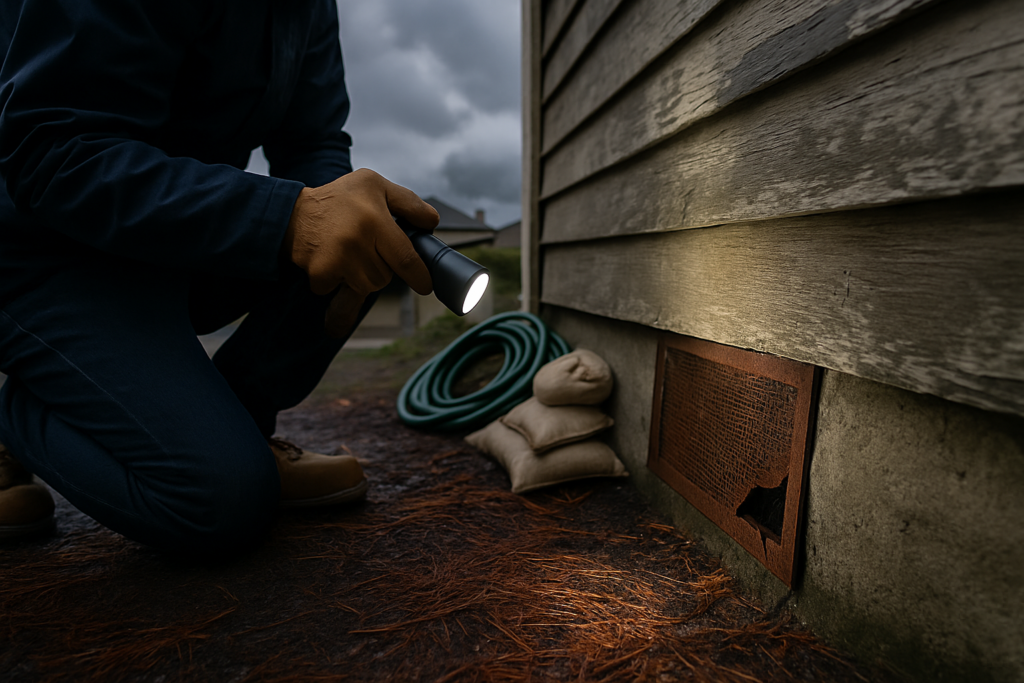
The clearest sign is wasps entering and exiting through a small gap in your siding, soffit, or foundation — especially if the traffic is consistent and you’re not seeing a visible nest nearby. You may also hear a faint buzzing from inside the wall during warmer parts of the day. Older wood-frame homes in Santa Cruz and the surrounding mountain communities are particularly prone to this because gaps in siding and soffits are common in structures built before modern weatherproofing standards.
Is eco-friendly wasp removal actually effective, or is it a compromise?
Targeted, eco-friendly treatments are fully effective for wasp and yellow jacket removal — the key word being ‘targeted.’ The right product applied directly to the colony is more effective than a broad spray, not less. Matthew West uses treatments that are specifically chosen for safety around children, pets, and the surrounding environment without sacrificing results. It’s not a tradeoff.
What happens to the nest after treatment — does it need to be physically removed?
For exposed paper wasp nests, physical removal after treatment is standard and straightforward. For yellow jacket nests inside cavities, the situation depends on location and access. Nest material left inside walls can attract other pests over time, so removal is generally worth discussing with whoever handles the treatment. A good technician will give you an honest answer about what’s accessible and what the realistic outcome looks like.
Have a Nest You’re Not Sure About?
West Pest Co. serves all of Santa Cruz County — from Capitola and Aptos to Scotts Valley and the mountain communities — and wasp and yellow jacket calls are handled with the same fast, straightforward response that earned Matthew West back-to-back Readers Choice Best Pest Control awards in 2023 and 2024. If you’ve got a nest in a location that’s making you nervous, or you’re just not sure what you’re looking at, the easiest next step is a direct conversation. Call (831) 430-8402 or visit westpestco.com to get in touch.