Keeping your Santa Cruz garden healthy without harsh chemicals is a way of life here. The best natural pest control works with our unique coastal environment. It's about creating a balanced yard using helpful insects, smart plant choices, and safe options when you need them.
A Thriving Santa Cruz Garden Without Harsh Chemicals
Welcome to your guide for protecting your Santa Cruz garden the natural way. In a community that values our environment, spraying harsh chemicals near your vegetables or where kids and pets play just doesn't feel right. This guide will show you powerful, eco-friendly strategies that are perfect for our coastal climate.
You'll learn how to partner with nature, not fight against it, to keep your yard beautiful and productive. For those who want to dig even deeper, organizations like The Environmental Protection Network offer more knowledge for your gardening journey.
Why Natural Methods Matter Here
The love for organic practices runs deep in Santa Cruz County. Many of your neighbors are gardeners who prefer sustainable methods. They are often hesitant to use traditional pesticides near edible plants or where their children and pets play.
Offering safe, practical pest prevention tips aligns perfectly with these local values. Whether you're dealing with aphids, whiteflies, or gophers, this guide gives you solutions that are both effective and responsible.
Here's what we'll cover:
- Identifying Local Pests: Get to know the common troublemakers in yards from Scotts Valley to Aptos, including aphids, leaf-chewers, and gophers.
- Actionable Prevention: Learn simple techniques, from improving your soil health to choosing plants that pests naturally avoid.
- Attracting Allies: Discover how to invite helpful insects to your garden to act as your personal security team.
- Safe DIY Solutions: We'll share effective, homemade remedies you can use when pest pressure gets a little too high.
A healthy garden starts with healthy soil and a balanced ecosystem. By focusing on prevention and natural allies, you reduce the need for intervention and create a landscape that can largely take care of itself.
Dealing with garden pests is frustrating, but you don't have to reach for synthetic chemicals. To get a head start, check out our overview of sustainable pest solutions that actually work in Santa Cruz County. This is about creating a garden that's safe for your family and the local environment we all love.
Building Your First Line of Defense With Natural Prevention
The best pest control has nothing to do with spraying. It’s all about stopping problems before they start. By making your garden a less inviting place for pests, you can create a yard that naturally defends itself.
Instead of waiting for an infestation and then reacting, these proactive strategies build a garden that is stronger from the start. It's about shifting your mindset from pest elimination to garden health.
Embrace Proactive Garden Health
A thriving garden starts with a smart, proactive approach. This is the main idea behind Integrated Pest Management (IPM), a strategy that puts prevention first. It’s about creating a balanced ecosystem, not just waging war on bugs.
Instead of waiting for aphids to show up, you can make your plants so healthy that they're less likely to attract them. You can learn more about this approach in our guide on what Integrated Pest Management is and why it's so effective. It's the key to successful natural pest control in Santa Cruz.
Strengthen Your Garden from the Ground Up
Healthy soil is your single greatest ally against pests. Pests are drawn to weak, stressed plants, and poor soil is often the root cause. Enriching your soil with organic matter creates a solid foundation for strong, pest-resistant plants.
Here’s how to build a strong base for your garden:
- Composting: Work compost into your garden beds to add vital nutrients. This simple step improves soil structure, helping it hold moisture during our dry summers.
- Mulching: Spread a layer of organic mulch, like straw or wood chips, around your plants. Mulch suppresses weeds, regulates soil temperature, and locks in moisture, which reduces plant stress.
- Avoid Compaction: Try not to walk directly on your garden beds. Compacted soil makes it tough for plant roots to get the water and nutrients they need.
Use Smart Watering and Planting Strategies
How you water and arrange your plants can make a huge difference. Pests and diseases love certain conditions, and you can easily control those with a few simple tweaks.
For instance, many fungal diseases thrive on damp leaves. By watering your plants at their base in the morning, the leaves stay dry. You can find fantastic tips on designing an effective garden layout that promotes plant health.
Pro Tip: Rotating your vegetable crops each year is a classic technique. It prevents pests that target a specific plant family from building up in the soil.
Create Physical Barriers to Block Pests
Sometimes, the simplest solution is the best one. Physical barriers are a great, non-toxic way to protect your plants from common pests in Santa Cruz.
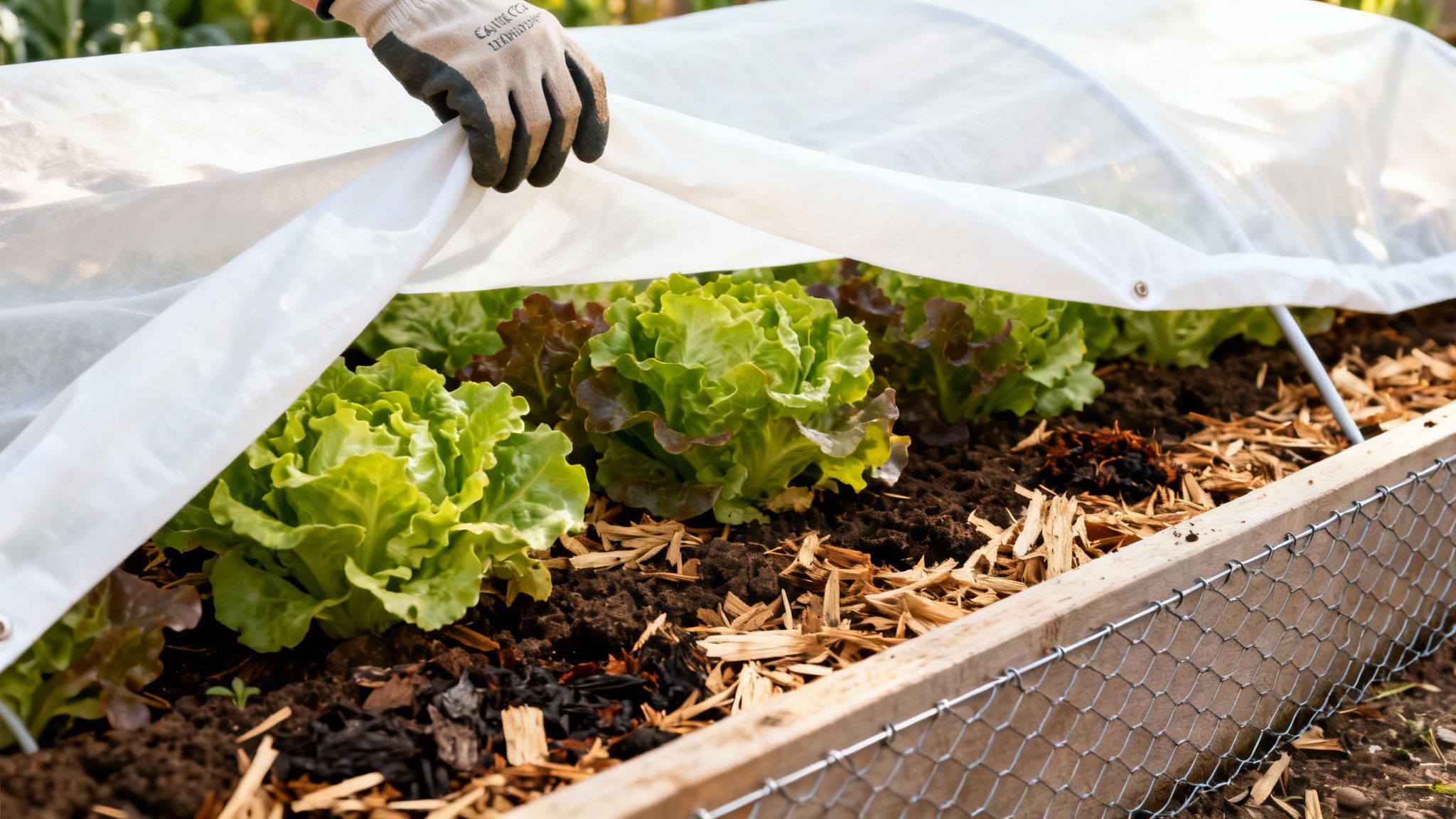
- Row Covers: These lightweight fabric covers protect leafy greens from cabbage moths and other flying insects. They let in sun and water while locking pests out.
- Gopher Wire: Before planting a new raised bed, line the bottom with hardware cloth or gopher wire. This is the single most effective way to stop gophers from destroying plant roots from below.
- Copper Tape: To stop slugs and snails, place copper tape around the edges of pots and garden beds. It creates a barrier that gives them a slight shock, deterring them.
By focusing on these preventative measures, you’re building a garden that is naturally strong. This foundational work sets the stage for a beautiful, productive, and eco-friendly outdoor space.
How to Spot and Handle Common Garden Intruders
The first step to winning the battle for your garden is knowing your enemy. Natural pest control is about correctly identifying who’s eating your plants so you can use the right, gentle approach. Many tiny intruders can look alike, but their habits—and their weaknesses—are very different.
This is your field guide to spotting the most common pests in Santa Cruz County yards. We’ll cover the signs they leave behind and give you simple, non-toxic ways to manage them.
Aphids: The Tiny Sap-Suckers
Aphids are probably the most common pest in Santa Cruz gardens. Our mild, coastal climate is a perfect breeding ground for them. You'll find these tiny insects clustered on new growth, like tender stems and the undersides of leaves.
They leave behind a sticky substance called "honeydew," which often attracts ants. In Santa Cruz County, where organic farming is a huge part of our community, aphids can be a serious threat. An aphid population can multiply by 15 times in a single week under ideal conditions.
To get a handle on aphids:
- A strong spray of water from the hose is often all it takes to blast them off your plants.
- Welcome their natural enemies. Ladybugs and lacewings love to eat aphids.
- For a stubborn problem, a targeted spritz of insecticidal soap can take care of the aphids without harming beneficial bugs.
Slugs and Snails: Our Damp-Weather Foes
Thanks to our coastal fog, slugs and snails feel right at home here. They are most active at night or on cool, overcast days. They chew ragged holes in the leaves of tender plants like basil and new lettuce seedlings. The giveaway is the silvery slime trails they leave behind.
Simple, consistent effort is your best defense against slugs and snails. A little cleanup and a few well-placed traps can make a massive difference.
A few easy strategies can keep them in check:
- Hand-picking: Head out in the evening with a flashlight and simply pluck them off your plants.
- Beer Traps: Bury a shallow dish of beer so the rim is level with the soil. Slugs and snails are drawn to the yeast and fall in.
- Copper Tape: Wrap copper tape around the rims of your pots or the edges of raised beds. It creates a barrier that convinces them to turn around.
Gophers: The Underground Menace
Few garden pests are as destructive as gophers. The classic sign is a fresh, crescent-shaped mound of dirt in your yard. Gophers are plant-eaters and will pull entire plants, from roses to carrots, right down into their tunnels.
Protecting your garden from gophers means being proactive.
- Gopher Wire Baskets: When planting new shrubs or trees, plant them inside a wire gopher basket to protect the roots.
- Secure Your Raised Beds: Before you fill a new raised bed, line the bottom with hardware cloth (gopher wire). This is the most effective way to protect a vegetable garden.
- Trapping: For an active infestation, trapping is often the most direct way to solve the problem.
If you're seeing signs of these pests, it helps to know what to expect as the seasons change. You can learn more about what's bugging Santa Cruz this season to stay one step ahead.
Inviting Garden Allies to Control Pests for You
One of the most powerful strategies for a healthy Santa Cruz garden is to let nature do the work for you. Instead of being the sole defender of your plants, you can recruit a team of beneficial insects to handle your pest problems. This approach is the heart of a sustainable garden.
This isn't just about dumping a box of ladybugs and hoping for the best. It's about creating a habitat that attracts and supports our local, native "good bugs." These allies will stay, reproduce, and protect your plants season after season.
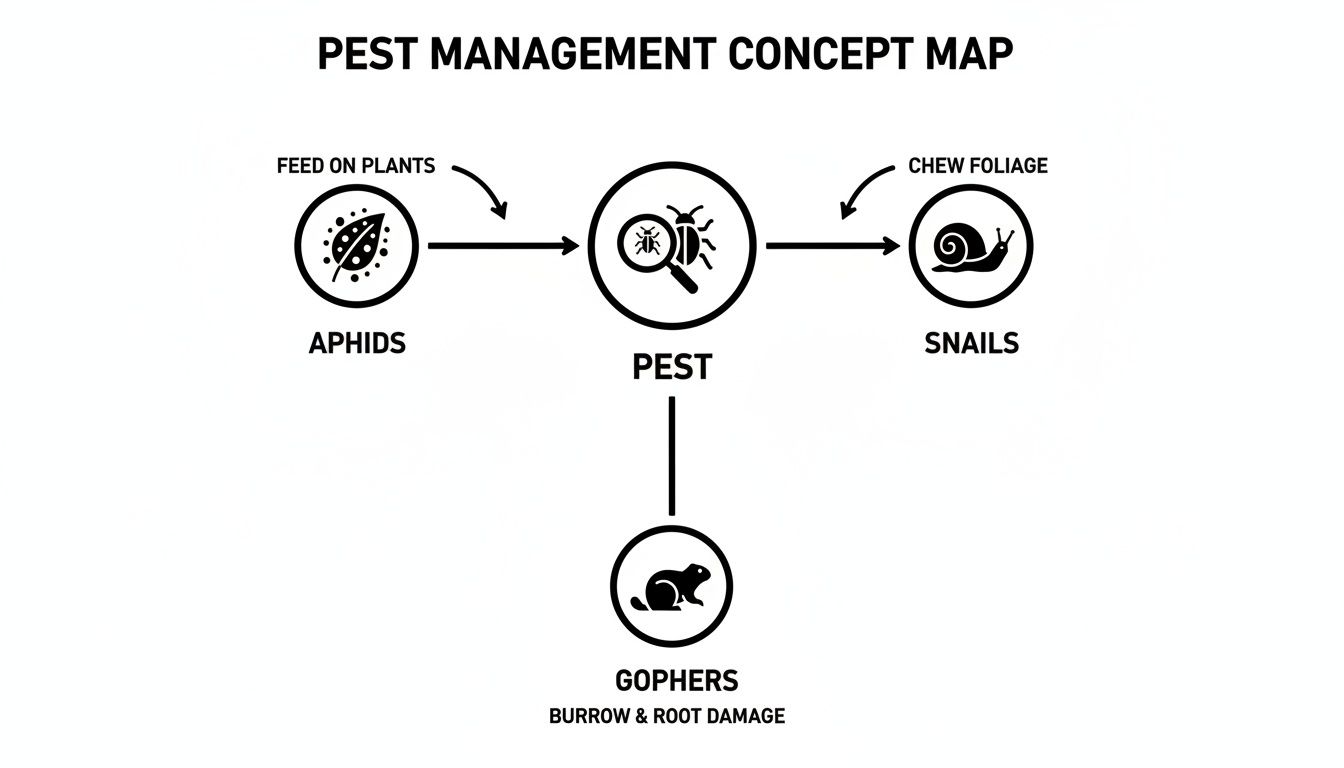
As you can see, pests like aphids, snails, and gophers all require different strategies. Attracting natural predators is a key part of a smart plan that works with our coastal environment.
Your Garden's Most Valuable Players
Think of these beneficial insects as your garden's personal security team. Each one has a specific job to protect your plants.
Here are a few of the top allies you want on your side:
- Ladybugs: A single ladybug can devour up to 5,000 aphids in its lifetime. Both adult ladybugs and their larvae are ferocious predators.
- Lacewings: The larvae of green lacewings, often called "aphid lions," feast on aphids, spider mites, and other soft-bodied pests.
- Hoverflies: These pollinators look like tiny bees. While the adults sip nectar, their larvae crawl through foliage, consuming huge numbers of aphids.
- Parasitic Wasps: These tiny, non-stinging wasps lay their eggs inside pests like aphids or caterpillars, stopping them in their tracks.
Attracting a diverse team is the goal. For a deeper dive, you can even explore our guide on what bugs eat mosquitoes to see how many different predators are out there working for us.
How to Roll Out the Welcome Mat for Good Bugs
Beneficial insects won't stay in a garden that doesn't meet their needs. To attract them and convince them to stay, you need to provide food, water, and shelter.
Creating this inviting habitat is surprisingly easy.
Here’s how to make your garden a popular spot for these helpful critters:
- Plant the Right Flowers: Many beneficial insects feed on nectar and pollen. Planting a variety of small-flowered plants gives them a food source. Good choices include sweet alyssum, cilantro, dill, fennel, yarrow, and cosmos.
- Offer a Water Source: A shallow dish of water with some pebbles in it for insects to land on works well. This makes a huge difference during our dry Santa Cruz summers.
- Stop Using Harsh Pesticides: This is the most important step. Spraying general-purpose insecticides will kill your garden allies along with the pests.
- Leave a Little Mess: Don't be too tidy. A small patch of undisturbed soil or some leaf litter provides shelter for beneficial insects over the winter.
Your Go-To Natural Sprays
When prevention and beneficial insects aren't quite enough, it’s time to consider safe, effective sprays. This is the next step when a pest population starts to get out of hand.
Remember that organic sprays work differently. Most are contact-based, meaning the spray has to physically touch the pest to work. It’s a more hands-on approach, but the reward is a healthier garden.
Here are the most common and effective choices:
- Insecticidal Soap: This product uses special salts to break down an insect's outer shell. It’s a great solution for soft-bodied pests like aphids, whiteflies, and spider mites, and it’s gentle on most plants.
- Neem Oil: This oil, from the seeds of the neem tree, is a multi-tasker. It makes leaves taste bad to pests and disrupts their life cycle.
- Horticultural Oil: These refined oils work by smothering insects and their eggs. They are excellent for controlling scale, aphids, and mites on fruit trees and woody plants.
Crucial Tip: Always spray in the early morning or late evening. Applying these oils in the heat of the day can burn your plant's leaves. Evening applications also avoid harming active pollinators like bees.
Simple DIY Deterrent Spray
You can also make effective pest deterrents with ingredients you have at home. These recipes won't kill pests on contact, but they can make your plants so unappealing that pests will go somewhere else.
This kind of integrated approach, where you layer different strategies, is what keeps a garden healthy. For homeowners in places like Aptos or Boulder Creek, using every tool available is critical. Studies show that an integrated pest management (IPM) approach can reduce chemical use by 70% in organic gardens. You can learn more about how IPM supports local agriculture in recent county reports.aspx).
When to Call a Professional for Your Garden
Solving a garden pest problem on your own is very satisfying. DIY methods are a fantastic first line of defense. But every Santa Cruz gardener knows there are times when a problem gets too big or stubborn.
Knowing when to call a professional is a key part of smart garden management. It's not about giving up; it's about protecting the time and love you've poured into your plants.
Sometimes, an infestation is too deep for sprays and hand-picking. You might be fighting a losing battle with aphids that keep coming back. Or you might be watching gophers destroy your root vegetables. These are the moments that often call for more specialized knowledge.
Recognizing When You Need an Expert
It’s time to think about calling for backup when you hit certain roadblocks. A good rule of thumb? If you're spending more time fighting pests than enjoying your garden, it’s probably time.
Consider calling a professional if you notice:
- Widespread Infestations: The problem has spread across entire sections of your garden.
- Deeply Entrenched Pests: Gophers have built a complex network of tunnels, or you have recurring infestations season after season.
- You've Run Out of Time: Your schedule doesn't allow for the consistent treatment needed to get an infestation under control.
The goal is a thriving, healthy garden. Sometimes, the most effective path is to partner with a local expert who can resolve the issue safely and efficiently.
A professional service like West Pest Co. can offer targeted, eco-friendly solutions that go beyond what you can buy at a store. We understand the unique pest pressures here in Santa Cruz County because we live and work here too. We can identify the pest and apply the most effective natural garden pest control for your Santa Cruz yard. Our article about when to call pest control offers more helpful insights.
Frequently Asked Questions
We hear a lot of the same questions from homeowners in Santa Cruz. From Capitola to Scotts Valley, everyone wants to know how to manage pests the natural way. Here are some simple answers.
Are "natural" pest solutions safe for my kids and pets?
For the most part, yes, but you still need to follow instructions. Products like neem oil and insecticidal soaps are much safer than synthetic chemical pesticides. But even natural products need to be used correctly. It’s always a good practice to keep kids and pets out of the area while you're spraying and until everything is dry.
How long does natural pest control take to work?
Natural methods work more gradually than harsh chemicals. A synthetic pesticide gives you an instant result, but a natural approach focuses on disrupting pest life cycles and building a healthier garden. You might see aphid numbers drop within a few days of a spray. Building up a strong population of helpful insects, on the other hand, could take a few weeks. The key is patience.
Gophers are tearing up my garden. Are traps my only option?
Traps are a great tool, but they aren’t the only one. With gophers, prevention is the most important step. Installing gopher wire in your garden beds before you plant is the single best long-term strategy. If you're dealing with a large problem, a professional can create a complete plan that combines trapping with exclusion techniques to protect your entire yard.
Should I buy and release ladybugs?
You can, but it’s often not very effective. It's better to attract the local, native ladybugs that are already adapted to our coastal climate. Commercially bought ladybugs often fly away if your garden isn't a perfect habitat for them. We recommend planting things like alyssum, cilantro, and yarrow to attract a variety of helpful bugs that will stick around.
If you need personalized advice for your garden's pest problems, the team at West Pest Co. is here to help. We create eco-friendly treatment plans tailored to the unique challenges of Santa Cruz yards. Contact us today for a free estimate and discover the local difference.