Mosquitoes can turn a beautiful Santa Cruz County evening into an itchy ordeal. While DEET and citronella have their place, a more sustainable, long-term solution buzzes right in our local ecosystem. The key is understanding what bugs eat mosquitoes and how to invite these natural predators into your garden. This isn't just about reducing bites; it's about creating a balanced, thriving environment where pests are managed by nature itself. A well-rounded approach is crucial, and it helps to learn general strategies for how to keep pesky pests at bay to protect your entire property.
This guide will walk you through eight powerful allies in the fight against mosquitoes, offering actionable steps for homeowners who prefer ecological harmony over chemical warfare. We'll provide specific, practical details tailored for Santa Cruz County residents, focusing on building a self-sustaining defense system. From aerial acrobats like dragonflies and birds to aquatic hunters such as mosquitofish and even microscopic organisms, we'll explore how to transform your yard into a no-fly zone for these annoying insects. By the end, you will have a clear blueprint for reinforcing your property's natural defenses and reclaiming your outdoor space.
1. Dragonflies (Odonata)
Often called "mosquito hawks," dragonflies are one of nature’s most effective and fascinating mosquito predators. These acrobatic flyers hunt mosquitoes throughout their life cycle, providing dual-stage pest control. As aquatic nymphs, they voraciously consume mosquito larvae in ponds and other still water. Once they mature into winged adults, they become formidable aerial hunters, catching and eating mosquitoes mid-flight.
Their incredible hunting ability makes them a cornerstone of any natural pest management strategy. Adult dragonflies are equipped with nearly 360-degree vision and can fly in any direction, allowing them to outmaneuver their prey with ease. Their presence signifies a healthy, balanced local ecosystem.
Why They Are So Effective
The hunting prowess of a dragonfly is legendary. An adult can consume dozens, sometimes hundreds, of mosquitoes every single day. Their effectiveness stems from highly specialized biological traits that make them premier aerial predators.
The bar chart below highlights key metrics that underscore why dragonflies are such efficient hunters.
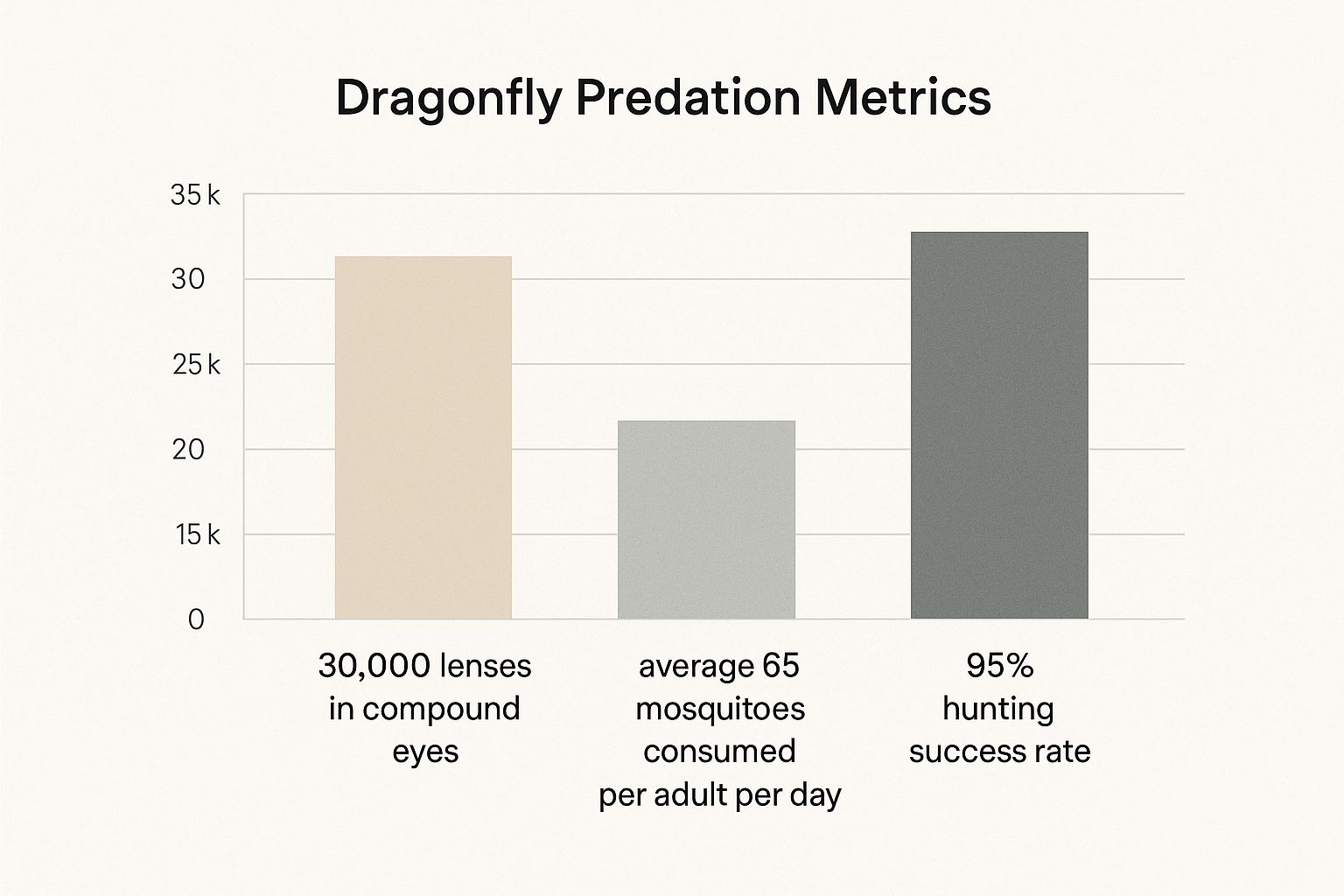
This data clearly illustrates their predatory superiority, from their incredible vision to their near-perfect success rate in capturing prey.
How to Attract Dragonflies to Your Santa Cruz County Garden
For Santa Cruz County homeowners, attracting these beneficial insects is a straightforward way to reduce mosquito populations without chemicals.
- Install a Water Feature: A shallow pond or water garden (1-2 feet deep) with sloped sides is ideal. Avoid adding fish, as many species will eat dragonfly nymphs.
- Add Aquatic Plants: Plant native submerged plants like eelgrass and floating plants like water lilies. These provide oxygen and give nymphs places to hide and hunt.
- Provide Perching Spots: Place sticks, bamboo stakes, or tall, flat-topped rocks around your pond. Adult dragonflies need these spots to rest, hunt, and warm themselves in the sun.
- Go Pesticide-Free: Broad-spectrum pesticides will kill dragonflies and their nymphs. Eliminating chemical use is the most important step in creating a dragonfly-friendly habitat.
2. Gambusia (Mosquitofish)
Known commonly as mosquitofish, Gambusia affinis are small, hardy freshwater fish renowned for their specific appetite for mosquito larvae. They are one of the most widely distributed biological control agents in the world, introduced into countless water bodies to combat mosquito populations at their source. By consuming mosquito larvae and pupae directly in standing water, they disrupt the mosquito life cycle before the insects can mature into biting adults.
Their use in mosquito control dates back to the early 20th century, with organizations like the World Health Organization endorsing their deployment to fight malaria and other vector-borne diseases. Their ability to thrive in various aquatic environments makes them a powerful tool for managing mosquito breeding grounds like ornamental ponds, water troughs, and neglected swimming pools.
Why They Are So Effective
The primary strength of mosquitofish lies in their voracious and specific diet. A single adult Gambusia can eat hundreds of mosquito larvae each day, making a small population highly impactful. They are surface feeders, which means they hunt precisely where mosquito larvae and pupae come to breathe.
Their effectiveness is compounded by their reproductive capacity and hardiness. Mosquitofish are livebearers that reproduce quickly, establishing a self-sustaining population that provides continuous pest control. They can also tolerate a wide range of water temperatures and quality, allowing them to succeed where other fish might not.
How to Use Mosquitofish in Santa Cruz County
For Santa Cruz County homeowners with ponds or standing water features, introducing mosquitofish is a targeted and effective control method. However, it's crucial to use them responsibly, as they can be invasive and outcompete native species. They should only be placed in self-contained water bodies like ornamental ponds, fountains, or unused pools.
- Determine Proper Stocking Density: A general guideline is to stock between 100 and 200 fish per acre of water surface. For a typical backyard pond, a small number of fish is sufficient. Using tools for calculating pond volume can help you determine the appropriate stocking density for your specific feature.
- Ensure a Suitable Habitat: Mosquitofish thrive in water temperatures between 32-100°F. Ensure your pond or water feature does not contain larger, predatory fish that would eat them.
- Source Fish Responsibly: Contact local vector control agencies, like the Santa Cruz County Mosquito and Vector Control, as they often provide mosquitofish for free to residents for pest control purposes.
- Never Release into Natural Waterways: It is critical to prevent these fish from entering local creeks, streams, or marshes, where they can harm native fish and amphibian populations.
3. Bacillus thuringiensis israelensis (Bti)
While not a bug, Bacillus thuringiensis israelensis (Bti) is a naturally occurring soil bacterium that acts as a highly specialized mosquito assassin. This microbe produces protein crystals that are specifically toxic to the larvae of mosquitoes, black flies, and fungus gnats. When mosquito larvae ingest the Bti, the toxins destroy their digestive systems, leading to rapid and targeted elimination.
This biological larvicide is a cornerstone of modern, eco-friendly mosquito control because it offers precision without collateral damage. It poses no threat to humans, pets, birds, fish, or other beneficial insects, making it an ideal choice for environmentally conscious homeowners. Its effectiveness in community-wide programs, from New York City to California’s Central Valley, highlights its power as a public health tool.
Why It Is So Effective
The genius of Bti lies in its specificity. Unlike broad-spectrum chemical insecticides that can harm a wide range of organisms, including pollinators and predators, Bti only affects a narrow group of insects. This precision allows it to control mosquito populations at their most vulnerable stage, the larval stage, without disrupting the surrounding ecosystem.
Its mode of action is purely biological and requires ingestion by the larva, so there is no risk of it harming other wildlife that may drink from the treated water. This makes it one of the safest and most effective natural mosquito control methods available. Learn more about how Bti fits into a comprehensive natural pest control strategy.
How to Use Bti in Your Santa Cruz County Garden
For Santa Cruz County residents, applying Bti is a simple and proactive way to stop mosquitoes before they can fly. It is perfect for treating standing water in birdbaths, rain barrels, ornamental ponds, and even clogged gutters.
- Choose the Right Form: Bti is available as dunks (solid, donut-shaped cakes for long-term control) or granules (for smaller water containers). Dunks can treat a 100-square-foot surface area for 30 days or more.
- Apply to All Standing Water: Identify and treat every potential breeding ground. This includes saucers under potted plants, old tires, and any other area where water collects for more than a few days.
- Time Your Application: Apply Bti every 2 to 4 weeks throughout the mosquito season, which typically runs from spring through fall in our climate.
- Store Products Correctly: To maintain potency, store Bti products in a cool, dry place away from direct sunlight and moisture.
4. Purple Martins (Progne subis)
Purple Martins, the largest swallows in North America, have a long-held reputation as premier mosquito predators. While celebrated in folklore for consuming thousands of mosquitoes a day, modern research indicates their diet is more varied. They primarily hunt larger flying insects like dragonflies, beetles, and moths, but they will eat mosquitoes when other food sources are scarce.
Despite the revised understanding of their diet, Purple Martins remain valuable assets for controlling a wide range of flying pests. Their graceful aerial acrobatics and social, chattering nature also make them a delightful addition to any landscape. Hosting a colony contributes to the conservation of a native species that relies heavily on human-provided housing.
Why They Are So Effective
The effectiveness of Purple Martins lies in their colonial nature and their diet of general flying insects. A single colony can contain dozens of birds, all hunting in the same area and significantly reducing the overall insect population. They are daytime hunters, complementing the work of nocturnal predators like bats.
Though they may not be the mosquito specialists they were once thought to be, their consumption of other large pests makes them a valuable component of an integrated pest management plan. This broad-spectrum insect control helps create a more balanced and comfortable outdoor environment for Santa Cruz County homeowners.
How to Attract Purple Martins to Your Santa Cruz County Garden
Attracting these social birds requires providing specific housing, as most Purple Martins east of the Rockies nest exclusively in man-made structures.
- Install Proper Housing: Use a multi-compartment martin house or a cluster of hollow gourds. Houses should be placed on a pole 12-20 feet high in an open area, at least 40 feet away from tall trees or buildings.
- Keep it Open: Purple Martins need clear flight paths. An open lawn, field, or a location near a body of water is ideal. They avoid areas with dense tree cover where aerial predators can hide.
- Manage Competitors: Aggressive, non-native species like European Starlings and House Sparrows will try to take over the nesting sites. Use starling-resistant entrance holes and actively monitor the house to remove these competitors.
- Maintain the House: Clean out the compartments at the end of each season to remove old nests and parasites. This prepares the house for the birds' return the following spring.
5. Predaceous Diving Beetles (Dytiscidae)
Lurking beneath the surface of ponds and slow-moving streams, predaceous diving beetles are powerful aquatic hunters that play a key role in controlling mosquito populations. Their larvae, aptly nicknamed "water tigers," are particularly aggressive predators of mosquito larvae. Both the adult beetles and their young are formidable hunters, contributing significantly to the health of aquatic ecosystems by keeping pest species in check.
These beetles are highly adapted for life in the water, with streamlined bodies and paddle-like hind legs for swimming. Their presence indicates a vibrant and balanced environment, making them a valuable ally for any Santa Cruz County homeowner with a water feature. They are a prime example of nature’s own pest management system at work.
Why They Are So Effective
The primary strength of predaceous diving beetles lies in the voracious appetite of their larval stage. A single "water tiger" can hunt and consume numerous mosquito larvae daily, using its large, sickle-shaped jaws to inject digestive enzymes and consume its prey. Adults are also effective hunters, capturing larvae and other small aquatic organisms.
Their ability to thrive in the same still-water habitats that mosquitoes favor makes them a direct and persistent threat. Unlike terrestrial predators, their entire life cycle is focused on the aquatic environment where mosquitoes begin their lives, providing continuous control right at the source.
How to Attract Predaceous Diving Beetles to Your Santa Cruz County Garden
Creating a welcoming habitat for these beneficial beetles is an excellent strategy for natural mosquito reduction in your garden's water features.
- Cultivate Diverse Aquatic Plants: Introduce a mix of native submerged and emergent plants. This vegetation provides shelter for the beetles and a rich hunting ground for the larvae.
- Provide Structural Shelter: Place rocks, sunken logs, or pieces of wood at the bottom of your pond. Adult beetles use these structures for cover and to lay their eggs.
- Avoid Chemical Contamination: Runoff from lawn and garden pesticides can be lethal to diving beetles and their larvae. Maintaining a chemical-free buffer zone around your water features is crucial. Just as you work to keep unwanted pests like ants out of your home, it's important to protect beneficial insects in your yard. Learn more about integrated pest management strategies to create a balanced environment.
- Ensure Water Quality: These beetles thrive in clean, well-oxygenated water. Regularly monitor your pond's health and avoid introducing pollutants that could harm these important predators.
6. Bats (Chiroptera)
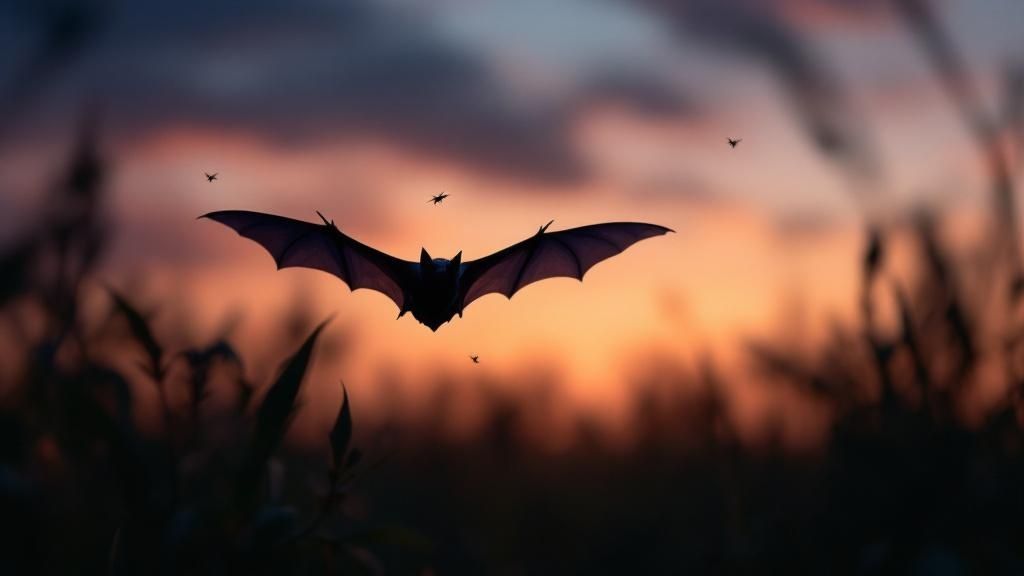
As nature's nocturnal pest control team, insectivorous bats are formidable aerial predators of night-flying insects, including mosquitoes. While mosquitoes might not be their sole food source, bats consume an incredible volume of insects every night. Their high-speed, echolocation-guided hunting makes them a powerful, natural solution for what bugs eat mosquitoes and other flying pests after sunset.
The presence of bats is often misunderstood, but they are vital to a healthy ecosystem. Their nightly foraging helps keep insect populations in check, reducing the need for chemical interventions. Promoting local bat populations is a sustainable strategy for managing mosquitoes and other nuisance insects around your property.
Why They Are So Effective
The effectiveness of bats comes down to sheer volume and specialized hunting. A single bat can consume thousands of insects in one night. They use sophisticated echolocation to navigate and pinpoint tiny prey in complete darkness, a feat that makes them exceptionally efficient hunters. Their role is especially critical during peak mosquito activity hours at dawn and dusk.
This natural pest management is widely recognized. From the famous Congress Avenue Bridge colony in Austin, Texas, which consumes millions of insects nightly, to organic vineyards in wine country that rely on bats to protect crops, their impact is significant. Urban parks and agricultural operations increasingly install bat houses as part of their integrated pest management plans.
How to Attract Bats to Your Santa Cruz County Garden
Inviting bats to your property is an excellent way to benefit from their insect-eating habits. For Santa Cruz County residents, creating a welcoming environment for these beneficial mammals is simple and highly effective.
- Install Bat Houses: Mount a professionally designed bat house 12-15 feet high on a pole or building, ideally facing southeast to capture morning sun. Multi-chamber designs are preferable as they can accommodate more bats and different species.
- Protect Water Sources: Bats need to drink, often skimming water from ponds, pools, or streams while in flight. Preserving and maintaining clean, accessible water sources is crucial.
- Cultivate a Bug-Rich Habitat: Plant native night-blooming flowers like evening primrose to attract moths and other insects that bats prey on. A robust insect population is the best invitation.
- Avoid All Pesticides: Chemical pesticides eliminate the bats' food source and can directly harm them. A pesticide-free garden is the single most important factor for creating a bat-friendly sanctuary.
7. Copepods (Mesocyclops)
While nearly invisible to the naked eye, copepods are tiny freshwater crustaceans that serve as powerful biological control agents against mosquitoes. Certain species, particularly from the Mesocyclops genus, are voracious predators of first-stage mosquito larvae. They thrive in the very water containers where mosquitoes, especially disease-spreading Aedes species, prefer to lay their eggs.
These microscopic predators are a key part of what bugs eat mosquitoes in aquatic environments. Their effectiveness in contained water sources like barrels, cisterns, and decorative urns makes them a unique and targeted solution. Global health programs have successfully used Mesocyclops to combat the mosquitoes responsible for transmitting dengue, Zika, and chikungunya.
Why They Are So Effective
The primary advantage of copepods is their ability to establish self-sustaining populations in permanent water containers, providing continuous, long-term mosquito control without repeated applications. A single copepod can consume several dozen young mosquito larvae per day, and a healthy population can eliminate nearly all larvae from a container.
Their success has been well-documented in community-based vector control programs. For instance, programs in Vietnam have drastically reduced dengue transmission by introducing Mesocyclops into community water storage tanks. This approach is sustainable, cost-effective, and environmentally safe, targeting mosquito larvae before they can mature into biting adults.
How to Use Copepods in Your Santa Cruz County Property
For Santa Cruz County homeowners, using copepods is a specialized strategy best suited for specific situations, such as large rain barrels or ornamental ponds that are not chlorinated or frequently emptied. This method aligns perfectly with an integrated pest management philosophy. For more strategies on keeping your yard pest-free, explore our guide to garden pest control.
- Introduce to Permanent Water: Add copepods to water storage containers, cisterns, or bird baths that hold water for long periods. They are not effective in temporary puddles.
- Avoid Chemicals: Do not treat water with chlorine, larvicides, or other chemicals, as these will kill the copepod population.
- Ensure Proper Habitat: Copepods thrive in untreated, relatively still water. They are less effective in water that is frequently disturbed or replaced.
- Source from a Reliable Supplier: Obtain Mesocyclops from a reputable biological control supplier to ensure you are introducing the correct, non-invasive species.
- Monitor and Protect: Check on your containers occasionally to ensure the copepods have established a population and the water remains suitable for them.
8. Parasitic Nematodes (Romanomermis)
Parasitic nematodes represent a highly specialized and targeted form of biological mosquito control. Unlike predators that eat adult mosquitoes, these microscopic roundworms, specifically from the Romanomermis genus, attack mosquitoes in their larval stage. They are obligate parasites, meaning they can only survive by infecting and developing inside a mosquito larva, ultimately killing their host before emerging to reproduce.
This method offers an environmentally sound way to disrupt the mosquito life cycle in specific aquatic habitats. Because they are host-specific, these nematodes pose no threat to humans, pets, fish, or other beneficial insects. Their application is a cornerstone of advanced integrated pest management (IPM) strategies, championed by institutions like the University of California for targeted vector control.
Why They Are So Effective
The effectiveness of Romanomermis nematodes comes from their unique life cycle, which is perfectly synchronized with their mosquito hosts. Female nematodes release their eggs in water, which hatch into infective-stage juveniles. These juveniles actively seek out and penetrate the cuticle of mosquito larvae.
Once inside, the nematode grows rapidly, absorbing nutrients from the larva and preventing it from pupating. After about a week, the nematode emerges, killing the host larva in the process. A single application can establish a self-sustaining nematode population in a suitable water body, providing continuous control throughout the mosquito season.
How to Use Nematodes in Santa Cruz County
While not a typical backyard solution, parasitic nematodes are invaluable for managing mosquitoes in larger or persistent water sources common in Santa Cruz County, such as ornamental ponds, stormwater retention areas, or agricultural water.
- Identify Suitable Sites: This method works best in semi-permanent, still, or slow-moving water bodies where mosquito larvae are a recurring problem. It is less effective in temporary puddles or fast-flowing water.
- Check Water Temperature: Romanomermis nematodes are most active and effective in water temperatures between 15°C and 30°C (59°F to 86°F), making them well-suited for our local climate from spring through fall.
- Integrate with Other Methods: Use nematodes as part of a broader strategy. Combine them with habitat management, like removing unnecessary standing water, and encouraging natural predators for the most comprehensive results.
- Source from Specialists: Parasitic nematodes for mosquito control are a specialty biological product. They are typically sourced through professional pest management suppliers or vector control agencies rather than standard garden centers.
8 Key Mosquito Predator Comparison
| Item | Implementation Complexity 🔄 | Resource Requirements ⚡ | Expected Outcomes 📊 | Ideal Use Cases 💡 | Key Advantages ⭐ |
|---|---|---|---|---|---|
| Dragonflies (Odonata) | Moderate: Need permanent water and habitat maintenance | Moderate: Water features, native plants, no chemicals | High: Consume 30-100+ mosquitoes/day per individual, 95% hunting success | Natural mosquito control in gardens, ponds, and urban wetlands | Chemical-free, targets multiple mosquito stages, self-sustaining |
| Gambusia (Mosquitofish) | Low to Moderate: Requires permanent water body and stocking | Low: Fish stocking, water maintenance | High: Each fish consumes 100-500 larvae/day | Large-scale mosquito control in ponds, rice fields, standing water | Cost-effective, hardy, proven in disease control programs |
| Bacillus thuringiensis israelensis (Bti) | Low: Easy application but needs regular reapplication | Low to Moderate: Purchase and apply microbial larvicide | Very High: Kills 95%+ larvae within 24-48 hours | Targeted mosquito larval control in various water bodies | Species specific, safe for non-targets, EPA-approved |
| Purple Martins (Progne subis) | High: Requires specialized housing and ongoing maintenance | Moderate: Nest houses, site management | Moderate: Consume 2000+ flying insects/day but <3% mosquitoes | General flying insect control, cultural & ecological gardens | Attractive birds, support biodiversity, pest control beyond mosquitoes |
| Predaceous Diving Beetles (Dytiscidae) | Moderate: Need established aquatic ecosystems | Low to Moderate: Habitat maintenance | Moderate: Larvae consume multiple mosquito larvae daily | Aquatic ecosystem mosquito control in wetlands and ponds | Native species, supports ecosystem health, dual life-stage predators |
| Bats (Chiroptera) | Moderate to High: Requires roost sites and habitat conservation | Low: Installing bat houses, preserving habitats | Moderate: Catch 1000+ insects/hour, including some mosquitoes | Nighttime flying insect control in urban and agricultural areas | Active at peak mosquito times, no maintenance after establishment |
| Copepods (Mesocyclops) | Moderate: Introduction to water containers requires knowledge | Low to Moderate: Introduce copepods to breeding sites | High: Reduce Aedes larvae by 80-95% in treated containers | Control of container-breeding mosquitoes (dengue, Zika vectors) | Effective in small habitats, environmentally safe, persists in containers |
| Parasitic Nematodes (Romanomermis) | High: Complex production and environmental requirements | Moderate to High: Specialized application | Moderate to High: 70-90% larval mortality under optimal conditions | Specialized mosquito control in wetlands and semi-permanent waters | Highly specific, no non-target effects, self-sustaining populations |
Integrating Natural Predators with Professional Pest Management
Embracing the power of biological control is a transformative step toward sustainable mosquito management right here in Santa Cruz County. As we've explored, creating a backyard ecosystem that welcomes nature's pest controllers offers a powerful, long-term defense against these persistent insects. From the aerial acrobatics of dragonflies to the silent, nocturnal hunting of bats, you now have a blueprint for turning your property into a less hospitable place for mosquitoes and a sanctuary for their natural enemies.
By understanding what bugs eat mosquitoes, you are no longer just reacting to a problem; you are proactively building a resilient environment. The key takeaway is that effective, eco-friendly mosquito control is not about a single solution but about creating a layered defense.
Your Action Plan for a Mosquito-Resistant Yard
Mastering these concepts allows you to move beyond temporary fixes and cultivate a lasting balance. The true value lies in integration, combining multiple strategies to create a robust, self-regulating system.
Here are your actionable next steps:
- Eliminate Standing Water: This is the non-negotiable foundation. Before attracting predators, you must remove mosquito breeding grounds. Conduct a thorough audit of your property for stagnant water in gutters, planters, birdbaths, and forgotten containers.
- Cultivate Predator Habitats: Start small. Choose one or two predators from our list that best fit your property. Plant native flowering plants to attract dragonflies, or add a pond with a gentle bubbler to house mosquitofish. These actions directly invite the beneficial "bugs" that eat mosquitoes into your yard.
- Deploy Larvicides Strategically: For water features you can't eliminate, like ponds or rain barrels, use Bti dunks or granules. This targeted approach kills mosquito larvae without harming the very dragonflies, beetles, and fish you want to attract.
- Adopt a Long-Term Perspective: Remember that building a healthy ecosystem takes time. Be patient as your new plantings mature and predator populations establish themselves. The reward is a sustainable, low-maintenance system that works for you year-round.
When Nature Needs a Professional Boost
While fostering a natural predator population is incredibly effective, it's not always an immediate fix. Severe infestations or persistent breeding sites hidden from view can overwhelm even the most well-designed ecological defenses. This is where a professional partnership becomes invaluable.
An integrated pest management (IPM) approach, which combines biological controls with expert intervention, offers the most comprehensive and reliable solution. A professional can identify and treat stubborn mosquito sources without compromising the beneficial ecosystem you’ve worked so hard to build. By combining your efforts with targeted, low-impact treatments, you achieve a level of control that neither approach could accomplish alone, ensuring your Santa Cruz home and garden remain a peaceful, bite-free sanctuary.
Ready to create a comprehensive defense that pairs nature's best with professional expertise? The team at West Pest Co. specializes in eco-friendly IPM strategies that complement your efforts to attract beneficial predators. Contact us today to develop a customized plan that protects your family and your local ecosystem.