When pests invade, the first instinct is often to reach for a powerful chemical spray. But what if there was a smarter, more effective, and environmentally conscious way to manage pests for the long term? This is the core principle behind Integrated Pest Management (IPM), a science-based approach that combines multiple strategies to solve pest problems while minimizing risks to people, property, and the planet.
Instead of simply reacting to infestations, IPM focuses on understanding pest life cycles and using this knowledge to create unfavorable conditions for their survival. It is a holistic methodology that prioritizes prevention and uses a tiered approach to control, from simple habitat adjustments to selective chemical applications as a last resort. This approach is not only better for the environment but also leads to more durable and effective results. For those interested in exploring broader topics related to maintaining a healthy and balanced outdoor environment, you may find valuable additional insights on sustainable yard care.
This comprehensive guide will walk you through seven key integrated pest management techniques, providing the actionable insights you need to build a resilient, pest-free environment in and around your property. From cultural controls to advanced pheromone technology, you'll discover a robust toolkit for smarter pest prevention.
1. Cultural Control Methods
Cultural control is a foundational pillar of integrated pest management (IPM), serving as the first line of defense against pest problems. This proactive approach involves modifying the growing environment or agricultural practices to make conditions less suitable for pests to thrive, reproduce, and cause damage. By focusing on prevention, cultural control methods disrupt pest life cycles, reduce their access to food and shelter, and promote the health of plants, making them naturally more resilient.

These techniques are powerful because they are often simple, cost-effective, and environmentally friendly. They work with natural systems rather than against them, forming the base upon which other IPM strategies are built.
How Cultural Controls Work
The core principle is to create a habitat that favors your desired plants or crops while actively discouraging pests. This can be achieved through several key strategies:
- Crop Rotation: One of the most effective cultural control methods. Planting the same crop in the same location year after year allows pest populations specific to that crop, like the corn rootworm, to build up in the soil. By rotating to a non-host crop, such as soybeans, you break the pest's life cycle by removing its food source.
- Sanitation: This involves removing and destroying diseased plants, infested crop debris, and weeds that can harbor pests or pathogens. Cleaning equipment between fields or garden plots also prevents the spread of pests and diseases.
- Trap Cropping: Planting a small, attractive "trap crop" near the main crop can lure pests away from your valuable plants. For instance, planting a border of mustard plants can draw flea beetles away from a primary brassica crop like broccoli or cabbage.
- Timing Adjustments: Altering planting or harvesting dates can help avoid peak pest populations. Early planting of cotton, for example, allows the crop to mature before bollworm populations reach their most destructive levels.
Key Insight: Cultural controls are not a one-time fix but a continuous management process. They require careful planning and observation of local pest cycles and environmental conditions for maximum effectiveness.
Putting It Into Practice
For homeowners in Santa Cruz County or commercial property managers, applying these principles is highly practical. A home gardener can rotate vegetable beds annually, ensure good air circulation around plants by proper spacing to prevent fungal diseases, and select plant varieties that are certified disease-resistant. For larger properties, implementing cover crops in vineyards or orchards can suppress weeds, improve soil health, and disrupt nematode life cycles, a common issue in California agriculture. Combining several of these techniques creates a robust, multi-layered defense system.
2. Biological Control
Biological control is a cornerstone of integrated pest management techniques, leveraging nature's own systems to manage pest populations. This strategy uses living organisms, known as natural enemies, to suppress pest numbers. These beneficial agents include predators, parasitoids, and pathogens that specifically target unwanted pests, reducing their populations to levels that are no longer damaging.
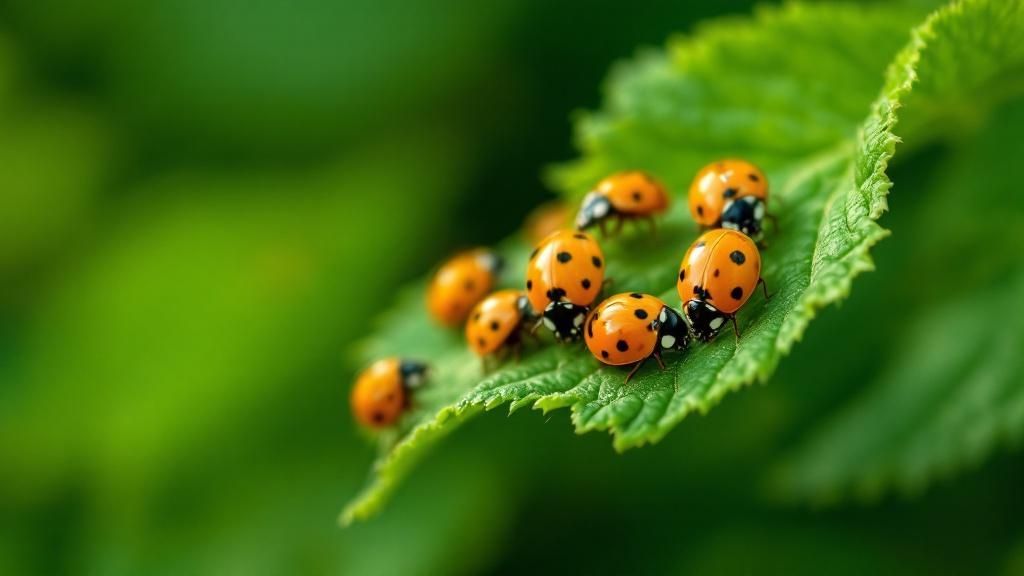
This approach is highly valued for its sustainability and environmental safety. By introducing or encouraging natural enemies, biological control minimizes the need for chemical interventions, protecting the surrounding ecosystem, non-target species, and human health.
How Biological Controls Work
The principle behind biological control is to use the natural predator-prey or host-parasite relationships that already exist in nature. This can be implemented in three main ways:
- Conservation: This involves protecting and enhancing the populations of natural enemies that are already present in the environment. This can be as simple as providing shelter, alternative food sources like nectar-rich flowers, or avoiding the use of broad-spectrum pesticides that harm them.
- Augmentation: This is the periodic release of commercially raised natural enemies to boost their numbers at a critical time. For example, releasing Trichogramma wasps can control lepidopteran pests like codling moths in orchards.
- Classical Biological Control: This method involves introducing a non-native natural enemy to control a non-native, invasive pest. A historic success story in California is the introduction of the vedalia beetle from Australia to control the cottony cushion scale, which was devastating the citrus industry.
Key Insight: Successful biological control depends on a deep understanding of the pest's life cycle and its natural enemies. Proper timing and environmental support are crucial for these beneficial organisms to establish and be effective.
Putting It Into Practice
For a Santa Cruz County homeowner, this might mean purchasing ladybugs or lacewings to release in a garden plagued by aphids. On a commercial scale, a greenhouse grower could release Neoseiulus californicus mites to prey on destructive spider mites, protecting their crops without chemicals. Some beneficial organisms, like certain dragonflies and damselflies, are excellent predators of mosquitoes. You can learn more about what insects eat mosquitoes and how they contribute to a balanced ecosystem. This practice promotes a self-regulating system where pests are kept in check naturally, forming a key part of any long-term IPM program.
3. Monitoring and Scouting Systems
Monitoring and scouting are the intelligence-gathering operations of integrated pest management (IPM), providing the critical data needed to make informed decisions. This technique involves systematically observing and recording pest populations, beneficial organisms, and environmental conditions over time. It transforms pest control from a reactive, calendar-based approach to a precise, data-driven strategy, ensuring that interventions are applied only when and where they are truly needed.
These systems form the backbone of any effective IPM program. By understanding what is happening in a field, garden, or facility, you can anticipate problems, identify pests before they become widespread, and choose the most effective, least disruptive control method. This is one of the most essential integrated pest management techniques for long-term success.
How Monitoring and Scouting Works
The core principle is to replace guesswork with evidence. Regular and structured observation allows property managers and growers to track pest trends, evaluate the effectiveness of control measures, and protect beneficial insect populations. This is achieved through several key strategies:
- Pheromone Traps: These traps use synthetic versions of insect sex pheromones to lure and capture specific pests, such as the codling moth in apple orchards. The number of moths caught provides an accurate measure of the pest's population density and flight timing.
- Sticky Traps: Brightly colored cards, often yellow or blue, are coated with a sticky substance to capture flying insects. Yellow sticky traps are highly effective for monitoring whiteflies, thrips, and aphids in greenhouses and gardens.
- Visual Inspection: This involves physically walking through the area and inspecting plants for signs of pests, damage, or disease. Trained scouts look for eggs, larvae, and adult insects, as well as symptoms like chewed leaves or discoloration.
- Degree-Day Models: These predictive tools use temperature data to forecast when a pest will reach a certain life stage. This helps time scouting efforts and control applications for maximum impact, targeting the pest's most vulnerable stage.
This infographic summarizes the core features, benefits, and challenges of establishing a robust monitoring system.
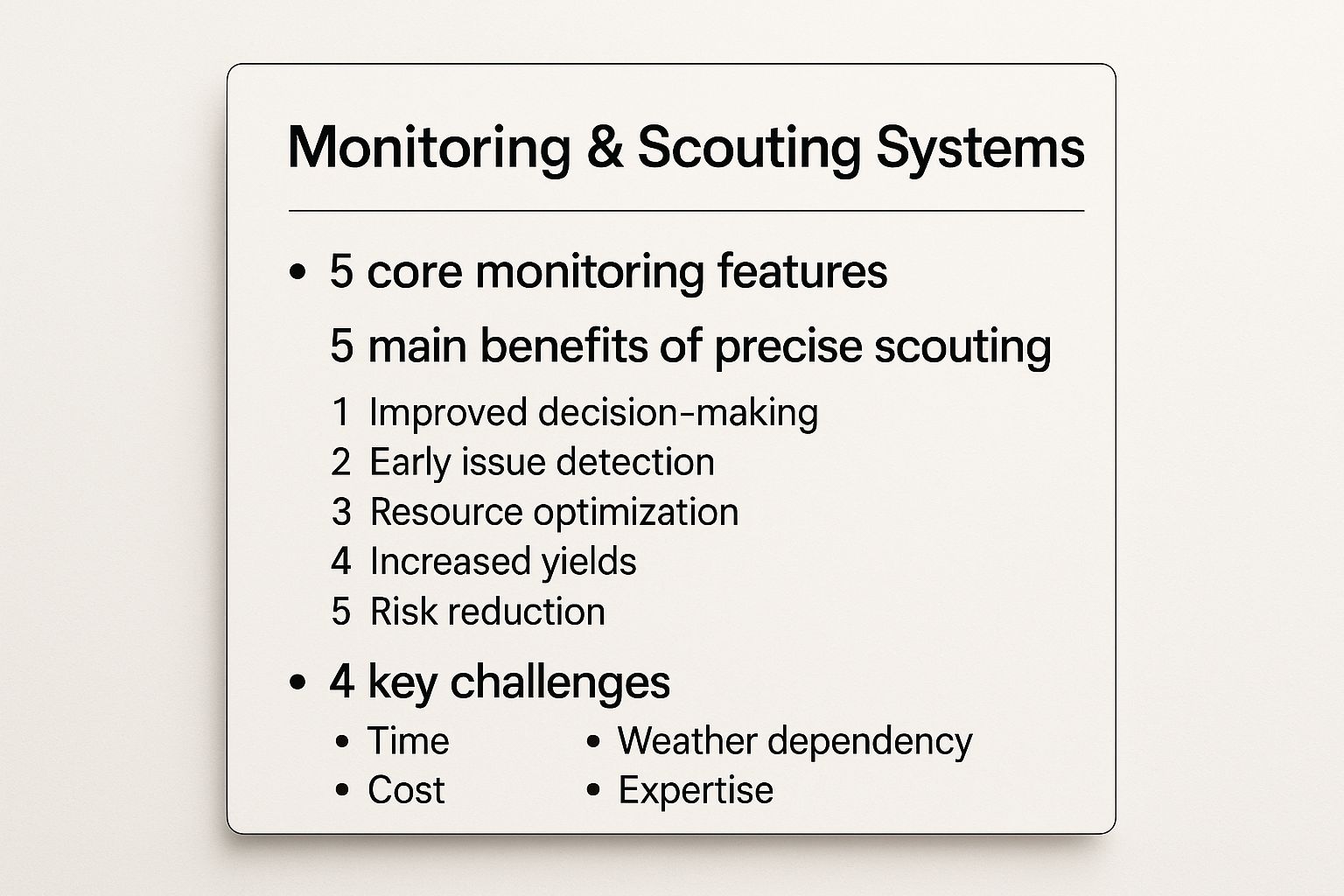
The visualization highlights that while implementing these systems requires expertise and resources, the benefits of precise, targeted control are significant.
Key Insight: Monitoring is not just about finding pests; it's also about not finding them. Confirming that pest populations are below a damaging threshold is just as important, as it justifies withholding treatment and saves money.
Putting It Into Practice
For a homeowner in Santa Cruz County, monitoring can be as simple as checking prized rose bushes weekly for aphids or setting out yellow sticky traps in a vegetable garden. For a commercial property manager, it might involve a more structured program with detailed scouting reports. For instance, a vineyard manager could use a network of pheromone traps and regular vine inspections to manage the vine mealybug. A detailed pest control inspection checklist can provide a standardized framework for any scouting effort, ensuring no detail is overlooked and data is collected consistently.
4. Selective Chemical Control
Selective chemical control is a highly targeted and strategic component of integrated pest management techniques, used only when other methods are insufficient to prevent significant damage. This approach involves the precise application of pesticides that are specifically designed to affect a target pest while minimizing harm to beneficial organisms, people, and the surrounding environment. By choosing the right product and applying it judiciously, selective chemical control can be a powerful tool without undermining the entire IPM system.
These chemicals are chosen for their narrow spectrum of activity, breaking pest cycles with surgical precision. This method stands in stark contrast to broad-spectrum pesticides that kill indiscriminately, often leading to secondary pest outbreaks by eliminating natural predators.
How Selective Chemicals Work
The core principle is to intervene with a chemical solution that has minimal collateral damage, preserving the ecological balance of your garden or property. This is accomplished through several key strategies:
- Targeted Product Selection: This involves choosing chemicals that are physiologically specific to the pest. For example, using insect growth regulators (IGRs) disrupts the molting process in insects like scales or mealybugs but is harmless to mammals, birds, and most beneficial insects.
- Precise Timing and Application: Chemicals are applied only when monitoring indicates that pest populations have reached an economic threshold, the point at which they will cause unacceptable damage. Application is timed to coincide with the most vulnerable stage in a pest's life cycle.
- Pheromone Disruption: In orchards or vineyards, synthetic pheromones can be used to confuse mating insects like the codling moth. This disrupts their reproductive cycle, reducing the next generation of pests without the use of toxic sprays.
- Narrow-Spectrum Fungicides: For managing specific plant diseases common in Santa Cruz County, like powdery mildew on grapes, a narrow-spectrum fungicide can control the pathogen without harming beneficial soil fungi or insects.
Key Insight: The goal of selective chemical use in IPM is not eradication, but suppression. It’s a tactical response used as a last resort to bring pest levels back down to a manageable point where cultural and biological controls can take over again.
Putting It Into Practice
For a commercial property manager dealing with an invasive weed in a landscape bed, a targeted post-emergent herbicide can eliminate the weed without harming surrounding ornamental plants. Homeowners can benefit by choosing products like Bacillus thuringiensis (Bt), a bacterium that is toxic only to specific insect larvae like caterpillars but is safe for humans, pets, and beneficial insects. The focus is always on using the least-toxic, most specific option available. This thoughtful approach aligns with modern, responsible pest management. For those interested in low-impact solutions, exploring environmentally friendly pest control options can provide further insight into safe and effective strategies.
5. Habitat Manipulation
Habitat manipulation is a sophisticated IPM strategy that involves altering the agricultural or landscape environment to make it less hospitable for pests and more attractive to their natural enemies. Rather than simply removing pests, this approach actively builds a healthier, more resilient ecosystem where beneficial organisms can thrive and perform natural pest control. It is a long-term investment in biodiversity that can significantly reduce the need for other interventions.
These techniques focus on providing essential resources like food, water, and shelter for predators and parasitoids. By creating these sanctuaries, you establish a standing army of beneficial insects ready to manage pest populations before they reach damaging levels, making it one of the most sustainable integrated pest management techniques.
How Habitat Manipulation Works
The core principle is to integrate targeted plantings and landscape features that support beneficial species directly within or adjacent to the area you want to protect. This ecological engineering enhances the natural pest control services already present in the environment.
- Beetle Banks: A classic example from European grain fields, these are raised earthen ridges planted with native grasses. They provide crucial overwintering habitat for predatory ground beetles and spiders, which then emerge in the spring to feed on crop pests like aphids.
- Hedgerows and Insectary Plantings: In California, planting hedgerows with a diverse mix of native, flowering plants provides year-round nectar and pollen for beneficial insects like syrphid flies, lacewings, and parasitic wasps. These are especially valuable in vineyards and organic vegetable farms.
- Companion Planting: This involves strategically placing specific plants together to benefit one another. For instance, planting aromatic herbs like rosemary or basil near tomatoes can help repel pests like hornworms through their strong scent.
- Prairie Strips: A technique gaining traction in the Midwest, this involves converting a small percentage of a crop field (like corn or soybeans) into strips of native prairie. These strips dramatically increase pollinator and beneficial insect populations, reduce soil erosion, and improve water quality.
Key Insight: Effective habitat manipulation requires a deep understanding of local ecology. The goal is to provide the right resources at the right time to support the life cycles of specific beneficial organisms that target your most common pests.
Putting It Into Practice
For a Santa Cruz homeowner, this could be as simple as planting a border of alyssum, yarrow, and cosmos in their garden. These plants provide continuous blooms that attract hoverflies and lacewings, whose larvae are voracious aphid eaters. For commercial property managers or local farmers, establishing a permanent, pesticide-free hedgerow along the edge of a property can create a robust buffer zone and a reservoir of natural enemies. Ensuring these habitat areas have access to a water source, even a small bird bath or shallow dish, will make them even more effective.
6. Physical and Mechanical Control
Physical and mechanical controls are among the most direct integrated pest management techniques, offering a hands-on approach to pest exclusion and removal. This strategy involves using physical barriers, traps, machines, or environmental modifications to block pests from reaching plants, capture them, or make the area uninhabitable. These methods are valued for being non-chemical, often providing immediate results and targeting pests without harming beneficial organisms.
By physically intervening in a pest's life cycle or behavior, these techniques provide a tangible and effective layer of defense. They can range from simple hand-picking of pests in a home garden to sophisticated machinery used in large-scale agriculture.
How Physical and Mechanical Controls Work
The principle behind these methods is straightforward: physically stop the pest. This can be accomplished by exclusion, removal, or creating inhospitable conditions. These controls are often most effective when tailored to a specific pest's biology and behavior.
- Barriers and Exclusion: This involves creating a physical shield to keep pests out. Fine-mesh row covers draped over vegetable beds prevent moths from laying eggs, while copper tape around planters creates an effective barrier that deters slugs and snails.
- Traps: Traps are used to lure and capture pests, reducing their numbers. Sticky traps are excellent for monitoring and controlling flying insects like whiteflies, while mechanical traps can manage rodents without poison. Beyond just traps, understanding various physical barriers and active deterrents is crucial for effective pest management. For instance, you can learn more about practical tips on how to keep flies away from food in both indoor and outdoor settings.
- Direct Removal: This can be as simple as hand-picking tomato hornworms off plants or using a strong spray of water to dislodge aphids. On a commercial scale, specialized vacuums are sometimes used to suck insects directly off crops like strawberries.
- Environmental Modification: Tilling or cultivation disrupts the soil, exposing soil-dwelling pests and weed roots to the elements and predators. Pruning away diseased or infested branches removes the problem source and improves air circulation to prevent future issues.
Key Insight: Physical and mechanical controls are most successful when implemented at the right time. Targeting a pest's vulnerable life stage, like trapping adult moths before they lay eggs, dramatically increases the effectiveness of the intervention.
Putting It Into Practice
Homeowners and property managers in Santa Cruz County can easily integrate these techniques. A gardener can protect young brassicas from cabbage moths with floating row covers. For properties dealing with gophers, setting mechanical traps in active tunnels is a direct and chemical-free solution. In larger agricultural settings, such as local organic farms, cultivation is a primary method for weed control, while pruning infected wood is standard practice in orchards to manage diseases like fire blight. These direct-action methods are a cornerstone of a robust IPM plan.
7. Pheromone Technology
Pheromone technology represents a highly targeted and sophisticated approach within integrated pest management (IPM). This method uses synthetic copies of the chemical signals, or pheromones, that insects naturally produce to communicate with each other. By deploying these synthetic signals, we can manipulate insect behavior in predictable ways, primarily to disrupt mating or lure them into traps for monitoring or removal.

This technique is exceptionally valuable because it is species-specific, meaning it only affects the target pest without harming beneficial insects like bees and ladybugs, pets, or other wildlife. It is a cornerstone of modern, eco-conscious pest control, offering a powerful alternative to broad-spectrum insecticides.
How Pheromone Technology Works
The core strategy is to use an insect's own communication system against it. This is typically achieved through one of two primary applications:
- Mating Disruption: This involves saturating an area, like an orchard or vineyard, with a high concentration of female sex pheromones. The abundance of synthetic signals confuses the male insects, making it nearly impossible for them to locate actual females to mate with. This effectively reduces reproduction and prevents the next generation of pests from emerging.
- Mass Trapping & Monitoring: Pheromones are used as bait in traps to attract a specific pest. For monitoring, a few traps can help determine if a pest is present, when it is active, and in what numbers. For mass trapping, a large number of traps are used to capture and kill a significant portion of the pest population, directly reducing their numbers. For example, this is used for managing grapevine moths in European vineyards.
Key Insight: Pheromone technology is a proactive control method that targets behavior rather than using toxic substances. Its success depends on precise timing and understanding the specific life cycle of the pest you aim to control.
Putting It Into Practice
Pheromone-based integrated pest management techniques are highly effective in commercial agriculture and can be adapted for smaller-scale use. Washington apple orchards famously use pheromone dispensers to disrupt the mating of the codling moth, protecting crops without heavy pesticide use. Similarly, California peach growers manage the Oriental fruit moth using this same principle. For a homeowner in Santa Cruz County with a prized fruit tree, placing a codling moth trap can help monitor for the pest's arrival and guide the timing of other control measures. For best results, dispensers for mating disruption should be applied before the first adult pests are expected to emerge, and traps must be checked regularly to assess the program's effectiveness.
Integrated Pest Management Techniques Comparison
| Method | Implementation Complexity 🔄 | Resource Requirements ⚡ | Expected Outcomes 📊 | Ideal Use Cases 💡 | Key Advantages ⭐ |
|---|---|---|---|---|---|
| Cultural Control Methods | Moderate – requires pest biology knowledge and planning | Moderate – initial equipment/infrastructure may be needed | Long-term pest reduction and soil health improvements | Sustainable farming, organic systems, long-term pest management | Environmentally safe, cost-effective, enhances biodiversity |
| Biological Control | High – research, testing, and establishment needed | Moderate – sourcing and releasing natural enemies | Sustainable, self-perpetuating pest control | Pests with known natural enemies, integration with ecosystems | Target-specific, environmentally safe, preserves beneficial insects |
| Monitoring and Scouting Systems | Moderate to High – requires trained personnel and technology | Moderate to High – equipment, apps, and ongoing data analysis | Timely, precise pest management decisions | Any IPM program needing data-driven control timing | Prevents unnecessary treatments, reduces costs, early resistance detection |
| Selective Chemical Control | Moderate – expertise needed for correct selection/application | Low to Moderate – chemical products and application tools | Rapid and effective pest suppression | When immediate pest control is critical, integration with IPM | Fast action, precise targeting, wide product availability |
| Habitat Manipulation | High – long-term planning with ecological knowledge | Moderate to High – establishment and maintenance costs | Long-term enhancement of beneficial populations | Landscape-level pest management, conservation-oriented systems | Supports natural enemies, sustainable, ecosystem health benefits |
| Physical and Mechanical Control | Low to Moderate – direct physical methods, labor-intensive | Moderate – labor and equipment needed | Immediate pest removal/control | Organic farming, small-scale operations, pest exclusion practices | Chemical-free, instant results, no resistance issues |
| Pheromone Technology | Moderate – requires species-specific application skills | Moderate to High – cost of synthetic pheromones and dispensers | Species-specific pest disruption and monitoring | Lepidopteran pests, mating disruption strategies | Highly specific, environmentally safe, no resistance development |
Implementing Your Integrated Pest Management Plan
Transitioning from traditional pest control to a comprehensive Integrated Pest Management (IPM) framework is a strategic investment in the long-term health and resilience of your property. As we've explored, this isn't about finding a single magic bullet. Instead, it’s about creating a powerful, layered defense by weaving together diverse integrated pest management techniques that support one another. From adjusting your watering schedule (cultural control) to introducing beneficial insects (biological control) and installing physical barriers (mechanical control), each method plays a critical role in a larger, smarter strategy.
The true strength of IPM lies in its proactive, knowledge-based approach. By embracing diligent monitoring and scouting, you shift from reacting to full-blown infestations to addressing potential issues before they escalate. This forethought, combined with precise record-keeping, allows you to identify patterns, understand pest life cycles, and make informed decisions. The result is a system that is not only more effective but also significantly reduces the need for broad-spectrum chemical applications, protecting your family, pets, and the unique Santa Cruz County environment.
Key Takeaways for a Successful IPM Strategy
To put these concepts into action, focus on these core principles:
- Patience and Observation are Paramount: IPM is a marathon, not a sprint. Success depends on consistently monitoring your environment, from the garden soil to the foundation of your building, and correctly identifying pests before acting.
- Prevention is the Best Cure: The most effective pest control is preventing pests from establishing a foothold in the first place. Prioritize cultural methods and habitat manipulation, such as proper sanitation, plant selection, and moisture management, to make your property less inviting to pests.
- Embrace a Layered Approach: Relying on a single technique is a recipe for failure. A robust IPM plan combines several methods simultaneously. For example, using pheromone traps to monitor moth populations while also encouraging their natural predators creates a two-pronged defense that is far more effective than either method alone.
Your Next Steps
Putting together a customized IPM plan can feel overwhelming, especially when dealing with persistent local challenges like gophers, ants, or seasonal insect pressures. The crucial first step is to perform a thorough assessment of your property to establish a baseline. Identify existing pests, potential entry points, and environmental factors contributing to the problem. From there, you can begin implementing the low-impact cultural and physical controls we’ve discussed.
Mastering these integrated pest management techniques empowers you to take control of your environment in a sustainable, responsible way. It fosters a healthier ecosystem, reduces chemical exposure, and often provides a more permanent solution than conventional, reactive treatments. This intelligent, holistic approach ensures your home, garden, or business can thrive, protected from pests without compromising environmental integrity.
Ready to implement a professional IPM strategy tailored to the specific pest pressures of Santa Cruz County? The experts at West Pest Co. specialize in creating customized, eco-friendly pest management plans for homes and businesses. Contact us today to learn how our deep knowledge of local integrated pest management techniques can provide you with effective, long-term protection.