Direct Answer: One flea treatment misses eggs, larvae, and pupae that aren’t affected by most products. Breaking the cycle takes multiple treatments timed to the flea’s development stages — usually 2-3 visits over 3-4 weeks.
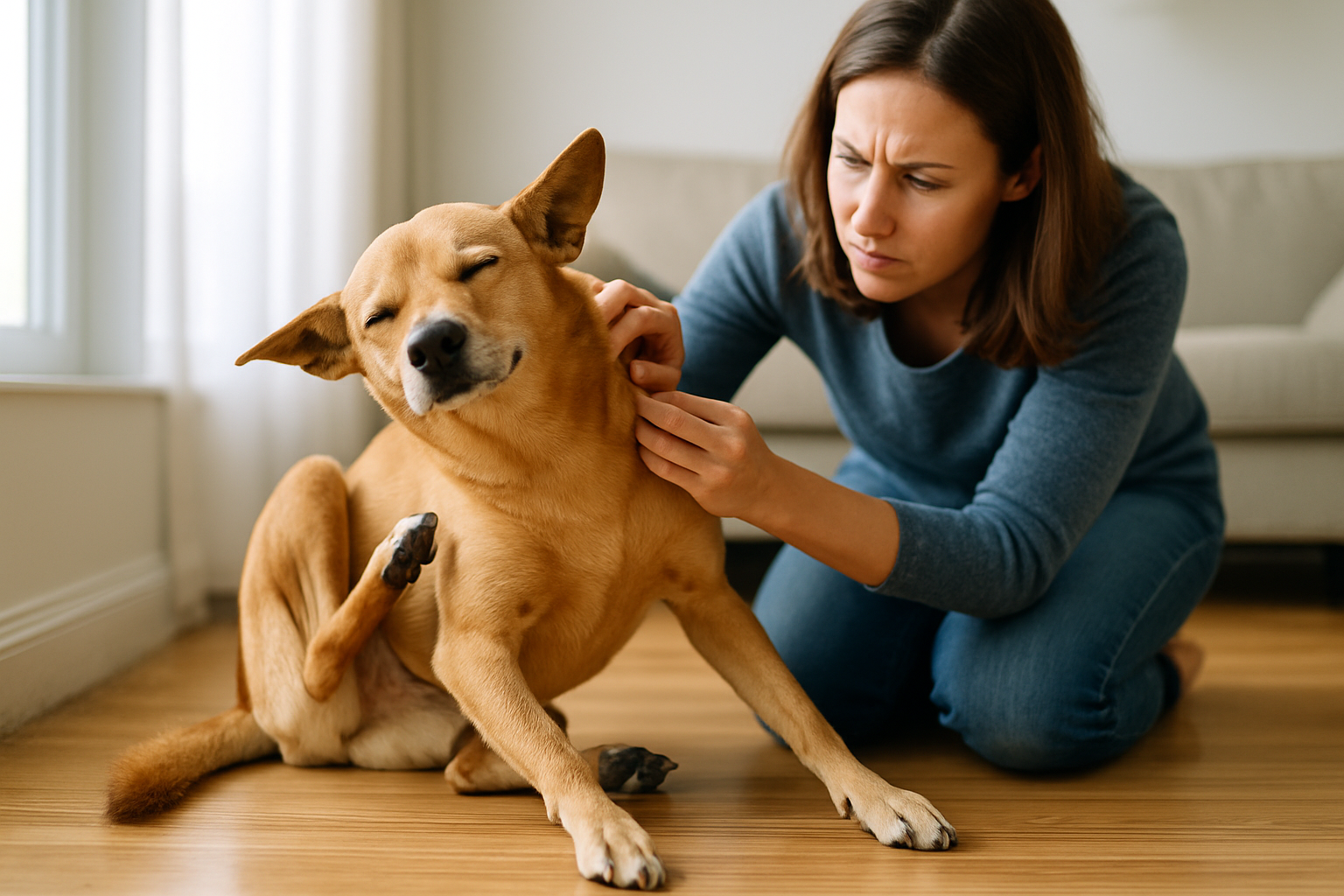
You treated the house. Maybe you treated the dog. A week later, you’re still seeing fleas jumping across the carpet. If that sounds familiar, you’re not doing anything wrong — you’re just up against a life cycle that most single treatments can’t fully address.
Santa Cruz County’s coastal climate makes this problem worse than it is in drier parts of California. The year-round humidity in areas like Aptos, Soquel, and Rio del Mar creates ideal conditions for flea eggs and larvae to survive in carpet fibers, bedding, and yard debris long after you’ve treated the visible problem.
This article breaks down exactly why the cycle keeps restarting and what a complete treatment plan actually looks like — so you can make an informed decision about next steps, whether you handle it yourself or call someone in.
The Flea Life Cycle Is the Whole Problem
Most people think of fleas as the small jumping insects they see on their pet or their floor. But those visible adults are only about 5% of the flea population in an infested home. The other 95% — eggs, larvae, and pupae — are hidden in carpet, floor cracks, pet bedding, and upholstered furniture.
Here’s what each stage looks like and why it matters:
- Eggs — Flea eggs aren’t sticky. They fall off the host and scatter wherever the pet walks or sleeps. A single female lays 20-50 eggs per day.
- Larvae — After hatching (usually within 2-10 days), larvae burrow into carpet fibers and avoid light. They feed on organic debris, including dried blood from adult flea feces.
- Pupae — This is the stage that defeats most single treatments. The cocoon is nearly impenetrable by insecticides. Pupae can sit dormant for up to 5 months and won’t hatch until they sense vibration, warmth, or carbon dioxide — all signs that a host is nearby.
- Adults — Once they emerge, adults need a blood meal within a few days. They jump onto any warm-blooded host, including humans.
When a treatment only kills adult fleas, eggs and pupae survive and the cycle restarts within 2-3 weeks. That’s not a treatment failure — it’s just biology.
Why the Santa Cruz Climate Extends the Problem
Inland California homeowners sometimes deal with fleas seasonally — a bad summer, then it cools off and things settle down. That’s less true along the Santa Cruz coastline.
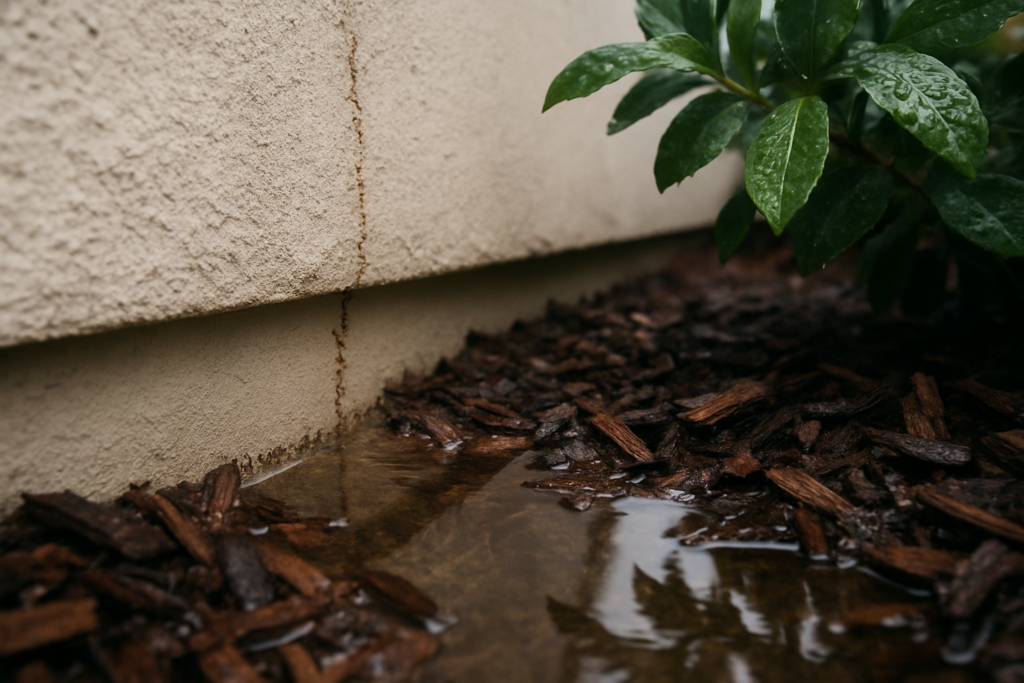
The fog and moderate temperatures that make this area comfortable for people also keep flea larvae viable through what would normally be a slow season. Larvae need humidity above roughly 50% relative humidity to survive — and coastal Santa Cruz regularly hits that mark even in January and February. In Watsonville and Corralitos, where agricultural soils stay moist much of the year, outdoor flea populations can persist well past what most homeowners expect.
This is also why treating only the interior of a home often doesn’t resolve the problem. If a pet has access to a yard where wildlife or neighboring animals have been active, reinfestation from outside is a real possibility — even after a thorough interior treatment. How do fleas get into a home with no pets? covers this in more detail, including how fleas travel indoors on clothing and through foundation gaps.
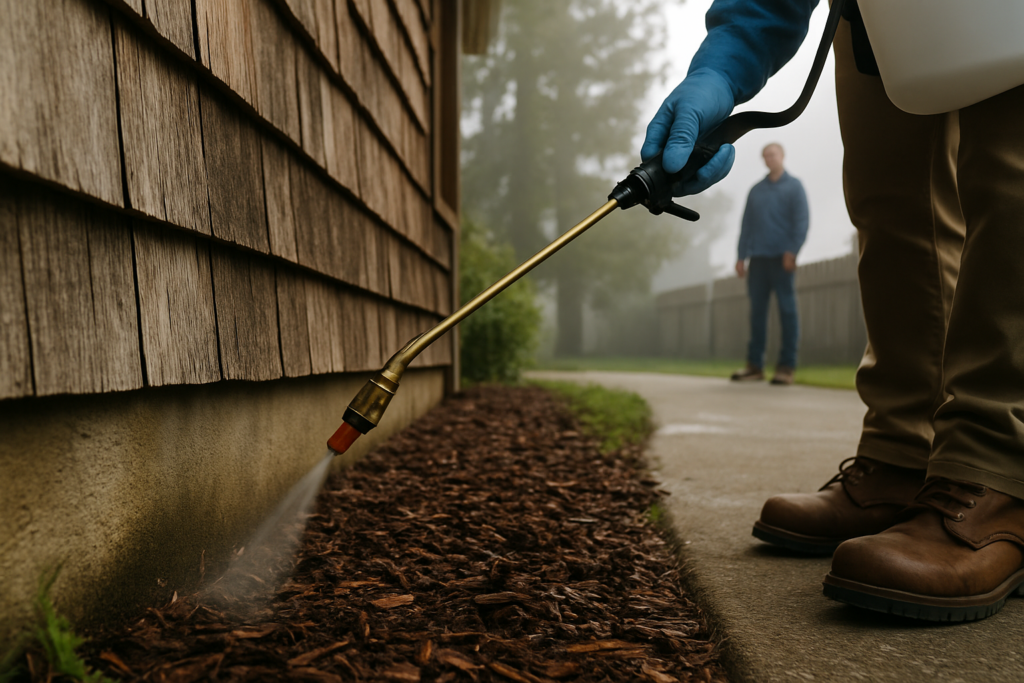
For Santa Cruz homeowners, a realistic treatment plan accounts for both indoor and outdoor environments — and it’s timed to match what’s actually happening in the local climate, not a generic seasonal schedule.
What a Complete Flea Treatment Plan Actually Covers
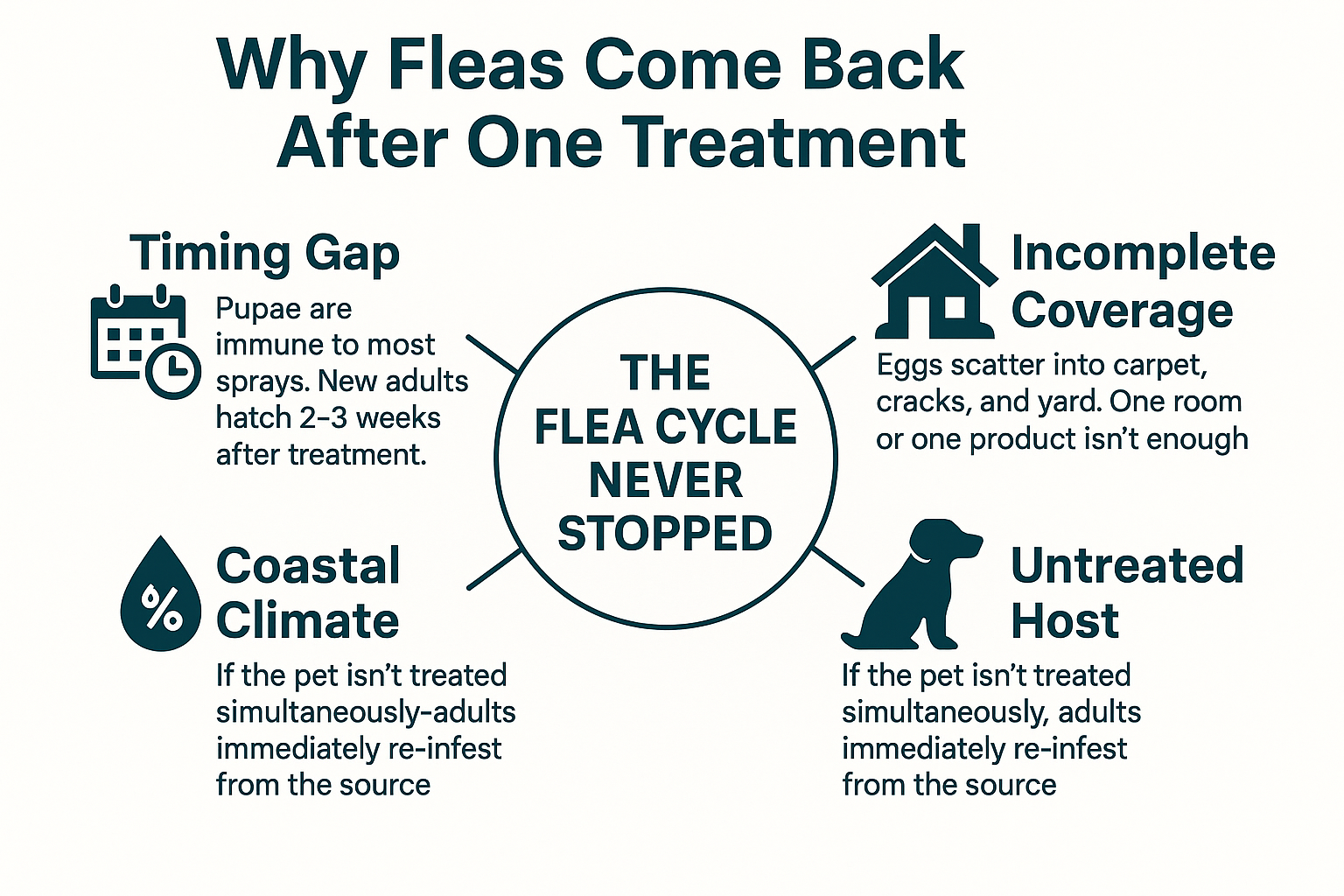
Most flea problems require at least three coordinated actions happening at the same time. This breakdown shows what each piece does and why skipping any one of them tends to extend the problem.
What Actually Breaks the Cycle: Timing and Coverage
A treatment plan that addresses the full flea life cycle typically involves two to three treatments spaced about 2 weeks apart. The first visit handles active adult fleas and applies a product with an insect growth regulator (IGR) to interrupt egg and larval development. The follow-up visits catch newly hatched adults before they can reproduce.
Beyond the number of visits, coverage matters just as much as chemistry. Every room where the pet spends time needs to be treated — not just the visible hot spots. That includes:
- Under furniture and along baseboards
- Inside closets and under beds
- Pet sleeping areas and crates
- Any upholstered furniture the pet accesses
- Outdoor areas where the pet rests or the yard has wildlife activity
Homeowners can improve results between professional treatments by vacuuming daily. Vacuuming creates vibration that triggers pupae to hatch earlier — before they’d naturally emerge — which brings them into contact with residual products. Empty the vacuum bag or canister immediately and dispose of it outside.
For situations where you’re weighing whether a problem has grown past what a DIY approach can handle, when to stop trying to handle a pest problem on your own is a useful read. Fleas are one of the categories where timing and product selection matter enough that getting it wrong often adds weeks to the process.
If you’re also weighing treatment methods and want to understand what eco-friendly options actually accomplish compared to store-bought remedies, what makes eco-friendly pest control work better than DIY remedies lays that out clearly.
Flea Life Stages vs. Treatment Vulnerability
Understanding which products affect which life stages helps explain why timing between treatments matters as much as the products themselves.
| Life Stage | Typical Duration | Vulnerable to Insecticides? |
|---|---|---|
| Egg | 2–10 days | Partially — IGRs can prevent hatching |
| Larva | 5–15 days | Yes — surface sprays and IGRs effective |
| Pupa (cocoon) | Up to 5 months | No — nearly impenetrable by most products |
| Adult | Several weeks to months | Yes — killed by most contact insecticides |
What to Do Before and After a Professional Treatment
Professional treatments work better when the environment is prepared correctly. A few specific steps make a real difference:
Before treatment:
– Wash all pet bedding on the hottest setting your washer allows
– Vacuum all carpeted areas, including stairs and closets, and dispose of the bag immediately
– Clear clutter from floors so the technician can reach baseboards and under furniture
– Arrange for pets and people to be out of the treated area for the time your technician recommends — typically 2-4 hours
After treatment:
– Don’t vacuum for at least 48 hours so residual products have time to work
– Continue treating your pet with a veterinarian-recommended flea product throughout the process — treating the home without treating the pet just delays the outcome
– Expect to see some flea activity for 1-2 weeks after the first treatment as pupae continue hatching — this is normal and expected, not a sign that treatment failed
For a deeper look at non-toxic options for the interior of your home, this guide to non-toxic flea treatment for home covers what’s available and how those approaches are best used alongside professional treatment.
One thing to avoid: retreating on your own between scheduled professional visits. Applying additional products on a non-coordinated schedule can complicate the plan and, in some cases, drive larvae deeper into carpet where they’re harder to reach.
Frequently Asked Questions About Flea Treatments
How long does it realistically take to get rid of fleas in a home?
For most homes, 3-4 weeks with 2-3 properly timed treatments is a realistic window. Homes with heavy infestations, pets still bringing in fleas from outside, or untreated outdoor areas can take longer. The timeline depends heavily on whether the pet is being treated simultaneously and whether the whole house — not just one room — was addressed.
I don’t have pets. How do I have fleas?
Fleas don’t require a pet in the home. Wildlife like raccoons, opossums, and feral cats that pass through your yard or under your house leave eggs and larvae behind. Fleas can also enter through foundation gaps, on used furniture, or on clothing after contact with an infested environment. This is actually a common situation in Santa Cruz County neighborhoods where wildlife activity is regular.
Is it safe to treat for fleas if I have young kids or a dog?
Yes, when the right products are used and the home is vacated for the recommended period — typically 2-4 hours after treatment. A professional using targeted, eco-friendly methods will apply products in specific areas rather than blanket-spraying every surface. Ask your technician specifically what’s being applied and where before the treatment starts.
Why are there still fleas two weeks after treatment?
Almost certainly because pupae that were present during the first treatment are now hatching. The cocoon stage is nearly impenetrable by insecticides, so newly emerged adults will appear 1-2 weeks after any treatment. This is expected — and it’s exactly why a follow-up treatment is scheduled. Those newly hatched adults are now exposed to residual product and can no longer reproduce if an IGR was used.
Do I need to treat my yard as well as the inside of my home?
In most Santa Cruz County situations, yes — especially if your pet goes outside or if there’s evidence of wildlife activity near the home. Treating only the interior while leaving an active outdoor source in place extends the problem significantly. Shaded, moist areas under decks and dense shrubs near the house are the most common outdoor hotspots.
Ready to Stop Treating the Symptom and Address the Whole Cycle?
If you’ve treated once and the fleas are back, the issue is almost always timing and coverage — not the products. Matthew West and the West Pest Co. team serve homeowners across Santa Cruz County, from Capitola to Watsonville, with treatment plans built around the flea life cycle and the specific conditions of the local coastal climate. Give them a call at (831) 430-8402 or visit westpestco.com to learn more about how they approach flea control for families with kids and pets.