Direct Answer: No. A vegetable garden changes where and how treatment happens, not whether it can happen. Beds and fruit trees get marked as no-go zones while the trail is handled elsewhere.
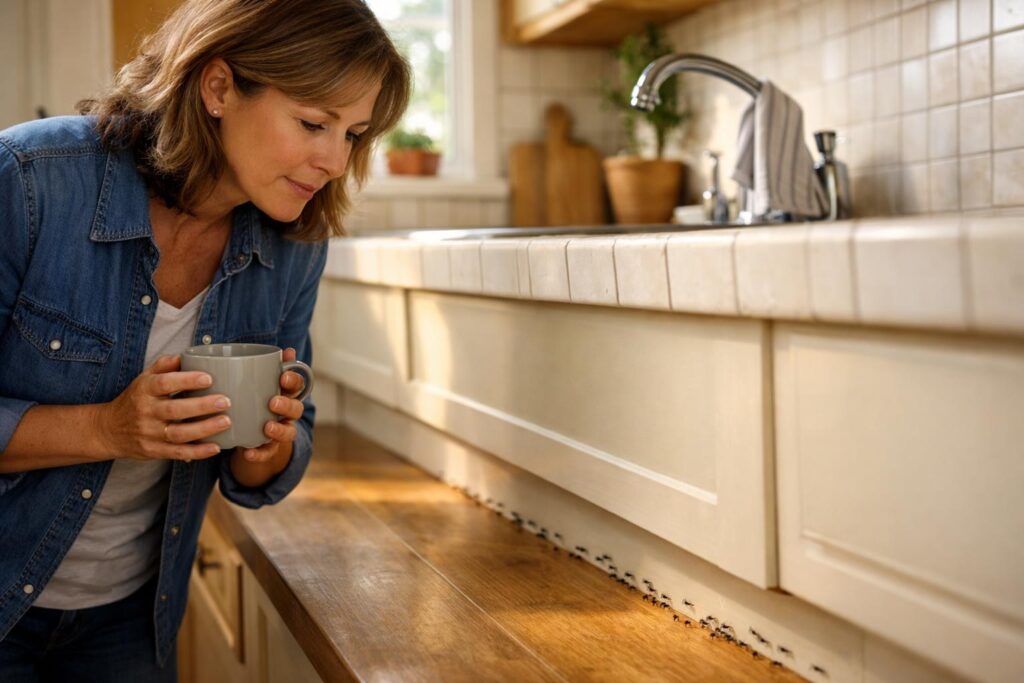
There is an ant trail running across the kitchen counter. And out back, the tomatoes you planted in April are finally doing something. So you hesitate before calling anyone, because it feels like you have to pick one.
I see this worry in our inbox constantly. One homeowner in the county wrote in about ants that showed up after her front yard was landscaped with wood mulch, then added a line asking whether her organic vegetable garden in back might limit the treatment options.
Here is the position I will defend for the rest of this article: the garden is information, not a disqualifier. It changes where product goes and what gets used, and a good inspection starts by asking where your edibles are before anything is opened.
Pest Treatment Around a Vegetable Garden Changes the Map, Not the Job
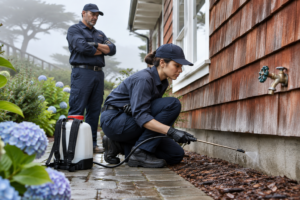
Most people picture pest control as a technician walking the whole property with a sprayer. That picture is where the fear comes from, and it is not how a yard with food growing in it gets handled.
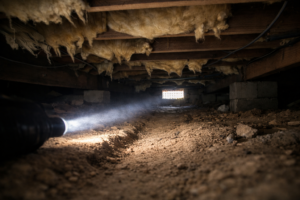
Ant trails, spider webs, and roach harborage sit in specific places. Usually that means the foundation line, the weep holes, a gap under siding, or a crack behind the dishwasher. Almost none of those places are inside a raised bed.
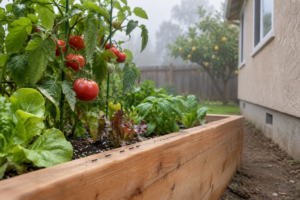
So the beds get treated as a boundary. Nothing goes on the soil, nothing goes on the leaves, and nothing gets applied in a way that can drift or run toward them.
What that leaves is still plenty of room to work:
- The exterior wall line, where trails actually enter
- Cracks, voids, and plumbing penetrations inside
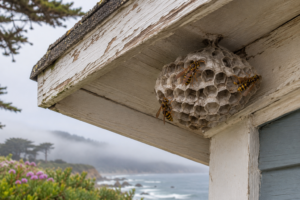
- Eaves and overhangs for spiders and wasps
- Hardscape, fence lines, and non-edible landscaping
One of our reviewers put the goal more plainly than I could: “Everything he used was pet, plant and kitchen safe.” That is the standard a property with edibles should be held to, and it is reachable on almost every job.
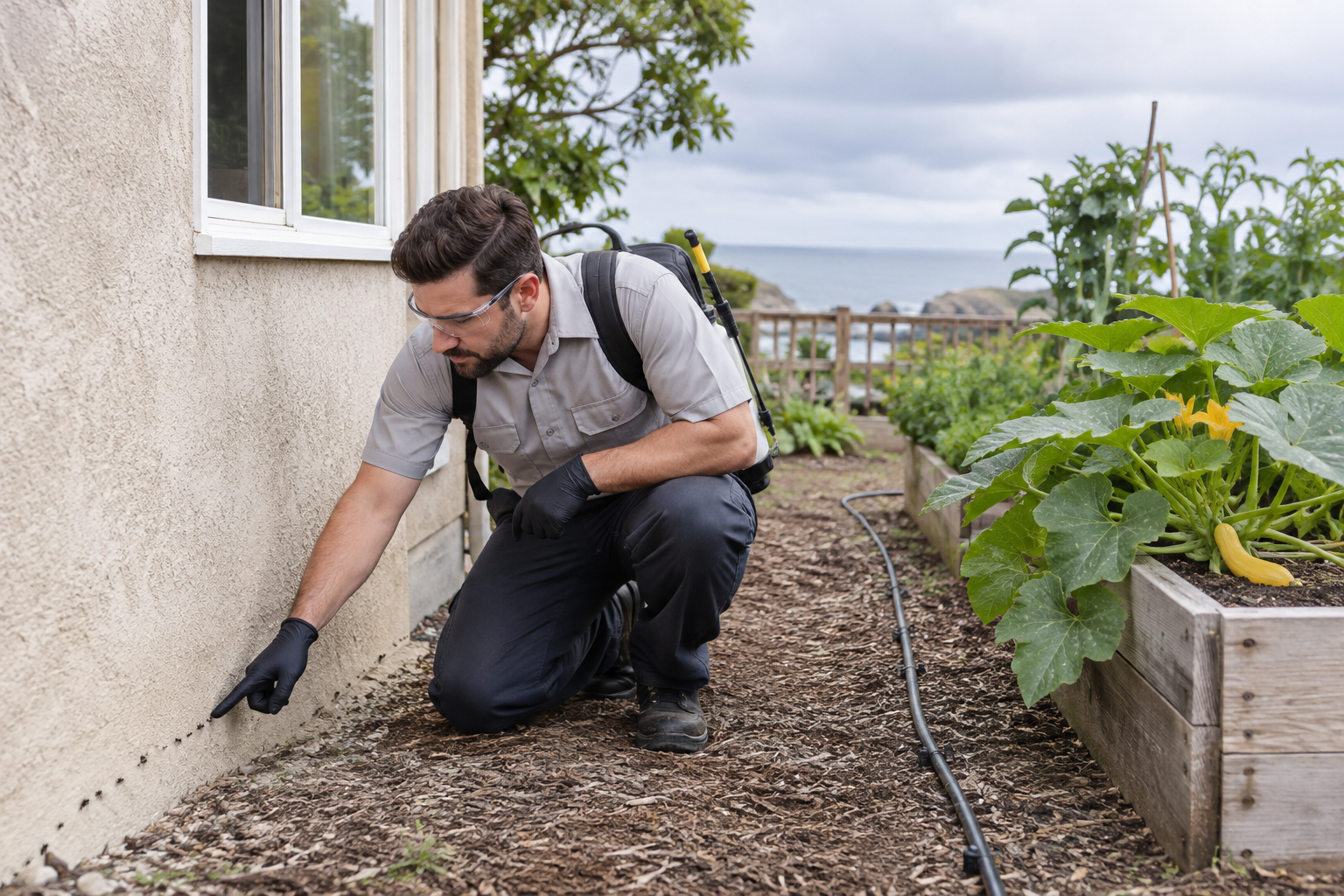
What I Ask Before I Open Anything on a Property With Edibles
This is the part nobody in our market seems to write down, so here is the walkthrough you would get standing in your own backyard.
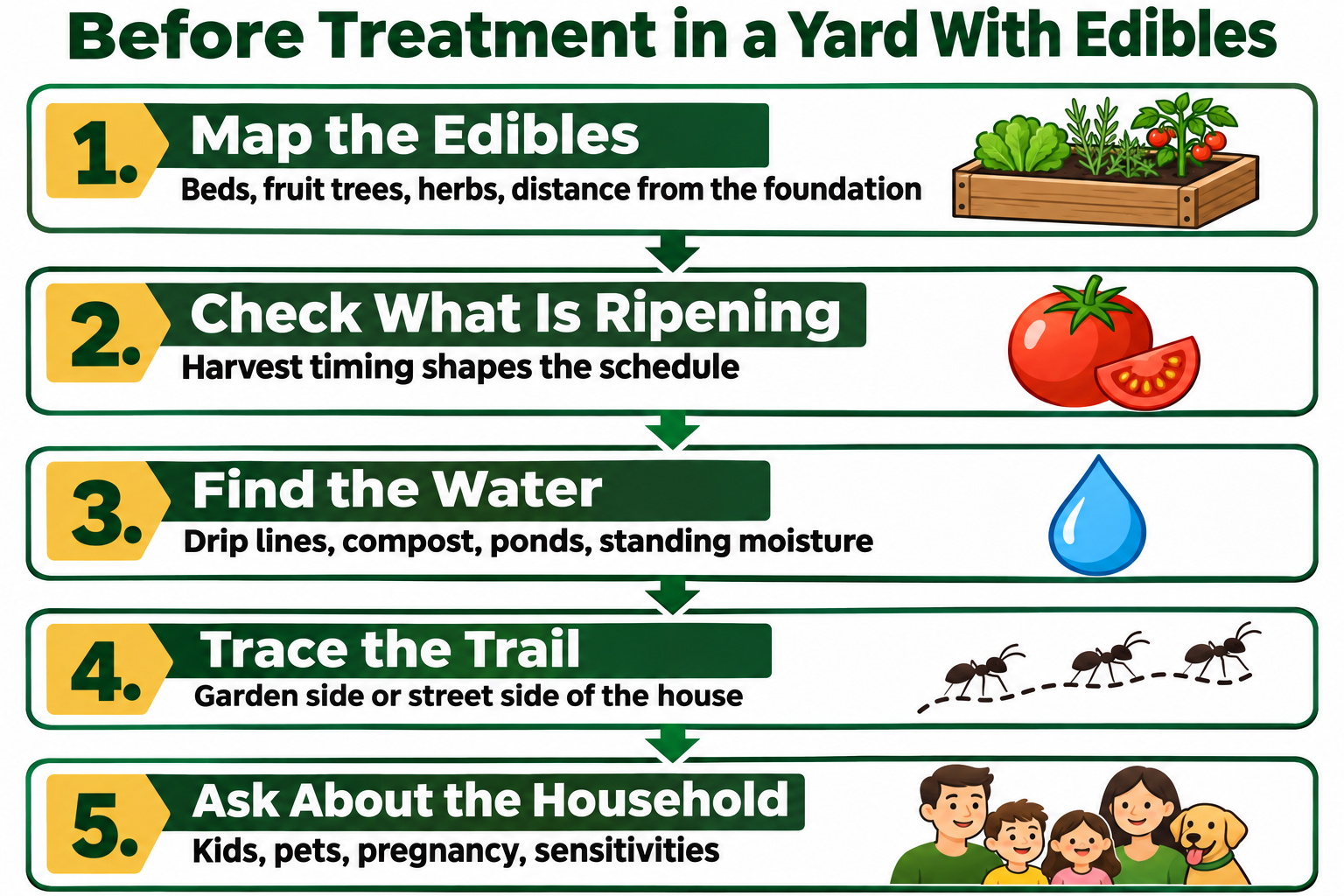
- Where are the beds and fruit trees relative to the foundation? Three feet from the wall is a very different job than thirty.
- What is ripening right now? Strawberries and tomatoes in peak harvest change timing. A bed of winter greens does not.
- Where do the drip lines and the compost run? Both are moisture and food, and both are frequently the real draw.
- Are bees working the yard? If the squash blossoms are busy, placement and timing shift.
- Is there a pond or water feature? One small business here asked for ant control that would not reach their koi pond. That is a reasonable ask and it shapes the plan.
- Is the trail coming from the garden side of the house or the street side? This one decides most of the work.
I also ask about the people. Pets, kids, pregnancy, respiratory sensitivity. A customer once told us about a household member’s lung sensitivity, and the recommendation changed on the spot while the ant problem still got handled.
If a technician starts spraying before asking these, that is your answer about whether to keep working with them.
Why the Ants and the Garden Show Up Together in the First Place
This is the piece most homeowners are missing, and it reframes the whole problem.
Aphids feed on roses, citrus, and tender vegetable starts, and they excrete a sugary liquid called honeydew. Ants farm those aphids and protect them, which builds a steady highway between your beds and whatever is nearest. Often that is your kitchen.
That is why the indoor trail keeps reappearing in the same spot no matter how many store baits you set. One homeowner here described ants in the grass, the dirt, the trees, and the garden across nearly an acre before she ever got to the ants indoors. The University of California’s statewide IPM program covers this ant and honeydew relationship in detail.
Two things you can do yourself that genuinely help:
- Hose aphids off vulnerable plants with a firm spray of water, repeating every few days
- Pull mulch back four to six inches from the foundation so there is no covered runway to the wall
Santa Cruz County’s coastal fog and damp soil keep ant pressure running close to year round instead of shutting down in winter. That outdoor work will not end the problem, but it lowers the pressure and makes the indoor side much easier to hold down. If trails linger after a visit, that is normal, and what the first two weeks look like is worth reading before you assume it failed.
How a Property With Food Growing on It Gets Divided Up
Here is roughly how the map looks on a typical Santa Cruz County lot with raised beds and a couple of fruit trees.
| Zone | What Usually Happens There | Why |
|---|---|---|
| Raised beds and fruit trees | No-go zone. Nothing applied to soil or foliage | Keeps everything off anything you will eat |
| Foundation and exterior wall line | Targeted work in a narrow band where trails run | This is where entry actually happens |
| Interior trails and cracks | Small bait placements in voids and cracks | Low volume, out of reach of kids and pets |
| Compost and drip lines | Noted and worked around, often a conditions talk | Moisture and food waste are frequently the draw |
| Flowering plants with bee activity | Timing and placement adjusted | Pollinators are working the same yard |
| Ponds and water features | Buffer held, no runoff path toward water | Runoff is the real risk, not the product itself |
The Questions That Come Before Treatment Day
This is the short version of the conversation that should happen before anything is applied on a property with edibles.
Being Straight About the Limits
Some approaches simply are not used near food crops, and that is a real limit, not a technicality. It can mean the work leans harder on bait placement and interior treatment than on broad exterior application.
It also means a treated perimeter does not make a yard pest free. Treatment handles active pests. If your property backs onto a greenbelt, or sits near farmland in the Watsonville and Corralitos area, you stay under pressure no matter what was applied. Homeowners down there regularly notice a push when the neighboring ground gets worked.
A reasonable outcome looks like this: activity drops noticeably over the first week or two, the indoor trail breaks, and the problem becomes something you manage rather than something that runs your kitchen. Recurrence is not automatically failure. It usually means a condition outside changed.
Anyone promising you a permanent fix on a property with food, water, and mulch on it is telling you what you want to hear.
Cost follows the same logic. Property size, how many trails there are, and whether the pressure is seasonal or ongoing all move the number, which is why ant treatment is priced the way it is rather than set at one flat rate. An exact figure for your lot needs a look at the lot.
Timing Around Picking and Watering
This is the practical question that lands right after the safety one, so here is what to expect.
- Harvest first if you can. Picking what is ready before the visit removes the question entirely.
- Hold off on heavy watering right after exterior work so nothing moves where it should not. A day is usually plenty.
- Re-entry windows vary by what was used, and anything applied is explained before it goes down. Often it is a matter of hours, and it is specific to the product, not a blanket rule.
- Late summer through the first fall rains is when garden-driven ant pressure tends to peak here, as outdoor food sources dry up and colonies push toward the house.
If you want to understand the broader approach behind this, what IPM means for homes with kids and pets covers the same thinking applied indoors.
Frequently Asked Questions About Pest Treatment Around a Vegetable Garden
Will anything be sprayed directly on my vegetable beds?
No. The beds get treated as a no-go zone, and the work happens along the foundation, in cracks and voids, and in other areas away from anything edible. That boundary gets set before treatment starts, not after.
Do I need to harvest or cover my plants before the visit?
Covering is usually unnecessary if the beds are being avoided anyway. Picking what is already ripe is still a good idea, mostly because it gives you one less thing to think about.
My ants are in the garden, not in the house. Is that still worth a call?
Often yes, because garden ant activity is frequently the source of the indoor trail that shows up weeks later. Aphid honeydew is usually behind it, and knocking aphids back with a hose is a real first step you can take yourself.
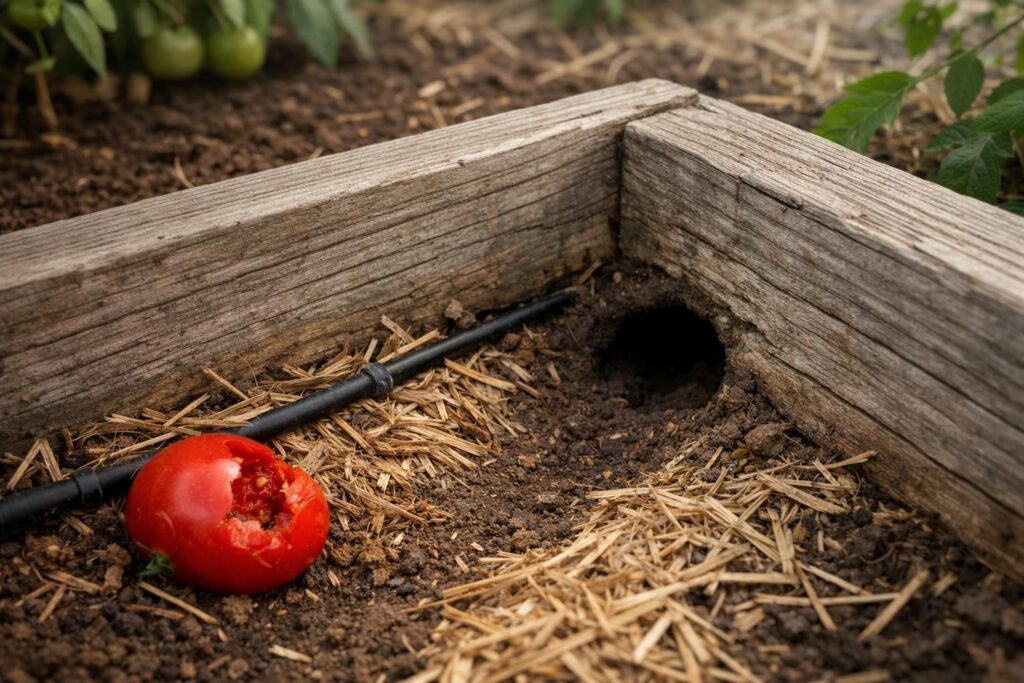
Can rats get into raised garden boxes?
They can, and it happens here more than people expect. One Westside homeowner wrote in worried that the way their garden boxes were built had created nesting space underneath. Open space beneath a bed plus a steady food supply is an appealing setup for roof rats.
Is a treated yard pest free afterward?
No, and nobody should tell you otherwise. Treatment addresses active pests, and a yard with soil, mulch, water, and food growing in it stays attractive to insects. Expect a meaningful drop in activity rather than an empty property.
Questions About Treatment Around Your Own Beds?
West Pest Co. works across Santa Cruz, Aptos, Capitola, Scotts Valley, Watsonville, and the rest of Santa Cruz County, and Matthew West does the inspections himself and explains what is being applied and why before anything happens. Homeowners with questions about treatment around edible gardens can reach the office at (831) 430-8402 or at westpestco.com.