Direct Answer: Yes. West Pest Co. treats fleas inside the home and in shaded yard hotspots across Scotts Valley, using pet-safe products on active infestations. Treating the dog alone rarely settles the problem.
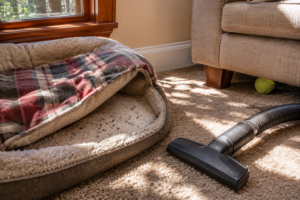
The dog naps under the deck, rolls around in the leaf litter, comes back in and flops on the carpet. A week later you are finding black specks in his bedding and getting bitten around the ankles while you watch TV.
Short answer up front: yes, we handle pet-safe flea treatment for both the inside of a home and the yard in Scotts Valley and across Santa Cruz County, and West Pest Co. usually covers both on the same visit. Most of the calls we get on this start exactly the way yours did.
The part most people get wrong is scope. Treating the dog alone, or spraying the yard alone, almost never settles a flea problem, because the bulk of the life cycle is sitting indoors in carpet fibers, under furniture, and in the dog’s bed. This article lays out the three places the problem lives and what actually gets treated in each one.
Our dog brought fleas into the house in Scotts Valley. Who offers pet-safe flea treatment for the home and yard?
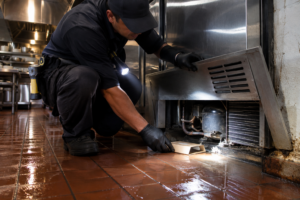
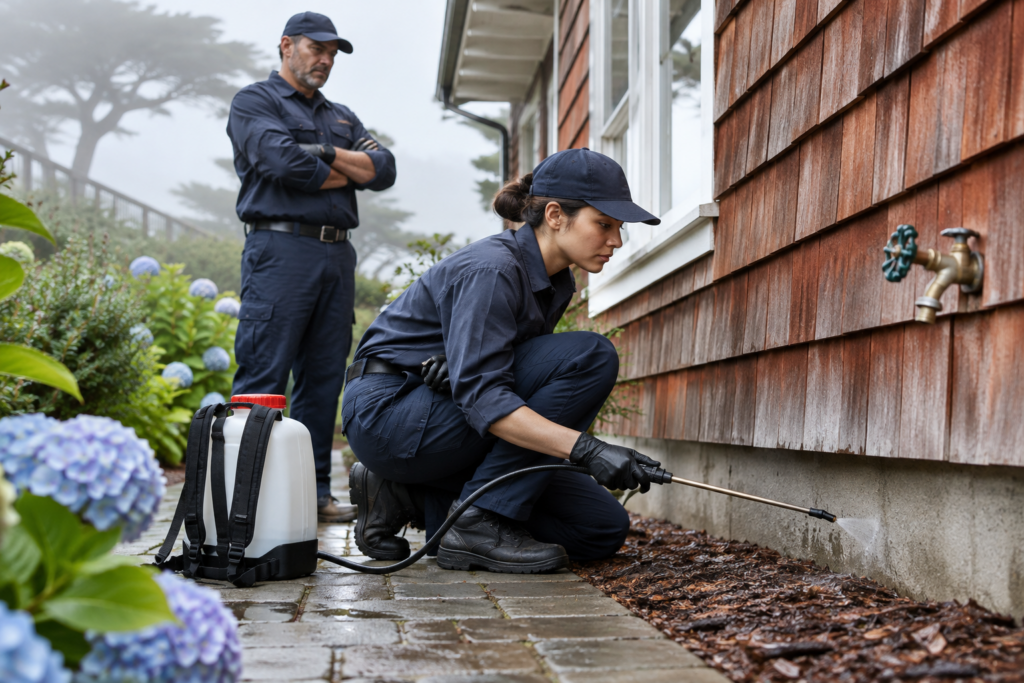
We do flea and tick work for homes and yards throughout Santa Cruz County, including Scotts Valley, Glenwood, Ben Lomond, and the Felton area. The owner typically performs the inspection and the treatment himself, so the person who looks at your crawl space entry is the person who treats it.
A flea visit generally covers:
- Inspection of indoor hotspots first: carpet and rug edges, under and behind furniture, pet bedding, floor cracks, and the rooms the dog actually sleeps in
- Inspection of outdoor hotspots: shaded, damp ground where the dog rests, not the whole lawn
- Targeted application of pet-safe, eco-conscious products to areas with active flea activity
- A walk-through of prep and follow-up, including what you handle between visits
What moves the price: square footage, how many rooms have carpet or rugs, whether the yard is included, how much shaded ground needs treating, and how long the problem has been building. Follow-up visits are common in flea work because of how the life cycle runs, and that affects the total too.
Flea jobs in this county tend to land in the mid hundreds for indoor work on an average single family home, with yard work priced on top, but that is general market context and not a quote. Call for a number on your specific property.
On timing, we can often get out the same week and sometimes the same day, depending on the schedule. A standard flea treatment usually takes one to two hours on site once the house is prepped.
The Problem Lives in Three Places, and the Dog Is the Smallest One
This is the piece that changes how people think about the job. Adult fleas on your dog are the visible part, but they are a small slice of the total population. The eggs roll off the animal and land wherever he spends time, then develop into larvae and pupae in carpet, cracks, and bedding.
UC’s integrated pest management program has a plain breakdown of the flea life cycle and where each stage hides, and it lines up with what we see in the field. The pupae are the stubborn ones. They sit protected in a cocoon and emerge on their own schedule, which is why a home can look clear for a week and then feel worse.
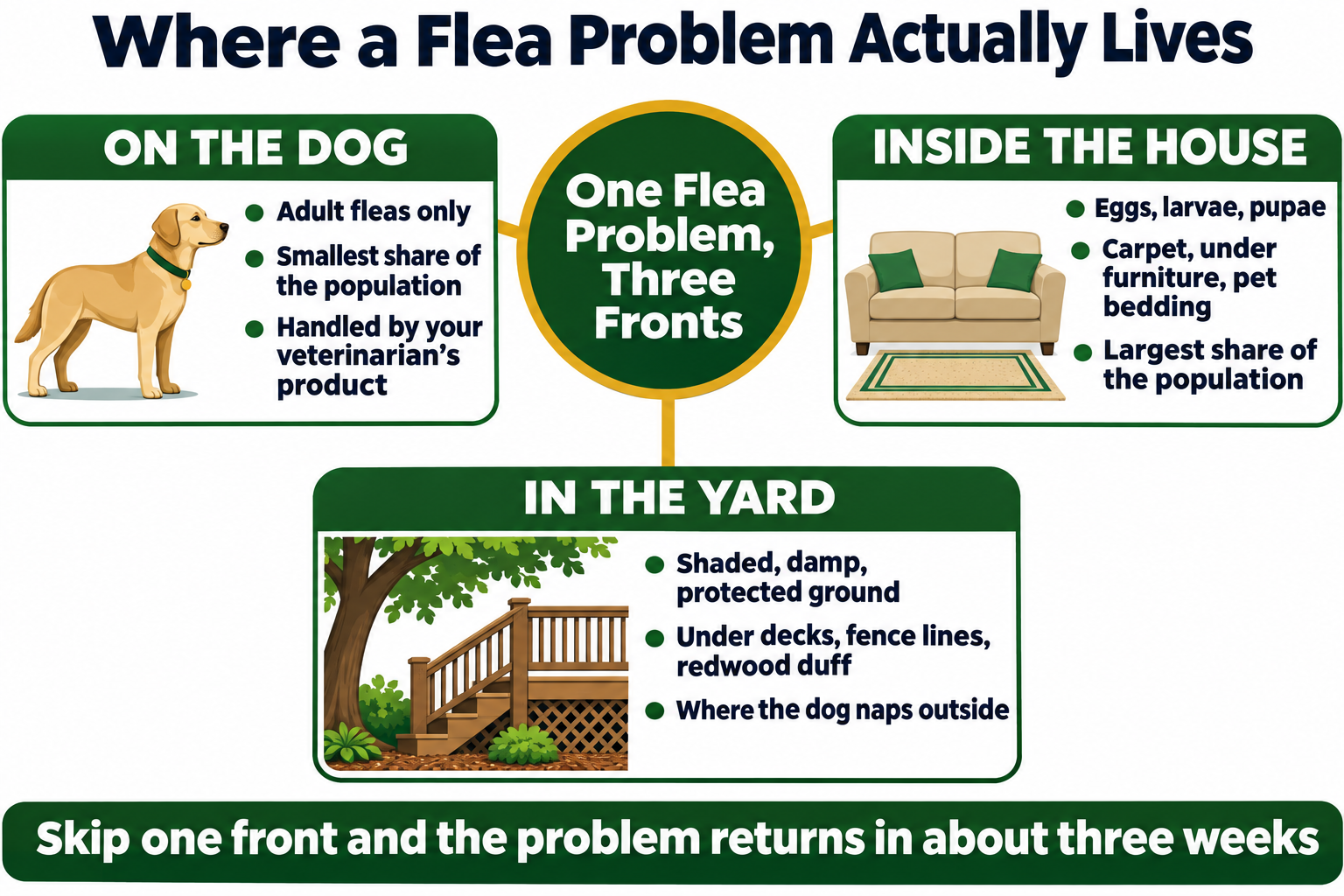
So the three fronts are:
- On the animal, handled by the product your veterinarian prescribes
- Inside the house, where most of the eggs, larvae, and pupae are
- In a few specific yard spots, where the dog picks up new ones
Skip any one of those three and you call somebody back in three weeks. That is the single most common reason homeowners tell us a previous flea treatment failed.
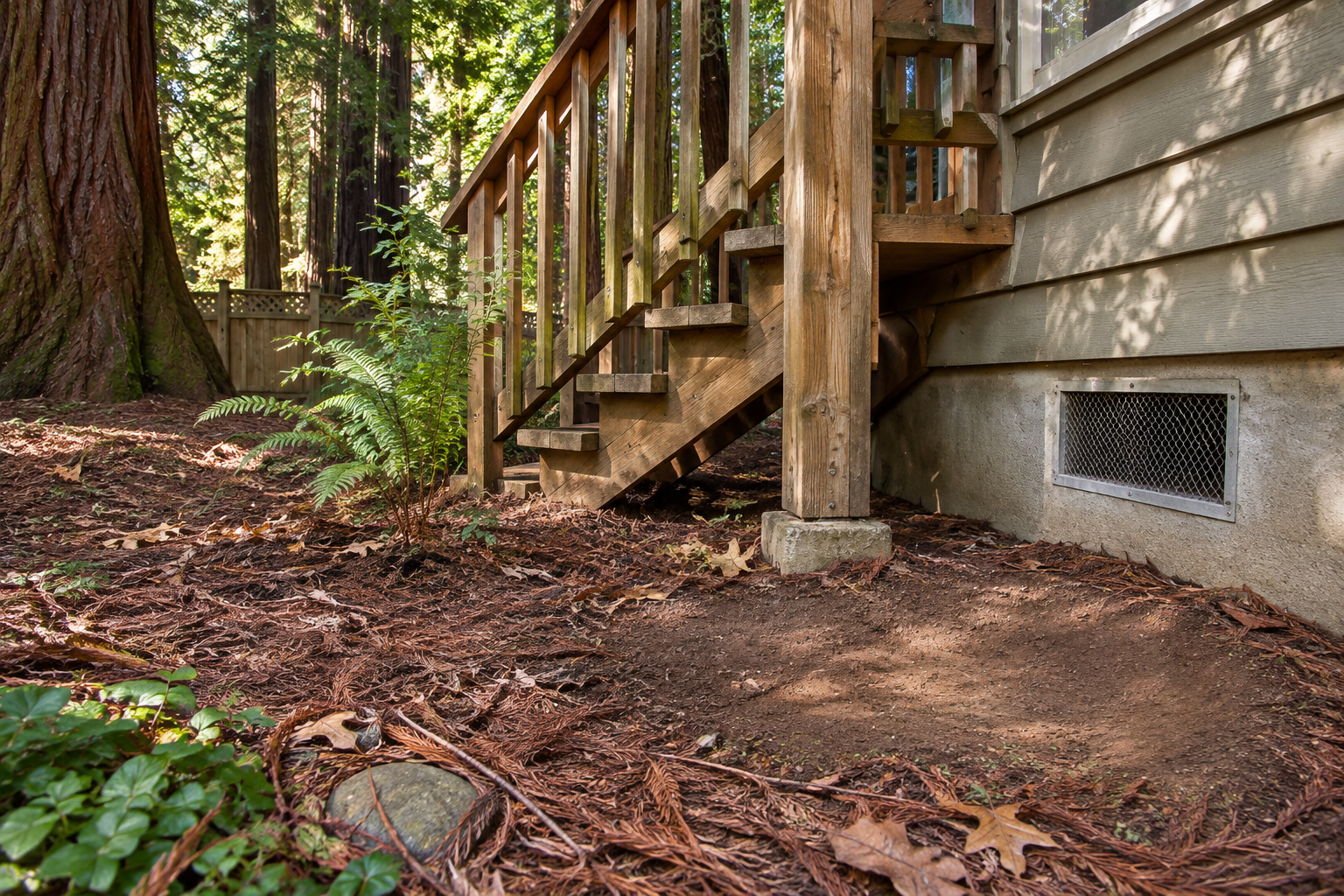
What a Yard Treatment Actually Targets on a Scotts Valley Lot
Broadcast spraying an entire lawn is not necessary and it is not what careful work looks like. Fleas do not survive well in open, sunny turf. They concentrate in shaded, moist, protected ground.
On wooded Scotts Valley and Glenwood properties, that usually means:
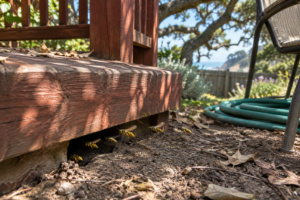
- Under decks, porches, and exterior stairs
- Along fence lines and the drip line of hedges
- Redwood duff and leaf litter that stays damp even in August
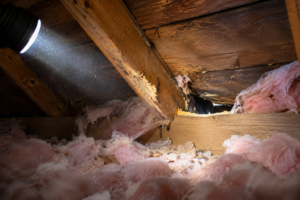
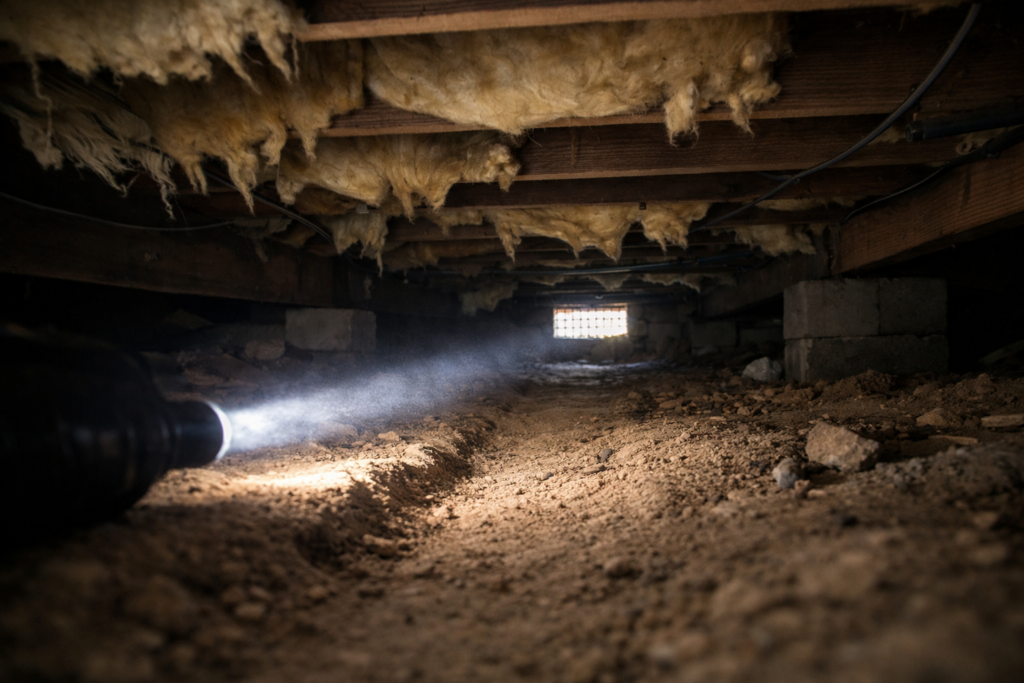
- Crawl space entries and the shaded strip against the foundation
- Wherever the dog naps outside, which is almost always the coolest spot on the lot
Here is something useful you can do before anyone arrives. Walk your own yard and mark the shaded, damp spots the dog actually uses. That list is usually the treatment plan, and it is also the honest reason a yard quote varies so much from one property to the next. A half acre of open lawn in a sunny subdivision needs far less treated area than a quarter acre under redwoods.
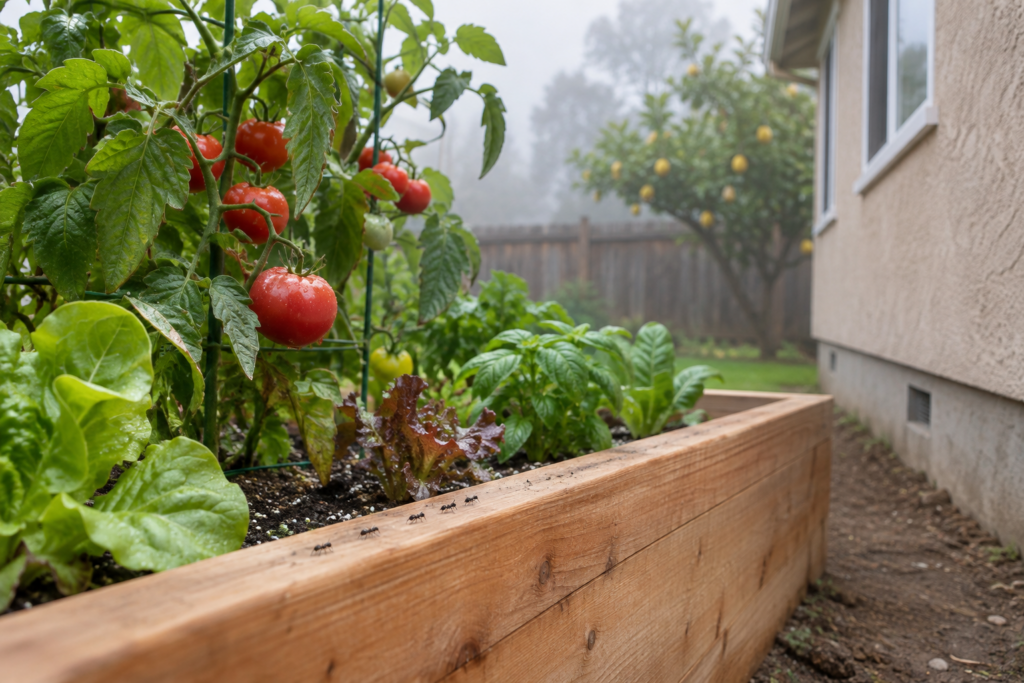
If you grow food, say so up front. We work around vegetable beds regularly, and there is more on treating around a backyard garden if that is a concern.
One honest note on the yard: raccoons, squirrels, deer, and neighborhood cats move through these properties constantly and keep reseeding the ground. The goal is control of active flea activity, not a sealed off yard.
The Three Fronts of a Flea Problem
A quick visual of where fleas live, who handles each area, and what gets skipped most often.
Who Handles What on a Flea Job
Flea work is one of the few pest problems where the homeowner’s hours matter as much as the application. This is how the work splits up.
| Where | What is happening there | Who handles it |
|---|---|---|
| On the dog | Adult fleas feeding and laying eggs | Your veterinarian’s prescribed product |
| Carpet and rugs | Eggs, larvae, and protected pupae | Treatment, plus your daily vacuuming |
| Pet bedding and blankets | Heavy egg and flea dirt buildup | You, hot wash and hot dry |
| Under and behind furniture | Larvae in dark, undisturbed fibers | Treatment, if the floor is clear |
| Shaded yard spots | Fleas in damp soil and leaf litter | Targeted outdoor treatment |
| Open sunny lawn | Little to no flea survival | Usually left alone |
The Pet Safety Question, Answered Concretely
This is the concern pet owners here raise before we even ask. People volunteer it on the quote form constantly, across every pest type, and it is a threshold issue rather than a nice-to-have. Nobody wants to trade an itchy dog for a sick one.
The products we use for flea and tick work are selected as pet-safe and eco-conscious, and that is the default approach, not an upcharge. The practical mechanics on treatment day:
- Pets and kids stay off treated surfaces until everything is dry, usually a couple of hours
- Food and water bowls get moved out of treated rooms beforehand
- Aquariums get covered and the air pump turned off during the application
- Birds and small caged animals get moved to an untreated room
The home treatment supports the on-animal product your vet prescribes. It does not replace it. If you have questions about what you are putting on your dog, that conversation belongs with your veterinarian, and there has been state review activity around certain flea drop ingredients worth knowing about.
For a broader walk-through of what treatment day looks like with a dog and small kids in the house, we covered the questions homeowners ask first.
The Prep That Genuinely Changes the Outcome
In flea work, your hours do as much as the application. This is not busywork.
- Vacuum daily for at least two weeks, including carpet edges, under cushions, and along baseboards. The vibration helps pull pupae out of their cocoons where treatment can reach them.
- Empty the canister or bag outside every single time, into a bin away from the house.
- Run the dog’s bedding through a hot wash and hot dry. Same for any throw blankets he sleeps on.
- Clear the floors. Toys, laundry piles, boxes under the bed. Anything that cannot be reached cannot be treated.
That last one gets skipped more than any other. A technician who cannot get a nozzle under the couch leaves a reservoir of larvae behind, and in three weeks you are watching fleas come back and wondering what went wrong.
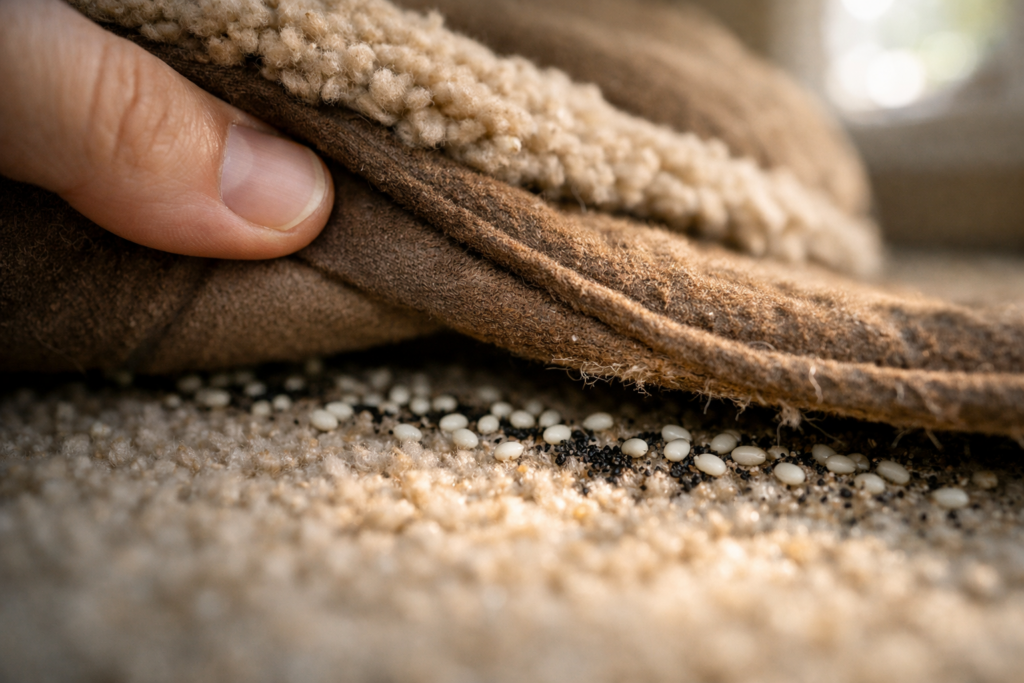
Also expect to keep seeing some activity after treatment day. Pupae emerging on their own schedule is normal and does not mean the treatment failed. If you are finding specks and shells and cannot tell what you are looking at, dead shells versus live eggs sorts that out.
Indoor Treatment, Yard Treatment, or Both? A Simple Read
Most flea content skips the diagnostic step, so here is a quick way to think about it before you book anything.
Bites around your ankles indoors and black specks in the dog’s bed point at the house. The population has already established itself in carpet and bedding, and indoor treatment is the priority.
Fleas showing up only after yard time, in a home that otherwise stays clear, points outside. Check the shaded spots first.
In practice, on a wooded Scotts Valley lot with a dog that goes in and out all day, it is usually both. Our mild coastal climate does not give us the hard freeze that knocks flea activity down inland, which is why we get these calls in January as often as July. If you are curious how that plays out seasonally, fleas in winter covers what pet owners here actually see.
Frequently Asked Questions About Flea Treatment in Scotts Valley
Our dog brought fleas into the house in Scotts Valley. Who offers pet-safe flea treatment for the home and yard?
West Pest Co. handles flea and tick work for both the inside of the home and the yard throughout Santa Cruz County, including Scotts Valley, Glenwood, Ben Lomond, and Felton. The visit covers inspection of indoor hotspots like carpet, furniture, and pet bedding, plus shaded outdoor areas where the dog rests, with pet-safe products applied to active infestations. Same-week availability is common, and the owner usually performs the inspection and treatment himself. Call (831) 430-8402 for a quote on your property.
Does the dog need to be treated too, or is the house enough?
Both. The on-animal product from your veterinarian handles the adults riding on your dog, and the home treatment handles the eggs, larvae, and pupae in the carpet and bedding. Doing one without the other is the most common reason flea problems drag on.
Will you spray my whole yard?
No, and you would not want us to. Fleas concentrate in shaded, damp, protected ground, so the work targets under decks, fence lines, redwood duff, crawl space entries, and the spots your dog actually naps in. Open sunny lawn is generally left alone.
How long until the fleas are gone?
Expect continued activity for a couple of weeks as protected pupae emerge, which is normal. Daily vacuuming through that window speeds things up considerably. Many homes need a follow-up visit, and the honest framing is control of active flea activity, not a one-and-done fix.
What does flea treatment cost for a house and yard?
It depends on square footage, how many carpeted rooms are involved, how much shaded ground the yard has, and whether a follow-up is needed. Indoor work on an average home in this county generally runs into the mid hundreds with yard work added on, but that is market context rather than a set price. A quick call gets you an actual number.
Sorting Out a Flea Problem in Your Scotts Valley Home
Flea and tick work covering both the home and the yard is available throughout Santa Cruz County, including Scotts Valley, Ben Lomond, and the Felton area neighborhoods. The eco-conscious approach pet owners here keep asking about is how the work is done by default, not an add-on. If you want to talk through your specific situation or get a quote for your property, the number is (831) 430-8402, or you can reach us at westpestco.com.