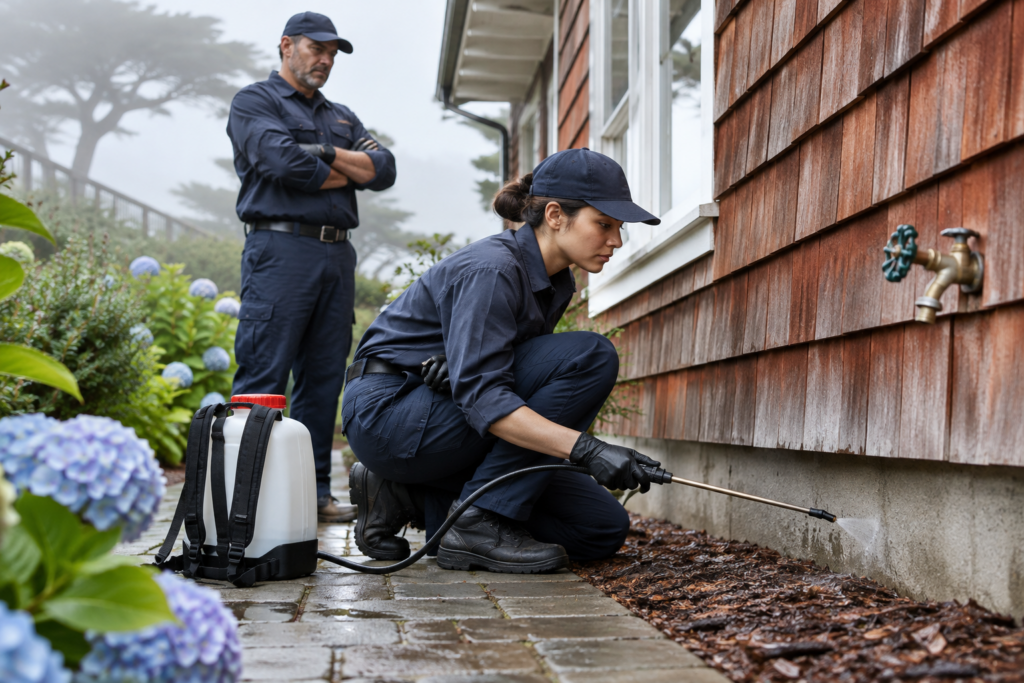
Direct Answer: For a cockroach problem in a Watsonville restaurant kitchen, West Pest Co. is the local owner-operated option. The work that holds starts with finding harborage in motors, drains, and table legs, not surface spraying.
You flip on the lights before prep and something moves under the dish machine. Then a cook mentions he saw two by the mop sink last week and did not say anything. By the time most Watsonville restaurant owners call me, they have already run through two rounds of store-bought gel and a few cans of spray.
Here is the position I will defend for the rest of this article: a kitchen roach problem is a harborage problem, not a spraying problem. Knocking down what you can see at 10 p.m. feels productive, but the population lives in warm, hidden voids you are not looking at.
People ask me who handles cockroach control in a Watsonville restaurant kitchen and what the process actually involves. I run those visits for West Pest Co. across the Pajaro Valley, and below is the honest version: where I look first, how scheduling works around a service period, and what a program can and cannot promise.
Who handles a cockroach problem in a Watsonville restaurant kitchen?
We do. I am the owner and I perform most commercial visits myself, which matters for a kitchen because the second visit should be done by someone who already knows where your floor drains run and which cooler has the warm motor.
We cover Watsonville, Freedom, Corralitos, Las Lomas, Pajaro, and the rest of Santa Cruz County, including small businesses, restaurants, and property managers.
What a commercial cockroach visit covers:
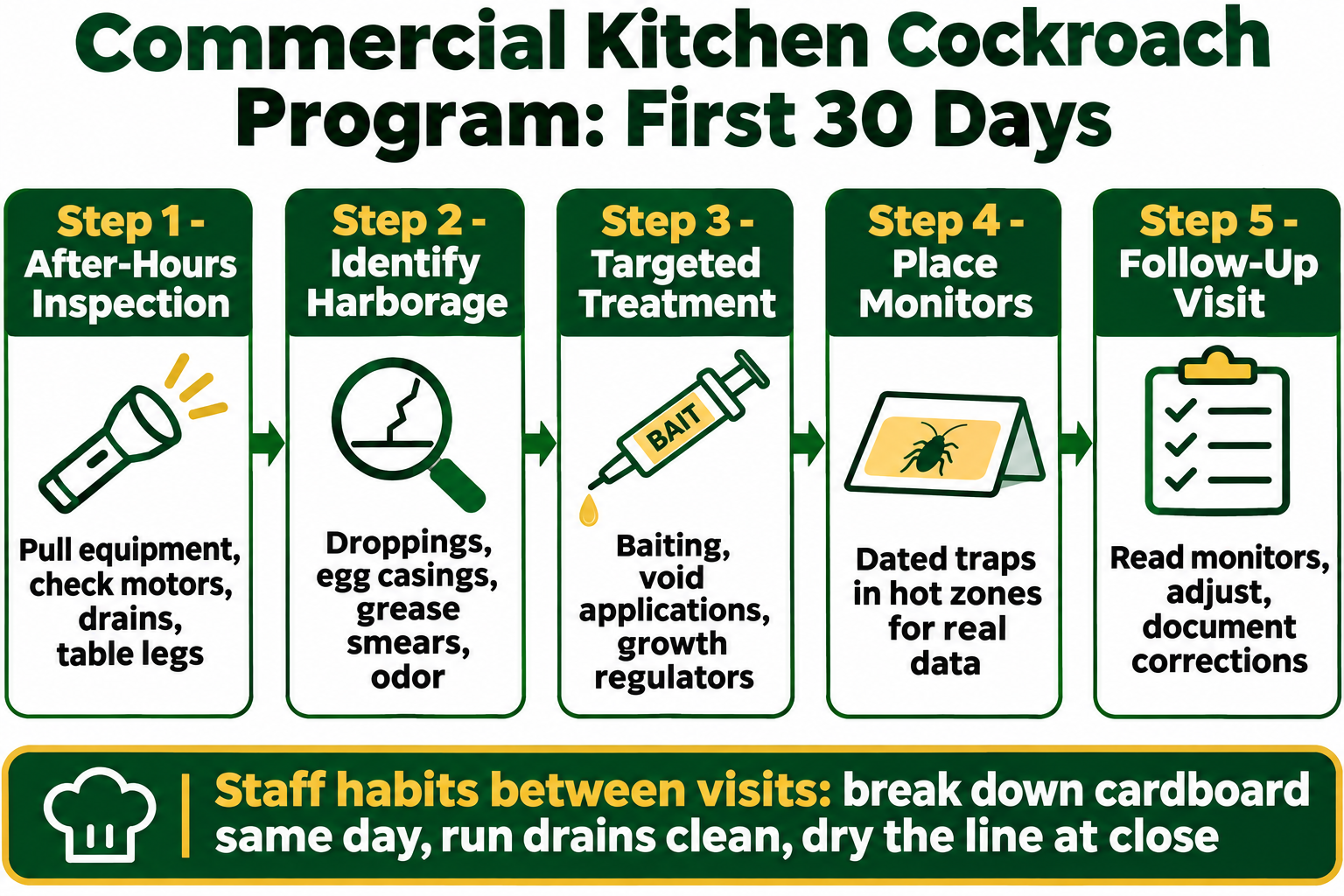
- A walk of the kitchen, dry storage, dish area, and back-of-house with equipment pulled where possible
- Species identification and a read on how long the population has been established
- Targeted treatment using professional baiting, residual applications in voids, and insect growth regulators where appropriate
- Monitors placed so the next visit has real data instead of guesses
- A written list of conditions I want the operator to correct, from drain cleaning to how cardboard gets handled
On the day itself, plan on roughly 60 to 120 minutes for a first commercial visit, longer if the kitchen is large or equipment has to be moved. I work around food contact surfaces and keep applications in cracks, voids, and equipment bases rather than open areas.
Cost depends on kitchen size, how long the problem has run, and whether the building is shared. I quote on the phone when I have enough detail, and the fastest way to get a real number is to describe exactly where and when you are seeing them.
Where I look first, and why it is almost never the dining room
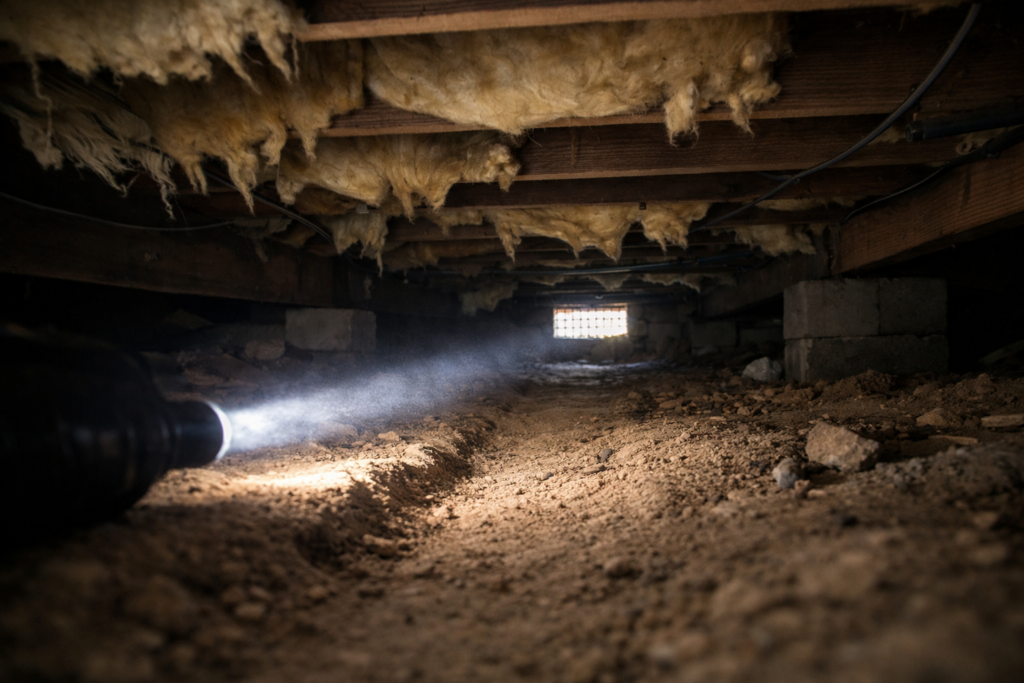
A commercial kitchen is warm, wet, and full of voids. That is the complete list of requirements for a breeding population, which is why a restaurant can hold roaches through a cool, foggy Watsonville winter while a nearby house stays clear.
The spots I check before anything else:
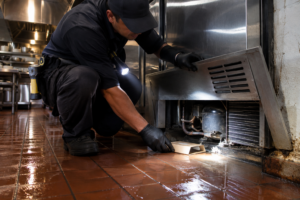
- Motor housings on the reach-in and the dish machine, where the condenser stays warm overnight
- Hollow legs on prep tables, which are basically vertical apartment buildings with an open bottom
- Seams and conduit behind the hot line, especially where a wall-mounted shelf bracket meets drywall
- Floor drains and the grease trap area, which supply water and food in one place
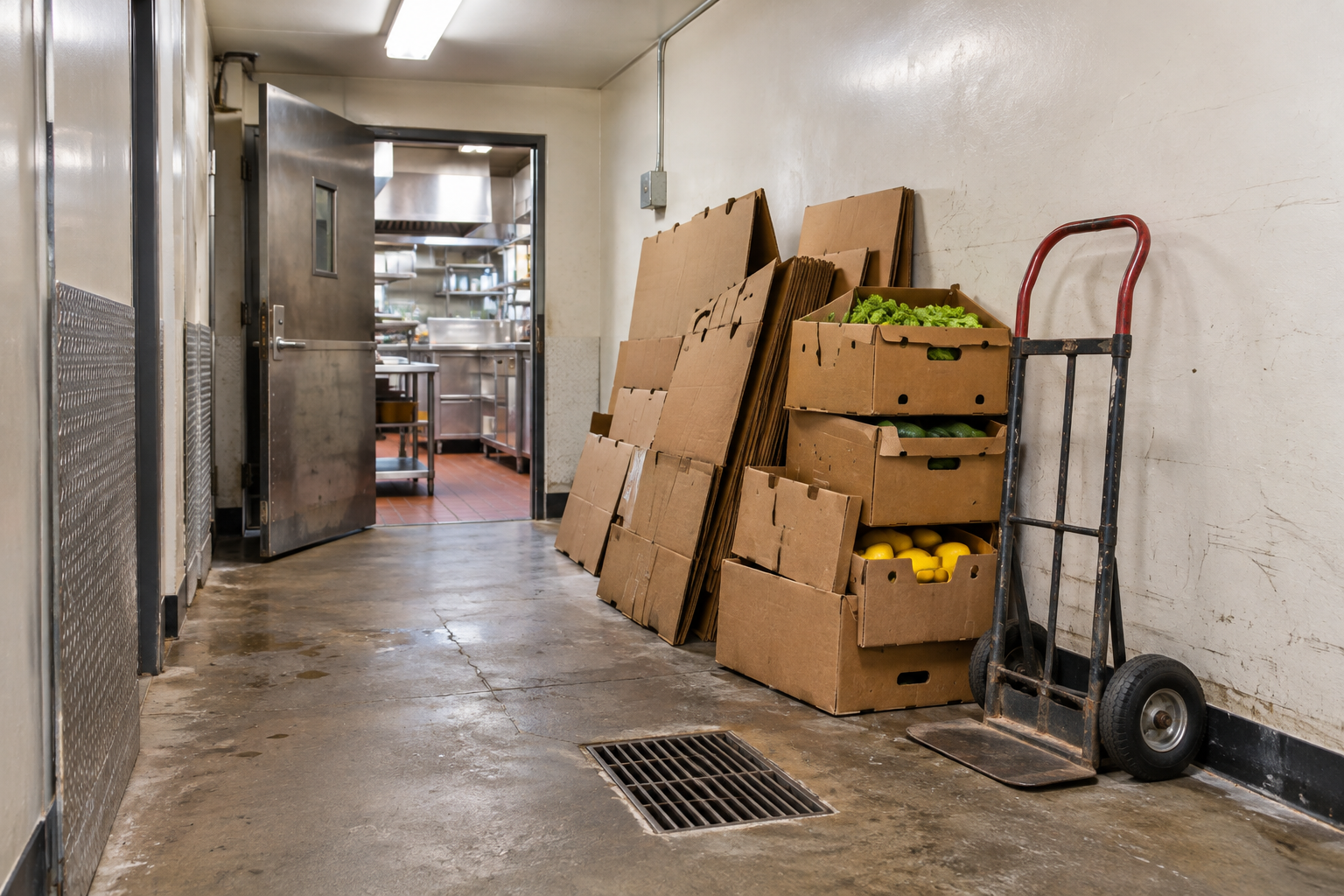
- The cardboard stack by the back door, both the boxes and the corrugation inside them
- Under rubber floor mats and in the gap behind the ice machine
What I am reading in those spots is evidence, not just live bugs. Dark droppings that look like coffee grounds, egg casings glued into a seam, grease smear marks along a wall run, and a musty odor in a cabinet all tell me how established the population is.
If the droppings are concentrated in one motor housing, I have a young infestation with a center. If they are in four places across two rooms, you have a mature population and a single treatment will not be the end of it.
Common harborage spots and what the evidence tells me
This is a short version of what I run through on a first commercial visit. If you want to check a few spots before you call, start here with a flashlight after close.
| Spot to check | Why roaches use it | What I look for |
|---|---|---|
| Reach-in and dish machine motor housing | Warm, dark, rarely cleaned | Droppings on the condenser shroud, egg casings in the frame |
| Hollow prep table legs | Enclosed void with a floor-level opening | Smear marks at the leg base, live activity when tapped |
| Floor drains and grease trap | Constant water and organic film | Activity at the grate edge, movement when the grate lifts |
| Seams behind the hot line | Heat plus grease plus tight cracks | Grease smears along the wall, droppings in the caulk line |
| Incoming cardboard by the back door | Corrugation is a hitchhiking nest | Live roaches or casings inside box flaps |
| Behind the ice machine | Condensation and a wall gap | Droppings on the floor at the wall, musty odor |
What a commercial cockroach program looks like over the first month
Here is the sequence I use in a working kitchen, from the first after-hours walk through the first follow-up visits.
Scheduling around a service period, and what to ask before you book
For a restaurant, the question is rarely whether treatment works. It is whether the visit can happen without losing a service period.
I hear this on the phone constantly, and I will be straight with you: availability is the number one reason a restaurant owner hangs up and keeps dialing. One caller told my office exactly that. So ask these questions of whoever you call, including me:
- Can the visit happen after close or before prep, and what time windows are realistic?
- How much lead time do you need, and is there a standby slot if something opens?
- What is the follow-up interval, and is it included or billed separately?
- Who performs the second visit, the same person or a rotating technician?
- Will I get a heads-up text before arrival?
One more thing that genuinely changes your place in the queue: describe the sighting precisely on the first call. “Three adults on the wall behind the hot line at 9 p.m. during service” gets rated differently than “saw one in the back.” Daytime sightings in an open area usually mean the harborage is crowded, and I treat that as urgent.
If I cannot reach you this week, say so and ask to be put on a cancellation list. That is a normal request and most honest operators keep one.
Shared walls, shared alleys, and why your building may not be the source
Plenty of downtown Watsonville commercial spaces sit in older multi-tenant buildings. Shared walls, shared plumbing chases, a common alley dumpster, and a neighbor who may or may not be dealing with the same thing.
I will be honest about the limit here: treating one unit in a shared building only goes so far. If roaches are traveling a plumbing chase from the suite next door, I can hold your kitchen down, but the pressure does not stop at your lease line.
That means the conversation with your landlord or the neighboring tenant is often part of the job. I am happy to document what I am seeing so you have something concrete to hand over instead of a complaint.
The other local factor is delivery. Produce and packing operations around the Pajaro Valley move a lot of product on pallets and cardboard, and corrugated boxes are one of the most reliable ways roaches enter a clean kitchen. If your back door receives several pallet drops a week, your receiving routine matters as much as anything I spray.
And our winters do not help. The mild, damp coastal pattern here never produces the seasonal die-off that national pest articles assume, which is why coastal winters do not slow cockroaches down the way owners expect. The same humidity is why store-bought deterrents behave differently in a coastal climate than the label suggests.
Inspections, documentation, and what a program honestly delivers
The quiet reason most owners call is not the roaches. It is the posted inspection result and the review that follows it.
Retail food facilities here are inspected by county environmental health staff under the California Retail Food Code, and vermin evidence is one of the categories that gets close attention. In general, an inspector wants to see an active program rather than a single emergency visit after a complaint.
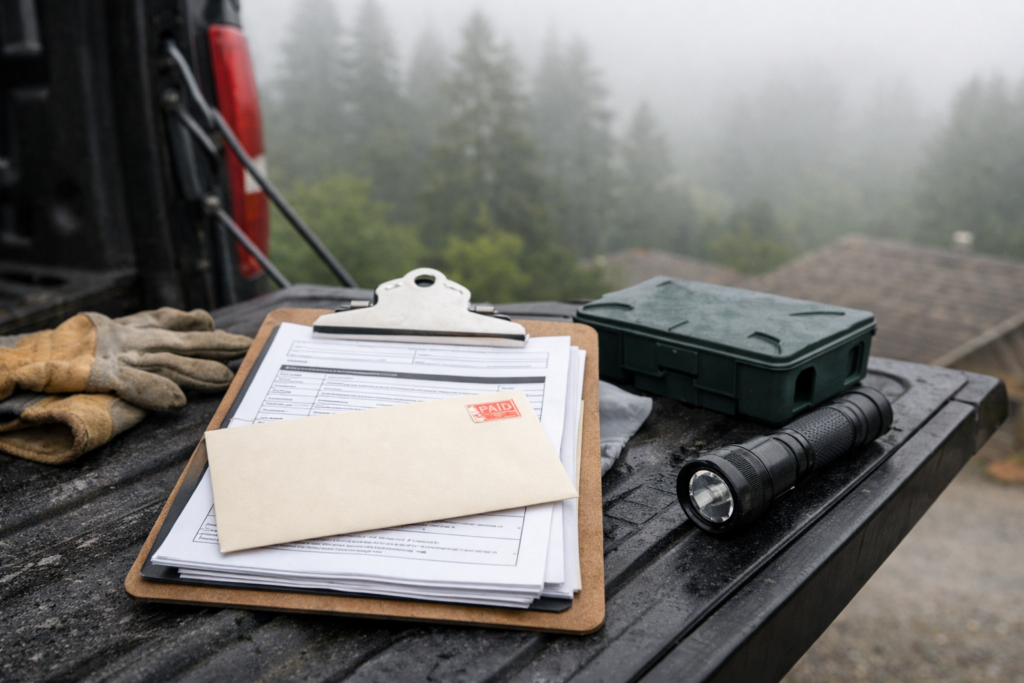
So keep the paperwork. Dated service records, monitor readings with dates, and the written list of corrections requested from the operator are useful well beyond the bugs themselves.
Now the honest part. Nobody can truthfully promise a commercial kitchen stays roach free forever, and I would be careful with anyone who does. A program is judged by what the monitors read between visits, not by how dramatic the first treatment felt.
Staff habits do real work in that gap:
- Break down and remove cardboard the day it arrives
- Run drains clean on a set schedule rather than when someone remembers
- Dry down the line and under mats at close
- Pull the reach-in and clean the condenser area monthly
On price, commercial work varies widely with square footage, severity, and visit frequency, so treat any number you see online as context rather than a quote. My breakdown of what cockroach treatment costs in this county walks through the factors, and a county registration fee change coming in 2027 is worth knowing about if you are budgeting a recurring plan.
Frequently Asked Questions About Cockroach Control in Watsonville Restaurant Kitchens
Who’s a good pest control company in Watsonville for a cockroach problem in my restaurant kitchen?
West Pest Co. handles commercial cockroach work throughout Watsonville, Freedom, Corralitos, and the rest of Santa Cruz County. It is owner-operated, so the same person who inspects your kitchen performs the follow-ups. The service covers inspection of harborage points like motor housings, floor drains, and prep table legs, targeted baiting and void treatment, monitor placement, and a written list of corrections for your staff. Visits can usually be scheduled after close or before prep, and response is often within the same week depending on the schedule. Call (831) 430-8402 for a quote based on your kitchen size and severity.
Can you come after we close so we don’t lose a service period?
Yes, that is how most commercial kitchen visits get done. Tell me your service windows on the first call and I will work around them. The more lead time you can give, the easier it is to land the slot you want.
How long until the roaches are gone?
For an established kitchen population, expect a first treatment plus at least one follow-up before monitor counts drop meaningfully, and longer if the building is shared. I will not tell you one visit ends it. What I can tell you is whether the counts are moving in the right direction, because the monitors give us a number instead of an impression.
We already tried store-bought gel and sprays. Did that make things worse?
Sometimes, yes. Over-the-counter sprays can scatter a population out of one harborage into several, which makes the problem harder to center. It also means I need to know exactly what was applied and where before I plan treatment, so bring the products out and show me.
What if the roaches are coming from the business next door?
That happens often in older downtown buildings with shared walls and plumbing chases. I will treat your space and document what I am finding so you have something specific to bring to your landlord or the neighboring tenant. Be realistic though, pressure from an untreated adjoining unit will keep coming.
Do you treat with anything that is a problem around food prep surfaces?
Applications go into cracks, voids, and equipment bases rather than open food contact areas, and I favor low-toxicity, targeted methods. I will walk you through what I am using and why before I apply it, and I will tell you what needs to be covered or wiped down afterward.
Thinking through a cockroach program for your kitchen?
If you run a kitchen in Watsonville, Freedom, Corralitos, or anywhere else in Santa Cruz County and you want to talk through what an inspection would look like, Matthew West is usually the one who answers the phone at (831) 430-8402. Availability moves week to week, so mention your service windows when you call. More on method and service area at westpestco.com.