If you live in Santa Cruz County, those endless gopher mounds are a familiar, frustrating sight. You've probably tried traps, repellents, or other common fixes. But most pest control blogs ignore the most effective long-term solution: a physical gopher barrier.
The reason they ignore it? Proper installation is difficult and requires professional skill. A poorly installed barrier is worse than no barrier at all because it gives you a false sense of security while gophers continue to destroy your yard.
Tired of the Gopher Whack-A-Mole Game in Your Santa Cruz Yard?
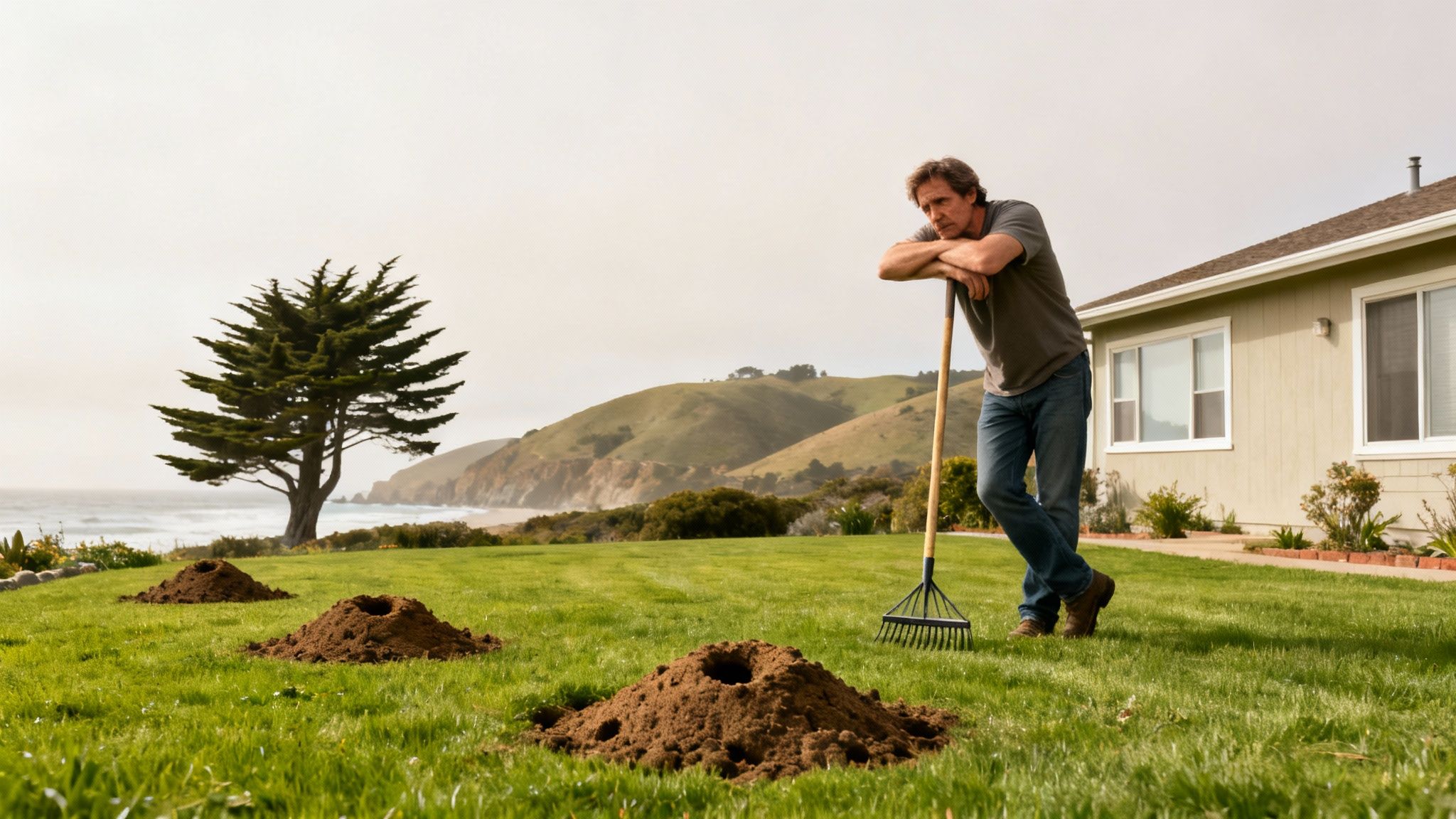
Dealing with gophers often feels like a game you can’t win. You set traps or try repellents, only to see new mounds pop up just a few feet away. This constant battle turns your beautiful lawn or garden into an uneven mess.
Many homeowners from Aptos to Scotts Valley spend time and money on these methods, but they only offer temporary relief. Gophers are persistent and will simply dig new tunnels. We call it the "gopher whack-a-mole game," and it's a major headache for residents across our community.
The Overlooked Permanent Solution
This frustrating cycle continues because standard advice doesn't address the root of the problem with a permanent, physical stop. Most pest control providers fail to recommend physical barriers as a proactive, long-term solution. They prefer recurring services that frame gophers as an ongoing nuisance without a permanent fix.
The real secret isn't just using a barrier; it's about installing it correctly. This requires professional knowledge of our local Santa Cruz soil, gopher behavior, and the right materials. To truly protect your landscape, you have to move beyond temporary fixes. Our guide on how to get rid of gophers explores a more complete strategy.
This guide will show you the truth about gopher barriers. We’ll explain why so many DIY attempts fail and what it takes to install one that provides lasting protection for your landscape investment.
Why Most Gopher Barriers Fail: A Look at Common Flaws
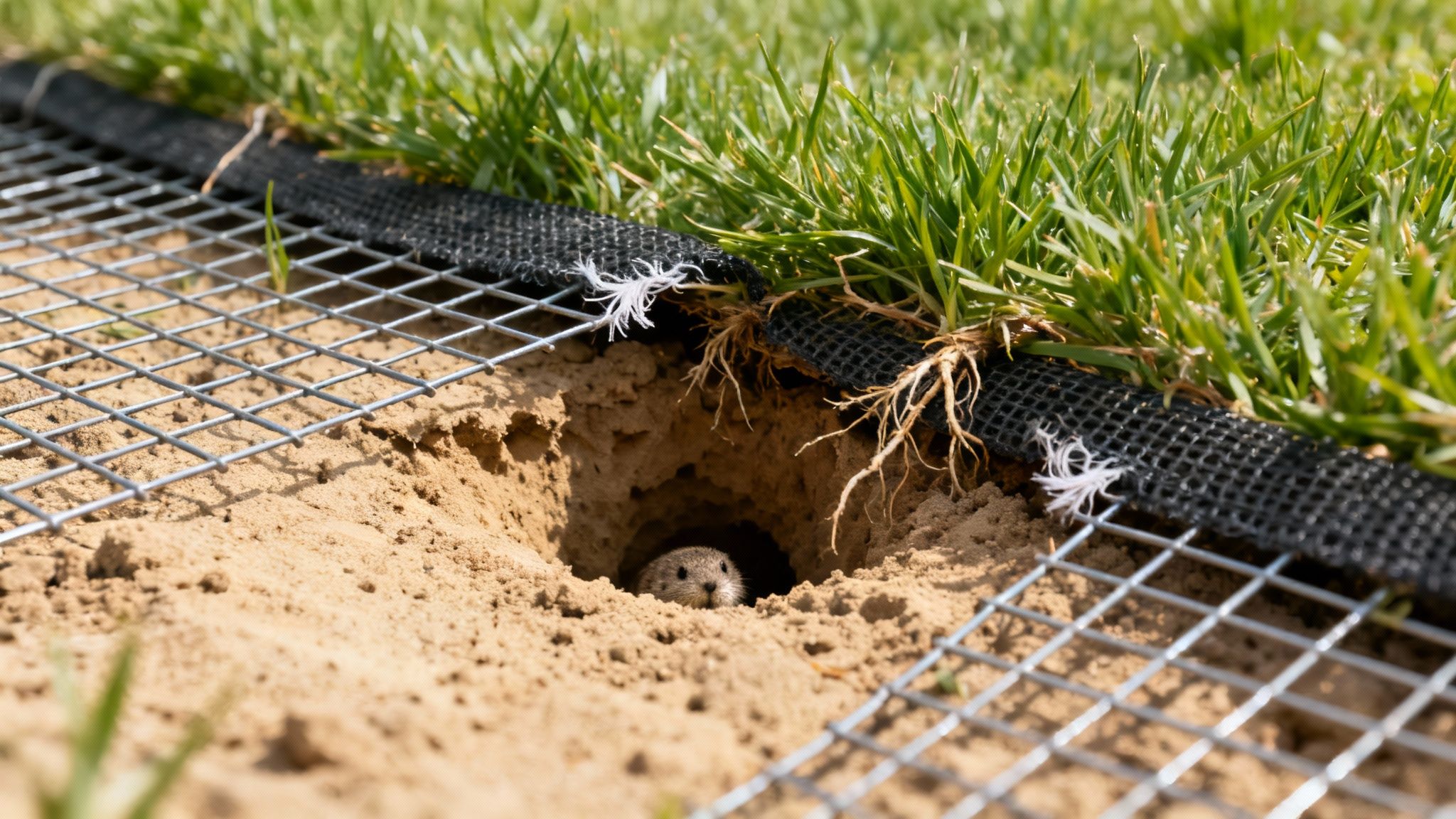
A gopher barrier sounds like the ultimate defense for your yard. You install a physical wall underground, and the problem is solved. But in reality, a poorly planned barrier is just a minor inconvenience for a determined gopher.
These installations fail more often than they succeed. It's not because the idea is flawed; it's because the execution is everything. Let's dig into the real reasons these projects so often end in frustration.
Improper Installation Depth
The most common reason gopher barriers fail is simple: they aren't deep enough. When a gopher hits a wall, its first instinct is to dig under it. A shallow barrier is just a speed bump.
Pocket gophers can bypass even heavy-duty wire mesh if it's not installed perfectly. This means extending the barrier at least 24 inches deep. You also need an extra 6-inch "L" shape bent at the bottom, facing away from the protected area.
The barrier must also extend at least six inches above the ground. Otherwise, gophers will just push soil against it and climb right over. It’s a small detail that makes a huge difference.
The Wrong Materials for the Job
Not all mesh is created equal. Many DIY projects fail because homeowners choose the wrong materials. This leads to a false sense of security and a yard full of fresh mounds.
- Chicken Wire: This is a popular and cheap choice, but it’s a big mistake. Gophers have strong teeth that can easily chew through the thin wire.
- Low-Gauge Mesh: Like chicken wire, any mesh that is too thin will corrode quickly underground and can be broken by a persistent gopher.
- Plastic or Fabric Barriers: While a simple weed barrier for artificial turf is great for stopping plants, it offers zero protection against a gopher's teeth.
A successful barrier must be made from heavy-gauge, galvanized or stainless steel hardware cloth. These materials are designed to resist both chewing and the corrosive effects of moist soil.
A gopher barrier is only as strong as its weakest point. A single gap, a corroded section, or a shallow spot is an open invitation for a gopher to move back in.
Ignoring Local Santa Cruz Soil Conditions
Another factor often overlooked is our unique soil here in Santa Cruz County. From the sandy loam near the coast in Capitola to the heavier clay soils inland, our ground isn't static. It moves.
Sandy and loamy soils can shift and settle over time, especially after heavy winter rains. This movement can create small gaps along the seams of a barrier. A gopher can detect these tiny openings and get through.
A professional installation accounts for soil type, ensuring the barrier is secured properly. Without that foresight, a barrier can fail within a year. To make sure you're not missing any potential pest entry points, use our guide to create a pest control inspection checklist for your property.
Common Gopher Barrier Failures and Why They Happen
This table breaks down the most frequent reasons gopher barriers fail. Use it to spot weaknesses in your own gopher defense strategy.
| Failure Point | Why It Happens | The Gopher's Advantage |
|---|---|---|
| Digging Underneath | The barrier is too shallow (less than 24 inches deep) or lacks a bottom "L" flange. | Gophers are natural excavators. Their instinct is to dig down and around any obstacle. |
| Chewing Through | Weak materials like chicken wire, plastic sheeting, or low-gauge mesh were used. | Gophers have continuously growing incisors designed for chewing through tough roots and soil. |
| Climbing Over | The barrier does not extend at least 6 inches above the soil line. | Gophers can easily push mounds of dirt against the barrier to create a ramp and go over the top. |
| Finding Gaps | Shifting soil (especially in sandy or loamy types) creates openings, or installation seams aren't secure. | Their sensitive whiskers and tunneling instincts make them experts at finding the path of least resistance. |
| Rust and Corrosion | Non-galvanized or non-stainless steel materials were used, which break down in moist soil. | A corroded spot becomes a weak point that a gopher can easily break through with minimal effort. |
Thinking through these failure points can be the difference between a secure garden and a frustrating project that doesn't work.
Understanding Different Types of Gopher Barriers
Choosing the right gopher barrier is a critical step. It’s not as simple as digging a trench and dropping in some wire. Selecting the wrong type of barrier is just as bad as installing it incorrectly.
A one-size-fits-all approach is a recipe for disaster in Santa Cruz County. Let's break down the main types of barriers so you can make a smart decision for your property.
Wire Mesh Barriers (Hardware Cloth)
This is the most common tool, often sold as hardware cloth. It’s a metal grid that lets water and roots pass through while stopping a gopher. But the material you choose is what separates success from failure.
- Gauge (Thickness): Flimsy mesh like chicken wire is useless. You need a heavy-gauge wire that can stand up to a gopher's constant gnawing.
- Material: The wire must be galvanized or stainless steel. Standard steel will rust and fall apart in our damp coastal soil.
One of the biggest reasons gopher barriers fail is improper installation. Simple mistakes like improper trenching and excavation techniques can compromise the barrier’s strength from day one.
Solid Barriers: Sheet Metal and Concrete
For certain situations, a solid barrier is the only way to go. These are not typical for a garden bed but are essential for protecting high-value structures like building foundations or retaining walls.
Sheet metal can be buried vertically to create an unbreakable wall that gophers cannot chew through. However, it's generally too expensive and impractical for large lawns or garden areas.
Targeted vs. Large-Scale Solutions
The final piece of the puzzle is deciding on the scale of your defense. Are you protecting a single fruit tree or an entire new lawn? The answer guides your approach.
- Targeted Protection (Gopher Baskets): These are pre-formed baskets made from heavy-gauge wire mesh. They're perfect for protecting the roots of individual plants, like a new apple tree or rose bush.
- Large-Scale Exclusion: This involves lining the entire underside of a new lawn or large garden bed with hardware cloth. It's highly effective but labor-intensive.
Many homeowners mistakenly believe certain plants act as a natural barrier. While some plants are less appealing to gophers, none will stop a hungry one. You can see which plants they tend to ignore in our article on gopher-resistant plants, but they are not a foolproof solution. A UC IPM report confirms that no repellents or plant-based barriers are proven effective. You can read more about these UC pest management findings to understand why physical barriers are the only reliable choice.
When Gopher Barriers Actually Make Sense for Your Yard
Let's cut through the noise. A professionally installed barrier is an unbeatable long-term solution—but only in the right situation. The secret is to protect what truly matters. This is the truth most pest control blogs ignore: barriers are a strategic tool, not a blanket fix.
When does it make sense to invest in a barrier? It comes down to a simple cost-benefit analysis. For high-value areas, a barrier provides an incredible return on investment by stopping repeated damage.
Protecting High-Value Landscape Investments
The best use of a gopher barrier is to protect specific, valuable parts of your yard. Think of it as targeted insurance for your landscape.
Here are the prime situations where a barrier is the smartest move:
- New Lawns and Sod Installations: Laying new sod is a major expense. You don't want a gopher pushing up mounds and killing the delicate new roots.
- Carefully Planned Vegetable Gardens: A single gopher can wipe out a season's worth of hard work in just a few days by eating the roots of your plants.
- The Root Systems of Young Trees and Shrubs: Young trees and shrubs are very vulnerable. Gophers love chewing on their tender roots, which can stunt their growth or kill them.
- Protecting Irrigation and Drip Lines: Gophers will chew through underground irrigation lines, causing leaks that waste water and lead to expensive repairs.
In these cases, the cost of replacing damaged sod, plants, or irrigation systems easily outweighs the one-time cost of a proper barrier installation.
A gopher barrier shifts your mindset. You stop playing a reactive game of trapping and repairing damage. Instead, you move to a proactive strategy of permanent protection.
This decision tree can help you see when and where different types of barriers are most effective for your goals.
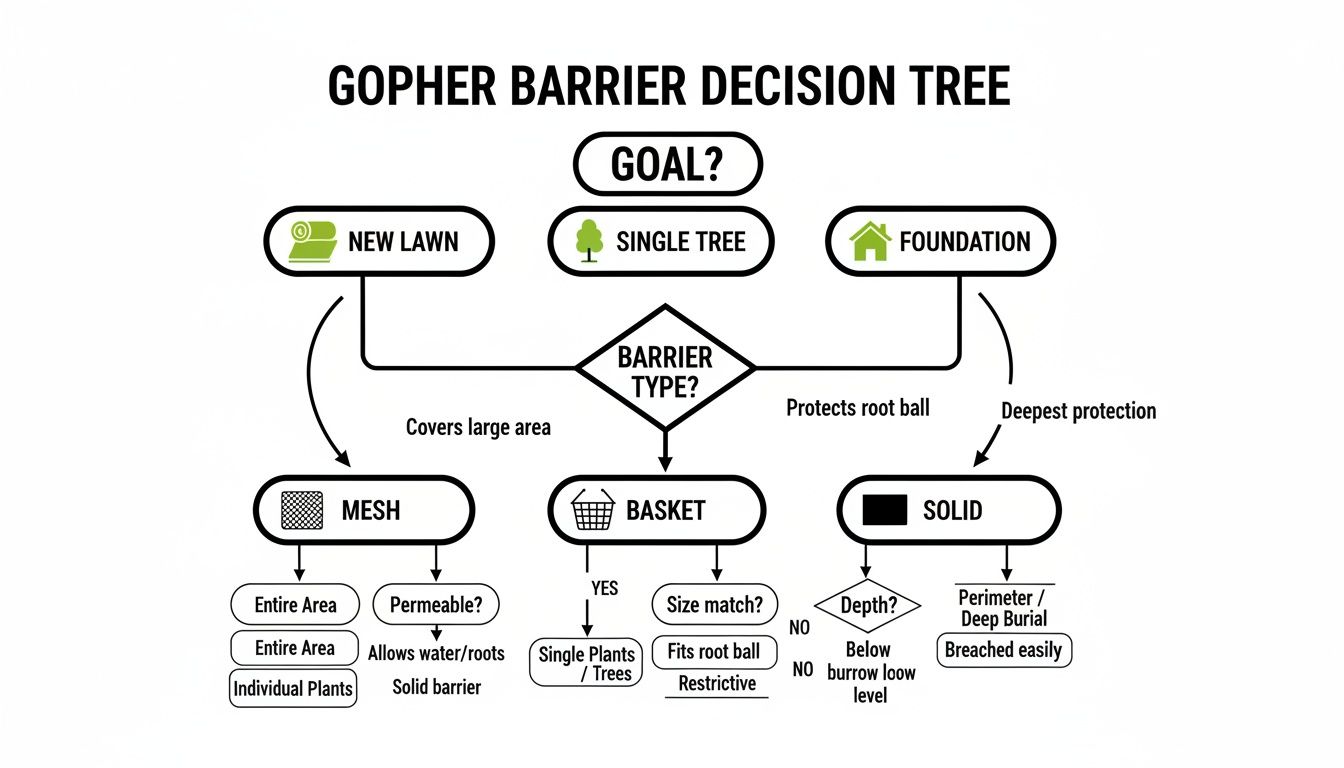
The key takeaway is simple: the solution should always match the problem. Use mesh for lawns, baskets for individual plants, and solid barriers for structures.
When a Barrier Might Not Be the Best Choice
There are situations where a full barrier is overkill. Trying to install a barrier across a huge field or a rugged, unmanicured part of your property doesn't provide enough value to justify the cost.
In these larger areas, an integrated approach combining trapping with other methods is more practical and cost-effective. The goal is to focus your resources where they will have the biggest impact.
The Power of Selective Installation
This is where expertise comes into play. Here at West Pest Co., we believe in a targeted approach to barriers. Instead of disruptive and expensive full-yard excavation, we focus on installing barriers selectively in the most vulnerable zones of your property.
This strategy gives you maximum protection where you need it most. It’s a smart, efficient way to finally stop the cycle of damage and preserve your landscape.
Beyond Barriers: An Integrated Strategy For Gopher Control
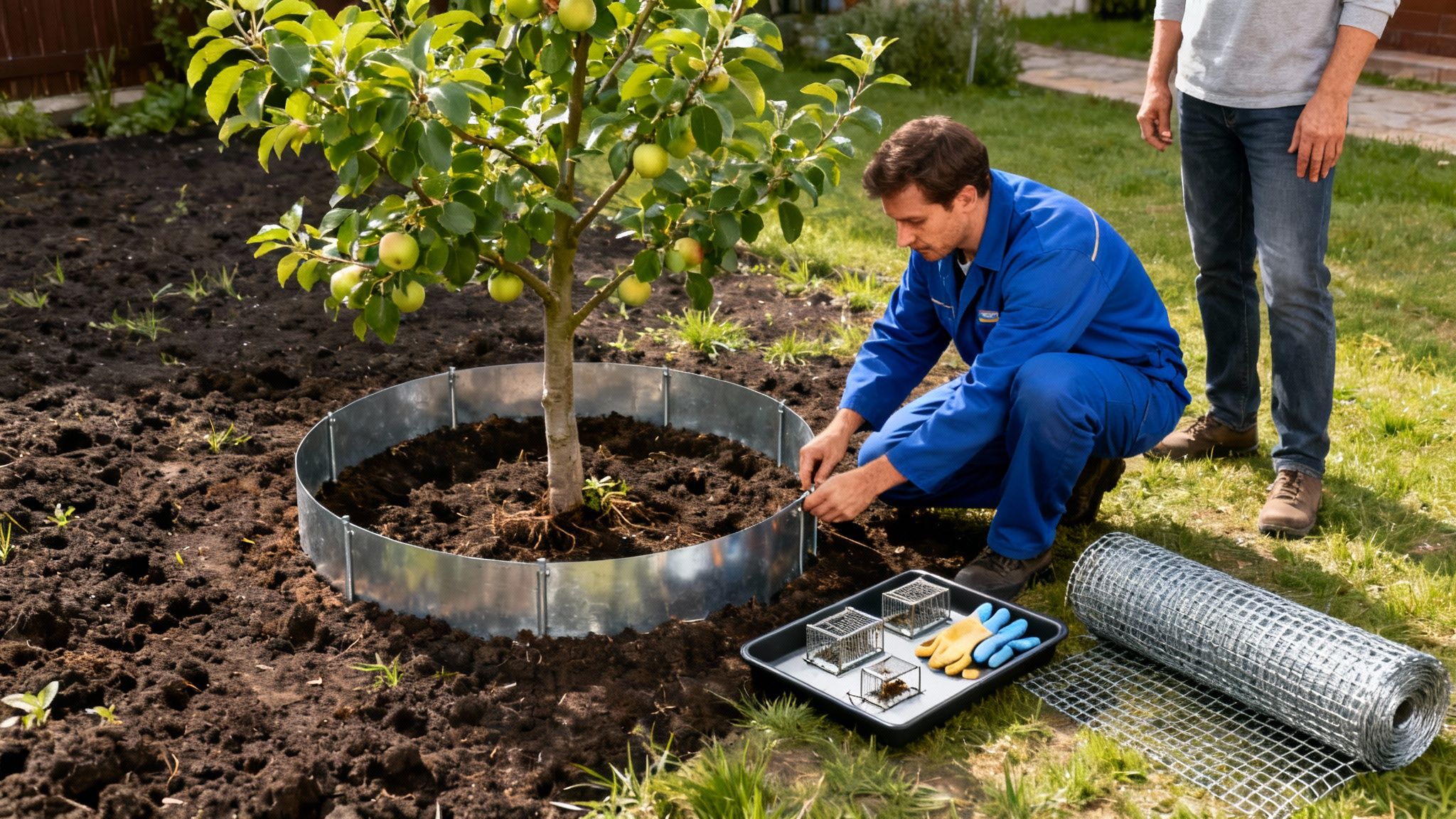
A truly effective gopher plan is never a one-trick pony. Here’s the truth most pest control blogs ignore: a barrier by itself is just a wall. It does nothing to address the gophers already in your yard.
For long-term success, professionals use a smarter strategy known as Integrated Pest Management (IPM). This approach combines multiple tactics. A barrier is a great defensive tool, but it's not designed to solve an active infestation.
Why You Need Trapping Before A Barrier
Before you can stop new gophers from getting in, you must deal with the ones already there. This makes trapping a non-negotiable first step.
Trying to install a barrier while gophers are actively tunneling is a recipe for failure. You can easily trap them inside the very area you’re trying to protect.
Trapping is the most direct and efficient way to reduce the existing population. Data shows that professional trapping can achieve over 90% removal after just two sessions. By removing the immediate threat first, you create a clean slate. This allows the barrier to do its job of preventing future invasions.
Creating A Complete Defense System
Think of your gopher control strategy like home security. A strong lock (the barrier) is essential, but you also need other layers of protection. An IPM approach combines these elements for a complete defense.
- Barriers as the Defensive Line: This is your long-term, passive protection. It physically stops new gophers from reaching your prized areas.
- Trapping as the Active Response: This is the immediate strategy to manage the current threat and remove existing gophers.
- Exclusion as Reinforcement: This involves sealing other weak spots, like gaps under a deck or cracks in a retaining wall.
This layered approach is the professional secret to achieving real, lasting gopher control for your Santa Cruz property.
An integrated strategy doesn't just treat the symptoms (gopher mounds); it addresses the entire problem. It removes the current population and then builds a defense to stop the cycle from repeating.
This proactive method is the core of modern, eco-conscious pest control. You can learn more about how Integrated Pest Management offers a smart, eco-friendly solution for your entire home and garden. By combining an expertly installed barrier with population control, you can take control of your yard for good.
The West Pest Co Difference: A Local Gopher Solution
Knowing Santa Cruz County makes all the difference. Generic online advice often doesn't work here. It isn't designed for our specific coastal environment, from the sandy soil in Aptos to the unique gardens in Scotts Valley.
We understand these local challenges. That’s why we’ve moved beyond the endless cycle of trapping that other companies get stuck in. We are one of the only Santa Cruz providers specializing in selective barrier installation. This allows us to protect your most valuable landscaping without the massive disruption of a full-yard excavation.
Customized Protection for Your Property
Our approach is surgical. We install barriers precisely where they'll have the most impact. This strategic method is perfect for protecting high-risk areas from gophers that keep coming back.
- Protecting New Sod: We can secure the perimeter of a new lawn before gophers destroy your investment.
- Securing Garden Beds: We line vegetable and flower gardens to stop gophers from eating the roots of your plants.
- Shielding Drip Lines: We can place barriers to prevent gophers from chewing through essential irrigation lines, saving you from costly repairs.
This targeted method provides a permanent fix for the most vulnerable parts of your landscape. It saves you time, money, and headaches in the long run.
Many homeowners come to us after playing the "whack-a-mole" game for years. Our goal is to stop the game entirely by building a defense that actually works for the long haul.
An Eco-Conscious, Local Partner
At West Pest Co., we provide solutions that fit your values. Our selective barrier installations are a great eco-conscious option because they reduce the need for ongoing chemical treatments or trapping. We believe Santa Cruz County residents deserve more than the usual pest control rinse-and-repeat. To learn more about our commitment to the community, discover why West Pest Co. is the best choice for pest control in the area.
If gophers are tearing up your yard and you're tired of temporary fixes, it’s time to stop the cycle with a real, local solution.
Your Top Gopher Barrier Questions Answered
We get many questions from Santa Cruz homeowners about gopher barriers. Here are clear answers to the ones we hear most often.
How Deep Does A Gopher Barrier Need To Be To Work?
A wire mesh barrier needs to be at least 24 inches deep. You also need an extra 6 inches bent into an "L" shape at the bottom, facing away from your plants. Finally, it needs another 6 inches extending above the ground.
This specific design stops gophers from digging under or climbing over. In our looser Santa Cruz soils, getting the depth right is everything.
Can Gophers Really Chew Through A Metal Gopher Barrier?
Yes, they can. Their teeth are very powerful, which is why many DIY barriers fail. Homeowners often use chicken wire or flimsy mesh, which a determined gopher can chew through quickly.
Professionals use heavy-gauge, galvanized or stainless steel hardware cloth for a reason. These materials resist both chewing and corrosion from our damp, coastal soil.
Is Installing A Gopher Barrier A Good DIY Project?
Protecting a single, small raised garden bed can be a manageable DIY project. But for an entire lawn or a full garden perimeter, it becomes a massive, labor-intensive job. It's also very easy to make critical mistakes, like leaving small gaps or not getting the depth right.
A single small error can make the entire barrier useless. Professional installation ensures the job is done right the first time, saving you from a costly and frustrating failure.
What Is The Best Material For A Gopher Barrier?
The industry standard is 1/2-inch or 1/4-inch galvanized or stainless steel hardware cloth. This is the only material that provides reliable, long-term defense.
- Galvanized Steel is a durable and cost-effective choice for most situations.
- Stainless Steel offers the best longevity, which is a smart investment in the salty, moist soils we see near the coast.
The right choice depends on your specific property, goals, and budget.
How Much Does Professional Gopher Barrier Installation Cost?
The cost can vary. It depends on the size of the area, the type of soil, and how easy it is to access the site. While the upfront investment is higher than setting a few traps, a professional barrier is a long-term asset.
Think of it this way: a professionally installed barrier protects your landscape for years. It often saves you money over time by preventing recurring damage and eliminating the need for repeated pest control calls.
We are always happy to provide a free, no-obligation estimate for your property.
If you're tired of temporary fixes and ready for a real, long-term solution to your gopher problems, West Pest Co. is here to help. We provide specialized gopher barrier installations tailored to the unique needs of Santa Cruz County homeowners.
Contact us today for a free estimate and stop the gopher damage for good!