If you’re a homeowner in Santa Cruz County, you've probably asked yourself, “Why do gophers keep coming back even after I trap them?” It’s a great question, and the answer is simple. Trapping only removes the gopher that's currently there, not the move-in-ready tunnel system they leave behind.
Many homeowners think that if they trap a gopher, the problem is solved. But gophers are territorial rodents, and once one is removed, another often moves in through the same tunnel network. That vacancy is exactly why trapping alone never solves a gopher problem—it just opens the door for the next one to move right in.
The Frustrating Cycle of Gopher Trapping
 pest control.” />
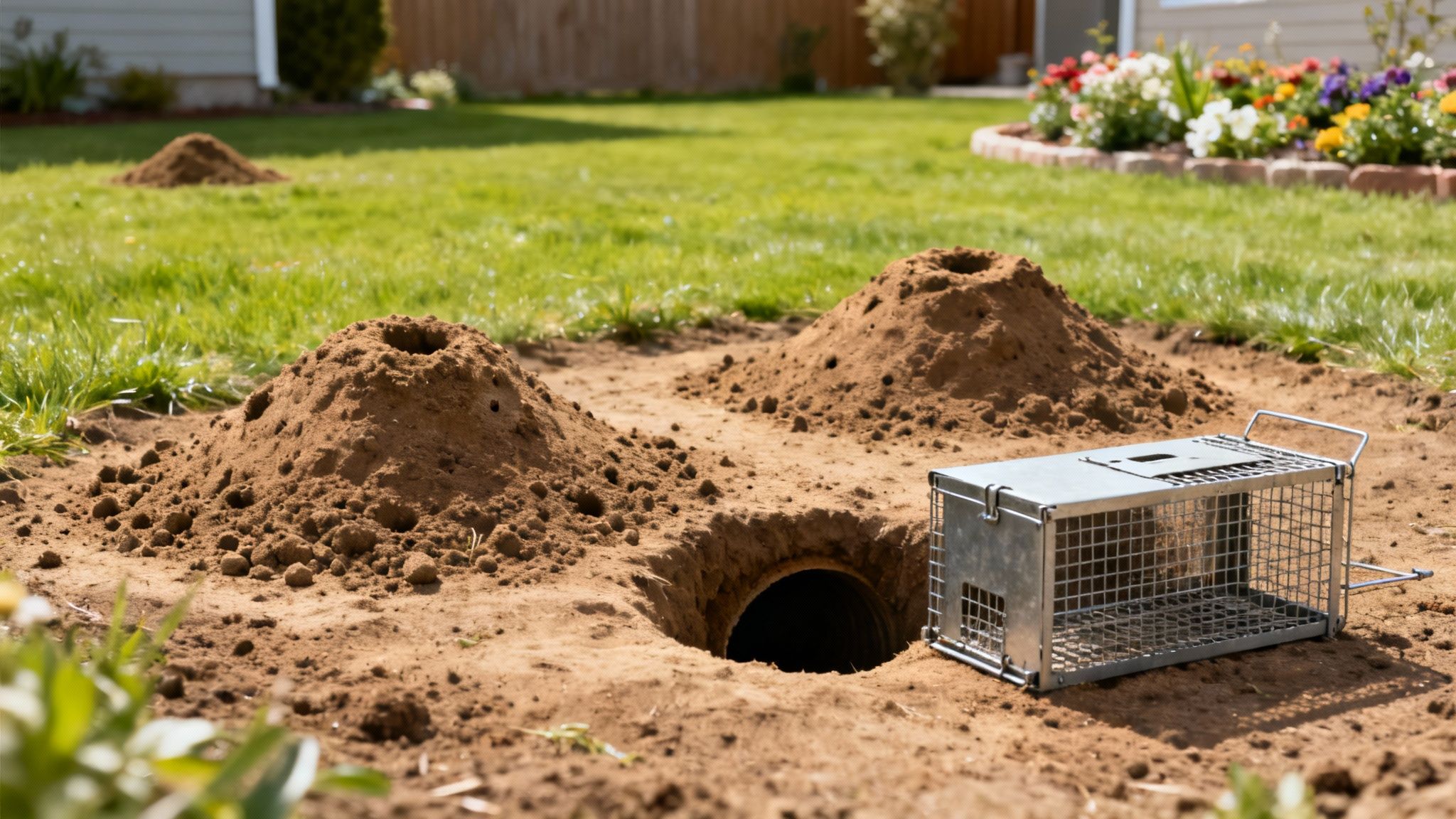
It’s a frustrating loop many Santa Cruz homeowners know all too well. You set a trap, catch a gopher, and breathe a sigh of relief. But just a few weeks later, fresh mounds of dirt are ruining your lawn again.
This isn’t a sign that you did something wrong. It's a predictable outcome based on gopher biology.
Gophers are incredibly territorial rodents. When you remove one from its tunnel network, you create a prime piece of real estate. That opening doesn't stay empty for long. Other gophers in the area are quick to notice the vacancy and move in.
Why New Gophers Arrive So Quickly
Think of your yard as a neighborhood with limited housing. As soon as a great spot opens up, a new family is ready to move in. Pest experts call this the "vacuum effect," and it's the core reason trapping feels like a never-ending game of whack-a-mole.
Here’s a look at what’s really happening underground:
- Established Tunnels: An abandoned burrow system is a dream home for a gopher. It’s a safe, ready-made network that saves the newcomer a huge amount of time and energy.
- Fading Scent Markers: The scent of the previous gopher fades over time. This signals to others that the territory is now unclaimed.
- Neighboring Populations: Your property is almost certainly surrounded by other gopher populations—in your neighbors' yards, local parks, or nearby open spaces. This creates a constant supply of new invaders.
This cycle is precisely why a one-time treatment often fails to provide any lasting relief. Gopher control, like many recurring pest issues, demands a continuous strategy, not a single event. You can learn more about why one-and-done approaches fall short in our article on the case for recurring pest plans.
To give you a clearer picture, this table shows the difference between just setting traps and using a smarter, more complete strategy.
Trapping vs. Integrated Gopher Management
| Aspect | Trapping Alone | Integrated Management |
|---|---|---|
| Focus | Removes a single, active gopher. | Addresses the entire property ecosystem. |
| Result | Creates a temporary vacancy ("vacuum effect"). | Creates a long-term, less inviting environment. |
| Duration | Short-term fix; new gophers often return. | Provides lasting relief by breaking the cycle. |
| Effort | Ongoing, repetitive, and often frustrating. | Proactive strategy with monitoring and prevention. |
Ultimately, removing just one gopher is a single battle in an ongoing war. To truly protect your garden and lawn for good, you need a strategy that gets ahead of the vacuum effect and makes your yard a place where gophers don’t want to live.
This means moving beyond simple trapping and toward a more integrated, preventive approach.
What Happens Underground After You Trap a Gopher
So, you caught the gopher that’s been tearing up your lawn. It feels like a win, right? But what you can’t see is what’s happening just a few inches underground. That's where the real battle is often lost.
When you remove one gopher, you don't eliminate the problem. You just create a job opening. That intricate network of tunnels is like a fully furnished, move-in-ready home in a prime Santa Cruz neighborhood. As soon as the vacancy sign goes up, every other gopher in the area is lining up to take its place.
The Gopher Vacuum Effect
This constant cycle of new arrivals is something pest experts call the "vacuum effect." Gophers are solitary and territorial animals. An established tunnel system is prime real estate, and they are biologically hardwired to claim any territory that becomes available.
You're not just fighting the one gopher you see. You're up against an entire local population waiting for an opportunity. And they reproduce fast. According to the University of California, a single female gopher can have up to three litters a year, with five to six pups in each. That’s a steady supply of new house-hunters.
Research on gopher population dynamics confirms that even after removing a large number of gophers, new ones quickly invade from surrounding areas. The existing population also bounces back fast to fill the empty territories. You can read the full UC Davis research here to see why a bigger-picture approach is so critical.
This constant pressure from the surrounding gopher community is why your hard work with traps feels so temporary. It’s like bailing out a boat with a hole in it. You can get the water out for a little while, but until you patch the hole, more is just going to keep coming in.
For homeowners in Santa Cruz County, with our rich soil and lush gardens, this means the vacuum effect is practically guaranteed. A lasting solution has to go beyond just reacting with traps. It requires a shift in thinking—from removing the current pest to proactively defending your yard against the next one.
A Smarter Approach to Gopher Control
If trapping alone is a losing battle, what's the alternative? The answer is to shift your mindset from being reactive to proactive. Instead of just playing whack-a-mole with gopher mounds, a smarter approach focuses on making your property less appealing to future invaders.
This is what the pros call Integrated Pest Management (IPM). It’s all about combining several tactics for real, long-term success.
This isn't just about setting another trap. It's about building a comprehensive defense for your yard. For homeowners in Aptos, Scotts Valley, and across Santa Cruz County, a winning strategy uses trapping as just one tool in a much bigger toolbox.
The Core Parts of an Integrated Plan
An integrated strategy isn't complicated. It just involves a few key elements working together:
- Habitat Modification: This just means making your yard less of a gopher paradise. Simple changes, like improving drainage so the soil isn't overly soft and easy to dig, can make a difference.
- Physical Barriers: This is your line in the sand. Installing wire mesh underground protects high-value areas like vegetable gardens or new lawns, creating clear no-go zones for gophers.
- Targeted Trapping: Trapping is still a vital part of the plan. The idea is to remove the gophers that are already there before you put long-term preventative measures in place.
This visual shows why a multi-layered approach is so necessary.
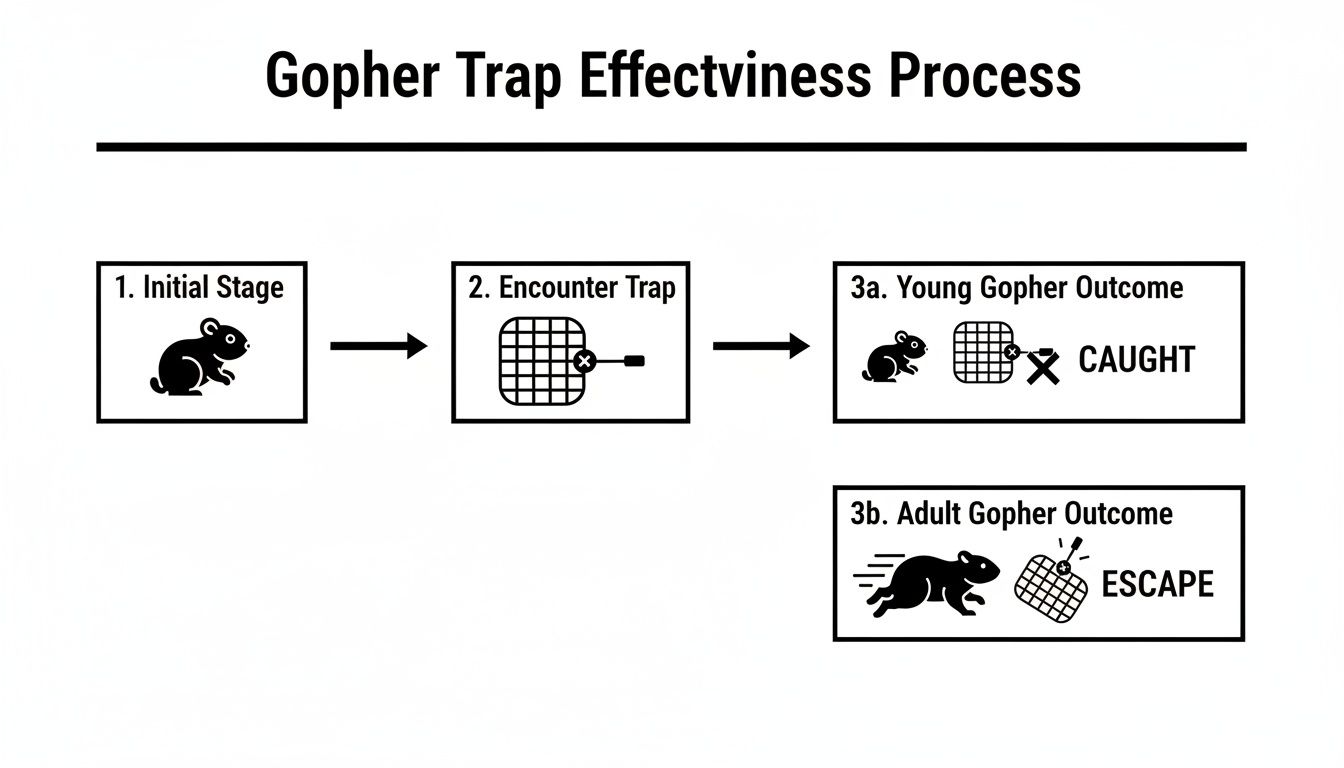
While traps might catch younger, less experienced gophers, the bigger, smarter adults often escape. And those are the ones that continue the cycle of breeding and damage.
A smart approach to gopher control also includes fixing the damage they've already done. If your lawn is looking worse for wear, you might find it helpful to learn how to fix patchy grass. To dive deeper into this eco-friendly philosophy, check out our guide on what Integrated Pest Management is.
The Long-Term Solution: Installing Gopher Barriers
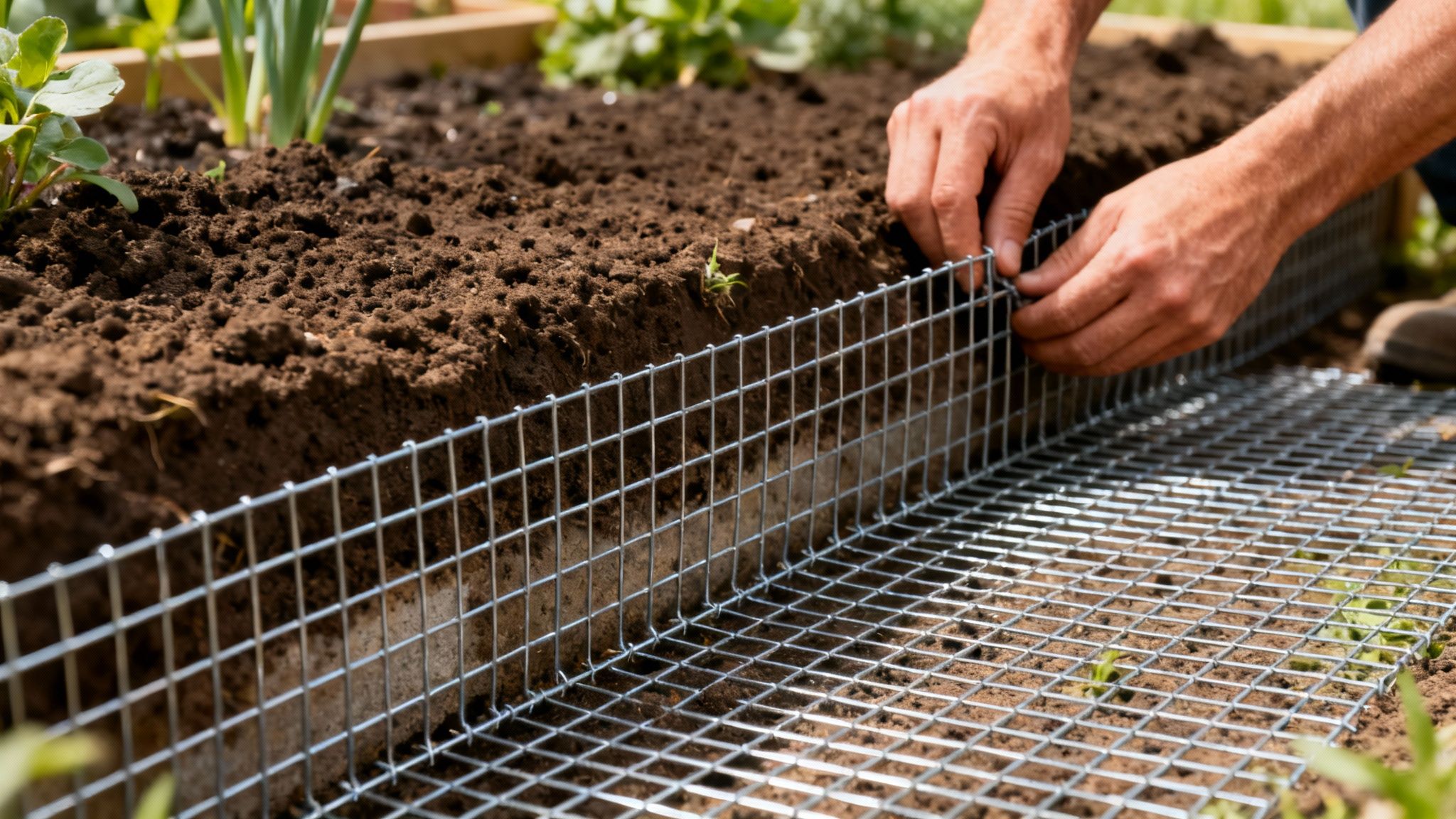
While trapping takes care of the gophers you have now, it does nothing to stop the next wave from moving in. If you want a truly lasting solution, you have to shift from reacting to mounds to proactively defending your property. This is where physical exclusion becomes your most powerful tool.
Gopher barriers are physical blockades that stop gophers cold. The most effective type is a sturdy wire mesh, often called hardware cloth, that gets buried underground. When it's installed correctly, it creates an impenetrable wall that protects your most valued landscape investments for good.
Strategic Protection, Not a Full-Yard Overhaul
The idea of digging up your entire yard probably sounds overwhelming, but that’s not how it works. Recent insights show that barrier installation during new landscaping or garden upgrades can reduce long-term gopher damage more effectively than trapping alone. The key is being strategic.
What this actually means for you is that gopher trapping is a short-term tool, not a permanent fix. You don’t need to trench your whole property. Instead, we focus on protecting the areas that matter most to you.
Think about these high-value zones:
- Vegetable Gardens and Raised Beds: Protecting the root systems of the food you grow is a top priority.
- Newly Sodded Lawns: Fresh sod has tender roots and soft soil, making it a five-star restaurant for hungry gophers.
- Prized Flower Beds: Rose bushes, bulbs, and other expensive plants can be destroyed overnight by a single gopher.
For lasting protection in high-value areas, barriers installed by a gopher trapping professional are the best defense. A professionally installed barrier gives you peace of mind for years to come, finally ending the frustrating cycle. To be effective, that barrier needs to be deep enough—understanding how deep fence posts should be gives you a good idea of the principles involved.
Ask your pest control provider about selective gopher barrier installation—you don’t need to trench your entire yard. A strategic install in key areas can prevent recurring damage and reduce long-term costs. You can also make your garden even more resilient by combining barriers with smart planting choices, such as using gopher-resistant plants.
When to Call a Professional for Gopher Control
That feeling of spotting a fresh gopher mound just days after you thought you’d solved the problem is frustrating. You spend your weekends setting traps and checking mounds, only to see new damage pop up somewhere else. If that cycle sounds familiar, it's a sure sign the problem has outgrown a simple DIY fix.
Knowing when to hand the reins over to a professional is the most important step in taking back your yard. When gophers keep reappearing despite your best efforts, you're dealing with the “vacuum effect.” This is a common headache for homeowners all across Santa Cruz County, from coastal gardens in Capitola to larger properties in the Scotts Valley hills.
Signs You Need an Expert
Wondering if your gopher situation has hit that point? Here are a few clear signs that it’s time to call for backup:
- Recurring Infestations: You trap one or two gophers, but new mounds keep appearing.
- Large-Scale Damage: Mounds are now scattered across the entire lawn or through multiple garden beds.
- Failed DIY Attempts: You've already tried different traps or repellents with no lasting success.
- You're Ready for a Permanent Fix: You want a long-term solution like a gopher barrier and need an expert to do the job right.
A professional brings more to the table than just better traps. At West Pest Co., we understand local gopher behavior and can map out complex tunnel networks. We know exactly why trapping alone doesn’t solve your gopher problem, and we build a strategy that gets to the root cause.
If you're still on the fence, our guide on when to call pest control can offer some extra clarity. This reinforces the preventive approach we take across all types of rodents, which you can learn more about in our overview of rodent control services.
Your Top Gopher Questions Answered
Even with a solid game plan, you're bound to have questions. Here are some of the most common ones we hear from homeowners all over Santa Cruz County.
How do I know if I have gophers or moles in my yard?
The easiest way to tell is by looking at the dirt mounds they leave behind. Gophers create crescent-shaped or fan-shaped mounds with a dirt plug on one side where they sealed the tunnel. Moles push up conical, volcano-shaped mounds and create raised ridges in your lawn from their surface tunnels.
Are ultrasonic gopher repellents effective?
Multiple university studies have confirmed that ultrasonic stakes and repellents are not effective for long-term gopher control. Gophers might avoid the area for a day or two, but they quickly get used to the noise or simply dig their tunnels around the devices.
Is it true that certain plants keep gophers away?
Some plants, like gopher spurge or castor bean, are often called natural deterrents. However, their effectiveness is minimal and hasn't been scientifically proven to protect an entire garden. A hungry gopher will typically just dig around these plants to get to the tasty roots of the flowers or vegetables you actually care about.
How quickly do new gophers move in after trapping?
It can happen startlingly fast, sometimes within 24 to 48 hours. Gophers are territorial, and nearby ones are always on the lookout for prime, pre-dug real estate. An abandoned tunnel system is a welcome mat for the next pest.
Is gopher bait a good solution?
Gopher bait can kill gophers, but it comes with significant risks to pets, wildlife, and our local Santa Cruz ecosystem. Hawks, owls, and even neighborhood cats can be poisoned by eating a baited gopher. At West Pest Co., we always prioritize safer, eco-friendly methods like strategic trapping and installing exclusion barriers.
Want to stop playing whack-a-mole with your garden? Reach out to West Pest Co. for a personalized evaluation—we’ll show you where strategic trapping ends and real prevention begins.