Frustrated by a sudden explosion of tiny aphids on your favorite plants? You're not alone. The secret to winning the war against these pests isn't found in a bottle of harsh chemicals. Instead, the core of organic aphid control is creating a resilient garden ecosystem that can largely police itself.
This approach is all about building healthy soil, inviting the right kind of insect allies, and using safe, targeted treatments that protect your plants, pollinators, and produce.
Why Choose Organic Aphid Control?
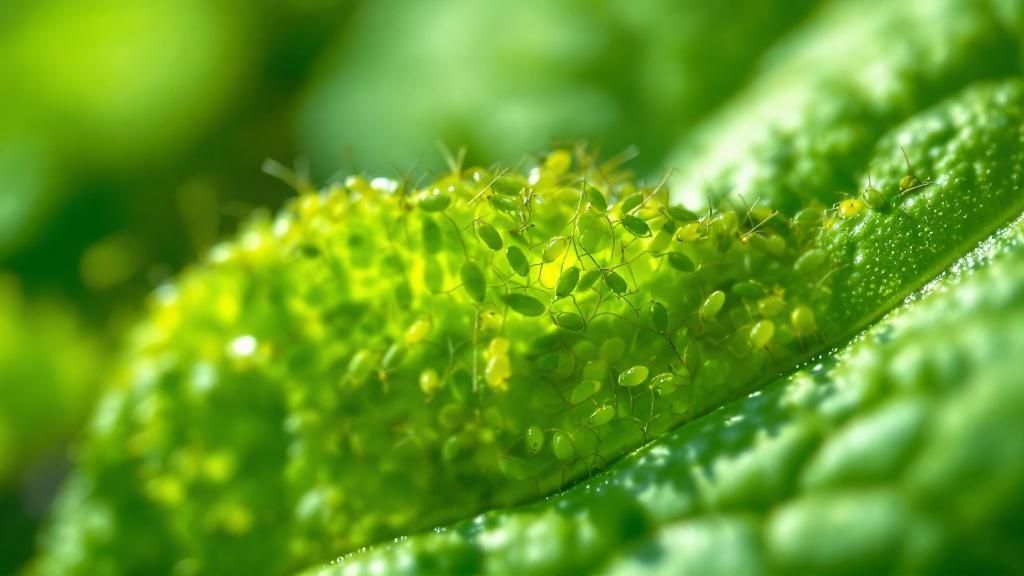
Discovering a cluster of aphids on a tender new leaf can be disheartening, but it’s a universal gardening experience. These tiny, sap-sucking insects drain vital nutrients from your plants, leading to stunted growth, yellowing leaves, and even the spread of disease. While reaching for a conventional pesticide might seem like a quick fix, it often creates far more problems than it solves.
Chemical sprays are indiscriminate. They don't just kill aphids; they wipe out the beneficial insects like ladybugs, lacewings, and bees that you want in your garden. This disruption throws your garden's natural balance completely out of whack, often leading to an even worse pest resurgence later on. This is where embracing organic aphid control becomes a true game-changer.
Protecting Your Garden's Ecosystem
An organic approach is so much more than just avoiding chemicals. It’s a proactive strategy centered on building a healthy, self-regulating environment. When you focus on nurturing your garden's ecosystem, you empower it to defend itself naturally.
This shift in mindset moves you from a reactive cycle of spraying and worrying to a sustainable, long-term solution. The benefits are impossible to ignore:
- Healthier Plants: Strong plants rooted in nutrient-rich soil are simply less susceptible to pests in the first place.
- Safer Produce: You can harvest and eat straight from your garden with confidence, knowing your food is free from harmful chemical residues.
- A Thriving Habitat: Organic methods protect and attract pollinators and predators, creating a lively, balanced, and buzzing garden.
Adopting organic practices means you're not just fighting pests; you're cultivating a robust ecosystem where problems like aphid infestations become less frequent and far less severe.
The Growing Movement Toward Sustainability
If you're leaning toward a more natural garden, you're in good company. Gardeners and farmers worldwide are turning away from synthetic inputs. This global shift is reflected in the market for organic pest control, which was valued at $3.5 billion in 2023 and is projected to more than double by 2032. You can explore the full market analysis from Dataintelo.com to see the data for yourself.
This growth is fueled by a collective awareness of the environmental and health risks tied to synthetic pesticides. This movement isn't just a trend; it's a fundamental change in how we see our role as gardeners. We stop being exterminators and become cultivators of a balanced environment.
By understanding the principles of organic pest management, you can tackle aphids effectively while contributing to a healthier planet. Our comprehensive guide on garden pest control offers even more strategies for creating your own pest-free sanctuary.
Building Your First Line of Defense
The best organic aphid control starts long before you ever spot a single pest. A proactive approach is everything. It’s about creating a garden that’s naturally resilient and just plain unappealing to aphids. This means shifting your mindset from reacting to problems to actively building a strong, healthy garden from the ground up.
Healthy, vibrant plants are far less attractive to sap-sucking insects like aphids. Pests are opportunists, always on the lookout for plants that are stressed, weak, or lacking nutrients. When you enrich your soil and give your plants everything they need to thrive, you’re giving them the internal strength to fend off attacks.
This whole process really begins below the surface. Amending your garden beds with rich, well-rotted compost each season is the single most important thing you can do. Compost builds great soil structure, helps it hold water, and provides a slow, steady diet of essential nutrients. It creates the foundation for vigorous growth, making your garden a much tougher target.
Harnessing the Power of Companion Planting
Companion planting is an old-school technique that just works. It’s all about using smart plant pairings to deter pests, attract the good guys (beneficial insects), and boost the overall health of your garden. It’s a simple yet powerful tool for keeping aphids in check organically.
Some plants release scents or compounds that aphids hate, while others can be used to lure them away from your prized veggies and flowers.
One of my favorite strategies is using trap crops. These are plants that aphids find absolutely irresistible. By planting them near or around the crops you want to protect, you’re basically offering the aphids a more appealing sacrifice.
- Nasturtiums: These are the classic aphid trap crop. Plant them near your vegetable beds—especially around brassicas like kale and broccoli—and they can draw aphids away from your food.
- Calendula: Just like nasturtiums, calendula is a magnet for aphids. I often let a patch of calendula get covered, knowing my nearby Swiss chard and peppers are being left alone.
- Radishes: Aphids and even flea beetles can be lured to radish tops, leaving the leaves of your squash and cucumber plants clean. The best part? You can often still get a perfectly good radish root harvest.
Beyond trap cropping, other companions offer different perks. Planting aromatic herbs like chives, garlic, and onions near roses or other susceptible plants can help repel aphids with their strong scent. Their presence literally confuses pests that are trying to find their favorite meal.
Think of your garden as a community. The right mix of residents helps everyone thrive. Trap crops act as willing decoys, drawing fire so the rest of your plants can grow strong and unbothered.
Scout Your Garden Like a Pro
Early detection is your greatest weapon in preventing a small aphid problem from exploding into a full-blown infestation. Aphids reproduce at an insane rate, so catching them early is everything. Make it a habit to walk through your garden daily or at least every other day—this is your scouting mission.
When you’re scouting, don’t just give your plants a quick glance. You have to get in there and inspect them closely.
- Check Under Leaves: Aphids love to hide out on the undersides of leaves, where they’re safe from the hot sun and many predators. Gently turn over the foliage of vulnerable plants.
- Look for New Growth: Aphids are always drawn to the most tender, succulent parts of a plant. Pay extra close attention to new shoots, flower buds, and young, unfurling leaves.
- Watch for Telltale Signs: Besides seeing the aphids themselves, keep an eye out for sticky "honeydew" on leaves, curled or yellowing foliage, or the presence of ants, which often "farm" aphids for their sweet secretions.
By building healthy soil, using smart companion plants, and becoming a vigilant scout, you create multiple layers of defense. This preventative framework is the heart of successful organic aphid management, making your garden a place where your plants flourish and pests struggle to even get a foothold.
Recruiting Natural Allies to Fight Aphids
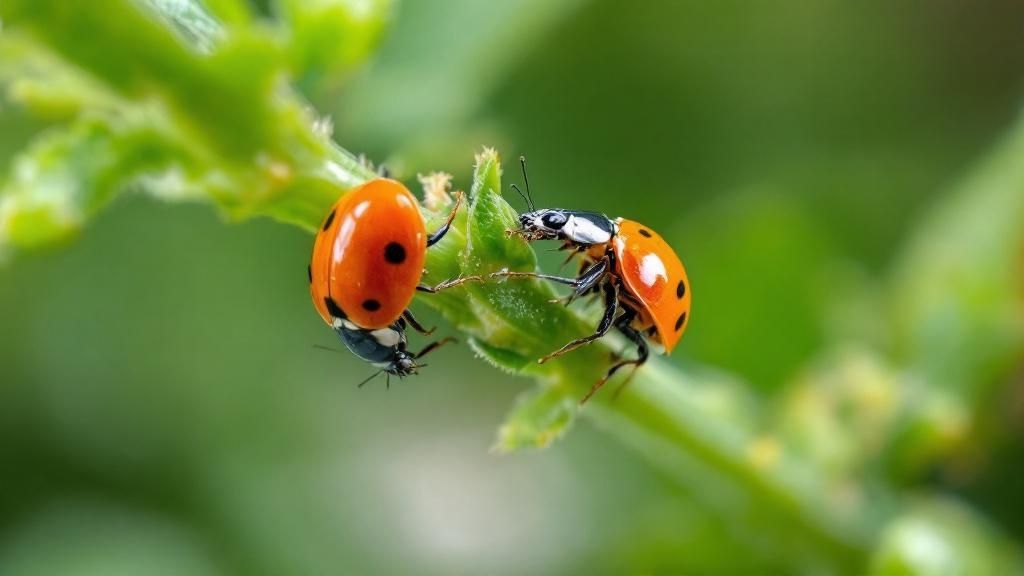
A truly effective organic aphid strategy is about more than just defense—it’s about turning your garden into a battleground where the good guys have the home-field advantage. The best way to do that? Recruit nature’s own pest control team. This means creating an environment so inviting to aphid predators that they show up on their own and decide to stay.
Forget the quick fix of dumping a box of ladybugs and hoping for the best. That’s a temporary solution. The real magic happens when you build a permanent, thriving habitat for beneficial insects. When you give them the right food, water, and shelter, you aren't just getting temporary help; you're establishing a standing army to protect your plants for the long haul.
This method, often called biological control or biocontrol, is the heart and soul of modern sustainable gardening. It uses natural enemies to keep pest populations in check, dramatically reducing the need for any kind of spray. The shift toward these ecological solutions is huge—the global biocontrol market was valued at around USD 6 billion in 2024 and is expected to rocket to USD 26.4 billion by 2034. It's clear proof that gardeners and farmers everywhere are realizing that working with nature is both smarter and more sustainable.
Meet the Aphid Annihilators
To build a welcoming habitat, you first need to know who you’re inviting to the party. Three of the most powerful aphid predators are ladybugs, lacewings, and parasitic wasps. Each one brings a unique and devastating skill set to your garden’s defense force.
-
Ladybugs (or Lady Beetles): These are the famous poster children for aphid control, and for good reason. A single ladybug can gobble up 5,000 aphids in its lifetime. And don't underestimate their young—the alligator-like larvae are even more ferocious predators than the adults.
-
Green Lacewings: Another top-tier ally. While the delicate, green-winged adults mostly sip nectar and pollen, their larvae are ruthless killers known as "aphid lions." These tiny terrors use their curved jaws to snatch aphids and suck them dry, destroying hundreds of pests before they grow up.
-
Parasitic Wasps: These tiny assassins operate with surgical precision. Smaller than a grain of rice, these non-stinging wasps are completely unnoticed by most gardeners. They lay their eggs inside aphids, and the developing wasp larva eats the pest from the inside out, turning it into a lifeless, mummified husk.
Creating an Irresistible Habitat for Predators
Just buying and releasing these beneficial insects can be a real hit-or-miss strategy. If your garden doesn't have what they need to survive and reproduce, they’ll just fly off to find a better home down the street. The real key is to build a habitat that attracts and sustains them naturally.
The most successful organic aphid control programs don't rely on purchasing insects. Instead, they focus on creating a garden ecosystem so rich and inviting that beneficial insects arrive on their own and establish permanent populations.
To pull this off, you need to offer more than just a buffet of aphids. Adult predators often need nectar and pollen as their main food source. The secret is planting a diverse mix of small-flowered plants.
Top Plants to Attract Your Garden's Bodyguards:
- Dill and Fennel: Their umbrella-shaped flower heads are the perfect landing pads for tiny parasitic wasps and ladybugs.
- Yarrow (Achillea): Its flat-topped clusters of tiny flowers offer an easily accessible nectar bar for all sorts of predators.
- Sweet Alyssum: This low-growing annual acts as a "living mulch," giving hoverflies and wasps shelter and a non-stop nectar supply.
- Cosmos and Sunflowers: These classic garden flowers provide plenty of pollen and nectar that attract lacewings and other helpful bugs.
Of course, avoiding broad-spectrum pesticides is absolutely critical to this whole process. You can't invite the good guys over and then poison them. Providing a shallow dish of water with some pebbles or marbles for insects to land on can also make a huge difference, especially during dry spells.
If you run into a specific issue that needs more direct attention, professional services can offer targeted solutions that won't disrupt your beneficial insect army. For gardeners in our area, there are expert resources for aphid control for plants that work in harmony with these eco-friendly principles.
Now, let's look at some of the best biological soldiers you can recruit for your garden.
Top Beneficial Insects for Aphid Control
This table highlights some of the most effective aphid predators, what they like to see in a garden, and why they’re so great to have around.
| Beneficial Insect | How to Attract | Key Benefit |
|---|---|---|
| Ladybug | Plant dill, fennel, yarrow, and cosmos. Avoid pesticides. | Voracious predators in both adult and larval stages. A single ladybug can eat up to 5,000 aphids. |
| Green Lacewing | Plant sweet alyssum, cosmos, and sunflowers. Provide a water source. | Larvae, known as "aphid lions," are ruthless aphid killers, consuming hundreds each. |
| Parasitic Wasp | Plant small-flowered plants like dill, fennel, and sweet alyssum. | Lays eggs inside aphids, killing them from within and creating "mummies." Highly effective and targeted. |
| Hoverfly (Syrphid Fly) | Plant sweet alyssum and yarrow. They resemble small bees. | The slug-like larvae are major aphid predators, while adults are excellent pollinators. |
By thoughtfully planting these flowers and herbs among your vegetables and ornamentals, you’re not just making your garden more beautiful—you’re creating a resilient, buzzing ecosystem. This vibrant community becomes your most powerful tool for keeping aphids in check, ensuring your plants stay healthy and protected, year after year.
Effective Homemade Sprays for Aphid Problems
When a stubborn aphid colony outpaces your preventive efforts, it’s time for some direct action. I’ve found that reaching for a homemade organic spray is a fantastic way to knock down an infestation without waging all-out war on your garden's ecosystem. These DIY solutions are contact killers, which means they only work when you spray them directly on the pests.
Success here is all about being thorough. Aphids love to cluster on the most tender parts of a plant—think new shoots, delicate flower buds, and especially the undersides of leaves. A quick, lazy spritz across the top of the foliage just won’t cut it. You have to get in close and make sure you’re coating every surface where these little sap-suckers are hiding.
The Simple Power of Insecticidal Soap
One of the most reliable and gentle tools in any organic gardener's kit is a simple soap spray. But here's a critical tip: you must use the right kind of soap. Many modern dish soaps contain degreasers and harsh detergents that can strip the protective waxy coating right off plant leaves, causing more harm than the aphids themselves. Instead, always reach for a pure castile soap or a commercial insecticidal soap concentrate.
These simple soaps work by dissolving the soft outer shell of the aphids, which causes them to dehydrate and die. It's a physical process, not a chemical one, which is great because it means aphids can’t develop resistance to it.
To mix up a batch of effective soap spray:
- Combine 1 teaspoon of pure castile soap (I like Dr. Bronner's unscented) with 1 liter (about a quart) of warm water.
- Gently shake the mixture in a clean spray bottle to combine everything.
- Before you go to town, do a quick "spot test." Spray a single leaf on the plant and wait 24 hours to make sure there's no damage.
This basic recipe is my go-to first response for most aphid flare-ups. It's gentle on the vast majority of plants but incredibly effective when it makes direct contact with the pests.
Harnessing the Strength of Neem Oil
For a solution that does more than just kill on contact, I always turn to neem oil. This stuff, extracted from the seeds of the neem tree, is a true powerhouse for organic gardening. It works in multiple ways: as an antifeedant, a repellent, and a growth disruptor. When an aphid ingests it, the oil messes with its hormones, stopping it from molting and reproducing.
As a bonus, neem oil also has fungicidal properties. This is a huge help in tackling sooty mold, that ugly black fungus that often grows on the sticky "honeydew" aphids leave behind. This dual action makes it a cornerstone of any solid pest management plan.
Neem oil is just as much a preventative tool as it is a treatment. A light, regular application every few weeks during the growing season can help keep pests from showing up in the first place.
To make a neem oil spray, you'll need something to help the oil mix with water, otherwise known as an emulsifier. A little bit of castile soap is perfect for the job.
- In a spray bottle, combine 2 teaspoons of cold-pressed, 100% pure neem oil with 1 teaspoon of castile soap.
- Add 1 liter of warm water and shake it like you mean it to get it all emulsified.
- Use it right away, as the oil and water will start to separate over time. I make sure to give the bottle a good shake every few minutes while I'm spraying.
A Potent Garlic and Pepper Repellent
If you’re looking for a spray that focuses more on repelling pests, a homemade garlic and pepper mix can be surprisingly effective. The strong, pungent compounds in these ingredients really irritate aphids and other soft-bodied insects, encouraging them to pack their bags and find somewhere else to feed. This spray is less about an instant kill and more about making your plants an awful place to live.
This is a great spray to use in rotation with soap or neem, or on plants that you know are a bit sensitive to oils.
This chart gives you a quick visual on how these common DIY sprays stack up.
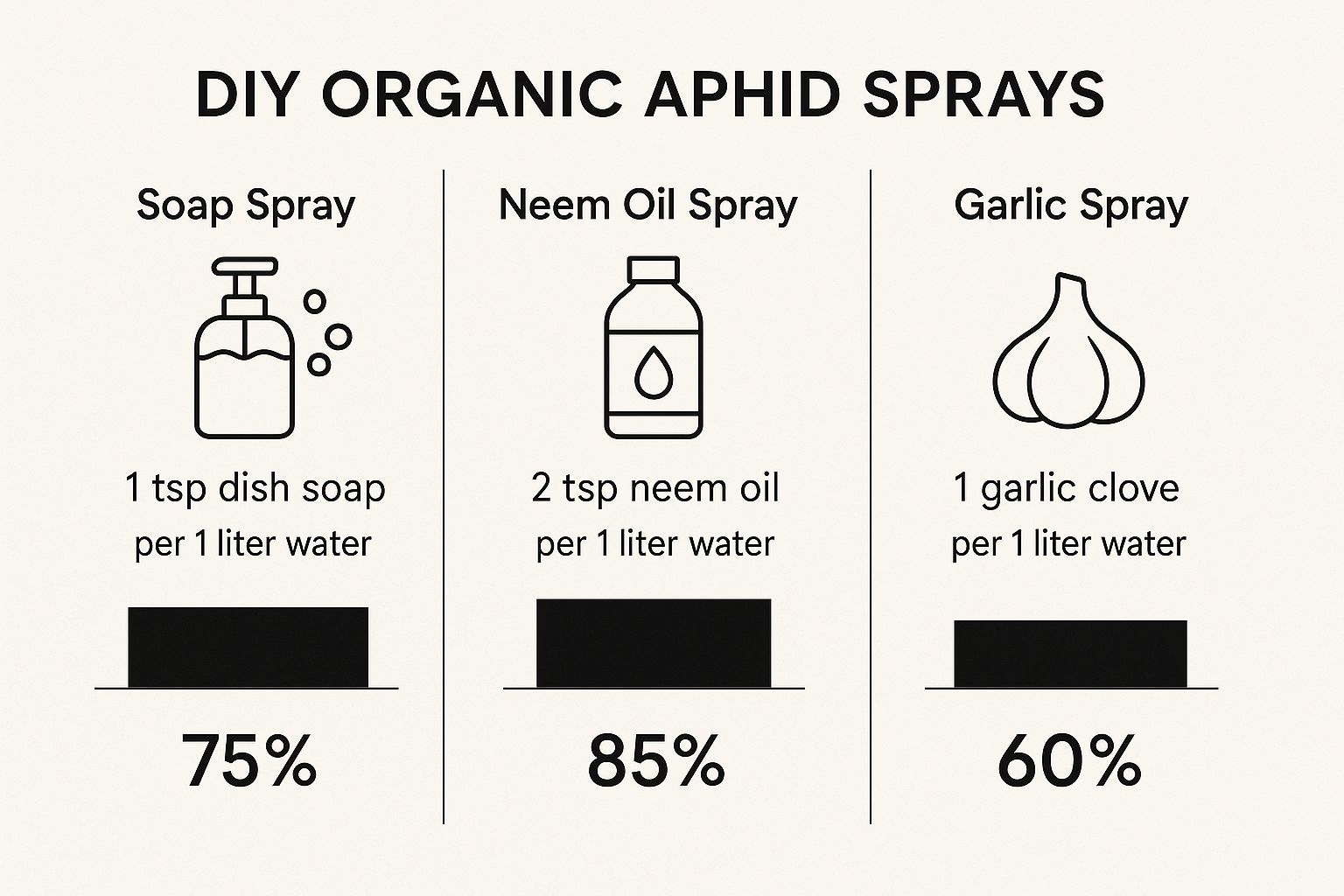
The data really backs this up. Neem oil and soap sprays consistently deliver the highest kill rates, while garlic and pepper mixes shine as repellents.
To see just how quickly these treatments can work, check out the results from this garden experiment. In a controlled test, insecticidal soap wiped out all aphids on the plants within 24 hours, while neem oil achieved an impressive 80% reduction in the same timeframe.
Comparison of DIY Organic Aphid Sprays
To help you decide which spray is right for your situation, I’ve put together a quick comparison of the most popular homemade options. Each has its own strengths and weaknesses.
| Treatment | Effectiveness Rate | Best For | Potential Considerations |
|---|---|---|---|
| Insecticidal Soap | High (90-95%) | Immediate knockdown of existing infestations on sturdy plants. | Can damage sensitive plants if mixed too strong or applied in sun. Doesn't have residual effects. |
| Neem Oil | Moderate-High (80-90%) | All-in-one treatment and prevention; good for pests and fungal issues like sooty mold. | Slower acting than soap. Strong odor. Can harm beneficials if sprayed directly on them. |
| Garlic/Pepper Spray | Low-Moderate | Repelling aphids from plants before an infestation gets bad; good for sensitive plants. | Primarily a repellent, not a strong killer. Must be reapplied frequently, especially after rain. |
Ultimately, the best choice depends on the severity of your aphid problem and your overall gardening philosophy. Rotating between these treatments can also be a highly effective strategy.
Best Practices for Application
No matter which spray you choose, how you apply it is what truly makes the difference between success and failure.
- Timing is Everything: Always spray in the cool of the early morning or late evening. Applying any oil or soap in the hot, direct sun is a recipe for scorched leaves. This timing also protects beneficial pollinators like bees, which are less active then.
- Get Full Coverage: Aphids hide, so you have to be persistent. You must spray the undersides of leaves, the crooks of branches, and all the new, tender growth. Drench the plant until the mixture is literally dripping off the foliage.
- Repeat as Needed: A one-and-done spray rarely solves a real infestation. Plan on reapplying your chosen spray every 5-7 days until you see no more signs of aphids. And don't forget to reapply after it rains.
These DIY sprays are powerful allies, but they're just one piece of the puzzle. For a more complete strategy, take a look at our comprehensive guide on natural pest control, which shows you how to integrate these treatments into a broader, more sustainable plan for a healthy garden.
Tackling Stubborn Aphid Problems
Even with the best organic strategies, there are times when it feels like you're fighting a losing battle. A stubborn infestation can pop up that just won’t quit, leaving you frustrated and ready to give up. Before you throw in the trowel, let’s look at some of the most common reasons why your aphid control efforts might be falling flat.
More often than not, the problem isn't your chosen method but a hidden factor you haven't addressed yet. One of the biggest culprits is the secret alliance between aphids and ants.
Disrupt the Ant-and-Aphid Alliance
Have you ever noticed ants marching up and down your aphid-covered plants? This is no coincidence. It's a classic example of a symbiotic relationship right in your backyard. Aphids excrete a sugary, sticky substance called "honeydew," which is a high-energy food source for ants.
In return for this sweet treat, the ants act as tiny bodyguards, fiercely protecting the aphids from predators like ladybugs and lacewings. If you’re trying to encourage beneficial insects but have an ant problem, your efforts will likely fail. The ants will literally fight off the helpful predators you’re trying to attract. To win the war against aphids, you have to break up this partnership first.
A simple and highly effective organic solution is to create a physical barrier. For woody plants, shrubs, and trees, you can apply a band of sticky material like Tanglefoot around the trunk or main stem. This non-toxic barrier makes it impossible for ants to climb up and tend to their aphid "livestock."
When Your DIY Sprays Don't Seem to Work
It’s incredibly disheartening to mix up a batch of homemade spray, apply it diligently, and see the aphids return in full force a few days later. When this happens, the failure usually comes down to one of two things: improper application or an incorrect recipe.
Application Issues:
- You're missing their hiding spots. Aphids love to hang out on the undersides of leaves and deep in the crevices of new growth. A light mist over the top of the plant simply won't reach them. You have to be thorough, drenching the plant until the solution drips from every leaf.
- Your timing is off. Spraying in the middle of a hot, sunny day can cause the treatment to evaporate too quickly and even scorch your plant's leaves. The best time to apply any spray is in the cool of the early morning or late evening.
Recipe Problems:
- The mix is too weak. If your soap or neem oil spray is too diluted, it won't be strong enough to do the job. Stick to tested recipes—a good starting point is 1-2 teaspoons of mild dish soap per quart of water.
- The mix is too strong. On the flip side, a spray that is too concentrated can damage or even kill your plant. I always recommend performing a spot test on a single leaf. Wait 24 hours to see how the plant reacts before spraying the whole thing.
Troubleshooting your organic aphid control often means looking beyond the aphids themselves. Managing the ant population and perfecting your spray technique are two of the most impactful adjustments you can make for long-term success.
Making Tough Garden Decisions
Sometimes, despite your best efforts, an infestation on a single plant becomes so severe that it threatens the health of your entire garden. In these moments, you have to make a tough call for the greater good of your little ecosystem.
One option is strategic pruning. If the aphids are concentrated on just a few branches or stems, don't hesitate to prune them off entirely. Immediately bag and dispose of the infested cuttings in the trash—not your compost—to prevent the pests from escaping and spreading.
In the most extreme cases, you may need to sacrifice a plant. Removing one heavily infested "typhoid Mary" can stop the problem from migrating to all of its neighbors. It’s a difficult decision for any gardener, but this act of triage can protect your broader garden investment and restore balance to the space you’ve so carefully cultivated.
Your Questions on Organic Aphid Control Answered
Once you’ve spotted aphids, the questions start popping up. Moving past the initial shock of finding these pests, you start wondering about the nitty-gritty details of getting rid of them for good—and doing it safely.
We get these questions all the time from fellow gardeners. Think of this as your go-to guide for troubleshooting in the garden, giving you the confidence to handle whatever aphid situation comes your way.
How Often Should I Apply Organic Aphid Sprays?
Consistency is your best friend when you're fighting an active aphid problem. For treatments like insecticidal soap or neem oil, you'll want to spray them every 5-7 days until you see the population is completely gone. Aphids have a frustratingly short life cycle, so this frequency is key to breaking their reproductive momentum.
Keep in mind, these are contact sprays. Any decent rain will wash them right off the leaves, making them totally useless. You’ll always need to reapply after a downpour.
For prevention, a much lighter touch works wonders. A gentle neem oil spray every two to three weeks during the peak growing season can make your plants a far less appealing home for pests looking to move in.
Will These Organic Sprays Harm Bees or Ladybugs?
The short answer is yes, they absolutely can. Most organic sprays, including soap and neem oil, are non-selective. This means they can harm any insect they come in direct contact with, whether it’s a "bad" aphid or a "good" ladybug. The good news is, you can take simple steps to protect your garden allies.
The most important rule for applying any spray is to be targeted and mindful. Protecting your pollinators and predators is just as crucial as getting rid of the pests.
To keep the good bugs safe, follow these critical guidelines:
- Spray Late in the Day: The best time to apply treatments is in the very late evening or at dusk. Bees and other pollinators have usually returned to their hives by then, which drastically cuts down their exposure.
- Avoid Open Flowers: Never spray directly onto open blossoms where you see pollinators actively foraging.
- Be Surgical with Your Application: Focus your spray directly on the aphid colonies themselves. There’s no need to blanket the entire plant if you don't have to.
Why Are My Aphid-Covered Plants Crawling With Ants?
If you see ants marching up and down your plants, consider it a giant red flag for an aphid infestation. You've just walked in on a classic partnership in the insect world. Aphids feast on plant sap and then excrete a sugary, high-energy waste product called "honeydew."
This honeydew is basically a superfood for ants. In exchange for this sweet treat, the ants become the aphids' personal bodyguards. They will actively defend the aphids from natural predators like ladybugs and lacewings, essentially farming them like tiny livestock.
Getting a handle on the ants is a non-negotiable step for effective aphid control. For woody plants and trees, a fantastic organic method is creating a physical barrier with a sticky substance like Tanglefoot around the base. This literally stops the ants in their tracks and breaks up their protective partnership.
Can I Just Use Regular Dish Soap for My Spray?
This is probably the most common question we hear, and the answer is a firm "no." While it seems like an easy and cheap shortcut, using standard dish soap from your kitchen can cause some serious problems for your plants.
Most dish soaps today are actually detergents. They’re packed with powerful degreasers, surfactants, and chemical fragrances designed to strip grease from dinner plates, not to be gentle on plant tissue. These harsh ingredients can easily strip the protective waxy cuticle right off a plant's leaves, leading to dehydration, leaf burn, and significant damage.
For a spray that’s both safe for your plants and effective against pests, always stick with a pure castile soap (like Dr. Bronner's) or a commercially formulated insecticidal soap. These products are specifically made to be tough on soft-bodied pests while being gentle on your plants.
Dealing with persistent pests can be a real challenge, but you don't have to go it alone. If you're up against a stubborn infestation or want to build a long-term prevention plan, the team at West Pest Co. offers professional, eco-friendly solutions tailored to your garden's specific needs. Find out more about our responsible pest control services.