Quick Answer
To get rid of a cockroach infestation in Santa Cruz fast, start with a thorough inspection, remove food and moisture sources the same day, seal obvious hiding spots, and use targeted gel baits and insect growth regulators instead of sprays or foggers. In Santa Cruz’s damp climate, established infestations usually move fastest with professional IPM treatment plus strict sanitation.
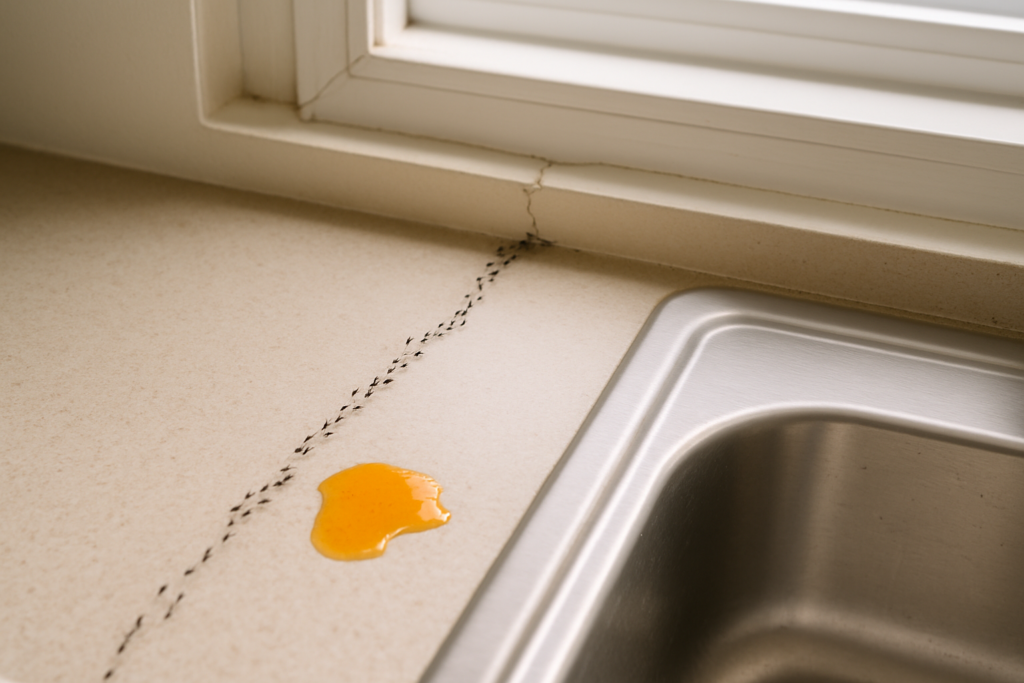
You’re probably looking for help because this feels urgent. Roaches in the kitchen at night, droppings in a drawer, or a bug running when you turn on the bathroom light usually means the problem is bigger than the few you can see.
If you’re asking how do i get rid of a cockroach infestation in santa cruz fast?, the short version is this. Move quickly, but don’t waste time on products that only kill the visible ones. Fast control comes from finding where they’re nesting, cutting off water, and treating the hidden areas correctly.
Emergency Actions You Can Take Tonight

The first night matters. You’re not trying to solve the whole infestation in a few hours. You’re trying to slow it down, reduce what’s feeding it, and gather useful information.
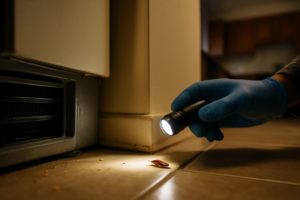
Do a nighttime flashlight check
Wait until the house is quiet and dark, then check with a flashlight around:
- Under the kitchen sink where plumbing lines enter the wall
- Behind the refrigerator where heat and crumbs collect
- Around the dishwasher especially near the motor area
- Inside bathroom vanities where leaks and condensation build up
- At cabinet hinges and drawer corners where German roaches like tight spaces
Look for live roaches, droppings, smear marks, and egg cases. If you see activity clustered in one or two spots, that’s useful. It usually points to the main harborages.
Practical rule: If you see roaches scatter when the light comes on, don’t spray the area right away. You want to know where they’re coming from, not just drive them deeper into walls.
Remove water before food
Roaches can survive a long time without much food. Water is usually the bigger issue, especially in Santa Cruz homes where damp air, condensation, and crawlspace moisture give them an edge.
Tonight, focus on these jobs:
- Dry the sinks completely before bed
- Fix or contain drips under sinks with a temporary tray or towel if you can’t repair them immediately
- Empty pet water overnight if that’s practical for your household
- Run bathroom ventilation to reduce moisture after showers
- Take out trash and close lids tightly
Clean the spots that matter most
You do not need to deep-clean the whole house tonight. Hit the areas that directly support roaches.
- Wipe grease from behind the stove and small appliances
- Vacuum crumbs from drawers, pantry corners, and under kick plates
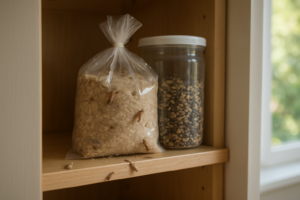
- Store open food in sealed containers
- Remove cardboard clutter under sinks or in pantries
If you need urgent help after hours, this page on fast-acting emergency pest control gives a good overview of when a same-day response makes sense.
Put out sticky monitors, not foggers
Glue boards or sticky traps help you measure activity. Place them along baseboards, behind appliances, near the sink, and beside the toilet.
Don’t use roach bombs or total-release foggers as your first move. They rarely reach the tight cracks where the main population is hiding, and they can scatter roaches into new spaces.
What to avoid tonight
A few common moves make things worse:
- Heavy aerosol spraying around bait placements, because sprays can contaminate bait and reduce feeding
- Bleaching every visible surface while leaving leaks and crumbs in hidden areas
- Moving appliances without cleaning under them
- Using random home remedies like lemon or essential oils as the main control method
The goal tonight is control, not panic. If you reduce moisture, remove easy food, and identify hotspots, you’ve already done the most useful first step.
Understanding the Cockroach Problem in Santa Cruz
Not every roach problem is the same. In Santa Cruz County, the climate changes the pace of the problem and the odds of a DIY fix working.
Why the species matters
When someone says “cockroach,” they may be talking about very different pests. The small tan German cockroach is the one that causes the fastest indoor infestations in kitchens, bathrooms, laundry rooms, and multi-unit housing. Larger roaches are often tied more to outdoor movement, drains, damp crawlspaces, or occasional entry.
That difference matters because treatment changes with the species. German roaches usually need precise bait placement, growth regulators, sanitation corrections, and follow-up monitoring. A larger occasional invader may point more toward exclusion and moisture management.
If you’re not sure whether you’re seeing one traveler or a real colony, this guide on the difference between seeing one cockroach and having an infestation is worth reading before you buy products.
Santa Cruz climate makes infestations move faster
Santa Cruz doesn’t behave like a dry inland area. Mild temperatures and persistent humidity give roaches a more forgiving environment, especially around older kitchens, crawlspaces, and bathrooms.
A 2025 UC Santa Cruz entomology study found that German cockroaches were present in 85% of local cases and completed their life cycles 25% faster in Santa Cruz because of 65 to 75 degree temperatures and high humidity. The same study found that common DIY baits and powders failed in over 88% of humid coastal homes within two weeks because moisture degraded them 40% faster than in drier inland areas (UC Santa Cruz entomology study, 2025).
That lines up with what pest technicians see on the ground. A powder or loose bait that might stay workable elsewhere often breaks down fast in a damp kitchen, under a sink, or near a crawlspace vent here.
In Santa Cruz, speed matters because the environment helps the infestation, not because the roaches are somehow different from every other town. Moisture changes the outcome.
Why generic DIY advice fails locally
A lot of online advice assumes a dry, predictable home environment. Santa Cruz homes often aren’t that simple.
Older homes can have:
- Gaps around plumbing
- Wood movement that opens cracks seasonally
- Moist crawlspaces
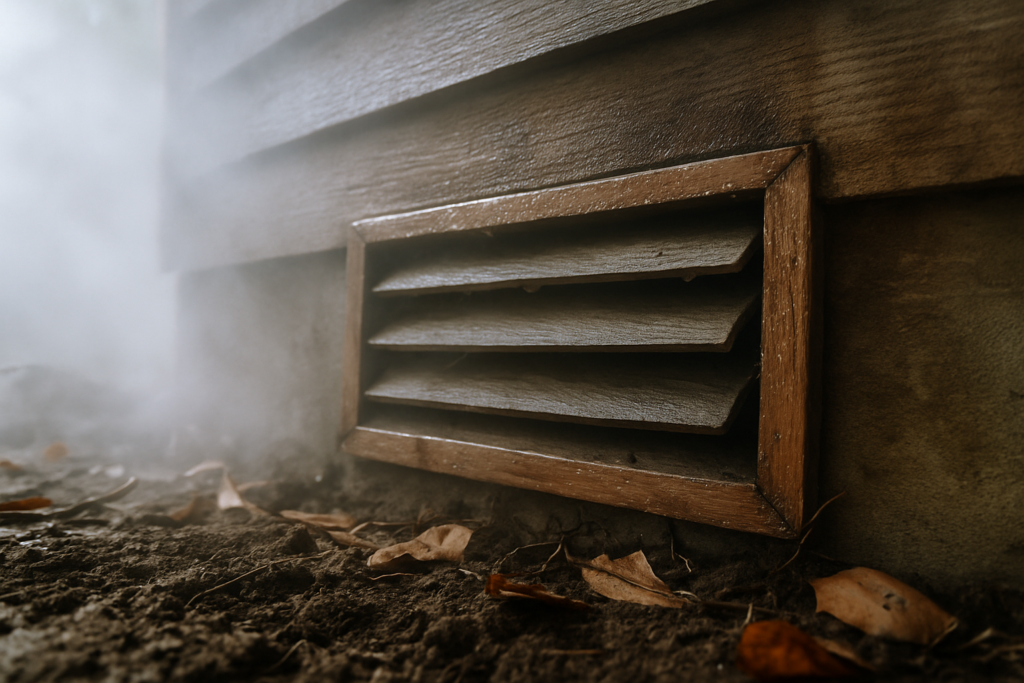
- Vent screens and utility penetrations that let damp air and pests in
- Condensation behind appliances and under sinks
That means the problem is often part sanitation, part exclusion, and part hidden harborage. If you only do one of those, the colony usually hangs on.
Inspection changes the whole plan
A proper inspection isn’t a formality. It tells you where to treat and what to ignore.
A useful inspection looks for:
- Harborage sites in cabinet voids, appliance cavities, and wall gaps
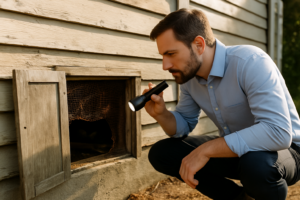
- Entry points around pipes, door sweeps, and vent penetrations
- Moisture sources including leaks, condensation, and poor airflow
- Activity patterns based on droppings, trap catches, and room-by-room spread
Without that diagnosis, people tend to overtreat open areas and miss the actual nesting points. That’s why two homes with “roach problems” may need very different solutions.
The hidden population is the real problem
The visible roaches are usually the foragers. The breeding population stays tucked into narrow, warm, humid voids where spray contact is poor.
A contact spray can make a kitchen look better for a day or two. It often doesn’t touch the egg cases or the nymphs tucked behind the cabinet back, under the counter lip, or inside appliance insulation spaces.
That’s why the fast answer isn’t “spray harder.” It’s identify the species, find the moisture, and treat the harborages that are sustaining the infestation.
Choosing Your Treatment Strategy DIY vs Professional
 pest control treatment methods.” />
A Santa Cruz roach problem can look small and still be established. Homeowners often see a few roaches at night, put down a spray or traps, and assume they are catching it early. In our coastal climate, mild temperatures and steady humidity let hidden populations keep breeding in wall voids, cabinet gaps, and damp appliance spaces long after the visible activity drops.
That is why the DIY versus professional decision should be based on conditions, not optimism.
When DIY can make sense
DIY can work for a light, localized issue. A couple of outdoor roaches in the garage, one sighting near a back door, or a very early problem limited to one small area can sometimes be handled without a service call.
The better DIY tools are targeted, not broad:
- Gel baits placed in protected cracks, hinge areas, and void openings where roaches travel
- IGRs such as hydroprene or pyriproxyfen, which interfere with development and help suppress reproduction
- Glue boards to confirm whether activity is isolated or spreading
- Caulk and sealant for simple gaps that are easy to reach and dry enough to seal properly
Placement matters. In Santa Cruz homes, damp air and condensation shorten the useful life of a lot of store-bought products. Baits dry out faster in some spots, powders cake up in humid voids, and sprays often push roaches deeper into harborages instead of removing the source.
DIY usually stops making sense when sightings are repeated, activity shows up in both kitchen and bathroom areas, or you are finding droppings, egg cases, or nymphs. Apartments, duplexes, and older homes with shared walls or heavy moisture issues are also poor candidates for a DIY-only plan.
When professional treatment is the faster route
Professional treatment is usually the faster route when the infestation is established and you want the problem reduced quickly without a lot of trial and error.
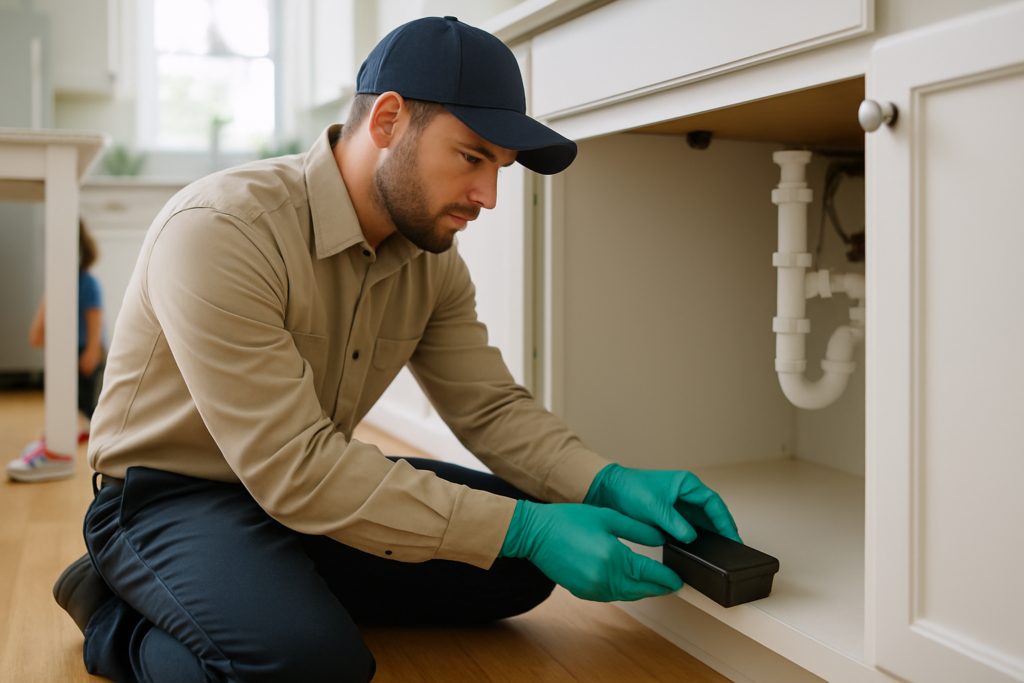
A good technician is not just applying product. The job should include species ID, inspection behind and under major appliances, moisture findings, harborage mapping, bait placement, growth regulator use when appropriate, and follow-up based on trap counts and room-by-room activity. That is the difference between knocking down foragers and collapsing the breeding population.
Some homes need only a focused treatment plus follow-up. Others need a broader plan because the infestation has spread through multiple rooms or units.
If a company recommends recurring service before checking where the roaches are nesting, where moisture is building up, and whether the issue is German roaches versus occasional outdoor invaders, that is a weak starting point.
For a plain-language breakdown of where home methods help and where they waste time, this guide on DIY pest fixes and what works and what doesn’t gives a useful comparison.
Cockroach Treatment Options Compared
| Treatment Approach | Best For | Effectiveness | Notes for Santa Cruz Homes |
|---|---|---|---|
| Store spray only | One visible roach or temporary knockdown | Low once roaches are established | Usually misses hidden harborages and does not address the moisture conditions helping them persist |
| DIY gel bait plus monitoring | Small, localized indoor activity | Fair if placement is accurate and you keep checking traps | Works best in protected areas. Damp, exposed placements fail faster near sinks, dishwashers, and refrigerators |
| DIY bait plus IGR | Early indoor infestation with strong household follow-through | Better than sprays alone | Often a smarter DIY option in humid homes where loose dusts break down or clump |
| Professional IPM | Repeated sightings, German roaches, multi-room activity, shared-wall housing | Highest overall | Best fit for hidden nests, moisture-heavy conditions, and follow-up adjustments |
| No-chemical mechanical and exclusion-focused work | Households limiting product use and dealing with light activity | Mixed | Can help, but it takes careful inspection, aggressive cleanup, and close monitoring |
Conventional, eco, and no-chemical options
Different treatment styles fit different households.
- Conventional treatment uses regulated products in targeted locations such as cracks, voids, and appliance areas. This is often the practical choice when the infestation is active and speed matters.
- Eco-focused treatment relies more on careful baiting, lower-risk materials, insect growth regulators, and tight placement. It can work well when the infestation is moderate and the home conditions support bait performance.
- No-chemical approaches use trapping, vacuuming, sealing, sanitation, and habitat correction. These methods can reduce pressure, but they demand more labor from the homeowner and usually work best on lighter infestations.
West Pest Co. offers those treatment tiers as one local option for Santa Cruz homeowners choosing between conventional, eco-focused, and no-chemical service styles based on the property and the infestation level.
What usually wastes time
A few approaches fail over and over:
- Foggers and bombs rarely reach the cracks and voids where the colony is concentrated
- Loose powders in damp areas break down, clump, or get avoided
- Repellent-only products often scatter roaches into new hiding spots
- Blanket spraying without inspection, trapping, and follow-up leaves the main population in place
Fast control comes from choosing the method that matches the infestation, the species, and the moisture conditions in the home. In Santa Cruz, that local climate piece matters more than many homeowners expect.
Creating a Roach-Proof Home Long-Term Exclusion and Sanitation
You can kill the visible roaches and still keep the infestation alive if the house stays damp and easy to hide in. In Santa Cruz, that happens a lot because the coastal air keeps crawlspaces, cabinet voids, and appliance areas humid longer than homeowners expect. Mild temperatures also let roaches stay active for more of the year, so small sanitation misses tend to matter more here.

Moisture control comes first
On Santa Cruz jobs, I usually find the same pattern. The bait did some work, but a slow leak under the sink, condensation behind the refrigerator, or damp air coming up from a crawlspace kept the pressure on. Roaches do not need standing water every day. Repeated moisture is enough.
Start with the places that stay humid even after the room looks dry:
- Under sinks where cabinet floors stay damp from supply line drips or drain leaks
- Behind refrigerators where defrost pans and condensation collect
- Bathroom cabinets where steam, plumbing sweat, and poor airflow raise humidity
- Laundry rooms where hoses, wall penetrations, and lint hold moisture
- Lower cabinets on exterior or crawlspace-adjacent walls where coastal dampness lingers
If you need a room-by-room reset, this outside guide on what a professional deep clean includes is useful for spotting the kind of buildup roaches use. For pest control, the parts that matter most are the hidden ones. Drawer corners, kick plates, grease along appliance edges, and debris under liners.
Seal the openings they use every night
Roaches travel the same protected routes over and over. A small gap at a pipe penetration or a split in cabinet trim can function like a hallway.
Check and seal:
- Pipe penetrations under sinks and behind toilets
- Gaps where countertops meet walls
- Cracks in pantry shelves and cabinet corners
- Baseboard separations near dishwashers and refrigerators
- Loose escutcheon plates around plumbing lines
- Openings near vents, utility chases, or crawlspace connections
Use caulk for narrow cracks. Use the correct backing material for wider voids. Fix leaks before sealing. If moisture stays trapped, the area can still support roaches even after the gap is closed.
A clean kitchen alone does not solve that problem. Roaches will stay where water and shelter are reliable.
Change the conditions that let them feed
German cockroaches, which are the usual indoor problem in Santa Cruz homes and apartments, do well on tiny food sources. Crumbs are enough. Grease film is enough. Pet food left out overnight is often enough.
Make these habits part of the routine:
- Store dry goods in sealed containers instead of cardboard or loosely clipped bags
- Pick up pet food and water at night during active infestations
- Wipe under small appliances where oils and crumbs build up
- Empty trash often and keep lids shut
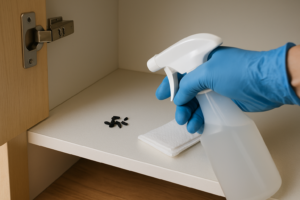
- Clean the full spill area inside cabinets and drawers, not just the visible front edge
- Reduce clutter under sinks and in pantries so hidden activity is easier to spot
There is a trade-off here. Deep cleaning and decluttering take time, and not every homeowner can do it all in one day. Start with the wettest and greasiest areas first. Those changes usually support treatment faster than cosmetic cleaning in low-risk rooms.
Keep monitoring after activity drops
Glue boards are not just for confirming an infestation. They show whether roaches are still using the same routes, whether activity is shifting into a new room, and whether your cleanup and sealing work is helping.
Place them in hidden, low-traffic spots:
- Behind the fridge
- Under the sink
- Inside the pantry near the floor
- Beside the dishwasher
- Near bathroom plumbing lines or wall voids
Check them on a schedule instead of waiting for a surprise sighting. If catches stay concentrated in one area, that usually points to missed moisture, a hidden harboring crack, or food debris nearby.
If you want a practical follow-up list, this guide on how to prevent roaches covers the basic prevention steps clearly.
One limitation is worth keeping in mind. General yard or perimeter pest treatments do not address the full indoor roach life cycle by themselves. Long-term control comes from matching treatment to the infestation, then keeping the home dry, sealed, and hard for roaches to use.
What to Expect A Realistic Timeline for Getting Rid of Cockroaches
Once treatment starts, an important concern quickly emerges. Is the process delivering results?
The answer depends on the method used, but there is a normal pattern. With bait-based control, seeing some roaches shortly after treatment doesn’t automatically mean failure.
The first couple of days
In the first day or two, you may still see roaches in treated areas. Some may look sluggish or appear in spots where you haven’t seen them before.
That can happen because bait and growth regulator programs disrupt the colony instead of just killing on contact. Activity often becomes more visible before it drops.
What the first week often looks like
Modern professional gel baits and IGRs work through a cascade effect. A single fed cockroach can contaminate up to 40 other roaches, and with proper placement, populations can see a 70 to 80% reduction in the first week, with near-total elimination possible within 3 to 4 weeks for most residential German cockroach infestations (West Pest Co., 2025, https://westpestco.com/how-to-get-rid-of-german-cockroaches/).
That’s why placement matters so much. If bait lands where roaches feed and travel, the colony starts carrying the material back into the hidden population.
Signs the treatment is working
Look for trends, not a perfect overnight stop.
Good signs include:
- Fewer live sightings each week
- More dead or dying roaches in hidden areas
- Less fresh spotting or droppings
- Lower trap counts in the same locations
- Activity shrinking to one remaining hotspot instead of multiple rooms
Signs you may need a follow-up
Some situations need another visit or a revised plan.
Watch for:
- No visible drop in sightings after the first week
- New hotspots appearing in untouched rooms
- Persistent moisture problems that haven’t been corrected
- Bait drying out, getting contaminated, or being placed in the wrong locations
- Apartment or shared-wall activity where neighboring units may be contributing
Don’t judge progress by a single night. Judge it by the pattern over the next few weeks.
Why patience and follow-through matter
Roach control is not the same as knocking down a wasp nest or removing a visible spider issue. The treatment has to reach the hidden breeding population, and the home has to stop feeding the survivors.
If you clean away bait placements, skip moisture corrections, or stop monitoring too early, the process slows down. If the baits stay active and the sanitation holds, the population usually trends down in a clear, measurable way.
When to Call a Professional How Do I Get Rid of a Cockroach Infestation in Santa Cruz Fast
 Pest Control business card in front of a laptop displaying their website.” />
There’s a point where more DIY work just burns time. If you want the fastest path, call a professional when the signs show the infestation is established.
That usually means:
- You’re seeing roaches during the day
- Droppings are showing up in more than one room
- You’ve already tried sprays or traps and the activity keeps returning
- You live in an apartment, duplex, or shared-wall property
- You feel overwhelmed and want a clear plan instead of more trial and error
A good company should inspect first, identify the species, explain whether the issue is nesting, sanitation, or entry-related, and tell you whether a one-time targeted treatment or follow-up service makes sense. You shouldn’t have to agree to a long contract before anyone has diagnosed the problem.
If you’re comparing companies, this article on how to choose the right exterminator in Santa Cruz is a useful starting point.
For homeowners asking how do i get rid of a cockroach infestation in santa cruz fast?, the practical answer is simple. Fast means accurate inspection, targeted baiting and growth regulation, moisture correction, and sealing the hiding spots that let the colony recover. If the infestation is active in the kitchen, bathroom, or multiple rooms, professional IPM is usually the shortest route to control.
Frequently Asked Questions About Cockroach Control
How fast can a cockroach infestation be brought under control?
If the treatment is well targeted and the home supports it with sanitation and moisture control, activity usually starts dropping early in the process. Full control takes longer than a quick spray because the treatment has to reach the hidden population, not just the visible roaches.
Should I spray roaches if I see them in the kitchen?
Usually, no. Heavy spraying can interfere with bait programs and may push roaches deeper into cracks and wall voids. It’s better to clean the area, reduce moisture, and use a treatment plan built around the nesting sites.
Are gel baits safer than foggers around kids and pets?
Targeted gel baits placed in hidden areas away from children and pets are generally a more controlled approach than foggers. Placement matters. Products should be used exactly as labeled, and bait placements should stay out of reach.
Why do I still see a few roaches after treatment?
That can be normal, especially with bait and IGR programs. Roaches may stay visible for a short time while the treatment moves through the colony. What matters is whether sightings, droppings, and trap counts are trending down.
Do I need ongoing service or just one treatment?
That depends on the species, the level of infestation, and the condition of the home. Some situations need a targeted treatment and follow-up inspection. Others, especially in shared buildings or homes with recurring moisture issues, may need continued service.
What should I do before a roach treatment appointment?
Clear out the areas under sinks, empty the space around major appliances if requested, and clean up exposed food and grease. Don’t over-spray beforehand. That can make the technician’s baiting and monitoring work less effective.
Can a clean house still get cockroaches?
Yes. Cleanliness helps a lot, but leaks, condensation, hidden crumbs, cardboard clutter, and structural gaps can still support an infestation. In Santa Cruz, humidity adds another layer, so moisture control matters just as much as surface cleaning.
If you need straight answers about a cockroach problem in Santa Cruz County, West Pest Co. offers inspection-first service with practical treatment options and no-pressure next steps. You can reach out for a free estimate through the website and get a clear recommendation based on what’s happening in your home.
Sources
This article relies on practical field experience in Santa Cruz County and on-source material already cited in the body. The previously listed UC Santa Cruz study has been removed because it was not a verifiable published source.
West Pest Co. material on German cockroach control was used earlier in the article and is not repeated here to avoid duplicating the same source URL.