Yes, flea traps absolutely work—but it’s critical to understand their specific role. Dealing with fleas can be unsettling, but thinking of traps less as an extermination tool and more like your own personal flea detective is the key to using them effectively.
They are fantastic at capturing adult fleas by mimicking a warm-blooded host (your pet!), which gives you undeniable proof of a problem and helps you zero in on hotspots in your Santa Cruz home.
Setting Realistic Expectations for Flea Traps
When you first spot fleas in your home, the natural reaction is to want them gone yesterday. It’s a frustrating feeling, especially when you see them bothering your pets and family. While a flea trap is an excellent tool in your arsenal, it's not the silver bullet you might be hoping for.
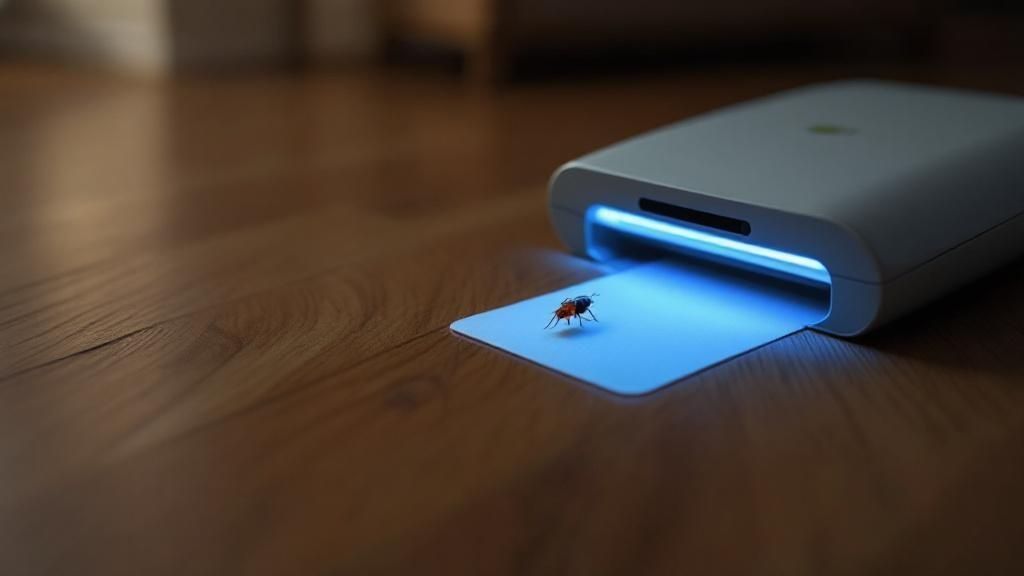
It helps to think of a flea trap as a sentinel or a monitoring station. Its main job isn’t to wipe out every single flea, but to give you crucial intel on the enemy. For those of us in Santa Cruz County, where the mild coastal climate lets fleas thrive nearly year-round, this kind of information is priceless.
What Flea Traps Do Best
The real strength of a flea trap is its power to attract and capture adult fleas. These are the jumpers, the biters—the ones you actually see. By catching them, a trap gives you a clear, visual headcount of the adult population in a specific area.
This helps you answer some critical questions:
- Do I actually have a flea problem? A trap that catches fleas confirms your suspicions when you might otherwise be second-guessing.
- Where are the fleas hiding out? Placing traps in different rooms, like near your dog's bed in Capitola or in that carpeted Aptos living room, reveals the infestation's epicenters.
- Is my treatment plan actually working? Seeing fewer and fewer fleas in the trap over time is solid, satisfying proof that your efforts are making a difference.
A trap’s true value is in monitoring. It turns a frustrating, invisible pest problem into a manageable project with clear signs of progress, empowering you to make smarter, more effective decisions.
To give you a quick rundown, here’s a look at what flea traps are designed for and where they have limitations.
Flea Trap Effectiveness At a Glance
| Aspect | Effectiveness & Purpose |
|---|---|
| Monitoring Infestations | Excellent. Traps provide clear, visual proof of flea activity and help identify high-traffic areas. |
| Capturing Adult Fleas | Good. They effectively lure and catch adult fleas using heat, light, and sometimes CO2. |
| Eliminating Eggs & Larvae | Poor. Traps have no impact on the other 95% of the flea life cycle (eggs, larvae, pupae) hidden in carpets and bedding. |
| Standalone Solution | Not Recommended. Using traps alone will not solve an infestation. They are a supplementary tool. |
| Confirming Treatment Success | Excellent. A declining catch rate is a great indicator that your primary treatments are working. |
As you can see, flea traps are fantastic for intelligence gathering, but they can't fight the war on their own. This monitoring capability is an essential piece of any successful flea control strategy, helping you focus your cleaning and treatments where they’ll have the most impact.
For a complete battle plan, our guide on flea and tick treatment for your home shows you how to integrate monitoring with the solutions you need to get rid of fleas for good.
How Flea Traps Outsmart Adult Fleas
So, what's the secret behind a flea trap's success? It’s all about clever deception. Think of a flea trap as a tiny, irresistible imposter sitting on your living room floor. Its gentle warmth and soft light are engineered to perfectly imitate a resting host—like your dog or cat curled up for a nap.
This imitation is incredibly potent because newly emerged adult fleas are biologically programmed to seek out these exact signals. To a hungry flea, that combination of warmth and light screams "first meal." It’s an invitation they simply can't ignore.
The Science of Attraction
The core principle here is attraction, not hunting. Flea traps don’t go looking for fleas; they passively lure them in using a one-two punch of powerful stimuli.
- Heat: A low-wattage bulb gently heats the trap, mimicking the 99-102°F body temperature of our furry friends. Fleas have specialized heat-sensing organs that guide them directly toward this warmth.
- Light: The bulb's soft glow acts as a visual beacon, especially in darker corners of a room or at night when fleas are often most active and on the prowl.
- Adhesive: As the flea makes the leap toward what it thinks is a promising meal, it lands on an inescapable sticky pad. Once they make contact, there's no getting away.
This simple yet effective combination of heat, light, and a sticky surface is what makes the trap so good at capturing the adult fleas hopping around your home.
Flea traps work by exploiting a flea's most basic survival instincts. They create a "super host" signal—a perfect storm of warmth and light—that adult fleas are hardwired to investigate, leading them straight into the trap.
Field-Proven Effectiveness
This isn't just a good idea in theory; it's a method backed by real-world science. For example, a 2012 study on flea collection methods found that light traps performed significantly better at capturing flea populations than other common sampling methods. The research confirmed just how effective using light and heat as attractants really is.
By understanding these mechanics, you can see why traps are an excellent tool for monitoring and reducing the adult flea population in your home. They exploit the very behaviors that make fleas such a persistent nuisance. Of course, this only targets one part of the problem. To build a complete strategy, it's crucial to also understand the full flea life cycle and how long fleas live.
The Pros and Cons of Using Flea Traps
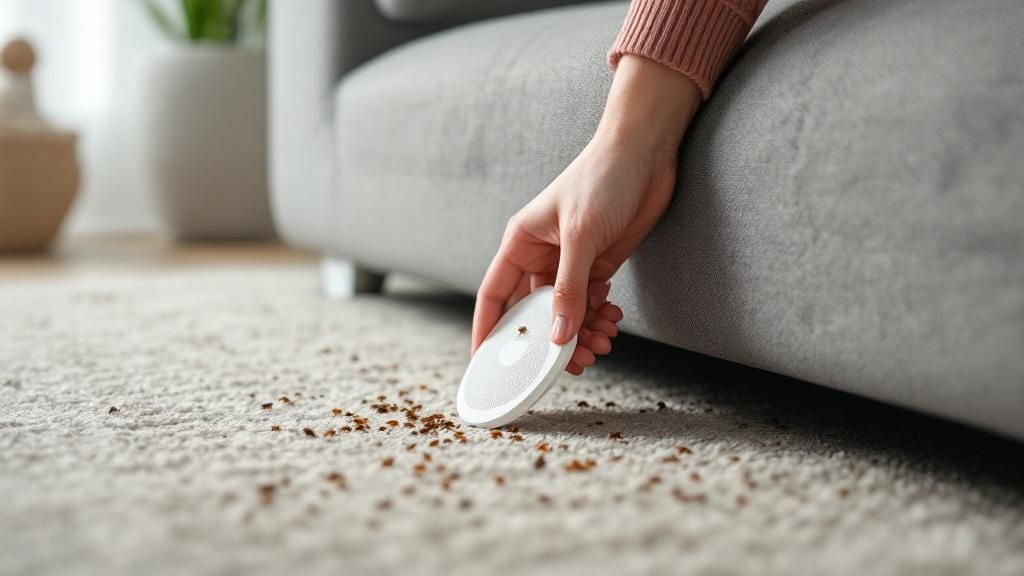
Before you start deploying flea traps all over your Santa Cruz home, it’s smart to take a step back and weigh their strengths against their weaknesses. Thinking of them as part of a bigger pest control toolkit—rather than a single, magical solution—is the secret to using them well. They have some clear advantages but also come with significant limitations you need to understand.
So, when you ask, "do flea traps work?", the answer really depends on your goal. If you want to monitor an infestation and cut down on the number of biting adults, they’re fantastic. But if you’re hoping to wipe out the entire flea population, they’re going to fall short on their own.
The Clear Advantages of Flea Traps
One of the biggest wins for flea traps is their safety profile. They are an excellent non-toxic monitoring tool, which makes them a worry-free addition to homes with curious kids and pets. Since they only use light, heat, and a sticky surface instead of chemicals, you can let them run 24/7 without a second thought.
Here are the main upsides:
- Completely Safe: With no pesticides or harsh chemicals, they can be placed in bedrooms, living rooms, and play areas without any risk.
- Silent Operation: Flea traps work around the clock without making a peep, quietly capturing adult fleas day and night.
- Visual Confirmation: There’s absolutely no guesswork. You can literally see the trapped fleas on the sticky pad, giving you undeniable proof of an active infestation and tangible evidence that your efforts are paying off.
The Significant Limitations
The most critical drawback of any flea trap is its narrow focus. Fleas have a complex, four-stage life cycle, and these traps only deal with one piece of that puzzle.
The biggest issue with a trap-only strategy is that it completely ignores the eggs, larvae, and pupae. These immature stages make up over 95% of the total flea population hidden in your carpets, furniture, and pet bedding.
This means that for every adult flea you manage to catch, dozens more are developing just out of sight, ready to emerge and keep the cycle going.
Other notable cons include:
- Limited Range: The heat and light from a trap only attract fleas from a few feet away. To effectively cover a single room, you might need multiple traps, especially in larger spaces.
- No Impact on the Source: Traps don't stop the breeding cycle. They catch the adults that wander by, but they do absolutely nothing to prevent new eggs from being laid or existing ones from hatching.
To get the full picture of what it takes to stop these pests for good, you can dive deeper into our guide to flea and tick prevention for a more complete strategy.
Flea Traps Pros vs. Cons
To make it even clearer, let's break down the good and the bad side-by-side. This table gives you a quick snapshot of what to expect when you bring flea traps into your home.
| Pros (Benefits) | Cons (Limitations) |
|---|---|
| Safe for Kids & Pets: Operates without any toxic chemicals or pesticides. | Only Catches Adults: Ignores the eggs, larvae, and pupae stages of the life cycle. |
| Provides Visual Proof: You can see the trapped fleas, confirming the infestation. | Limited Attraction Radius: Only effective within a few feet of the device. |
| Silent and Unobtrusive: Runs 24/7 without making any noise. | Doesn't Stop Reproduction: Fleas can still lay eggs and multiply. |
| Easy to Use: Simply plug it in and place it where fleas are active. | Requires Multiple Units: You'll likely need several traps for adequate coverage. |
Ultimately, flea traps are a valuable ally in your fight against fleas, but they aren’t a standalone cure. They give you crucial data, help manage the adult population safely, and offer some peace of mind. But for real success, you have to integrate them into a much broader, more aggressive pest control strategy.
Using Traps to Measure Your Flea Problem
More than just a way to catch fleas, a trap’s real power is in the data it gives you. Think of it less as a weapon and more as a monitoring device, giving you a clear-eyed look at how bad your infestation really is and whether your treatments are actually working. This approach turns a frustrating, invisible battle into a manageable project with measurable progress.
Let's say you place a trap in your Aptos living room right where your dog loves to nap. The next morning, it’s covered in fleas. That’s not just a gross discovery—it’s critical intel. You've just confirmed a major flea hotspot, a ground zero for activity where you absolutely need to focus your cleaning and treatment efforts. Without that trap, you’d just be guessing.
How to Read the Story Your Trap is Telling
The real magic happens when you start tracking the catch rate over time. The number of fleas you find on that sticky pad each day tells a story about what’s happening inside your home.
Here’s how to interpret the results:
- A High and Steady Catch Rate: Are you catching dozens of fleas every single night for a week straight? That’s a clear signal the flea breeding cycle is in full swing. It means that as fast as you trap the adults, newly hatched fleas are emerging from their cocoons to take their place.
- A Dwindling Catch Rate: Seeing those numbers drop is the best news you can get. If you caught 20 fleas on Monday but only five by Friday, you have tangible proof your strategy—whether it’s more vacuuming, treating your pet, or calling in the pros—is working.
- An Empty Trap: A consistently empty trap in a spot you thought was active is also useful. It could mean you’ve finally wiped out the local population, or it might be a sign to move the trap to a different area to see if they're hiding elsewhere.
Think of your flea trap as a tiny census taker for pests. It gives you reliable, hard numbers on the flea population in your home, letting you track the infestation without any guesswork.
This method is so reliable that it's the same approach used in scientific research. A 2018 in-home study used intermittent-light flea traps to monitor indoor populations, counting every captured flea to gather solid data. You can get more details on how researchers use these tools by reviewing their findings on flea population monitoring.
By paying attention to these numbers, you’re no longer fighting an enemy you can't see. You’re tracking its movements, measuring its strength, and getting confirmation when you’ve finally won the war. This information empowers you to make smarter, more effective decisions, ensuring your hard work is paying off.
Why Traps Alone Will Never Solve an Infestation
Using flea traps to fight an active infestation is a bit like trying to empty the ocean with a bucket. Sure, you’ll catch some, but you’ll never really make a dent in the overall problem. This is because flea traps have one critical, singular flaw: they only address the very tip of the iceberg.
You see, a flea population has four distinct life stages, and traps only deal with one of them. The adult fleas you see hopping around and landing on your trap’s sticky pad represent a mere 5% of the total infestation. The other 95%—a hidden army of eggs, larvae, and pupae—are completely safe, developing deep within your carpets, furniture, and pet bedding.
The Hidden 95 Percent Problem
To truly get why a trap-only strategy is doomed to fail, you have to appreciate what’s happening completely out of sight.
- Eggs: A single female flea can lay up to 50 eggs a day. These tiny white specks aren't sticky; they fall right off your pet and settle into your home's environment.
- Larvae: After hatching, flea larvae immediately burrow away from any light. They'll seek refuge deep in carpet fibers, under furniture, or between floorboards.
- Pupae: This is the flea's "armored" stage. Fleas develop inside a protective cocoon that is shockingly resistant to many treatments. They can wait inside for months until conditions are just right to emerge as hungry adults.
Traps do absolutely nothing to stop this relentless cycle. While you’re catching a few adults, new ones are constantly maturing and taking their place, guaranteeing the infestation just keeps on going.
This visual breaks down how a trap works, and you'll quickly see that every feature is designed to attract adult fleas, not eliminate the source of the problem.
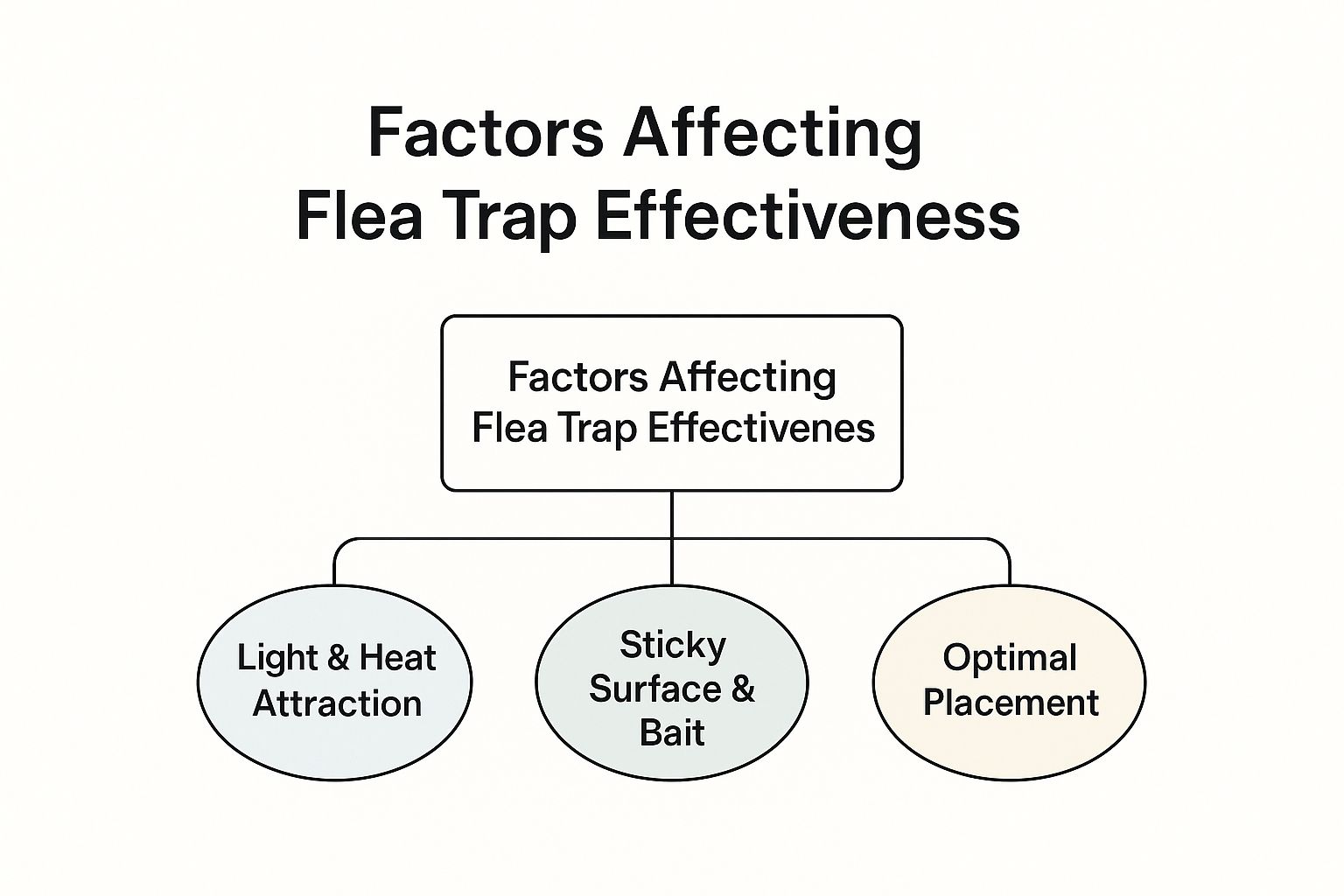
As the diagram shows, a trap's entire game plan relies on luring adult fleas with heat and light. It's a useful tactic for monitoring, but it does nothing to impact the other 95% of the population developing in your home.
Key Takeaway: Relying solely on flea traps is a purely reactive measure, not a solution. It’s like plucking dandelions without ever getting the roots—new ones will just keep popping up, no matter how many you pull.
An Integrated Approach Is Essential
Achieving complete flea eradication requires a comprehensive strategy that attacks the entire flea life cycle. This is the core of what we call Integrated Pest Management (IPM), a professional method that combines multiple tactics for effective, long-term control.
While flea traps are an excellent tool for monitoring an infestation and reducing the number of biting adults, they're just one piece of a much larger puzzle. For a complete approach, you must integrate traps with other effective dog fleas control methods that target every life stage.
Research from Purdue University backs this up, showing that after a professional treatment, flea trap counts dropped by a massive 92.5% (Purdue University, 2011). This proves that while traps are great for measuring success, they need professional intervention to get you there in the first place.
For homes in areas like Santa Cruz County, which are often right next to natural landscapes teeming with wildlife, a multi-front attack is the only way to win. This means treating your pet (with your vet's guidance), your home, and your yard all at once. If you're feeling overwhelmed, looking into a professional flea & tick control service in Santa Cruz County can provide the comprehensive power needed to finally break the cycle for good.
When To Call A Flea Control Professional

Knowing when to hang up your DIY hat and call in a professional is a crucial part of winning the war against fleas. While flea traps are fantastic for keeping an eye on the situation, certain signs are a clear signal that it's time for backup.
If you’ve been diligent but are still spotting live fleas on your pet—even after using vet-approved treatments—the infestation is probably outpacing your efforts. Similarly, if your traps are consistently full week after week, it means the breeding cycle is still going strong somewhere in your home.
Clear Signs You Need Expert Help
Keep an eye out for these red flags. They suggest the problem has grown beyond simple monitoring and requires a professional touch.
- Persistent Bites: If you or your family members are getting flea bites, it’s a sure sign the population is large enough to be spreading beyond your pets.
- Constant Sightings: You continue to see adult fleas on your pets, jumping on furniture, or hiding in carpets.
- Overwhelming Numbers: The sheer number of fleas you’re catching in your traps just isn't going down over time.
Here in Santa Cruz County, our mild and often foggy climate creates a perfect, year-round breeding ground for fleas. This can make infestations in local areas like Scotts Valley and Capitola particularly stubborn. Feeling overwhelmed is a perfectly valid reason to seek professional help.
A persistent infestation can also cause serious distress for your pets. Beyond just treatment, it's important to know how to soothe an itchy dog to give them some immediate comfort.
At West Pest Co., we provide a comprehensive, eco-friendly approach that targets every single stage of the flea life cycle. We offer a free home pest inspection in Santa Cruz to help you get your peace of mind back.
Frequently Asked Questions About Flea Traps
If you're a Santa Cruz homeowner staring down a potential flea problem, you've probably got a lot of questions. Getting clear, straightforward answers is the first step toward reclaiming your home and your peace of mind. Here are some of the most common things we get asked about using flea traps.
Where is the best place to put a flea trap?
The best spot for a flea trap is right in the enemy's territory. Think about where your pets spend the most time napping, sleeping, or just hanging out. These are your prime locations.
Place traps near their beds, beside their favorite spot on the couch, or in the middle of carpeted rooms where they frequently rest. These areas become flea “hotspots” where adult fleas jump off your pet and females lay eggs that fall into the carpet. For the best results, run the traps at night in a dark room. This makes the trap’s light the most attractive thing around. Just be sure to keep them out of high-traffic walkways to avoid getting kicked or knocked over.
Can I make my own DIY flea trap?
You can definitely find instructions online for making a trap with a dish of soapy water and a lamp, but we strongly advise against it. The main reason is safety. Setting up an open bowl of water right next to an electrical device is a serious fire and shock hazard. It’s just not worth the risk.
Commercial flea traps are specifically designed and tested for safety. They use enclosed, low-wattage bulbs and have UL-tested components to make sure they can run continuously without creating a hazard. For reliable and safe monitoring, always stick with a product that was built for the job.
How long does it take for a flea trap to start working?
A well-placed flea trap gets to work the second you plug it in. In a room with an active infestation, you could see your first catches within just a few hours.
But its real value isn’t in that initial quick catch—it’s in long-term monitoring. New fleas are constantly hatching from their cocoons. To get a true picture of your home’s flea population, you need to leave the trap running 24/7 for several days, maybe even a week. This allows you to track the number of newly hatched fleas, giving you a much clearer idea of how serious the infestation really is.
Do flea traps attract more fleas into my house?
This is a common and totally understandable myth, but the answer is a firm no. The light and heat from a flea trap only have an effective range of a few feet. A trap just isn't powerful enough to act like a beacon, luring fleas in from your yard or even from other rooms.
It exclusively captures fleas that are already in the immediate area. This is exactly what makes them such a fantastic tool for detecting an existing problem inside your home, not a magnet for creating a new one.
Are the chemicals on the sticky pad harmful?
The sticky pads in most quality flea traps are non-toxic. They don't use any pesticides to kill or capture the fleas. The adhesive is very similar to what you'd find on a glue board for catching mice or insects.
These pads are considered perfectly safe for homes with kids and pets. The only real precaution is making sure a curious pet or toddler can't get to the pad and make a sticky mess.
Feeling overwhelmed by a flea problem that just won’t quit? You don't have to go it alone. The experts at West Pest Co. offer safe, effective, and eco-conscious flea control solutions designed for Santa Cruz County homes. We target the entire flea life cycle to deliver results that last.
Contact us today to schedule your free estimate and take the first step toward a flea-free home!