Direct Answer: Starting January 1, 2028, AB 2477 lets an unlicensed employee who has applied for the Branch 2 and Branch 3 Applicator exam apply pesticides outdoors only, under supervision, for up to 60 days.
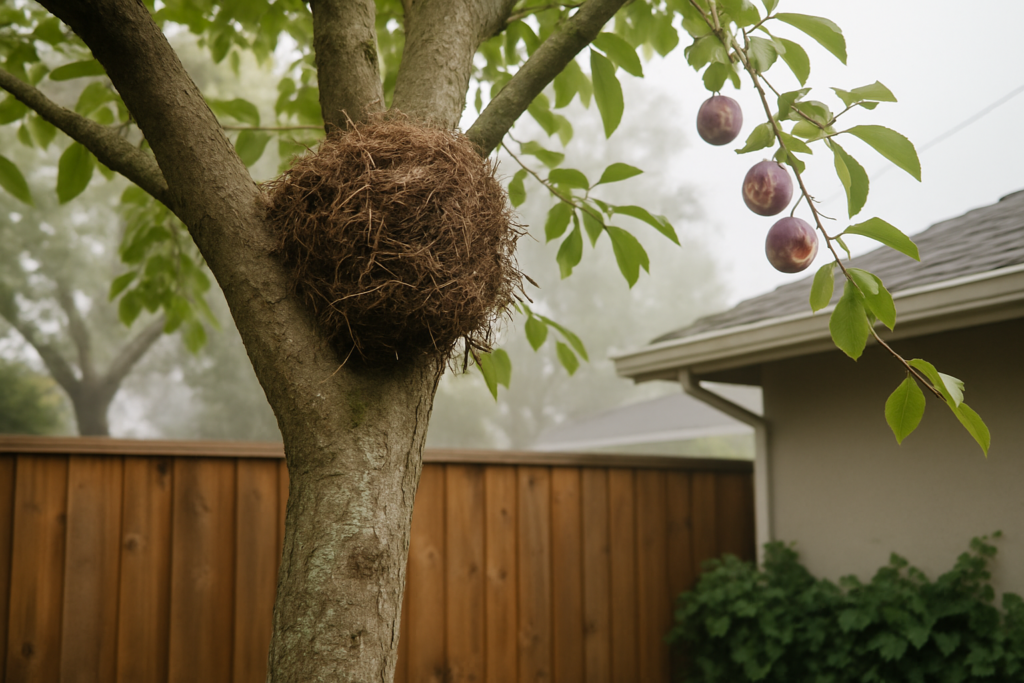
Most people who call me are not thinking about licensing. They are thinking about rodents in the attic, ants that came back after another company already treated, or a yellowjacket nest next to the front door.
But a new state law changes who is allowed to hold the sprayer on the outside of your house. AB 2477, the Small Pest Control Business Relief Act, was signed on September 18, 2026 and takes effect January 1, 2028.
Here is my take after reading it: for most homeowners around the Monterey Bay, this is a small change that does not require you to do anything differently. It does give you one good question to ask starting in 2028, and I will tell you exactly what that question is.
What the AB 2477 applicator license law actually says
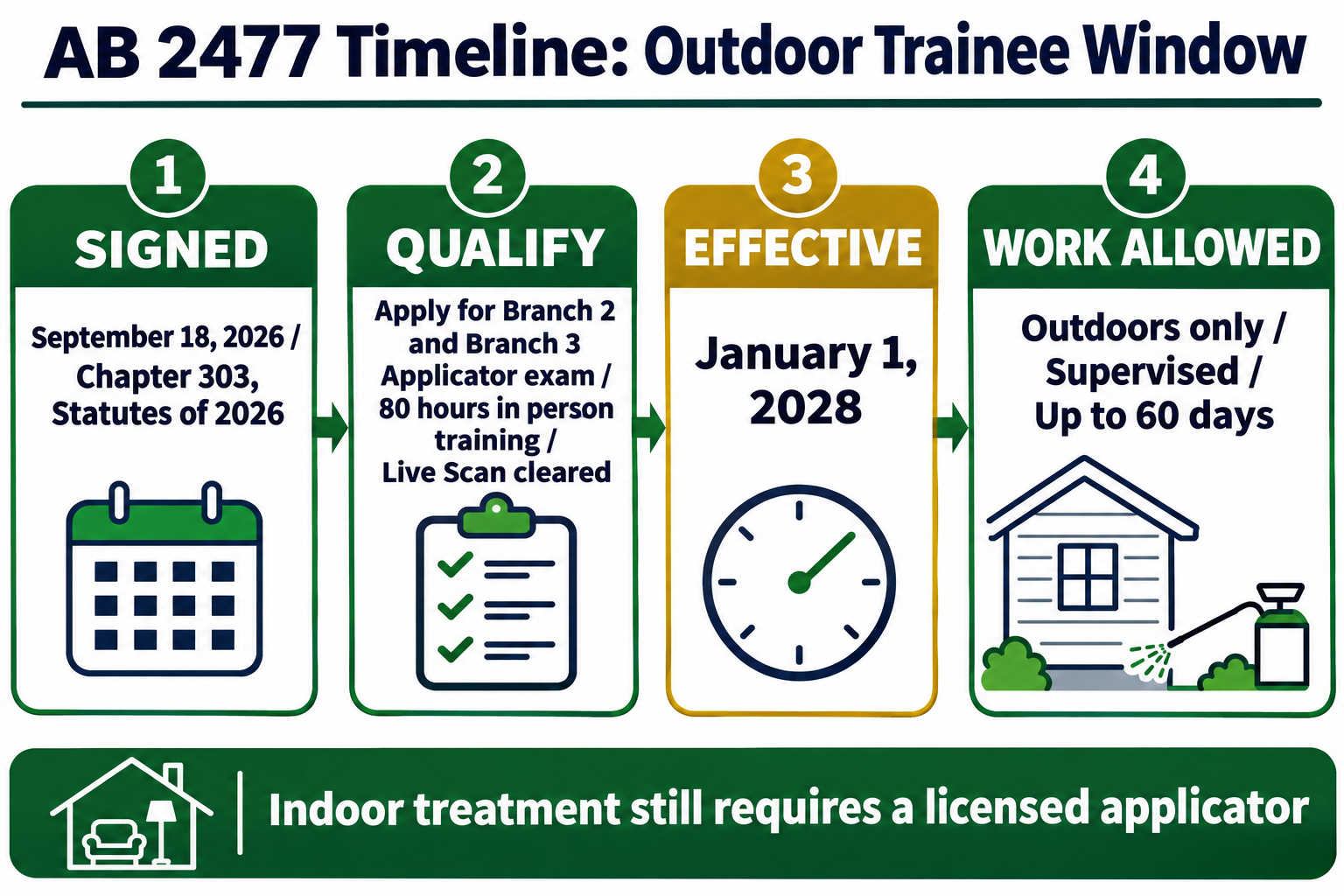
AB 2477 was approved by the Governor and chaptered on September 18, 2026 as Chapter 303, Statutes of 2026. It adds Section 8551.6 to state law.
On and after January 1, 2028, an unlicensed employee of a registered pest control company who has applied for the Branch 2 and Branch 3 Applicator examination may apply those pesticides outdoors only, under the supervision of a licensed operator or field representative, for up to 60 days.
Industry reporting in October 2026 added more detail on the eligibility side. To use that window, the employee is described as needing to:
- Apply for the Branch 2 or Branch 3 applicator license examination
- Complete 80 hours of documented, in person training
- Clear Live Scan background screening
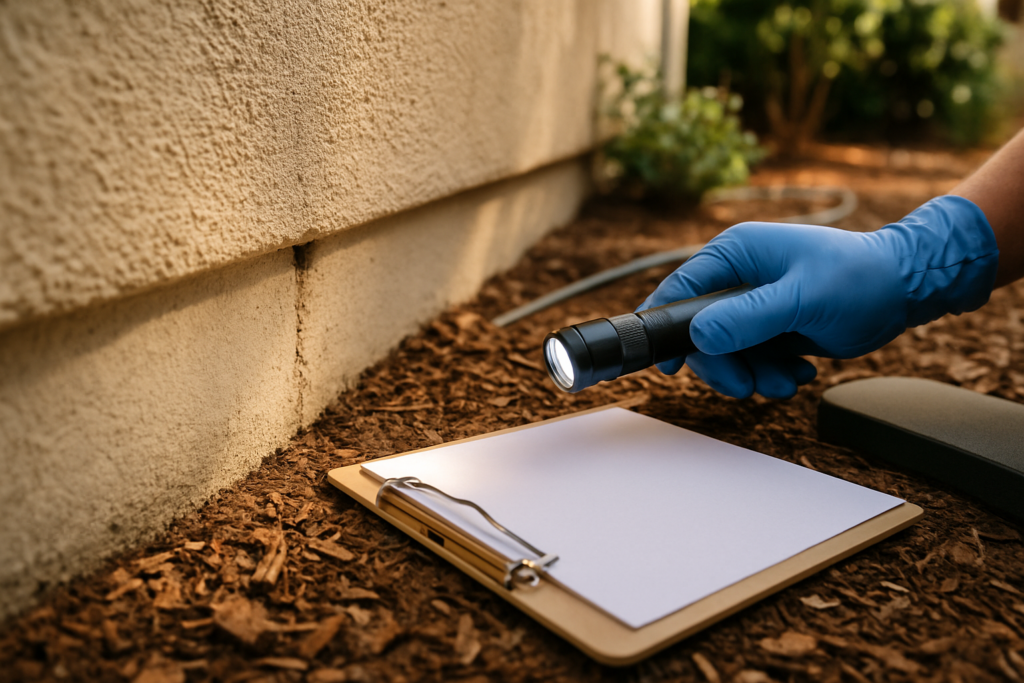
- Work only on exterior structural surfaces, perimeters, landscape and hardscape areas
The reason this law exists is pretty plain. Small shops have complained for years that a new hire sits idle for weeks waiting on exam dates and license processing, which is expensive for a three person company and does nothing for the customer waiting on a callback.
Nothing changes before 2028. If someone treats your property this year or next, the current rules still apply. Branch 2 covers general structural pest work, and the state Structural Pest Control Board is where those licenses are issued and verified.
Why outdoor only is the part that actually matters here
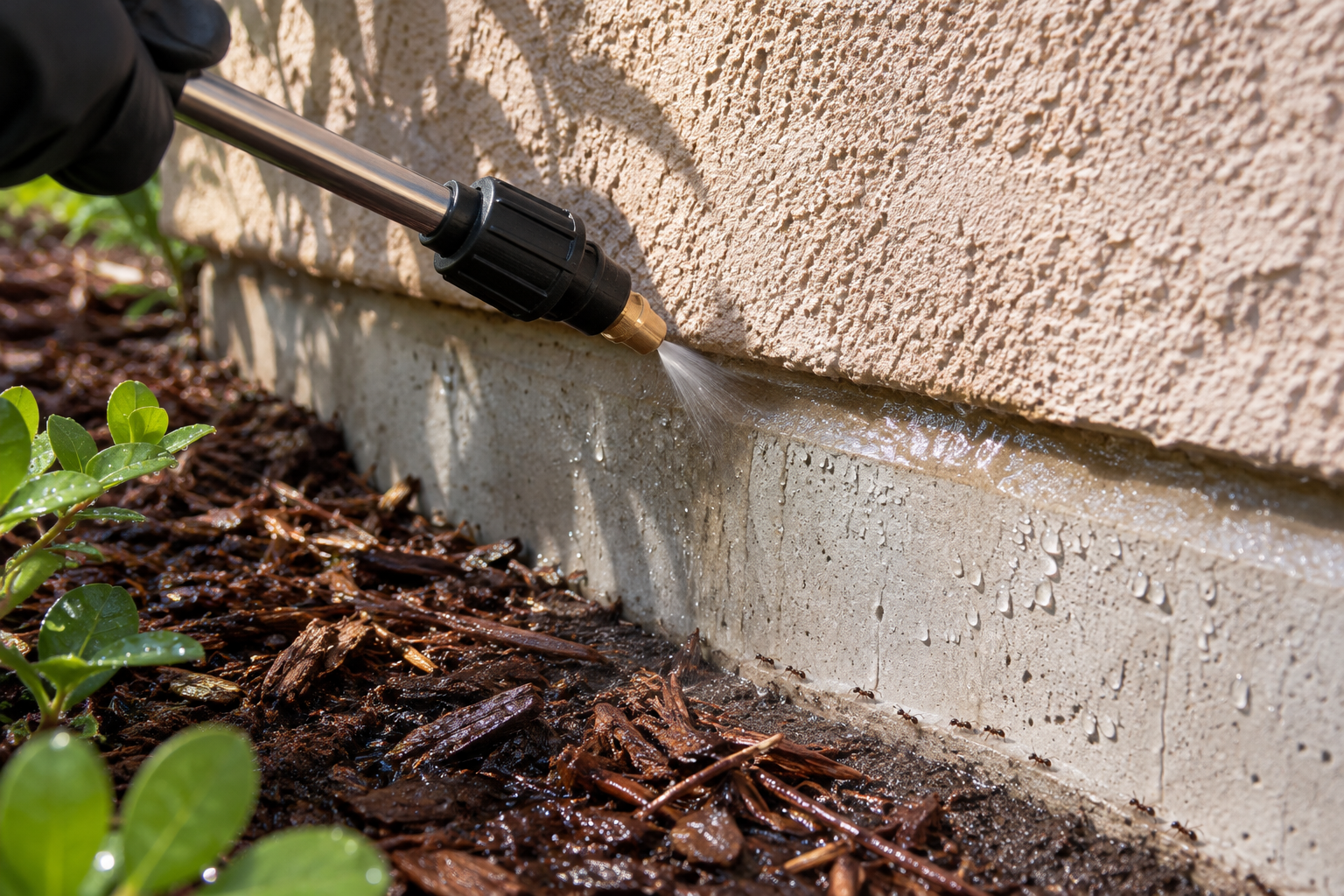
On the Central Coast, a huge share of real pest work happens outside the walls. That is not a shortcut. It is where the problem starts.
Our coastal fog and soil moisture keep ants active close to year round, which is why mulch beds, irrigation lines, and foundation seams get so much attention. Rodents push toward structures earlier in fall here than they do inland. And spider activity climbs every September along eaves, window frames, and patio furniture.
So when the law says outdoors only, that still covers a lot of what you would watch a technician do on a typical visit:
- Perimeter bands along the foundation
- Eaves, door frames, and window trim on the exterior
- Landscape beds, mulch, and planting areas
- Patios, walkways, retaining walls, and other hardscape
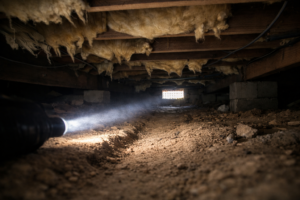
What it does not cover is inside your home. Interior work still requires a licensed person. If a technician is treating under your kitchen sink, in a bathroom, or in a crawl space or attic, the license requirement has not changed.
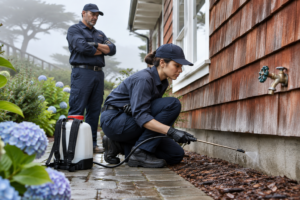
That split is the whole story. A supervised trainee may be the one walking your perimeter for ants or spiders in 2028, with a licensed operator or field representative supervising, and the indoor portion still falls to the licensed person.
Supervised trainee vs licensed applicator in 2028
This is a simple side by side of what the new window allows once it opens on January 1, 2028.
| Task | Supervised trainee (2028 onward) | Licensed applicator |
|---|---|---|
| Exterior foundation and perimeter treatment | Allowed under supervision | Allowed |
| Landscape beds, mulch, hardscape | Allowed under supervision | Allowed |
| Interior kitchen, bathroom, or living area treatment | Not allowed | Allowed |
| Working alone on your property | Not allowed, supervision required | Allowed |
| How long the status lasts | Up to 60 days | Ongoing with renewal |
| Prerequisites | Exam application, 80 hours documented training, Live Scan | Passed exam and current license |
The AB 2477 timeline at a glance
Here is the sequence, from the day the bill was signed to the day a supervised trainee can work an exterior perimeter.
What this could mean for scheduling and cost
The honest answer on cost is that nobody knows yet, and anyone who promises you a number is guessing.
What I can say is what drives pest control pricing around here, and it has very little to do with licensing paperwork. Cost usually comes down to property size, how many structures and outbuildings are involved, how bad the activity is when we get there, and whether the job needs follow up visits.
The more realistic effect is on availability. The single most common thing callers ask me is whether someone can come out today or this week, and when the answer is no, people call the next company on the list. A law that lets a new hire do supervised exterior work instead of sitting on their hands for two months could ease that bottleneck a little at small shops.
If you are budgeting for next year, the change more likely to show up on your invoice is the county registration fee cap moving from $25 to $75, which hits in 2027. AB 2477 is a labor rule, not a fee rule.
For a specific property, ask for a quote based on what is actually happening at your house rather than a published range.
Two questions worth asking starting in 2028
My position on this is straightforward. You should not change pest control companies over AB 2477, and you should not assume a supervised trainee means worse work. Supervised outdoor training is how good technicians have always been made.
But you are allowed to know who is on your property. Two questions cover it:
- Who is doing the application, and who is supervising? A supervised trainee is working under a named licensed operator or field representative. That person should be identifiable.
- Who is handling the indoor portion? Interior work still requires a license, so ask who is doing it and what product is going inside.
I would add a third for anyone with kids or pets in the house, because that comes up in almost every conversation I have. Ask what is being applied, where, and how long to stay off treated areas. A technician who cannot explain that in plain language is a problem regardless of what license they hold. That thinking is the same reason IPM matters in homes with kids and pets.
This is also not the only licensing change moving through the system. There is a separate trainee pathway for outdoor only pest spraying worth understanding alongside this one.
Frequently Asked Questions About AB 2477
Does AB 2477 mean an unlicensed person can treat inside my house?
No. The law allows outdoor applications only. Interior treatment still requires a licensed applicator, and that has not changed.
When does this actually start?
January 1, 2028. The bill was signed and chaptered on September 18, 2026, but the provision does not take effect until the start of 2028. Nothing about your service changes before then.
How long can someone work under this trainee status?
Up to 60 days. It is a short bridge while the exam and license process plays out, not an open ended alternative to getting licensed.
Will my pest control bill go down because of this?
I would not plan on it. The law reduces idle labor time at small companies, which may help availability, but pricing here is driven mostly by property size, how severe the activity is, and whether follow up visits are needed. Ask for a quote tied to your specific property.
Can I ask for a licensed technician instead of a trainee?
You can ask. Most small, owner operated shops in Santa Cruz County send the same person to the same homes anyway, which is part of why customers here request a specific technician by name. Just raise it when you schedule rather than when the truck pulls up.
Does this affect rodent work differently than ant or spider work?
A fair amount of rodent work involves attics, crawl spaces, and interiors, which stay on the licensed side. Exterior inspection and perimeter work can fall into the outdoor category. If your job is mostly inside the structure, this law has little bearing on it.
Questions about who is treating your property?
Licensing rules shift, but what matters on a Monterey Bay property is still the same: knowing what is being applied, where, and why. West Pest Co. works across Santa Cruz County and the surrounding Monterey Bay area, and we are happy to walk through what a treatment plan would actually involve at your address. Reach us at (831) 430-8402 or westpestco.com when the timing works for you.