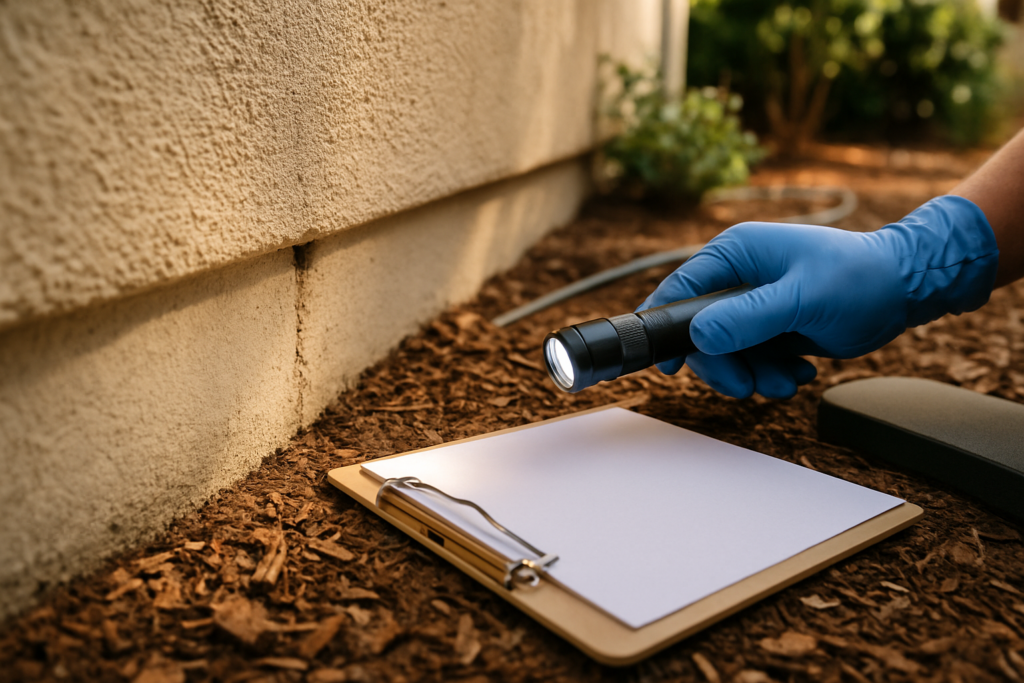
Direct Answer: A rodent inspection covers the crawl space, attic, garage, and exterior to turn a noise into a location. The real output is a short list of likely entry points and a plan.
You wake up at 2 a.m. in October to scratching overhead. You cannot tell if it is in the ceiling, inside the wall, or under the floor. Almost nobody can, and that is normal.
Most people call me because of a sound. But the visit is not there to confirm something is up there. The job of a rodent inspection is to turn a noise into a location, and then into a short list of places an animal is getting in.
Here is the part a lot of homeowners get wrong: if a company shows up, walks the perimeter, drops a few stations and leaves without going under the house or into the attic, that was not an inspection. In Santa Cruz County, with our raised foundations and vented crawl spaces, those two spaces are where the answer lives.
A Noise Tells You Almost Nothing on Its Own
Sound travels along framing. A rat running on a top plate above a hallway can sound like it is directly over your bed. One homeowner described the problem to us as rodents in the house, under the house, and in the attic, all at once, because that is honestly what it sounded like.
Another customer with traps already set called to say the noise was coming from the opposite side of the house from where the traps were, and asked if he should move them himself. That is the exact problem. Traps only work when they sit on the runway the animals actually use.
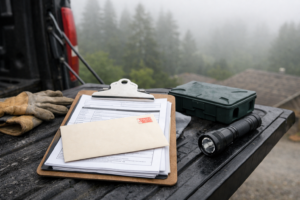
So the first few minutes of a visit are questions, not equipment:
- What time of night does the noise happen, and how long does it last
- Which room are you in when you hear it, and what is directly above and below that room
- Is it scratching, scurrying, or a slow heavy drag
- Has anything changed outside recently, like new mulch, a woodpile, or bird feeders
- Has anyone put out bait or traps already, and where
Quick, loud scurrying right after dark usually means roof rats moving on framing. A slower rustle under the floor at the same hour usually means something working the crawl space. Neither guess counts until I see the ground evidence.
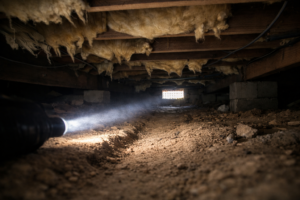
The Crawl Space: What I Am Reading Under Your Floor
Plenty of people in Santa Cruz, Soquel, and Ben Lomond have lived in their house for twenty years and never once looked under the floor. Older raised foundations with vented crawl spaces are everywhere here, and those vents are the most common weak point I find.
With a light down there, I am reading four things:
- Runways. Rodents travel the same paths, so dust gets wiped into clean trails along the dirt, the mudsill, or the top of a duct.
- Rub marks. Oil and dirt from fur leave dark smudges on joists, pier blocks, and the edges of vent openings.
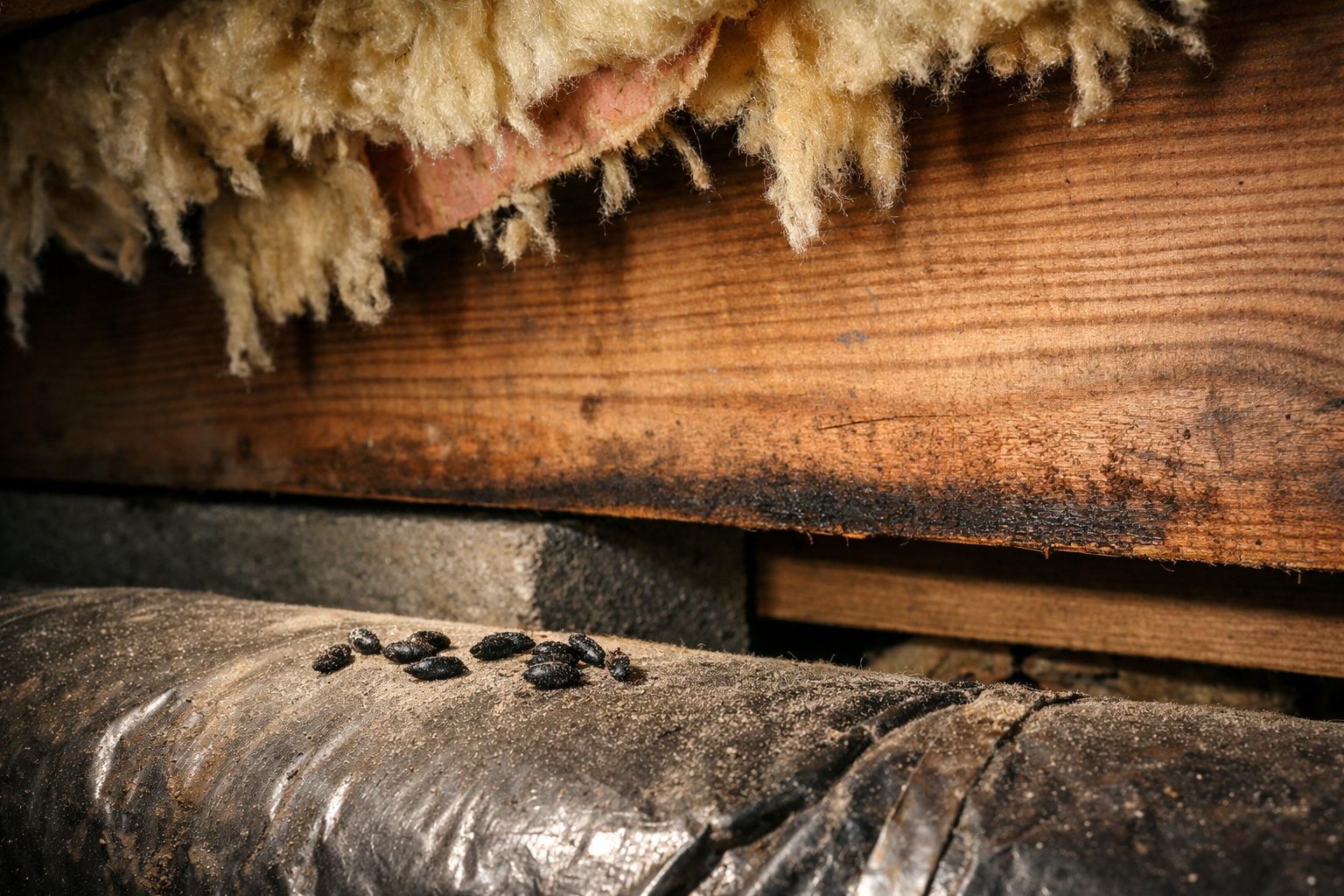
- Droppings. Scattered everywhere usually means older, drying activity. Concentrated in one corner or on top of one duct run usually means a current nesting area.
- Disturbed insulation. Batts pulled loose, hanging down, or hollowed out from above, plus shredded paper facing used as nest material.
Fall is when this gets busy here. Our first real rain and cooler nights soak outdoor nesting spots earlier than inland valleys do, and rats and mice start testing structures sooner in the season because of it.
The county’s vector control agency publishes a local rodent reference for Santa Cruz County homeowners covering which rat species live here, how small an opening each can pass through, and how far to keep vegetation off the house. It is worth ten minutes of your time before anyone shows up. If you want more detail on reading what is under there, I wrote about the crawl space signs that show up before rats get inside.
The Attic and the Vents: Same Evidence, Different Angle
Attic work is the other half of the visit, and in a lot of local homes that includes the attic space above a detached or attached garage. Several people a month tell me they think something is living above the garage specifically.
Up there I am looking for:
- Trails pressed through blown-in insulation, usually hugging the edges where the joists meet the roof deck
- Droppings lined up along the tops of joists rather than spread across the floor
- Chewed corners on gable vent screens, soffit screens, or the edge of an eave vent
- Gnawed wire insulation, chewed ducting, and stained or matted nesting areas
- Daylight showing at roof-to-wall junctions, around pipe penetrations, or where a dormer meets the roofline
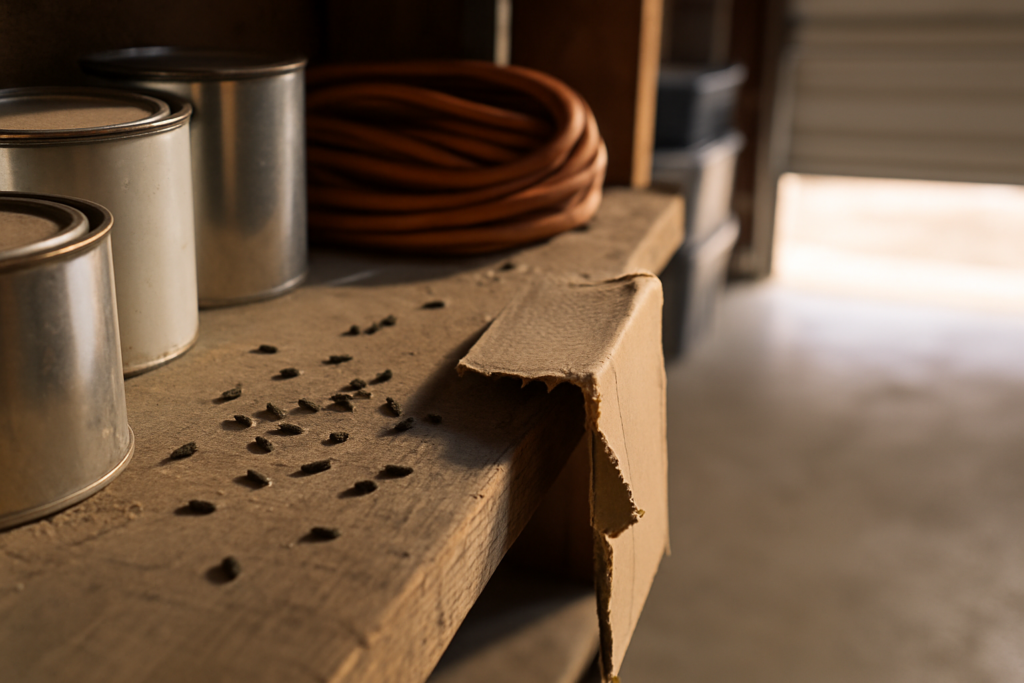
Garages confuse people because the evidence sits in plain sight for years. Old droppings in a cardboard box look identical to new ones unless you know what to check, and I covered how to tell old garage activity from a live problem separately.
If what you are hearing is overhead at night, the sounds and signs that point to rats in the attic will help you describe it better before anyone arrives.
Matching What You Hear to Where I Look First
This is roughly how I prioritize the inspection based on what a homeowner describes on the phone. It is a starting point, not a diagnosis.
| What you describe | Where I start | What would confirm it |
|---|---|---|
| Fast scurrying overhead shortly after dark | Attic, eave and gable vents | Trails in insulation, chewed vent screen |
| Rustling under the floor, often near a wall | Crawl space, foundation vents | Runways in dust, rub marks on the mudsill |
| Scratching inside a wall, up and down | Both, plus the wall’s top and bottom plates | Droppings above and below that wall line |
| Noise above a garage or in stored boxes | Garage ceiling, shared attic space | Shredded cardboard, droppings on joist tops |
| Noise but no droppings found anywhere | Exterior perimeter and roofline | Travel evidence outside, no interior entry yet |
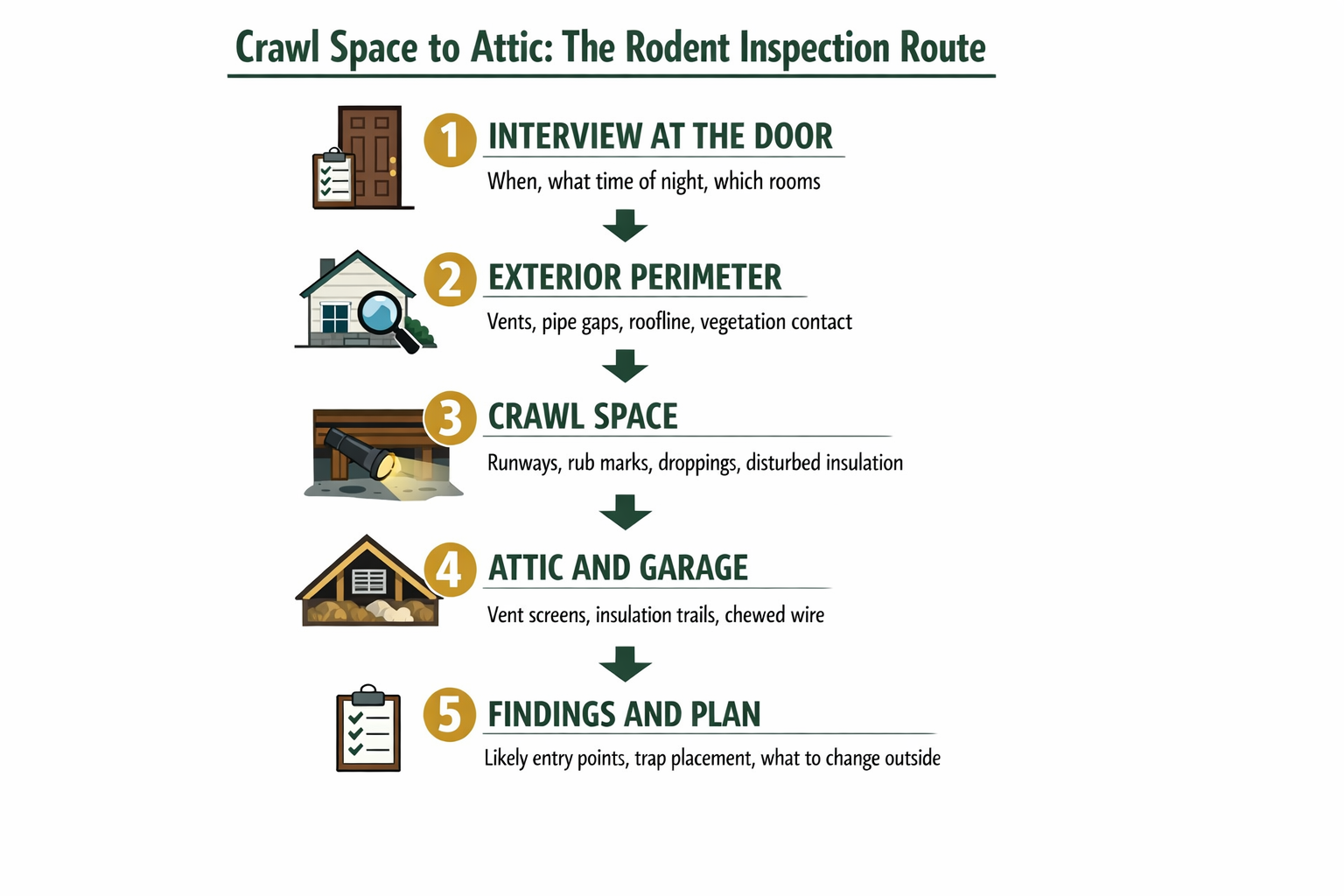
The Route a Rodent Inspection Takes
Here is the order the visit usually runs in, and what each stop is meant to answer.
The Real Output Is a Short List of Entry Points, Not a Verdict
By the end of the visit you should not just hear “yes, you have rodents.” You should be shown where they are getting in and how they are moving.
One customer put it simply in a review: “His inspection found one unknown access point for rodents.” That is the whole point of going under the floor and into the attic. Another homeowner had two separate penetrations in the exterior walls identified on a first visit, both places they had walked past for years.
A useful set of findings usually includes:
- The specific openings most likely being used, with their locations
- Where activity is concentrated right now versus where it is old
- Where traps need to sit to be on the actual runway
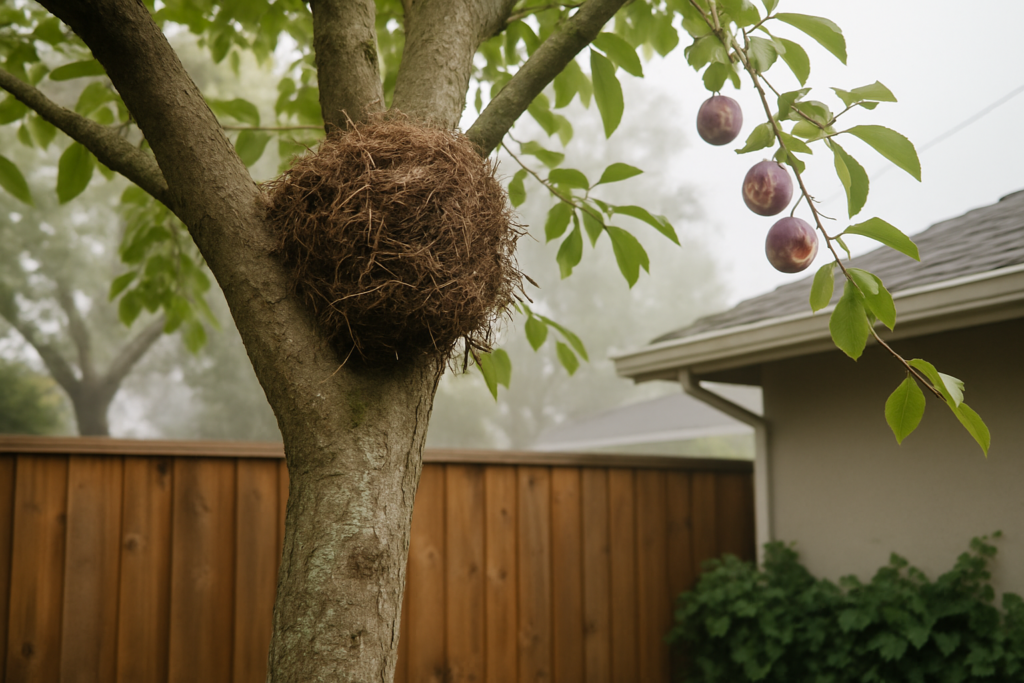
- What outside the house is feeding the pressure, like fruit trees, bird seed, woodpiles, or branches touching the roof
Now the honest part. One of the most searched rodent questions locally is how to get rid of rodents permanently, and no technician should answer that with a yes.
If your property backs onto a greenbelt, a creek corridor, or heavy vegetation, it stays under pressure no matter what any single visit accomplishes. Lasting results come from closing the gaps an animal is using and cutting back what draws them in, then checking the house again later. Anyone promising a permanent fix is selling, not inspecting.
What to Have Ready Before Anyone Shows Up
The answers you give at the door shape the plan as much as anything I find in the crawl space. Homeowners here volunteer this stuff unprompted all the time, and it genuinely changes what I recommend.
Have a rough answer for:
- When the noises started and whether they have gotten more frequent
- What time of night you hear them, and from which room
- Whether anyone has used bait or traps, including stations a previous company left behind
- Where pets and kids spend time, especially a dog that sleeps in the garage
- Whether you have a vegetable garden, chickens, compost, or fruit trees in the yard
One household told me upfront they had two cats and two teenage kids. Another asked what the options were because of an organic vegetable garden out back. Neither of those is an inconvenience. Both narrow the approach before I even open the truck.
If you already found droppings and are not sure what to do with them, read what to do after you find rodent droppings before you start vacuuming.
Why the Inspection Matters More Than It Used To
California tightened its rodenticide rules under AB 1788 in 2020 and extended the restrictions in 2024. The short version is that the no-poison approach is now the legal mainstream in most residential situations, not a boutique preference.
Plenty of people here were already there on their own. One longtime customer chose that route because the neighborhood is full of owls, hawks, and coyotes, plus neighborhood cats and a family dog.
That raises the stakes on the inspection. Trapping works, but only when traps sit on real runways in real travel corridors, which you cannot know without getting under the floor and into the attic. For the full background, see what California’s rat poison rule changes mean for your home.
Who Is Actually Crawling Under Your House
The person who answers the phone here is the person who does the inspection and the person who explains the findings afterward. There is no handoff to a separate technician reading someone else’s notes.
That shows up in the small stuff customers mention most: a text before arrival, showing up at the time that was given, and walking you through what was found instead of handing over a quote. Being voted Best Pest Control in Santa Cruz by Readers Choice in both 2023 and 2024, alongside a 5 star Google rating, mostly reflects that one habit.
Frequently Asked Questions About Rodent Inspections
How long does a rodent inspection take?
For a typical single-story home with an accessible crawl space and attic, plan on roughly an hour. Larger homes, multiple structures, or tight access can push it longer.
What does a rodent inspection cost in Santa Cruz County?
Costs vary quite a bit depending on the size of the home, how many spaces need to be entered, and whether the visit rolls into treatment. The honest factors that move the number are square footage, crawl space and attic access, how many separate structures are involved, and how far out you are. Call for a straight quote on your specific situation rather than working off a number you saw online.
Do I need to clear out my crawl space or attic first?
Usually not. What helps is unlocking the crawl space hatch, clearing a path to the attic access, and moving stored boxes away from the opening if you can. If the access panel has been painted shut or buried behind shelving, mention it on the phone.
I already sealed my attic vents and still hear noises. Is an inspection still useful?
Yes, and that is one of the more common calls I get. When someone closes the openings they can see and the noise continues, it almost always means there is a gap somewhere they could not see, often at a roof-to-wall junction, a pipe penetration, or a foundation vent down below.
Will one visit solve the problem?
A single visit can find the entry points and get traps on the right runways, which is most of the work. But on wooded or greenbelt-adjacent properties, pressure from outside continues regardless, so a follow-up check is normal and expected. Be skeptical of anyone describing a one-and-done permanent outcome.
Thinking About Getting the Crawl Space and Attic Looked At?
Rodent inspections are available across Santa Cruz County, from the Westside and Live Oak out to Soquel, Aptos, Scotts Valley, Ben Lomond, and Watsonville. If you want to talk through what you are hearing before deciding, West Pest Co. can be reached at (831) 430-8402 or at westpestco.com.